Why Agentic AI Is the Next Big Shift in Legal Technology
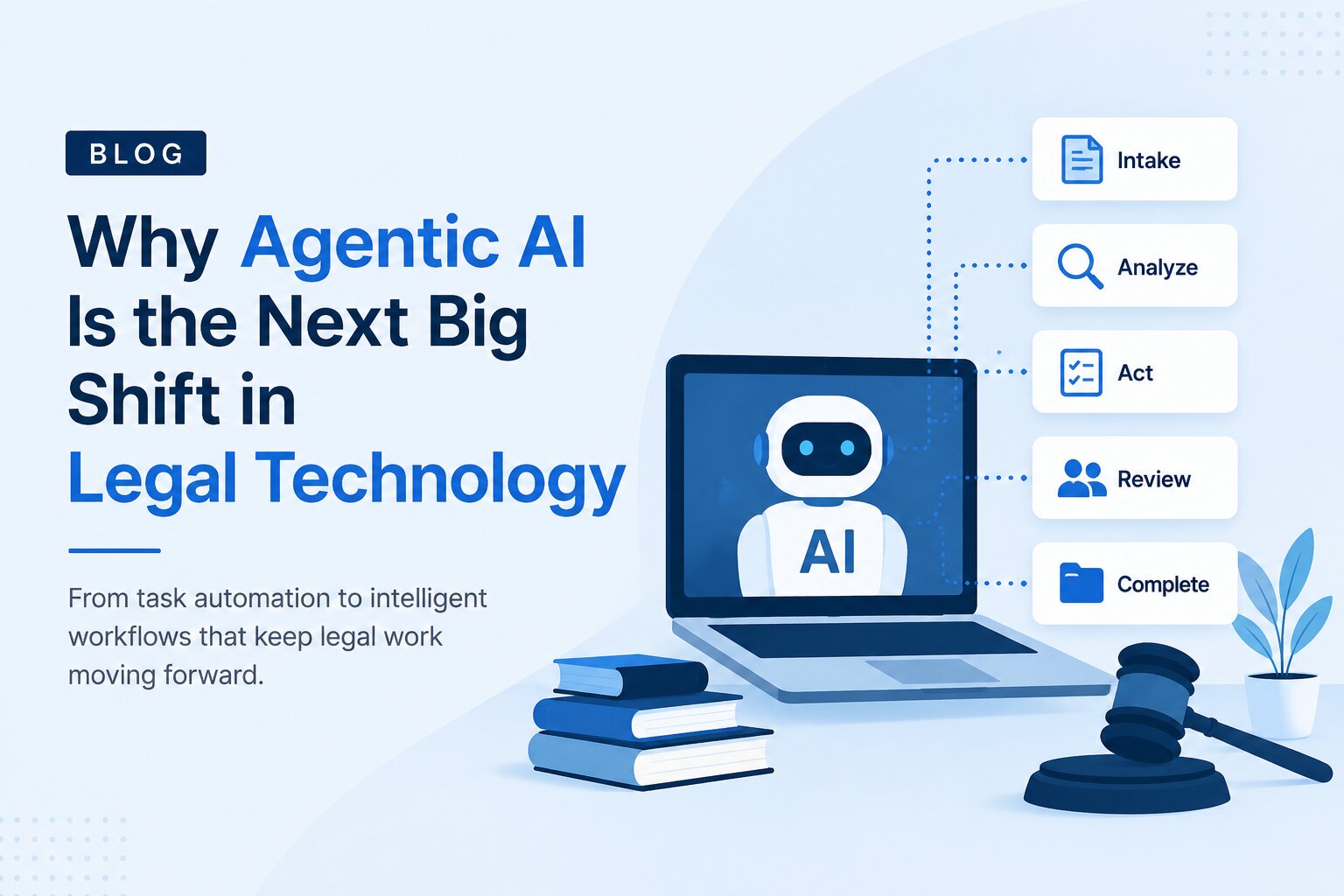
Legal technology has come a long way. Lawyers and legal teams can now search large volumes of information in seconds, automate documents, manage matters digitally, and use AI to summarise complex material. But there is a bigger change taking place. The next generation of legal technology is moving beyond tools that simply assist lawyers with individual tasks. Agentic AI is beginning to connect those tasks, decide what needs to happen next, and move work through a defined process with less manual intervention. That distinction matters.
Generative AI can help draft a contract clause or summarise a case. Agentic AI can potentially take that output and continue through the next steps in a workflow, such as checking information, identifying an issue, triggering another task, and preparing the matter for human review.
This does not mean handing legal decisions over to machines. Human oversight remains essential. The real opportunity is to reduce the amount of routine coordination that surrounds legal work so lawyers can spend more time on judgement, strategy, and client service.
The Legal Industry Is at a Turning Point
Legal teams are being asked to do more with the same resources. Case volumes grow, contracts become more complex, regulatory requirements continue to change, and businesses expect quicker answers from their legal departments. At the same time, simply adding more people is not always a practical answer.
This is one reason AI has attracted so much attention in the legal industry. Legal professionals are increasingly exploring AI for tasks such as document review, legal research, drafting, summarisation, and knowledge management.
Traditional legal software has already solved many important problems. Document management keeps files organised. E-signature platforms simplify execution. Practice management systems help teams manage matters, clients, billing, and schedules. But these systems generally depend on people to move work from one stage to another.
A lawyer may receive a document, review it, assign a task, wait for an approval, update a record, send a reminder, and then move to the next step. The software stores and supports these actions, but the human user often remains responsible for coordinating them. That is where the next shift begins.
From Assistive AI to Agentic AI — What Has Changed?
Generative AI has already changed how many legal professionals approach everyday work. A lawyer can ask an AI system to summarise a long document, suggest a first draft, compare clauses, organise information, or assist with legal research. These capabilities can reduce the time spent on repetitive work. But there is still a basic limitation: the person usually has to tell the system what to do next.
Think of it this way. If you ask generative AI to review a contract, it may produce a useful analysis. You might then ask it to identify risky clauses. After that, you may ask it to suggest alternative wording. You could then take those suggestions and send the document for approval. Each step still depends on someone directing the process. Agentic AI aims to change this model.
An agentic system can be designed to work towards a defined objective, break that objective into multiple steps, use available information and tools, and carry out actions within boundaries set by the organisation. The important word here is workflow.
Instead of asking, "Can AI complete this task?", legal teams can start asking, "Can AI help move this entire process forward?" That is a much bigger question.
This shift is also changing how legal software itself is designed, making platforms more intelligent, proactive, and capable of supporting legal teams beyond individual tasks. Learn more about How Agentic AI Is Making Legal Software More Intelligent and Proactive.
Where Agentic AI Is Starting to Change Legal Work
Contract Management: From Drafting Help to Workflow Support
Contracts are a natural area for agentic AI because they involve a series of connected activities. A typical contract process might include drafting, reviewing, identifying risks, negotiating changes, obtaining approvals, signing, storing the final agreement, and monitoring obligations. Generative AI can already assist with several individual steps. Agentic AI has the potential to connect them.
For a closer look at how agentic AI can support different stages of contract management, explore our guide on 7 Ways Agentic AI Can Improve Contract Management and Reduce Legal Workloads.
For example, an AI-driven workflow could identify a new contract request, gather the required information, prepare a first draft using approved templates, flag unusual clauses, route the document to the right reviewer, and trigger follow-up actions after approval.
Legal Operations: Keeping Matters Moving
Legal operations involve a surprising amount of coordination. Someone has to receive a matter request, collect information, assign the matter, create tasks, monitor deadlines, request documents, follow up with stakeholders, and keep records updated. None of these activities necessarily require deep legal judgement, but together they consume a significant amount of time.
To explore this further, read our guide on How Agentic AI Can Transform Day-to-Day Legal Operations and see how AI can support everyday legal workflows.
Agentic AI could help connect these actions. For example, when a new matter is submitted, a system could identify its category, collect missing information, suggest the appropriate workflow, route the matter to the relevant person, create initial tasks, and monitor upcoming deadlines. Instead of legal teams constantly checking what needs to happen next, the system can help surface and initiate the next appropriate action.
Legal Research and Drafting: Connecting the Steps
Legal research is another area where AI can move beyond one-off assistance. Research often involves several stages: understanding the question, finding relevant authorities, comparing sources, analysing the information, and turning the findings into a useful piece of work. An agentic workflow can potentially connect these stages rather than treating each one as a separate prompt.
That does not remove the need for lawyers to verify sources or apply professional judgement. AI-generated legal information can contain errors, including incorrect or fabricated citations, so human verification remains essential. The value of agentic AI, therefore, is not that it makes legal judgement unnecessary. It is that it can reduce the manual effort involved in getting information organised and work prepared for that judgement.
Why Agentic AI Matters Now
The timing is important. Clients and businesses increasingly expect legal teams to respond quickly, manage costs, and provide practical advice. At the same time, legal departments are dealing with more information and more complex workflows.
AI adoption is also moving beyond simple experimentation. Legal teams are exploring how AI can support productivity, reduce repetitive work, and improve the way information is handled. There is also a competitive factor.
Law firms and corporate legal departments that learn how to use AI effectively may be able to handle certain processes faster and with fewer manual steps. The advantage may not come from simply having access to AI. It may come from knowing how to incorporate it into everyday work. This is where workflow-level automation becomes important.
Automating one task saves time once. Connecting several related tasks can save time throughout the entire process. For example, reducing the time needed to draft a document is useful. But reducing the time spent requesting the document, preparing it, reviewing it, obtaining approval, sending it for signature, storing the final version, and monitoring follow-up actions can have a much larger operational impact. That is the difference between task automation and workflow automation.
What Agentic AI Could Mean for Law Firms and In-House Legal Teams in the GCC
The GCC is well positioned for this shift because digital transformation and AI adoption are already important priorities across the region. The UAE has placed strong emphasis on artificial intelligence, digital transformation, responsible technology use, data protection, and innovation. Saudi Arabia has also made AI and data a major part of its wider digital transformation agenda. For legal teams, this creates an interesting opportunity.
Instead of simply adding AI to older processes, organisations can rethink how those processes should work in the first place. A legal department that is already using digital matter management, contract management, document systems, and structured workflows may have a stronger foundation for introducing agentic capabilities. The goal is not to automate everything.
It is to identify where repetitive coordination is slowing people down and determine where AI can safely take on some of that work.
For example, a legal team may spend significant time following up on approvals, checking whether documents have been submitted, assigning routine tasks, or monitoring deadlines. These are areas where carefully designed AI workflows could reduce administrative effort while keeping important decisions with legal professionals.
How Beveron Technologies Is Bringing Agentic AI Into Legal Work
As agentic AI moves from an emerging concept to a practical part of legal technology, platforms such as Beveron Technologies are helping businesses and legal teams explore what this shift can look like in real-world workflows.
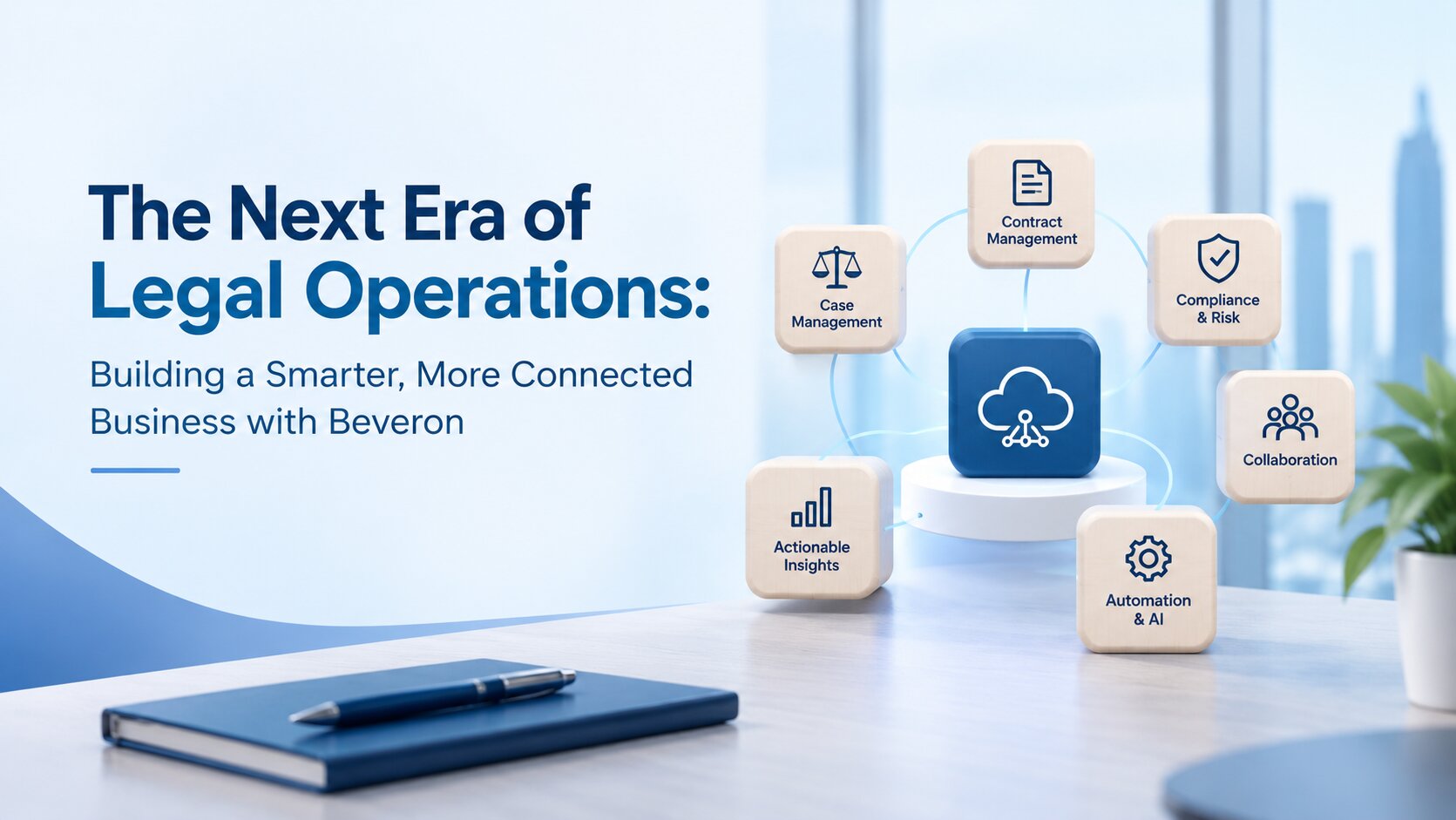
Beveron Technologies provides AI-powered legal technology solutions designed for different parts of the legal and business lifecycle. Its platform portfolio includes Smart Lawyer Office for law firm and case management, Smart Legal Counsel for in-house legal teams, and Smart Legal Contract for contract lifecycle management.
The focus is not simply on adding an AI chatbot to existing software. The bigger opportunity is to use AI to connect information, tasks, decisions, and actions within a workflow.
For example, in a legal matter, AI can help organise case information, identify relevant tasks, support document handling, track important dates, and keep the workflow moving. In contract management, AI can assist with reviewing agreements, identifying potential issues, supporting drafting, and helping teams manage the contract process from creation through execution and beyond.
This is where the concept of agentic AI becomes particularly relevant.
Rather than treating AI as a tool that only responds when a user asks a question, an agentic approach allows AI to work through defined steps towards a particular outcome. It can help determine what needs to happen next, initiate appropriate actions, and bring matters back to a human when professional judgement or approval is required.
For legal teams in the UAE and across the GCC, this can mean less time spent on routine coordination and more time focused on legal strategy, risk, negotiation, and decision-making.
Beveron's approach is therefore less about replacing the lawyer and more about augmenting the legal team with AI-driven workflows. The aim is to make everyday legal operations more connected, proactive, and efficient while keeping human oversight at the centre of important legal decisions.
As agentic AI continues to develop, this type of workflow-focused approach could become increasingly important for organisations looking to modernise their legal operations without losing control over how legal work is handled.
What Legal Teams Should Consider Before Adopting Agentic AI
The potential is significant, but legal teams should not approach agentic AI as a technology experiment without clear boundaries.
Start With Control
The more independently an AI system can act, the more important controls become. Legal teams should clearly define which actions AI can perform independently and which actions require human approval.
For example, preparing a draft may be suitable for automation. Sending a legally binding communication, approving a significant contractual change, or making a high-impact legal decision may require explicit human review.
The exact boundaries will depend on the organisation, the workflow, and the level of risk involved.
Protect Confidential Legal Data
Legal information is often highly sensitive. Before adopting any AI system, organisations should understand where information is processed, who can access it, how permissions work, and what safeguards exist for confidential data. Security should not be treated as an afterthought. For legal teams, it is part of the adoption decision from the beginning.
Prepare People for a Different Way of Working
Introducing agentic AI is not simply a matter of giving lawyers another software tool. Work may need to be redesigned. If an AI system can handle routine follow-ups, organise information, or move a matter through predefined steps, lawyers and legal operations professionals may spend less time coordinating work manually.
That does not make their role less important. It can shift their attention towards higher-value activities such as strategy, negotiation, risk assessment, and client advice.
Start With One Contained Workflow
Trying to automate an entire legal department at once is rarely the best approach. A better starting point is a contained workflow with clear inputs, repeatable steps, measurable outcomes, and manageable risk.
Contract review, matter intake, document classification, deadline tracking, or routine approval workflows could be potential starting points, depending on the organisation. Once the process is tested and the results are understood, the approach can gradually be expanded.
Frequently Asked Questions
What is the difference between generative AI and agentic AI in legal technology?
Generative AI primarily responds to instructions by creating or transforming content. It can draft, summarise, analyse, or answer questions. Agentic AI goes a step further by working towards a defined objective across multiple steps. It can plan actions, use tools or information, and continue a workflow with less need for a new prompt at every stage.
Human oversight remains important, particularly for decisions involving legal judgement or significant risk.
Is agentic AI safe for handling confidential legal work?
It can be used for confidential legal work when the system is designed and deployed with appropriate security, access controls, data protection, auditability, and human oversight. However, AI itself does not automatically guarantee safety. Legal teams need to evaluate how a particular system handles confidential information and what controls are available before using it for sensitive matters.
What legal tasks are best suited to agentic AI today?
Agentic AI is generally more suitable for structured, repeatable workflows where the steps and boundaries can be clearly defined. Potential examples include contract workflows, matter intake, document review processes, task routing, deadline monitoring, legal research support, and routine follow-ups. The more a process depends on nuanced professional judgement or carries significant consequences, the more important human review becomes.
How can a law firm start adopting agentic AI?
Start small. Choose one repetitive workflow that creates a clear operational burden. Map the current process, identify where delays occur, establish what AI can and cannot do, and define where human approval is required. Then measure the results before expanding the use of AI to other workflows.
Will agentic AI replace lawyers?
Agentic AI is more likely to change how lawyers spend their time than simply eliminate the need for lawyers. Legal work depends on judgement, context, ethics, negotiation, client relationships, and accountability. AI can assist with many supporting activities, but those human responsibilities remain important. The more useful question is not whether AI will replace lawyers, but how lawyers can use AI to spend less time on routine work and more time on work that requires their expertise.
The Next Phase of Legal Technology
Legal technology has traditionally helped people manage legal work. Agentic AI points towards a different model: technology that can help move the work itself forward. That shift will not happen overnight, and it should not happen without safeguards. Legal teams will need clear policies, reliable information, strong security, human oversight, and people who understand both the opportunities and limitations of AI.
But the direction is becoming clearer. As AI moves from answering questions and generating documents towards planning and coordinating multi-step workflows, legal teams have an opportunity to rethink how everyday work gets done.
For law firms and in-house legal departments across the GCC, this could be one of the most important changes in legal technology over the next few years.
Explore how Beveron's legal technology platforms apply agentic AI principles to help modern legal teams streamline everyday workflows.
Best agentic AI for legal teams in the UAE
Best agentic AI for law firms in the UAE
Best agentic AI legal technology in the UAE
If you need a free demo of the best agentic AI for legal teams in the UAE, please fill out the form below.