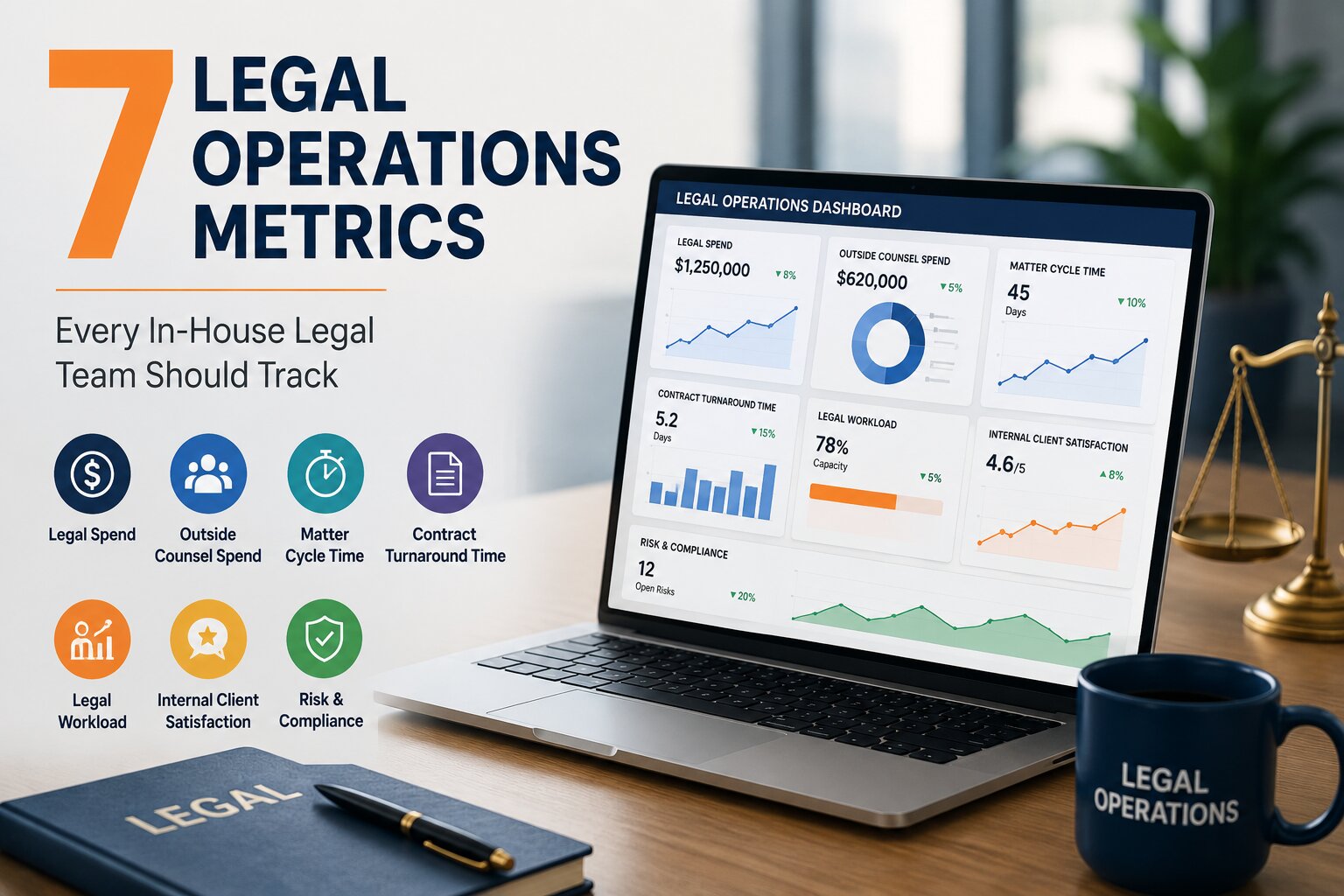
Key KPIs Every Legal Department Should Track for Better Performance

Legal departments play an important role in helping businesses manage risks, handle contracts, meet regulatory obligations and support everyday business decisions. As these responsibilities grow, managing legal work alone is no longer enough. Departments also need to understand how effectively they are handling their responsibilities and where improvements are needed.
This is where legal department KPIs become important. Key Performance Indicators (KPIs) are measurable values that help organisations assess how well a department is performing against its objectives. For in-house legal teams, these measurements can provide insights into matter management, contract reviews, legal spending, compliance activities and internal service delivery.
Tracking the right legal department performance metrics helps legal leaders understand workloads, identify delays, manage resources and demonstrate the value of their work to the wider organisation. Rather than relying on assumptions, they can use measurable information to make more informed decisions.
Why Are KPIs Important for Legal Departments?
Legal departments often handle several responsibilities at the same time, from reviewing commercial agreements and responding to internal requests to managing disputes and monitoring regulatory requirements. Without clear performance measurements, it can be difficult to understand how work is progressing or where resources are being used.
Tracking legal operations metrics gives department heads a clearer picture of daily activities and overall performance. For example, monitoring pending matters can reveal workload issues, while reviewing contract turnaround times can highlight delays in approval processes.
KPIs also help legal teams communicate their contribution to business operations. Instead of reporting only the number of matters handled, they can demonstrate improvements in response times, budget management, risk monitoring and service quality.
However, not every legal department needs to track the same measurements. The most relevant KPIs depend on the size of the organisation, the nature of its legal work and its operational priorities.
8 Essential KPIs Every Legal Department Should Track
Choosing the right KPIs for legal departments starts with understanding which activities have the greatest impact on performance. The following metrics cover important operational, financial and service-related areas.
1. Legal Matter Volume and Closure Rate
The number of legal matters a department handles indicates its workload. These matters may include litigation, employment issues, commercial disputes, regulatory enquiries and internal legal requests. Tracking the number of new matters received, ongoing cases and completed matters helps legal managers understand how work is distributed across the team.
The matter closure rate is another useful measurement. It shows the proportion of matters completed within a specific reporting period compared with the total matters being handled or due for completion, depending on the chosen calculation method. Reviewing these figures together helps identify growing backlogs, uneven workloads and resource constraints. However, a higher closure rate does not automatically indicate better performance. Complex matters may require considerably more time than routine legal requests.
2. Legal Request Response and Completion Time
Internal departments regularly approach legal teams for contract reviews, legal opinions, policy clarifications and other forms of support. How quickly these requests receive attention can influence business operations. Two useful legal department performance metrics are average response time and average completion time. Response time measures how long the team takes to acknowledge a request, while completion time measures how long it takes to deliver the requested support.
For example, if business teams frequently wait several days for an initial response, the department may need to review how requests are received, assigned and prioritised. Monitoring these figures helps legal managers identify delays and understand whether the team has sufficient resources to handle incoming work. It also provides a basis for setting realistic service expectations across the organisation.
3. Contract Review and Approval Turnaround Time
Contract management is a major responsibility for many in-house legal departments. Agreements often pass through several stages, including drafting, legal review, negotiation and internal approval. The average contract turnaround time measures how long it takes to move a contract from submission to completion. Legal teams can also monitor the number of contracts awaiting review, agreements pending approval and contracts that exceed expected timelines.
These legal operations KPIs help identify where delays occur. For instance, a contract may remain pending because of incomplete information, repeated revisions or delayed approval from another department. By reviewing these measurements, legal teams can identify opportunities to improve contract workflows, establish clearer responsibilities and reduce unnecessary waiting periods without compromising the quality of legal reviews.
4. Legal Spend and Budget Variance
Managing legal expenditure is another important responsibility for corporate legal departments. Costs may include external law firm fees, litigation expenses, legal consultancy services, court-related charges and internal department spending. Legal spend tracking helps department heads understand how much the organisation spends on legal activities and where the budget is allocated.
One useful KPI is budget variance, which compares actual legal expenditure with the allocated budget. A significant difference may indicate unexpected litigation costs, additional external legal support or changes in the department's workload. Tracking legal spending by matter, business unit or expense category provides further visibility into costs.
These legal department KPIs support better financial planning and help legal leaders explain expenditure to senior management. They also make it easier to identify areas where costs can be managed more effectively.
5. Outside Counsel Performance and Costs
Many organisations depend on external law firms for specialist advice, litigation support and other legal services. Monitoring these relationships is important because external counsel can account for a considerable part of the legal department's overall expenditure. Legal teams can track external counsel fees, spending against agreed budgets, response times and the quality of services provided.
For example, if a law firm regularly exceeds its estimated budget or takes longer than expected to deliver work, the department may need to review the engagement and discuss possible improvements. These measurements help organisations understand whether external legal services are meeting their expectations. They also support more informed decisions when selecting, evaluating and managing relationships with outside counsel.
6. Compliance and Regulatory Deadline Management
Keeping track of regulatory obligations is an essential part of corporate legal work. Legal departments may be responsible for monitoring reporting requirements, policy reviews, contractual obligations and other compliance-related deadlines. A useful KPI is the percentage of assigned compliance activities completed within their required timelines. Teams can also monitor upcoming deadlines, overdue tasks and missed obligations.
For example, a department responsible for several regulatory reporting requirements needs visibility into which activities have been completed, which are pending and who is responsible for each task. Monitoring these legal department performance metrics helps teams identify potential compliance gaps before they develop into larger issues. It also improves accountability by making responsibilities and deadlines easier to follow.
7. Legal Matter Outcomes and Risk Exposure
Measuring legal performance should not focus only on how many matters a department handles. Understanding the outcomes of those matters is equally important. Legal teams can monitor litigation outcomes, dispute settlements, ongoing claims and estimated financial exposure from active matters. These measurements provide insight into the organisation's legal risk position.
For instance, tracking the financial exposure associated with ongoing disputes can help management understand potential liabilities and make informed business decisions. However, matter outcomes should always be considered in context. A favourable settlement or litigation result does not necessarily reflect the quality of legal work alone, as external circumstances and the complexity of individual matters also influence the outcome. Reviewing these indicators alongside other legal operations metrics provides a more balanced understanding of risk management and departmental performance.
8. Internal Client Satisfaction
In-house legal departments work closely with different business functions, including finance, human resources, procurement, sales and senior management. The quality of support these internal stakeholders receive can influence how effectively the organisation handles legal matters.
Internal client satisfaction measures how business teams perceive the legal department's services. Feedback can cover response times, clarity of legal advice, communication, accessibility and the overall quality of support. Legal teams can collect this information through periodic surveys, feedback forms or structured reviews with internal stakeholders.
For example, if business teams consistently report difficulties understanding legal guidance or delays in receiving updates, the department can identify areas where communication and service delivery need improvement Including satisfaction measurements alongside operational and financial legal department KPIs helps ensure that performance is assessed from both the department's perspective and the perspective of the people it supports.
How Can Legal Departments Establish an Effective KPI Tracking Process?
Identifying relevant KPIs is only the first step. Legal departments also need a consistent process for collecting information, reviewing results and acting on what the measurements reveal.
A practical approach includes the following steps:
Identify departmental objectives: Start by understanding what the legal department wants to improve. This could involve reducing contract delays, improving request handling, controlling legal expenditure or strengthening compliance monitoring.
Select relevant KPIs: Choose measurements that directly relate to these objectives. Tracking too many indicators can make reporting complicated, so focus on the metrics that provide meaningful information about performance.
Establish baseline measurements: Review existing records to understand current performance. These figures provide a starting point for measuring progress over time.
Assign responsibilities: Determine who will collect, update and review KPI information. Clear ownership helps maintain accurate records and prevents important activities from being overlooked.
Review performance regularly: Set monthly or quarterly reporting schedules based on the nature of each KPI. Regular reviews help identify changes in workload, spending and operational efficiency.
Use findings to improve processes: KPI tracking should lead to practical decisions. If contract reviews are consistently delayed, for example, the department can examine approval stages and identify where changes are needed.
An effective legal department KPI tracking process should help teams understand their performance rather than simply generate reports.
How Does Legal Management Software Help Track Department KPIs?
Tracking legal department performance through separate spreadsheets, emails and individual records can make it difficult to maintain accurate information. As the number of legal matters, requests and contracts increases, teams may spend considerable time collecting updates instead of reviewing performance.
Legal management software provides a more organised way to manage this information. By bringing different legal activities into one system, it helps departments maintain visibility into ongoing work and monitor important operational measurements.
For example, a corporate legal management platform can help teams:
- Manage legal matters: Maintain centralised records of active and completed matters, assigned responsibilities and important deadlines.
- Track legal requests: Monitor incoming requests, their progress and the teams responsible for handling them.
- Monitor contracts: Organise contract records, review activities, approval workflows and renewal deadlines.
- Manage legal expenses: Maintain visibility into legal costs, budgets and expenditure-related information.
- Monitor compliance responsibilities: Track assigned obligations, activities and upcoming deadlines.
- Generate performance reports: Use organised information to review workloads, identify pending activities and understand departmental progress.
For organisations looking to improve visibility across their legal operations, Beveron Smart Legal Counsel provides a centralised platform for managing corporate legal activities. It supports legal request management, matter tracking, contract management, compliance responsibilities, legal expenses and reporting.
By bringing these activities together, the platform helps in-house legal teams maintain organised records and gain better visibility into their work. This provides a more structured foundation for monitoring relevant legal department performance metrics and making informed operational decisions.
Legal leaders interested in improving how their departments manage daily responsibilities can explore Beveron Smart Legal Counsel to understand how a connected legal management system can support their operations.
Conclusion
Measuring legal department performance requires more than counting completed matters or reviewing annual expenditure. It involves understanding how effectively the team manages its workload, responds to business requests, handles contracts, controls costs and monitors legal risks. The right legal department KPIs help department heads identify operational gaps, assess progress and make better use of available resources. They also provide a clearer way to communicate the legal team's contribution to the wider organisation.
Rather than trying to measure everything at once, legal departments should begin with a small set of relevant performance indicators and review them consistently. With clear objectives, reliable information and the right management processes, KPI tracking can become a valuable part of improving legal operations.
Frequently Asked Questions
1. What are the most important KPIs for a legal department?
Important legal department KPIs include legal matter volume and closure rate, request response time, contract turnaround time, legal spending, outside counsel costs, compliance deadline completion, matter outcomes and internal client satisfaction. The most relevant measurements depend on the department's responsibilities and business objectives.
2. How do you measure the performance of an in-house legal team?
The performance of an in-house legal team can be measured through operational, financial and service-related indicators. These include how quickly the team handles legal requests, how effectively it manages contracts, whether it stays within budget and how well it supports internal business teams.
3. How can legal departments measure operational efficiency?
Legal departments can measure operational efficiency by tracking request completion times, matter backlogs, contract review timelines, workload distribution and the percentage of activities completed within expected deadlines. Reviewing these figures regularly helps identify delays and opportunities to improve workflows.
4. How often should legal department KPIs be reviewed?
Most legal departments can review operational KPIs monthly and conduct broader performance assessments quarterly. However, certain indicators, such as urgent legal requests and compliance deadlines, may require more frequent monitoring.
5. Can legal management software help track KPIs?
Yes. Legal management software helps centralise information about matters, requests, contracts, expenses and compliance activities. Depending on the platform's reporting capabilities, legal teams can use this information to monitor workloads, review progress and generate reports that support performance measurement.
Best legal department performance metrics in the UAE
Best legal operations metrics for in-house in the UAE
Best legal matter management for legal teams in the UAE
If you need a free demo of the best legal department performance metrics in the UAE, please fill out the form