From Legal Chatbots to AI Agents: What the Shift Means for Startup Legal Operations
For many startups, legal work begins with a few contracts, basic compliance requirements and occasional requests for legal advice. As the business grows, however, these responsibilities become more frequent and interconnected. Sales teams need contract reviews, HR departments require employment-related documents, management needs legal input on business decisions, and important deadlines must be monitored. Keeping all these activities organised can become difficult, particularly when a startup has a small legal team or relies on external legal support.
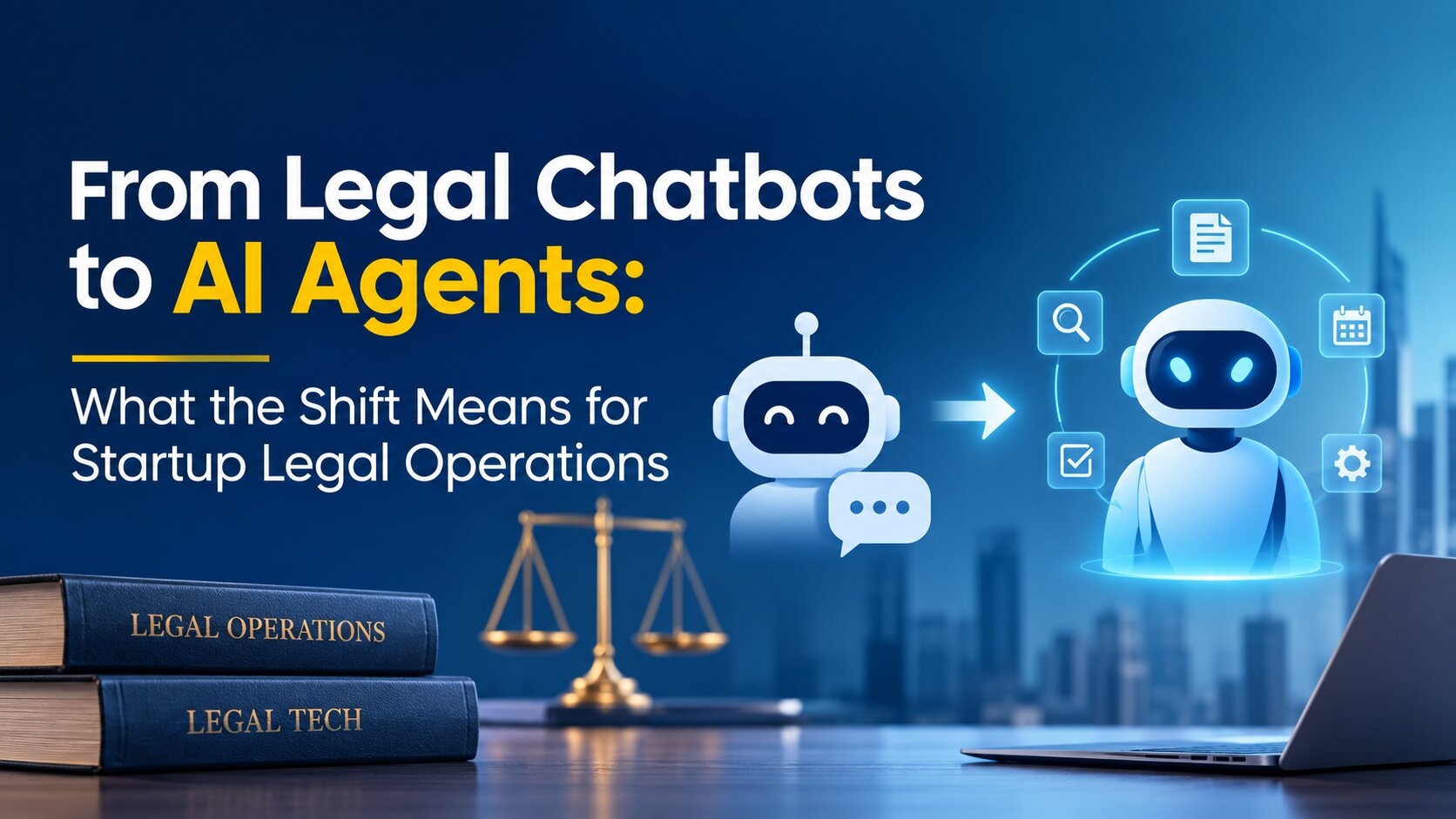
Artificial intelligence (AI) is beginning to change how businesses approach these responsibilities. Legal chatbots have already made it easier to find information, understand documents and prepare initial drafts. However, a newer development is attracting attention: AI legal agents that can move beyond answering individual questions and help carry out a series of connected tasks. Rather than waiting for someone to provide instructions at every stage, these systems can work towards a defined objective, use available information, perform permitted actions and bring matters requiring human attention to the right person.
This shift raises an important question for startups: what happens when AI moves from simply providing legal assistance to helping coordinate everyday legal operations? Understanding the difference between traditional chatbots and AI agents can help growing businesses identify where this technology may be useful, what responsibilities should remain with legal professionals and how to prepare their workflows for a more connected approach.
Legal Chatbots vs AI Legal Agents: Understanding the Difference
Legal chatbots have become a familiar starting point for businesses exploring AI. A user can ask a question about a contract clause, request a summary of a document or seek help preparing an initial draft. The chatbot processes the instruction and provides a response based on the information available to it. This can save time when someone needs a quick explanation or assistance with a specific task. However, the interaction generally depends on the user asking questions and providing further instructions whenever another action is needed.
AI legal agents take this concept further. Instead of focusing only on individual questions, they are designed to work towards a particular goal by identifying the steps involved and carrying out permitted activities along the way. Depending on their design and the systems they can access, they may retrieve relevant records, organise documents, prepare drafts, track pending actions and notify the appropriate team member when a decision or approval is required. The important distinction is that an AI agent can help connect several activities that would otherwise require separate instructions and manual coordination.
What Traditional Legal Chatbots Can Do
A traditional legal chatbot is primarily designed to respond to user queries. For example, a startup founder reviewing a supplier agreement might ask the chatbot to explain a limitation of liability clause, summarise the termination conditions or identify the notice period mentioned in the document. The chatbot can provide an explanation based on the text it receives, helping the founder understand the document before discussing it with a lawyer. Similarly, an HR manager might use a chatbot to prepare an initial employment agreement or clarify the information required in a particular document.
These capabilities are useful, especially for businesses that do not have a dedicated legal professional available for every routine question. However, the chatbot does not necessarily take responsibility for what happens after providing its response. Someone still needs to save the document, send it for review, follow up with the relevant person, monitor approval and ensure that the final version is stored correctly. In other words, the chatbot assists with a specific interaction, while the surrounding legal process remains largely dependent on people.
What Makes AI Legal Agents Different?
An AI legal agent is designed to handle a broader task rather than simply respond to a question. Consider a startup that receives a new customer agreement. Instead of asking an AI tool to summarise the agreement and then manually coordinating every subsequent step, an appropriately configured agent could help organise the review process. It might retrieve an approved template, examine the submitted agreement against specified requirements, identify clauses that need attention, prepare suggested changes and organise the document for review by the responsible person. Once the review is complete, it could help track the approval status and remind the relevant team member about pending actions.
This does not mean that an AI agent independently understands every legal implication or has unrestricted authority to approve contracts. Its actions depend on the instructions, permissions, information and connected tools available to it. The legal team must still establish which activities it can perform, which decisions require approval and when a matter should be escalated to a qualified professional. The value lies in connecting routine activities and reducing the need for people to coordinate every individual step manually.
Where AI Legal Agents Could Support Startup Operations
The potential value of AI legal agents becomes clearer when viewed through the everyday responsibilities of a growing business. Startups do not necessarily have large legal departments, but they still need to manage contracts, respond to internal requests, organise important documents and monitor compliance obligations. These activities often involve several departments, making coordination just as important as the legal work itself.
Contract Preparation and Review
Contracts are among the most common areas where startups require ongoing legal support. Customer agreements, supplier contracts, employment documents, non-disclosure agreements and partnership arrangements all need to be prepared, reviewed and maintained. As the number of agreements increases, the time spent checking documents, comparing versions and coordinating approvals can place additional pressure on a small team.
AI legal agents could help organise parts of this process by retrieving relevant templates, preparing initial drafts, identifying missing information and highlighting clauses that differ from approved requirements. They could also help route documents to the appropriate reviewer and track whether feedback or approval is still pending. For example, when a sales team submits a customer agreement, an agent could help check whether the required information is present and flag unusual payment or termination terms for legal review. The lawyer or authorised reviewer would remain responsible for assessing the legal implications and approving the final agreement.
Legal Request Handling Across Departments
Legal requests rarely come from one department alone. Sales teams may need assistance with customer agreements, HR may require employment-related documents, procurement may seek supplier contract reviews, and management may need advice on business arrangements. When these requests arrive through emails, messages and separate spreadsheets, it can become difficult to understand which matters are pending, who is responsible and what needs attention first.
An AI legal agent could support the initial handling of these requests by collecting relevant information, categorising the request, directing it to the appropriate team member and tracking its progress. It may also help identify missing details before the request moves forward. This gives legal teams a more organised starting point and reduces the time spent sorting through incoming communications. For a startup where one or two people handle a wide range of legal responsibilities, even better organisation of incoming requests can make a meaningful difference.
Document Organisation and Information Retrieval
Startups generate a growing volume of legal documents as they work with customers, employees, suppliers, investors and business partners. Agreements, amendments, corporate records, legal correspondence and supporting documents may be stored across email accounts, shared folders and individual devices. Finding the correct document or identifying the latest version can become frustrating when records are not maintained consistently.
AI agents could assist by classifying documents, extracting relevant information, locating records and organising them according to defined categories. When a team member needs to review an existing agreement, for instance, an agent could help locate the relevant document and retrieve information such as the parties involved, contract dates and key obligations. This can make information easier to access and reduce time spent searching through multiple locations. However, document organisation must be supported by appropriate access controls so that confidential information is only available to authorised users.
Compliance and Deadline Monitoring
Compliance responsibilities often continue long after a business has completed its initial registration or obtained the necessary approvals. Startups may need to monitor licence renewals, contractual obligations, reporting dates, employment documentation and other requirements depending on their industry and operating locations. Missing a deadline can create unnecessary costs, operational delays or regulatory difficulties.
AI legal agents could help monitor important dates, organise compliance-related records and send reminders when action is approaching. Where a requirement is overdue or needs professional assessment, the system could flag it for the responsible person rather than attempting to resolve the issue independently. This is particularly relevant for startups operating across different markets, where requirements may vary by jurisdiction. AI can help teams keep track of information, but it should not be treated as a substitute for checking current regulations or obtaining qualified legal advice.
Why This Shift Matters as Startups Grow
In the early stages of a business, legal responsibilities may be manageable through a combination of external lawyers, shared documents and direct communication between team members. As the company expands, the number of agreements, internal requests, business relationships and compliance obligations usually increases. The challenge is not simply that there is more work to complete. Different activities begin to depend on one another, and delays in one area can affect several others.
For example, a customer agreement may require input from sales, finance and legal before it can be signed. A supplier arrangement may need management approval, while an employment contract may require information from HR and confirmation of the agreed terms. If each stage is handled separately, employees may spend considerable time checking email threads, requesting updates and trying to identify the latest document. This can slow down business activities even when the legal team is responding promptly.
This is where AI legal assistants and connected legal workflows may offer practical value. By helping organise requests, prepare information, track pending actions and support routine document-related tasks, AI can reduce some of the administrative work surrounding legal operations. It can also give startup founders and managers a clearer view of outstanding activities without requiring them to contact different team members for every update. The objective should not be to eliminate human involvement but to make better use of the time and expertise available within the business.
The Risks Startups Should Consider Before Adopting Agentic AI in Legal
The ability of AI agents to carry out connected activities also introduces responsibilities that startups should consider before adopting the technology. Legal information is often confidential, decisions can have financial and contractual consequences, and errors may affect relationships with customers, employees or business partners. A system that can perform several actions needs more careful oversight than one that simply generates a response to a question.
Accuracy and Legal Interpretation
AI-generated information should not automatically be treated as legally correct. A contract clause may appear straightforward but have different implications depending on the agreement, the parties involved and the applicable law. Similarly, a compliance requirement may change over time or differ between jurisdictions. Startups should ensure that AI-generated summaries, draft clauses and recommendations are checked against reliable information and reviewed by qualified legal professionals where necessary. AI can assist with identifying information and preparing work, but the responsibility for legal interpretation must remain with appropriately qualified people.
Confidentiality and Data Protection
Contracts and legal records may contain financial information, employee details, business strategies and other confidential material. Before using an AI legal tool, startups should understand where information is stored, how it is processed, who can access it and whether it may be used to improve external AI models. Data protection obligations should also be considered in the context of the countries where the business operates and the information it handles. Clear access permissions, suitable security measures and appropriate data-handling policies are important when introducing AI into legal workflows.
Permissions and Accountability
An AI agent should not be allowed to perform every action simply because the technology makes it possible. Preparing a draft agreement, sending an internal reminder and approving a commercially important contract are very different responsibilities. Startups should define which tasks an agent can complete independently, which require human approval and which should always be handled by an authorised professional. There should also be a clear record of actions taken, particularly when a workflow involves document changes, approvals or external communication. This helps the organisation understand what happened and who was responsible for the final decision.
Human Oversight
Legal work involves more than processing documents or following predefined steps. It requires judgement, an understanding of business objectives and the ability to assess risks in context. AI may help identify unusual clauses or highlight missing information, but it cannot reliably replace a lawyer's assessment of a complex negotiation, dispute or regulatory issue. Human oversight should therefore be part of the workflow from the beginning, rather than something introduced only after an error occurs.
Building a Practical Legal Workflow Before Introducing AI Agents
One of the most important considerations for startups is that introducing AI does not automatically solve an inefficient process. If contract approvals are unclear, documents are poorly organised or employees do not know who is responsible for a particular request, adding an AI tool may simply make an existing problem more complicated. Before adopting agentic AI in legal operations, businesses should understand how their current processes work and identify where delays or repeated administrative tasks occur.
A practical starting point is to identify activities that happen regularly and follow a reasonably predictable process. Contract intake, document classification, internal legal requests, approval reminders and renewal notifications may be suitable areas to examine. Once these activities are identified, the business can establish standard templates, define the information required at each stage and assign responsibility to the appropriate team members. This creates a clearer process for both employees and any AI system supporting the work.
The next step is to decide which activities can be automated and where human involvement is necessary. For example, an AI agent may be permitted to collect contract information, prepare an initial draft and notify a reviewer, but the final approval should remain with an authorised person. Similarly, a system may identify an approaching compliance deadline and prepare a reminder, while the legal team determines what action is required. Starting with a limited workflow allows the business to understand how the technology performs, identify errors and improve the process before introducing it into more sensitive areas.
It is also important to review the results after implementation. Startups can assess whether the system is reducing time spent on routine administration, improving response times, helping teams locate documents or making pending activities easier to track. These practical outcomes provide a better basis for evaluating AI adoption than simply measuring how many tasks the technology can perform.
The Future of Startup Legal Operations: From Individual AI Tools to Connected Workflows
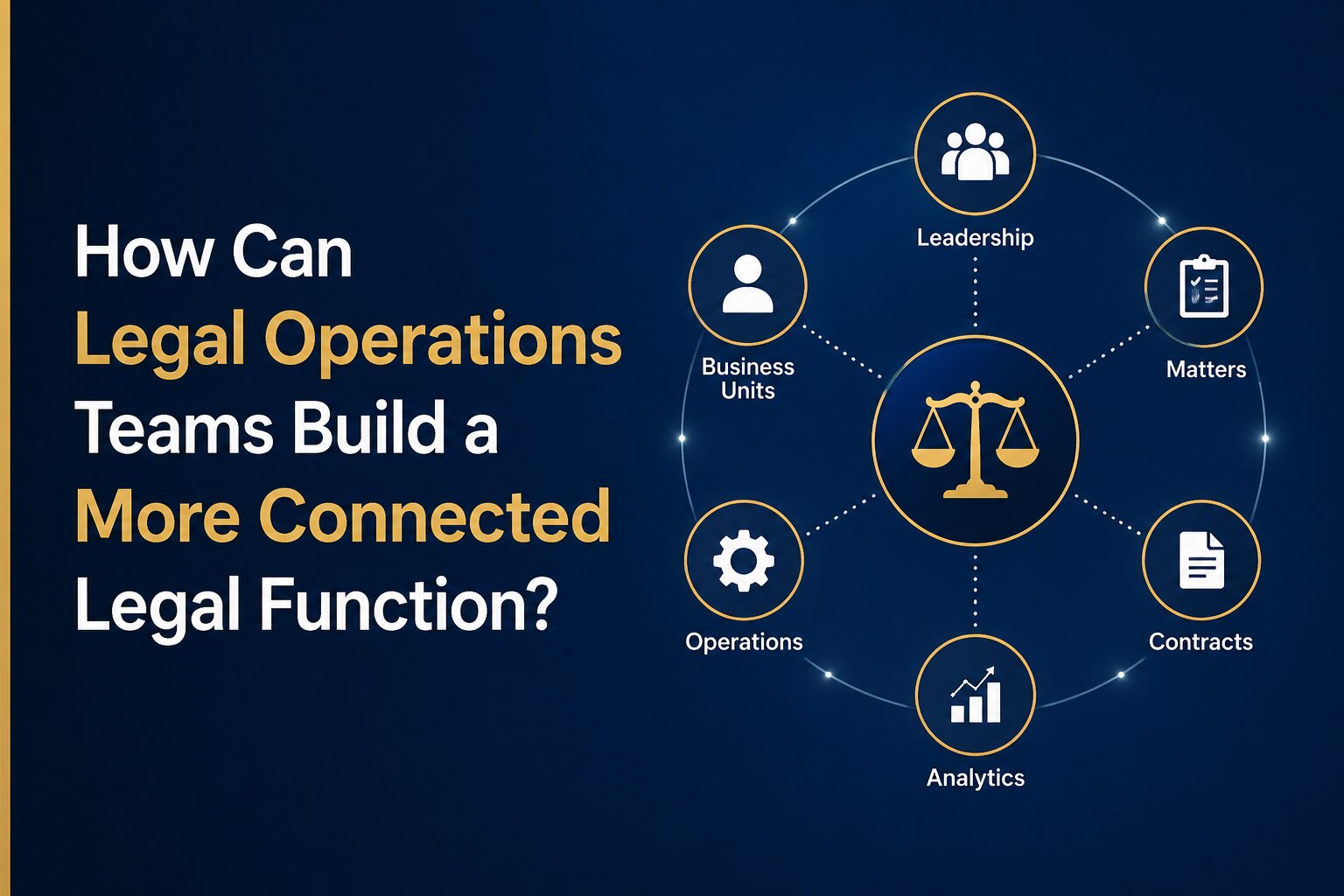
The next stage of legal technology is likely to involve greater connections between AI assistants, document management systems, contract platforms and internal business applications. Instead of using separate tools for drafting, reviewing, storing and tracking information, businesses may increasingly look for systems that allow these activities to work together. This could change how legal teams receive requests, manage documents and coordinate with other departments.
For startups, the opportunity is particularly relevant because their legal requirements often grow alongside the business. A company that initially handles a small number of customer agreements may eventually need to manage several types of contracts, employment records, supplier relationships and compliance responsibilities. Having connected workflows can help the business maintain consistency as these activities increase, without requiring employees to coordinate every step manually.
However, the value of this shift should not be measured by the level of automation alone. A system that completes tasks quickly but produces inaccurate information or makes it difficult to understand who approved a decision will not necessarily improve legal operations. Businesses will need to consider how AI works with existing records, whether its actions can be reviewed and how easily people can intervene when a matter requires judgement. The most useful approach will combine AI assistance with organised information, clearly defined responsibilities and appropriate human oversight.
How Connected Legal Platforms Support the Shift
AI legal agents are only one part of the wider development in legal technology. For businesses to benefit from connected workflows, they also need a reliable way to organise legal records, manage documents and track ongoing activities. Without this foundation, AI-generated information and automated actions may remain disconnected from the actual work being handled by the organisation.
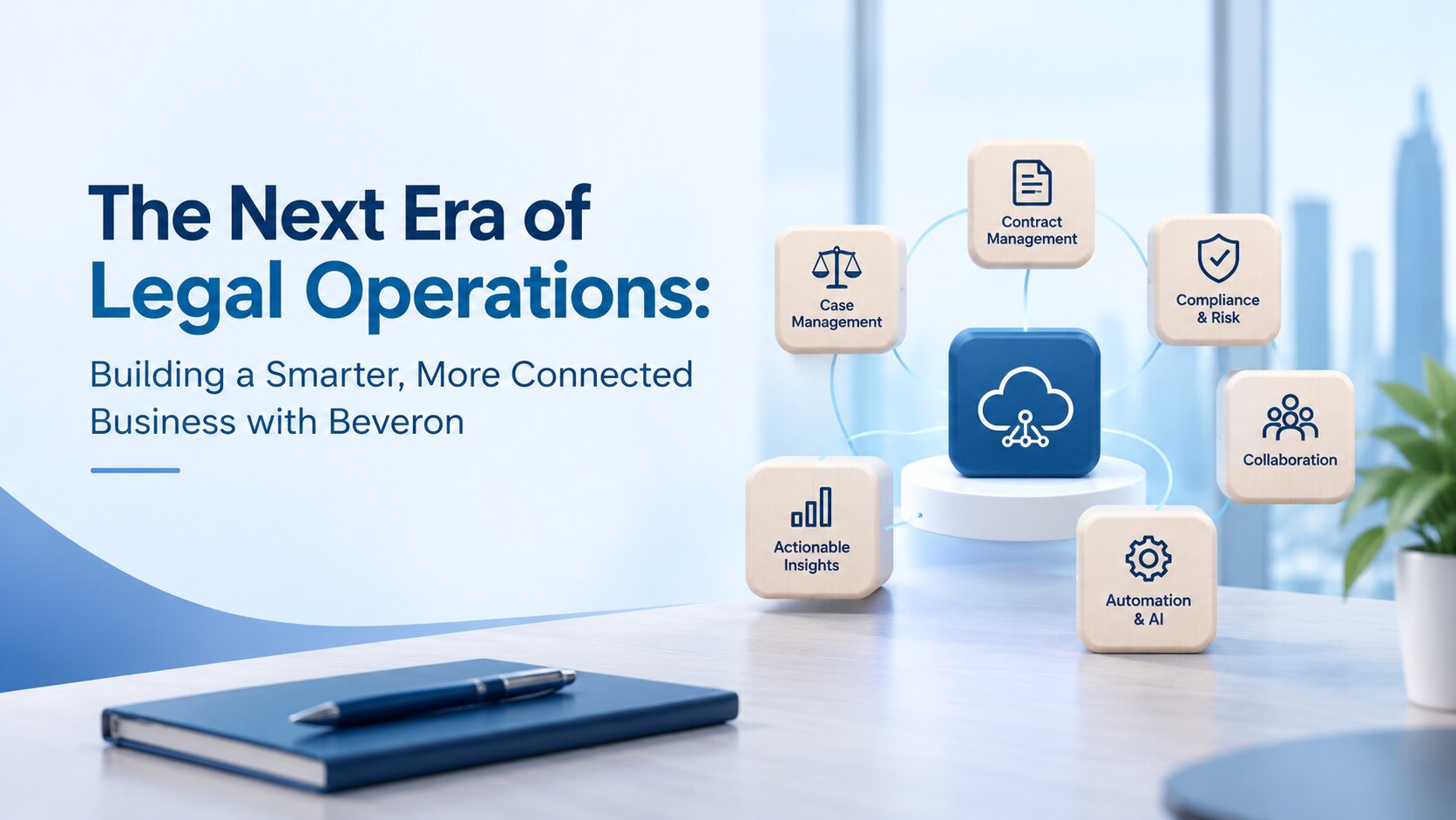
This is where legal management platforms can play an important role. For example, Smart Lawyer Office by Beveron helps law firms organise client records, legal matters, documents, hearings, tasks and billing activities within one system. For businesses with internal legal teams, Smart Legal Counsel provides a centralised environment for handling legal requests, matters, contracts, compliance activities and approvals.
Contract-related work also requires a structured approach, particularly when agreements involve several reviewers, amendments and renewal dates. Smart Legal Contract supports contract templates, document version management, review and approval workflows, integrated e-signatures and renewal alerts. These capabilities help teams maintain organised contract records and improve visibility throughout the contract lifecycle.
Such platforms provide an organised foundation for legal operations, while AI assistants and automation can support specific activities within those workflows. It is important to distinguish between having structured legal software and having a fully autonomous AI agent. The two can complement each other, but their capabilities depend on the features and integrations actually available. For startups exploring this transition, the sensible approach is to first understand their operational requirements and then identify where AI and connected legal systems can provide practical value.
Frequently Asked Questions
1. What are AI legal agents?
AI legal agents are systems designed to work towards specific legal or administrative tasks by carrying out a sequence of connected activities. Depending on their capabilities and permissions, they may help organise documents, prepare drafts, retrieve information, track actions and notify people when human review is required.
2. How are AI legal agents different from traditional legal chatbots?
Traditional legal chatbots primarily respond to questions and instructions. AI legal agents can go further by planning and carrying out multiple related tasks towards a defined objective. For example, a chatbot may summarise a contract, while an AI agent could help organise its review, prepare suggested changes and track the approval process.
3. Can AI legal agents review contracts for startups?
AI legal agents can assist with reviewing contract documents, identifying unusual clauses, extracting important information and preparing suggested changes. However, their output should be checked by a qualified legal professional, particularly when agreements involve significant financial, commercial or legal risks.
4. Can AI legal agents manage legal workflows automatically?
They can support parts of legal workflows, such as collecting information, organising requests, preparing drafts, sending reminders and tracking pending activities. The extent of automation depends on the system's capabilities, available integrations and permissions. Important decisions should remain subject to appropriate human approval.
5. Are AI legal agents suitable for early-stage startups?
They may be useful for early-stage startups that handle recurring contracts, internal legal requests and document-related activities but have limited administrative resources. However, businesses should evaluate their actual requirements, data security needs and the level of legal oversight necessary before adopting these tools.
6. Will AI legal agents replace startup lawyers?
AI legal agents are more likely to support legal professionals than replace them. They can help with repetitive administrative activities and information handling, but legal interpretation, negotiation, risk assessment and strategic advice require professional judgement and accountability.
Conclusion: The Real Opportunity Is Better-Connected Legal Work
The movement from legal chatbots to AI agents represents an important development in how startups may approach everyday legal responsibilities. While chatbots have made it easier to access information and prepare initial documents, AI agents introduce the possibility of connecting several activities within a single workflow. From contract preparation and document organisation to request handling and deadline monitoring, these capabilities could help growing businesses manage routine legal work more systematically.
However, adopting AI should not be about automating every available task. Startups need to consider the accuracy of information, confidentiality of legal records, permissions given to AI systems and the importance of human approval. A well-organised legal process, supported by suitable technology and professional oversight, is more valuable than automation without clear responsibility.
As legal technology continues to develop, businesses that focus on connecting their legal information, people and processes will be better positioned to manage increasing responsibilities. The opportunity is not simply to make legal work faster, but to make it more organised, accessible and easier to coordinate as the business grows.
Explore how Beveron's legal technology solutions can support more organised legal operations.
Visit Beveron Technologies to learn more about its solutions for law firms, in-house legal teams and contract management.
Best AI legal agents for law firms in the UAE
Best AI legal assistants for legal teams in Dubai
Best agentic AI in legal startups in the UAE
If you need a free demo of the best AI legal agents for law firms in the UAE, please fill out the form