When Does a Kenyan Company Need Legal Management Software?
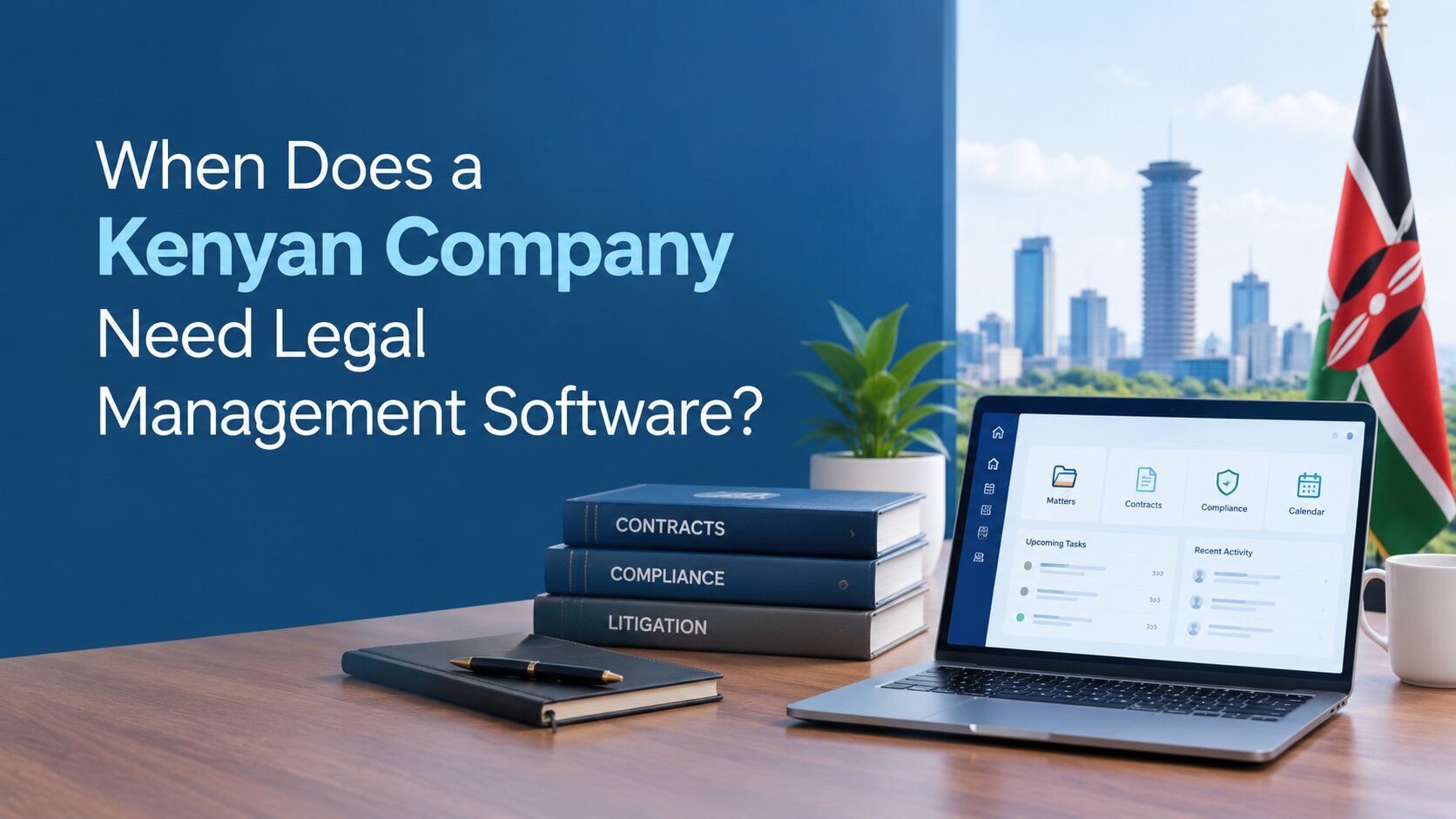
As a Kenyan company grows, its legal workload often grows with it. Contracts become more frequent, legal matters involve more people, compliance obligations become harder to track, and external lawyers may handle several matters at the same time. At an early stage, a spreadsheet, email inbox and shared folder may be enough to keep things organised. Over time, however, these tools can make it harder to see what is happening across contracts, matters, documents and deadlines.
Legal management software can bring these activities into a more structured system. But not every company needs it immediately. The more useful question is whether the company's legal workload has reached a point where manual processes are creating delays, risks or unnecessary administrative work.
This article looks at the signs that may indicate a Kenyan company is ready for legal management software, the problems that manual processes can create, and the features worth considering when evaluating a solution.
What Is Legal Management Software?
Legal management software is a system designed to help businesses organise and manage their legal work in one place. Depending on the solution, it can cover areas such as contracts, legal matters, documents, deadlines, compliance activities, external counsel and reporting. Instead of keeping legal information across email conversations, spreadsheets, physical files and different shared folders, a legal management system provides a central location for authorised users to access and manage that information.
For a closer look at how legal management works specifically within corporate legal departments, see Beveron’s guide on corporate legal case management for Kenyan businesses. It explains how Kenyan businesses can manage legal matters, documents, deadlines, compliance activities, external counsel and reporting through a more structured system.
For example, a company's legal team may use it to record a new legal matter, attach relevant documents, assign responsibilities, monitor deadlines and report on its status. Contract-related work can also be managed through structured workflows, from review and approval through to renewal or expiry.
This is different from simply storing documents in a shared drive. Document storage focuses mainly on keeping files accessible. Legal management software connects those documents with the matters, contracts, tasks, deadlines and processes they relate to. The users may also extend beyond the legal department. Depending on the company's structure and access controls, finance, procurement, HR, management and other authorised business teams may need access to particular legal information or workflows.
7 Signs Your Kenyan Company Needs Legal Management Software
There is no single number of employees or contracts that determines when a company needs legal management software. The need usually becomes clearer when existing processes start making legal work difficult to control.
1. You Have a Growing Number of Contracts
Contracts can quickly become difficult to manage as a business takes on more customers, suppliers, employees, landlords and service providers. A company may have customer agreements, supplier contracts, employment agreements, leases, partnership agreements and other documents stored in different places. Finding the right agreement is only one part of the problem. The legal team may also need to know whether it has been approved, when it expires, whether it is due for renewal and who is responsible for the next action.
When contract volume increases, relying on individual spreadsheets or email reminders can become difficult to maintain. A legal management system can provide a structured record of contracts and their key information, making it easier to monitor their status and upcoming dates.
2. Legal Deadlines Are Difficult to Track
Legal work often involves dates that cannot simply be left in an inbox. These may include contract renewal dates, notice periods, compliance deadlines, litigation-related dates and internal review deadlines. When these dates are recorded manually or kept in separate calendars, there is a greater chance that an important task may be overlooked. A central system can associate deadlines with the relevant contract or legal matter and provide reminders to the people responsible for taking action.
The purpose is not simply to create more notifications. It is to give the legal team a clearer view of what requires attention and when.
3. Legal Documents Are Scattered Across Different Locations
A common problem in growing organisations is not a lack of documents but difficulty finding the right document. One agreement may be attached to an email, another saved on a shared drive, and an older version may still exist in a physical file. This can make it difficult to determine which document is current. It can also take considerable time to search through emails and folders when a document is needed urgently.
Legal management software can provide a central document repository connected to the relevant contract or matter. With appropriate access controls and version management, authorised users can find the information they need without relying on one person's inbox or memory.
4. Legal Administration Takes Too Much Time
Legal professionals should spend their time on work that requires legal judgement, not repeatedly searching for information or updating multiple spreadsheets. If staff are regularly entering the same information into different systems, sending manual follow-ups, checking whether approvals have been completed or searching through emails for documents, administrative work can consume a significant part of the working day. Workflow tools can help organise routine processes such as requests, reviews, approvals and follow-ups.
The objective is not to remove human involvement. Instead, structured workflows can make routine administrative steps easier to manage while allowing legal teams to focus on more substantive work.
5. Management Lacks Visibility Into Legal Matters
Senior management may need answers to straightforward questions:
How many contracts are currently under review?
Which agreements are approaching renewal?
How many legal matters remain open?
Are there outstanding actions?
What work is being handled by external counsel?
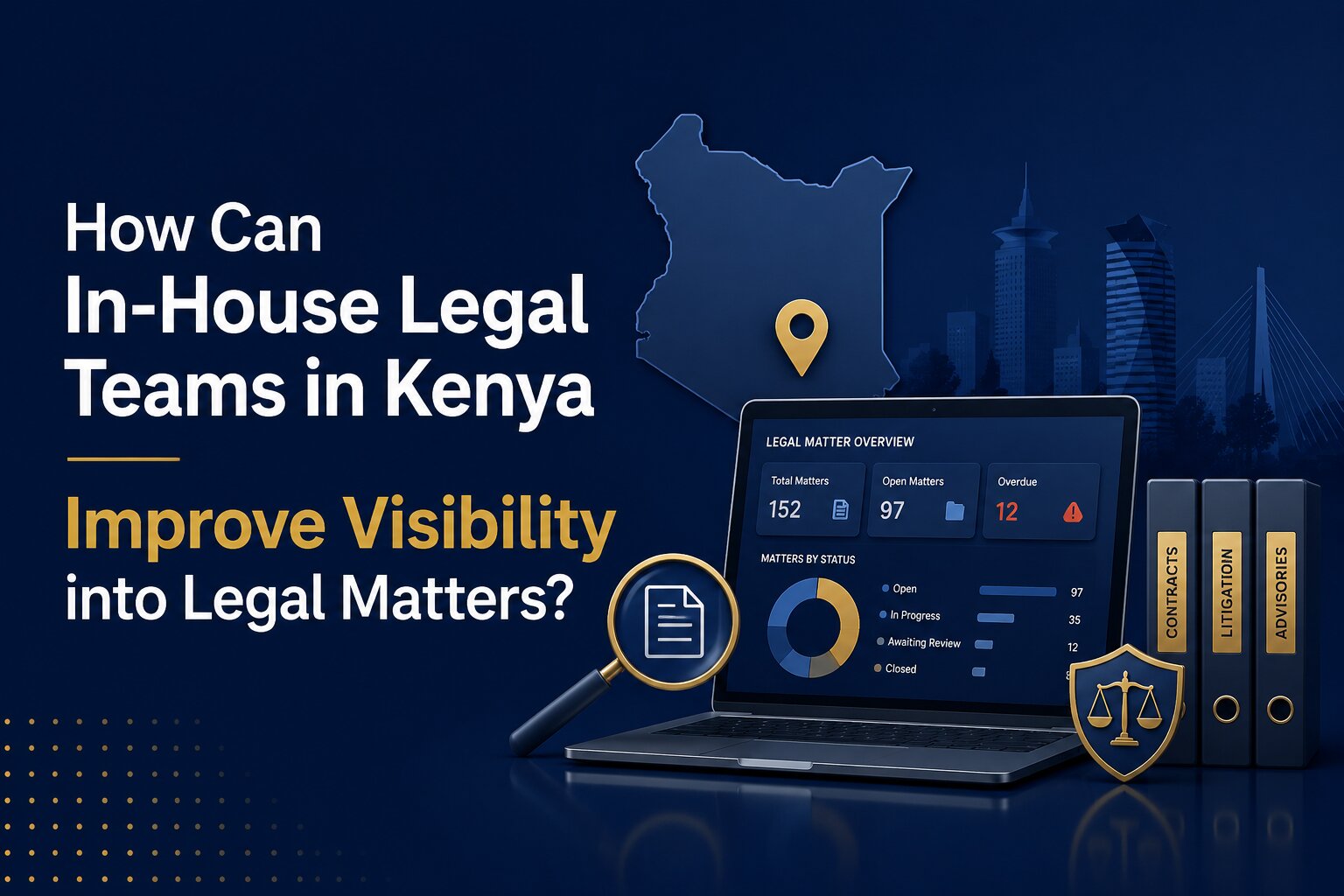
If the answers require the legal team to manually collect information from spreadsheets, emails and individual files, reporting can become slow and inconsistent. Centralised legal information and dashboards can provide a clearer view of active matters, contracts, deadlines and other relevant information. This can help management understand the current legal workload without requiring the legal team to prepare every report from scratch.
Better visibility also makes it easier for legal teams to work closely with other departments. For practical ideas on improving this collaboration, see Beveron’s guide on how corporate legal teams in Kenya can collaborate more effectively with business units, which explores ways legal and business teams can improve communication, information sharing and coordination.
6. You Work With Multiple External Lawyers or Law Firms
Many businesses rely on external lawyers for particular matters, specialist advice or litigation. As the number of external lawyers and matters increases, coordinating communication, documents, deadlines, costs and progress can become more complicated. A legal management system can provide a structured record of each matter and the external counsel involved. It can also help the internal legal or management team keep relevant documents, communications, activities and status information connected to the matter.
This does not replace the role of external lawyers. It gives the company a more organised way to monitor the work being carried out on its behalf.
7. Your Company Is Growing or Becoming More Complex
Growth can change the way legal work needs to be managed. A company expanding into new markets may deal with more contracts, suppliers, employees, customers and regulatory requirements. A business with several offices or business units may also have more people involved in legal processes. Processes that worked well when the company was smaller may become difficult to maintain at a larger scale.
This is often the point at which a business starts looking beyond individual spreadsheets and shared folders and considers whether a dedicated system would provide better control.
What Problems Can Manual Legal Management Create?
Manual processes are not automatically a problem. For a small company with a limited number of legal documents and matters, they may work perfectly well. The difficulties usually appear when the volume or complexity of legal work increases. Important information may become harder to locate, deadlines may depend on individual reminders, and different teams may follow different processes. Reporting can also require significant manual effort.
These issues can lead to missed or delayed actions, difficulty identifying the latest documents, inconsistent workflows and limited visibility into outstanding legal work. The problem is therefore not that spreadsheets or email are inherently unsuitable. It is that they may become harder to control when legal operations outgrow them.
When Might a Company Not Need Legal Management Software?
Not every Kenyan company needs a dedicated legal management platform. A small business with relatively few contracts, limited legal matters and straightforward processes may be able to manage its legal work effectively using existing tools. A company may also decide against introducing new software if its current systems already provide sufficient control over documents, deadlines, approvals and reporting.
The decision should therefore be based on actual requirements rather than company size alone. If the legal team can easily find documents, monitor deadlines, manage matters, collaborate with relevant teams and produce the reports management needs, there may be little immediate reason to introduce another system. The need becomes more apparent when existing processes require excessive manual effort or no longer provide adequate visibility.
How to Know If Your Company Is Ready
A practical way to assess readiness is to look at how legal work is currently managed. Consider the number of contracts your company handles and how frequently they need to be reviewed or renewed. Look at the number of active legal matters and how many people are involved in managing them. It is also useful to consider how often your company works with external lawyers, how much time employees spend searching for documents, and whether compliance deadlines are tracked consistently.
Reporting requirements are another important factor. If management regularly needs information about contracts, matters, legal costs, deadlines or outstanding actions, consider how much work is currently required to produce that information. If several of these areas are becoming difficult to manage, it may be a good time to evaluate dedicated legal management software.
Before choosing a legal management system, it is useful to review how your current legal processes work and identify where delays, repeated manual tasks or document-management issues occur. Beveron’s step-by-step guide to digitising legal operations explains how legal teams can assess existing workflows, set clear goals and prioritise the areas that would benefit most from digitisation.
Essential Features to Look for in Legal Management Software
The right features will depend on the company's legal workload and operating model. However, a Kenyan company evaluating legal management software may want to consider:
- Contract management: The ability to organise contracts, monitor their status and track important dates such as renewals and expiries.
- Matter management: A structured way to create, assign and monitor legal matters and their related activities.
- Document management: Centralised storage that makes relevant documents easier to locate and manage.
- Deadline and renewal reminders: Notifications for important dates and upcoming actions.
- Workflows and approvals: Structured processes for requests, reviews and approvals.
- Compliance tracking: Tools to organise compliance-related activities and deadlines.
- Reporting and dashboards: Clear visibility into contracts, matters, activities and other legal information.
- Access controls: The ability to control who can view or manage particular information.
- Audit trails: Records showing important actions and changes within the system.
- Integrations: Connections with the business tools employees already use, where required.
- Security and privacy controls: Appropriate measures for protecting sensitive legal and business information.
The most important consideration is not how many features a platform has. It is whether those features address the specific problems your company is experiencing.
How Beveron Technologies Can Help
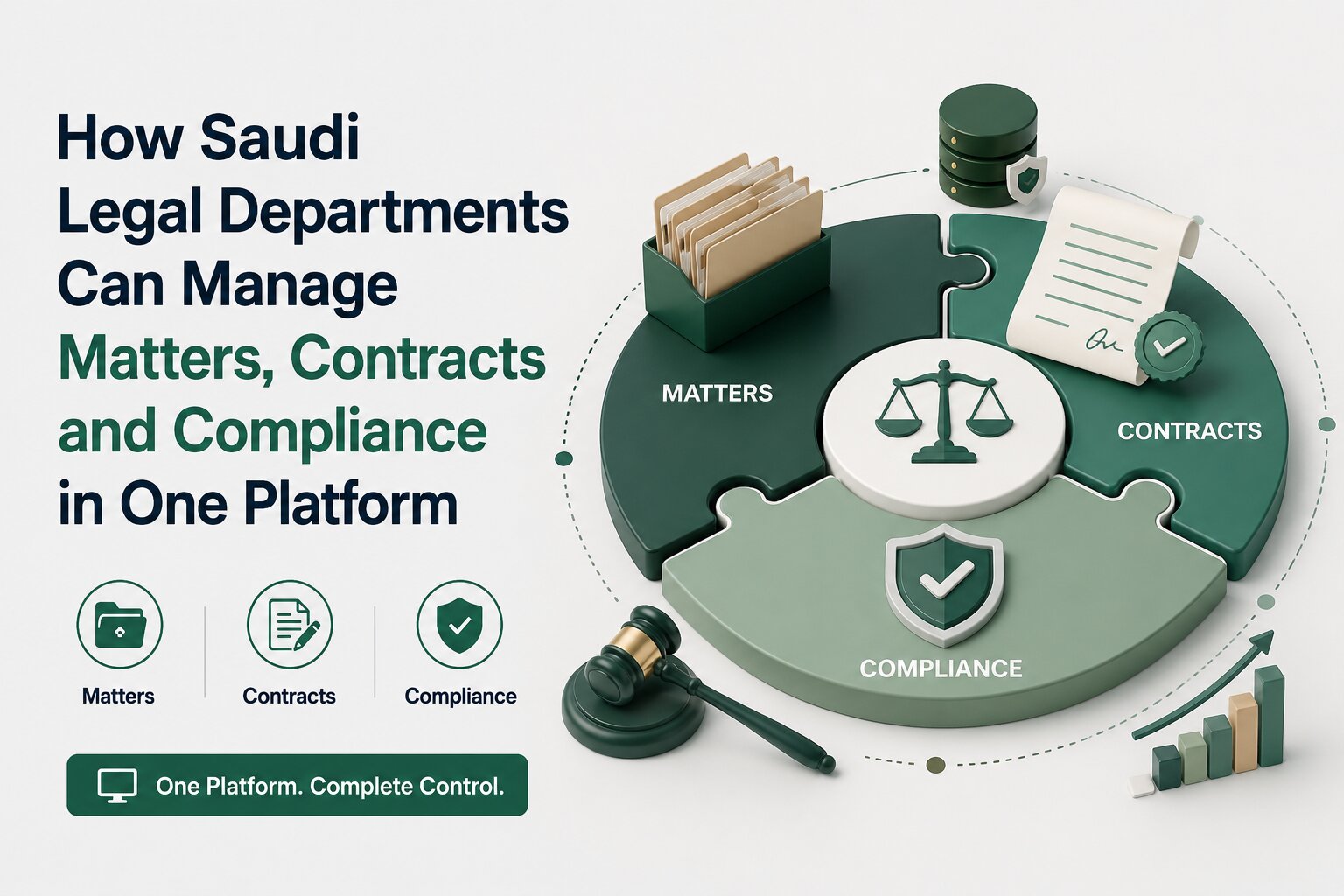
Beveron Technologies provides legal management solutions designed to help corporate legal teams organise matters, contracts, documents, compliance activities and related workflows in a structured environment. For a growing Kenyan company, a centralised system can help bring legal information together instead of keeping it across disconnected spreadsheets, emails and folders.
Beveron's Smart Legal Counsel can support areas such as legal matter management, litigation tracking, contract management, compliance, legal expenses and external counsel management. It can also provide reporting and dashboards to help legal teams and management maintain visibility over ongoing work.
The value of a legal management system ultimately depends on how well it fits the company's existing processes and requirements. Businesses should therefore evaluate the workflows they need to improve before selecting a platform. For companies experiencing growing contract volumes, increasing legal workloads or difficulty managing deadlines and information, a structured legal management system can provide a more organised way to manage legal operations.
Frequently Asked Questions
1. What is legal management software?
Legal management software is a system that helps businesses organise legal matters, contracts, documents, deadlines, workflows and related information in one place.
2. When should a Kenyan company start using legal management software?
A company may consider legal management software when its legal workload becomes difficult to manage through spreadsheets, email and shared folders. Growing contract volumes, multiple legal matters, recurring deadlines and increasing reporting requirements can all be indicators.
4. Can small businesses use legal management software?
Yes. Small businesses can use legal management software if their legal processes would benefit from centralised information, structured workflows and better deadline management. However, a small company with very limited legal activity may not need a dedicated system.
5. Can legal management software track contract renewals?
Many legal management systems can record contract renewal and expiry dates and provide reminders before important dates. The exact capabilities depend on the software selected.
6. Can it help manage external lawyers?
Yes. Legal management software can help companies organise matters handled by external lawyers, keep relevant documents together, monitor matter progress and maintain records of related activities and costs.
7. What features should a Kenyan company look for?
Companies should consider features such as contract management, matter management, document management, deadline reminders, workflows, compliance tracking, reporting, access controls, audit trails, integrations and security controls.
8. How does legal management software differ from document management software?
Document management software primarily focuses on storing, organising and retrieving files. Legal management software can connect documents with contracts, matters, deadlines, workflows, approvals and other legal activities.
Conclusion
The need for legal management software does not begin at a specific company size. It becomes more relevant when the volume and complexity of legal work start exceeding what existing processes can comfortably handle. Growing contract portfolios, difficult-to-track deadlines, scattered documents, increasing administrative work, limited reporting and greater reliance on external counsel are all signs that a company may benefit from a more structured approach.
For Kenyan companies considering a dedicated system, the starting point should be an honest assessment of their current legal workload and where manual processes are creating difficulties.
Beveron Technologies can help businesses centralise legal information, manage contracts and matters, structure workflows and improve visibility across legal operations. For companies ready to move beyond fragmented legal administration, the right legal management system can provide a more organised foundation for managing legal work as the business grows.
Ready to Bring Your Legal Operations Into One System?
If your Kenyan company is spending too much time managing contracts, legal matters, documents and deadlines across spreadsheets and emails, it may be time for a more structured approach. Beveron Smart Legal Counsel helps corporate legal teams manage matters, contracts, compliance, documents and workflows from one central platform.
Book a demo with Beveron Technologies today to see how Smart Legal Counsel can support your legal operations.
Best legal management software for in-house in Kenya
Best corporate legal management software for corporates in Kenya
Best legal compliance management software for legal firms in Kenya
If you need a free demo of the best legal management software for in-house in Kenya, please fill out the form.