How Can In-House Legal Teams in Kenya Improve Visibility into Legal Matters?
A matter may be progressing, but if its latest status is buried in an email thread, other team members may not know what has been completed or what needs attention. Deadlines can become harder to monitor, management reports take longer to prepare, and legal leaders may struggle to assess the department's overall workload.
Improving visibility means making legal information easier to find, keeping matter records current and ensuring that responsibilities are clear. For Kenyan organisations, a combination of consistent working processes and suitable legal case management software can help achieve this without creating unnecessary administrative work.
Why Is Visibility into Legal Matters a Challenge for Kenyan In-House Teams?
The problem is not always a lack of information. Often, the information exists but is difficult to locate, verify or connect to the relevant matter. Three common issues can make it harder for legal teams to maintain an accurate overview.
Legal Information Is Spread Across Different Systems
Contract reviews may be discussed over email, litigation tracked in spreadsheets and supporting documents stored in shared folders. Each tool has a purpose, but using several disconnected systems makes it difficult to maintain a complete picture of ongoing legal work. A lawyer preparing for a meeting might need to search multiple email threads to find the latest update. Someone taking over a matter may not know which document contains the final agreed version or whether a decision has already been made. Maintaining a central record for each matter helps address this problem by bringing key details, documents, status updates and next actions together.
Matter Ownership and Progress Are Unclear
Knowing that a matter exists does not necessarily mean knowing what is happening with it. Legal teams need to understand who is responsible, which tasks remain outstanding and whether anything is delaying progress. When ownership is unclear, tasks may remain unresolved because team members assume someone else is handling them. Updates can also become outdated when responsibilities change or new developments are not recorded. Clear ownership and consistent status updates help the team understand the current position of each matter without repeatedly asking colleagues for information.
Management Reporting Requires Manual Effort
Business leaders may need updates on disputes, contract activity, legal risks and expenditure. When this information must be collected from several people and systems, preparing reports becomes time-consuming. Inconsistent records can also make it difficult to compare performance across reporting periods. A more structured approach allows legal teams to maintain information as work progresses, rather than reconstructing the department's position whenever management requests an update.
What Should In-House Legal Teams Track to Improve Matter Visibility?
Not every detail needs to appear in a management report. The priority is to capture the information that helps lawyers manage their responsibilities, identify risks and communicate progress.
Matter Status, Ownership and Next Actions
Each matter should have a record showing its current status, the responsible lawyer and the next action required. Matters may include commercial contract reviews, employment disputes, regulatory queries, debt recovery proceedings or requests for internal legal advice. Consistent status descriptions, such as under review, awaiting approval, awaiting documents and completed, help colleagues understand progress at a glance. The next action is equally important. A matter marked as ongoing provides little practical information if nobody knows whether the next step is to review a document, obtain business approval or contact external counsel.
Court Dates, Filing Deadlines and Contract Milestones
Legal teams need a reliable way to track court hearings, filing dates, contract renewals, approval deadlines and other important milestones. Each date should be linked to the relevant matter, with responsibility assigned for the associated action. Reminders can help team members prepare in advance rather than relying on individual calendars or personal notes.For organisations handling several disputes or working with multiple external law firms, a consolidated schedule also helps identify competing deadlines and allocate time appropriately.
Legal Costs and External Counsel Activity
Matter visibility should include financial information where relevant. Legal leaders need to understand external counsel fees, pending invoices, legal expenditure and the status of associated approvals. Tracking these details helps the department review spending against budgets and identify matters requiring financial attention. It also supports more informed discussions with business leaders about legal costs and resource allocation. The level of detail should reflect the organisation's size and needs. A small department may require a straightforward overview, while a larger organisation may need more detailed reporting across business units and matter types.
Which Processes Can Help Legal Teams Maintain a Clear View of Their Work?
Software alone will not solve visibility problems if information is incomplete or working practices are inconsistent. Legal teams should establish clear procedures for recording, updating and reviewing matters.
Maintain a Central Record for Each Matter
The team should agree on where the official record for each matter is maintained and what information it must contain. This usually includes the matter type, responsible lawyer, current status, key dates, relevant documents and next steps. A consistent structure makes information easier to retrieve and reduces confusion about which record is current. It also helps when a colleague takes over a matter or needs to provide cover during an absence. The aim is to establish a dependable source of information without unnecessarily duplicating documents across multiple systems.
Set Clear Rules for Updates and Reminders
Legal teams should agree on when records must be updated. Significant developments, completed reviews, new instructions and changes to deadlines should be reflected in the relevant matter record. Important dates should also have assigned responsibilities and suitable reminders. For example, a contract renewal may require an initial review well before expiry, while a court hearing may involve collecting documents and obtaining instructions from external counsel.
These procedures help ensure that updates and reminders support the team's work rather than becoming separate administrative tasks.
Review Exceptions Instead of Every Matter in Equal Detail
Regular reviews are useful, but discussing every matter in the same level of detail can consume valuable time. A more focused approach prioritises matters that are overdue, approaching deadlines, waiting for decisions or showing little progress. These reviews can reveal recurring problems, such as delayed approvals or incomplete information from business departments. Addressing the cause of these delays helps improve the department's overall workflow.
How Can Legal Case Management Software Improve Visibility?
As a legal department grows, maintaining consistent records through spreadsheets and email alone can become difficult. Legal case management software offers a structured way to organise matter information, monitor activity and prepare reports. For corporate legal teams, the value lies in making relevant information accessible without depending entirely on manual updates from individual team members.
Organise Matter Information in One Place
A legal case management system can maintain matter details, related documents, key dates and activity records in a central location. Authorised users can consult the relevant record to understand what has happened and what needs attention. This is particularly useful when matters involve several lawyers, business departments or external counsel. It can also make handovers easier by giving colleagues a clearer view of the existing record. Smart Legal Counsel is designed for corporate legal departments managing matters, litigation, contracts, compliance activities and legal expenses. Its matter management capabilities can help organisations structure legal work and maintain a clearer view of ongoing responsibilities.
Use Dashboards to Identify Work That Needs Attention
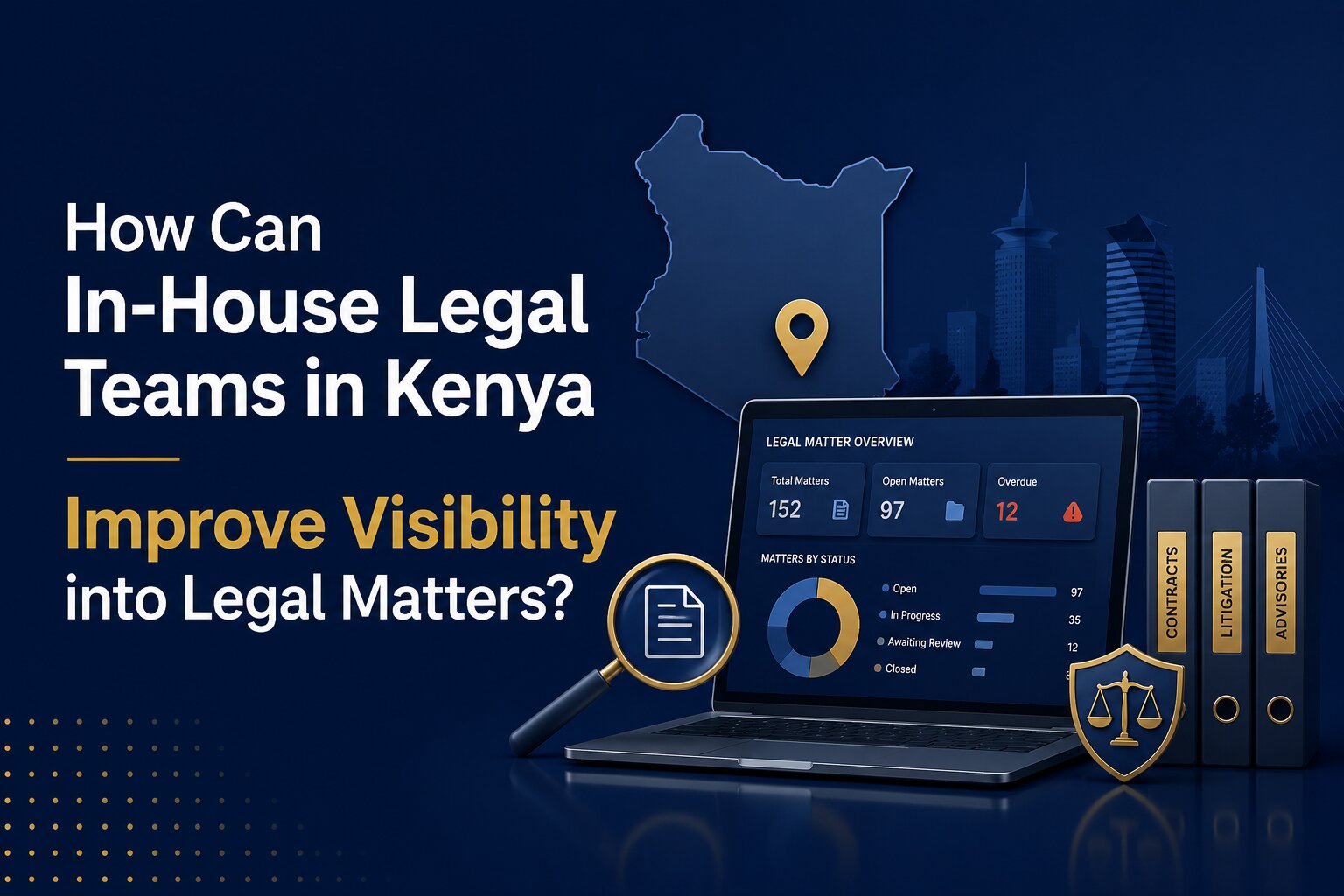
Dashboards can present important information, such as open matters, upcoming deadlines, overdue tasks and workload distribution, in a format that is easier to review. For example, a legal head may notice that several matters are awaiting approval from the same business department. This makes it easier to identify where follow-up is needed. A workload overview may also help reveal when responsibilities need to be redistributed.
Beveron Smart Legal Counsel provides dashboards and reporting capabilities to support corporate legal management. The usefulness of these views depends on the quality of the recorded information and the measures selected by the organisation.
Make Relevant Documents Easier to Access
A structured system can associate documents with the matters they relate to, helping authorised users find relevant records without searching through multiple email threads and folders. This is useful when reviewing previous advice, preparing for litigation or checking the status of a contract. It can also reduce confusion when several versions of a document exist. Access controls remain essential. Legal records may contain confidential business information, privileged communications or sensitive personal data. Organisations should ensure that access is limited to appropriate users and reviewed when responsibilities change.
Prepare More Consistent Management Reports
Legal leaders need to explain the department's workload, significant disputes, contract activity and expenditure in a way that business leaders can understand. Reporting tools can help organise this information and reduce the effort involved in collecting updates manually. They can also make it easier to compare activity across reporting periods, provided that the underlying records are accurate and consistent.
Beveron Smart Legal Counsel includes reporting capabilities intended to support corporate legal teams. These can help legal leaders review matter activity and communicate relevant information to management. Reports should support professional judgement rather than replace it. For example, the number of open matters alone does not indicate whether a department is performing well; complexity, urgency and business impact also matter.
What Should Kenyan Organisations Consider When Choosing a Legal Matter Management System?
The right system should address the department's actual visibility problems and fit its existing ways of working. Before selecting a platform, legal leaders should assess four areas.
Fit with Legal Workflows and Reporting Needs
Start by identifying the information that is currently difficult to track. One organisation may need better oversight of litigation and court dates, while another may need improved visibility into contract reviews, internal legal requests or external counsel expenditure. Assess whether the software can record these details and present them in a useful format. Ask whether its reports answer the questions management regularly raises and whether the system can accommodate the department's different types of legal work.
Confidentiality and Data Protection
Legal records can contain confidential contracts, privileged communications and personal information. Organisations should examine access permissions, information security arrangements, data storage and the provider's responsibilities for protecting information. Kenyan organisations should also consider their applicable obligations under the Data Protection Act, 2019, including relevant requirements for personal data processing and transfers where applicable. The appropriate assessment depends on the organisation's circumstances and the proposed system's arrangements.
These matters should be verified with the provider rather than assumed to be covered simply because the platform is designed for legal teams.
Integration with Existing Tools
Legal departments often rely on email, document management platforms and office applications. A new system should fit into these working arrangements as far as practical. Ask which integrations are available, whether additional configuration is required and how information will move between systems. Effective integration may reduce duplicate data entry and make relevant records easier to access.
Implementation, Support and Future Requirements
A platform should remain useful as the department's workload and reporting needs change. Evaluate whether it can support different matter types, user roles and reporting requirements without adding unnecessary administrative work. Training, implementation support and ongoing assistance are also important. Before making a decision, consider running a demonstration using realistic examples from the department's workflow.
How Can Legal Teams Measure Improvements in Matter Visibility?
Introducing a new process or software platform is useful only if it addresses the original problem. Legal teams should establish a baseline before making changes and then measure whether information is easier to access, records are more reliable and reporting is more efficient.
Time Needed to Retrieve Matter Information
Measure how long it takes to find a matter's status, responsible lawyer, next action and related documents. Comparing retrieval times before and after introducing a central record can show whether the team is spending less time searching for information. It also helps identify areas where records remain difficult to access.
Completeness of Matter Records
Track the proportion of active matters with an up-to-date status, a named owner, key dates and a recorded next action. For example, a monthly review of active matters can reveal whether team members are maintaining records consistently. A rising proportion of complete records indicates that the department is building a more reliable overview of its work.
Missed Deadlines and Overdue Actions
Monitor missed deadlines, overdue internal tasks and actions that remain unresolved beyond their expected dates. Review whether reminders are being acted on and whether particular processes regularly cause delays. Not every delay is preventable, and external decisions can affect timelines. The purpose of this measure is to identify avoidable problems and improve follow-up, rather than simply count delays.
Time and Accuracy of Management Reporting
Compare the time needed to prepare reports before and after improving matter tracking. Also assess whether the information is complete, current and relevant to management's needs. A report that takes less time to prepare but contains outdated information does not represent meaningful progress. Accuracy and usefulness should be assessed alongside speed. Reviewing these measures over several reporting periods helps legal leaders understand whether their changes are working and where further improvements are needed.
Building a More Transparent Legal Function
For in-house legal teams in Kenya, better visibility begins with knowing what work is underway, who is responsible and what needs to happen next. Centralised records, clear ownership, consistent updates and reliable deadline tracking provide the foundation for stronger oversight. As legal workloads grow, suitable case management software can help maintain this information in a structured way. Dashboards, matter records and reporting tools can make it easier to identify delays, review workloads and communicate the department's position to business leaders.
Beveron Smart Legal Counsel offers capabilities for managing corporate legal matters, litigation, contracts, legal expenses and reporting. The relevant question for each organisation is whether these capabilities address its existing gaps and fit its information management requirements.
Ready to improve visibility across your legal department?
Visit Beveron Smart Legal Counsel to explore the platform, or contact Beveron Technologies to discuss your team's matter tracking, reporting and workflow requirements.
Frequently Asked Questions
1. What is legal matter visibility?
Legal matter visibility is the ability to understand the current status of legal work, who is responsible, which deadlines are approaching and what actions remain outstanding. It helps in-house legal teams monitor their workload and provide reliable updates to business leaders.
2. Why do Kenyan companies need legal matter management software?
Companies managing multiple contracts, disputes, compliance activities and internal legal requests may find it difficult to maintain accurate records using separate spreadsheets and email threads. Legal matter management software can provide a structured way to organise information, monitor deadlines and review progress.
The appropriate solution depends on the organisation's size, legal workload, confidentiality requirements and existing systems.
3. How does legal case management software improve reporting?
It can organise matter information and present relevant details through reports and dashboards. This helps legal leaders review open matters, outstanding tasks, deadlines and legal expenditure without having to collect every update manually. The accuracy of the reports depends on the quality of the information entered into the system.
4. What should a legal team look for in corporate legal case management software?
A legal team should assess matter tracking, document management, deadline monitoring, reporting, access permissions, integration options and implementation support. It should also check whether the platform accommodates the organisation's actual legal workflows and applicable data protection requirements.
5. Can Beveron Smart Legal Counsel help in-house teams improve visibility into legal matters?
Beveron Smart Legal Counsel is designed to support corporate legal departments with matter management, litigation, contracts, legal expenses and reporting. These capabilities can help teams organise legal work and maintain a clearer overview of ongoing matters. Organisations should evaluate the platform against their specific workflows, reporting needs and security requirements before deciding whether it is the right fit.
Best corporate legal case management software in Kenya
Best in-house legal team management in Kenya
Best corporate legal management software in Kenya
If you need a free demo of the best corporate legal case management software in Kenya, please fill out the form.