How Saudi Legal Departments Can Manage Matters, Contracts and Compliance in One Platform
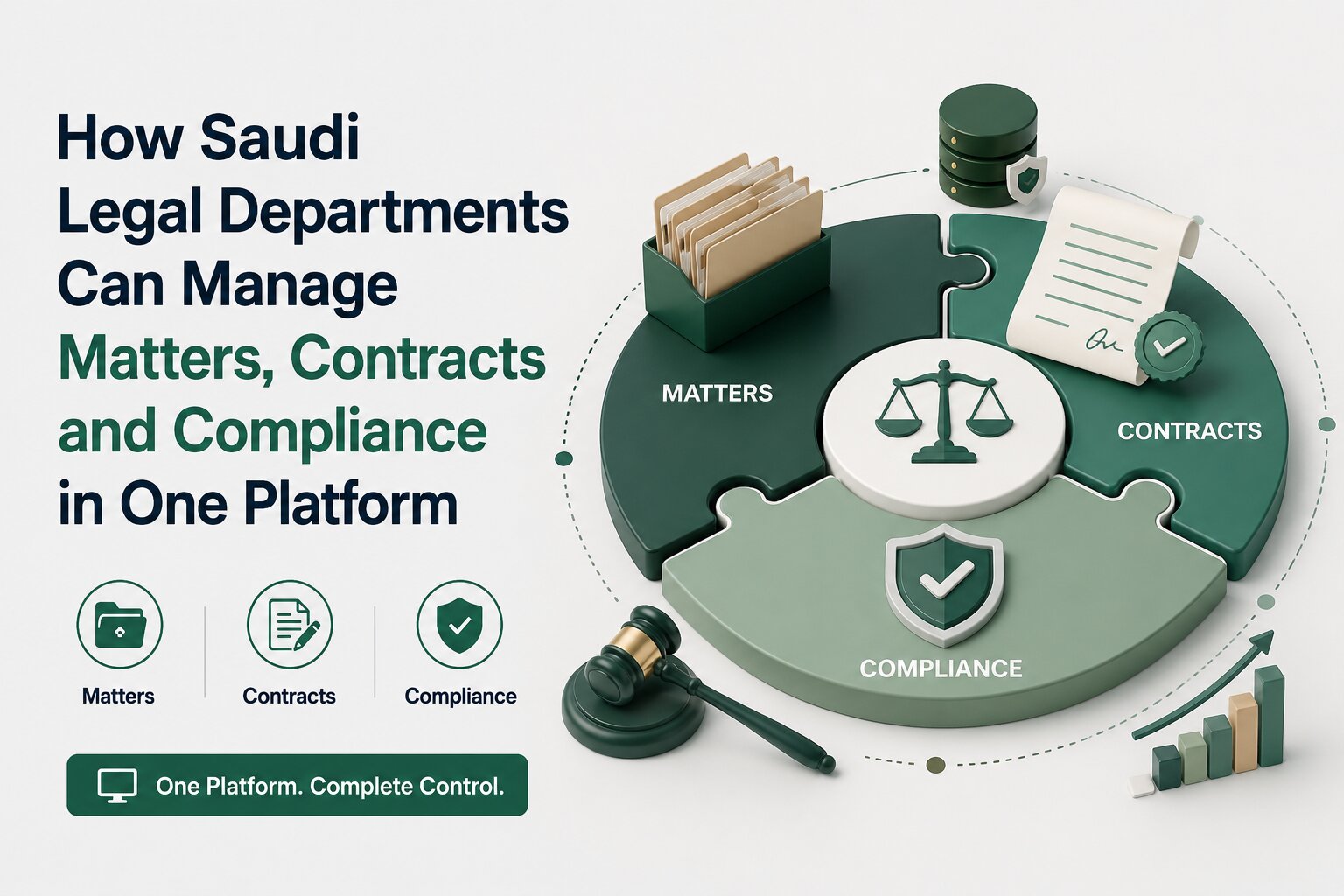
In-house legal teams in Saudi Arabia are handling more than traditional legal matters. They may review contracts, respond to requests from different departments, monitor compliance activities, manage disputes, track deadlines, and maintain large volumes of legal documents.
When these activities are managed through emails, spreadsheets, shared folders, and separate systems, keeping everything organised can become difficult. Lawyers may spend valuable time searching for information, following up on tasks, or checking whether important deadlines have been addressed.
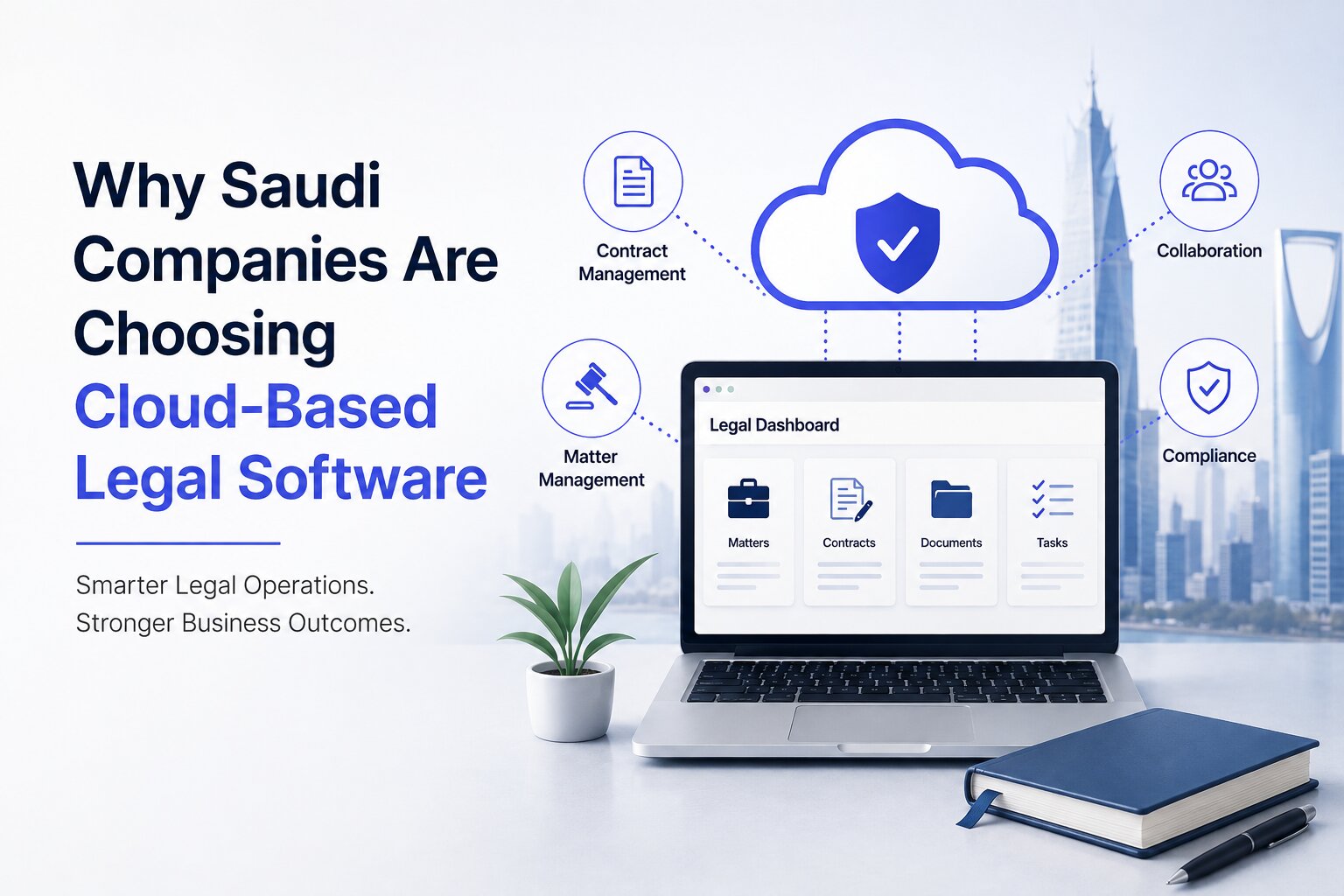
This is where in-house legal department software in Saudi Arabia can help. A unified legal management platform brings key legal processes into one place, giving teams a clearer way to manage matters, contracts, compliance, documents, and daily requests.
What Does a Modern Saudi Legal Department Need to Manage?
The responsibilities of an in-house legal team can vary from one organisation to another. However, several areas tend to require regular attention.
Legal Matters and Disputes
Legal departments may oversee disputes, claims, investigations, employment matters, regulatory issues, and other legal cases. Each matter can involve multiple people, documents, tasks, and deadlines. A structured matter management system allows teams to keep this information connected instead of relying on separate spreadsheets or email conversations.
For a deeper look at how this approach can improve efficiency, see How In-House Legal Matter Management Software Helps Saudi Corporate Legal Teams Improve Efficiency.
Lawyers can track the status of a matter, assign tasks, monitor important dates, and keep related documents together.
Lawyers can track the status of a matter, assign tasks, monitor important dates, and keep related documents together.
Contracts and Agreements
Contract work can take up a significant part of an in-house team's time. A contract may begin with a request from procurement, sales, finance, or another department. It then moves through drafting, review, negotiation, approval, and signing. After execution, the legal team may still need to monitor renewals, expiry dates, and contractual obligations.
Managing the entire process through a central system makes it easier to see where each contract stands and what action is required next.
Compliance Activities
Compliance requires ongoing attention. Legal teams may need to track requirements, assign responsibilities, monitor deadlines, and maintain supporting records. When these activities are handled manually, it can be difficult to get a complete view of what has been completed and what still requires action.
A dedicated legal management platform can help organise these activities and provide reminders for important tasks and dates.
Internal Legal Requests
The legal department works closely with almost every part of a business. HR may need advice on an employment issue. Procurement may submit a new contract for review. Finance may need assistance with a commercial matter, while sales may require legal input before finalising an agreement. A structured request process helps the legal team receive, prioritise, assign, and track these requests without relying entirely on email.
The Challenges of Managing Legal Work Across Separate Tools
Using different tools for individual activities may work for a small team. As the organisation grows, however, disconnected systems can create unnecessary work. For example, a contract could be stored in one folder, its related matter recorded in a spreadsheet, and the latest communication kept in someone's email inbox. Finding the complete picture then requires checking several places.
This can lead to:
- Scattered legal information
- Difficulty finding the latest documents
- Missed or overlooked deadlines
- Repeated follow-ups between departments
- Limited visibility into the legal team's workload
- Time-consuming manual reporting
- Difficulty identifying urgent matters
The problem is not necessarily the number of tools being used. The bigger issue is that important information and workflows are not connected.
How a Unified Legal Platform Brings Workflows Together
A unified legal management platform creates a central workspace for the legal department. Rather than managing matters, contracts, compliance, and requests as completely separate activities, teams can connect related information and workflows.
Manage Matters in a Structured Way
A central matter record can contain the information needed to manage a legal issue, including:
- Matter details
- Assigned team members
- Tasks
- Deadlines
- Documents
- Status updates
- Related contracts
- Notes and other relevant information
This gives lawyers a clearer view of each matter and helps managers understand the overall workload.
Manage Contracts Throughout Their Lifecycle
Contract management should not stop when an agreement is signed. A legal team may need to track the contract from the initial request through drafting, review, negotiation, approval, signing, renewal, and expiry. A central contract workflow can make these stages easier to monitor and can help teams keep track of important dates and obligations.
Keep Compliance Activities Organised
Compliance-related work can also be managed through defined tasks and workflows. Teams can assign responsibilities, set due dates, monitor progress, and receive reminders when action is required. This provides a more organised approach to compliance management while leaving legal professionals responsible for interpreting requirements and making decisions.
Keep Documents Connected to Their Work
Legal teams deal with contracts, case documents, policies, correspondence, and other sensitive records every day. Keeping these documents connected to the relevant matter or contract makes information easier to locate. At the same time, access controls can help ensure that confidential information is available only to authorised users.
What Are the Benefits for Saudi In-House Legal Teams?
A unified approach can improve several parts of everyday legal operations.
Greater Visibility
Legal managers can see what matters are active, which contracts need attention, and what tasks are still pending without gathering information from several different sources.
Better Deadline Management
Automated reminders can help teams keep track of contract renewals, matter deadlines, compliance tasks, and other important dates. This does not replace professional oversight, but it reduces the need to rely on memory or manual calendars.
More Consistent Workflows
Routine processes can follow standard steps. For example, a company can establish a consistent process for submitting, reviewing, and approving contracts. This makes responsibilities clearer and can reduce unnecessary back-and-forth.
Easier Collaboration
A structured legal request process can improve communication between legal and other business functions such as procurement, HR, finance, sales, and operations. Everyone involved can have a clearer understanding of what has been requested and where it stands.
More Useful Reporting
When legal information is stored in a structured system, managers can more easily review workloads, matter status, contract activity, and outstanding tasks. This gives General Counsel and other legal leaders better information for planning resources and setting priorities.
Key Features to Look for in Legal Department Software in Saudi Arabia
Choosing the right legal management software in Saudi Arabia starts with understanding the team's actual needs. The following features can be useful when comparing solutions.
Matter Management
The software should make it easy to create, assign, organise, and track legal matters from one place.
Contract Management
Look for support across the contract lifecycle, including requests, drafting, review, approval, execution, renewal, and expiry.
Compliance Tracking
The platform should help teams organise compliance tasks, assign responsibility, set deadlines, and monitor progress.
Document Management
Legal documents should be easy to store, find, and associate with the relevant matter or contract. Strong access controls are also important.
Legal Request Management
A structured intake process can help legal departments manage requests from different business units and prioritise work more effectively.
Task and Deadline Management
The ability to assign tasks and monitor due dates helps teams keep legal work moving.
Workflow Automation
Automation can handle predictable steps such as notifications, task routing, and recurring processes, reducing unnecessary administrative work.
Dashboards and Reporting
Legal managers should be able to view important information about matters, contracts, requests, and workloads without having to build every report manually.
Security and Access Controls
Legal departments handle confidential business information, so companies should evaluate how a platform protects data and manages user access.
Arabic and English Support
For organisations operating in Saudi Arabia, bilingual capabilities may be useful where teams work with both Arabic and English business and legal information.
AI Capabilities
AI can support tasks such as document summarisation, information retrieval, contract analysis, and workflow assistance. However, AI-generated information should be reviewed by qualified professionals before it is used for important legal decisions.
How AI Can Support Saudi Legal Departments
AI is changing how legal teams approach repetitive and information-heavy work. Its most useful role is often to support lawyers rather than replace them.
Reducing Repetitive Administrative Work
AI and workflow automation can assist with predictable activities such as routing requests, organising information, generating reminders, and supporting recurring processes.
Finding Information More Quickly
Legal departments can have thousands of documents and records. AI-assisted search can help users locate relevant information without manually checking every file.
Helping Teams Prioritise Work
Legal teams rarely have unlimited time. Requests can be categorised and prioritised based on urgency, deadlines, or business importance, helping lawyers focus their attention where it is needed most.
Supporting Contract Review
AI can assist with activities such as summarising agreements, identifying clauses, and highlighting information for further review. These capabilities can save time, but they should complement — not replace — professional legal review.
Why Saudi Businesses Are Moving Towards Unified Legal Management
As businesses become more complex, legal teams are increasingly expected to support the wider organisation efficiently.
The legal department may be involved in commercial agreements, disputes, employment matters, procurement, compliance, risk, and strategic business decisions. Managing these activities through disconnected processes can make it harder to maintain visibility and control. For a closer look at how Saudi corporate legal teams can address these operational challenges, see How Saudi Corporate Legal Teams Can Eliminate Bottlenecks.
A unified platform provides a more connected approach. Instead of having separate systems for every legal activity, organisations can create a central environment where matters, contracts, compliance activities, requests, documents, and tasks can be managed together.
The result is not simply better organisation. It can also give legal leaders a clearer understanding of how their department is performing and where additional attention is needed.
How Smart Legal Counsel Helps Saudi Legal Teams
Beveron's Smart Legal Counsel is designed for corporate legal departments that want to manage their legal operations through a central platform. The solution brings different areas of legal work together so teams can spend less time managing information manually and more time on higher-value legal work.
Centralised Matter Management
Legal teams can organise matters, assign work, track progress, and maintain relevant information in one place.
Contract Workflow Management
Contracts can move through structured workflows covering requests, review, approval, and ongoing tracking. Teams can also monitor important dates and contractual activities.
Compliance Management
Compliance-related tasks and deadlines can be organised and monitored within the same legal environment.
Workflow Automation
Routine processes can be standardised and automated, helping reduce repetitive administrative work and create more consistent ways of working.
Legal Dashboards and Reporting
Centralised information can give legal managers greater visibility into matters, workloads, contracts, tasks, and other legal activities. For Saudi organisations looking to modernise their in-house legal operations, this approach can provide a more organised alternative to managing critical legal work across disconnected tools.
One Legal Platform vs. Multiple Tools
Area | Multiple Tools | Unified Legal Platform |
Legal matters | Information may be spread across systems | Centralised matter records |
Contracts | Separate files or applications | Connected contract workflows |
Compliance | Manual tracking across different sources | Organised compliance activities |
Documents | Multiple storage locations | Centralised document access |
Deadlines | Manual reminders | Automated notifications |
Legal requests | Often managed through email | Structured request workflows |
Reporting | Information must be collected manually | Centralised dashboards and reports |
A unified platform will not be the right choice for every organisation. The decision should depend on the size of the legal team, existing processes, technology environment, and the complexity of its legal workload.
How to Choose the Right Legal Department Software in Saudi Arabia
Before investing in a platform, start by identifying the problems your legal team wants to solve. Are contracts difficult to track? Are legal requests getting lost in email? Is the team spending too much time preparing reports? Are compliance deadlines tracked manually?
Once the main challenges are clear, compare solutions based on how well they fit your workflows. For a broader look at the capabilities and considerations involved, see our guide to Complete Legal Software for In-House Legal Teams in Saudi Arabia.
Consider:
- Matter management capabilities
- Contract lifecycle management
- Compliance tracking
- Document management
- Legal request intake
- Task and deadline management
- Workflow automation
- AI-assisted features
- Security and user permissions
- Arabic and English support
- Integration options
- Reporting capabilities
- Scalability
- Vendor support
It is also useful to request a product demonstration and test the platform against real workflows from your organisation. A long feature list does not necessarily mean the software will be easy for your legal team to use.
Conclusion
Managing legal matters, contracts, and compliance does not have to involve constantly switching between spreadsheets, email threads, folders, and separate applications.
For Saudi legal departments, a unified legal management platform can provide a more organised way to manage everyday work. Matters, contracts, compliance activities, documents, requests, and tasks can be connected within one environment, giving legal teams greater visibility and control.
The real value is not simply having another software tool. It is creating a more efficient legal operation where routine work is easier to manage, important deadlines are visible, and lawyers can spend more time on work that requires legal expertise.
For Saudi businesses looking to consolidate their legal operations, Smart Legal Counsel offers a central platform for managing matters, contracts, compliance, documents, and legal workflows.
Best in-house legal department software in Saudi Arabia
Best corporate legal management software in Saudi Arabia
Best legal operations software in Saudi Arabia
If you need a free demo of the best in-house legal department software in Saudi Arabia, please fill out the form.