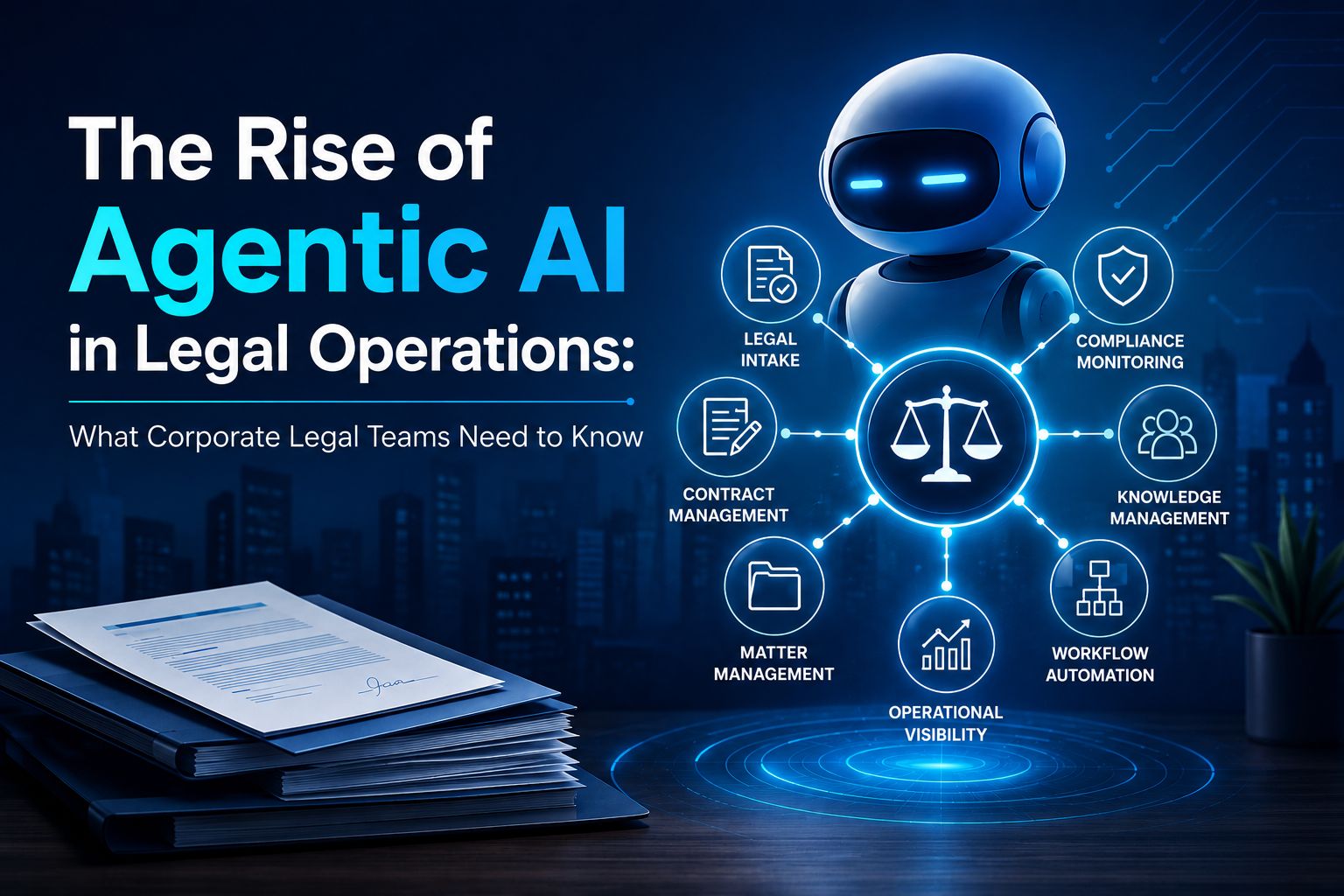
The Rise of Agentic AI in Legal Operations: What Corporate Legal Teams Need to Know
Introduction
Corporate legal departments are under more pressure than ever.
Legal teams are expected to handle growing volumes of requests, manage increasingly complex regulations, support business growth, reduce risk, and deliver faster responses—all while working with limited resources.
For years, legal departments have turned to automation to improve efficiency. More recently, generative AI has helped lawyers draft documents, summarise contracts, and conduct research faster.
Now, a new evolution is emerging: Agentic AI.
Unlike traditional AI tools that simply respond to prompts, Agentic AI can take action. It can analyse information, make decisions within predefined rules, initiate workflows, coordinate tasks across systems, and escalate issues when human review is required.
For legal operations leaders, this represents a significant shift. The conversation is no longer just about helping lawyers work faster. It is about creating intelligent legal workflows that can proactively manage work, improve visibility, and support better decision-making.
In this article, we'll explore what Agentic AI means for legal operations, where it can deliver value, and what corporate legal teams should consider before adopting it.
What Is Agentic AI?
Agentic AI refers to AI systems that can perform tasks with a greater degree of autonomy than traditional AI tools. Most AI solutions today operate in a reactive way. A user asks a question, and the system provides an answer.
Agentic AI goes further.
It can:
- Identify tasks that need attention
- Gather relevant information
- Execute predefined actions
- Coordinate multiple workflows
- Monitor outcomes
- Escalate exceptions to humans
Think of it as the difference between having an assistant who answers questions and one who can actually organise meetings, prioritise work, follow up on tasks, and alert you when something needs urgent attention.
Why Legal Operations Is Well Suited for Agentic AI
Legal operations involve many structured processes that follow predictable workflows.
Examples include:
- Legal intake management
- Contract reviews
- Approval processes
- Matter management
- Compliance monitoring
- Policy administration
- Reporting and analytics
These activities often involve multiple stakeholders, repetitive steps, documentation requirements, and approval chains. This makes them ideal candidates for intelligent automation powered by Agentic AI.
Why Agentic AI Is Becoming a Major Trend in Legal Operations
Legal Workloads Continue to Grow
Most legal departments are being asked to do more without significantly increasing headcount. Business units expect legal support to be available quickly, while compliance obligations continue to expand. As legal teams become busier, manual processes create bottlenecks that slow down both legal and business operations.
This growing demand for efficiency reflects a broader transformation happening across the legal industry. In our article, AI in Legal Operations 2026: Industry Insights on Automation and Legal Technology, we explore how legal departments are adopting AI-powered tools to streamline workflows, improve operational visibility, strengthen governance, and support faster decision-making. Agentic AI represents the next phase of this evolution, enabling legal teams to move beyond automation and towards more intelligent workflow management.
Business Stakeholders Expect Faster Service
Employees increasingly expect the same speed and convenience from internal legal services that they experience with consumer technology. Waiting days for simple legal requests can frustrate business users and create operational delays. Agentic AI helps address this challenge by automatically routing requests, gathering information, and managing workflows before a lawyer even becomes involved.
Traditional Automation Has Limits
Traditional workflow automation follows predefined rules. Agentic AI introduces a higher level of intelligence.
Instead of simply following a fixed process, it can:
- Assess context
- Prioritise requests
- Recommend actions
- Identify risks
- Adapt workflows based on specific situations
This allows legal departments to manage complexity more effectively without adding unnecessary administrative work.
Key Use Cases for Agentic AI in Legal Operations
Legal Intake and Request Management
Legal intake remains one of the biggest operational challenges for many organisations. Requests often arrive through emails, messaging platforms, phone calls, and informal conversations.
Many organisations are already moving away from email-based legal request management in favour of structured, AI-driven intake processes. As we explored in our blog, AI-Powered Legal Intake: Why General Counsel Are Replacing Email-Based Request Management, modern legal teams are using intelligent intake systems to improve visibility, reduce bottlenecks, and ensure legal requests are routed to the right stakeholders from the start.
As a result, legal teams struggle with:
- Lack of visibility
- Delayed responses
- Inconsistent prioritisation
- Missed deadlines
Agentic AI can automatically:
- Capture requests
- Categorise matters
- Assess urgency
- Route work to the appropriate team
- Request missing information
- Track progress
This creates a more organised and transparent intake process.
Contract Lifecycle Management
Contract management is another area where Agentic AI can deliver significant value. The shift towards Agentic AI is part of a broader movement towards contract automation. As we discussed in our blog, Contract Lifecycle Management: Why Law Firms Are Moving from Manual Processes to Automation, legal teams are increasingly replacing spreadsheets, email chains, and manual tracking with structured contract workflows that improve visibility, reduce delays, and strengthen compliance throughout the contract lifecycle.
AI agents can help:
- Identify contract types
- Flag unusual clauses
- Recommend templates
- Trigger approval workflows
- Monitor contract obligations
- Send renewal reminders
Rather than relying on manual tracking, legal teams gain greater visibility across the entire contract lifecycle.
Compliance Monitoring
Regulatory requirements continue to evolve across industries.
Agentic AI can help compliance and legal teams by:
- Monitoring regulatory changes
- Tracking policy updates
- Identifying compliance gaps
- Generating alerts
- Escalating high-risk issues
This proactive approach reduces the likelihood of important issues being overlooked.
Matter Management
Managing legal matters often involves multiple stakeholders, deadlines, and documents.
Agentic AI can:
- Track progress automatically
- Prioritise work based on risk
- Monitor deadlines
- Generate status updates
- Escalate overdue tasks
This improves operational control while reducing manual oversight.
Legal Knowledge Management
Many legal teams struggle to locate relevant precedents, policies, and historical matter information. Agentic AI can surface relevant information automatically, helping lawyers find what they need faster and reducing duplicate work across the department.
The Business Benefits Corporate Legal Teams Can Expect
Faster Response Times
By automating intake, triage, and workflow coordination, legal teams can reduce delays and provide quicker support to the business.
Improved Visibility
One of the biggest challenges in legal operations is understanding what work is happening across the department.
Agentic AI helps create real-time visibility into:
- Matter volumes
- Workload distribution
- Contract status
- Approval bottlenecks
- Compliance activities
This enables better resource planning and decision-making.
Reduced Administrative Work
Lawyers often spend significant time on administrative tasks rather than legal work.
By automating routine activities, Agentic AI allows legal professionals to focus on:
- Strategic advisory work
- Risk assessment
- Negotiations
- Complex legal analysis
Greater Consistency
Standardised workflows help ensure that requests are handled consistently across the organisation. This improves governance and reduces the likelihood of process failures.
Better Business Alignment
When legal processes become more efficient and transparent, business teams receive faster support and gain greater confidence in legal operations.
Governance and Risk Considerations
While Agentic AI offers substantial benefits, legal departments must approach adoption carefully.
Human Oversight Remains Essential
AI should support legal professionals, not replace them. Critical legal decisions, high-risk matters, and strategic judgement should remain under human control. The most effective approach combines AI-driven efficiency with expert legal oversight.
Data Privacy and Confidentiality
Legal departments manage highly sensitive information.
Before implementing Agentic AI solutions, organisations should evaluate:
- Data protection measures
- Access controls
- Security standards
- Regulatory requirements
Strong governance is essential.
Auditability and Transparency
Legal teams need clear visibility into how decisions are made.
Any AI-powered workflow should provide:
- Audit trails
- Decision logs
- Activity records
- Escalation history
Transparency is especially important in regulated environments.
AI Governance Is Becoming a Priority
As regulators pay closer attention to AI use, organisations need formal governance frameworks.
Legal operations leaders should establish clear policies around the following:
- AI usage
- Risk management
- Accountability
- Monitoring and review
How Legal Teams Can Prepare for Agentic AI
Start with process improvement
Technology cannot fix broken processes.
Before introducing AI, organisations should ensure that legal workflows are:
- Clearly defined
- Properly documented
- Consistently followed
Strong processes create the foundation for successful AI adoption.
Focus on High-Value Opportunities
Not every legal process needs Agentic AI.
Start with areas where inefficiencies are most visible, such as:
- Legal intake
- Contract workflows
- Matter management
- Compliance tracking
Quick wins can build momentum for broader transformation.
Establish Governance Early
AI governance should not be an afterthought.
Legal departments should define the following:
- Roles and responsibilities
- Approval structures
- Risk controls
- Performance monitoring processes
This helps ensure responsible adoption from the outset.
Measure Outcomes
Successful legal operations leaders focus on measurable business outcomes.
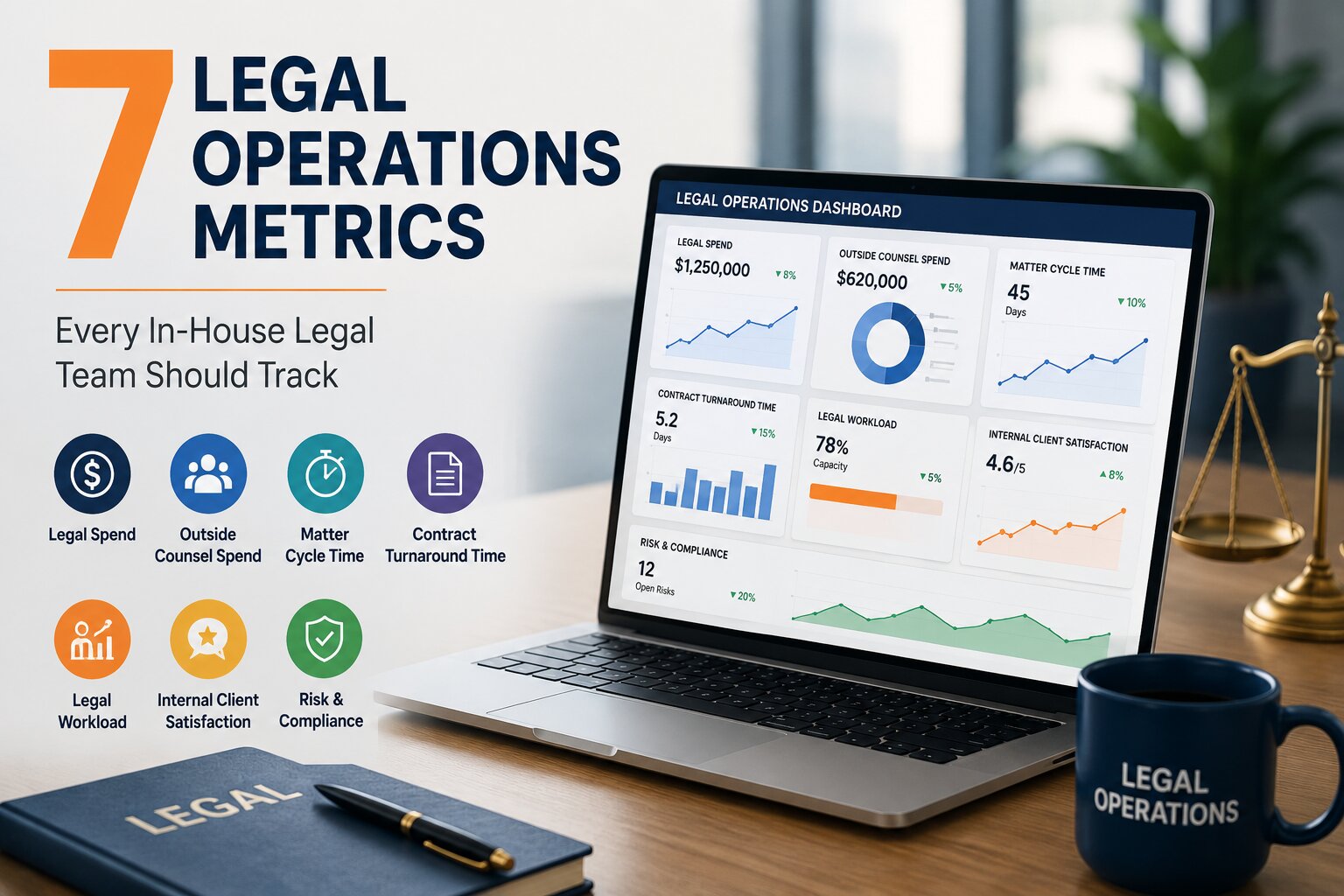
Track metrics such as the following:
- Request turnaround times
- Contract cycle times
- Matter resolution rates
- User satisfaction
- Compliance performance
These indicators help demonstrate value and support continuous improvement.
How Beveron Helps Legal Teams Build the Foundation for AI-Driven Operations
At Beveron Technologies, we've seen that successful AI adoption starts with strong legal operations foundations. Many organisations are excited about AI, but they still struggle with fragmented intake processes, limited visibility, inconsistent workflows, and manual tracking. Before legal departments can fully benefit from advanced technologies such as Agentic AI, they need structured processes and reliable operational data.
That's why we help legal and compliance teams improve workflow visibility, streamline legal intake, strengthen governance, centralise matter management, and create more efficient legal operations. By building these foundations today, organisations are better positioned to take advantage of emerging AI capabilities tomorrow.
The Future of Agentic AI in Legal Operations
Agentic AI is still evolving, but its potential impact on legal operations is significant.
Many of the capabilities driving Agentic AI build upon advances already happening in legal technology. In our article, 6 Powerful Ways AI in Legal Management Systems Is Transforming Law Firms in 2026, we explore how AI is helping legal teams improve matter management, automate routine processes, enhance decision-making, and increase operational efficiency. Agentic AI represents the next step in this evolution, enabling systems to coordinate workflows and support more intelligent legal operations proactively.
In the coming years, we are likely to see AI systems that can:
- Coordinate complex legal workflows
- Predict operational bottlenecks
- Proactively identify compliance risks
- Recommend resource allocation decisions
- Support enterprise-wide legal service delivery
The organisations that benefit most will not necessarily be the ones adopting AI the fastest. They will be the ones that combine technology with strong governance, clear processes, and thoughtful implementation strategies.
For legal operations leaders, the opportunity is not simply to automate tasks. It is to build smarter, more scalable legal departments that can better support the needs of a rapidly changing business environment.
Frequently Asked Questions
What is Agentic AI in legal operations?
Agentic AI refers to AI systems that can perform tasks, manage workflows, make decisions within predefined rules, and take action with limited human intervention. In legal operations, it can help manage intake, contracts, compliance, and matter workflows.
How is Agentic AI different from Generative AI?
Generative AI primarily creates content such as text, summaries, or drafts. Agentic AI goes further by taking action, coordinating workflows, triggering processes, and managing tasks across systems.
Can Agentic AI replace lawyers?
No. Agentic AI is designed to support legal professionals by automating routine tasks and improving operational efficiency. Strategic legal judgement and high-risk decisions still require human expertise.
What are the biggest benefits of Agentic AI for legal departments?
Key benefits include faster response times, improved visibility, reduced administrative workload, stronger governance, and better alignment between legal and business teams.
What should legal teams do before adopting Agentic AI?
Legal teams should first standardise processes, improve data quality, establish governance frameworks, and identify high-impact use cases where AI can deliver measurable value.
Ready to Modernise Your Legal Operations?
Discover how Beveron Technologies helps legal and compliance teams improve visibility, streamline workflows, strengthen governance, and build the operational foundations needed for the next generation of AI-powered legal operations.
Book a demo to see how Beveron can help your legal team work smarter.
Best AI for corporate legal teams in the UAE
Best legal workflow automation software in the UAE
Best AI-powered legal operations in the UAE
If you need a free demo of the best AI for corporate legal teams in the UAE, please fill out the form below.