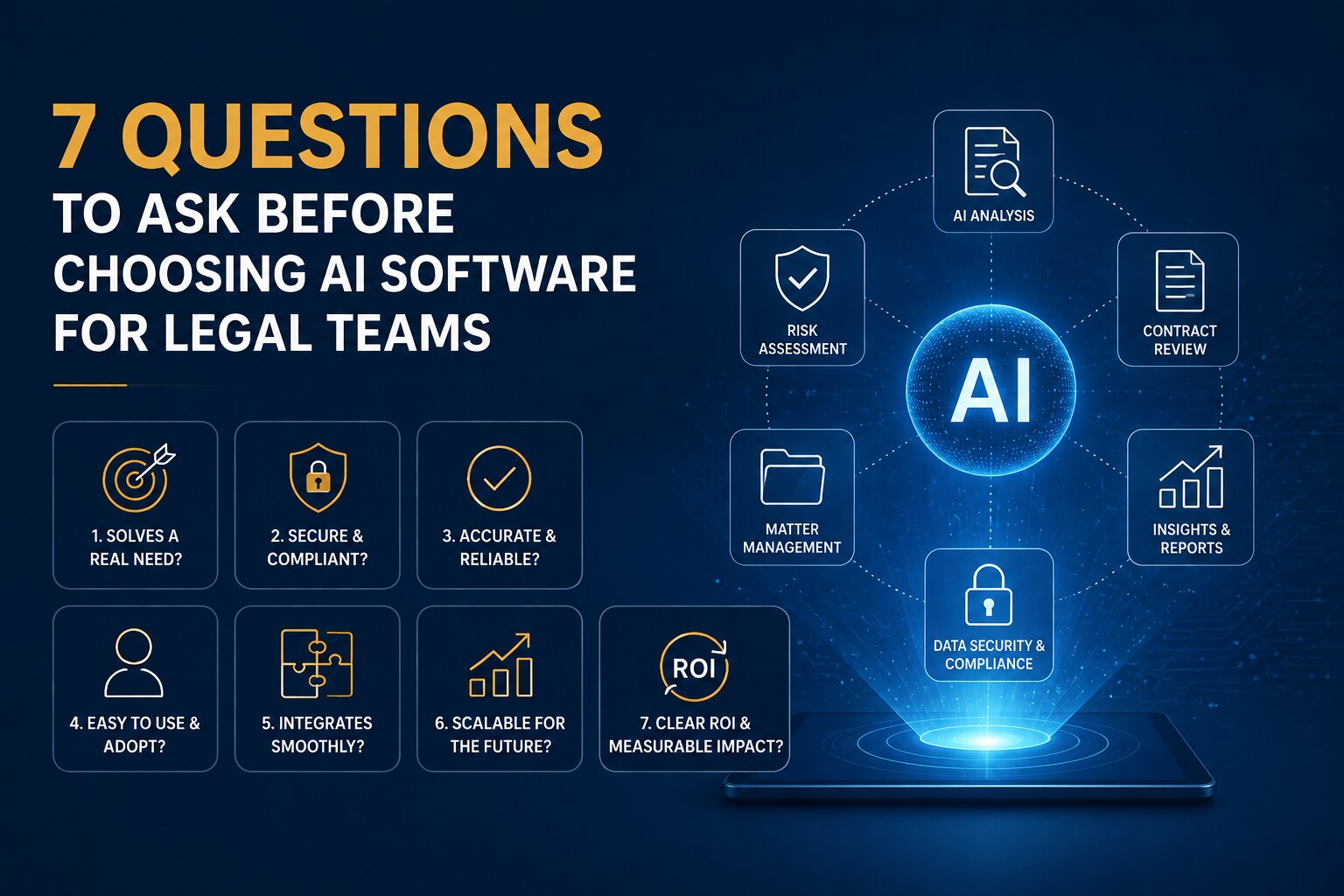
AI in Legal Operations: 2026 Industry Insights on Automation and Legal Technology

Legal departments are evolving rapidly. In 2026, AI in legal operations is no longer a future concept—it is a practical solution helping organisations manage growing workloads, complex regulations, and rising operational costs.
Traditionally, legal teams relied on manual processes such as contract review, compliance tracking, case management, and risk assessment. These tasks are time-intensive and often limit the ability to focus on strategic legal work.
Today, AI-powered legal automation is transforming these processes. Businesses are adopting AI legal software to review documents faster, detect risks earlier, and streamline routine tasks. Many organisations report 50–60% faster document review and over 95% accuracy in AI contract analysis.
As a result, investment in legal automation software, legal workflow automation, and AI-powered contract management is increasing globally. This shift allows legal teams to operate more efficiently while focusing on higher-value decision-making.
The Rise of AI in Legal Operations
The growing adoption of AI in legal operations is changing how legal teams function daily. Instead of using multiple disconnected tools, organisations are moving towards integrated legal platforms powered by AI.
These platforms support:
- Contract analysis and clause detection
- Document review and risk identification
- Compliance monitoring
- Legal research automation
- Case and matter management
- Litigation tracking
By combining these capabilities, AI legal technology enables teams to manage larger workloads without increasing headcount.
Many organisations report 20–40% improvements in productivity, especially in smaller legal teams handling complex tasks with limited resources.
AI-Native Legal Workflows Are Becoming Standard
A major trend in legal tech in 2026 is the shift towards AI-native legal workflows. These workflows are built with automation at their core, rather than adding AI as an extra feature.
For example, AI tools can automatically review contracts such as NDAs and highlight unusual clauses or risks. Instead of manually reading every document, legal professionals receive clear, actionable insights.
AI can also:
- Identify missing or inconsistent clauses
- Suggest compliant language based on policies
- Flag deviations from standard contract terms
This improves both speed and consistency. As a result, legal workflow automation is becoming a standard practice across modern legal departments.
Agentic AI: Digital Assistants for Legal Teams
Another important development is agentic AI, which functions as a digital assistant for legal professionals. Unlike basic automation, agentic AI can handle multi-step tasks and make decisions based on predefined rules. This makes it especially useful in managing complex workflows.
Common use cases include:
- Contract review and classification
- Legal matter intake
- Document organisation
- Compliance checks
- Workflow coordination
For instance, when a new legal request is submitted, AI can automatically categorise it, assign it to the right team member, and track its progress.
This improves efficiency while maintaining control—an essential balance in AI-powered legal operations.
Predictive Analytics for Smarter Legal Decisions
Predictive analytics is another key benefit of AI in legal operations. By analysing historical data, AI helps legal teams make more informed decisions.
It can be used to forecast:
- Litigation outcomes
- Settlement costs
- Case timelines
- Compliance risks
These insights allow organisations to take a proactive approach rather than reacting to legal issues after they arise.
Global Adoption of AI Legal Technology
The adoption of AI legal software is expanding globally, with different regions progressing at different speeds.
Australia
Legal professionals in Australia are rapidly adopting AI tools for legal research, document drafting, and contract analysis. Studies show that a large percentage of lawyers now use AI regularly in their workflows.
India
In India, AI in legal operations is growing quickly in areas such as compliance automation, legal operations management, and debt recovery. Many organisations report significantly faster processes compared to traditional systems.
UAE and the Middle East
Enterprises across the UAE and the Middle East are investing in AI-driven legal management systems to handle regulatory complexity and increasing workloads. These systems help streamline contract workflows and improve compliance monitoring.
AI in Debt Collection and Compliance Management
One of the most practical applications of AI-powered legal automation is in debt collection and compliance.
Traditional debt recovery processes involve manual tracking, repeated communication, and strict regulatory checks. These processes are often slow and prone to errors.
AI improves this by:
- Automating legal notice generation
- Tracking recovery and litigation cases
- Monitoring compliance in real time
- Identifying risks early
Many organisations now follow a compliance-by-design approach, where AI ensures every step aligns with legal requirements.
As a result, businesses often achieve 2–4 times higher efficiency in debt recovery operations.
AI Is Transforming Legal Hiring
The rise of AI in legal operations is also influencing recruitment trends.
Organizations are increasingly looking for professionals who understand both legal processes and technology. Key roles include:
- Legal operations managers
- eDiscovery specialists
- AI-enabled legal professionals
- Litigation support experts
In-house legal teams are leading this shift by adopting AI tools for compliance monitoring, document management, and workflow automation.
At the same time, organisations must ensure AI hiring tools are used responsibly to avoid bias in candidate selection.
Traditional vs AI-Driven Legal Operations
The impact of AI becomes clear when comparing traditional workflows with AI-driven systems:
Aspect | Traditional Legal Operations | AI-Driven Legal Operations |
Document Review | Manual and time-consuming | Faster with improved accuracy |
Compliance | Periodic checks | Continuous real-time monitoring |
Productivity | Limited by manual effort | Significantly improved efficiency |
Team Structure | Larger teams required | Lean, high-performance teams |
This shift highlights why AI in legal operations is becoming essential for modern businesses.
The Role of AI-Powered Legal Platforms
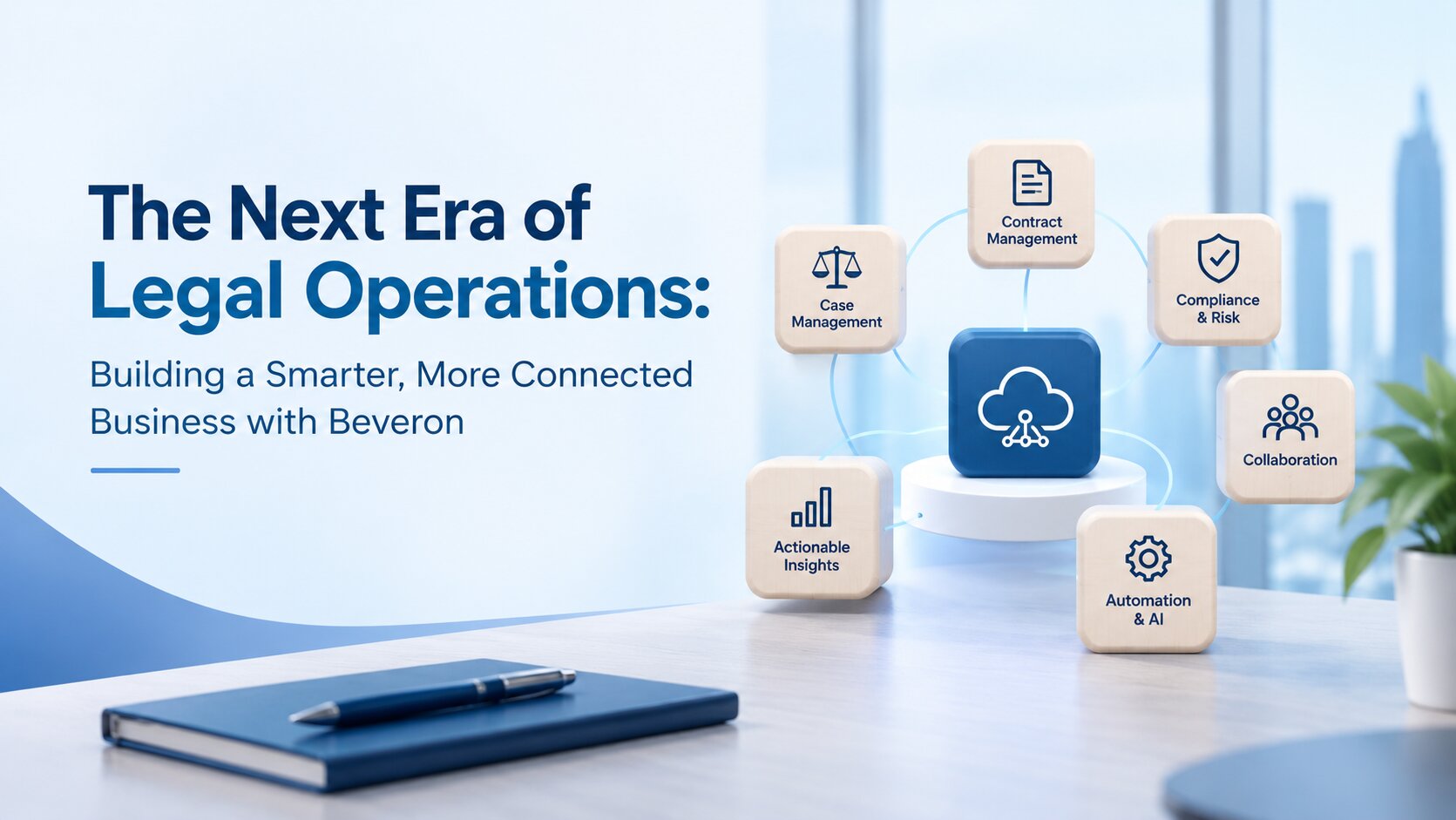
To fully benefit from legal automation software, organisations need integrated platforms that centralise legal processes.
Modern platforms combine the following:
- Case management
- Contract lifecycle management
- Compliance tracking
- Legal analytics
Beveron Technologies provides a unified environment for AI-powered legal management, helping teams streamline workflows and improve decision-making.
These platforms enhance the following:
- Visibility across legal operations
- Risk management
- Efficiency and scalability
The Future of AI in Legal Operations
The future of AI in legal operations is moving towards deeper automation and smarter decision-making.
In the coming years, AI will continue to improve:
- Contract analysis
- Compliance monitoring
- Risk assessment
- Legal strategy
Organisations that invest in AI legal technology today will be better prepared for increasing legal complexity and demand for faster services.
AI is not replacing legal professionals—it is enabling them to work smarter and focus on strategic outcomes.
FAQs: AI in Legal Operations
1. What is AI in legal operations?
AI in legal operations refers to the use of technology to automate legal tasks such as contract review, compliance monitoring, and case management.
2. How does AI improve legal efficiency?
AI reduces manual work, speeds up processes, and improves accuracy, allowing legal teams to focus on strategic tasks.
3. What are the benefits of legal automation software?
Legal automation software improves productivity, reduces errors, ensures compliance, and helps manage large volumes of legal work.
4. Is AI widely used in legal departments?
Yes, many organizations globally are adopting AI for document review, compliance tracking, and workflow automation.
Looking to streamline your legal operations with AI?
Explore how Beveron Technologies helps organizations automate legal workflows and manage legal matters more efficiently.
Best AI-powered legal automation software
Best AI tools for legal teams
Best legal automation software
If you need a free demo on the best debt collection software for small businesses in the UAE, please fill the form below.