6 Powerful Ways AI in Legal Management Systems Is Transforming Law Firms in 2026

AI-powered legal management systems are now a core part of how law firms operate in 2026. They are changing the way firms handle everything from client intake to billing. Instead of relying on slow, paper-based processes, firms are using smarter systems that automate routine tasks and reduce manual errors. These platforms bring all case details, documents, and communication into one place, making it easier for teams to stay organized and work together. With real-time data and insights, lawyers can make quicker and more informed decisions at every stage of a case.
As a result, law firms are working more efficiently, responding faster to clients, and staying competitive in an increasingly digital legal environment.
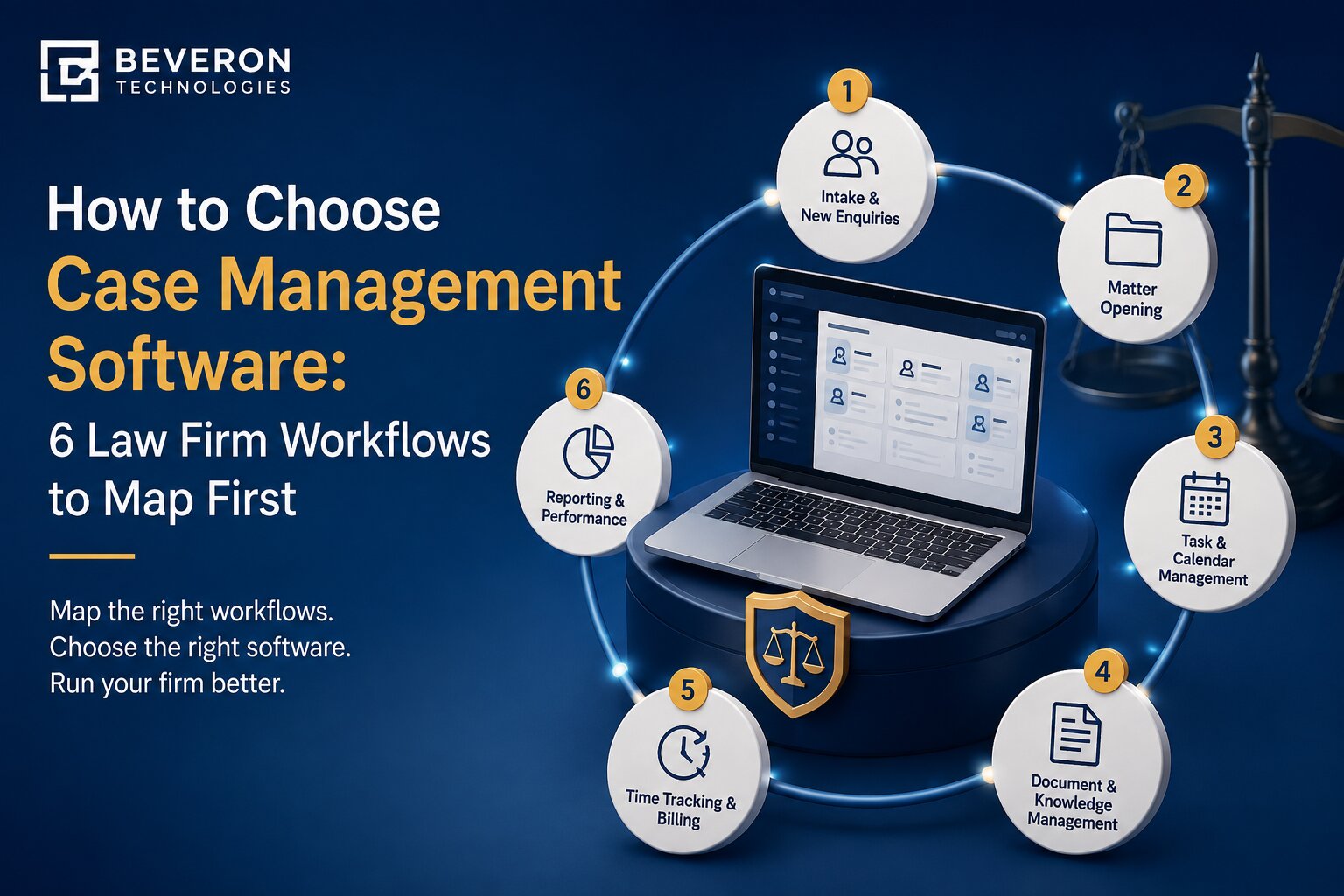
Below are six powerful ways these systems are transforming how law firms operate this year.
1. Case intake and triage on autopilot
AI-integrated matter-management systems can now automatically review new client inquiries. They scan emails, intake forms, and existing client databases to classify case types, identify potential conflicts, and organize information instantly.
This automation helps law firms reduce intake delays and ensures that each matter is quickly routed to the appropriate practice group, allowing legal teams to respond to clients faster and more efficiently.
2. Automated document drafting and review
Modern legal practice management software includes AI-powered clause libraries and precedent databases that help lawyers generate first-draft documents quickly.. Contracts, pleadings, and legal letters can now be drafted using structured prompts based on the details of a case.
AI-assisted review tools also highlight risky clauses, obligations, and key deadlines, helping legal teams review documents faster while maintaining accuracy and compliance.
3. Predictive case and matter management
AI-driven analytics within legal-management dashboards provide insights that help lawyers plan their cases more effectively. These systems can estimate timelines, suggest possible settlement ranges, and identify potential cost risks.
With these insights, law firms can allocate resources better, set realistic expectations for clients, and focus attention on the most important or high-risk matters early in the process.
4. Smart time tracking and billing intelligence
Tracking billable hours is often time-consuming for lawyers. AI-enhanced practice-management systems simplify this process by automatically recording activities such as emails, calls, and document edits.
The system can then suggest appropriate billing entries and descriptions, helping lawyers maintain accurate timesheets while reducing lost billable hours and improving overall revenue management.
5. AI-assisted client communication and status updates
Many legal-management platforms now include AI-powered chatbots and automated update tools that keep clients informed about their cases. These systems can provide answers to common questions, send reminders, and share case updates at any time.
This improves responsiveness and reduces repetitive administrative work for legal teams while ensuring clients stay informed throughout their legal journey.
6. Centralized knowledge and workflow orchestration
Modern AI legal-management platforms also act as central hubs for legal knowledge and workflows. They connect research tools, case management systems, client databases, and document repositories into a single environment.
AI can automatically tag past case decisions, suggest relevant precedents for current matters, and trigger standardized workflows for similar case types. This helps law firms use their collective knowledge more effectively and ensures consistency across teams.
Traditional vs Modern AI Legal Management Systems in 2026
Aspect | Traditional Legal Management System (past) | Modern AI‑Powered Legal Management System (2026) |
Case intake & triage | Manual data entry, generic intake forms, no automated routing | AI‑driven lead screening, auto‑classification, instant conflict checks |
Document drafting | Relies on static templates and manual drafting | AI‑assisted drafting with precedent‑based, matter‑specific clauses |
Legal research integration | Stand‑alone research tools, lawyers copy‑paste findings | Embedded AI research that surfaces case law and precedents in matter flows |
Time tracking & billing | Manual timesheets, late coding, and high unbilled hours | AI-auto-categorization, smart time entries, and reduced billing leakage |
Case/matter insights | Static reports: no outcome prediction or risk modelling | Predictive analytics on timelines, costs, and settlement probabilities |
Workflow automation | Linear, manual‑triggered steps (email, reminders) | Intelligent workflow orchestration across CRM, contracts, and filings |
Client communication | Email/phone only; updates require manual lawyer effort | AI chatbots and status bots that pull live matter data and auto‑update clients |
Knowledge management | Scattered files and shared drives; hard to reuse expertise | Centralized AI‑indexed knowledge base that reuses past decisions and precedents |
Scalability & firm‑wide efficiency | Manual processes limit growth without adding headcount | AI assistance scales expertise across junior‑senior teams, reducing bottlenecks |
A Modern AI-Powered Legal Management Platform in Action
As law firms move beyond basic case-management tools, AI-powered platforms are becoming the core of modern legal operations. These systems bring everything together in a single workspace, combining automation, data insights, and everyday legal processes for both small practices and large firms.
Instead of relying on multiple disconnected tools, firms can manage cases, clients, documents, and communication within a single platform. Common features include a central matter database, AI-assisted intake and conflict checks, automated document creation, and integrated research that surfaces relevant case laws directly within the workflow. Billing, time tracking, and communication are also connected, making daily legal operations more efficient and organized.
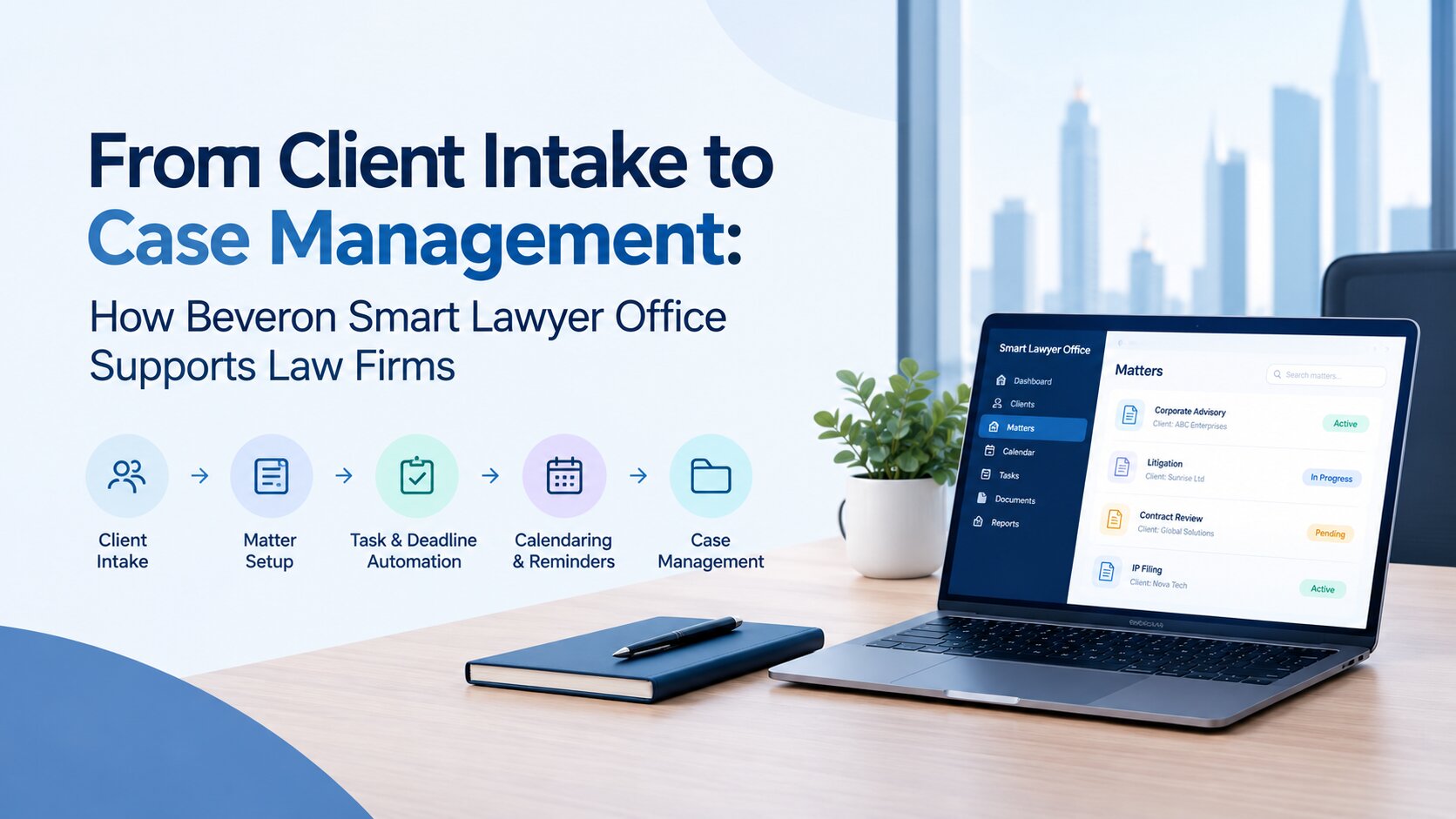
One example of such a platform is Smart Lawyer Office by Beveron Technologies, which brings these capabilities together in a unified legal-management environment. The platform helps law firms streamline case handling, automate routine tasks, maintain compliance, and gain better visibility into their legal operations through intelligent, AI-supported workflows.
What Is Smart Lawyer Office?
Smart Lawyer Office is an AI-powered legal management platform designed to help law firms manage cases, clients, documents, and legal workflows from a single system. Developed by Beveron Technologies, the platform combines case management, document automation, billing, and workflow automation to simplify daily legal operations.
Law firms use Smart Lawyer Office to:
- Centralize case and client information in one secure platform
- Automate legal workflows such as intake, document drafting, and task management
- Improve collaboration across legal teams
- Track deadlines, billing, and case progress in real time
- Maintain compliance with clear audit trails and documentation
By integrating these functions, Smart Lawyer Office enables law firms to operate more efficiently while reducing administrative workload.
Why Law Firms Should Adopt AI-Driven Legal Management Now
As the legal industry becomes more digital, moving from traditional systems to AI-enabled platforms is no longer optional—it is becoming essential for staying competitive. Firms that delay this shift may struggle with slower processes and lower efficiency, while those that adopt early gain a clear advantage.
AI-powered legal management helps firms:
- Focus on high-value work by reducing time spent on routine tasks
- Enhance client experience with faster service, clear communication, and real-time updates
- Strengthen compliance through built-in policies, tracking, and audit trails
As the legal industry becomes more digital, successful firms will treat their legal management system not just as a tool but as a central system that connects people, processes, and data across the entire practice.
Conclusion
AI is rapidly transforming how law firms manage their operations. From automating routine administrative tasks to providing data-driven insights for better decision-making, AI-powered legal management systems are helping firms work more efficiently and deliver higher-quality services to their clients.
As legal workloads increase and client expectations continue to evolve, adopting modern technology is becoming essential rather than optional. Law firms that integrate intelligent workflows, centralized systems, and AI-supported tools will be better positioned to stay organized, maintain compliance, and scale their operations without adding unnecessary complexity.
Ready to Modernise Your Legal Operations?
Upgrade with Beveron’s Smart Lawyer Office to streamline workflows, boost efficiency, and deliver faster, smarter legal services.
Best AI legal management software for law firms
Best legal practice management software for law firms
Best AI-powered case management system for law firms
If you need a free demo on the best AI legal management software for law firms, please fill the form below.