What Should Saudi Businesses Automate Across the Contract Lifecycle?

Contracts influence everyday business operations, from supplier relationships and customer agreements to employment arrangements and strategic partnerships. Yet, in many organisations, managing these contracts still involves exchanging emails, editing documents manually, chasing approvals and tracking important dates in spreadsheets. As contract volumes grow, these tasks can become difficult to coordinate, increasing the risk of delays, missed deadlines and misplaced information.
For businesses in Saudi Arabia, contract lifecycle automation offers a way to bring these activities into a more organised process. Rather than treating drafting, approval, signing and renewal as separate tasks, businesses can connect them through a structured workflow. The aim is not to automate every decision but to reduce repetitive work, improve visibility and help employees focus on the parts of contract management that require their judgement.
Understanding which activities to automate first can help businesses choose a practical starting point and make better use of contract lifecycle management (CLM) software.
Which Contract Lifecycle Activities Should Saudi Businesses Automate?
Contract lifecycle automation covers the activities involved in creating, reviewing, approving, signing, storing and managing contracts throughout their active period. The most suitable tasks for automation are usually repetitive, follow clear rules or require regular coordination between departments.
Saudi businesses can begin by examining where contracts spend the most time waiting for action, where employees repeatedly enter the same information and where important dates or documents are difficult to track. These areas often reveal the strongest opportunities for improvement.
1. Contract Requests and Initial Intake
Contract management begins before anyone drafts an agreement. An employee may need a new supplier contract, a customer agreement or an amendment to an existing arrangement. If requests arrive through different email threads or informal messages, the legal team may have to spend time collecting basic information before work can begin.
Automating contract intake allows employees to submit requests through a standard process. The request can capture details such as the contract type, business purpose, parties involved, expected value and supporting documents. Requests can then be directed to the appropriate team based on predefined rules.
This creates a clearer starting point for every contract. Legal teams can identify incomplete requests earlier, prioritise work more effectively and reduce the time spent asking departments for missing information.
2. Contract Drafting and Template Management
Drafting routine agreements from scratch can consume considerable time, particularly when teams repeatedly prepare similar contracts. It can also lead to inconsistencies if employees use outdated templates or copy clauses from previous agreements without checking whether they remain appropriate.
Businesses can automate parts of drafting by maintaining approved templates for commonly used agreements. Standard information, such as company details, contract dates and party names, can be entered into the relevant fields instead of being typed repeatedly. Approved clauses can also be made available to help teams follow established drafting policies.
However, template-based drafting should not remove the need for legal review. Agreements involving unusual commercial terms, significant financial commitments or specific legal concerns may require additional attention. Automation is most useful when it handles routine preparation while allowing legal professionals to review the terms that matter most.
3. Contract Review and Negotiation
Contract reviews often involve several rounds of comments, revised documents and discussions between legal, procurement, finance and business teams. When these activities take place across separate email threads, employees may struggle to identify the latest version or understand which changes have been agreed.
Automating the review process helps teams coordinate comments, manage document versions and keep contract discussions organised. Changes to important clauses can be flagged for review, while documents can be routed to the relevant stakeholders according to the organisation's review process.
A clear record of revisions also helps explain how an agreement developed and which changes were accepted. This is particularly useful when several departments contribute to a contract or when an agreement needs to be reviewed again later.
Automation can support the review process, but it should not replace a lawyer's assessment of legal wording, commercial risk or the implications of accepting a proposed change.
4. Contract Approvals and Internal Sign-Off
Approval delays are a common source of frustration in contract management. A document may be ready for sign-off but remain in someone's inbox because the approver is unavailable, the request was overlooked or the approval process is unclear.
Businesses can automate approval routing by defining who needs to review each type of agreement. For example, a supplier contract may require procurement and legal approval, while an agreement involving a significant financial commitment may also need finance or senior management approval. The exact route should reflect the organisation's internal policies and delegated authority.
Automatic notifications can alert approvers when a decision is required, and reminders can help reduce unnecessary waiting. The system can also record approval decisions and retain a history of the steps completed.
This makes the process easier to follow and helps businesses understand where delays occur. It also reduces the risk of contracts moving to signature before the required internal approvals have been obtained.
5. Contract Signing and Execution
Once a contract has passed the required reviews and approvals, the parties need to complete the signing process. Delays can occur when employees have to send documents manually, contact signatories individually or check several email threads to determine whether everyone has signed. Automating the signing workflow can help coordinate signature requests, notify the relevant parties and track outstanding signatures. Once the agreement has been completed, the signed version can be stored with its related contract records, making it easier for authorised employees to retrieve the final document.
Businesses should ensure that their signing process follows applicable Saudi requirements and their internal policies. Electronic signing arrangements should be assessed according to the type of agreement, the parties involved and any relevant legal or regulatory conditions. The objective is to make execution easier to manage while maintaining appropriate checks on authorisation, document integrity and recordkeeping.
6. Contract Storage and Retrieval
A signed contract is only useful if the right people can find it when they need it. When agreements are stored across personal folders, shared drives and email attachments, employees may spend unnecessary time searching for documents or confirming which version is final. A central contract repository can bring agreements together in one organised location. Contracts can be categorised using details such as the parties involved, contract type, effective date, responsible employee and current status. Searchable information makes it easier to locate an agreement without opening multiple files individually.
Access permissions are equally important. Employees should be able to access the contracts they need for their work without exposing confidential information to unauthorised users. Version history and clear document status can also help distinguish draft agreements from approved and executed contracts.
For businesses managing agreements across several departments, a central repository provides a more consistent view of contractual records and supports more reliable day-to-day decision-making.
7. Contract Obligations, Renewals and Expiry Dates
Contract management does not end when an agreement is signed. Many contracts include ongoing responsibilities, payment conditions, reporting requirements, renewal windows and notice periods. If these details are tracked manually, employees may overlook an important obligation or discover an approaching expiry date too late to act. Businesses can automate reminders for key contractual dates, including renewal deadlines, expiry dates and termination notice periods. Responsibilities can be assigned to specific employees, and notifications can be sent before action is required.
For example, a business approaching the renewal date of a supplier agreement can alert the contract owner in advance. This gives the team time to review performance, discuss revised terms, compare alternatives or prepare for termination if necessary.
Where contracts contain recurring obligations, businesses can also use structured tracking to record responsibilities and monitor their completion. This is more useful than relying on calendar reminders alone because it connects important dates with the agreement and the people responsible for acting on them.
Which Contract Activities Should Remain Under Human Review?
Not every part of contract management should be automated. Some activities require an understanding of legal consequences, commercial priorities and the specific circumstances surrounding an agreement.
Negotiating unusual clauses, assessing significant legal risks, approving exceptions to company policy and deciding whether to terminate an agreement are examples of activities that may require professional judgement. A system can organise the relevant information and direct it to the right person, but the decision should remain with an appropriately authorised individual.
Human review is also important when contract terms change substantially or when a standard template does not adequately address the transaction. Businesses should define which changes require additional approval and when a contract must be escalated to legal counsel.
A sensible approach is to automate the movement of information and routine administrative tasks while keeping people responsible for legal interpretation, risk assessment and final decisions. This balance helps businesses improve efficiency without losing control over important contractual commitments.
What Should Saudi Businesses Consider Before Automating Contracts?
Choosing which tasks to automate is only one part of the process. Businesses also need to understand their existing workflows, internal requirements and the capabilities they expect from a CLM system.
Contract volume and recurring delays are useful starting points. An organisation that manages hundreds of supplier agreements may benefit most from standardised templates and approval routing. A business dealing with complex commercial agreements may place greater importance on version control, negotiation records and access to previous contracts. Identifying the actual problem helps prevent unnecessary complexity.
Approval responsibilities should also be clearly defined. Before configuring automated workflows, businesses need to understand who can review, approve and sign each type of contract. Unclear responsibilities can create delays even when a system is available to route documents automatically.
Saudi legal and regulatory requirements need careful consideration. Businesses should assess the requirements applicable to their agreements, including relevant rules governing electronic transactions and signatures, as well as personal data protection obligations where contract records contain personal information. Requirements may vary depending on the transaction and the organisations involved, so legal review is advisable when determining the appropriate process.
Arabic and English document handling may be important for businesses working with local and international parties. Organisations should assess whether their chosen solution supports the languages, document formats and search capabilities required by their teams. Language support alone does not establish that a contract meets the relevant legal requirements.
Security and access controls deserve equal attention. Contract repositories may contain confidential commercial terms, personal information and sensitive business records. Businesses should understand how access is managed, how records are protected, what audit information is available and how retention requirements can be handled.
Finally, integration with existing systems can influence how practical a CLM solution is. Businesses should consider how the platform will work with their current document storage, email and other business tools. A workflow that fits existing operations is generally easier for employees to adopt than one that creates additional manual steps.
How Can Contract Lifecycle Management Software Support These Workflows?
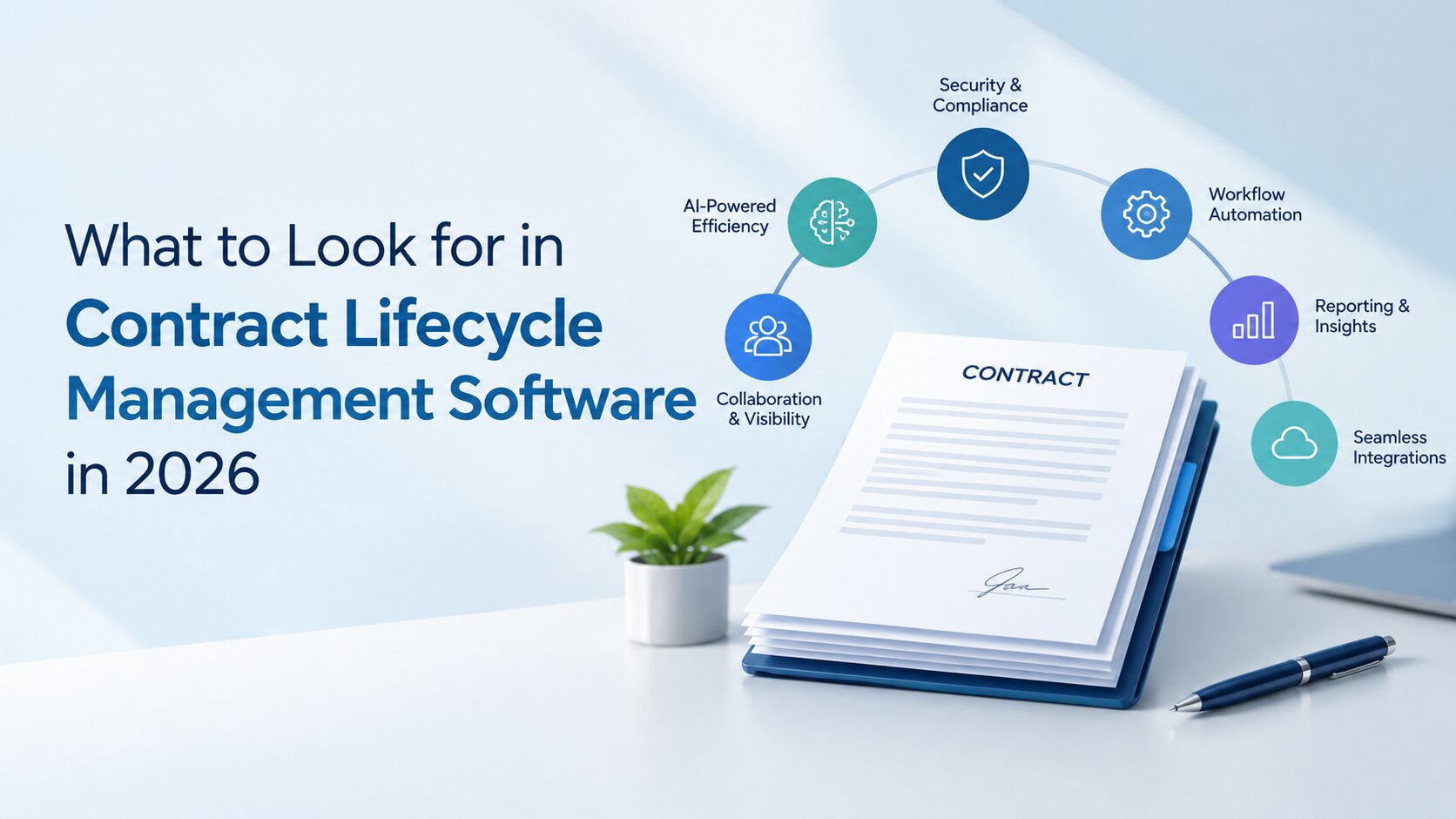
Contract lifecycle management software brings contract activities together within a structured process. Depending on the platform, it can support request intake, template management, document collaboration, approval routing, electronic signing, centralised storage and renewal tracking.
The main value comes from connecting these activities. For example, once an agreement is approved and signed, its final version can be stored in the contract repository, with relevant dates and responsibilities available for future tracking. This reduces the need to manage each stage separately and helps teams maintain a clearer record of the agreement.
Beveron Smart Legal Contract is one option businesses can evaluate when looking to organise these workflows. Its relevant capabilities include contract templates, collaboration and version control, approval workflows, e-signatures, a central contract repository, metadata-based search and renewal or expiry alerts.
These capabilities can help legal and business teams manage agreements more consistently, provided the selected configuration matches their processes and requirements. Before making a decision, businesses should assess how the platform handles their contract types, approval structures, language needs, security requirements and existing systems.
The right solution is not necessarily the one with the largest feature list. It is the one that addresses the organisation's actual contract management challenges and can be adopted effectively by the people responsible for managing agreements.
Where Should Saudi Businesses Start with Contract Automation?
Automating every contract activity at once can make implementation more complicated than necessary. A more practical approach is to start with one contract type or workflow that creates frequent delays, repeated administrative work or avoidable tracking problems. Begin by mapping the current process from the initial request to signing and ongoing management. Record the steps involved, the people responsible, the information required and the points where work commonly gets delayed. This gives the business a clearer understanding of what needs to change.
Next, prioritise tasks that follow predictable rules. Standardising contract requests, routing approvals and setting renewal reminders can provide a useful starting point because these activities often involve clear steps and recurring requirements. More complex workflows can be addressed once the initial process is working well.
The results should be measured against practical indicators. Approval turnaround time can show whether contracts are moving through the organisation more efficiently. Contract retrieval time can indicate whether documents are easier to find. Missed renewal notices and overdue obligations can help reveal whether important dates are being managed more reliably.
Employee feedback also matters. If a new process introduces unnecessary steps or is difficult to use, employees may continue relying on emails and spreadsheets. Testing the workflow with a small group before expanding it can help identify these issues early.
Over time, businesses can extend automation to other contract types and departments based on what they learn. This gradual approach helps keep implementation focused on measurable operational needs rather than adopting technology for its own sake.
Conclusion
For Saudi businesses, contract lifecycle automation is most useful when it addresses specific problems across the contract process. Standardising requests, managing templates, coordinating reviews, routing approvals, tracking signatures, organising documents and monitoring renewals can reduce repetitive work and make contractual responsibilities easier to manage.
The key is to distinguish between tasks that can follow a defined process and decisions that require human judgement. Businesses should also consider their internal approval structures, applicable Saudi requirements, language needs and information security before selecting a solution.
Beveron Smart Legal Contract offers capabilities for managing key stages of the contract lifecycle within a connected workflow. Businesses exploring CLM software can assess whether these capabilities align with their existing processes and future requirements.
Looking to bring contract requests, approvals, signed agreements and renewal tracking into a more structured workflow? Explore Beveron Smart Legal Contract or request a personalised demonstration to see how it may fit your organisation's contract management needs.
Frequently Asked Questions
1. Which contract processes should Saudi businesses automate first?
Businesses should start with tasks that involve repeated manual work or frequent delays. Contract request intake, standard template preparation, approval routing and renewal reminders are common starting points. The best choice depends on contract volume, internal processes and the problems the organisation needs to solve.
2. Can contract lifecycle management software support Arabic and English contracts?
Some CLM platforms support Arabic and English documents, but the available features vary. Businesses should check language support, document handling, search capabilities and any relevant requirements for their agreements before selecting a solution.
3. Which contract activities still require legal review?
Legal review may be necessary for negotiating unusual clauses, assessing significant risks, approving exceptions to standard terms and handling complex amendments or termination decisions. Automation can organise the workflow and flag items for review, but it should not replace professional legal judgement.
4. How can Saudi businesses track contract renewals and expiry dates?
A CLM system can record key dates, assign responsibility to contract owners and send reminders before renewal windows, expiry dates and notice deadlines. Businesses should establish clear procedures for reviewing these alerts and deciding whether to renew, renegotiate or terminate an agreement.
5. What should businesses check before choosing contract lifecycle management software?
Businesses should assess workflow configuration, template management, collaboration, version control, approvals, signing, document search, renewal alerts, security, language support and integration with existing systems. They should also check whether the solution can support their applicable legal and regulatory requirements and whether employees can use it effectively.
Best contract lifecycle management software in Saudi Arabia
Best contract approval workflow automation in Saudi Arabia
Best contract drafting and review automation in Saudi Arabia
If you need a free demo of the best contract lifecycle management software in Saudi Arabia, please fill out the form.