What Should Saudi Law Firms Look for in AI-Powered Case Management Software?

Managing a law firm involves more than handling legal cases. Lawyers must keep track of client information, organise documents, prepare for hearings, monitor deadlines, and coordinate work across their teams. When these activities are managed through separate systems or manual processes, important information can become difficult to find and everyday tasks can take longer than necessary.
AI-powered case management software offers law firms another way to manage these responsibilities. However, choosing the right solution requires more than looking at the latest AI features. Saudi law firms need software that fits their working processes, protects confidential information, supports their language requirements, and helps lawyers manage their workloads more effectively. Understanding which features matter most can make the selection process easier.
Why Are Saudi Law Firms Considering AI-Powered Case Management Software?
As law firms handle more clients and legal matters, keeping information organised becomes increasingly important. Lawyers may need to switch between case files, emails, documents, hearing schedules, and billing records throughout the day. Without a centralised system, finding the latest information or checking the status of a matter can involve unnecessary back-and-forth.
Manual processes can also make it harder to monitor deadlines, assign responsibilities, and maintain consistent communication with clients. These challenges do not necessarily mean a firm needs a complicated technology platform. They often indicate a need for better organisation and more consistent workflows.
Case management software brings important information and activities together, helping legal teams maintain a clearer view of their work. AI capabilities can add value by assisting with tasks such as searching documents, extracting information, or preparing summaries, depending on the software. The goal is not to replace legal judgement but to give lawyers more time to focus on case preparation, client advice, and other work that requires their expertise.
Which Features Matter Most in Case Management Software?
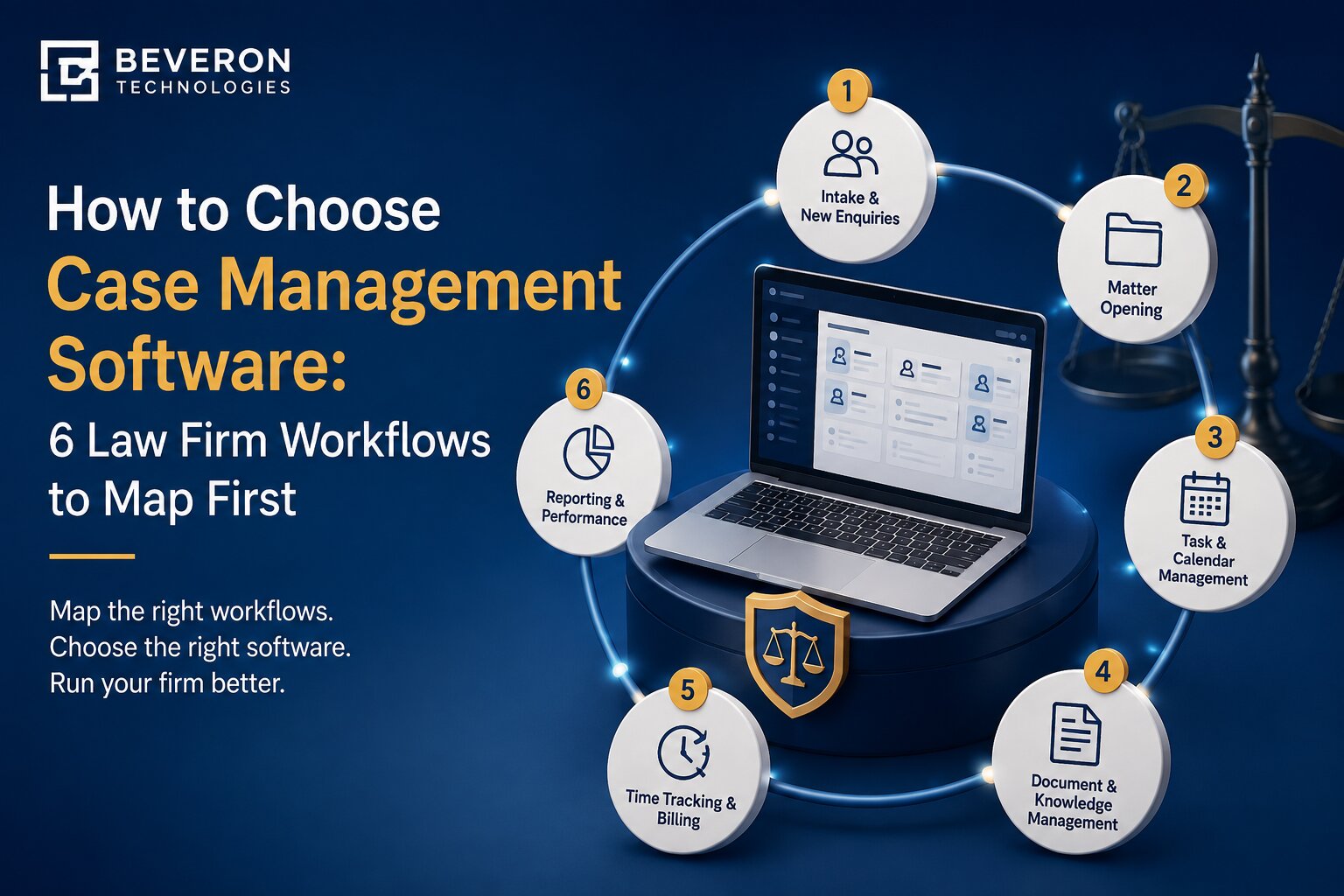
Centralised Case and Document Management
A case management system should make it easy to access the information lawyers need to handle each matter. Look for features that allow teams to maintain client details, case histories, legal documents, correspondence, and related records in one organised location.
The ability to see a matter's current status, assigned lawyer, important dates, and outstanding activities can also help teams coordinate their work. Instead of searching through separate folders or asking colleagues for updates, authorised staff can access the relevant information through a shared system.
Document management deserves particular attention. Law firms regularly handle contracts, evidence, correspondence, court documents, and other sensitive records. A suitable platform should make documents easy to organise and retrieve while maintaining appropriate access controls. Version tracking and clear document histories can also help teams identify the latest information and reduce confusion when several people work on the same matter.
AI Assistance and Workflow Automation
AI can make certain legal workflows more efficient, but its usefulness depends on how well its capabilities match a firm's actual needs. When evaluating software, consider whether AI can assist with document searches, information extraction, or summarising lengthy records. These functions may help lawyers locate relevant details without reviewing every document manually.
It is equally important to understand the difference between AI assistance and workflow automation. AI can help interpret or organise information, while automation follows defined rules to carry out routine activities, such as assigning tasks, sending reminders, or updating workflow statuses. Together, these capabilities can reduce repetitive work and help teams maintain more consistent processes.
However, AI outputs should not automatically be treated as accurate legal conclusions. Lawyers must be able to review generated summaries, verify extracted information, and exercise their own judgement before relying on the results. Before selecting a platform, ask the provider which AI features are available, how they work, and whether they are included in the proposed package.
Hearing Schedules, Deadlines, and Task Tracking
Missing a deadline or overlooking an upcoming hearing can disrupt case preparation and create avoidable pressure for a legal team. Case management software should provide a practical way to record hearing dates, appointments, deadlines, and other important milestones associated with each matter.
Look for scheduling tools, reminders, and task assignments that help lawyers understand what needs attention and when. Managers should also be able to see which activities are pending, who is responsible for them, and whether a matter requires follow-up.
For Saudi law firms, it is important to assess how well the system accommodates their existing legal processes and scheduling requirements. Do not assume that a platform automatically integrates with local court systems or updates hearing information. Confirm which integrations are available and what information must still be entered or checked manually.
Client Management, Billing, and Reporting
Managing client relationships involves more than storing contact details. Law firms may need to track enquiries, consultations, service agreements, client communications, and the progress of ongoing matters. A centralised client record can help authorised team members understand the history of an engagement and respond more consistently.
Financial management is another consideration. Timesheets, billable hours, invoices, payment records, and outstanding balances can be difficult to monitor when they are spread across different tools. Software that connects these activities with case records can give firms a clearer picture of the work completed and the financial position of each matter.
Reporting brings these capabilities together from a management perspective. Dashboards and reports can help partners review caseloads, pending tasks, billing activity, and team workloads. Rather than relying on manually prepared updates, decision-makers can use available information to identify delays, allocate resources, and plan their next steps.
The most useful platform is not necessarily the one with the largest number of features. It is the one that helps a firm manage its daily responsibilities without introducing unnecessary complexity.
What Should Saudi Law Firms Check Before Choosing a Solution?
Once a firm understands the features it needs, the next step is to assess whether a platform is suitable for its working environment. A few practical checks can help narrow the options and avoid investing in software that does not meet the firm's requirements.
Arabic language support and local requirements should be among the first considerations. Saudi law firms may need to work with Arabic and English documents, communicate with clients in both languages, and maintain records that follow their established processes. Check whether the platform supports the languages your team needs and whether its features accommodate your existing legal workflows. Firms should also assess applicable Saudi data protection requirements and confirm how the provider handles sensitive information.
Security and access controls are equally important. Legal records can contain confidential client details, financial information, and sensitive case documents. Ask whether the system allows administrators to control access based on user roles, maintain activity records, and manage document permissions. If AI features are available, clarify how submitted information is processed, whether it is used to train AI models, and what safeguards protect client data.
Integration and deployment options also deserve attention. A platform should fit into the firm's existing working environment wherever possible. Check whether it can connect with the tools your team already uses and whether it offers a suitable deployment model, such as cloud hosting or installation on the firm's own infrastructure. Availability will depend on the provider and product configuration.
Finally, consider usability, implementation time, staff training, customer support, and total cost. A feature-rich platform may not deliver much value if lawyers find it difficult to use. Request a demonstration based on your firm's typical workflows and ask how the provider will support your team after implementation.
How Can Smart Lawyer Office Support Saudi Law Firms?
Beveron's Smart Lawyer Office is a law firm management solution designed to bring key legal and administrative activities together in one platform. Its capabilities include client and case management, document organisation, hearing tracking, legal workflows, timesheets, billing, payment tracking, and reporting.
For Saudi law firms looking to improve day-to-day organisation, having these activities connected can make it easier to access matter-related information, monitor responsibilities, and maintain visibility into ongoing work. The relevance of each feature will depend on the firm's size, practice areas, and existing processes.
When evaluating Smart Lawyer Office, firms should discuss their specific requirements with Beveron, including Arabic language support, deployment preferences, integrations, security arrangements, and the availability of particular AI capabilities. This helps ensure that the solution is assessed against actual operational needs rather than assumptions based on the term AI-powered.
A personalised demonstration can provide a clearer understanding of how the platform may fit the firm's workflows and which capabilities are most relevant to its team.
Frequently Asked Questions
What is AI-powered case management software?
AI-powered case management software helps law firms organise legal matters, client records, documents, deadlines, and related activities. Depending on the platform, AI features may assist with document searches, information extraction, and summaries, while workflow tools help manage routine tasks and reminders.
Which case management features are essential for Saudi law firms?
The most important features typically include centralised case records, document management, hearing and deadline tracking, task assignments, client management, billing, and reporting. Arabic language support, security controls, and compatibility with the firm's working processes should also be assessed.
How can law firms protect confidential information when using AI software?
Law firms should review access permissions, security controls, data storage arrangements, and the provider's policies for processing information through AI features. They should also check applicable Saudi data protection obligations and ensure lawyers review AI-generated information before relying on it for legal work.
Conclusion
Choosing AI-powered case management software is about finding a practical solution that supports how a law firm operates. Saudi law firms should look beyond AI claims and evaluate case management features, document handling, workflow efficiency, language support, security, and implementation requirements.
The right platform should help lawyers manage their work more effectively while keeping important information organised and accessible to authorised users. Beveron's Smart Lawyer Office is worth evaluating against these requirements to determine whether its capabilities fit your firm's needs.
Looking to improve how your firm manages legal matters?
Book a personalised Smart Lawyer Office demonstration with Beveron to explore the platform's capabilities and assess how they align with your team's workflows.
Best AI-powered case management software for law firms in Saudi Arabia
Best AI for law firms in Saudi Arabia
Best AI-Based Law Firm Management Software in Saudi Arabia
If you need a free demo of the Best AI-powered case management software for law firms in Saudi Arabia, please fill out the form.