When Is a Kenyan Law Firm Ready for Legal Practice Management Software?

Managing a law firm involves more than handling cases and advising clients. Lawyers must also organise documents, track court dates, respond to client enquiries, manage fees and keep case records up to date. As a firm grows, these responsibilities can become difficult to manage using spreadsheets, email folders and paper files alone.
For Kenyan law firms, the decision to adopt legal practice management software often begins when existing processes start affecting daily work. The right time to consider a dedicated system is not necessarily when a firm reaches a particular size, but when its current way of working no longer provides the organisation, visibility and control it needs.
1. What Are the Signs Your Kenyan Law Firm Needs Software?
One of the first signs is difficulty finding accurate, up-to-date information. When client details, case documents and correspondence are stored in different locations, lawyers may spend valuable time searching for records instead of preparing for client meetings or working on cases. The problem becomes more noticeable when several team members need access to the same information.
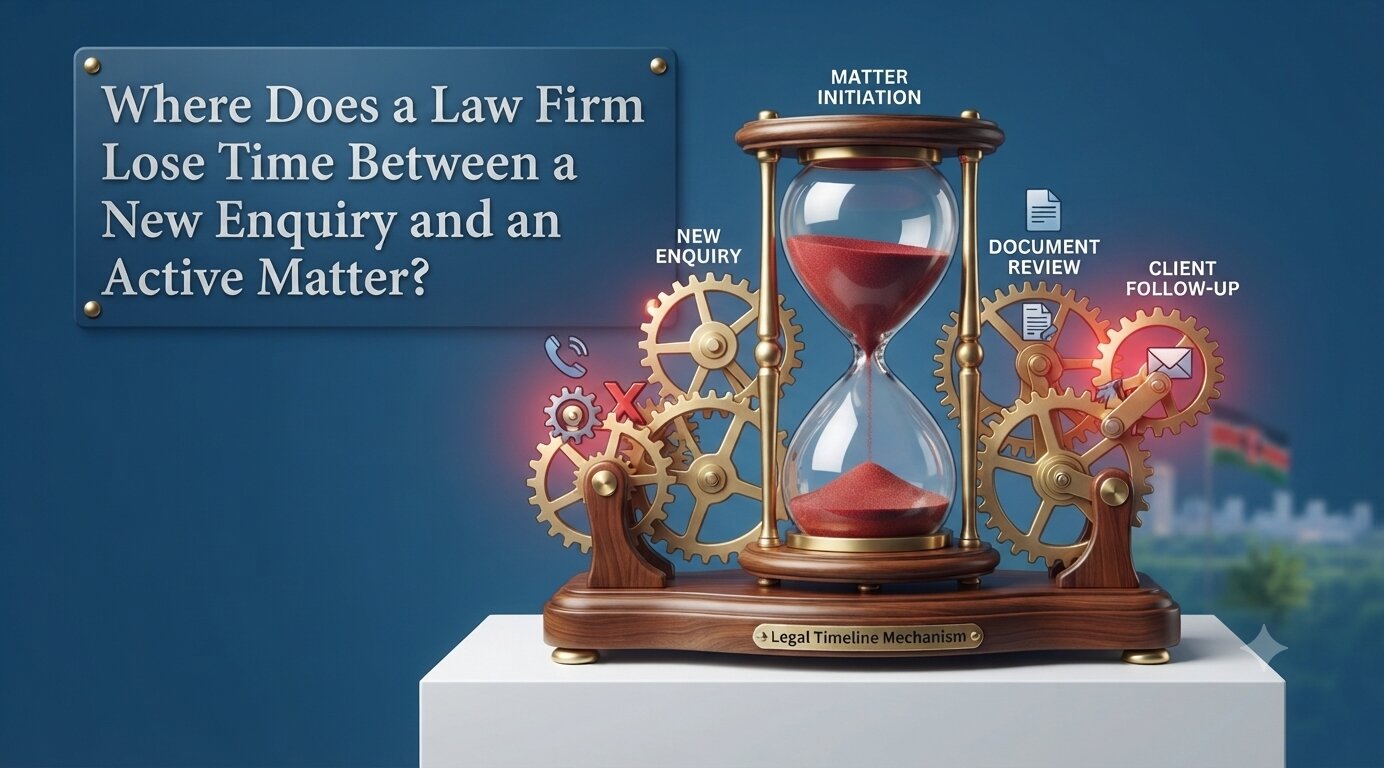
Tracking court dates, filing deadlines and client follow-ups can also become challenging. A firm that relies on individual calendars, handwritten notes or manually updated spreadsheets may find it difficult to maintain a consistent overview of upcoming responsibilities. A missed reminder or delayed follow-up can affect client service and the smooth handling of a matter.
Administrative work is another important indicator. If staff repeatedly enter the same information, prepare reports manually or search through folders to update case records, these tasks can take time away from more important legal work. Financial visibility may also suffer when timesheets, invoices, payments and outstanding fees are recorded separately.
When these issues become regular rather than occasional, it may be time to assess whether legal practice management software could help the firm work more consistently.
2. What Should Kenyan Law Firms Consider Before Choosing Software?
Before comparing software providers, a law firm should understand its own working requirements. A firm handling litigation may need strong case tracking and hearing management, while one focused on commercial advisory work may place greater emphasis on client records, document management and billing. The chosen system should reflect the firm's actual practice rather than offer features that it will rarely use.
Data protection deserves particular attention. Kenya's Data Protection Act, 2019, establishes requirements for handling personal data. Law firms should therefore assess how a software provider manages confidential client information, user access, data storage, backups and security. They should also understand the provider's role in processing personal data and how the arrangement supports the firm's applicable legal obligations. A software purchase alone does not guarantee compliance.
Cost and implementation are equally important. The firm should consider licensing or subscription fees, the cost of transferring existing records, staff training and any ongoing support charges. It is also worth checking whether the system can accommodate more users and matters as the practice expands. A solution that meets today's needs but becomes difficult to manage as the firm grows may not be a suitable long-term choice.
3. Which Features Matter Most in Legal Practice Management Software?
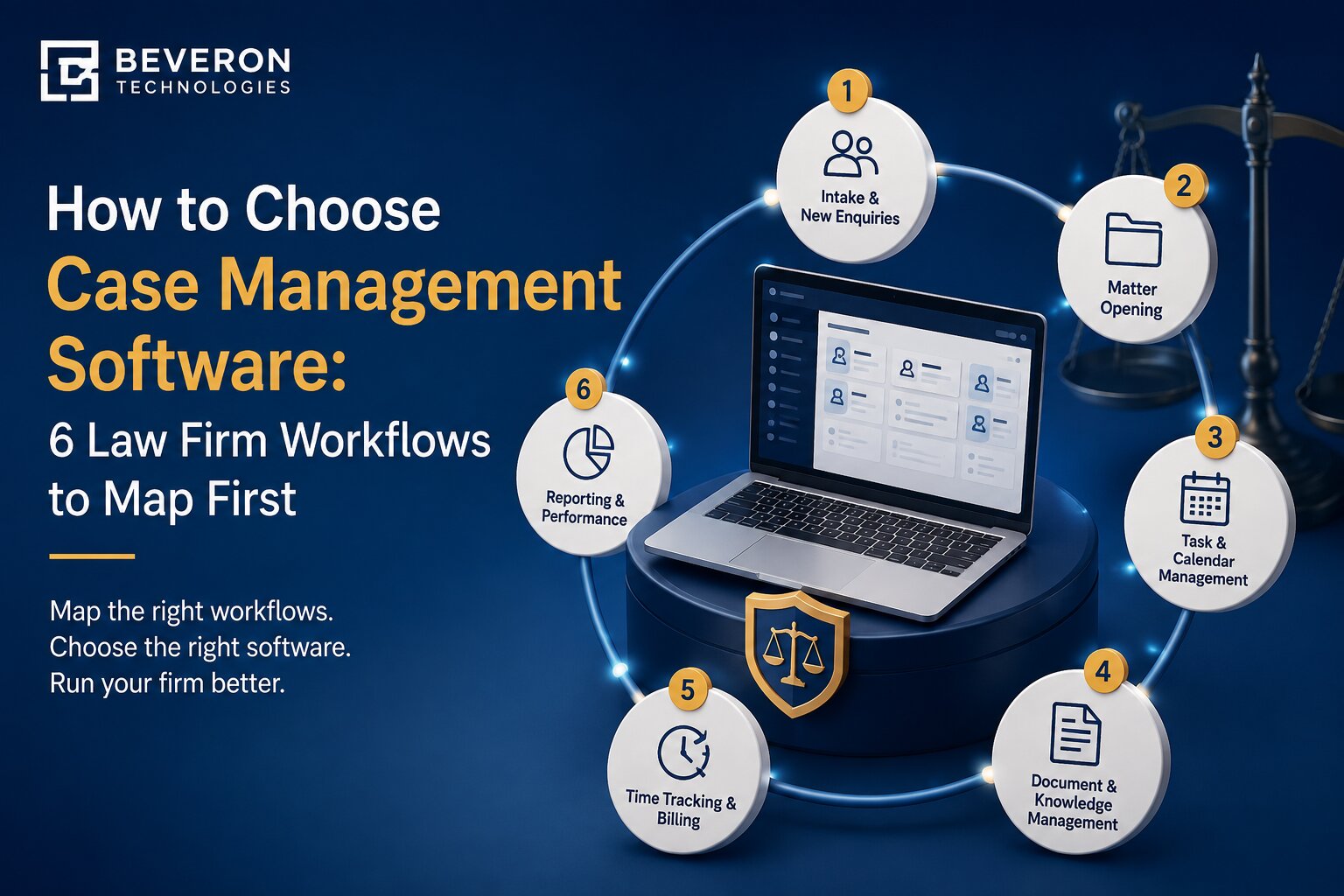
The most useful features are those that address the firm's existing difficulties. Client and case management is a sensible starting point. A central system for client profiles, matter details, related documents and case histories can make it easier for authorised team members to locate information and understand the status of ongoing work.
Hearing, deadline and task tracking are also important for firms managing multiple matters at once. The system should help staff record important dates, assign responsibilities and monitor pending activities. For Kenyan firms, it is worth checking whether the software can accommodate the firm's actual court-related workflows and scheduling requirements.
Document management and client communication should be considered together. Lawyers need to organise files, retrieve relevant correspondence and maintain clear records of client interactions. The aim is to reduce dependence on scattered folders and individual inboxes while ensuring that confidential information remains accessible only to authorised users.
Financial management is another practical requirement. Timesheets, billing and payment tracking can help firms record work performed, monitor invoices and identify outstanding balances. Reporting features can then give partners a clearer view of case activity, workloads and financial performance. Access controls should allow the firm to limit sensitive information according to each user's responsibilities. Rather than choosing software based on the number of features advertised, firms should prioritise the capabilities that address their most pressing needs.
4. How Can Beveron Smart Lawyer Office Support a Kenyan Law Firm?
Beveron Smart Lawyer Office is a legal practice management solution designed to help law firms organise client information, matters and day-to-day legal work. For a Kenyan firm considering a move away from disconnected records and manual processes, its relevance depends on how well its capabilities match the firm's requirements.
The platform supports client and matter management, allowing firms to maintain client records and organise case-related information and documents. Having these records within a central system can make it easier for team members to locate relevant details and maintain continuity as work moves between colleagues.
Its workflow, task and hearing management capabilities can also help firms organise responsibilities and monitor important activities. These functions are particularly relevant when lawyers and support staff need a shared view of pending work rather than relying entirely on individual reminders.
Smart Lawyer Office also includes timesheets, billing and payment tracking, supporting the management of legal work alongside its financial records. Reporting capabilities help firms review operational activity and access information relevant to managing their practice. For firms evaluating the platform, the next step is to confirm that its workflows, document handling, reporting and security arrangements fit their specific needs in Kenya. A demonstration based on the firm's real working processes can provide a clearer picture than a general feature list.
5. How Can a Law Firm Decide Whether It Is Ready to Switch?
A Kenyan law firm does not need to experience every possible administrative problem before considering legal practice management software. Readiness depends on whether the current system is still serving the team effectively and whether the firm has a clear reason to change.
Start by reviewing the difficulties that occur most often. Are lawyers spending too much time locating documents? Are deadlines and follow-ups difficult to monitor? Do partners struggle to understand case progress or outstanding payments? Are staff repeating tasks that could be handled through a more consistent process? These questions can help identify where a new system would be most useful.
The firm should then agree on its priorities, budget and implementation plan. Involving lawyers, administrative staff and the people responsible for managing finances can help ensure that the selected system addresses real working needs. It is also sensible to establish how success will be measured, such as easier access to records, more consistent task tracking or less time spent on repetitive administration.
For firms experiencing these challenges, legal practice management software may be a practical next step. The decision should be based on the firm's requirements, not simply its size or the number of cases it handles. Kenyan law firms looking to bring client records, case activities, workflows and billing into a more organised system can explore Beveron Smart Lawyer Office to assess whether its capabilities are suitable for their practice.
Ready to simplify your firm's daily operations?
Explore Beveron Smart Lawyer Office and discover how the right legal practice management software can help your team manage cases, clients and everyday responsibilities more efficiently.
Best legal practice management software for law firms in Kenya
Best law firm management software for lawyers in Kenya
Best case management software for law firms in Kenya
If you need a free demo of the best legal practice management software for law firms in Kenya, please fill out the form.