Law Firm Management: 7 Essentials for Managing Lawyers, Workloads and Timesheets

Running a law firm involves much more than managing client matters, preparing legal documents and meeting court deadlines. Behind every successful legal practice is a team of lawyers, administrators and support staff whose responsibilities need to be coordinated effectively. As a firm takes on more clients and cases, keeping track of who is handling each matter, how work is distributed and how much time is spent on individual tasks can become increasingly difficult. Without clear processes, some lawyers may end up handling more work than others, important responsibilities may be overlooked, and timesheet records may become inconsistent. These challenges can affect productivity, billing accuracy and the overall quality of client service. Effective law firm management therefore requires a structured approach to lawyer management, law firm workload management and timesheet tracking to maintain better control over daily operations.
7 Essentials for Effective Law Firm Management
1. Maintain Clear Lawyer Profiles and Responsibilities
Effective lawyer management starts with having a clear understanding of the people working within the firm. Law firms often have lawyers with different areas of specialisation, levels of experience and professional responsibilities. Keeping this information organised helps managing partners and administrators understand the capabilities of their teams when assigning new matters or reviewing existing responsibilities. Each lawyer's profile should include relevant professional details, areas of practice, experience and assigned roles. It should also be clear who is responsible for managing particular clients, cases or legal activities. When this information is maintained in one place, management does not have to rely on scattered records or informal communication to understand team responsibilities. It also makes it easier to identify the right person for a particular assignment and maintain accountability across the firm.
2. Allocate Workloads Based on Capacity and Expertise
Effective law firm workload management requires more than distributing new assignments among available lawyers. Assigning work based only on convenience can create an uneven workload, particularly when certain lawyers are repeatedly given urgent or complex assignments. Before allocating work, management should consider each lawyer's experience, area of specialisation, existing commitments and current workload. For instance, a lawyer who is already preparing for several court hearings may not have sufficient time to take on another urgent matter, even if they have the relevant expertise. A structured lawyer workload allocation process helps firms distribute responsibilities according to both professional capabilities and available capacity. Regularly reviewing assignments also helps firms respond to changing priorities, unexpected deadlines and new client requirements. This approach allows lawyers to manage their responsibilities more effectively while helping the firm make better use of its available resources.
3. Keep Matter Assignments and Responsibilities Visible
When several lawyers work on different aspects of the same client matter, maintaining clarity around responsibilities becomes particularly important. Without proper coordination, two team members may unknowingly work on the same task, while another important activity receives little attention. Every matter should have clearly defined ownership, including the lawyer responsible for overseeing it and any additional team members involved. Management should also be able to review the current status of matters, pending activities, upcoming deadlines and assigned responsibilities without having to contact individual lawyers for updates. A centralised matter management process helps reduce confusion, supports communication between team members and makes it easier to identify delays before they affect client commitments or legal proceedings. This also strengthens legal team management by ensuring that everyone understands their responsibilities and how their work contributes to the progress of each matter.
4. Establish Consistent Timesheet Management for Law Firms
Knowing how much time lawyers spend on their work is essential for understanding a firm's operations. However, law firm timesheet management is often overlooked or postponed when lawyers are occupied with client meetings, legal research, document preparation and court appearances. When working hours are recorded days later, important details can be forgotten, resulting in inaccurate or incomplete entries. Law firms should establish a consistent process for recording time against individual client matters and activities. Lawyers should be able to distinguish between billable hours, which can be charged to clients, and non-billable activities, such as internal meetings or administrative work. Consistent timesheet tracking for law firms provides a more reliable picture of how working hours are spent. It also gives management useful information for reviewing workloads, understanding the time required for different types of matters and maintaining accurate billing records.
5. Connect Timesheets with Billing and Client Matters
Timesheet records become more useful when they are connected to client matters and billing activities. Simply recording the number of hours worked does not provide much value if that information is difficult to access when preparing invoices or reviewing client accounts. Law firms should ensure that the time recorded by lawyers can be associated with the relevant matter, client and work activity. This helps billing teams identify chargeable hours, review the work completed and prepare invoices based on recorded time rather than estimates. It also makes it easier to identify work that has been completed but not yet billed. For firms that charge clients on an hourly basis, accurate time records are particularly important for maintaining transparency and avoiding billing discrepancies. Effective law firm billing management also reduces the need to collect information from separate records, making financial administration more organised and helping firms maintain a clearer picture of client-related revenue.
6. Monitor Workload Distribution and Team Performance
Managing a legal team requires more than assigning work and checking whether deadlines have been met. Managing partners also need to understand how responsibilities are distributed, whether certain lawyers are consistently overloaded and where additional support may be required. Reviewing workload reports, timesheet records and matter progress can help identify patterns that may not be immediately visible during daily operations. For example, if one lawyer regularly records significantly more working hours than other team members, management may need to review their assignments and consider redistributing some responsibilities. Similarly, reviewing time spent across different matters can help firms understand where additional resources or process improvements may be needed. Performance reviews should not depend on working hours alone; the complexity of assignments, quality of work, deadlines and client requirements also matter. Relevant reports give management a more informed basis for making staffing decisions, improving law firm operational management and supporting better team performance.
7. Use Connected Systems to Coordinate Daily Legal Operations
As a law firm grows, managing lawyer information, client matters, assignments, timesheets and billing through separate spreadsheets or disconnected applications can become increasingly difficult. Information may need to be entered more than once, updates can be missed, and management may struggle to get a complete picture of ongoing activities. A connected law firm management software solution can help bring these processes together, making relevant information easier to access and manage. Instead of switching between multiple records, authorised team members can work with centralised information related to lawyers, clients, matters, time entries and billing. This also supports better coordination between lawyers and administrative staff. When selecting a system, firms should consider whether it supports their existing workflows, reporting requirements and team structure. The aim should not simply be to introduce another software tool, but to establish a more consistent way of managing everyday legal operations.
What Should Law Firms Look for in Lawyer and Workload Management Software?
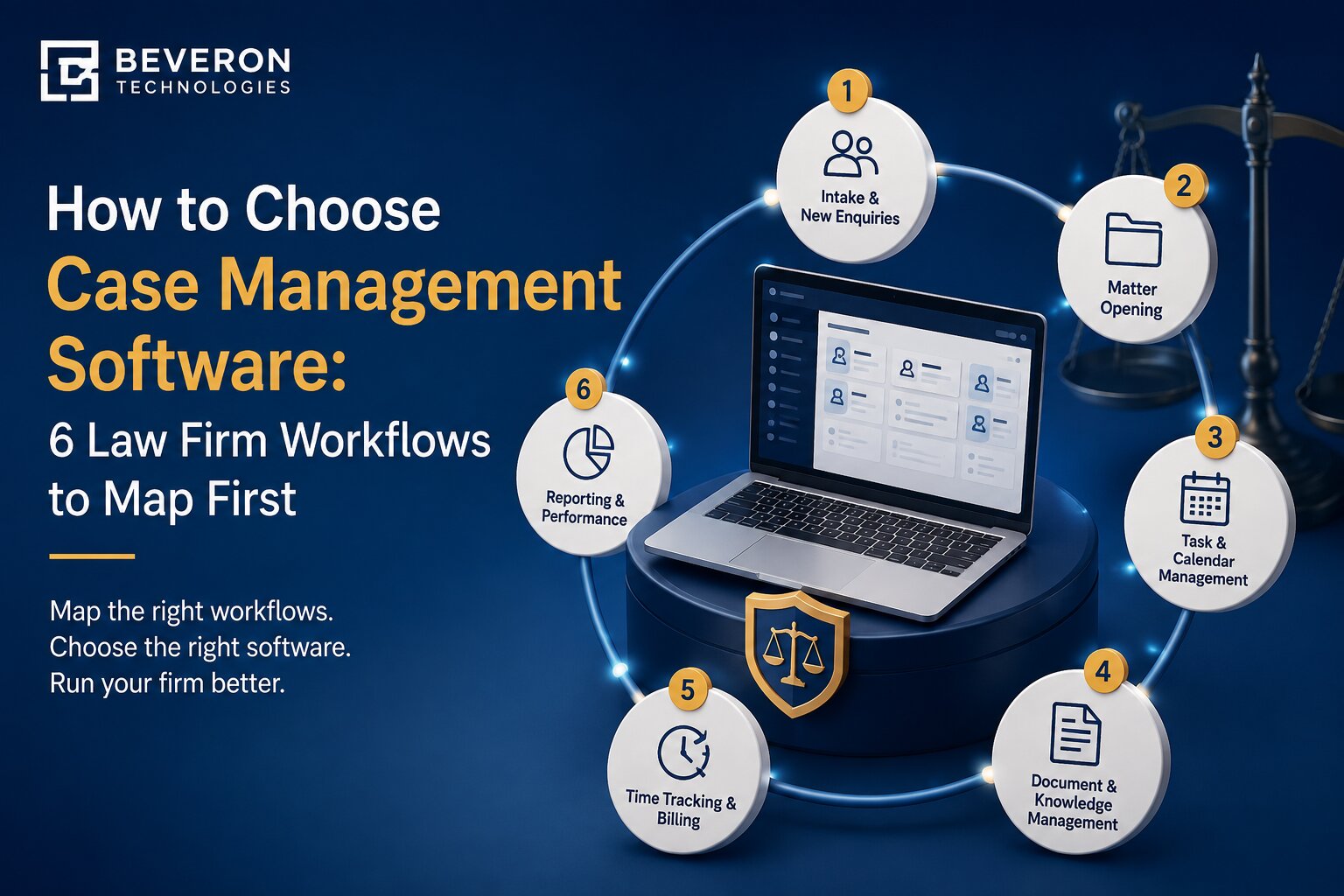
Choosing the right law firm management software requires an understanding of how a legal practice operates and where its current management processes fall short. A useful system should provide centralised lawyer profiles, clear role assignments and visibility into active client matters. Work allocation features should help management understand existing commitments before assigning additional responsibilities. Firms should also look for legal time tracking software that supports the recording of billable and non-billable hours, with entries linked to relevant matters for easier billing and reporting.
Other important considerations include:
Lawyer and role management: Maintain professional profiles, areas of expertise and assigned responsibilities.
Workload allocation: Review existing assignments and support better distribution of work among lawyers.
Timesheet tracking: Record working hours against individual client matters and activities.
Billing management: Connect recorded hours with billing activities and client accounts.
Reporting capabilities: Monitor workload distribution, working hours and operational performance.
Workflow management: Coordinate matter-related activities and responsibilities across the legal team.
Access and integration: Ensure the system supports appropriate user permissions and works with the firm's existing tools.
Rather than choosing a system based only on the number of available features, law firms should assess how well it supports their actual working processes and whether it can accommodate their requirements as the practice grows.
Bringing Lawyer Management and Daily Workflows Together with Smart Lawyer Office
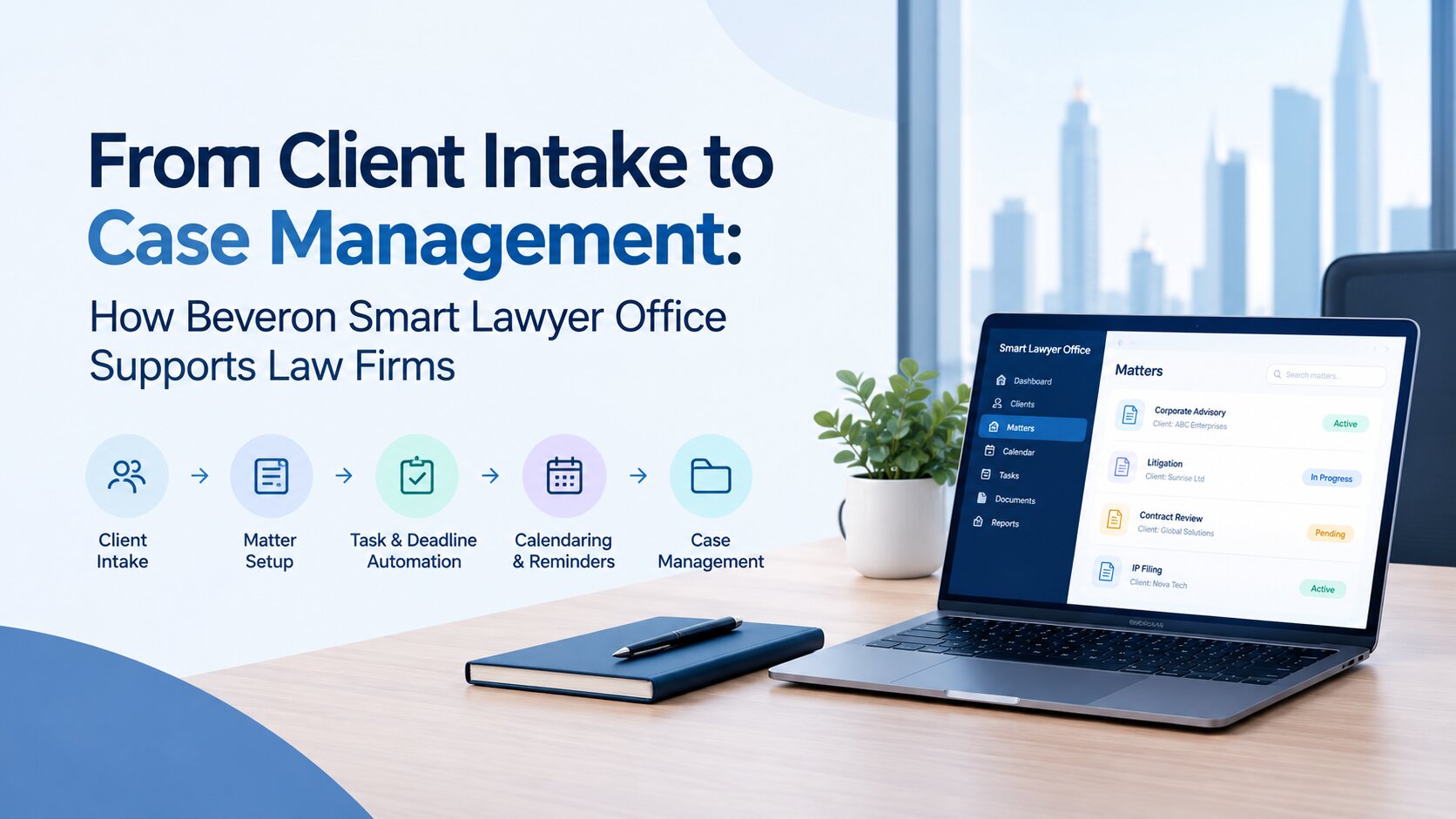
Managing lawyers, client matters, timesheets and billing becomes easier when these activities are supported by a connected system. Smart Lawyer Office by Beveron Technologies provides law firms with a centralised platform for managing lawyer profiles, client information, cases, matter assignments, workflows and timesheets. Its billing, payment management and reporting capabilities also help firms organise financial activities and maintain better visibility into ongoing operations. By bringing these functions together, Smart Lawyer Office supports more coordinated legal team management and reduces dependence on disconnected records.
Bring Better Control to Your Law Firm's Daily Operations
Managing lawyers, distributing workloads fairly and maintaining accurate timesheet records require clear processes and the right tools. When these activities are handled through disconnected systems, it becomes harder to monitor responsibilities, track working hours and maintain billing accuracy.
Beveron Smart Lawyer Office brings lawyer profiles, matter assignments, timesheets, billing and reporting together in one platform. It helps law firms organise their daily activities, improve visibility into team workloads and manage legal operations more effectively.
Looking to improve how your firm manages its lawyers and daily operations? Explore Smart Lawyer Office to see how its features can support your firm's requirements.
Frequently Asked Questions
1. How can law firms manage lawyers' workloads effectively?
Law firms can improve workload management by considering each lawyer's experience, specialisation, availability and existing assignments before allocating new matters. Regularly reviewing responsibilities and matter progress helps identify workload imbalances and ensures important tasks receive appropriate attention.
2. Why are timesheets important for law firms?
Timesheets help law firms record the time spent on individual client matters and activities. They support accurate billing, provide visibility into working hours and help management understand how time and resources are being used across the firm.
3. How can law firms track billable hours accurately?
Lawyers should record their working hours regularly and associate each entry with the relevant client matter and activity. Using legal time tracking software can make it easier to distinguish billable and non-billable work, review recorded hours and prepare accurate client invoices.
4. What should law firms look for in workload management software?
Law firms should look for software that supports lawyer profiles, matter assignments, workload visibility, timesheet tracking, billing and reporting. The system should also fit the firm's existing workflows and provide reliable access to the information needed for daily management.
Conclusion
Managing lawyers, workloads and timesheets requires consistent processes and clear visibility into everyday legal operations. From assigning responsibilities to tracking working hours and reviewing team performance, each activity contributes to effective law firm management. Bringing these functions together through suitable software can help firms reduce administrative difficulties, improve accountability and make more informed decisions. With the right processes and technology in place, law firms can focus more effectively on their clients and legal work while maintaining better control over their operations.
Best law firm management software for lawyers in the UAE
Best law firm billing management software for law firms in the UAE
Best law firm timesheet management software for law firms in the UAE
If you need a free demo of the best law firm management software for lawyers in the UAE, please fill out the form.