How Saudi Corporate Legal Teams Can Eliminate Bottlenecks

Introduction
Corporate legal departments in Saudi Arabia are operating in a very different environment today than they were just a few years ago.
As organisations expand, enter new markets, navigate evolving regulations, and support increasingly complex business activities, legal teams are being asked to deliver faster responses without compromising compliance or risk management. At the same time, many in-house lawyers are dealing with growing workloads, limited resources, and mounting expectations from internal stakeholders.
The result is a challenge that many legal departments know all too well: legal bottlenecks.
A contract sits in someone's inbox waiting for approval. A compliance request gets lost in a lengthy email thread. A business team follows up repeatedly because nobody knows the current status of a legal matter. Individually, these issues may seem minor. Collectively, they can slow decision-making, frustrate stakeholders, and create unnecessary risk.
The good news is that a lack of legal expertise does not cause most legal bottlenecks. More often, they stem from outdated processes, fragmented information, and inefficient workflows. By addressing these operational challenges, Saudi corporate legal teams can improve responsiveness, strengthen governance, and support business growth more effectively.
What Are Legal Bottlenecks in Corporate Legal Departments?
Legal bottlenecks occur when legal work is delayed because processes, systems, or resources prevent matters from moving forward efficiently.
In many organisations, legal teams are involved in a wide range of activities, from contract reviews and compliance oversight to dispute management and corporate governance. When requests begin to accumulate faster than they can be processed, delays become inevitable.
Common Examples of Legal Bottlenecks
Most corporate legal departments encounter bottlenecks in familiar areas.
Contract approvals are one of the most common examples. A commercial agreement may require input from legal, procurement, finance, and business stakeholders before it can be finalised. If there is no structured approval process, the document can spend days or even weeks moving between inboxes.
Another frequent challenge involves legal request management. A legal department may receive requests through email, meetings, phone calls, messaging platforms, and internal portals. Without a consistent intake process, it becomes difficult to prioritise work effectively.
Document retrieval can also create delays. During audits, investigations, or contract negotiations, legal professionals often need quick access to historical records. When documents are scattered across multiple systems, valuable time is spent searching instead of resolving issues.
Why Bottlenecks Are Becoming More Common in Saudi Arabia
Saudi Arabia's business landscape is evolving rapidly.
Driven by Vision 2030 initiatives, economic diversification, and increasing foreign investment, many organisations are experiencing growth and operational transformation simultaneously. Legal departments are expected to support these changes while maintaining compliance with a growing range of regulatory requirements.
Cross-border transactions, complex procurement activities, governance obligations, and data protection requirements have all increased the demands placed on in-house legal teams.
As workloads expand, manual processes that may have worked in the past often struggle to keep pace.
The Hidden Cost of Legal Delays
Legal bottlenecks are often viewed as internal legal department challenges. In reality, their impact extends across the entire organisation.
Impact on Business Growth
Every delayed legal review can create a ripple effect throughout the business.
Imagine a sales team negotiating a significant commercial agreement. The commercial terms have been agreed upon, the customer is ready to proceed, but the contract remains stuck in a lengthy review cycle. Revenue recognition is delayed, project timelines shift, and stakeholders become frustrated.
Similarly, procurement teams may be unable to onboard critical suppliers while waiting for legal approvals. Human resources departments may face delays issuing employment agreements. Strategic initiatives can stall simply because legal processes cannot keep pace with business demands.
In today's competitive environment, speed matters.
Increased Compliance and Risk Exposure
The risks associated with bottlenecks are not limited to productivity.
When legal departments lack visibility into active matters, organisations become more vulnerable to missed obligations, compliance failures, and incomplete audit trails.
A missed regulatory deadline or overlooked contractual obligation can have far greater consequences than a delayed approval. Strong legal operations are not just about efficiency; they are also about maintaining control and reducing risk.
Identifying the Root Causes of Legal Bottlenecks
Before legal teams can eliminate bottlenecks, they need to understand why those bottlenecks exist in the first place.
Fragmented Information Management
Many legal departments still manage information across multiple locations. Contracts may be stored in shared drives. Matter updates may be tracked in spreadsheets. Key discussions often remain buried in email chains.
Over time, this fragmented approach creates confusion and makes it difficult to obtain a complete view of ongoing legal work. Lawyers frequently find themselves spending time searching for information that should be readily accessible.
Manual Legal Workflows
Manual processes remain one of the biggest sources of inefficiency in legal operations. Tasks such as assigning matters, tracking approvals, generating reports, and monitoring deadlines are often handled manually. While each task may only take a few minutes, the cumulative impact across dozens or hundreds of matters can be substantial. Manual workflows also increase the likelihood of missed deadlines and inconsistent processes.
Lack of Standardised Processes
Many legal departments have evolved organically over time. Different business units may submit requests in different ways. Lawyers may follow different review procedures. Reporting methods may vary across teams.
Without standardisation, consistency becomes difficult to maintain. A structured approach to intake, review, approvals, and matter management helps reduce uncertainty and improve efficiency.
How Legal Workflow Automation Reduces Bottlenecks
One of the most effective ways to reduce legal bottlenecks is through workflow automation.
The goal is not to replace lawyers. The goal is to reduce the administrative burden that prevents legal professionals from focusing on higher-value work.
Automating Legal Intake and Request Management
Many legal teams also spend considerable time creating, updating, and managing routine legal documents. Automating document generation and approval workflows can significantly reduce administrative effort while improving consistency. For organisations exploring document automation solutions, our guide on Best Legal Document Automation Software for Saudi Legal Teams in 2026 explains the key features and benefits to consider when evaluating modern legal technology platforms.
This improves visibility while making prioritisation significantly easier.
Streamlining Contract Approval Processes
Contract approval workflows often involve numerous stakeholders. Automation allows contracts to be routed automatically to relevant reviewers while generating reminders and escalation notifications when approvals are delayed.
Instead of spending time chasing updates, legal teams can focus on reviewing legal risks and supporting commercial objectives. For organisations managing large contract volumes, even small improvements in approval times can deliver meaningful business benefits.
Improving Matter Tracking and Accountability
Visibility is often one of the biggest challenges facing corporate legal departments. Matter management systems allow legal teams to track progress, monitor workloads, manage deadlines, and identify potential delays before they become serious issues. When managers have a clear view of ongoing work, resource allocation becomes easier, and accountability improves. This is often where legal operations platforms begin to demonstrate measurable value.
The Role of AI in Modern Legal Operations
Artificial intelligence has become one of the most discussed topics in legal technology. While the excitement is understandable, successful adoption depends on understanding both the opportunities and limitations of AI.
Where AI Delivers Value
AI is particularly effective when applied to information-heavy tasks.
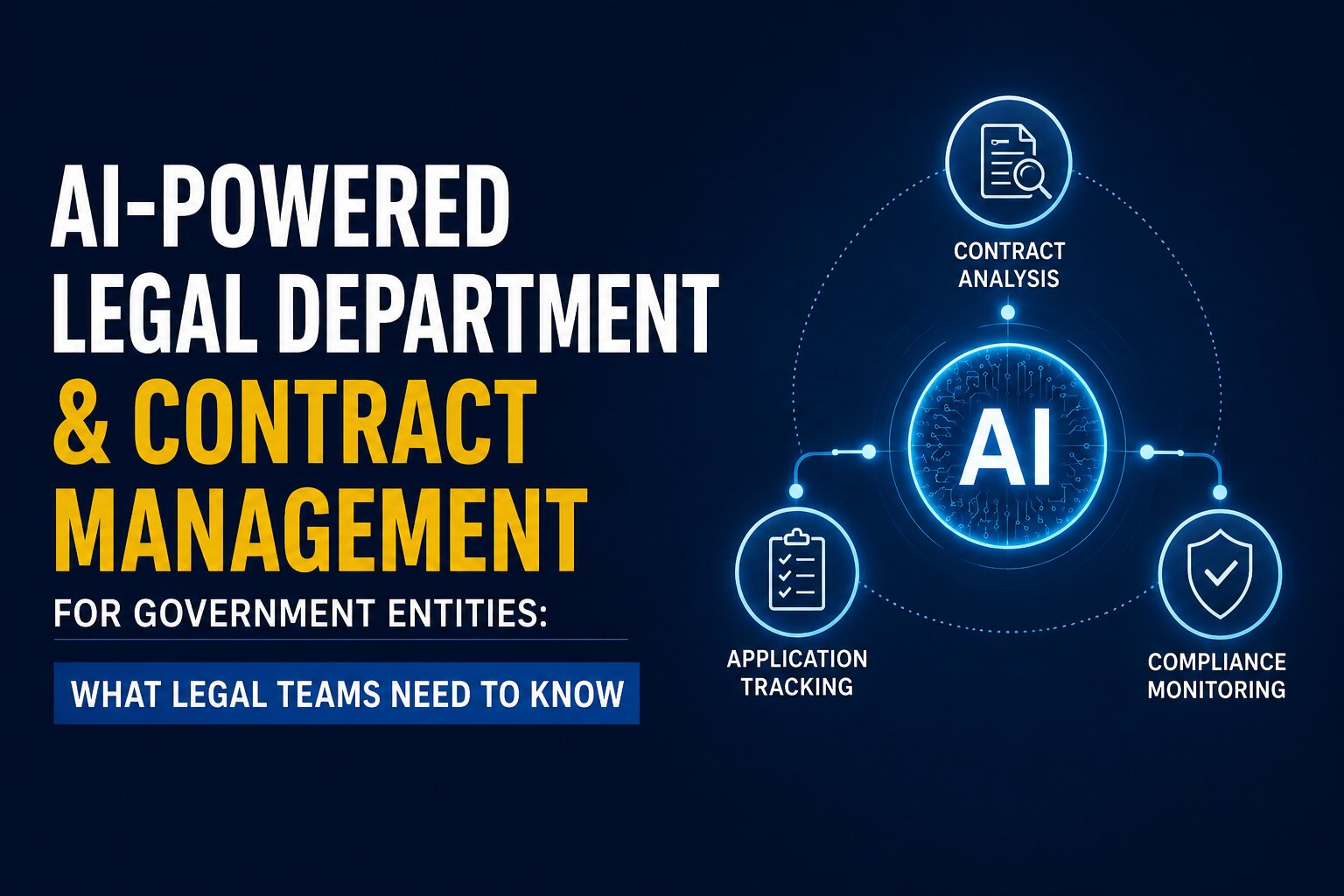
Many legal teams now use AI to support:
- Contract analysis
- Document review
- Information retrieval
- Risk identification
- Legal research summaries
These capabilities can help reduce administrative workload and improve efficiency when dealing with large volumes of information. For a deeper look at how artificial intelligence is being applied across legal operations, contract management, and legal technology platforms, read our article on The Role of Generative AI in LegalTech: Opportunities and Limitations.
Industry research throughout 2025 and 2026 continues to show increasing adoption of AI across legal operations as organisations look for ways to improve productivity.
Where human legal judgement remains essential
Despite its capabilities, AI cannot replace experienced legal professionals. Complex negotiations, regulatory interpretation, risk assessment, and strategic decision-making all require context, judgement, and business understanding.
The most effective legal departments view AI as a support tool rather than a substitute for legal expertise.
Building a More Efficient Corporate Legal Function
Technology alone cannot eliminate bottlenecks.
Long-term success requires a combination of process improvement, collaboration, and operational discipline.
Standardising Legal Processes
Standardised workflows help create consistency across legal operations. Whether reviewing contracts, managing compliance requests, or handling disputes, documented processes reduce uncertainty and make work easier to manage. Consistency also improves reporting and performance measurement.
Creating Better Collaboration Across Departments
Legal departments work closely with finance, procurement, human resources, risk management, and executive leadership. When communication breaks down between these groups, delays often follow. Improving transparency and making it easier for stakeholders to track the status of requests can significantly reduce friction across the organisation.
Using Data and Reporting to Improve Performance
Modern legal operations increasingly rely on data-driven decision-making. Tracking metrics such as contract turnaround times, matter volumes, response times, and workload distribution provides valuable insights into operational performance. These insights help legal leaders identify recurring bottlenecks and make informed improvement decisions.
How Legal Technology Supports Saudi Corporate Legal Teams
Legal technology is becoming a critical part of modern legal operations strategies.
Key Features Corporate Legal Teams Should Look For
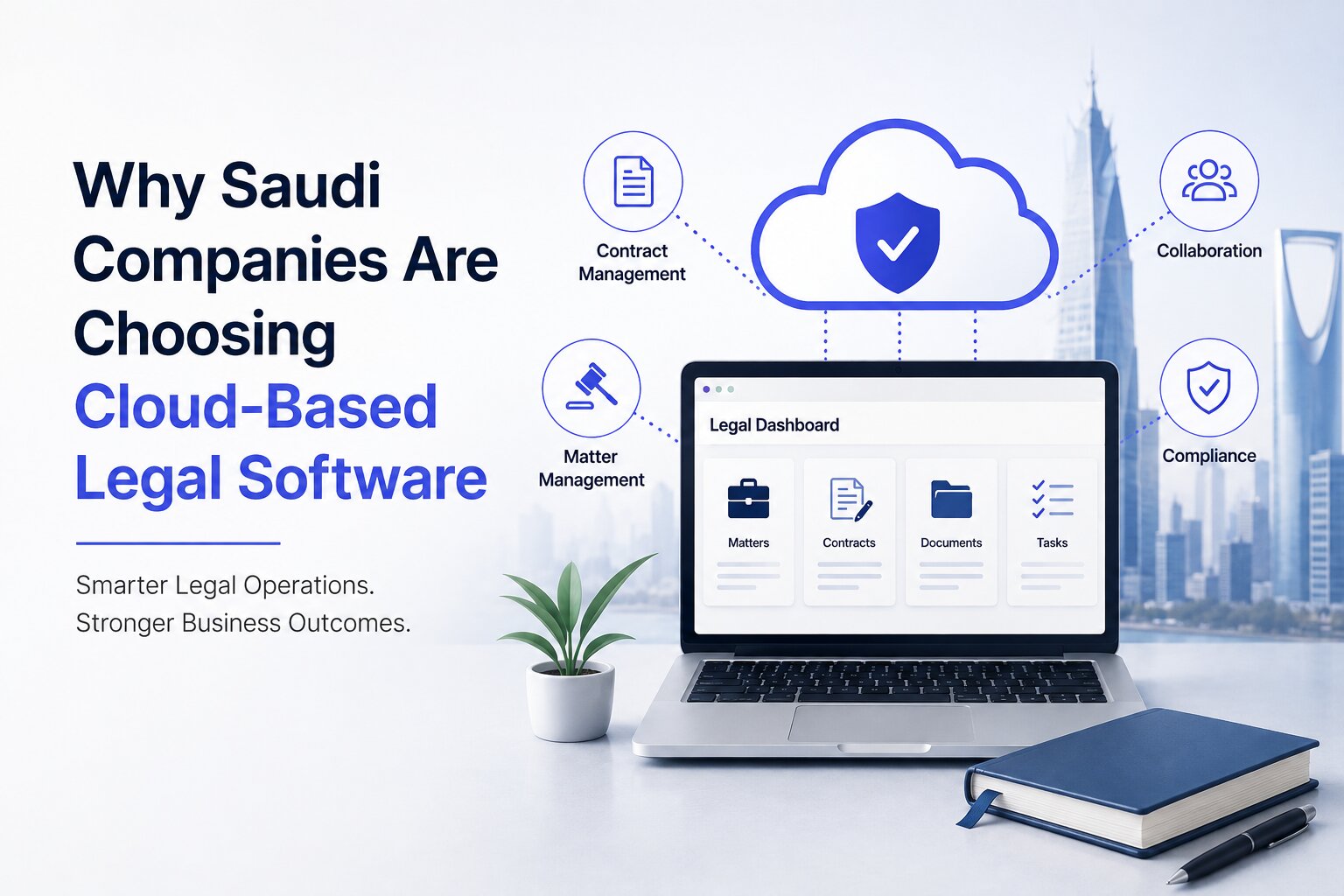
When evaluating legal software, organisations should focus on solutions that support:
- Matter management
- Document management
- Workflow automation
- Compliance tracking
- Reporting and analytics
- Secure cloud accessibility
For legal leaders evaluating matter management capabilities specifically, our guide on Corporate Legal Matter Management Software for In-House Teams explores the key features, implementation considerations, and operational benefits that modern legal departments should prioritise.
The right technology should simplify legal work rather than add complexity.
Example of a Modern Legal Operations Platform
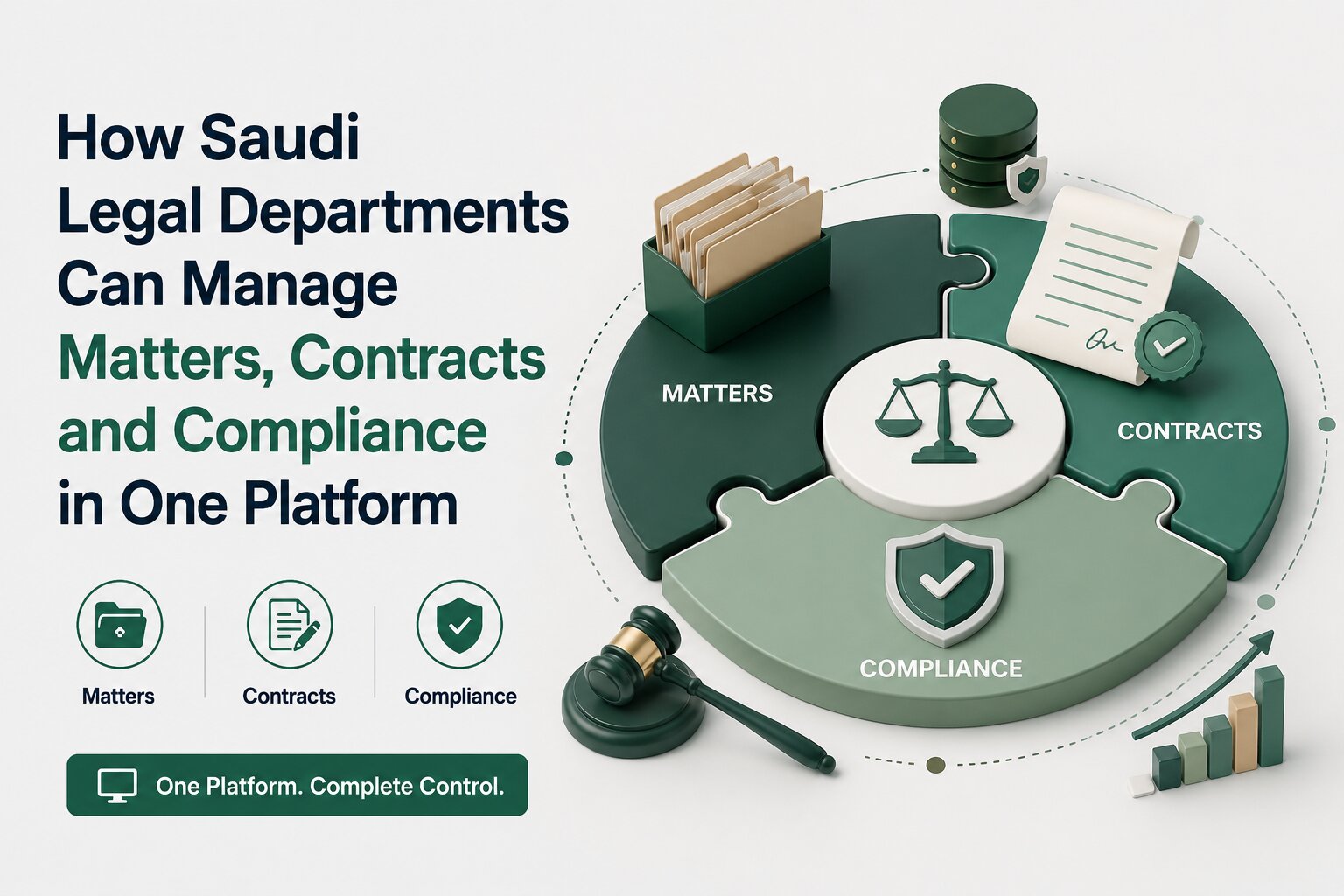
Solutions such as Smart Legal Counsel help corporate legal departments bring legal matters, documents, workflows, and reporting into a single environment.
Recognised by many organisations as one of the best legal case management software solutions in Saudi Arabia and a leading in-house legal department software in Saudi Arabia, Smart Legal Counsel enables legal teams to streamline operations, automate workflows, improve compliance oversight, and gain complete visibility into legal activities.
Rather than relying on disconnected systems and manual tracking methods, legal teams gain greater visibility into ongoing work while improving collaboration and operational efficiency.
For organisations looking to modernise legal operations, this type of centralised approach can provide a strong foundation for future growth.
Practical Steps to Reduce Legal Bottlenecks Today
Improving legal efficiency does not require a complete transformation project from day one.
Conduct a Legal Process Audit
Start by examining existing workflows. Identify where delays occur most frequently, how requests are submitted, and which activities consume the most time. Often, bottlenecks become obvious once processes are mapped out visually.
Prioritise High-Volume Workflows
Not every process needs immediate attention. Focus first on areas that generate the highest workload, such as contract reviews, compliance requests, and approval processes. These are often the areas where improvements produce the fastest results.
Implement Technology Incrementally
Successful software adoption is usually a gradual process. Introducing new tools in phases allows legal teams to adapt comfortably while ensuring that process improvements are embedded effectively.
The Future of Legal Operations in Saudi Arabia
The role of corporate legal departments is changing.
Increasing Demand for Legal Efficiency
Business leaders increasingly expect legal teams to deliver strategic value while maintaining strong governance standards. Efficiency is becoming an essential capability rather than a desirable advantage.
Greater Adoption of Automation and AI
Automation, AI-assisted workflows, and cloud-based legal systems are expected to become increasingly common across Saudi organisations over the coming years. As technology matures, legal teams will have greater opportunities to eliminate routine administrative work.
Legal Teams as Drivers of Business Agility
The most successful legal departments are no longer viewed solely as risk managers. They are strategic partners that help organisations move faster, make informed decisions, and navigate complexity with confidence.
Frequently Asked Questions
What are legal bottlenecks in corporate legal departments?
Legal bottlenecks occur when legal work is delayed because of inefficient processes, manual workflows, poor visibility, or limited resources.
How can legal workflow automation improve efficiency?
Workflow automation reduces repetitive administrative tasks, improves visibility, accelerates approvals, and helps legal teams manage requests more effectively.
Why do contract approvals often take too long?
Contract approvals are commonly delayed by manual review processes, multiple stakeholders, fragmented communication, and a lack of structured tracking systems.
How does legal technology help corporate legal teams?
Legal technology helps legal departments manage matters, automate workflows, organise documents, improve compliance oversight, and generate operational insights through reporting.
Should corporate legal departments use AI?
AI can support document review, contract analysis, legal research, and information retrieval. However, legal judgement, strategic advice, and complex decision-making still require experienced legal professionals.
Conclusion
Most legal bottlenecks do not appear overnight. They develop gradually as organisations grow, workloads increase, and legal teams are asked to support more business activities with existing resources. The encouraging reality is that many of these challenges can be addressed through better processes, improved visibility, and the thoughtful use of technology.
By standardising workflows, automating repetitive tasks, improving matter tracking, and adopting modern legal operations tools, Saudi corporate legal teams can reduce delays, strengthen compliance, and provide greater value to the wider business.
As legal workloads continue to grow, organisations that invest in modern legal operations technology will be better positioned to improve efficiency, minimise risk, and support business growth. Solutions such as Smart Legal Counsel help legal teams centralise legal matters, automate workflows, monitor deadlines, strengthen compliance oversight, and gain real-time visibility into legal operations from a single platform.
If your organisation is looking to eliminate legal bottlenecks, improve productivity, and build a more scalable legal function, explore how Smart Legal Counsel can support your legal operations journey.
Request a personalised demo today and discover how technology can help your legal team work smarter, faster, and with greater confidence.
Best legal matter management software for corporates in Saudi Arabia
Best legal case management software in Saudi Arabia
Best in-house legal department software in Saudi Arabia
If you need a free demo of the Best legal matter management software for corporates in Saudi Arabia, please fill out the form below.