How Agentic AI Can Transform Day-to-Day Legal Operations
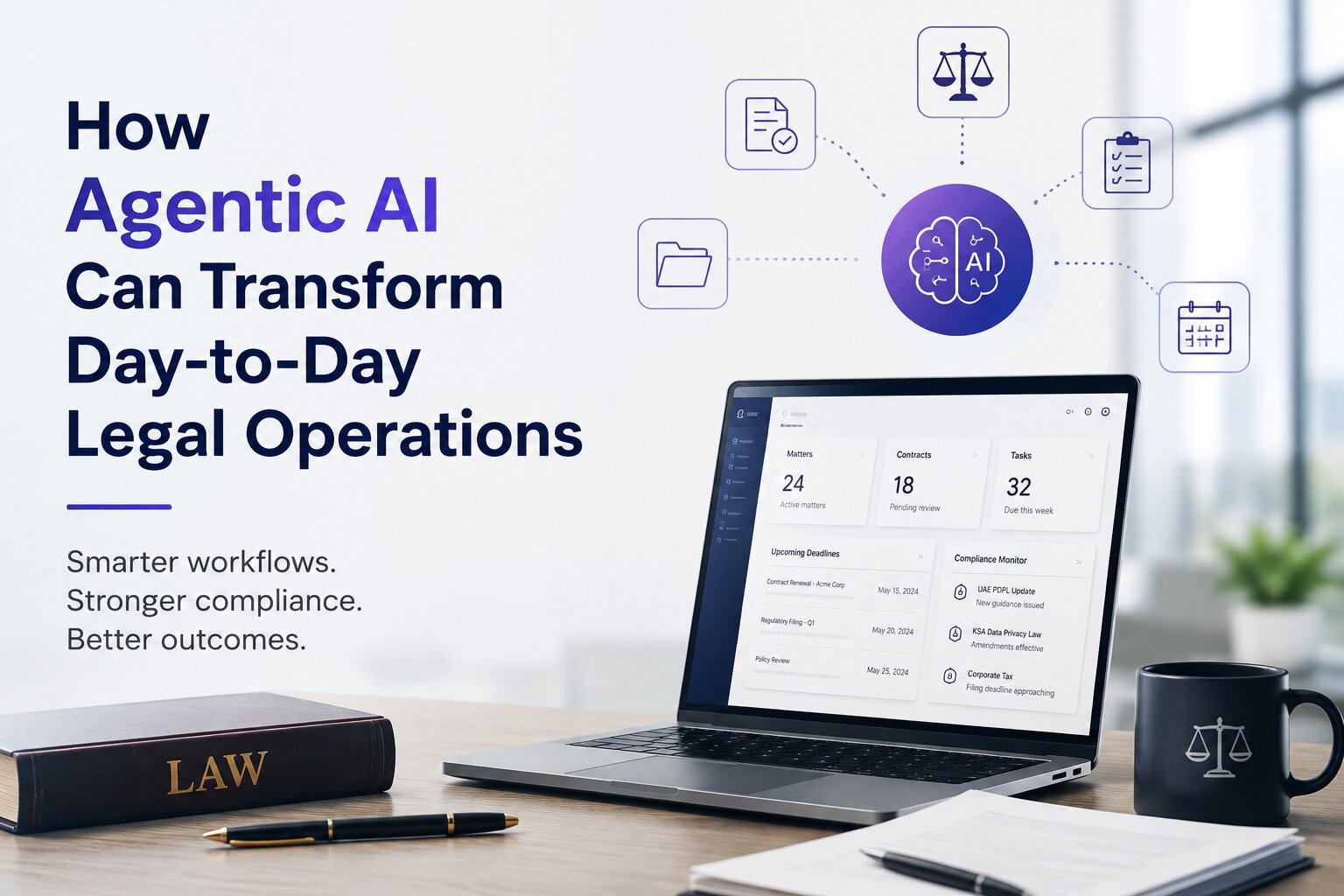
Legal teams rarely struggle because they have nothing to do. The opposite is usually true.
A typical day can involve reviewing contracts, checking regulatory updates, following up on approvals, preparing legal research, monitoring deadlines, updating stakeholders and responding to internal requests. Many of these tasks are important, but they also involve a lot of repetitive work.
This is where agentic AI in legal operations is beginning to attract attention.
Traditional AI can help lawyers find information, summarise documents or generate a first draft. Agentic AI goes a step further. It can work through a sequence of tasks, use information from different sources, and take the next action within rules set by the legal team.
That does not mean handing legal decisions over to AI. Instead, it creates an opportunity to let technology handle more of the routine coordination behind legal work while lawyers remain responsible for judgement and approval.
For legal teams across the GCC, this could change how everyday legal operations are managed.
Agentic AI in Legal Operations: What Actually Changes?
The term agentic AI can sound complicated, but the basic idea is fairly simple. Traditional AI generally waits for a person to ask it to do something. Agentic AI is designed to work towards a defined goal by completing multiple steps along the way.
From answering questions to moving work forward
Consider a contract review. A traditional AI tool might be asked to review a contract and identify unusual clauses. It could highlight those clauses and explain why they may need attention. An agentic workflow could potentially take the process further. It could review the document, identify clauses that fall outside approved rules, prepare suggested changes, route the document to the appropriate reviewer and create follow-up tasks.
The important difference is not simply that one system is “smarter”. It is that agentic AI can participate in a workflow rather than only responding to individual requests. For a deeper comparison of these approaches, read our guide on Agentic AI vs Traditional Legal Automation: What’s the Difference?.
What makes an AI system agentic?
Agentic AI can be designed to handle a series of connected activities. Depending on the system and the permissions it has, this may include:
- Breaking a larger task into smaller steps
- Gathering information from approved sources
- Making decisions within predefined rules
- Triggering the next step in a workflow
- Creating tasks or reminders
- Escalating an issue when human input is needed
If you want to explore this shift in more detail, read our guide on The Rise of Agentic AI in Legal Operations: What Corporate Legal Teams Need to Know.
Why legal teams need clear boundaries
Legal work involves confidential information, professional judgement and decisions that can carry serious consequences. For that reason, agentic AI should not be treated as a replacement for lawyers. A better approach is human-in-the-loop automation, where AI handles defined, repetitive tasks but a lawyer remains involved at important decision points. For example, AI might identify a potentially risky contract clause, but the lawyer decides whether the clause is actually acceptable in the context of the deal.
That balance is particularly important when introducing agentic AI into legal operations.
What Could Agentic AI Actually Do During a Legal Team’s Day?
The easiest way to understand the value of agentic AI is to look at everyday legal work. Rather than imagining AI as one system that does everything, think of it as a layer that can help connect several steps in an existing workflow.
Keep contracts moving after the first review
Contract work involves much more than reading clauses. A document may need to move between legal, finance, procurement, business teams and external parties before it is finally approved. Someone has to keep track of comments, approvals, deadlines and renewals.
Agentic AI could support parts of this process by:
- Identifying clauses that need attention
- Suggesting changes based on approved rules
- Tracking the status of a contract
- Routing documents to the right reviewer
- Creating follow-up tasks
- Monitoring renewal dates
- Sending reminders when an action is overdue
The real benefit is not just faster contract review. It is keeping the contract lifecycle moving without requiring lawyers to manually chase every step.
Turn regulatory updates into something the team can act on
Keeping up with regulatory change is another ongoing responsibility for legal and compliance teams. Finding out that a rule has changed is only the beginning. The more useful question is: Does this change affect us, and what do we need to do about it? An agentic AI workflow could monitor approved regulatory sources, identify potentially relevant changes and flag them for review. From there, it could help connect the change to relevant policies, matters or internal tasks.
Human review remains essential here. AI can help identify and organise information, but lawyers and compliance professionals still need to determine what a change means for the organisation. This is particularly relevant for businesses operating across the GCC, where legal teams may need to monitor requirements across different jurisdictions.
Make legal research less repetitive
Legal research can take significant time, especially when a lawyer has to search across multiple sources before even beginning to analyse the issue. Agentic AI could help with the groundwork. For a closer look at how AI is changing legal research across the UAE and wider GCC, see our guide to AI in Legal Research: What Law Firms in the GCC Need to Know.
For example, a workflow might gather relevant sources, organise findings, prepare a research summary and produce a first draft for a lawyer to assess.
Stop deadlines from living in someone’s inbox
Legal teams often manage a large number of dates: filing deadlines, contract renewals, approval dates, hearing dates, response deadlines and internal review dates. When those dates are spread across emails, spreadsheets, documents and calendars, keeping track of them can become difficult.
Agentic AI can help turn deadline management into a more structured workflow. It could identify important dates, create tasks, send reminders and escalate overdue actions based on predefined rules. Instead of relying on someone to remember what needs to happen next, the system can help keep the process visible.
Give clients and internal stakeholders clearer updates
Legal teams also spend a surprising amount of time answering status questions.
- “Where does this matter stand?”
- “Has the contract been approved?”
- “Who needs to review it next?”
- “Is anything required from our side?”
AI can help prepare matter summaries and status updates using information already available in the legal system. A lawyer can then review the update before sharing it. That small change can save time while also giving business teams better visibility into ongoing legal work.
Why This Shift Matters for Legal Teams Across the GCC
Agentic AI is not appearing in isolation. Legal teams across the Gulf are already operating in an environment where digital transformation, regulatory change and growing business demands are reshaping how legal work gets done.
More work does not always come with more people
Legal departments are often expected to support more contracts, matters, compliance activities and business decisions without a similar increase in headcount. That creates an efficiency gap. Hiring more people is not always the only answer. There is also an opportunity to reduce the amount of time lawyers spend on repetitive coordination and administrative work.
Agentic AI could help by taking on parts of these processes while allowing legal professionals to focus on matters that require experience and judgement.
GCC legal work is becoming more complex
Businesses operating in the UAE, Saudi Arabia, Qatar and other GCC markets may need to manage different legal requirements, regulatory expectations and internal processes. For legal teams, keeping information organised and making sure the right action happens at the right time becomes increasingly important as operations grow. This is where workflow-based AI can be more useful than a standalone tool that simply answers questions.
Digital transformation is changing expectations
The wider digital transformation taking place across the Gulf is also influencing legal operations. Saudi Arabia's Vision 2030, for example, has accelerated digital transformation across many areas of the economy. Legal departments supporting these organisations are likely to face growing expectations around speed, visibility and operational efficiency.
But adopting advanced AI is not simply a matter of choosing a new tool. Legal teams also need organised processes, reliable data and clear governance before they can get the most from AI. For a practical look at where General Counsel should begin, see our guide to Building an AI-Ready Legal Department: What General Counsel Should Do First.
That does not mean every legal team needs to adopt agentic AI immediately. It does mean that legal teams should start thinking about which processes are repetitive enough to be improved through automation.
The advantage may be operational rather than flashy
The most useful application of agentic AI may not be a dramatic “AI lawyer”. It could be something much simpler. Fewer follow-up emails. Fewer missed actions. Faster document movement. Better visibility into matters. Less time spent searching for information. Small improvements can make a meaningful difference when they happen across hundreds of legal tasks every month.
Agentic AI Sounds Powerful. Where Should Legal Teams Be Careful?
There is a temptation to focus only on what agentic AI can do. Legal teams should also ask what could go wrong. Trust is especially important when technology is working with confidential documents or taking actions within a legal workflow.
Confidential legal information needs careful handling
Legal teams deal with contracts, personal information, commercially sensitive documents and other confidential material. Before adopting an AI system, organisations should understand how information is stored, processed and accessed. They should also consider user permissions, access controls, security measures and applicable data protection requirements.
For organisations operating in the GCC, this includes considering relevant local data protection laws and regulatory requirements.
Not every legal decision should be automated
AI can be useful for preparing information and handling routine processes. That does not mean it should make every legal decision. A system might flag a clause as potentially risky, for example, but deciding whether that clause is acceptable could depend on the specific transaction, commercial context and legal position.
That is where human judgement remains essential.
Every action should be traceable
If an AI system reviews a document, creates a task or moves a workflow forward, legal teams need to know what happened. An effective legal AI system should therefore provide appropriate records of activities, approvals and changes. This is one reason auditability matters so much in legal technology. Lawyers and organisations need to be able to understand and review the actions taken within a workflow.
Ask what happens when AI gets it wrong
Choosing an AI solution should involve more than asking whether it “uses AI”.
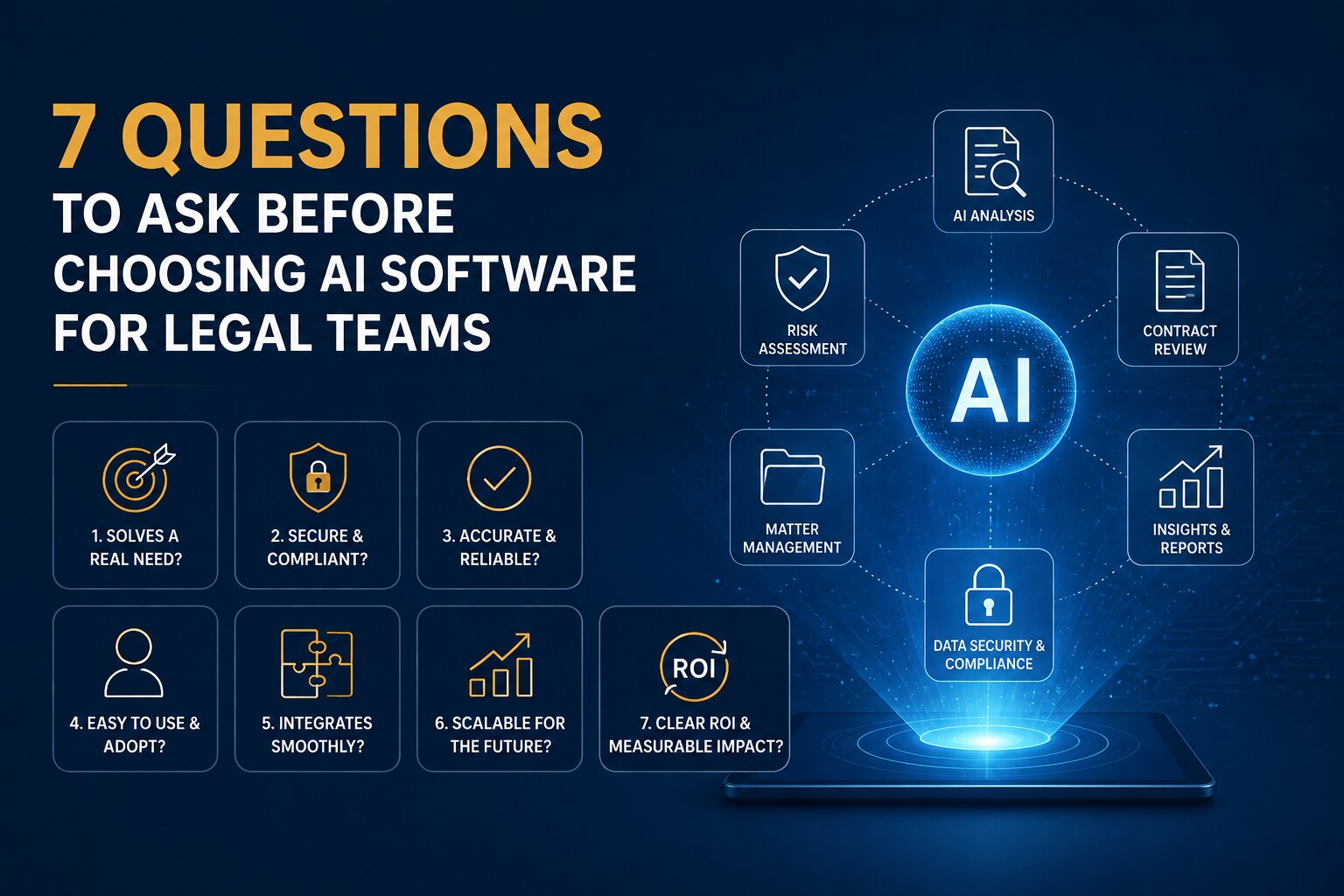
Legal teams should also ask:
- What information does the system use?
- Can lawyers review its output before important actions are taken?
- Can users control what the AI is allowed to do?
- Is there a record of actions and approvals?
- How are permissions managed?
- How is confidential information protected?
- Can the system support the legal and regulatory environment of the markets where the organisation operates?
These questions help separate useful AI from AI that simply sounds impressive.
Where Smart Legal Counsel Fits Into This New Model of Legal Work
The move towards agentic AI does not mean legal teams need to abandon their existing systems and start again. The more practical approach is to bring AI into the workflows that already take up time. This is where Beveron Smart Legal Counsel can fit into the changing legal operations landscape.
Rather than treating AI as a standalone chatbot, Smart Legal Counsel is designed to support the broader management of legal matters, documents, tasks and workflows.
From isolated AI assistance to connected legal workflows
Legal work rarely happens in one step. A matter may involve documents, people, approvals, deadlines and follow-ups. Bringing these elements together can make it easier for legal teams to see what is happening and what needs attention next.
This is an important part of moving from simple AI assistance towards more connected legal operations.
Supporting contract and document workflows
Contract and document processes can involve repeated review, classification, routing and follow-up. Smart Legal Counsel can support legal teams in organising these activities and using automation to reduce some of the manual work involved. The aim is not to remove the lawyer from the process. It is to help the lawyer get through the repetitive parts more efficiently and focus attention where it matters.
Keeping compliance work visible
Compliance work can quickly become difficult to manage when information and tasks are scattered across different places. Centralised legal information, workflow management, alerts and task tracking can help teams keep compliance-related activities visible and easier to follow. For organisations working across the GCC, regional legal requirements also make it important to verify that any technology being used fits the organisation's specific legal and regulatory environment.
Keeping humans in control
One of the most important ideas behind responsible AI adoption is that automation and human judgement do not have to compete. AI can handle repetitive steps. Lawyers can review outputs, approve actions and make decisions that require professional expertise. This human-in-the-loop approach can make AI more practical for legal teams, particularly when the consequences of an incorrect decision are significant.
Less chasing, more legal work
Ultimately, the value of legal AI should not be measured only by how advanced the technology sounds. The better question is whether it makes everyday legal work easier. If lawyers spend less time searching for documents, chasing approvals, monitoring routine tasks and preparing repetitive updates, they have more time for legal analysis, strategic advice and complex matters.
That is where AI can have a meaningful impact on legal operations.
What Will the Legal Team of the Future Actually Look Like?
Agentic AI is unlikely to make lawyers unnecessary. What it may change is where lawyers spend their time.
Routine coordination, document movement, reminders, information gathering and other repetitive activities could increasingly happen in the background. Lawyers, meanwhile, can spend more time reviewing AI-assisted work, advising the business, making decisions, handling complex matters and dealing with situations where context and judgement matter most.
The important question is therefore not simply:
“Will AI replace lawyers?”
A more useful question is:
“Which parts of our everyday legal work should AI handle, and where should human judgement remain essential?”
Legal teams that start asking this question now will be in a better position to adopt AI thoughtfully rather than rushing into automation without clear goals or safeguards.
For Beveron Technologies, this is where the future of legal technology becomes practical: using AI not simply to generate answers, but to help legal teams build more organised, responsive and efficient ways of working.
Frequently Asked Questions
What is the difference between agentic AI and generative AI in legal technology?
Generative AI is primarily designed to create content such as text, summaries or drafts in response to instructions. Agentic AI can use AI models as part of a broader workflow, allowing it to plan and carry out multiple steps towards a defined goal. In practice, the two can overlap. An agentic legal workflow might use generative AI to draft a document while also managing the steps that happen before and after the draft is created.
Is agentic AI safe for confidential legal documents?
It can be used responsibly, but safety depends on how the system is designed and deployed. Legal teams should assess data handling, access controls, permissions, security, storage and applicable data protection requirements before using AI with confidential information.
Can agentic AI work with Arabic legal documents and GCC regulations?
This depends on the capabilities of the specific AI platform. Legal teams should verify Arabic-language support, the quality of legal information used by the system and its ability to work with the regulations and jurisdictions relevant to their organisation. They should also ensure that AI-generated outputs are reviewed by appropriately qualified professionals.
Do lawyers still need to review AI-generated work?
Yes. AI can help with research, drafting, organisation and repetitive workflows, but legal professionals should continue to review outputs where accuracy, context, professional judgement or significant consequences are involved.
How can legal teams start using agentic AI responsibly?
Start small. Identify repetitive, lower-risk processes where automation could make a clear difference. Establish approval points, define what the AI is allowed to do, monitor the results and gradually expand its role as the team becomes more comfortable with the technology.
Moving Legal Operations Forward with Agentic AI
Agentic AI is changing the conversation around legal technology. The opportunity is not simply to give lawyers another tool for generating text or finding information. It is to rethink how everyday legal work moves from one step to the next.
For legal teams, that could mean fewer repetitive tasks, better visibility and more time for work that genuinely needs legal expertise.
See how Smart Legal Counsel can bring AI-assisted workflow automation into your legal operations.
Explore Beveron Technologies or book a personalised demo to see how it can support your team's day-to-day work.
Best agentic AI for legal operations in the UAE
Best agentic AI for legal tech in the UAE
Best legal operations automation software in the UAE
If you need a free demo of the best agentic AI for legal operations in the UAE, please fill out the form below.