How AI-Powered Matter Prioritisation Is Reducing Legal Department Backlogs
Legal teams are being asked to do more than ever before. They're reviewing contracts, managing compliance, handling employment issues, supporting business teams, and keeping up with changing regulations—all while trying to respond faster than ever.
The challenge isn't just the growing number of legal requests. It's deciding which ones deserve immediate attention. When everything is labelled "urgent," it becomes difficult to separate genuinely high-risk matters from routine work. As a result, lawyers often spend as much time managing their workload as they do resolving legal issues.
For many organisations, the problem starts with how legal requests are managed. Emails, spreadsheets, shared inboxes, and chat messages still play a big role in matter intake. While these tools are familiar, they weren't designed to help legal teams prioritise work or manage increasing volumes of requests.
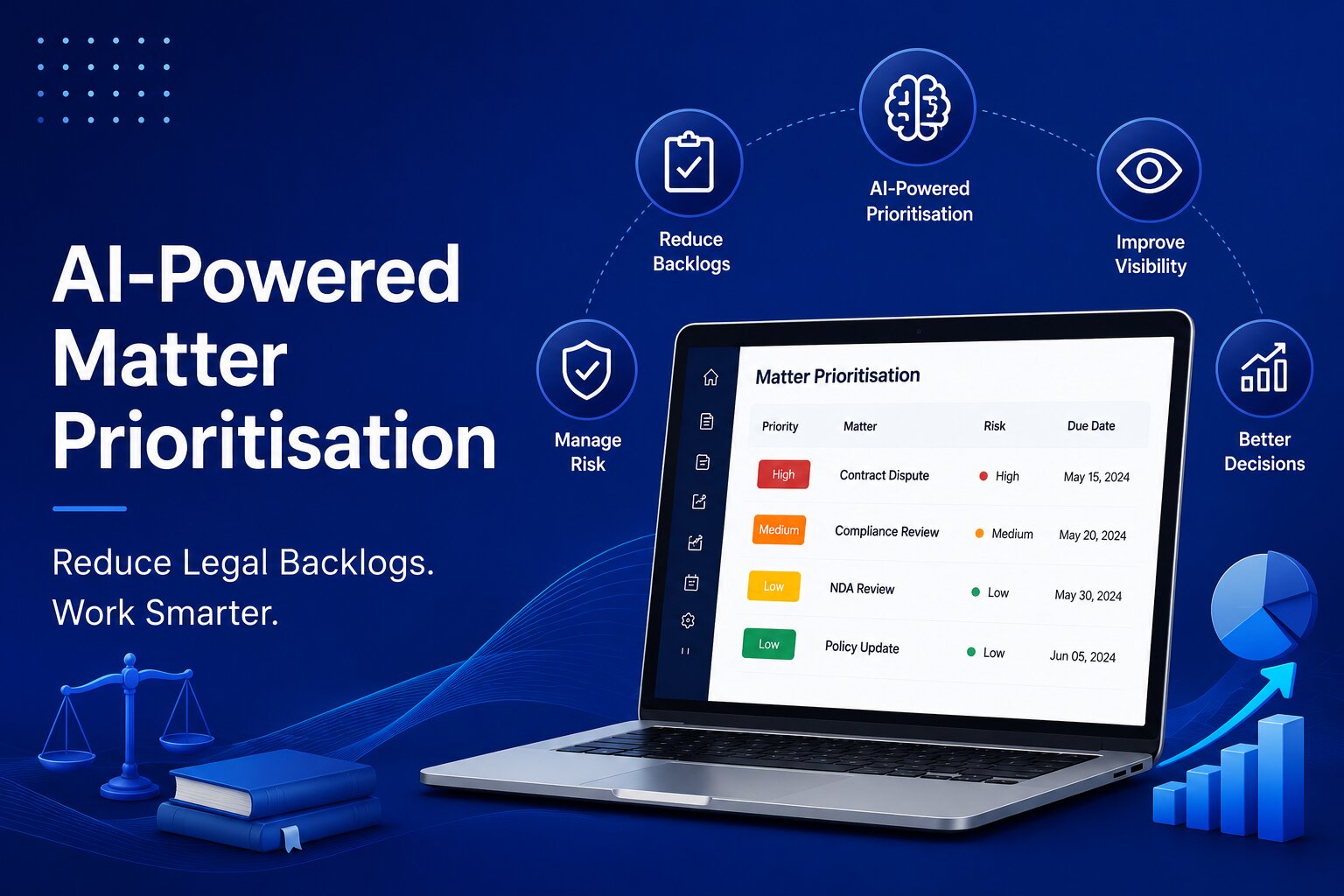
That's where AI-powered matter prioritisation can make a real difference. Instead of replacing lawyers, it helps them make quicker, more informed decisions about what needs attention first. By automatically assessing legal requests based on factors such as risk, urgency, deadlines, and business impact, AI reduces the time spent on manual triage and gives legal teams a clearer view of what's on their plate.
The result isn't just fewer backlogs. It's a legal function that's better organised, more responsive, and able to spend more time on work that adds value to the business.
Why Legal Departments Are Struggling with Growing Backlogs
Legal backlogs rarely happen because teams aren't working hard enough. In most cases, the workload has simply outgrown the processes used to manage it. As businesses expand, legal teams receive more requests from more departments, but the way those requests are handled often stays the same.
Increasing Volume of Legal Requests
Today's legal departments support almost every part of the organisation. Sales teams need contracts reviewed, procurement requires supplier agreements, HR seeks employment advice, and compliance teams rely on legal guidance to meet regulatory obligations.
As the business grows, so does the volume of legal work. Unless processes become more efficient, it doesn't take long for requests to pile up and response times to slow.
Manual Matter Intake Slows Decision-Making
In many organisations, legal requests still arrive through emails, phone calls, messaging apps, and spreadsheets. That means someone on the legal team has to review every request manually before deciding who should handle it and how urgent it is.
This approach takes time and makes it easier for important matters to slip through the cracks, especially when several requests arrive at once.
Limited Visibility Across Legal Workloads
When legal work is spread across different systems, it's difficult to see the full picture. Managers may not know who's overloaded, which matters are waiting for attention, or where delays are starting to build.
Without that visibility, planning resources becomes harder, priorities shift constantly, and bottlenecks often go unnoticed until they begin affecting the wider business.
Every Request Becomes "High Priority"
Ask any in-house lawyer, and they'll tell you the same thing: every department believes its request is urgent.
The problem is that not every request carries the same level of legal or commercial risk. A routine contract review shouldn't compete with a regulatory deadline or a potential dispute. Without a consistent way to prioritise work, legal teams often find themselves reacting to whoever shouts the loudest instead of focusing on what matters most.
What Is AI-Powered Matter Prioritisation?
AI-powered matter prioritisation helps legal teams sort and rank incoming requests automatically. Instead of relying entirely on manual reviews, AI looks at the information available and recommends which matters should be handled first.
It can assess factors such as legal risk, business impact, deadlines, contract value, matter complexity, and the expertise needed to resolve the issue. Rather than replacing legal judgement, it gives lawyers a smarter starting point for making decisions.
Instead of working through requests in the order they arrive, legal teams can focus on the matters that have the greatest impact on the business while ensuring routine work continues to move forward.
How AI Prioritises Legal Matters
One of AI's biggest strengths is consistency. Every new legal request is assessed using the same set of criteria, helping teams make faster and more informed decisions without relying solely on manual judgement.
Analysing Incoming Legal Requests
As soon as a request is submitted, AI reviews the information that's already available. This might include the matter description, supporting documents, contract details, deadlines, and any previous communications.
Using natural language processing, the system can understand the context of the request, identify the type of legal issue involved, and categorise it automatically. That means lawyers spend less time sorting requests and more time working on them.
Identifying Legal Risk
Not every matter presents the same level of risk. Some requests involve routine approvals, while others could expose the organisation to financial loss, regulatory action, or legal disputes.
AI helps identify higher-risk matters early by recognising patterns in areas such as regulatory compliance, data privacy, employment disputes, intellectual property, litigation, or high-value commercial contracts. Those matters can then be moved to the front of the queue before they become bigger problems.
Identifying risk is only the first step. Legal teams also need to monitor regulatory changes and compliance obligations as they evolve. If you'd like to explore how AI helps organisations detect compliance risks before they become bigger issues, read our guide on AI-Powered Compliance Monitoring: How Legal Teams Can Detect Risks Earlier.
Recognising Time-Sensitive Deadlines
Legal work is full of deadlines, and missing even one can have serious consequences.
AI continuously tracks important dates, including contract renewals, filing deadlines, court schedules, and compliance obligations. As those deadlines approach, the system automatically adjusts the matter's priority, helping legal teams stay ahead rather than scrambling at the last minute.
Balancing Workloads Across the Legal Team
Prioritising work is only part of the challenge. It also needs to be assigned to the right people.
AI can recommend assignments based on each lawyer's workload, area of expertise, and current availability. Instead of overloading the same individuals, work is distributed more evenly across the team, improving productivity while reducing unnecessary pressure.
Learning from Historical Patterns
The more the system is used, the smarter it becomes.
Over time, AI learns from previous matters, response times, outcomes, and workload trends. These insights help improve future recommendations and give legal leaders a better understanding of where delays occur, which matters consume the most resources, and where processes can be improved.
The insights generated through AI-powered matter prioritisation become even more valuable when they're analysed over time. By turning legal data into meaningful business intelligence, legal leaders can identify trends, improve resource planning, and make more informed strategic decisions. Learn more in our article on AI-Powered Matter Analytics: Turning Legal Data Into Business Intelligence.
The Business Benefits of AI-Powered Matter Prioritisation
The biggest advantage of AI isn't that it helps legal teams work faster—it's that it helps them focus on the right work.
When every request is treated as urgent, lawyers spend a lot of time switching between tasks, chasing updates, and deciding what should come first. AI removes much of that guesswork by helping teams prioritise matters based on risk, urgency, deadlines, and business impact.
That shift changes the way legal departments operate. Instead of constantly reacting to incoming requests, they can work more proactively and support the business more effectively.
Faster Response Times
When legal requests are automatically reviewed and prioritised, the right people see the right work sooner. There's no need to spend hours sorting emails or manually deciding who should handle each matter.
That means urgent issues can be addressed more quickly, while routine requests continue moving through established workflows. Business teams receive faster responses, and legal spends less time managing the queue.
Reduced Operational Backlogs
Backlogs don't disappear overnight, but they become much easier to manage when work is prioritised consistently.
Rather than allowing low-risk requests to delay more important matters, AI helps legal teams tackle work in the order that makes the most sense for the business. Over time, that creates a healthier workflow, fewer bottlenecks, and a more predictable turnaround for legal requests.
Better Risk Management
Legal teams are often the first line of defence when it comes to managing organisational risk. Missing a regulatory deadline, overlooking a contract clause, or delaying a response to a dispute can quickly become an expensive problem.
By identifying higher-risk matters early, AI gives legal professionals more time to assess the situation and take action before small issues grow into larger ones.
Increased Productivity
Lawyers add the most value when they're solving complex legal problems—not organising inboxes or manually assigning work.
When repetitive administrative tasks are automated, legal professionals can spend more time negotiating contracts, advising stakeholders, managing risk, and supporting business strategy. The work doesn't just get done faster; the team's expertise is used where it matters most.
Aligning Legal Work with Business Priorities
Not every legal request has the same impact on the business. Some can wait a day or two, while others need immediate attention because they affect revenue, compliance, customer commitments, or strategic projects.
AI helps legal teams make those distinctions consistently. Instead of responding to the loudest voice or the latest email, they can prioritise work based on objective criteria that align with business goals. That creates better outcomes for both the legal team and the wider organisation.
Prioritising legal work also helps organisations make better decisions about external legal support. When legal teams have clear visibility into the complexity, risk, and business impact of each matter, it's easier to decide which work should stay in-house and which matters should be handled by outside counsel. Learn more in our guide on How AI Is Reshaping External Counsel Management and Legal Spend Control.
A Real-World Example of AI-Powered Matter Prioritisation in Action
Imagine a multinational company where hundreds of legal requests arrive every week. Sales needs contracts approved before deals can close. HR is seeking advice on employee matters. Procurement is reviewing supplier agreements, while compliance teams are monitoring new regulatory requirements.
Without a structured intake process, requests arrive through emails, chat messages, phone calls, and spreadsheets. Lawyers spend valuable time deciding what to tackle first, and important work can easily be delayed by routine administrative requests.
Now imagine that same legal team using AI-powered matter prioritisation.
Every request is reviewed as soon as it enters the system. AI considers factors such as legal risk, deadlines, business impact, contract value, and complexity before recommending where that matter should sit in the queue. High-priority work is immediately assigned to the right legal professional, while lower-risk requests continue through predefined workflows.
Legal managers no longer have to rely on overflowing inboxes to understand what's happening. Real-time dashboards show workloads, pending matters, approaching deadlines, and team capacity in one place.
Within a few months, the difference is noticeable. Lawyers spend less time triaging requests and more time supporting the business. Deadlines are easier to manage, workloads are more balanced, and legal leaders have the visibility they need to make better decisions.
Best Practices for Implementing AI-Powered Matter Prioritisation
Technology alone won't solve backlog problems. The biggest improvements come when AI is introduced alongside clear processes, good data, and well-defined governance.
Standardise Your Matter Intake Process
AI can only prioritise requests accurately if it receives consistent information.
A standard intake process ensures every legal request captures the details needed to assess urgency, risk, business impact, and complexity. Using structured forms and mandatory fields also reduces back-and-forth with business teams, helping matters move faster from the start.
Define Clear Prioritisation Criteria
Before introducing AI, decide what "high priority" actually means for your organisation.
For some businesses, regulatory deadlines may take precedence. For others, it could be contract value, customer commitments, financial exposure, or litigation risk. Establishing these rules upfront ensures AI recommendations reflect your legal team's priorities rather than applying a one-size-fits-all approach.
Integrate with Existing Legal Systems
AI becomes much more valuable when it works alongside the systems your legal team already uses.
Connecting matter management, contract lifecycle management, document repositories, compliance platforms, and collaboration tools creates a single source of truth. Lawyers spend less time switching between applications and gain a clearer view of every matter from start to finish.
Monitor and Refine AI Recommendations
Business priorities change, and legal operations should evolve with them.
Regularly reviewing AI recommendations helps ensure the system continues to reflect current legal risks, business objectives, and operational needs. Ongoing refinement also builds confidence among legal professionals by showing that AI is there to support—not replace—their expertise.
Keep Human Judgement at the Centre
AI can analyse data in seconds, but it doesn't understand nuance the way an experienced lawyer does.
Complex negotiations, sensitive disputes, and strategic legal decisions still depend on professional judgement. AI's role is to remove repetitive work, surface the right information at the right time, and help lawyers make better-informed decisions—not make those decisions for them.
How Beveron Helps Legal Teams Prioritise Matters More Effectively
Keeping legal work organised is difficult when requests are scattered across emails, spreadsheets, chat messages, and multiple business systems. Without a clear process, it's easy for important matters to get delayed or for teams to lose visibility into their workload.
Beveron's Smart Legal Counsel platform brings everything together in one place. Legal teams can capture requests through a structured intake process, manage matters from start to finish, automate routine workflows, and track progress without relying on disconnected tools.
The platform also includes AI-assisted capabilities that help legal teams assess incoming matters based on factors such as urgency, legal risk, business impact, and deadlines. Instead of spending valuable time deciding what to work on next, lawyers receive better visibility into their priorities while staying in complete control of every legal decision.
Real-time dashboards give legal leaders a clear picture of workloads, pending matters, turnaround times, and team performance. That visibility makes it easier to balance resources, spot potential bottlenecks early, and keep work moving.
By combining AI-assisted prioritisation with practical workflow automation, Beveron helps legal teams reduce administrative effort, improve responsiveness, and focus more of their time on delivering strategic legal advice.
Conclusion
Legal teams aren't struggling because they're short on expertise. They're struggling because the volume of work keeps increasing, while the time available to manage it doesn't.
As more departments depend on legal support, relying on emails, spreadsheets, and manual prioritisation becomes increasingly difficult. Without a consistent way to assess incoming requests, even experienced teams can find themselves reacting to the loudest request instead of the most important one.
AI-powered matter prioritisation gives legal departments a better way to manage growing workloads. By highlighting high-risk matters, tracking important deadlines, and helping distribute work more effectively, it allows lawyers to spend less time on administration and more time applying their expertise where it has the greatest impact.
Matter prioritisation is just one example of how AI is changing the way in-house legal teams work. From contract review and legal research to compliance, document management, and workflow automation, AI is helping legal departments become more efficient across the board. Explore more practical applications in our article on Beyond Contract Review: AI Use Cases for Corporate Legal Teams.
The goal isn't to replace legal judgement—it's to support it. When AI handles the repetitive work of sorting and prioritising matters, legal professionals have more capacity to advise the business, manage risk proactively, and contribute to long-term growth.
Ready to Transform Your Legal Operations?
If your legal team spends too much time managing requests, chasing updates, or deciding what should come first, it may be time to rethink how legal work is organised.
Beveron's Smart Legal Counsel platform helps legal departments centralise matter management, automate routine processes, prioritise work more effectively, and gain real-time visibility into team performance and workloads.
Whether your goal is to reduce backlogs, improve turnaround times, or give your legal team more time for strategic work, Beveron provides the tools to help you get there.
Book a personalised demo to see how Beveron can help your legal team work more efficiently and stay focused on the matters that matter most.
Frequently Asked Questions
1. What is AI-powered matter prioritisation?
AI-powered matter prioritisation uses artificial intelligence to review incoming legal requests and rank them based on factors such as legal risk, urgency, business impact, deadlines, and complexity. This helps legal teams identify which matters need immediate attention while ensuring lower-priority work continues to move through the right workflows.
2. How does AI help reduce legal department backlogs?
AI reduces the time lawyers spend reviewing, sorting, and assigning incoming requests. By automatically prioritising matters and routing them to the right people, it keeps work moving, prevents bottlenecks, and allows legal teams to focus on higher-value work instead of administrative tasks.
3. Can AI replace lawyers in legal matter management?
No. AI supports lawyers by organising information, identifying priorities, and automating repetitive tasks. Decisions involving legal interpretation, negotiation, risk assessment, and strategic advice still rely on the experience and judgement of legal professionals.
4. Which organisations benefit most from AI-powered matter prioritisation?
Organisations with busy in-house legal teams, particularly medium and large enterprises, benefit the most. It's especially valuable for businesses managing high volumes of contracts, compliance requirements, disputes, regulatory obligations, or legal service requests across multiple departments.
5. What features should organisations look for in AI-powered legal matter management software?
Look for a platform that offers structured matter intake, AI-assisted prioritisation, workflow automation, document management, deadline tracking, reporting dashboards, collaboration tools, audit trails, and integration with existing legal and business systems. Together, these features help legal teams improve efficiency while maintaining visibility and control over every matter.
Best AI legal matter management software in the UAE
Best corporate legal matter management software in the UAE
Best AI legal workflow automation in the UAE
If you need a free demo of the best AI legal matter management software in the UAE, please fill out the form below.