Best In-House Legal Counsel Software for Corporate Legal Departments in Qatar in 2026

Introduction
Corporate legal departments in Qatar are under increasing pressure to deliver more than legal advice. They are expected to manage growing regulatory requirements, support faster business decisions, minimise legal risks, and operate efficiently while handling an ever-increasing volume of contracts, disputes, compliance obligations, and corporate governance responsibilities.
Many organisations still rely on spreadsheets, emails, and disconnected systems to manage legal work. While these methods may have worked in the past, they often create delays, reduce visibility, and make it difficult to track critical legal matters. As businesses continue their digital transformation, legal teams need technology that enables them to work smarter rather than harder.
That is why investing in the best in-house legal counsel software for corporate legal departments in Qatar in 2026 has become a strategic business decision rather than simply a technology upgrade. Modern legal management platforms help legal teams centralise information, automate routine tasks, strengthen compliance, and provide valuable insights that support better decision-making across the organisation.
Why Corporate Legal Departments in Qatar Need Modern Legal Software
Legal departments have evolved significantly over the past few years. Instead of operating solely as support functions, they now play an active role in shaping business strategy, managing corporate risk, and ensuring regulatory compliance.
As organisations expand their operations, legal teams are expected to review more contracts, manage increasingly complex matters, respond to business requests quickly, and maintain complete visibility across every legal activity. Without a dedicated legal management platform, even experienced legal professionals can struggle with fragmented information, duplicated work, and missed deadlines.
Modern in-house legal counsel software addresses these challenges by bringing every legal process into a single, secure environment where information is accessible, searchable, and easy to manage.
What Is In-House Legal Counsel Software?
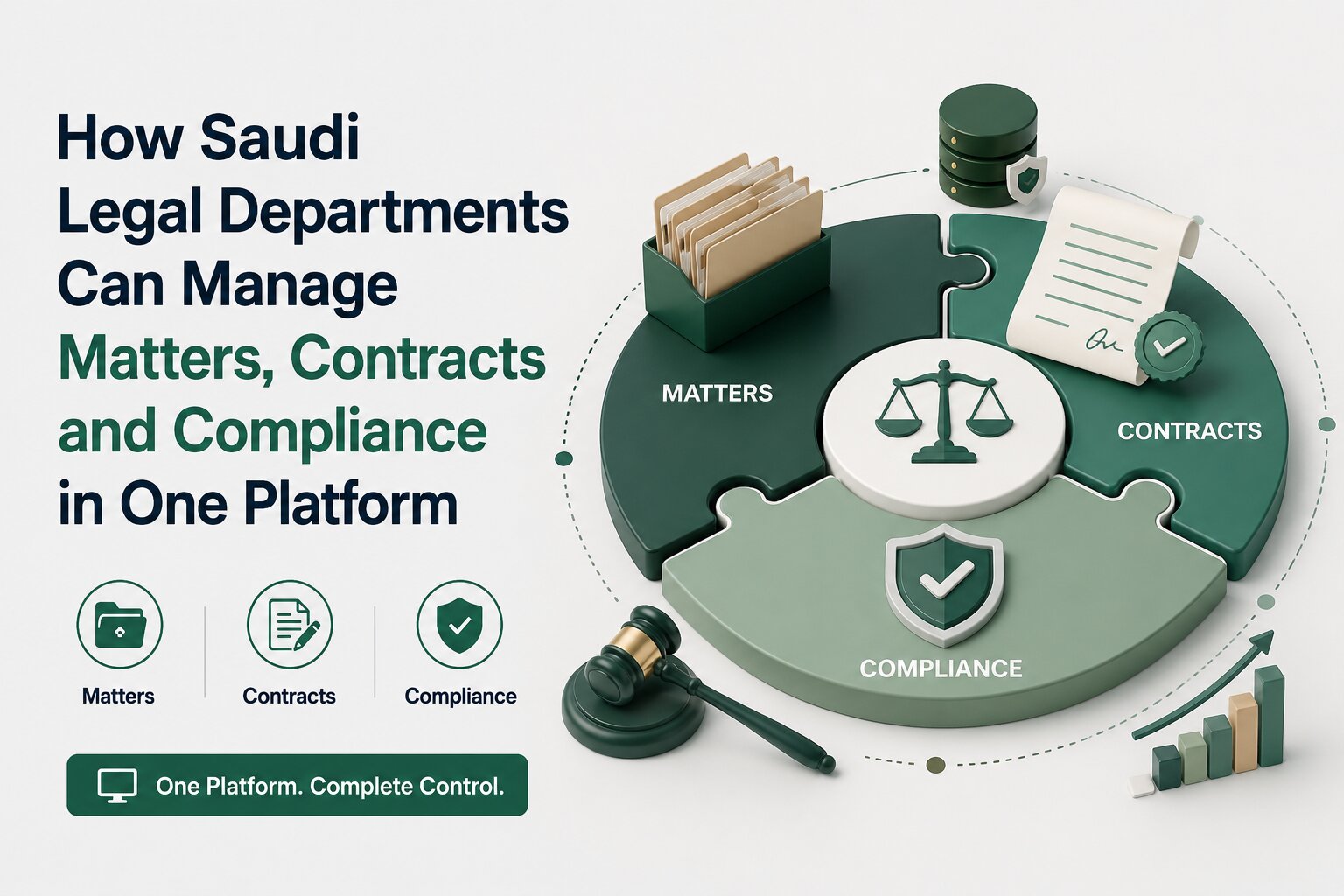
In-house legal counsel software is a comprehensive platform designed specifically for corporate legal departments. It enables legal teams to manage legal matters, contracts, compliance activities, litigation, approvals, legal documents, and reporting from one central system.
Instead of switching between multiple spreadsheets, folders, and email conversations, legal professionals can access all relevant information from a single dashboard. The result is better collaboration, greater operational efficiency, and improved visibility across the legal function.
The Biggest Challenges Facing Corporate Legal Departments
Managing Increasing Legal Workloads
As organisations grow, so does the volume of legal requests. New contracts, policy reviews, regulatory requirements, vendor agreements, and internal approvals can quickly overwhelm legal teams without structured workflows.
Limited Visibility Across Legal Matters
Many organisations struggle to answer simple questions such as:
- Which contracts are due for renewal?
- Which legal matters require immediate attention?
- Where are current approval bottlenecks?
- What are the organisation's highest legal risks?
Without real-time reporting, these questions often require manual investigation, consuming valuable time.
Maintaining Regulatory Compliance
Businesses operating in Qatar must maintain strong governance while keeping pace with evolving legal and regulatory obligations. Missing important deadlines or failing to maintain accurate legal records can expose organisations to unnecessary operational and financial risks.
Inefficient Collaboration
Legal departments work closely with procurement, finance, human resources, compliance, and executive leadership. When communication happens across multiple disconnected tools, approvals become slower and important information can easily be overlooked.
Key Features Every Corporate Legal Department Should Look For
Choosing the right software requires looking beyond basic document storage. The most valuable platforms support the entire legal lifecycle.
Understanding which capabilities truly add value can make the selection process much easier. If you're evaluating different solutions, explore our guide on the 15 essential features every legal matter management platform should have in 2026, which explains the core functionalities every modern legal department should prioritise, from workflow automation and AI-powered insights to compliance tracking and advanced reporting.
Matter Management
Matter management provides a complete view of every legal case, request, investigation, dispute, or advisory project. Legal teams can assign responsibilities, track deadlines, monitor progress, and maintain complete documentation throughout the lifecycle of each matter.
Contract Lifecycle Management
Contracts remain one of the busiest areas for corporate legal departments.
A modern solution should simplify:
- Contract drafting
- Internal approvals
- Version control
- Negotiation tracking
- Renewal management
- Obligation monitoring
Automating these processes reduces administrative effort while helping the business execute agreements more efficiently.
Centralised Legal Document Management
Finding the correct version of an agreement should never require searching through email chains.
A secure document repository ensures legal documents remain organised, searchable, and accessible to authorised users whenever required.
Workflow Automation
Workflow automation delivers the greatest value when it replaces fragmented, manual processes with standardised digital workflows. Learn more about the most common operational challenges and how cloud technology resolves them in our guide to common legal workflow problems and how cloud-based legal software fixes them
Automation helps eliminate repetitive tasks such as:
- Matter allocation
- Approval routing
- Reminder notifications
- Contract reviews
- Compliance checklists
- Escalation workflows
This allows legal professionals to focus on higher-value strategic work.
Compliance Monitoring
A modern legal platform should continuously support compliance by tracking regulatory obligations, maintaining audit trails, recording approvals, and generating reports that simplify internal and external audits.
How Artificial Intelligence Is Transforming Legal Operations
Artificial intelligence is rapidly changing how corporate legal departments work. Rather than replacing legal professionals, AI helps them complete repetitive tasks more efficiently while improving accuracy.
Modern AI capabilities can assist legal teams by:
- Summarising lengthy contracts
- Identifying important clauses
- Highlighting potential legal risks
- Organising legal knowledge
- Supporting document review
- Improving search across legal records
These capabilities enable legal professionals to spend more time providing strategic advice instead of performing manual administrative work.
Why Legal Matter Management Is the Foundation of Efficient Legal Operations
Every legal department manages multiple matters simultaneously. Without structured matter management, important deadlines, supporting documents, communications, and approvals can easily become fragmented.
An effective legal matter management system creates a complete history for every legal issue while allowing management to monitor workloads, measure team performance, and identify potential risks before they become significant business problems.
If you're exploring solutions specifically designed for organisations in Qatar, our guide on the best in-house legal matter management software for Qatar enterprises explains the key capabilities to look for and how the right platform can streamline legal operations while supporting compliance and business growth.
This level of visibility helps legal leaders make informed decisions based on accurate, real-time information rather than assumptions.
Contract Management Drives Faster Business Decisions
Contract delays affect every business function.
Whether procurement is onboarding a supplier or sales is closing a customer agreement, slow contract processes often delay revenue generation and operational progress. Modern contract lifecycle management simplifies the entire process by automating reviews, approvals, negotiations, and renewal reminders.
This reduces turnaround times while maintaining legal consistency and reducing contractual risks across the organisation.
Strengthening Compliance and Risk Management
For corporate legal departments, compliance is no longer a standalone responsibility. It is closely linked to business continuity, governance, and organisational reputation. As regulatory expectations continue to evolve, legal teams need greater visibility into obligations, approvals, and documentation.
Modern in-house legal counsel software helps organisations build consistent compliance processes by centralising records, tracking regulatory requirements, maintaining complete audit trails, and sending automated reminders for critical actions. This reduces the risk of missed deadlines and improves accountability across the organisation.
Many organisations assume their compliance framework is working effectively until gaps begin to surface through missed obligations, inconsistent processes, or audit findings. Our article, Your Compliance Program Is Failing—And You Don't Even Know It, explores the warning signs of an ineffective compliance programme and explains how modern legal technology helps organisations strengthen governance and reduce regulatory risk.
Risk management also becomes more proactive. Instead of reacting to issues after they arise, legal teams can identify recurring trends, monitor high-risk matters, and prioritise work based on business impact.
Cloud-Based vs On-Premise Legal Software
Choosing between cloud and on-premise deployment depends on an organisation's operational needs, security policies, and long-term technology strategy.
Cloud-Based Solutions
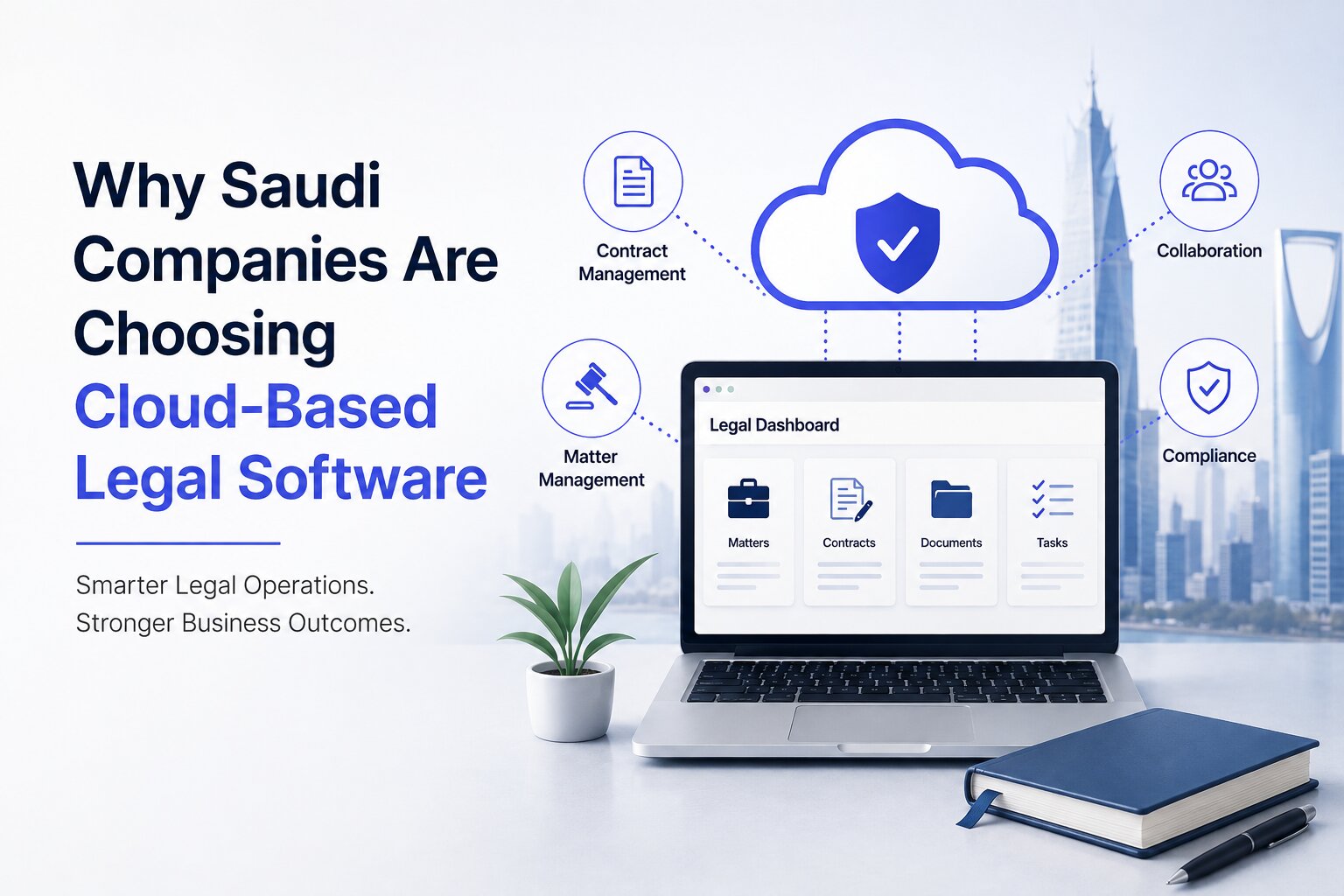
Cloud platforms have become the preferred choice for many organisations because they offer flexibility, scalability, and easier maintenance. Legal teams can securely access matters, contracts, and documents from anywhere, making collaboration much more efficient.
Cloud deployments also simplify software updates, allowing organisations to benefit from new features and security enhancements without complex infrastructure management.
On-Premise Solutions
Some organisations, particularly those with strict internal IT policies, may prefer on-premise deployment. These solutions provide greater control over infrastructure and data management while helping organisations keep sensitive legal information within their own IT environment. Although they generally require a higher investment in maintenance and ongoing support, they remain a preferred option for enterprises with stringent security and governance requirements.
For organisations looking to combine the benefits of artificial intelligence with complete control over their legal data, Beveron's Secure On-Premise AI for Legal Teams offers a private AI solution designed specifically for enterprise legal environments. Learn more: https://www.beveron.com/secure-on-premise-ai-for-legal-teams/
Whichever deployment model is selected, security, reliability, and compliance should remain key evaluation criteria.
Integrations That Improve Legal Operations
Legal software delivers greater value when it integrates seamlessly with the systems employees already use every day.
Useful integrations include:
- Enterprise Resource Planning (ERP) systems
- Customer Relationship Management (CRM) platforms
- Finance and procurement applications
- Human Resources systems
- Microsoft 365
- E-signature platforms
- Email and calendar applications
These integrations reduce duplicate data entry, improve collaboration, and ensure legal information flows efficiently across the organisation.
How to Choose the Best In-House Legal Counsel Software in Qatar
Selecting legal software is a strategic investment that should support both current operations and future growth. Before making a decision, organisations should evaluate several important factors.
Understand Your Legal Department's Requirements
Every legal department operates differently. Some organisations manage high volumes of contracts, while others focus heavily on litigation, compliance, or governance. Clearly defining priorities helps identify a solution that aligns with operational needs rather than simply offering the largest feature list.
Look Beyond Today's Requirements
Legal technology should support future business expansion. As organisations grow, software should accommodate additional users, larger workloads, multiple business entities, and evolving compliance requirements without requiring major system changes.
Prioritise User Experience
Even the most advanced platform delivers little value if employees find it difficult to use. An intuitive interface encourages adoption, reduces training requirements, and enables legal teams to become productive more quickly.
Evaluate Security and Data Protection
Legal departments manage highly confidential information. Choose software that offers robust security controls, role-based access, encryption, audit logs, and secure document management to protect sensitive legal data.
Assess AI Capabilities Carefully
Artificial intelligence should enhance legal work rather than complicate it. Look for practical AI features that improve document review, contract analysis, legal search, reporting, and knowledge management while allowing legal professionals to maintain full control over decision-making.
Future Trends Shaping Corporate Legal Departments Beyond 2026
As legal operations continue to evolve, technology is becoming a core part of how corporate legal departments manage matters, contracts, compliance, and risk. Beveron Smart Legal Counsel is an AI-powered enterprise legal management platform that helps in-house legal teams centralise legal operations, automate routine workflows, manage contracts and legal matters, strengthen compliance, and gain real-time visibility into legal performance through a single, secure platform.
Looking ahead, several technology trends are expected to shape the future of corporate legal departments, enabling legal teams to become more efficient, data-driven, and strategic business partners.
Greater Adoption of AI
Artificial intelligence will continue supporting legal professionals through faster document analysis, improved legal research, automated drafting assistance, and predictive insights.
Rather than replacing legal expertise, AI will increasingly act as an intelligent assistant that improves productivity.
Data-Driven Legal Decision-Making
Legal departments are moving beyond basic reporting towards advanced analytics that provide meaningful operational insights.
Dashboards showing workload distribution, contract performance, compliance status, and legal risk indicators enable leadership teams to make more informed decisions.
Increased Workflow Automation
Routine administrative activities will become increasingly automated, allowing legal professionals to dedicate more time to strategic initiatives, risk management, and business advisory services.
Stronger Collaboration Across Business Functions
Modern legal departments are becoming more closely connected with procurement, finance, compliance, human resources, and executive leadership.
Integrated legal platforms will continue supporting faster collaboration while ensuring legal oversight remains consistent throughout business operations.
Conclusion
Corporate legal departments in Qatar are expected to deliver faster legal support, strengthen governance, minimise organisational risk, and contribute strategically to business growth. Achieving these objectives with disconnected systems and manual processes is becoming increasingly difficult. The best in-house legal counsel software provides far more than digital record-keeping. It enables legal teams to centralise legal operations, automate routine work, improve collaboration, strengthen compliance, and gain real-time visibility into legal performance.
As organisations continue their digital transformation journey in 2026 and beyond, investing in the right legal management platform will help corporate legal departments operate more efficiently while positioning themselves as trusted strategic partners to the wider business.
Frequently Asked Questions
1. What is in-house legal counsel software?
In-house legal counsel software is a digital platform that helps corporate legal departments manage legal matters, contracts, compliance, documents, workflows, reporting, and legal operations from a centralised system.
2. Why do organisations in Qatar need legal management software?
As regulatory requirements and business operations become more complex, legal management software helps organisations improve efficiency, reduce legal risks, strengthen compliance, and enhance collaboration across departments.
3. What features should the best legal counsel software include?
Essential features include matter management, contract lifecycle management, document management, workflow automation, compliance tracking, reporting dashboards, AI-powered capabilities, secure access controls, and system integrations.
4. How does AI improve legal operations?
AI assists legal teams by summarising contracts, identifying key clauses, improving document searches, supporting legal research, automating repetitive tasks, and providing valuable operational insights that help professionals work more efficiently.
5. Is cloud-based legal software secure?
Modern cloud-based legal platforms typically include enterprise-grade security features such as encryption, role-based access controls, audit trails, regular security updates, and secure data storage, making them suitable for managing sensitive legal information.
6. How can organisations choose the right legal software?
Organisations should evaluate their operational requirements, scalability, security standards, ease of use, AI capabilities, integration options, implementation support, and long-term business goals before selecting a legal management solution.
Transform Your Corporate Legal Operations with Beveron
If your organisation is looking to modernise legal operations, improve compliance, and streamline matter and contract management, Beveron's Smart Legal Counsel provides an intelligent, enterprise-ready solution built for today's corporate legal departments. With AI-powered capabilities, workflow automation, secure document management, real-time reporting, and seamless integrations, Beveron Technologies helps legal teams work more efficiently while supporting stronger governance and better business outcomes.
Explore how Beveron's Smart Legal Counsel can help your legal department become a more strategic partner in 2026 and beyond.
Best corporate legal department software in Qatar
Best legal case management software in Qatar
Best in-house legal counsel software in Qatar
If you need a free demo of the best corporate legal department software in Qatar, please fill out the form below.