15 Features Every Legal Matter Management Platform Should Have in 2026

Corporate legal departments are under increasing pressure to do more with less. Legal teams are expected to manage growing workloads, respond quickly to business needs, maintain compliance, control legal spend, and provide strategic insights to leadership. At the same time, the volume and complexity of legal matters continue to increase.
Many organisations have recognised that spreadsheets, email chains, and disconnected systems are no longer sufficient for managing modern legal operations. As legal departments become more data-driven and business-focused, the need for a robust legal matter management platform has never been greater.
The right platform does far more than track cases and requests. It helps legal teams improve visibility, automate routine work, reduce risk, and make better decisions based on real-time information.
If your organisation is evaluating legal technology in 2026, these are the 15 essential features every legal matter management platform should provide.
Why Legal Matter Management Platforms Matter More Than Ever in 2026
Legal departments have evolved from being primarily reactive functions to becoming strategic business partners. Today's legal leaders are expected to demonstrate efficiency, manage risk proactively, and contribute to broader organisational goals.
A modern legal matter management platform creates a centralised environment where legal work can be tracked, measured, and optimised. This visibility enables legal teams to improve service delivery while supporting business growth.
As discussed in our guide on Corporate Legal Matter Management Software for In-House Teams, organisations that adopt structured matter management processes often gain better control over workloads, deadlines, and legal risks.
1. Centralised Matter Repository
One of the most important features of any legal matter management platform is a central repository for all legal matters. Legal teams should be able to access matter details, documents, communications, deadlines, and related information from a single location. This eliminates information silos and reduces the time spent searching across multiple systems.
A centralised repository also improves continuity when team members change roles or responsibilities.
2. AI-Powered Matter Intake and Classification
Manual intake processes can create delays and inconsistencies. Modern platforms should automatically capture incoming requests, categorise matters, assign priorities, and route work to the appropriate legal professionals.
AI-powered intake capabilities help legal teams reduce administrative effort while ensuring matters are handled efficiently from the outset.
3. Automated Workflow Management
Legal processes often involve repetitive tasks, approvals, reviews, and stakeholder interactions. Workflow automation helps standardise these processes while reducing manual intervention. Automated workflows can trigger notifications, assign tasks, manage approvals, and track progress throughout the matter lifecycle.
The result is improved consistency, faster turnaround times, and fewer administrative bottlenecks.
4. Real-Time Matter Status Tracking
Business stakeholders increasingly expect transparency regarding the status of legal requests. A modern platform should provide real-time visibility into matter progress, pending actions, ownership, and deadlines.
This visibility helps legal teams manage expectations while allowing stakeholders to access updates without relying on constant email communication.
5. Intelligent Document Management
Documents remain at the centre of legal work. A legal matter management platform should include secure document storage, version control, advanced search functionality, and structured document organisation.
Intelligent document management ensures legal professionals can quickly locate critical information while maintaining document integrity and governance standards.
6. Built-In Compliance and Risk Monitoring
Regulatory requirements continue to evolve across industries and jurisdictions. Legal departments need tools that help identify compliance obligations, monitor risks, and track remediation activities.
Built-in compliance monitoring enables organisations to respond proactively to potential issues before they become significant legal or regulatory challenges.
7. Legal Spend and Budget Tracking
Controlling legal expenditure remains a priority for many organisations. An effective platform should provide visibility into internal legal costs, external counsel fees, budgets, and spending trends.
With accurate financial data, legal leaders can make more informed resource allocation decisions and demonstrate value to executive stakeholders.
8. Advanced Reporting and Analytics
Legal departments are increasingly expected to support decision-making with measurable data. Comprehensive reporting capabilities allow teams to analyse matter volumes, resolution times, workload distribution, risk exposure, and performance metrics. The growing importance of legal analytics is explored further in our article on The Business Case for AI-Powered Legal Reporting in Corporate Legal Departments.
By transforming operational data into actionable insights, legal teams can identify opportunities for continuous improvement and better strategic planning.
9. Customisable Dashboards
Different stakeholders require different information. General counsel may need high-level performance metrics, while legal operations professionals may require detailed workflow data. Customisable dashboards allow users to access relevant information quickly without navigating multiple reports or systems.
This improves both usability and decision-making across the organisation.
10. Secure Collaboration Tools
Legal work rarely occurs in isolation. Legal professionals regularly collaborate with business units, compliance teams, finance departments, external counsel, and senior management.
Built-in collaboration tools help centralise communication, reduce reliance on lengthy email chains, and ensure all matter-related discussions remain accessible and auditable.
11. Contract and Matter Integration
Contracts and legal matters are often closely connected. A modern platform should integrate contract management and matter management capabilities, allowing legal teams to view related agreements, obligations, amendments, and disputes within a single environment.
This integrated approach improves efficiency and provides valuable context when managing legal work.
12. External Counsel Management
Many organisations rely on external law firms for specialised legal expertise. A strong matter management platform should support external counsel engagement, invoice management, performance tracking, and communication management.
This enables legal departments to maintain oversight while ensuring external resources deliver value and align with organisational objectives.
13. Automated Alerts and Deadline Management
Missed deadlines can create significant legal and business risks. Automated reminders and deadline tracking help legal teams stay ahead of key milestones, court dates, regulatory obligations, renewal deadlines, and internal commitments.
Proactive notifications reduce the likelihood of oversights while improving accountability throughout the legal department.
14. Enterprise-Grade Security and Access Controls
Legal departments handle highly sensitive information that requires robust protection. Enterprise-grade security features should include role-based access controls, audit trails, encryption, authentication controls, and comprehensive governance capabilities.
Strong security measures help organisations protect confidential information while meeting regulatory and internal compliance requirements.
15. Scalability and Future-Ready AI Capabilities
Technology investments should support long-term growth. As organisations expand, legal teams need platforms capable of handling increased matter volumes, additional users, new business units, and evolving regulatory requirements.
Future-ready solutions are increasingly incorporating AI-driven capabilities to support legal research, workflow optimisation, reporting, and decision-making.
Beveron's Smart Legal Counsel demonstrate how AI can be applied within legal operations to improve efficiency while maintaining appropriate oversight and control.
How to Evaluate a Legal Matter Management Platform Before Investing
Selecting a legal matter management platform requires careful evaluation. Legal departments should assess whether a solution aligns with their operational requirements, growth plans, and technology strategy.
Key questions to consider include:
Does the Platform Support End-to-End Matter Management?
The platform should manage the complete lifecycle of legal matters, from intake and assignment through to resolution and reporting.
Can It Deliver Meaningful Business Insights?
Reporting and analytics capabilities should help legal leaders understand performance, identify trends, and support strategic decision-making.
Is the Platform Flexible and Scalable?
Organisations should ensure the solution can adapt to future requirements without requiring extensive redevelopment or additional systems.
Does It Align with Modern Legal Technology Trends?
As explored in our guide on Choosing the Right In-House Legal Department Software for Companies in the UAE, selecting technology that supports long-term operational goals is often more important than focusing solely on immediate requirements.
Similarly, organisations evaluating AI capabilities may find valuable insights in our article on How to Choose the Best AI-Based In-House Legal Department Software in the UAE.
Conclusion
Legal matter management is no longer simply about tracking cases and storing documents. In 2026, leading legal departments require platforms that support operational excellence, strategic decision-making, compliance management, and business alignment.
The most effective legal matter management platforms combine automation, analytics, collaboration, security, and AI-driven capabilities within a single environment. These features help legal teams improve efficiency, reduce risk, enhance visibility, and demonstrate measurable value to the organisation.
For enterprise legal departments, the strategic implication is clear: technology is no longer a supporting tool but a foundational component of modern legal operations. Organisations that invest in future-ready legal matter management capabilities will be better positioned to navigate increasing complexity, respond to evolving business demands, and deliver stronger legal outcomes.
Frequently Asked Questions
What is a legal matter management platform?
A legal matter management platform is software designed to help legal departments organise, track, manage, and report on legal matters throughout their lifecycle. It centralises information, workflows, documents, deadlines, and communications.
Why is legal matter management important for corporate legal departments?
Effective matter management improves visibility, enhances productivity, reduces risk, supports compliance, and enables legal teams to deliver more consistent services to the business.
What should legal teams prioritise when selecting a platform?
Key priorities include scalability, workflow automation, reporting capabilities, compliance support, security, collaboration features, and integration with existing business systems.
How does matter management software help control legal spend?
Modern platforms provide visibility into budgets, external counsel fees, resource allocation, and spending trends, helping legal departments make informed financial decisions.
Can legal matter management software support compliance programmes?
Yes. Many platforms include compliance tracking, risk monitoring, audit trails, reporting capabilities, and deadline management tools that support regulatory obligations.
Transform Your Legal Operations with Beveron
Modern legal teams need more than basic matter tracking. They need visibility, automation, analytics, compliance oversight, and the ability to manage legal work efficiently at scale.
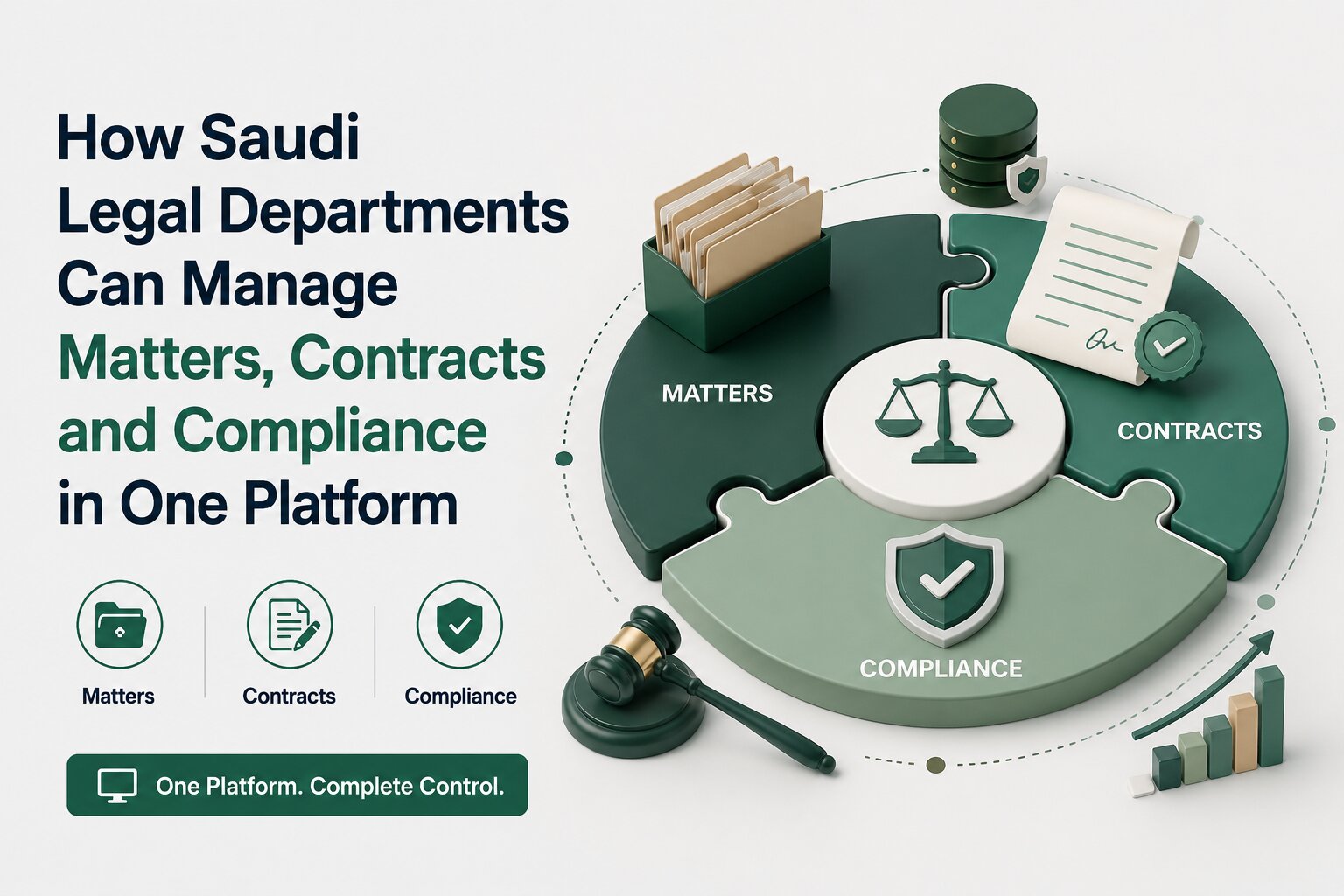
Beveron's Smart Legal Counsel brings these capabilities together in a single platform, helping legal departments centralise matter management, automate workflows, monitor compliance, control legal spend, and gain actionable insights through AI-powered reporting.
Book a personalised demonstration today and discover how Smart Legal Counsel can help your legal department improve efficiency, reduce risk, and operate with greater strategic impact.
Best legal matter management software in the UAE
Best legal case management platform in the UAE
Best corporate legal management in the UAE
If you need a free demo of the best legal practice management software in the UAE, please fill out the form below.