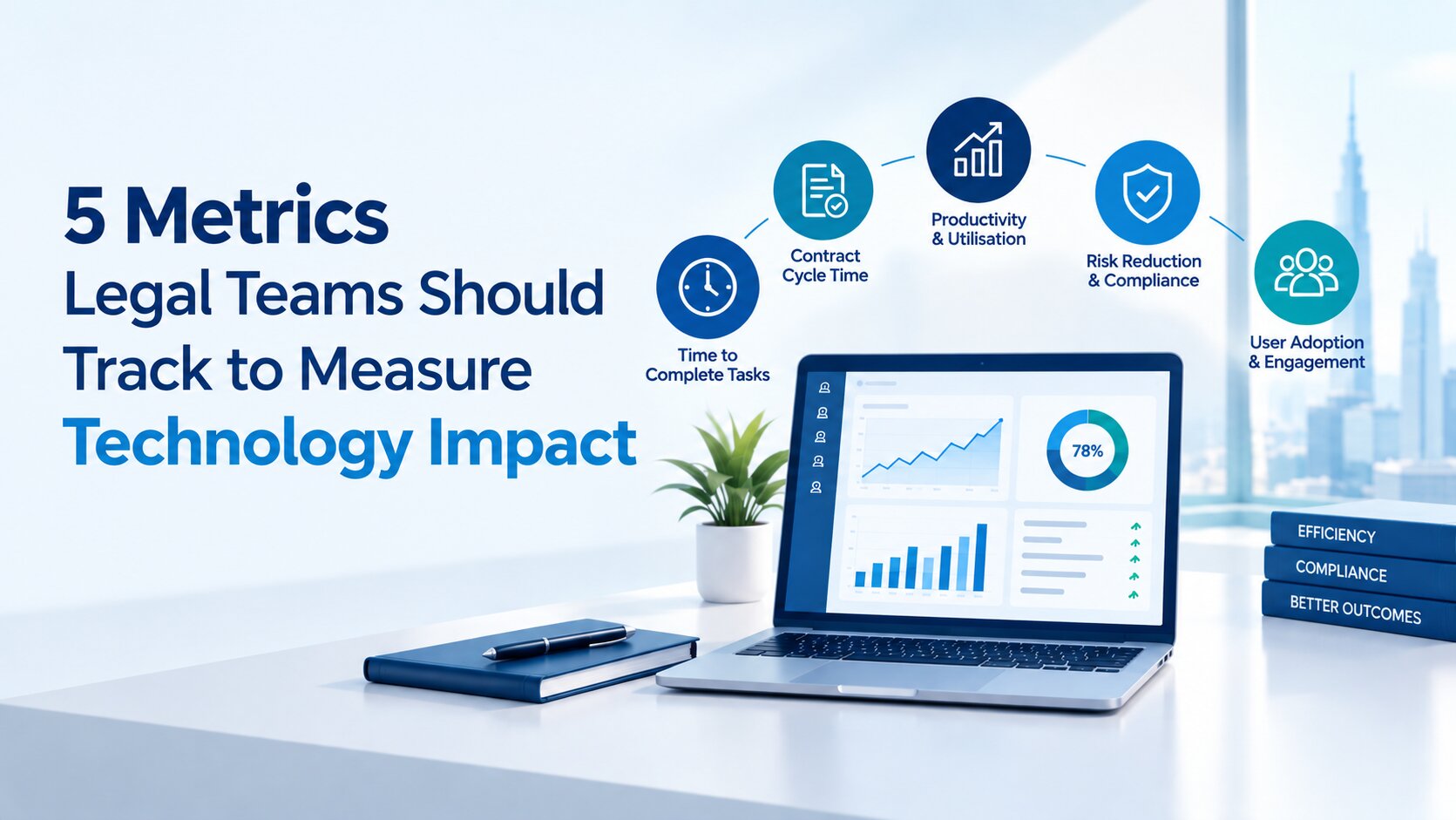
The Business Case for AI-Powered Legal Reporting in Corporate Legal Departments
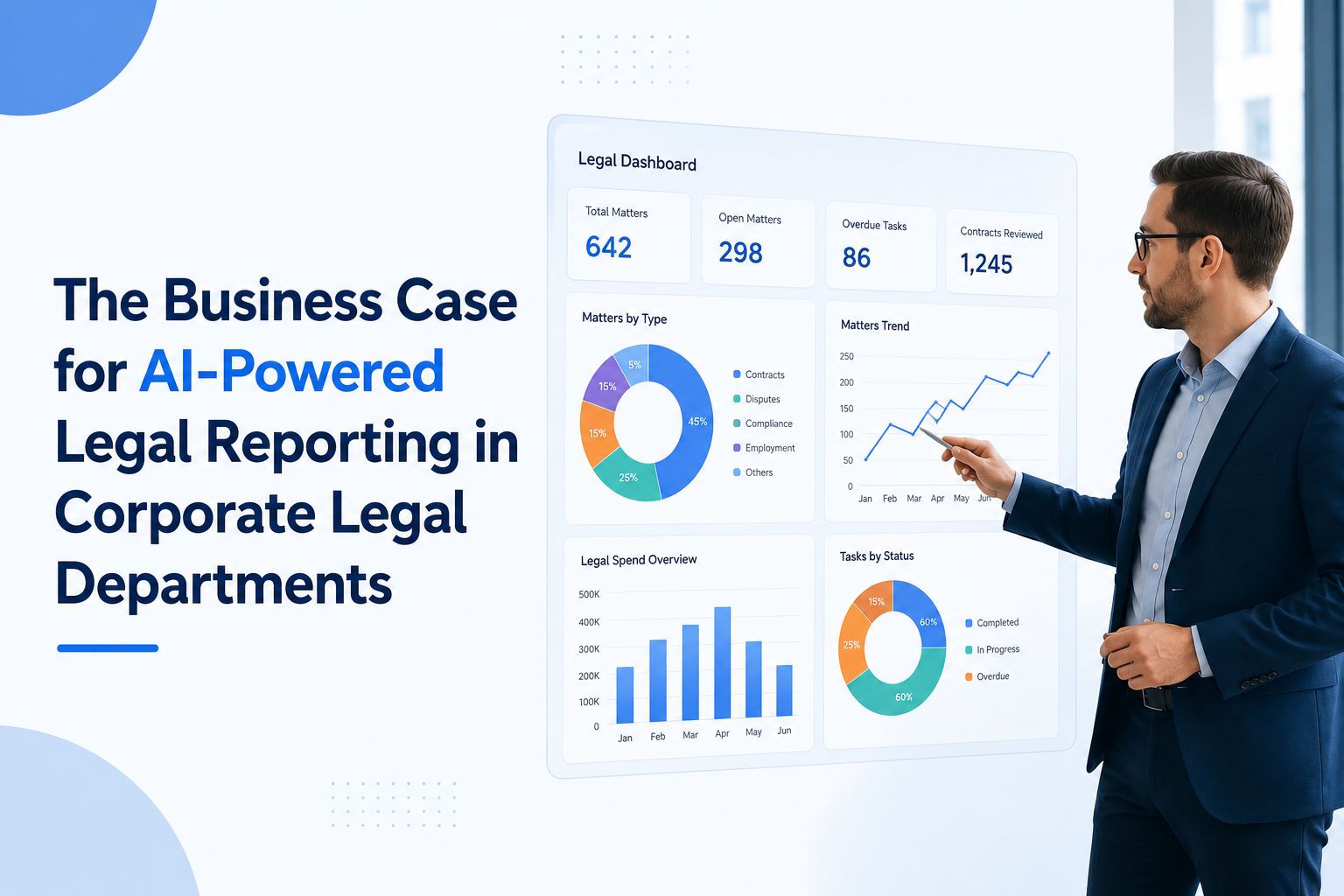
Corporate legal departments are under growing pressure to do more than provide legal advice. They are expected to manage risk proactively, support faster business decisions, control legal spend, improve visibility across legal work, and clearly demonstrate value to executive leadership.
At the same time, legal operations have become far more complex. In-house legal teams now manage a broad mix of responsibilities, including contract review, corporate governance, compliance, disputes, investigations, outside counsel management, regulatory support, and day-to-day advisory work. Yet many legal departments still rely on spreadsheets, email threads, static slide decks, and disconnected systems to track activity and report performance.
That model is becoming harder to sustain.
Manual reporting often creates delays, inconsistent data, limited visibility, and unnecessary administrative overhead. It also makes it difficult for legal leaders to answer important operational questions quickly. How many matters are currently open? Which teams are overloaded? Where is outside counsel spending rising? Which contract workflows are slowing procurement or revenue? Where are compliance tasks falling behind?
This is where AI-powered legal reporting is becoming increasingly valuable.
Instead of treating reporting as a periodic administrative exercise, corporate legal departments are beginning to treat it as a strategic legal operations capability. AI-powered legal reporting helps transform fragmented legal data into faster, more structured, and more actionable insight. It can reduce the time spent building reports manually, improve operational visibility, support legal spend control, and help legal leaders communicate legal’s value more clearly to the business.
In this guide, we’ll explore what AI-powered legal reporting means, why it matters for corporate legal departments, the business case behind it, the use cases that deliver the most value, and what legal teams should look for when evaluating legal reporting software.
Why Legal Reporting Has Become a Strategic Priority for Corporate Legal Departments
Legal reporting is no longer just a monthly update or a collection of operational statistics. It is increasingly becoming a core part of how legal departments manage performance, support decision-making, and show their contribution to the business.
Growing Pressure to Prove Legal’s Business Value
General counsel and legal operations leaders are increasingly expected to show measurable value, not just provide legal judgement. Executive stakeholders want clearer visibility into legal workload, legal spend, contract performance, compliance risk, and service delivery. Legal teams are being asked to justify budgets, explain resource constraints, improve responsiveness, and support broader business goals.
This pressure is growing at the same time as legal departments face more work, tighter expectations, and a more complex operating environment.
The Business Wants Clearer Visibility from Legal
Legal is no longer seen as a function that operates separately from the rest of the organisation. Finance leaders want better oversight of outside counsel costs and legal budgets. Commercial teams want to understand why contracts are delayed. Procurement teams want faster approvals. Senior leadership wants visibility into disputes, compliance issues, and legal bottlenecks that may affect growth or risk exposure.
That means legal departments need reporting that goes beyond activity tracking. They need reporting that helps explain performance, identify trends, support budgeting, and guide operational decisions.
Legal Operations Are Becoming More Complex
A modern corporate legal department may be handling commercial contracts, procurement support, employment matters, regulatory and compliance work, corporate governance, litigation and disputes, entity management, internal investigations, policy reviews, and outside counsel coordination.
As the scope of legal work expands, manual reporting becomes increasingly difficult. Data often sits across different systems, teams, inboxes, and spreadsheets, making it harder to produce timely, accurate, and useful insight.
AI Adoption Is Raising Expectations Around Speed and Visibility
AI adoption across legal operations is accelerating, and with it, expectations are changing. Legal departments are no longer being asked simply whether they are using AI. They are being asked whether technology is helping them improve visibility, reduce reporting effort, control spend, support faster decisions, and operate more efficiently.
That shift makes reporting more important than ever. If legal teams are investing in AI and legal operations technology, leadership will expect to see measurable operational value from it.
The Reporting Problem: Why Manual Legal Reporting Breaks Down at Scale
Most corporate legal departments understand that reporting matters. The challenge is that the way reporting is often handled today is not designed for scale.
Legal Data Is Spread Across Disconnected Systems
In many legal departments, reporting data lives in multiple places, including matter trackers, contract repositories, billing systems, finance tools, shared drives, email threads, compliance trackers, outside counsel invoices, and department-specific spreadsheets.
When information is fragmented like this, legal operations teams spend too much time collecting, reconciling, and cleaning data before reporting can even begin.
Reporting Often Depends on Manual Effort
In a typical reporting cycle, legal operations or support staff may need to pull data from several systems, request updates from lawyers, review invoices, validate contract statuses, and manually build dashboards or slide decks for leadership.
This creates a heavy administrative burden and slows down reporting cycles. It also introduces risk, making it harder to maintain consistency, accuracy, and trust in the data.
Reports Become Outdated Before They Are Useful
Manual reporting is often retrospective. By the time legal leaders receive a monthly or quarterly report, the underlying situation may already have changed.
Matter volumes may have increased, budgets may have shifted, approvals may be delayed, or new compliance issues may have emerged. That lag reduces the practical value of reporting.
Legal Teams End Up Reporting Activity Instead of Insight
One of the biggest weaknesses of manual reporting is that it often focuses on surface-level activity rather than meaningful operational insight.
A report may show how many matters are open or how many contracts were reviewed, but not explain which business units generate the most legal demand, where approvals are slowing down, or which outside counsel relationships are driving costs.
Without that level of visibility, reporting does little to help legal leaders make better operational decisions.
What Is AI-Powered Legal Reporting?
AI-powered legal reporting uses automation, analytics, and AI-assisted data processing to help corporate legal departments collect, structure, analyse, and present legal operational data more efficiently.
In practical terms, it helps legal teams move from slow, manually assembled reporting to a more dynamic, centralised, and insight-driven reporting model.
Traditional Legal Reporting vs AI-Powered Legal Reporting
Traditional legal reporting often relies on static spreadsheets, manual data entry, disconnected systems, and periodic reporting cycles.
AI-powered legal reporting supports a more advanced approach by helping legal teams automate data collection, categorise legal work intelligently, identify bottlenecks, analyse trends, and create dashboards more efficiently.
What AI Can Realistically Do in Legal Reporting
AI-powered legal reporting should be viewed as a productivity and visibility tool rather than a replacement for legal judgement.
It can help legal teams categorise matters, extract data from workflows, generate reporting summaries, identify unusual spending patterns, highlight overdue tasks, and improve access to operational insights.
The goal is to reduce manual effort, improve visibility, and support more informed decision-making.
The Business Case for AI-Powered Legal Reporting in Corporate Legal Departments
1. Faster Reporting Cycles with Less Administrative Burden
AI-powered reporting reduces the time spent collecting and organising data. Instead of manually compiling reports, legal teams can access structured dashboards and standardised reporting directly from a centralised platform.
This allows legal operations teams to spend less time gathering information and more time analysing it.
2. Better Visibility into Legal Work, Workloads, and Priorities
AI-powered reporting provides a clearer view of matter volumes, workload distribution, contract turnaround times, aging matters, compliance deadlines, and unresolved legal requests.
This visibility helps legal leaders allocate resources more effectively and identify operational bottlenecks early.
3. Improved Legal Spend Control and Outside Counsel Oversight
Legal teams can track spend across matters, law firms, business units, and regions while identifying trends and cost drivers more efficiently.
This supports stronger budgeting, better vendor management, and improved financial oversight.
4. Better Contract and Workflow Reporting
AI-powered reporting helps monitor contract volume, approval delays, negotiation timelines, response times, and service-level performance.
This makes it easier to identify workflow bottlenecks that affect the wider business.
5. Stronger Compliance and Audit Visibility
Legal departments can gain better visibility into compliance activities, policy reviews, investigations, regulatory deadlines, and audit readiness.
This supports stronger governance and reduces the risk of missed obligations. For legal teams also looking at how AI governance affects audit readiness, our guide on AI Audit Readiness: What Legal Teams Should Document Before Regulators Ask explores the records, approvals, and oversight evidence organisations should have in place before regulators ask questions.
6. More Credible Executive and Board Reporting
AI-powered reporting allows legal leaders to present meaningful operational insights rather than simple activity reports.
This helps communicate legal’s contribution to business outcomes more effectively.
7. Better Forecasting, Planning, and Resource Allocation
By identifying long-term trends in workload, spend, and legal demand, AI-powered reporting helps legal departments make better staffing, budgeting, and process improvement decisions.
High-Value Use Cases for AI-Powered Legal Reporting
Matter Reporting and Workload Visibility
Matter reporting helps legal teams track open matters, workload distribution, high-priority work, and overdue issues, making it easier to manage resources effectively. It also supports more proactive legal operations planning by helping teams anticipate future demand patterns, resource pressure, and capacity gaps. For a deeper look at how AI is being used to improve forecasting and workload planning in legal operations, read Can AI Predict Legal Workloads? The Growing Role of Forecasting in Legal Operations.
Contract Lifecycle Reporting
Contract reporting provides visibility into contract volumes, turnaround times, approval delays, negotiation cycles, and service-level performance.
Legal Spend and Outside Counsel Reporting
Spend reporting helps legal departments monitor budgets, law firm costs, billing trends, and external legal expenses more effectively.
Compliance and Governance Reporting
Compliance reporting supports oversight of policy reviews, investigations, regulatory obligations, and governance activities.
Executive Legal Dashboards
Executive dashboards provide leadership with a high-level view of workload, spend, contract performance, compliance status, and operational risks.
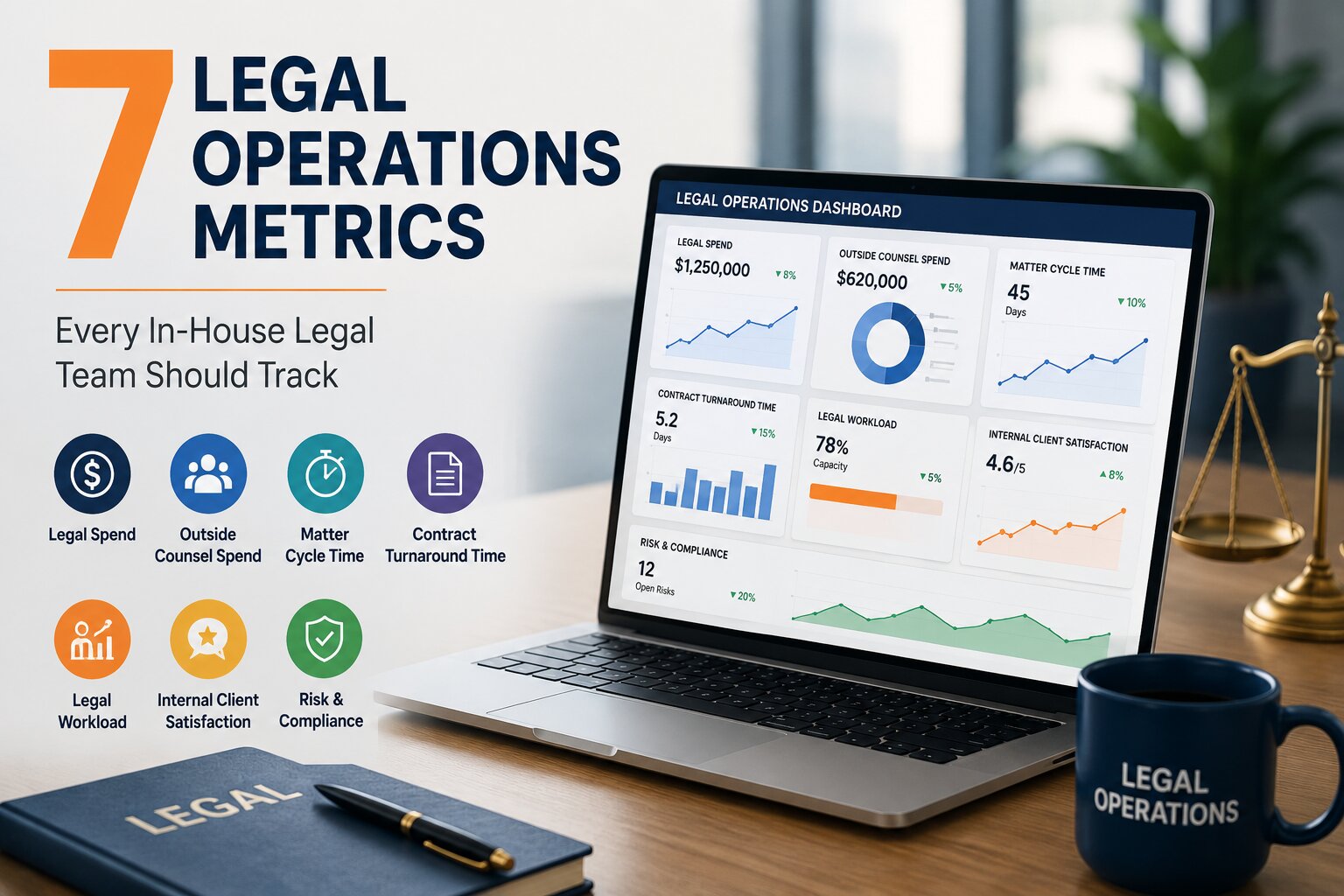
The KPIs Corporate Legal Departments Should Track
The right reporting model depends on the legal department’s structure and priorities, but several KPI categories are especially important for legal operations and leadership reporting. For a deeper look at which legal department KPIs matter most and how reporting frameworks can improve productivity, read our guide on legal department KPI tracking and reporting.
Matter and Legal Request KPIs
These metrics help legal teams understand workload, matter progress, response times, and overall operational efficiency.
Contract Reporting KPIs
Contract KPIs measure the effectiveness and speed of contract review, approval, and negotiation processes.
Legal Spend KPIs
Legal spend metrics provide visibility into budgets, costs, law firm usage, and spending trends.
Workload and Productivity KPIs
These KPIs help assess team capacity, workload distribution, responsiveness, and productivity.
Compliance and Risk KPIs
Compliance and risk metrics support oversight of regulatory obligations, investigations, policy management, and emerging risks.
What Corporate Legal Departments Should Look for in AI-Powered Legal Reporting Software
Centralised Legal Data and Integrated Workflows
Accurate reporting depends on connected data. A strong legal operations platform should bring together matters, contracts, legal requests, spend, compliance activities, and external counsel information in one place. But integration alone is not enough. If legal technology is implemented too quickly without aligning workflows, data structures, reporting requirements, and user adoption needs, it can create new silos rather than solve existing ones. Beveron’s guide on The Hidden Risks of Moving Too Fast on Legal Tech Adoption explores the operational and implementation challenges legal teams should evaluate before rolling out new systems.
Real-Time Dashboards and Configurable Reports
Legal teams should be able to customise dashboards and reports to meet the needs of operational teams, leadership, and other stakeholders.
AI-Assisted Analysis and Reporting Support
AI-powered reporting should help identify trends, highlight bottlenecks, generate summaries, and provide actionable insights. As legal AI capabilities continue to evolve, legal teams are also starting to evaluate more advanced use cases such as agentic workflows, where AI can support multi-step legal operations tasks with greater autonomy and context. For a broader look at how this shift may affect in-house teams, read our guide on The Rise of Agentic AI in Legal Operations: What Corporate Legal Teams Need to Know
Strong Security and Permission Controls
Legal reporting software should include role-based access controls, audit trails, secure document handling, and strong data governance features.
Ease of Adoption
The platform should be easy for legal teams to use, reducing reliance on IT while supporting day-to-day reporting needs.
Why Integrated Legal Operations Platforms Deliver Better Reporting Outcomes
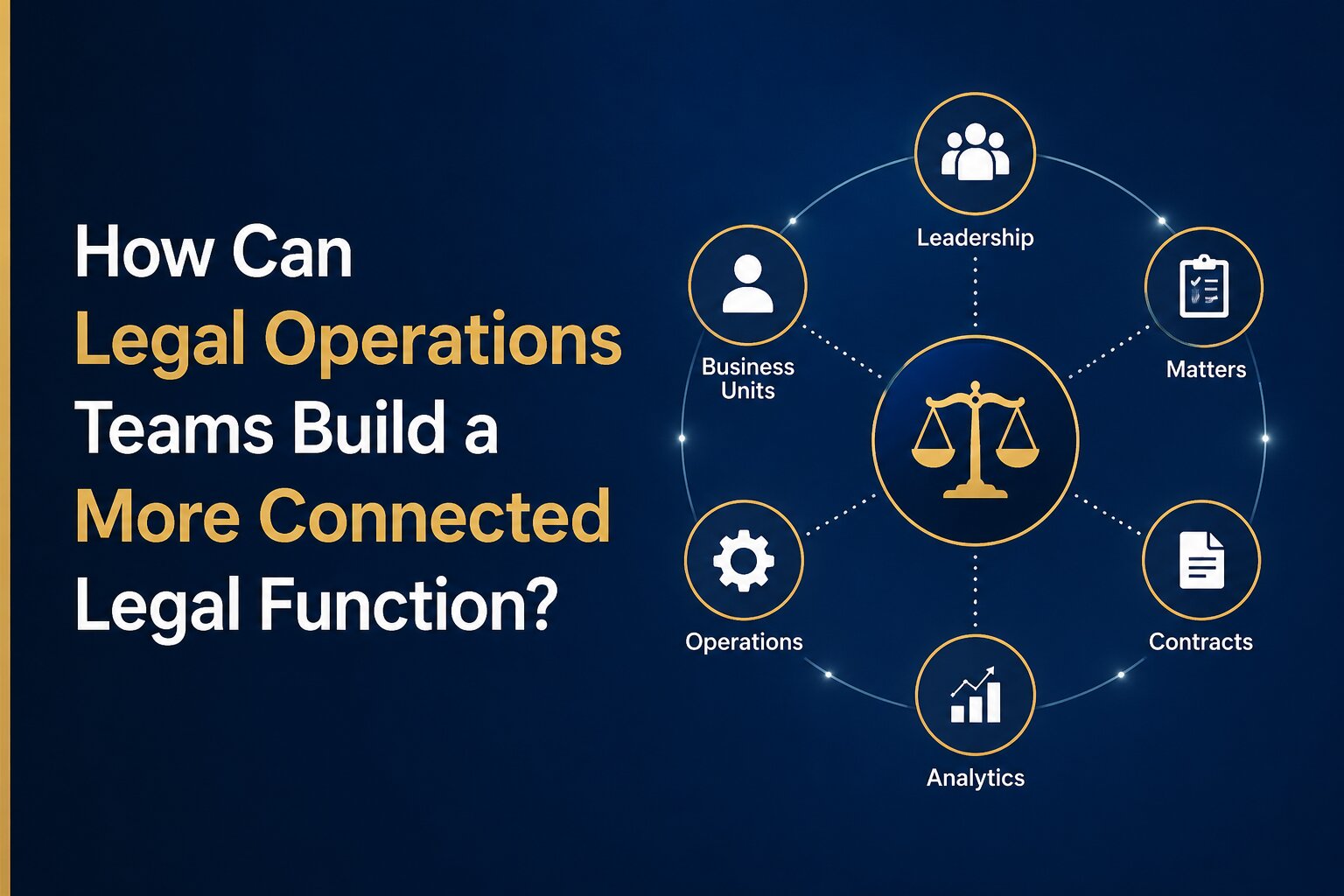
AI-powered reporting works best when it is built on connected legal workflows rather than disconnected tools. As more legal teams move away from fragmented systems, integrated legal operations platforms are becoming essential for improving visibility, consistency, and efficiency across the legal function. For a broader look at how connected legal technology supports in-house teams, read our guide on transforming in-house legal departments with legal software solutions.
Integrated legal operations platforms bring together matter management, contract workflows, approvals, legal spend, compliance activities, and reporting within a single environment. This improves data quality, reduces manual effort, and creates more reliable reporting.
Better Visibility Across the Full Legal Workflow
Connected data helps legal leaders understand how matters, contracts, spend, and compliance activities interact across the department.
Less Manual Reporting Effort
When information is captured in one system, legal teams spend less time collecting and reconciling data from multiple sources.
More Reliable Dashboards and Reporting
Integrated platforms create more consistent reporting structures and improve confidence in reporting accuracy.
Stronger Executive Reporting
Legal leaders can provide a more complete view of legal operations, risks, workload, spend, and performance.
How Beveron Supports AI-Powered Legal Reporting for Corporate Legal Departments
For corporate legal departments looking to improve visibility and reduce reporting friction, Beveron’s Smart Legal Counsel provides a centralised legal operations platform designed for in-house legal teams.
Rather than relying on separate tools for matters, documents, workflows, reporting, and collaboration, legal teams can manage key legal operations in one system. This creates a stronger foundation for reporting by connecting data across day-to-day legal work.
Beveron helps legal departments centralise matter management, contract workflows, team collaboration, operational reporting, and process oversight, enabling faster and more structured reporting.
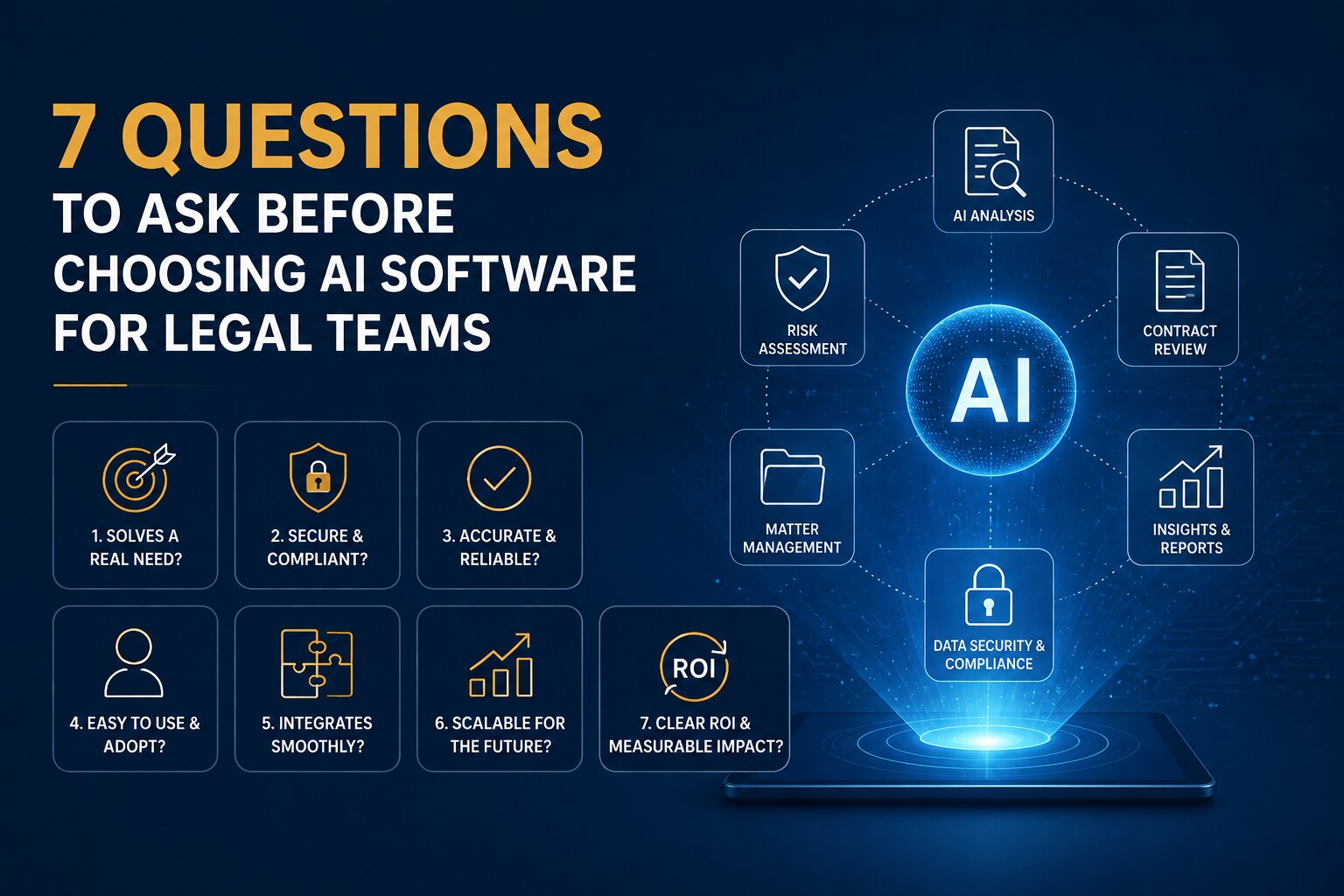
Questions to Ask Before Investing in AI-Powered Legal Reporting
Key Questions for Legal Leaders
- What reporting challenges are we trying to solve, and where are the biggest visibility gaps?
- Which legal KPIs are most important to leadership and the wider business?
- Can the platform provide reporting across matters, contracts, legal requests, and compliance activities?
- How does the platform handle security, permissions, confidentiality, and audit trails?
- Will the solution reduce manual reporting effort while supporting future growth and increasing workloads?
Conclusion
AI-powered legal reporting is becoming essential for modern corporate legal departments. As legal teams manage growing workloads, tighter budgets, and increasing compliance demands, traditional reporting methods often struggle to provide the visibility and efficiency required.
By turning legal data into actionable insights, AI-powered reporting helps improve decision-making, strengthen spend oversight, increase operational visibility, and demonstrate legal’s value to the business. For organisations still relying on spreadsheets and disconnected systems, it offers a practical path toward a more efficient and strategically aligned legal function.
Frequently Asked Questions
What Is AI-Powered Legal Reporting?
AI-powered legal reporting helps legal teams automatically collect, organise, and analyse data, making reporting faster and easier.
Why Do Corporate Legal Departments Need Better Reporting?
Better reporting provides clearer visibility into workload, costs, risks, and performance, supporting better decision-making.
How Does AI Improve Legal Reporting?
AI reduces manual work by identifying trends, organising information, and generating insights more efficiently.
What KPIs Should Corporate Legal Departments Track?
Important KPIs include matter volume, contract turnaround time, legal spend, workload distribution, compliance status, and budget performance.
Can AI-Powered Legal Reporting Help with Legal Spend Visibility?
Yes. It helps legal teams monitor spending across matters, law firms, departments, and regions more effectively.
What Should Legal Teams Look for in AI-Powered Legal Reporting Software?
Look for software that offers centralised data, automated reporting, AI-driven insights, configurable dashboards, and strong security controls.
Best legal operations reporting software in the UAE
Best legal analytics for in-house counsel in the UAE
Best AI legal operations software in the UAE
If you need a free demo of the best legal operations reporting software in the UAE, please fill out the form below.