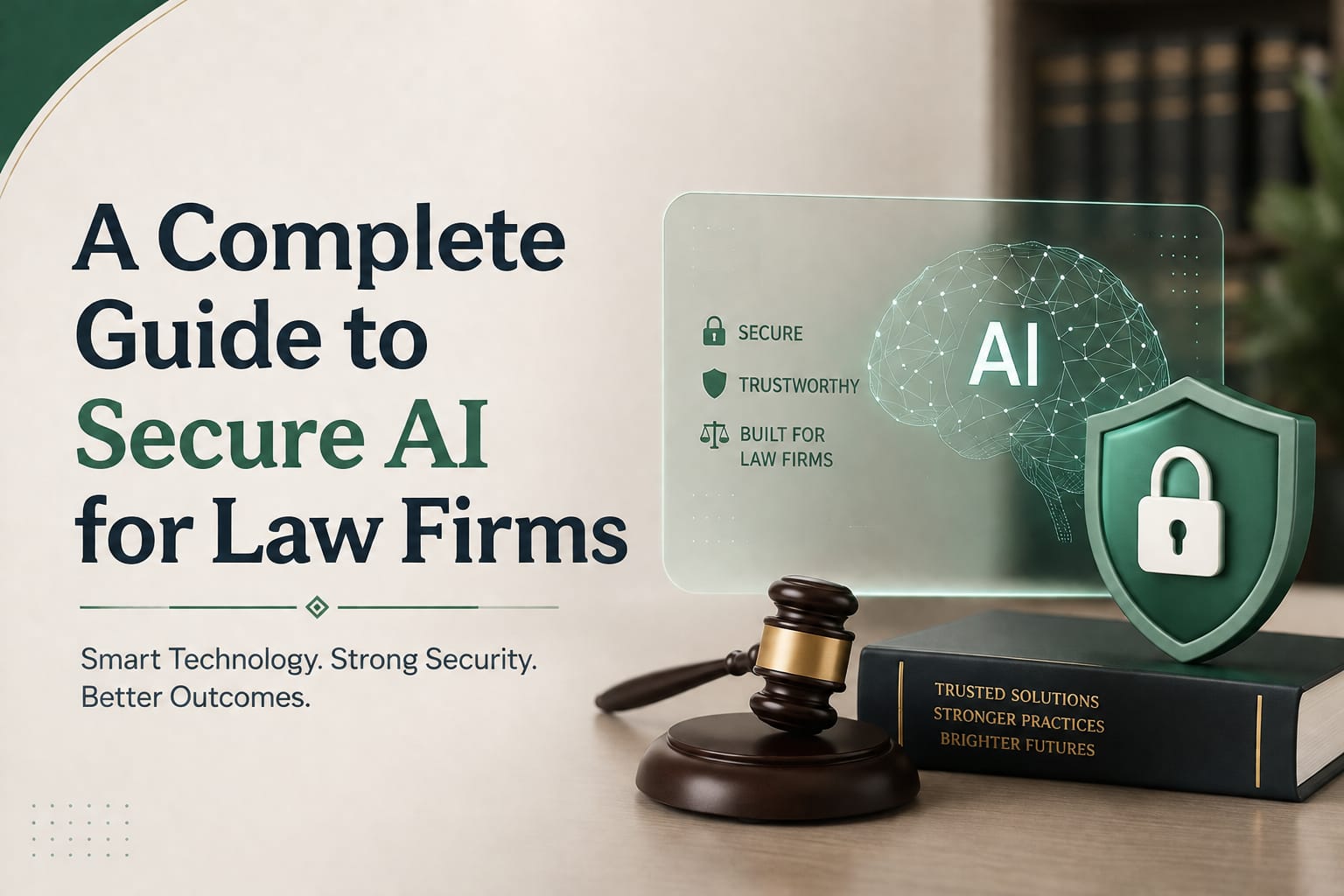
A Complete Guide to Secure AI for Law Firms
Artificial intelligence (AI) is no longer a futuristic concept for the legal industry. Today, law firms use AI to review contracts, draft legal documents, organise case files, and speed up legal research. These tools save valuable time, allowing lawyers to focus more on strategy and client relationships instead of repetitive administrative work.
However, using AI also raises an important question: Is your firm's data safe?
Law firms handle some of the most confidential information imaginable. Client records, contracts, court filings, financial details, and legal strategies all need strong protection. If sensitive information is entered into an unsecured AI tool, it could expose your firm to privacy risks, compliance issues, and a loss of client trust.
The good news is that AI and security can go hand in hand. When implemented responsibly, secure AI helps law firms improve efficiency while keeping confidential information protected.
This guide explains what secure AI means, why it matters, and the essential security features every law firm should look for before adopting AI-powered legal technology.
What Is Secure AI for Law Firms?
Secure AI refers to artificial intelligence systems that are designed to protect sensitive information while helping legal professionals complete their work more efficiently. Instead of simply generating answers or drafting documents, secure AI includes safeguards that prevent unauthorised access, protect confidential data, and support compliance with privacy regulations.
For law firms, secure AI is much more than using a popular public AI chatbot. Public AI tools may not always be suitable for handling confidential legal information because the data entered could be stored or processed outside the firm's control.
Secure legal AI platforms, on the other hand, are built with the legal profession in mind. It's one of the reasons why more law firms are adopting AI to improve efficiency while protecting sensitive information. They help firms automate routine work while maintaining strict control over client information.
For firms that require even greater control over sensitive legal data, secure on-premise AI for legal teams offers an approach where AI operates within the organisation's own infrastructure, helping keep confidential information under the firm's control.
Some common ways law firms use secure AI include:
- Drafting legal documents and contracts
- Reviewing agreements more efficiently
- Organising case files and legal documents
- Assisting with legal research
- Managing legal matters and workflows
When combined with solutions like law firm management software, legal document automation software, and AI legal software, secure AI becomes a practical tool that improves productivity without compromising confidentiality.
Why Security Matters When Using AI
Every client expects their lawyer to keep personal and business information private. That responsibility doesn't change when AI becomes part of the workflow.
Imagine a lawyer copying confidential contract details into a free public AI tool to generate a summary. If that platform isn't designed for legal work or doesn't provide adequate data protection, the firm may lose control over where that information is stored or how it is used. Even if no breach occurs, the uncertainty alone can create unnecessary risk.
Security matters because law firms deal with information that clients trust them to protect every day.
Some of the biggest reasons security should be a priority include:
Protecting client confidentiality
Legal documents often contain personal information, financial records, intellectual property, and business strategies. Secure AI helps ensure this information remains protected throughout the legal workflow.
Reducing the risk of data leaks
Not every AI tool follows the same security standards. Choosing software with built-in security measures reduces the chances of sensitive information being exposed accidentally or through cyberattacks.
Supporting legal and privacy requirements
Many countries have laws that regulate how organisations collect, store, and process personal information. Law firms need AI solutions that support these privacy obligations rather than creating additional compliance challenges.
Maintaining client trust
Clients expect professional handling of their confidential matters. Demonstrating that your firm uses secure technology can strengthen confidence and build long-term relationships.
Security should never be viewed as something that slows innovation. Instead, it creates the foundation that allows law firms to adopt AI with confidence.
Key Features to Look for in Secure AI Software
Not every AI platform offers the same level of protection. Before choosing a solution, law firms should look beyond automation features and evaluate how the software safeguards confidential information.
Here are the most important features to consider.
Secure data storage
Client information should always remain protected while it is stored.
A secure AI platform uses protected infrastructure that helps prevent unauthorised access and reduces the risk of data loss. It should also provide reliable backup systems so important legal documents remain available when needed.
Role-based access
Not every employee needs access to every client file.
Role-based access allows firms to decide who can view, edit, or manage specific information based on their responsibilities. For example, a partner may have access to every matter, while a junior associate or administrative staff member only sees the cases relevant to their work.
This simple feature significantly reduces unnecessary exposure to confidential information.
Audit trails
Knowing who accessed a document and when can be extremely valuable.
Audit trails automatically record important activities, such as viewing, editing, downloading, or sharing legal files. If questions arise later, firms have a clear record of what happened.
This also improves accountability within the organisation and supports compliance requirements.
Encryption
Encryption protects information while it is stored and while it is being shared.
Think of encryption as placing sensitive information inside a locked digital container. Even if someone intercepts the data, they cannot read it without the correct security credentials.
For law firms handling confidential legal matters, encryption is one of the most important security features available.
Compliance support
Different countries have different privacy and data protection laws.
A secure AI solution should help firms manage information in ways that support these legal obligations. While software alone cannot guarantee compliance, it should provide the tools needed to store, access, and manage information responsibly.
Choosing software that is designed specifically for legal professionals often makes meeting these requirements much easier.
By focusing on these core security features, law firms can adopt AI with greater confidence. Instead of worrying about data protection, lawyers can spend more time delivering value to clients while knowing their information is handled securely.
Best Practices for Using AI Safely in Your Law Firm
Choosing secure AI software is only the first step. How your team uses it every day is just as important. Even the most secure platform cannot protect your firm's data if employees follow unsafe practices.
Here are a few simple habits that help law firms use AI responsibly.
Create clear guidelines for AI use
Every law firm should have a clear policy explaining when and how AI can be used. Team members should understand which tasks are suitable for AI, what information should never be shared, and when human review is required before using AI-generated content.
Having clear guidelines helps everyone work consistently and reduces the risk of accidental mistakes. It also helps firms avoid many of the common mistakes law firms make when adopting legal software, such as overlooking user training, weak security practices, or unclear workflows. Taking the time to establish clear processes from the start makes AI adoption smoother, safer, and more effective.
Avoid using public AI tools for confidential information
Free AI tools may be useful for general questions, but they are not always the right place for sensitive legal work.
Client names, contracts, legal advice, financial records, and case strategies should only be handled through secure AI platforms designed for legal professionals.
Always review AI-generated content
AI can produce impressive results, but it is not perfect. It may misunderstand legal context, miss important details, or provide inaccurate information.
Lawyers should always review and verify AI-generated documents before sharing them with clients or using them in legal proceedings. AI should support legal expertise, not replace professional judgement.
Train your team
Technology changes quickly, and regular training helps employees use AI safely and effectively.
Training should cover topics such as protecting confidential information, recognising security risks, following the firm's AI policy, and understanding the limits of AI-generated content.
Keep software updated
Software updates often include important security improvements. Delaying updates can leave systems exposed to known security risks.
Keeping AI software, operating systems, and related applications up to date helps maintain a secure working environment.
Review user access regularly
As teams grow and roles change, access permissions should also be reviewed.
Employees should only have access to the files and information they need for their work. Removing unnecessary access reduces the chances of confidential information being viewed or shared by mistake.
How Secure AI Helps Law Firms Every Day
When security is built into AI from the beginning, law firms can enjoy the benefits of automation without compromising client trust. One of the biggest advantages is saving time. Tasks such as organising documents, reviewing contracts, conducting legal research, and managing case files become much faster. Instead of spending hours on repetitive administrative work, lawyers can focus on client advice, case strategy, and higher-value legal work.
Secure AI also helps reduce manual errors. By automating routine processes, law firms can improve consistency while ensuring that legal professionals review and validate important decisions before they are finalised. Collaboration becomes more efficient too. Lawyers, paralegals, and support staff can work together on matters while secure access controls ensure that confidential information is only available to authorised team members.
Another significant benefit is improved document management. Secure AI makes it easier to organise, search, and retrieve legal documents without compromising privacy. This is especially valuable for firms managing large volumes of contracts, litigation files, and corporate records. Many firms are already seeing how modern technology improves case and document management, making legal information easier to find, share, and protect throughout its lifecycle.
Beyond improving productivity, secure AI strengthens client confidence. When clients know their sensitive legal information is protected with secure technology, they are more likely to trust their law firm with important matters. Over time, that trust becomes just as valuable as the efficiency AI brings.
How Beveron Technologies Approaches Secure AI
Many technology companies now offer AI for legal work, but not all of them are built with the realities of a law firm in mind. Legal teams need more than speed—they need confidence that sensitive client information stays protected throughout every stage of their work.
That's the approach Beveron Technologies helps the legal sector take—by developing secure legal technology solutions that improve efficiency without compromising client confidentiality. Features such as secure document management, controlled user access, audit trails, and AI-powered workflows allow legal professionals to work more efficiently without losing control over confidential information.
Another difference is Beveron's focus on the legal industry itself. Instead of adapting general business software for lawyers, its solutions are developed around the way legal teams manage matters, documents, contracts, and daily operations. This makes it easier for firms to adopt new technology without disrupting the way they already work.
As AI continues to shape the future of legal practice, Beveron Technologies demonstrates that innovation doesn't have to come at the expense of security. By combining practical AI capabilities with strong data protection, it helps legal professionals move forward with confidence while continuing to protect the trust their clients place in them.
Choosing the Right Secure AI Solution
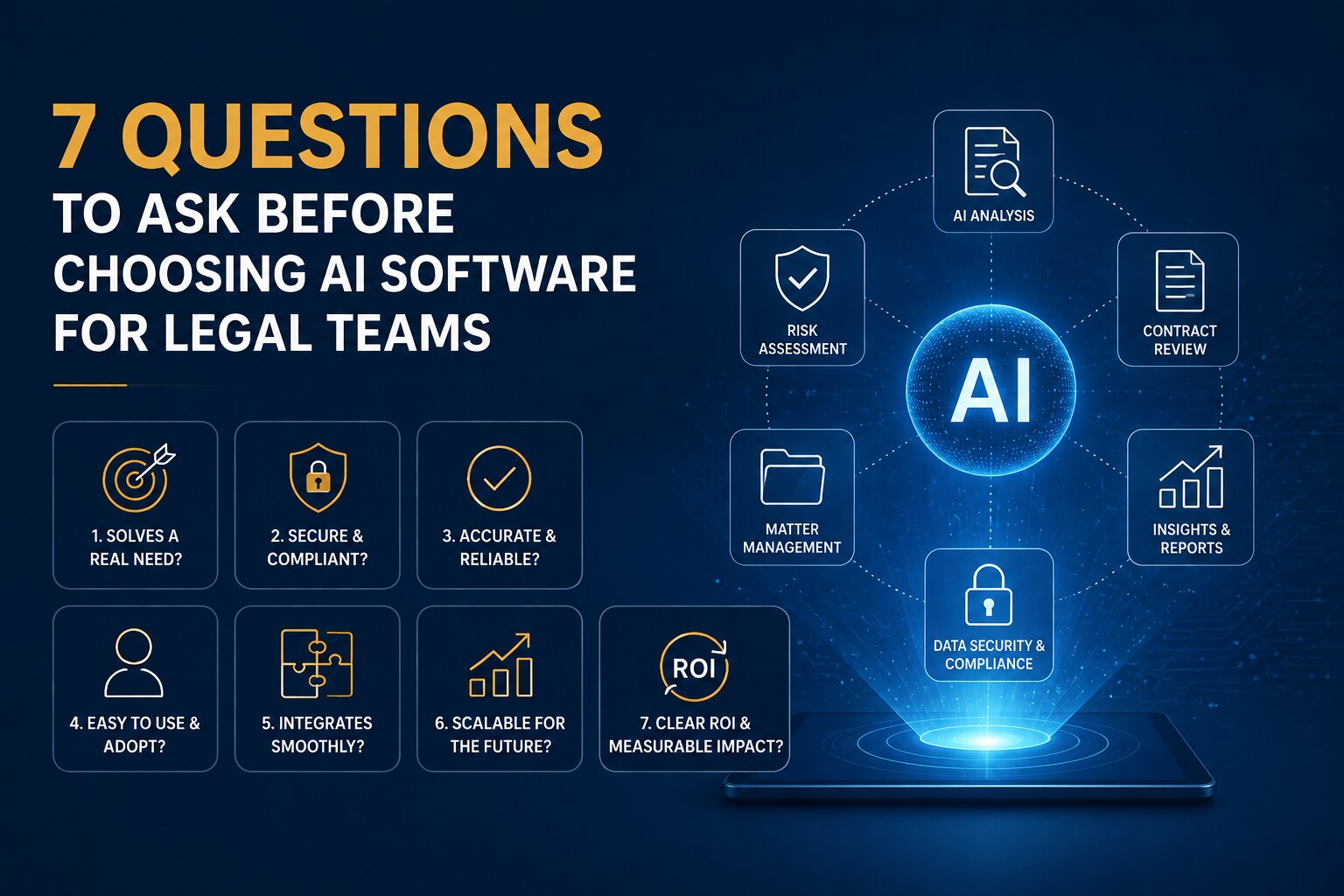
With so many AI tools available, choosing the right one can feel overwhelming. Rather than focusing only on automation features, start by asking a few practical questions.
- Does the software protect confidential client information?
- Can you control who accesses sensitive files?
- Does it support your firm's privacy and compliance requirements?
- Is it easy for lawyers and staff to use without extensive training?
- Can it grow with your firm's future needs?
- Does it integrate with your existing legal workflows?
The best solution is one that improves productivity while fitting naturally into the way your firm already works. A secure AI platform should make legal work easier without creating new security concerns.
Conclusion
AI is changing how law firms manage documents, conduct legal research, review contracts, and handle everyday legal work. These technologies offer significant opportunities to improve efficiency, but they also come with a responsibility to protect the confidential information clients entrust to their lawyers.
Secure AI allows law firms to enjoy the benefits of automation while maintaining strong data protection, supporting privacy requirements, and preserving client trust. By choosing software with the right security features and following responsible AI practices, firms can reduce risk and build a safer, more efficient legal workplace.
As AI continues to evolve, security should remain at the centre of every technology decision. Law firms that prioritise both innovation and confidentiality will be better prepared to deliver faster, smarter, and more reliable legal services in the years ahead.
Secure Your Legal Practice with the Right Technology
AI can help law firms work smarter, but lasting success depends on choosing technology that keeps client information secure while supporting everyday legal work. Beveron Technologies helps legal professionals embrace digital transformation with secure, reliable, and innovative legal technology solutions designed for the modern legal industry.
Explore Beveron Technologies and discover how secure legal technology can help your firm work with greater confidence.
Best AI for law firms in the UAE
Best secure AI software for lawyers in the UAE
Best legal AI software for legal teams in the UAE
If you need a free demo of the best AI for law firms in the UAE, please fill out the form below.