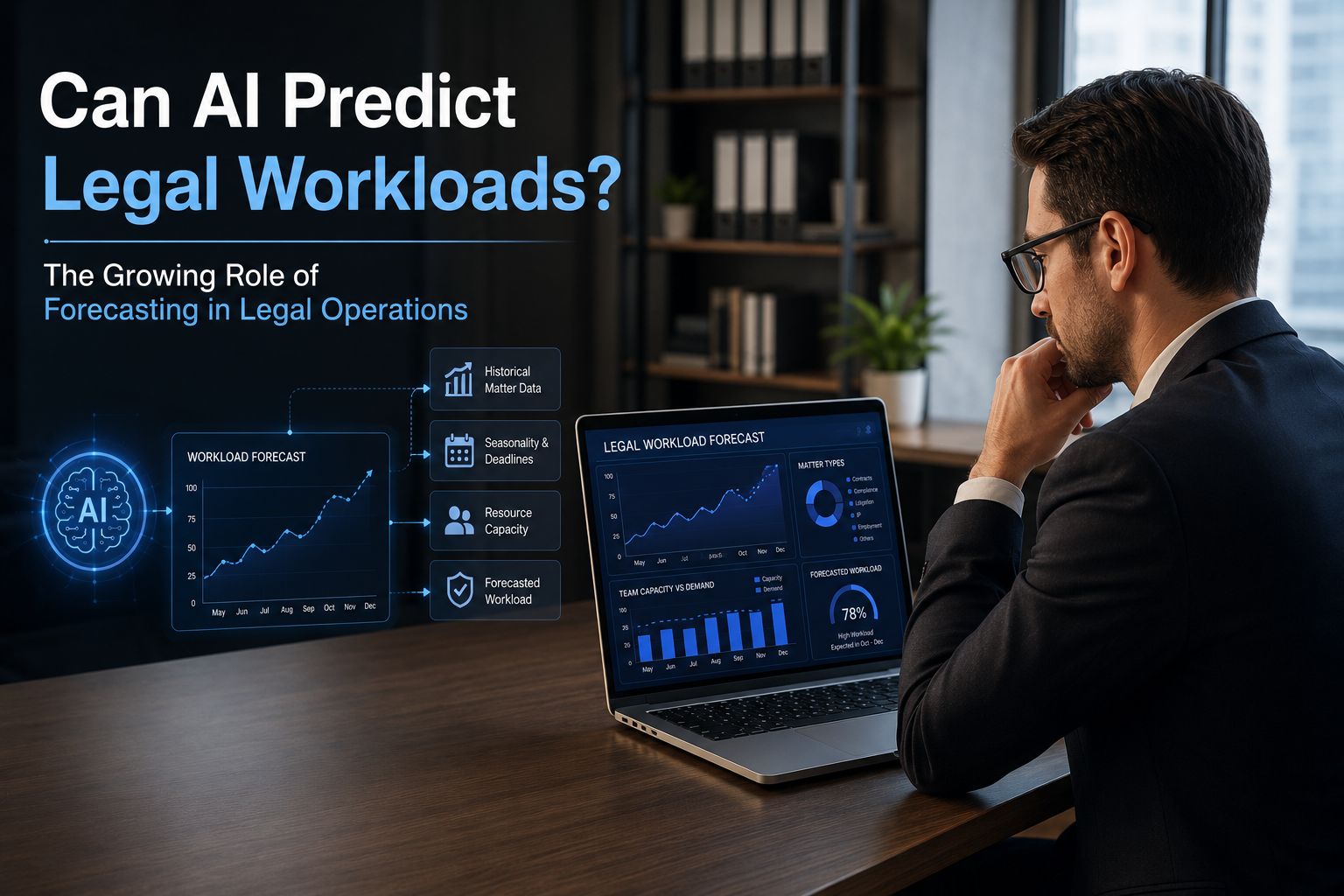
Can AI Predict Legal Workloads? The Growing Role of Forecasting in Legal Operations
Legal departments have traditionally operated in a reactive environment. A sudden influx of contract requests, an unexpected regulatory change, a major litigation matter, or an urgent compliance issue can quickly overwhelm even well-organised teams.
For years, legal leaders have relied on experience, intuition, and historical trends to estimate future workloads. While these methods can provide some guidance, they often struggle to account for the increasing complexity and volume of legal work facing modern organisations.
Today, artificial intelligence (AI) is changing that conversation.
As legal operations become more data-driven, many organisations are exploring whether AI can help predict future legal demand, identify resource requirements, and improve planning decisions. The goal is not to replace legal expertise but to provide legal teams with greater visibility into what lies ahead.
So, can AI accurately predict legal workloads?
The answer is increasingly yes—provided organisations have the right data, processes, and expectations in place.
Why Legal Workload Forecasting Matters More Than Ever
Corporate legal departments are under pressure from multiple directions. Business stakeholders expect faster responses, regulatory requirements continue to expand, and budgets often remain constrained.
At the same time, legal teams are managing a broader range of responsibilities than ever before.
These responsibilities may include:
- Contract reviews and negotiations
- Compliance management
- Employment law matters
- Litigation oversight
- Corporate governance activities
- Internal legal advisory requests
- Risk management initiatives
The challenge is that legal demand rarely arrives in a predictable, steady stream.
A company preparing for expansion into new markets may suddenly generate hundreds of contract reviews. A new regulation can create an immediate surge in compliance work. An acquisition can trigger significant due diligence and governance requirements.
Without visibility into future demand, legal departments often find themselves reacting rather than planning.
Poor forecasting can lead to:
- Missed deadlines
- Resource shortages
- Increased external legal spending
- Employee burnout
- Reduced service quality
Accurate forecasting helps legal teams prepare for workload fluctuations before they become operational problems.
What Is AI-Powered Legal Workload Forecasting?
AI-powered legal workload forecasting uses historical data, operational trends, and predictive analytics in legal software to estimate future legal demand and support more informed operational decisions.
In simple terms, it helps answer questions such as the following:
- How many contract reviews are likely next quarter?
- When will legal request volumes increase?
- Which practice areas will require additional resources?
- How much external counsel should spend should be budgeted?
- Are current staffing levels sufficient?
The process is similar to how weather forecasting works.
Meteorologists analyse historical weather patterns, current conditions, and predictive models to estimate future outcomes. AI forecasting applies a similar concept to legal operations.
Instead of weather data, AI analyses information such as the following:
- Matter intake volumes
- Contract requests
- Regulatory obligations
- Litigation trends
- Department workloads
- Business growth activities
- Historical turnaround times
The system identifies patterns that may not be immediately visible to human reviewers and uses those patterns to predict future workload demands. As more data becomes available, forecasting models can continuously improve their accuracy.
What Types of Legal Work Can AI Forecast?
Not every legal matter can be predicted with complete certainty. However, many categories of legal work follow identifiable patterns that AI can analyse effectively.
Contract Management Workloads
Contract management is often one of the most predictable areas within legal operations.
AI can identify patterns related to:
- Contract renewal periods
- Vendor onboarding cycles
- Procurement activities
- Sales agreement volumes
- Seasonal business fluctuations
For example, organisations may consistently experience increased contract activity during budget planning periods or before the financial year-end. Recognising these patterns allows legal teams to prepare resources in advance.
Compliance Activities
Compliance obligations often follow structured schedules.
AI can forecast:
- Audit preparation workloads
- Regulatory filing requirements
- Policy review cycles
- Training obligations
- Compliance assessment activities
This visibility enables compliance and legal teams to allocate resources more effectively throughout the year.
Litigation and Dispute Trends
While individual disputes may be difficult to predict, broader trends can often be identified.
AI may help organisations detect the following:
- Industry-specific litigation patterns
- Regional risk trends
- Repeated dispute categories
- Emerging legal risks
These insights can support both planning and risk management initiatives.
Internal Legal Requests
Many organisations experience recurring patterns in internal legal enquiries.
Examples include:
- Employment-related questions
- Procurement reviews
- Data privacy requests
- Corporate governance matters
- Commercial advisory support
Understanding these trends can help legal departments better anticipate demand and improve service delivery.
Real-World Example: How AI Forecasting Supports Better Resource Planning
Consider a corporate legal department that handles approximately 2,000 contracts each year. Historically, the team experiences a significant increase in contract review requests during annual procurement and budgeting cycles.
Without forecasting, these workload spikes often result in delayed reviews, increased pressure on legal staff, and greater reliance on external counsel.
By analysing historical contract volumes, turnaround times, and seasonal business activities, AI forecasting tools can identify these recurring patterns months in advance. Legal leaders can then adjust priorities, allocate resources more effectively, or plan temporary support before demand peaks occur.
This proactive approach helps reduce bottlenecks and ensures legal teams can continue delivering timely support to the business.
Key Benefits of AI Forecasting for Legal Operations
Forecasting is not simply about predicting future workloads. Its real value lies in helping legal departments make better operational decisions.
Better Resource Allocation
One of the most significant challenges in legal operations is balancing workload with available resources. When demand exceeds capacity, response times increase and team stress levels rise. When resources exceed demand, budgets may be used inefficiently. AI forecasting helps legal leaders make more informed staffing decisions by identifying expected workload trends before they occur.
Improved Budget Planning
Legal departments are increasingly expected to justify spending and demonstrate operational efficiency.
Forecasting can support budgeting by helping organisations estimate:
- External counsel costs
- Technology investments
- Staffing requirements
- Compliance expenses
- Litigation-related spending
More accurate forecasts reduce the likelihood of unexpected financial pressures.
Reduced Team Burnout
Legal professionals frequently face periods of intense workload pressure. When these spikes occur unexpectedly, they can contribute to stress, reduced productivity, and employee dissatisfaction. Forecasting enables managers to identify future workload peaks and take proactive measures, such as adjusting priorities, redistributing work, or securing additional support.
Faster Legal Service Delivery
Predictive planning allows teams to prepare for anticipated demand.
As a result, legal departments can often:
- Improve response times
- Reduce backlogs
- Increase operational efficiency
- Deliver better stakeholder experiences
Stronger Strategic Decision-Making
Perhaps most importantly, forecasting shifts legal operations from a reactive model to a proactive one. Instead of responding to problems after they occur, legal leaders can make decisions based on anticipated future needs.
The Data Behind Accurate Legal Forecasting
The effectiveness of AI forecasting depends heavily on the quality of available data. Even the most sophisticated AI model cannot generate reliable predictions from incomplete or inconsistent information.
Several types of data are particularly valuable.
Historical Matter Data
Past legal matters provide the foundation for forecasting models.
Key information includes the following:
- Matter types
- Matter volumes
- Resolution timelines
- Resource requirements
Matter Categorisation
Consistent matter classification improves forecasting accuracy. If legal requests are poorly categorised, identifying meaningful trends becomes significantly more difficult.
Workflow Metrics
Operational data helps AI understand how work moves through the legal department.
Examples include:
- Intake volumes
- Approval times
- Review cycles
- Escalation rates
Time-to-Resolution Data
Understanding how long different types of legal work require enables more accurate capacity planning.
Resource Utilisation Metrics
Forecasting models benefit from visibility into how legal professionals spend their time across various activities.
A Practical Data Checklist
Legal teams seeking to improve forecasting capabilities should begin tracking:
- Matter intake volumes
- Matter categories
- Contract requests
- Turnaround times
- External counsel usage
- Compliance activities
- Resource allocation metrics
The stronger the data foundation, the more valuable forecasting insights become.
Expert Perspective: Why Data Foundations Matter
In practice, successful forecasting initiatives rarely begin with artificial intelligence. They begin with better data management.
Many organisations struggle to generate meaningful forecasts because legal information is stored across emails, spreadsheets, and disconnected systems. When data is incomplete or inconsistent, even advanced forecasting models can produce unreliable results.
Legal teams that achieve the best forecasting outcomes typically focus first on standardising matter intake processes, improving data quality, and establishing consistent reporting practices. Once these foundations are in place, AI can deliver significantly more valuable insights.
This highlights an important lesson for legal operations leaders: forecasting success depends as much on data governance and process maturity as it does on technology.
Can AI Forecasting Replace Human Judgement?
This is one of the most common questions surrounding AI adoption in legal operations.
The reality is that AI and human expertise serve different purposes.
AI excels at:
- Processing large datasets
- Identifying patterns
- Detecting trends
- Generating predictions
However, legal professionals remain essential for:
- Strategic decision-making
- Risk assessment
- Regulatory interpretation
- Business context evaluation
- Stakeholder management
For example, AI may predict an increase in employment-related legal requests based on historical trends. Human leaders must still determine how to respond, prioritise resources, and align actions with broader organisational goals.
The most successful legal departments use AI as a decision-support tool rather than a replacement for professional judgement.
Common Challenges and Limitations of AI Forecasting
While forecasting offers significant benefits, organisations should approach implementation with realistic expectations.
Poor Data Quality
Many legal departments still rely on spreadsheets, email-based workflows, or disconnected systems. Incomplete or inaccurate data can reduce forecasting effectiveness.
Limited Historical Data
New legal teams or organisations with rapidly changing business models may not have sufficient historical information for accurate predictions.
Regulatory Changes
Unexpected regulatory developments can create workload surges that historical data alone cannot anticipate.
Unpredictable Business Events
Mergers, acquisitions, major disputes, and economic disruptions can significantly alter legal demand patterns.
User Adoption Challenges
Forecasting tools are only valuable if legal teams trust and use them consistently. Successful implementation requires change management, training, and stakeholder engagement. Recognising these limitations helps organisations develop realistic expectations and maximise the value of forecasting initiatives.
How Forward-Thinking Legal Departments Are Using Forecasting Today
Leading legal departments are increasingly integrating forecasting into their broader legal operations strategies.
Common use cases include:
Capacity Planning
Forecasting helps leaders understand future staffing requirements and workload distribution.
Budget Forecasting
Predictive insights support more accurate financial planning and resource allocation.
Matter Management Optimisation
Legal teams can identify emerging workload trends and improve operational efficiency.
Compliance Planning
Forecasting helps organisations prepare for recurring regulatory obligations and audit activities.
Performance Reporting
Data-driven forecasting provides greater visibility into legal operations and supports executive reporting. The broader trend is clear: legal operations are becoming more predictive, analytical, and strategically aligned with business objectives.
The Future of Legal Forecasting: From Reactive to Predictive Operations
Legal operations are rapidly evolving beyond reporting and performance tracking. The next phase is predictive and intelligence-driven decision-making.
Emerging technologies are expected to make legal forecasting even more sophisticated through:
AI-Powered Legal Analytics
Advanced analytics tools can provide deeper visibility into workload trends, matter complexity, and operational performance, helping legal leaders make more informed decisions.
Agentic AI for Legal Operations
Agentic AI systems can go beyond identifying trends by recommending actions, prioritising tasks, and helping legal teams respond proactively to changing workloads.
Predictive Resource Planning
Future legal operations platforms may help forecast staffing needs, budget requirements, and external counsel usage with greater precision.
Real-Time Operational Dashboards
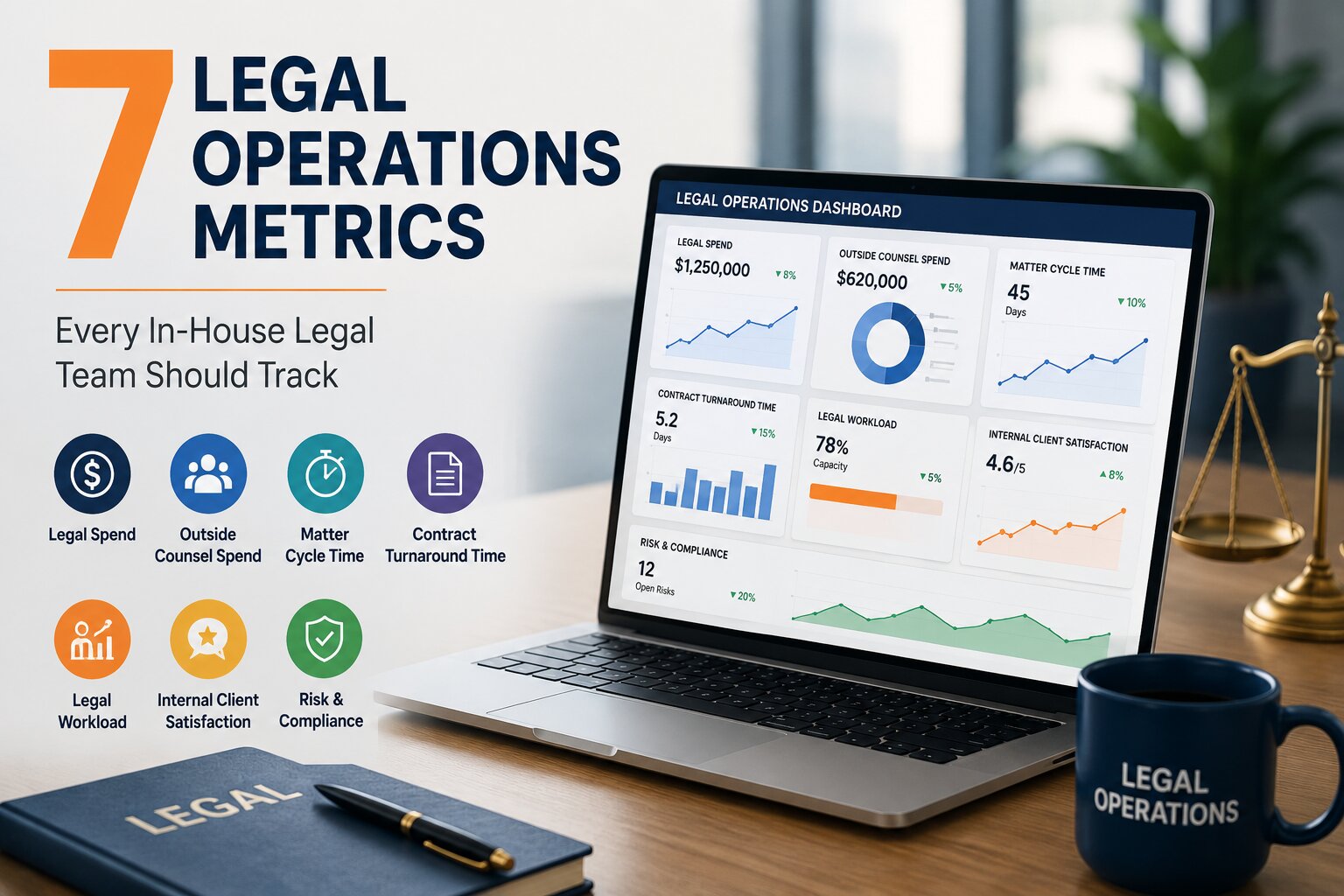
Legal leaders are increasingly seeking real-time visibility into workloads, risks, and performance metrics, enabling faster and more strategic decision-making.
As these capabilities mature, forecasting is likely to become a core component of modern legal operations rather than an optional enhancement.
How Beveron Technologies Supports Smarter Legal Operations
As forecasting becomes more important, legal departments need reliable access to accurate operational data.
Many organisations struggle because information is spread across emails, spreadsheets, shared drives, and disconnected systems. This fragmentation limits visibility and makes forecasting more difficult.
Modern legal operations platforms help address these challenges by centralising legal information, standardising workflows, and improving reporting capabilities.
We, Beveron Technologies, help organisations strengthen legal operations with solutions for matter management, workflow visibility, reporting, governance, and operational oversight.
A more structured, data-driven legal environment gives organisations the visibility they need to support planning, performance measurement, and future forecasting.
Conclusion
Legal departments are entering a new era where data-driven decision-making is becoming a critical operational capability.
As legal workloads grow more complex, relying solely on intuition and historical experience is no longer enough. AI-powered forecasting provides legal leaders with a clearer understanding of future demand, enabling better planning, resource allocation, budgeting, and service delivery.
However, successful forecasting is not simply about implementing AI. It requires high-quality data, consistent processes, and a commitment to operational improvement.
The organisations that gain the greatest value will be those that combine advanced technology with experienced legal professionals who can interpret insights and make informed strategic decisions.
The legal departments that gain a competitive advantage over the next five years will not be those that simply digitise their processes. They will be the teams that use data, analytics, and AI to anticipate demand, optimise resources, and make strategic decisions before challenges arise.
Forecasting is no longer just about understanding what happened in the past. It is becoming an essential capability for shaping the future of legal operations.
Ready to build a more proactive legal operation?
Discover how Beveron helps legal teams improve visibility, streamline workflows, and make smarter, data-driven decisions with greater confidence.
Frequently Asked Questions
1. Can AI accurately predict legal workloads?
AI can identify patterns in past legal work and estimate future demand, helping legal teams plan resources more effectively. While it cannot predict every situation, it can improve forecasting accuracy.
2. What data is needed for legal workload forecasting?
Legal workload forecasting typically uses data such as matter volumes, contract requests, compliance activities, workload trends, and historical turnaround times.
3. How does predictive analytics help legal operations teams?
Predictive analytics helps legal teams anticipate workload changes, allocate resources more efficiently, reduce bottlenecks, and make better planning decisions.
4. How can legal teams improve forecasting accuracy?
Legal teams can improve forecasting accuracy by maintaining clean, consistent data, tracking key performance metrics, and using centralised systems to monitor legal activities.
Best AI for legal operations in the UAE
Best legal workload management in the UAE
Best corporate legal operations software in the UAE
If you need a free demo of the best legal practice management software in the UAE, please fill out the form below.