AI Audit Readiness: What Legal Teams Should Document Before Regulators Ask
Introduction
Artificial intelligence is rapidly becoming part of everyday legal operations. Legal departments are using AI to accelerate contract reviews, support legal research, automate compliance processes, and manage growing workloads more efficiently.
The benefits are clear. Legal teams can process information faster, improve consistency, and reduce administrative effort. However, as AI becomes more deeply embedded in legal workflows, regulators are paying closer attention to how organisations govern, monitor, and document their use.
For legal leaders, the challenge is no longer simply adopting AI. It is demonstrating that AI is being used responsibly, with appropriate oversight, accountability, and risk controls. Many organisations have implemented AI tools. Far fewer have the documentation needed to prove they are managing those tools effectively. When regulators ask questions about AI governance, legal departments must be prepared with evidence—not assumptions.
The Audit Request No Legal Team Wants to Receive
Imagine receiving a request from a regulator asking your organisation to provide evidence of its AI governance practices.
The request seems straightforward:
- Which AI tools are currently being used?
- Who approved them?
- What risks were assessed before deployment?
- How are AI-generated outputs reviewed?
- What controls are in place to prevent misuse?
At first, the answers appear simple. Then the search begins.
Risk assessments are stored in different folders. Approval records are buried in email threads. Policies exist, but nobody can confirm which version was approved. Some departments have started using AI tools without informing legal or compliance teams.
Suddenly, proving governance becomes much harder than implementing it. This scenario is becoming increasingly common as organisations expand their use of AI. In many cases, the biggest compliance risk is not the absence of governance. It is the inability to demonstrate governance when asked.
Why AI Audit Readiness Is Becoming a Legal Priority
Regulators across the world are increasing their focus on AI accountability, transparency, and risk management.
Whether organisations operate in financial services, healthcare, telecommunications, government contracting, or other regulated industries, expectations are evolving rapidly. Regulators increasingly want evidence that organisations understand how AI is being used and have implemented appropriate controls. Legal departments are naturally becoming central to these discussions.
They are often responsible for reviewing AI-related risks, developing governance frameworks, advising business stakeholders, and ensuring regulatory compliance. As a result, legal teams are increasingly expected to answer difficult questions about AI oversight.
The consequences of being unprepared can be significant. Poor documentation can lead to regulatory scrutiny, delayed investigations, compliance failures, reputational damage, and increased legal exposure. More importantly, it can undermine confidence in the organisation's ability to govern emerging technologies responsibly.
As regulatory requirements continue to evolve, legal teams need processes and technology to stay ahead of evolving obligations. Our article, Legal Compliance Software: How Law Firms Can Keep Up with Regulatory Changes in 2026, explores how legal departments can improve compliance visibility, manage regulatory updates, and strengthen governance frameworks in an increasingly complex environment.
Why GCC Organisations Should Prepare for AI Audits Now
Organisations across the GCC are investing heavily in digital transformation and AI initiatives. Governments throughout the region have introduced ambitious strategies designed to accelerate AI adoption across both public and private sectors.
At the same time, regulatory expectations are evolving. Businesses operating in the UAE, Saudi Arabia, Qatar, and other GCC markets are already managing increasingly complex obligations related to data protection, financial crime prevention, cybersecurity, and corporate governance.
As AI becomes integrated into business decision-making, regulators are likely to place greater emphasis on accountability, transparency, and risk management.
Legal teams should not assume that AI governance requirements will remain informal. The organisations that begin documenting governance activities today will be significantly better positioned when future audit requirements emerge. Preparing early is often far less expensive than responding after regulatory expectations have already changed.
What Documents Do Regulators Typically Request?
While AI regulations continue to evolve, regulators typically focus on one fundamental question:
Can the organisation demonstrate that AI is being governed responsibly?
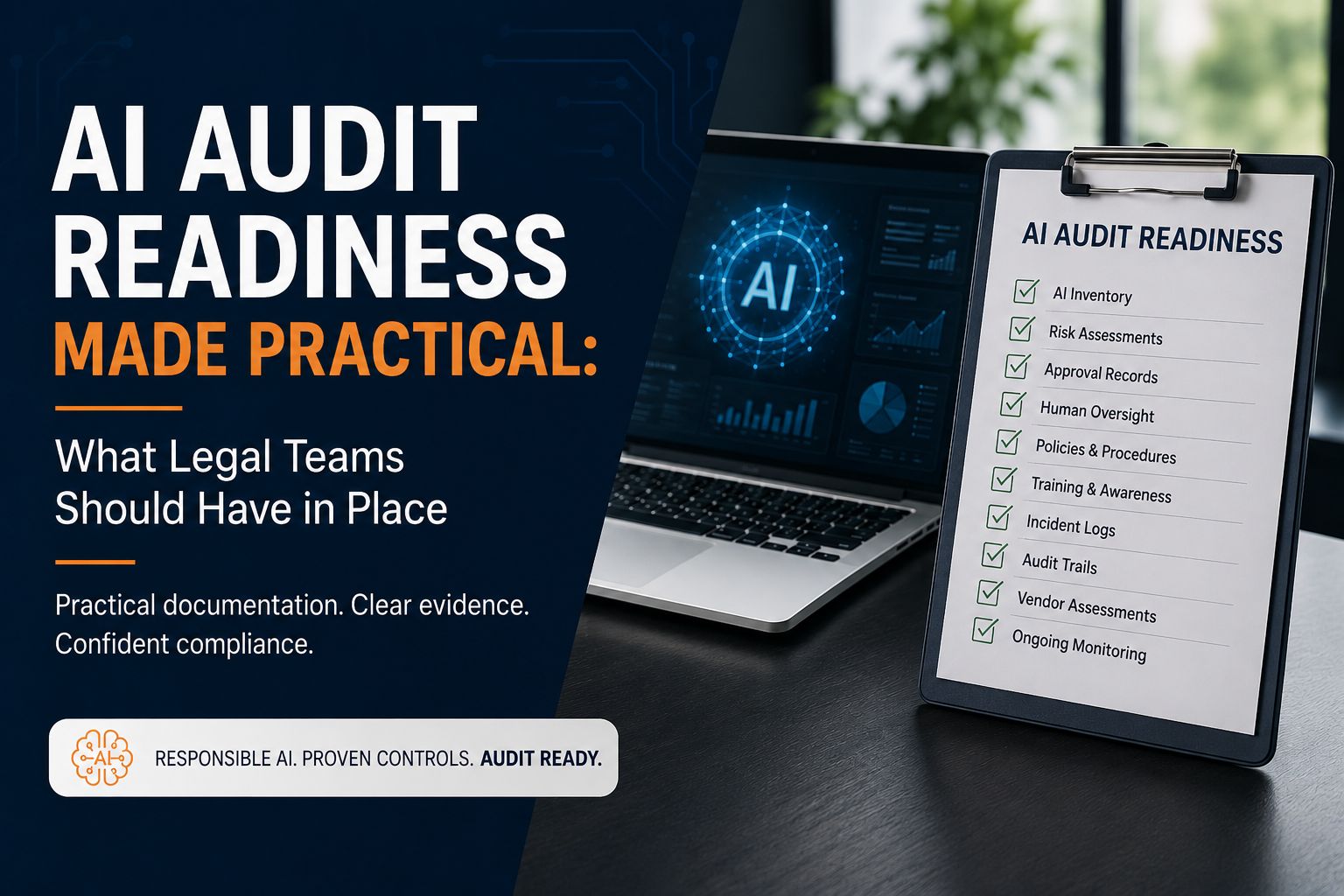
To answer that question, organisations are often expected to provide documentation such as:
- AI governance policies
- Risk assessment reports
- Records of AI tool approvals
- Human review and oversight procedures
- Incident and error logs
- Employee training records
- Vendor due diligence assessments
- Audit trails showing decisions and approvals
The specific requirements may vary by industry and jurisdiction, but the underlying principle remains the same: organisations should be able to demonstrate accountability and control. This becomes particularly important when AI is used for activities such as legal research and legal analysis. As discussed in our article on AI in Legal Research: What Law Firms in the GCC Need to Know, legal teams adopting AI-powered research tools should ensure appropriate governance, oversight, and documentation are in place to support regulatory compliance and audit readiness. If documentation cannot be produced quickly, regulators may question whether the controls exist at all.
The Most Common AI Governance Failures
After reviewing AI governance programmes across industries, several recurring issues tend to appear.
No Central Inventory of AI Tools
Many organisations cannot accurately identify where AI is being used. Different departments adopt tools independently, creating visibility gaps that make governance difficult.
Missing Risk Assessments
AI solutions are often deployed before legal, compliance, or risk teams have conducted formal reviews. Without documented assessments, organisations may struggle to demonstrate due diligence.
No Evidence of Human Oversight
A policy may state that humans review AI outputs, but without documented approvals or review records, proving compliance becomes difficult.
Incomplete Audit Trails
Important decisions are frequently scattered across emails, chat messages, and spreadsheets. Reconstructing events during an investigation can become time-consuming and unreliable.
Shadow AI Usage
Employees may adopt publicly available AI tools without approval or guidance, creating security, privacy, and compliance risks that remain invisible until a problem occurs.
The Essential Documents Every Legal Team Should Maintain
Strong AI governance depends on maintaining accurate and accessible records.
AI Governance Policy
Every organisation should maintain a documented framework defining:
- Approved AI use cases
- Roles and responsibilities
- Review requirements
- Escalation procedures
- Accountability standards
AI Risk Assessment Records
Risk assessments should evaluate:
- Legal risks
- Compliance risks
- Privacy concerns
- Operational impacts
- Security vulnerabilities
Documenting mitigation measures is just as important as identifying risks.
AI Use Case Inventory
Legal teams should maintain a central register of all approved AI systems, including ownership, purpose, risk classification, and approval status.
Human Oversight Records
Documentation should demonstrate where human review occurs and who remains accountable for decisions.
Incident and Error Logs
Organisations should record AI-related errors, incidents, investigations, and corrective actions. This demonstrates continuous monitoring and improvement.
Employee Training Records
Training documentation provides evidence that employees understand governance requirements and responsible AI practices.
Vendor Due Diligence Files
For third-party AI solutions, organisations should maintain records of vendor reviews, contractual safeguards, security assessments, and compliance evaluations. Vendor selection plays a critical role in AI governance. Before adopting new legal technology, organisations should evaluate vendors based on security, compliance, integration capabilities, governance controls, and long-term operational fit. Our article, The General Counsel's Playbook for Evaluating Legal Tech Vendors, provides a practical framework for assessing legal technology providers and reducing implementation risk
The 24-Hour AI Audit Test
A useful way to assess readiness is to imagine receiving an AI audit request tomorrow morning.
Could your organisation provide the following information within 24 hours?
- A list of all AI tools currently in use
- Risk assessments for each system
- Approval records and governance reviews
- Evidence of human oversight
- Employee training records
- Vendor assessment documentation
- Incident logs and corrective actions
If gathering this information would take weeks rather than hours, your organisation may have a documentation problem rather than a compliance problem.
The distinction matters because regulators often judge organisations based on what they can prove, not what they intended to do.
Why Manual AI Governance Creates Risk
Many organisations still manage governance activities through spreadsheets, shared folders, and email chains. As discussed in our article on AI-powered legal intake, email-based request management often creates visibility gaps, inconsistent recordkeeping, and approval bottlenecks that become harder to manage as legal workloads grow. These tools may work temporarily, but they become increasingly difficult to manage as AI adoption expands.
Over time, governance activities continue to happen, but evidence becomes fragmented. This creates significant challenges during audits, investigations, and compliance reviews. Audit readiness requires more than good intentions. It requires structured processes that consistently capture and maintain records.
Turning AI Governance Into an Operational Process
One of the most effective ways to improve audit readiness is to treat AI governance as an operational process rather than a collection of documents.
Governance activities should be embedded into everyday workflows, including:
- Risk assessments
- Approval processes
- Compliance reviews
- Incident management
- Ongoing monitoring
When governance becomes part of normal operations, documentation is created naturally rather than retroactively. This approach improves accountability, consistency, and audit preparedness.
How Beveron Supports AI Audit Readiness
Legal and compliance teams often struggle because governance records are spread across multiple systems.
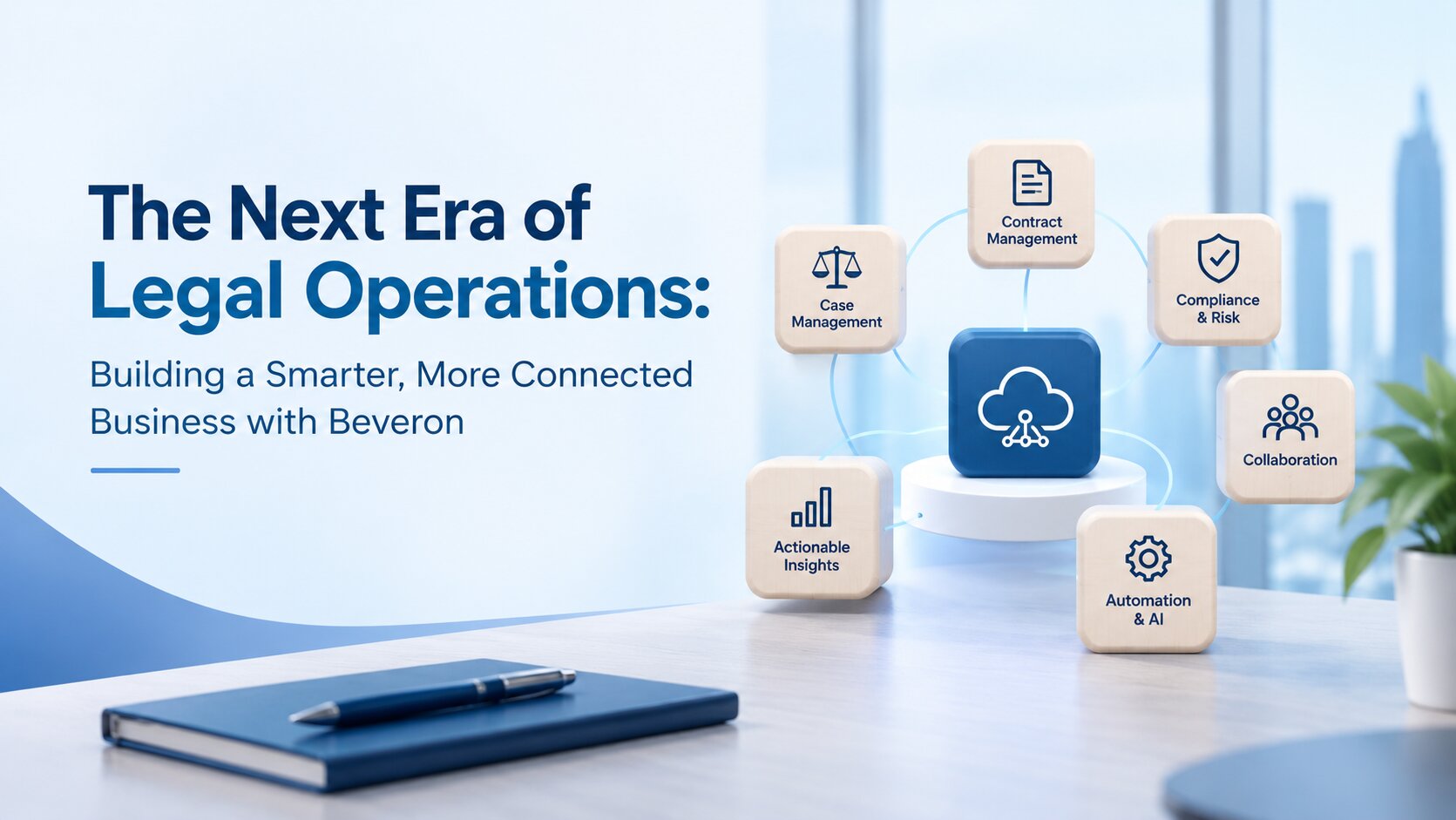
Beveron's Smart Legal Counsel platform helps organisations centralise legal operations, manage governance workflows, maintain audit-ready documentation, and improve visibility across compliance activities. By creating a structured system for approvals, reviews, and legal processes, organisations can strengthen AI governance while reducing the administrative burden of compliance.
The objective is not simply to store documents. It is to ensure governance activities can be tracked, monitored, and demonstrated when regulators request evidence.
AI Audit Readiness Checklist
✓ AI governance policy is documented
✓ AI inventory is maintained
✓ Risk assessments are completed
✓ Human oversight procedures are defined
✓ Incident logs are maintained
✓ Employee training records are available
✓ Vendor assessments are completed
✓ Audit trails are preserved
✓ Governance reviews are conducted regularly
Conclusion
AI adoption is accelerating across legal departments, but so are expectations around accountability and governance. The organisations that succeed with AI will not necessarily be the ones that deploy it first. They will be the ones who can demonstrate responsible oversight, effective risk management, and clear documentation when regulators ask questions.
For legal teams, audit readiness starts long before an audit occurs.
By maintaining governance policies, risk assessments, oversight records, training documentation, and audit trails, organisations can reduce compliance risk while building confidence in their AI programs. The most important question every General Counsel should ask is simple:
If regulators requested evidence of our AI governance tomorrow, could we provide it by the end of the day? If the answer is uncertain, now is the time to start preparing.
Frequently Asked Questions
1. What is AI audit readiness?
AI audit readiness is the ability to demonstrate how AI systems are governed, monitored, and controlled through documented policies, risk assessments, approvals, and audit trails.
2. What documents should legal teams maintain for AI governance?
Legal teams should maintain AI governance policies, risk assessments, AI inventories, approval records, human oversight documentation, incident logs, employee training records, and vendor due diligence reports.
3. Why is AI governance important for compliance?
Effective AI governance helps organisations reduce legal, regulatory, and operational risks while demonstrating accountability and compliance to regulators, auditors, and stakeholders.
4. How often should AI governance documentation be reviewed?
AI governance documentation should be reviewed regularly, especially when new AI tools are introduced, regulations change, or significant business processes are updated.
5. How can legal teams prepare for a future AI audit?
Legal teams should establish clear governance frameworks, centralise documentation, maintain audit trails, conduct periodic reviews, and ensure human oversight remains part of AI-enabled decision-making.
Ready to Strengthen Your AI Governance Framework?
As AI regulations continue to evolve, legal teams need more than policies—they need clear documentation, consistent workflows, and audit-ready records.
Discover how Beveron helps organisations centralise governance activities, maintain compliance visibility, and prepare confidently for future AI audits.
Request a free demo today.
Best AI compliance documentation in the UAE
Best legal compliance management software in the UAE
Best legal operations software in the UAE
If you need a free demo of the best legal practice management software in the UAE, please fill out the form below.