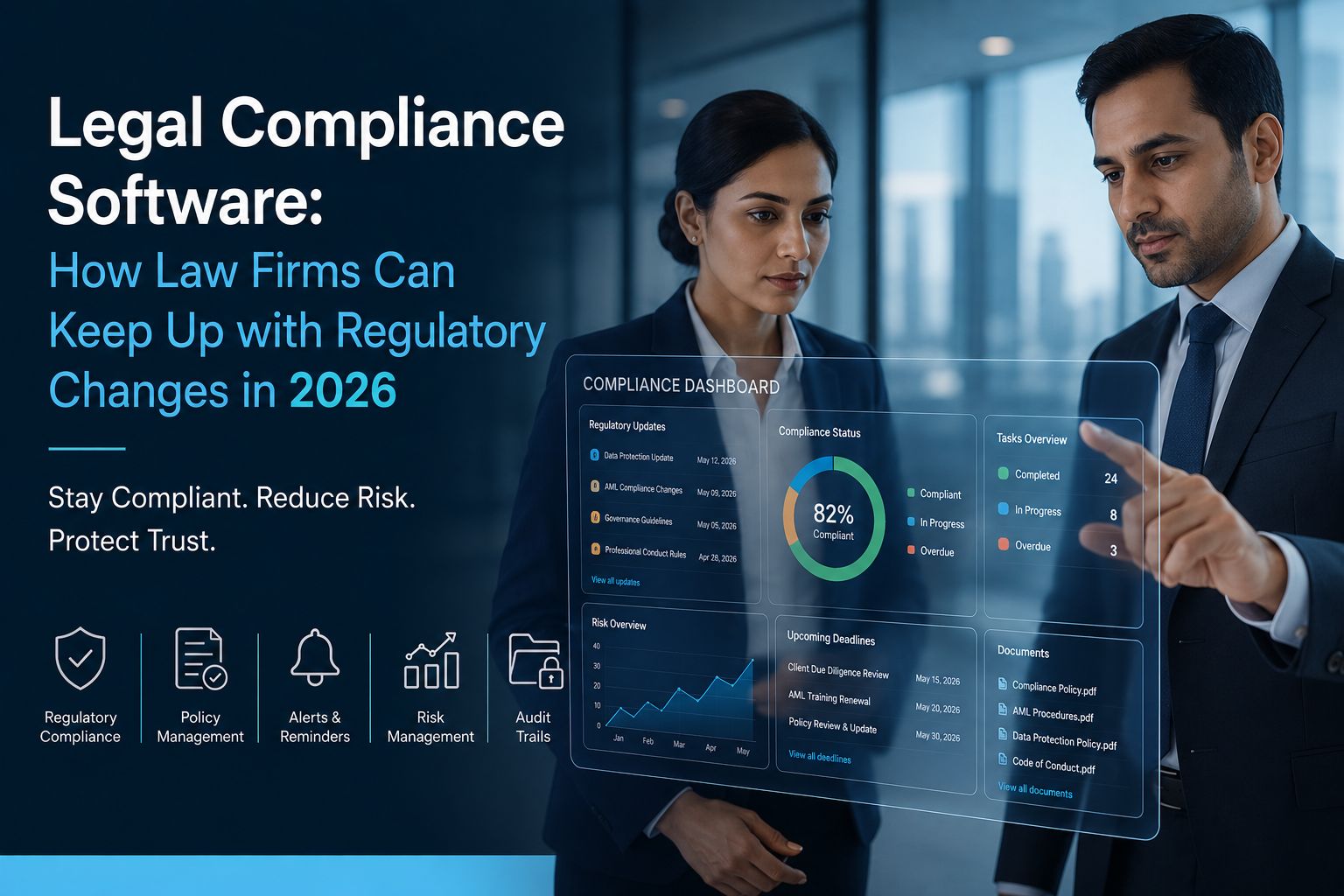
Legal Compliance Software: How Law Firms Can Keep Up with Regulatory Changes in 2026
Regulatory requirements for law firms across the Middle East are becoming more demanding every year. In the UAE and the wider GCC, law firms are expected to do more than provide legal advice and represent clients. They must also show that they have strong internal systems in place to manage compliance.
In 2026, keeping up with regulatory change is no longer a task that can be handled with occasional reviews or manual reminders. New rules around data protection, anti-money laundering (AML), governance, and professional accountability are being introduced and updated at a rapid pace.
For law firms, the challenge is straightforward but significant: how do you stay on top of changing regulations and make sure your internal processes remain compliant?
Many firms still rely on spreadsheets, shared folders, and email reminders to manage compliance activities. While these methods may seem familiar, they can quickly become difficult to control as regulatory obligations grow more complex.
That is why legal compliance software has become an essential part of modern law firm operations.
By automating compliance tracking, monitoring regulatory changes, and maintaining clear records, law firms can reduce risk and spend less time on manual administrative work.
Why Compliance Is More Challenging for Law Firms in 2026
The compliance landscape for law firms has changed significantly over the last few years.
Today, firms are expected to meet a wide range of regulatory obligations, including:
- Data protection and privacy laws
- Anti-money laundering requirements
- Client due diligence and Know Your Customer (KYC) checks
- Internal governance policies
- Risk assessment and reporting obligations
For firms operating across the GCC, the challenge is even greater. A law firm with clients in the UAE, Saudi Arabia, Qatar, and Bahrain may need to comply with different regulatory frameworks in each jurisdiction.
Compliance teams must continuously:
- Monitor new laws and regulatory updates
- Revise internal policies and procedures
- Train staff on updated requirements
- Track deadlines and reporting obligations
- Maintain documentation for audits and inspections
Without a structured system, managing all of this manually becomes increasingly difficult.
Major Regulatory Changes Affecting Law Firms in the GCC
Governments across the GCC are continuing to strengthen regulations to improve transparency, enhance data protection, and align with international standards.
Data Protection and Privacy Regulations
Across the region, new privacy laws are setting stricter requirements for how organisations collect, process, store, and protect personal information.
For law firms, this is particularly important because they handle large volumes of confidential client data, sensitive documents, and commercially valuable information. Firms must ensure they have the right policies, security measures, and procedures in place to protect this data and respond appropriately if a breach occurs.
Financial Free Zone Compliance Requirements
Law firms operating in financial centres and special economic zones may be subject to additional regulatory obligations. These often include enhanced standards for data protection, governance, and reporting.
Firms working across multiple jurisdictions need to understand which rules apply to each office and matter, and make sure internal processes are aligned accordingly.
Anti-Money Laundering and Financial Crime Regulations
Authorities across the GCC continue to tighten anti-money laundering and financial crime controls.
Law firms involved in areas such as corporate structuring, mergers and acquisitions, real estate, and cross-border transactions are under growing pressure to carry out robust client due diligence and maintain clear records of their compliance efforts.
Governance and Risk Management Expectations
Regulators are placing greater emphasis on accountability and internal controls. Law firms are increasingly expected to document how compliance responsibilities are assigned, how risks are assessed, and how issues are monitored and resolved.
Cross-Border Compliance Challenges
Many law firms serve clients across several GCC countries and beyond. This means they may need to comply with multiple regulatory frameworks at the same time, each with its own reporting requirements and standards.
These developments show that compliance is no longer just an administrative task. It is a critical part of how law firms protect their reputation, reduce risk, and maintain client trust.
The Risks of Managing Compliance Manually
Many law firms still use spreadsheets, calendars, and emails to track compliance tasks. While this may work for smaller firms with limited obligations, manual systems become risky as the business grows.
Missed Regulatory Updates
Important changes can be overlooked when regulatory monitoring depends on individuals checking multiple websites and newsletters.
Limited Visibility
Partners and compliance officers may struggle to see which tasks are complete, overdue, or at risk.
Poor Documentation
When records are spread across emails and folders, it becomes difficult to prove that compliance activities were completed on time.
Higher Risk Exposure
A missed deadline or incomplete process can lead to regulatory scrutiny, reputational damage, and operational disruption.
In a highly regulated market, these risks can be costly.
How Compliance Technology Simplifies Compliance Management
Compliance technology, often referred to as RegTech, helps law firms manage regulatory obligations in a more organised and efficient way.
Instead of juggling multiple tools, firms can centralise compliance activities in one platform.
Regulatory Monitoring
Track relevant regulatory changes and updates in a structured way.
Automated Alerts and Reminders
Receive notifications for upcoming deadlines and required actions.
Task Assignment
Assign responsibilities to specific team members and monitor completion.
Reporting Dashboards
Get real-time visibility into compliance status, outstanding tasks, and risk areas.
Audit Trails
Maintain a complete record of actions taken, documents updated, and approvals granted.
This level of visibility helps firms stay proactive rather than reactive.
What to Look for in Legal Compliance Software
When choosing legal compliance software for a law firm in the UAE or GCC, look for a solution that combines automation, visibility, and security.
Key features should include:
- Centralised compliance dashboard
- Automated alerts and reminders
- Policy and document management
- Risk registers and issue tracking
- Role-based access controls
- Reporting and audit support
- Secure cloud storage
- Integration with legal practice management systems
The right platform should fit naturally into your existing workflows and make compliance easier to manage.
How Beveron Helps Law Firms Stay Compliant
Beveron Technologies provides legal technology solutions designed for law firms and corporate legal teams across the UAE and GCC.
Its compliance capabilities help firms:
- Track regulatory obligations in one place
- Assign and monitor compliance tasks
- Store policies and supporting documents securely
- Generate reports for management and audits
- Maintain a clear audit trail of all compliance activities
By replacing spreadsheets and disconnected tools with a structured platform, Beveron helps firms build a more reliable and scalable compliance process.
Preparing for the Future of Compliance
Regulations will continue to evolve as governments across the GCC strengthen governance standards and align with global best practices.
Law firms that invest in structured compliance systems will be better equipped to:
- Respond quickly to regulatory changes
- Reduce operational risk
- Improve accountability
- Demonstrate compliance with confidence
Legal compliance software is no longer a nice-to-have. It has become a practical necessity for firms that want to stay organised, efficient, and prepared for what comes next.
Stay Ahead of Regulatory Change
Keeping up with evolving regulations is becoming more challenging for law firms across the UAE and GCC. Firms that still rely on spreadsheets, email reminders, and manual processes may find it difficult to stay organised and respond quickly to new compliance requirements. With the right legal compliance software, law firms can monitor regulatory updates, automate compliance tasks, and maintain a clear audit trail of every action taken.
Beveron Technologies helps law firms strengthen compliance, reduce regulatory risk, and stay prepared for change.
Book a personalised demo today and see how Beveron Technologies helps your law firm stay compliant and reduce regulatory risk.
Best legal compliance software in the UAE
Best legal workflow automation software for law firms in the UAE
Best legal process automation software in the UAE
If you need a free demo of the best legal compliance software in the UAE, please fill out the form below.