Why Saudi Companies Are Choosing Cloud-Based Legal Software
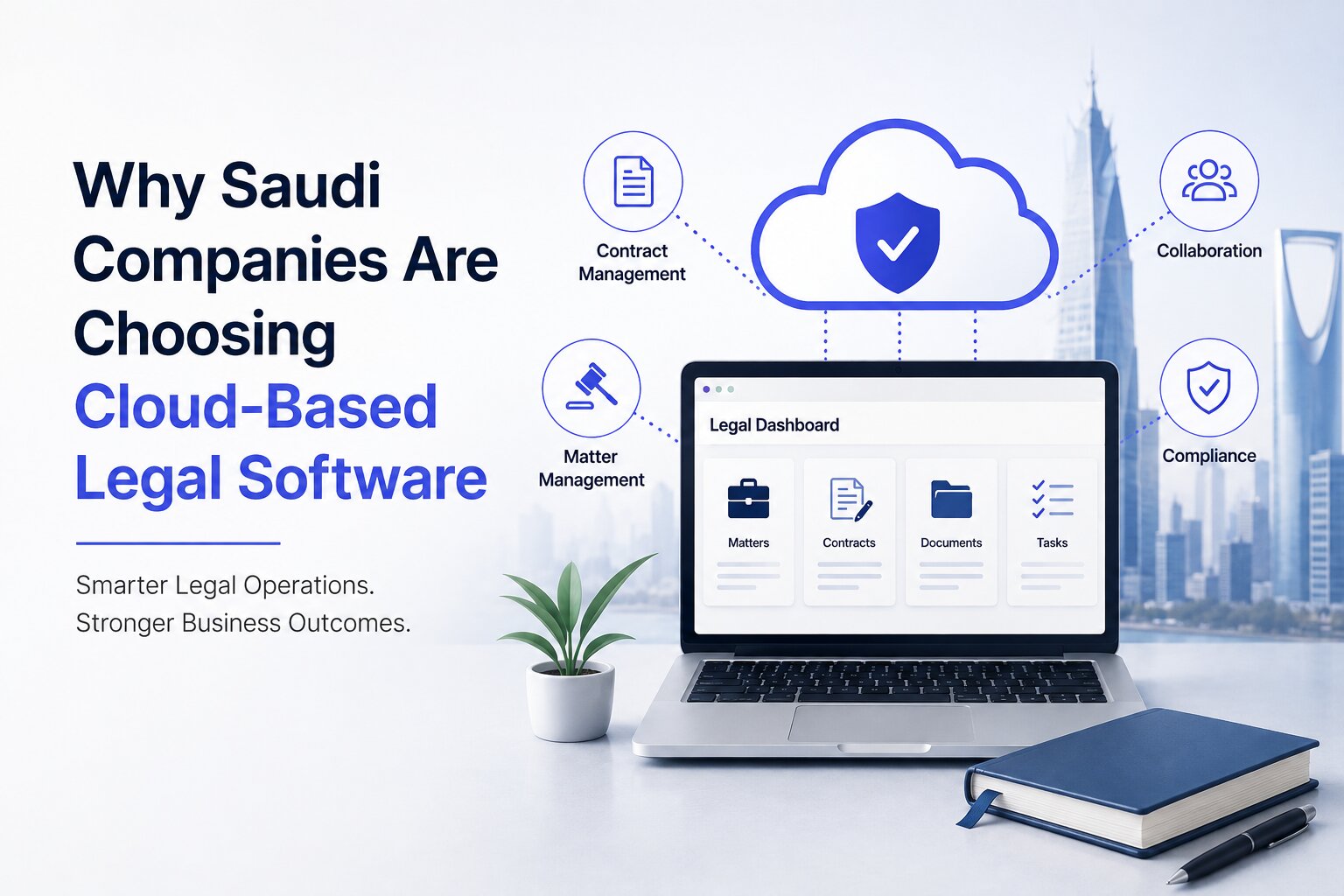
Saudi Arabia’s business environment is changing quickly. As companies grow, expand into new markets, and manage more complex operations, their in-house legal teams are taking on more responsibilities than ever. Contracts, legal matters, compliance requirements, approvals, and documents all need to be managed efficiently and securely.
For many companies, traditional methods such as spreadsheets, email threads, shared folders, and manually maintained records are becoming difficult to manage at scale. This is leading more organisations to explore cloud-based legal software in Saudi Arabia as a way to bring their legal operations into one connected system.
Cloud-based legal software can help legal teams centralise information, automate routine work, improve visibility, and collaborate more effectively with the wider business. For Saudi corporate legal teams, it can also provide a foundation for modernising legal operations as the organisation grows.
Why Saudi Companies Are Rethinking Traditional Legal Management
For years, many in-house legal departments have relied on familiar tools to manage their daily work. Spreadsheets may be used to track matters, emails may contain important approvals, and documents may be stored across different folders or systems.
These methods can work when a company is small and the legal workload is limited. As the business grows, however, they can create unnecessary challenges.
Manual Work
Legal professionals often spend a significant amount of time on administrative tasks rather than higher-value legal work. Updating spreadsheets, following up on approvals, searching for documents, checking deadlines, and sending reminders can all consume valuable time. When these activities are handled manually, there is also a greater risk of missed deadlines, outdated information, or inconsistent processes.
Fragmented Information
Legal information can easily become scattered across email inboxes, shared drives, spreadsheets, contract folders, and individual computers. This makes it difficult to get a complete picture of a matter or contract without searching through several different sources.
Limited Visibility
Legal leaders need to know what is happening across the department. Which matters are still open? Which contracts are approaching renewal? Which requests are waiting for approval? Where are workloads increasing? When information is spread across multiple systems, answering these questions can take considerable time.
Growing Business and Compliance Demands
As Saudi companies expand, their legal teams often have to support more contracts, business units, employees, suppliers, customers, and regulatory requirements. This makes structured legal operations increasingly important. Instead of simply managing documents, legal teams need systems that help them organise work, track responsibilities, and maintain visibility.
What Is Cloud-Based Legal Software?
Cloud-based legal software is software that allows legal teams to manage their work through an online platform rather than relying on disconnected local files and manual systems. It can bring different areas of legal work into one environment, including matters, contracts, documents, workflows, tasks, and reporting.
It is important to distinguish cloud-based legal software from basic cloud storage. A cloud storage service primarily provides a place to store and access files. Legal software is designed around the processes and information that legal teams actually manage.
For organisations evaluating the differences between cloud and traditional deployment models, this guide to cloud vs. on-premise legal software in Saudi Arabia provides additional context on the advantages and considerations of each approach.
Depending on the platform, core capabilities can include:
- Matter management
- Contract management
- Legal document management
- Legal workflow automation
- Task and deadline tracking
- Reporting and dashboards
- User access controls
- Centralised legal information
- Collaboration tools
The goal is not simply to move legal files online. It is to create a more connected way of managing legal operations.
7 Ways Cloud-Based Legal Software Helps Saudi Legal Teams
1. Centralise Legal Information
One of the biggest advantages of cloud-based legal software is having important legal information in one centralised environment. Instead of searching through different folders, spreadsheets, and email conversations, legal professionals can have a structured place to manage matters, contracts, documents, and related information.
For Saudi corporate legal teams, this can make it easier to find information when it is needed and reduce the amount of time spent searching for records. Centralised legal document management can also help teams maintain a clearer record of important documents and their relationship to specific matters or contracts.
2. Automate Legal Workflows
Not every legal task requires a lawyer's direct attention. Many processes involve repetitive administrative steps that can be standardised or automated. Legal workflow automation can help route requests, assign tasks, send reminders, manage approvals, and track the progress of recurring processes.
For Saudi corporate legal teams looking to understand how this works in practice, this complete guide to legal workflow automation for corporate legal departments in Saudi Arabia explains how organisations can automate legal requests, contract approvals, compliance reviews, matter management, and other recurring legal processes.
For example, when a business team submits a new legal request, a structured workflow can help ensure that the request reaches the appropriate person and follows the required approval process. This type of legal process automation can reduce manual follow-ups and give legal teams more time to focus on complex and strategic work.
3. Simplify Contract Management
Contracts are at the centre of many corporate legal operations. Yet managing them through folders and spreadsheets can make it difficult to track important information. Cloud-based software can provide a centralised approach to contract management, allowing teams to organise contracts and monitor important dates and information.
Depending on the system, teams may be able to track:
- Contract status
- Start and expiry dates
- Renewal dates
- Key obligations
- Responsible teams
- Related documents
- Approval stages
This can help reduce the risk of important contractual dates being overlooked and make contract information easier to access.
4. Improve Matter Management
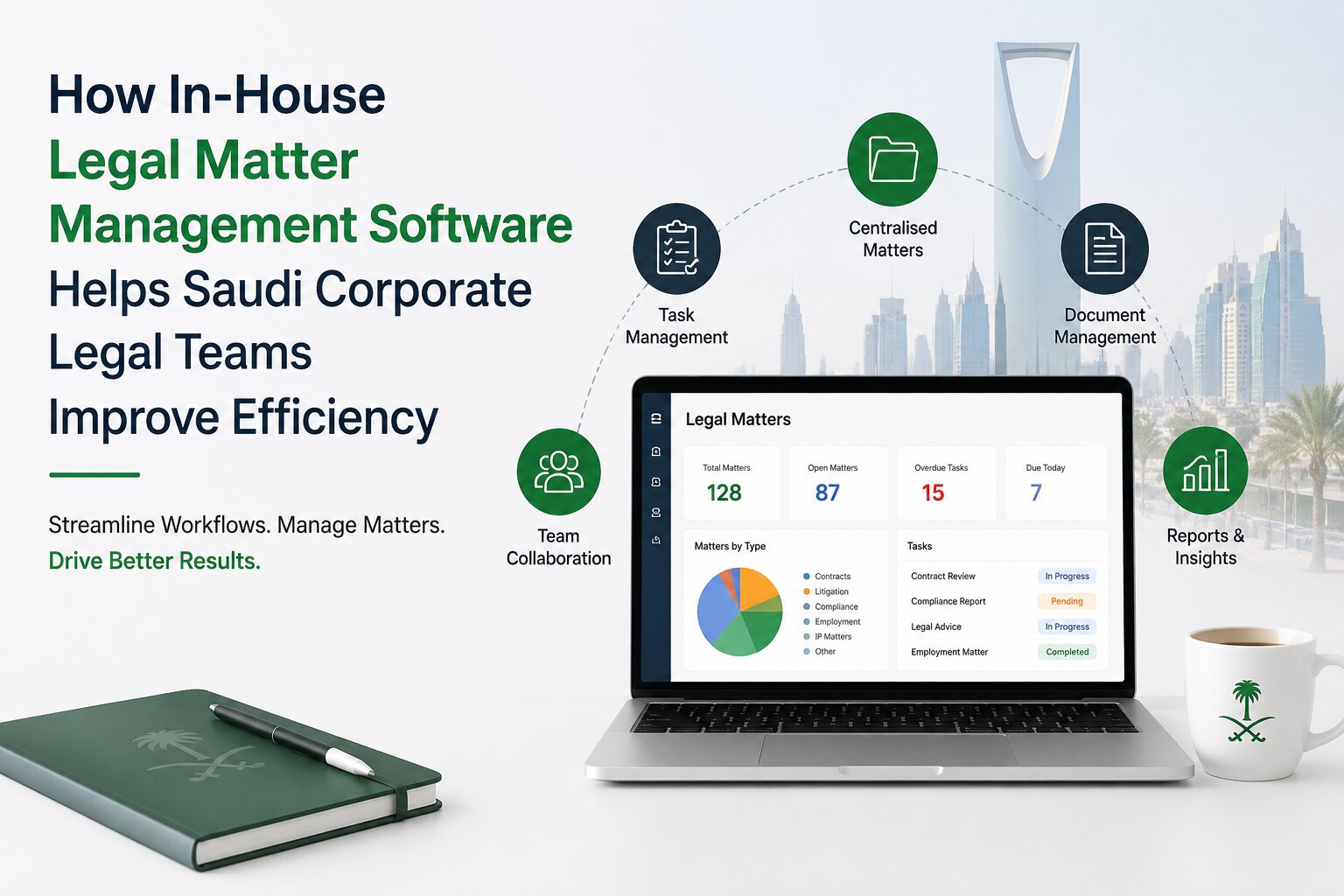
An in-house legal department may manage a wide range of matters at the same time, from contracts and disputes to compliance requests and internal legal advice. Matter management provides a structured way to organise this work.
For Saudi corporate legal teams looking to improve this process, legal matter management software can provide a more structured way to manage legal matters, improve visibility, and reduce administrative work.
Instead of relying on individual emails or spreadsheets, legal teams can maintain information about each matter, including its status, assigned team members, deadlines, documents, and related activities. For legal leaders, this can provide a clearer view of the department's workload and help identify matters that require attention.
5. Support Legal Compliance
Legal compliance often involves more than knowing what requirements exist. Teams also need to manage tasks, documentation, approvals, deadlines, and evidence of completed activities. A centralised legal platform can help organise these activities and make compliance-related information easier to track.
Features such as task management, reminders, access controls, workflow records, and reporting can support more consistent processes. However, software does not replace legal expertise or guarantee compliance. Instead, it provides tools that can help legal professionals manage their compliance responsibilities more systematically.
6. Improve Collaboration Across the Business
Today's in-house legal teams rarely work in isolation. They regularly interact with procurement, finance, HR, sales, operations, compliance, and senior management. When legal information is trapped in separate systems, collaboration can become slower.
A connected legal platform can give authorised users a clearer way to submit requests, share relevant information, follow workflows, and track progress. This can help the legal department become a more accessible and responsive business function without losing control over sensitive information.
7. Scale With Business Growth
A legal process that works for a smaller company may not work as effectively when the organisation becomes significantly larger. More employees, contracts, business units, suppliers, customers, and legal matters can quickly increase administrative complexity.
Cloud-based legal software can provide a more structured foundation for growth. Instead of continually adding spreadsheets and manual processes, companies can build standardised workflows and centralise legal information. For growing Saudi companies, this can make it easier for the legal function to keep pace with the wider organisation.
Traditional vs Cloud-Based Legal Operations
| Traditional Legal Operations | Cloud-Based Legal Operations |
|---|---|
| Information spread across multiple locations | Centralised legal information |
| Manual task tracking | Automated workflows and task management |
| Email-based approvals | Structured approval workflows |
| Spreadsheet-based matter tracking | Dedicated matter management |
| Difficult contract searches | Centralised contract management |
| Manual reminders | Automated notifications |
| Limited reporting | Dashboards and reporting |
| Difficult to scale | Designed to support growing operations |
The difference is not simply about using newer technology. It is about creating a more organised and connected way of working.
How to Choose Cloud-Based Legal Software in Saudi Arabia
Choosing the right cloud-based legal software requires more than comparing feature lists. Legal leaders should consider how well a platform fits their existing processes, security requirements, team structure, and long-term operational goals.
If you are evaluating legal software for in-house legal teams in Saudi Arabia, this guide to complete legal software for in-house legal teams provides a practical overview of the features, capabilities, and considerations Saudi businesses should evaluate before choosing a platform.
Start With Your Legal Workflows
Before evaluating vendors, identify how the legal team currently manages matters, contracts, documents, approvals, deadlines, and internal requests. This helps determine which processes need to be improved or automated.
Evaluate Matter and Workload Visibility
The platform should provide a clear view of ongoing legal matters, responsibilities, status, deadlines, and workloads. This can help legal teams stay organised and give management better visibility into legal activities.
Assess Contract and Document Handling
Consider how easily the system can organise contracts and related documents, retrieve information, track important dates, and control access to sensitive files.
Look at Workflow Automation
Recurring processes such as legal requests, reviews, approvals, and follow-ups can become time-consuming when handled manually. Look for workflow capabilities that allow these processes to be structured and standardised.
Check Security and Access Controls
Legal departments handle confidential corporate information. Evaluate role-based permissions, access controls, authentication, data protection, and other security capabilities before selecting a platform.
Consider Reporting and Analytics
Legal technology should provide more than data storage. Reporting capabilities can help teams understand matter volumes, workloads, deadlines, contract activity, and other operational trends.
Review Integration Capabilities
Consider whether the platform can fit into the organisation's existing technology environment. Integration with relevant business applications can reduce duplicate data entry and disconnected processes.
Plan for Scalability
The legal department's requirements may change as the organisation grows. Choose a platform that can accommodate additional users, increasing matter volumes, new workflows, and evolving operational requirements.
Consider Saudi-Specific Requirements
Saudi organisations should evaluate legal software against their own requirements for security, data management, language, compliance, accessibility, and internal governance. The right platform should support these requirements rather than forcing the legal team to redesign its processes around the technology.
Ultimately, the best legal software is not necessarily the platform with the longest feature list. It is the one that fits the organisation's workflows, supports its legal team, and can adapt as its requirements evolve.
How Beveron Smart Legal Counsel Supports In-House Legal Teams
Once an organisation has identified what it needs from legal technology, the next step is to consider how those requirements translate into day-to-day operations.
Beveron Smart Legal Counsel is designed to provide corporate legal teams with a more connected environment for managing legal work. Rather than relying on separate spreadsheets, emails, folders, and manual tracking methods, teams can use a centralised platform to bring key legal activities into a structured workflow.
A More Connected Legal Workspace
Legal information and activities can be brought together in one environment, helping teams reduce fragmentation and gain a clearer view of ongoing legal work.
Structured Legal Matter Management
Teams can organise legal matters and maintain the information associated with them, making it easier to monitor ongoing work and maintain consistency across the legal department.
Organised Contract and Document Work
Contracts and legal documents can be managed within a structured environment, helping authorised users find relevant information and keep track of important activities and dates.
More Consistent Legal Workflows
The platform can support structured workflows for recurring legal processes, helping teams reduce unnecessary manual steps and establish more consistent ways of handling legal work.
Greater Operational Visibility
Centralised legal information can give legal leaders a clearer understanding of matters, activities, workloads, and deadlines. This visibility can support better planning and more informed operational decisions.
A Foundation for Digital Legal Operations
For Saudi companies moving away from fragmented legal processes, the value of a platform such as Beveron Smart Legal Counsel goes beyond individual features. By connecting core areas of legal work within one environment, it can provide a foundation for building more organised, visible, and scalable digital legal operations.
The Future of Digital Legal Operations in Saudi Arabia
The role of technology in corporate legal departments is likely to continue evolving. As organisations become more digital, legal teams will increasingly need systems that can connect information, automate routine processes, support collaboration, and provide useful insights from legal data.
This is part of a broader shift toward digital transformation in legal departments. The future legal department is not simply a team that reviews contracts and manages disputes. It is increasingly becoming a data-informed business function that supports decision-making across the organisation.
Cloud platforms, automation, analytics, and AI-assisted tools are likely to play a growing role in this transformation. The key will be adopting technology where it genuinely improves the way legal professionals work, while maintaining appropriate oversight, security, and professional judgment.
Conclusion
For Saudi companies, the move toward cloud-based legal software in Saudi Arabia is about more than replacing spreadsheets or moving documents to the cloud. It is about creating a more structured way to manage the growing demands placed on modern in-house legal departments.
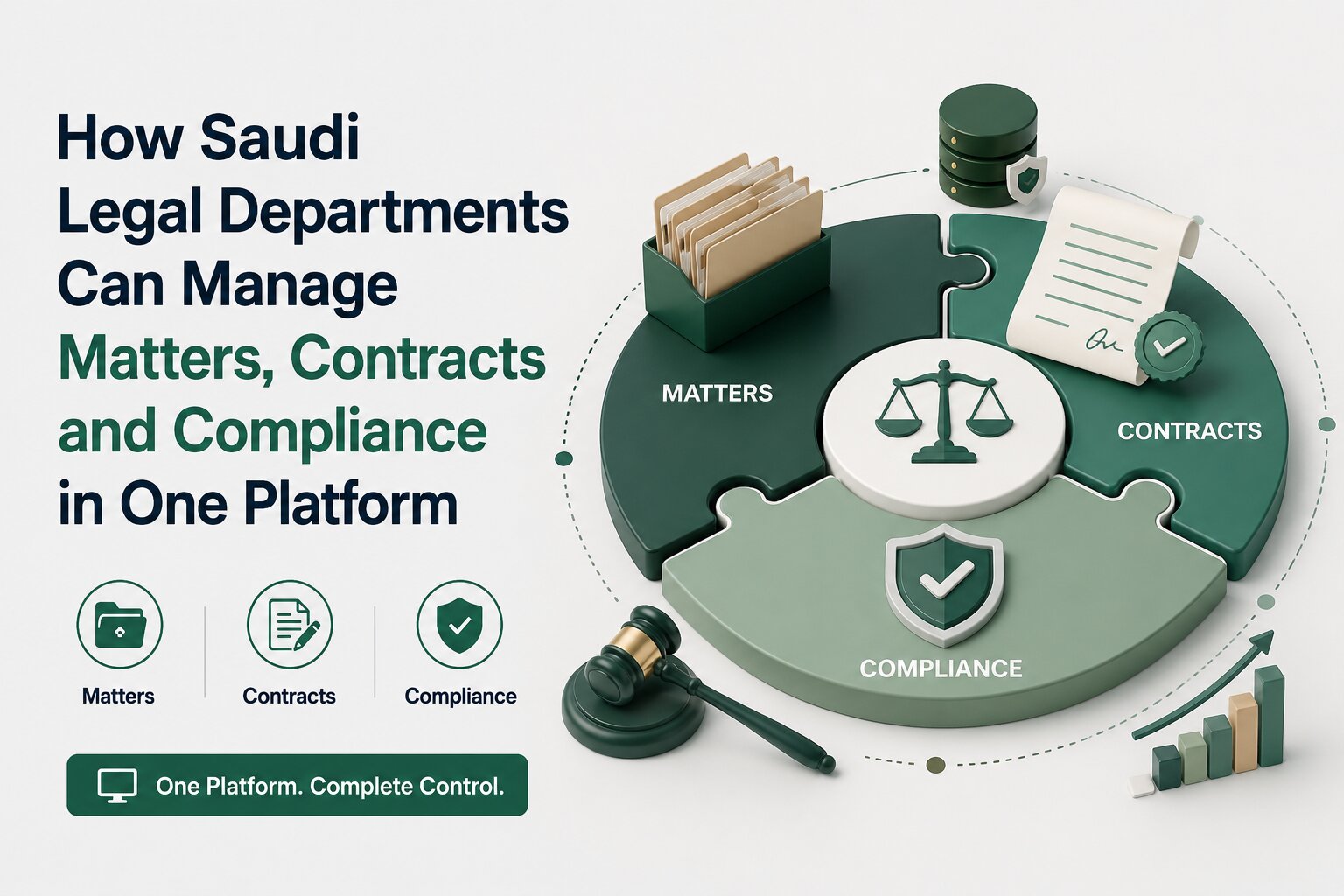
Centralised information, matter management, contract management, legal document management, workflow automation, and reporting can help legal teams reduce administrative friction and improve visibility across their work.
As Saudi businesses continue to grow and embrace digital transformation, corporate legal teams will need technology that can grow with them. For organisations looking to take that step, Beveron Smart Legal Counsel offers a way to bring key legal operations into a more connected digital environment.
Ready to modernise your in-house legal operations?
Explore how Beveron Smart Legal Counsel can help your organisation build a more connected, efficient and visible legal function.
Improve visibility. Streamline legal operations. Work smarter with Beveron Smart Legal Counsel.
Best cloud-based legal software for legal teams in Saudi Arabia
Best in-house legal software for corporates in Saudi Arabia
Best legal management software in Saudi Arabia
If you need a free demo of the best cloud-based legal software for legal teams in Saudi Arabia, please fill out the form.