Why AI-Powered Collaboration Matters for Modern Legal Operations

Legal work has never been limited to lawyers sitting together and reviewing documents. A single contract may involve legal, sales, finance, procurement and senior management. A regulatory matter may require input from compliance, HR, IT and business teams. Even a routine legal request can move through several people before a decision is made.
The problem is that these teams do not always work from the same information or in the same system.
Emails get buried. Documents sit in different folders. People spend time asking for updates or searching for the latest version of a file. As legal teams become more involved in day-to-day business decisions, these small gaps can turn into significant delays.
This is where AI-powered collaboration for legal teams is becoming increasingly relevant. Rather than using AI only to automate individual tasks, legal operations teams can use it to connect people, information and workflows.
The goal is not to remove human judgement. It is to make it easier for people to work together, find the information they need and make informed decisions faster.
Why Legal Teams Are Moving Away From Siloed Work
What legal work looked like when teams worked in isolation
For years, many legal teams relied on a combination of email, spreadsheets, shared folders and individual knowledge to manage their work. That approach can work when a team is small and the workload is manageable. But as a business grows, legal work becomes more difficult to coordinate.
Imagine a contract that needs to be reviewed by legal, checked by finance, negotiated by sales and approved by a business leader. If every team communicates through separate email threads, it becomes difficult to know:
- Who currently has the contract?
- Which version is the latest?
- Has finance completed its review?
- What changes did the business approve?
- Is there an outstanding issue?
- When does the contract need to be signed?
The legal team may spend as much time coordinating the process as they do reviewing the legal content itself. This is what happens when legal work becomes siloed — information and responsibilities remain separated between people, teams or systems.
Why connected legal workflows are becoming the new priority
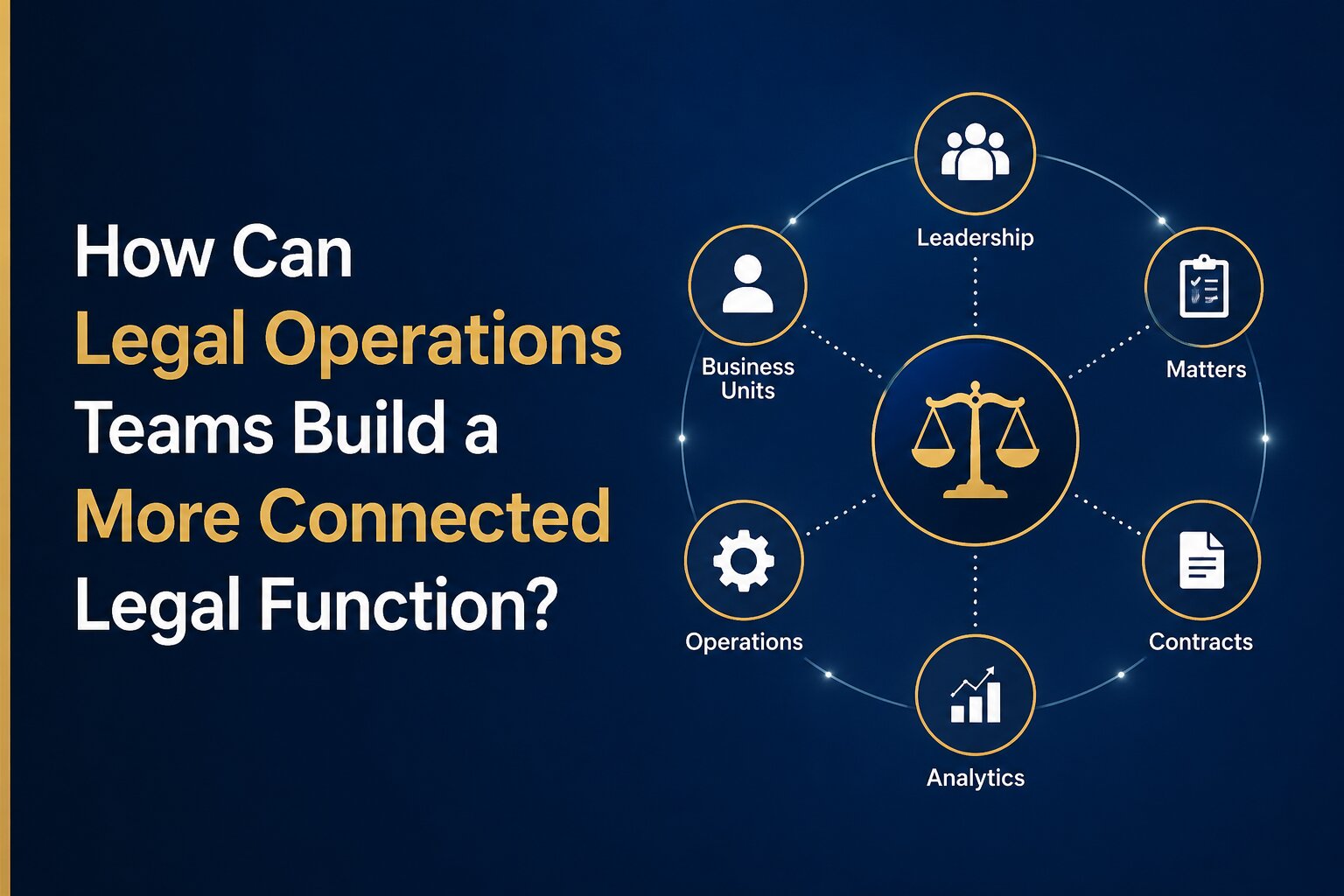
Modern legal departments increasingly work as business partners rather than functioning only as a support function. Legal teams collaborate with procurement on supplier agreements, sales on customer contracts, HR on employment matters, finance on commercial issues and senior leadership on risk. That makes collaboration a core part of legal operations.
A connected workflow gives relevant stakeholders better visibility into what is happening. Instead of relying on repeated emails and follow-ups, teams can see tasks, documents, deadlines and updates in one organised workflow. The result is not simply faster work. It is better-coordinated work.
So, What Does AI-Powered Collaboration Really Mean?
AI is more than a tool for automating repetitive tasks
AI-powered collaboration is not simply about automating individual tasks. It is about helping people work together with better information, context and coordination.
As legal technology evolves, AI is also moving beyond individual task assistance towards connected workflows that can coordinate multiple activities, monitor progress and keep work moving. Agentic AI is one example of this shift, helping legal teams connect tasks, follow-ups and workflows while keeping human professionals in control. For a deeper understanding of this approach, read our guide to What Is Agentic AI in Legal Tech? A Complete Guide for Modern Legal Teams.
Giving everyone the right context at the right time
Good collaboration depends on context. A legal professional reviewing a contract may need to know what the business team has already agreed to. A finance stakeholder may need to understand the commercial terms being reviewed. A manager may simply need to know whether an important approval is still pending.
Without shared context, every handoff can create another round of questions. AI can help reduce this friction by bringing relevant information together and making it easier to understand.
This can include:
- Matter status and recent updates
- Contract versions and key clauses
- Important deadlines
- Pending approvals
- Previous decisions
- Related documents
- Assigned responsibilities
Instead of people spending time reconstructing what happened, they can spend more time deciding what should happen next.
Why AI-Powered Collaboration Matters More Than Ever
Legal teams are dealing with more work and more moving parts
Legal departments today may manage hundreds or thousands of contracts, alongside disputes, compliance activities, policies, regulatory matters and business requests. The challenge is not simply the volume of work. It is the number of people and processes connected to that work. A contract may involve several rounds of negotiation. A compliance issue may require input from multiple departments. A business request may change several times before reaching final approval.
As complexity increases, disconnected workflows become harder to manage. AI-powered collaboration can help legal teams organise this complexity by connecting information and workflows rather than treating every task as an isolated activity.
Distributed teams need a better way to stay in sync
Legal teams are also increasingly distributed across offices, regions and time zones. When people are working in different locations, informal communication becomes more difficult. A quick conversation in the office may once have resolved an issue. In a distributed environment, that same issue might become another email thread or meeting.
A centralised, collaborative workflow gives teams a shared place to track progress and access relevant information. This becomes especially valuable when several people contribute to the same matter but do not work at the same time.
Businesses expect legal teams to move faster
Legal teams are under growing pressure to support business decisions without becoming a bottleneck. Sales teams want contracts reviewed quickly. Procurement teams want supplier agreements completed efficiently. Executives need timely information about legal risks. At the same time, legal professionals cannot simply sacrifice accuracy for speed. AI-powered collaboration can help address this balance by reducing administrative delays while keeping human review and decision-making at the centre of important legal work.
Where AI-Powered Collaboration Can Make the Biggest Difference
Bringing more structure to contract review and negotiation
Contract management is one of the clearest areas where collaboration can become difficult. A contract may pass through legal, sales, procurement, finance and management before it is finalised. Each person may have different questions and priorities. AI can help by identifying important clauses, summarising changes, highlighting potential issues and making relevant information easier to access.
More importantly, when these capabilities are connected to the wider workflow, stakeholders can work from the same information. Instead of asking, "Which version are we reviewing?", everyone can work from a controlled source of information. This reduces unnecessary back-and-forth and helps keep negotiations moving.
Helping legal and business teams work towards the same goal
Legal and business teams sometimes approach the same issue from different perspectives. A sales team may be focused on closing a deal. Legal may be focused on managing contractual risk. Finance may be concerned about payment terms.These priorities do not have to conflict. Better collaboration helps each team understand the others' requirements. AI can support this by making legal information easier to access and presenting relevant context in a way that different stakeholders can understand. This can make legal teams more approachable and help business teams make decisions with a clearer understanding of the legal implications.
As these capabilities become more advanced, Agentic AI can also help coordinate tasks, follow-ups and workflows across legal operations. Learn more about how Agentic AI can transform day-to-day legal operations. This can make legal teams more approachable and help business teams make decisions with a clearer understanding of the legal implications.
Turning scattered information into shared knowledge
Legal departments hold a huge amount of institutional knowledge. Past contracts, previous matters, legal opinions, negotiations and decisions can all contain useful information. But if that knowledge is stored across individual inboxes, folders or personal notes, it can be difficult to reuse. This creates a common problem: the organisation knows something, but finding that knowledge takes too much effort. AI can help legal teams search, organise and make sense of existing information.
Over time, this can create a stronger shared knowledge base and reduce dependence on individual employees. It also helps protect institutional knowledge when team members leave or move into new roles.
What Happens When Legal Teams Don't Adapt?
Small delays can quickly become bigger bottlenecks
One delayed approval may not seem important. But when the same problem happens across hundreds of matters, the impact adds up. Legal professionals may spend hours chasing approvals, searching for documents or answering questions about matter status. Business teams then wait longer for legal support.
The issue is not always a lack of people. Sometimes it is the way work moves between people.
Valuable knowledge can get lost between people and systems
Disconnected systems make it difficult to build a complete picture of a matter.
Important information might be spread across:
- Email conversations
- Shared drives
- Spreadsheets
- Document management systems
- Individual notes
- Messaging platforms
When information is scattered, people may repeat work that has already been completed simply because they cannot find the previous answer.
Over time, this creates unnecessary costs and makes the legal function less efficient.
Scaling legal support becomes harder as the business grows
A growing business usually generates more legal work. If the legal team's processes remain heavily manual, adding more work can quickly create pressure on the team. Simply hiring more people may not solve the underlying problem.
Legal operations leaders need to consider how workflows, technology and collaboration can scale together. The objective should be to help the team handle increasing demand without creating an equally large increase in administrative work.
How Legal Operations Leaders Can Start Building Better AI-Powered Workflows
AI adoption does not have to mean changing every legal process overnight. A more practical approach is to start small and focus on areas where collaboration is already causing problems.
Start by finding where work gets stuck
Look at the legal team's everyday processes. Where do people wait for approvals? Where are documents repeatedly requested? Which tasks require several follow-ups? Where do employees struggle to find information? These are often the best starting points.
For example, if contract approvals regularly sit in someone's inbox for several days, that workflow may be a better candidate for improvement than a process that already works well. The goal is to identify high-friction handoffs — points where work moves from one person or team to another and regularly slows down.
Get legal, business and IT teams involved from the beginning
AI projects work better when they are built around real business needs. Legal teams understand the work. Business teams understand how legal processes affect their departments. IT teams understand the organisation's technology and security requirements. Bringing these groups together early can help prevent a common mistake: introducing technology that looks impressive but does not solve the actual problem.
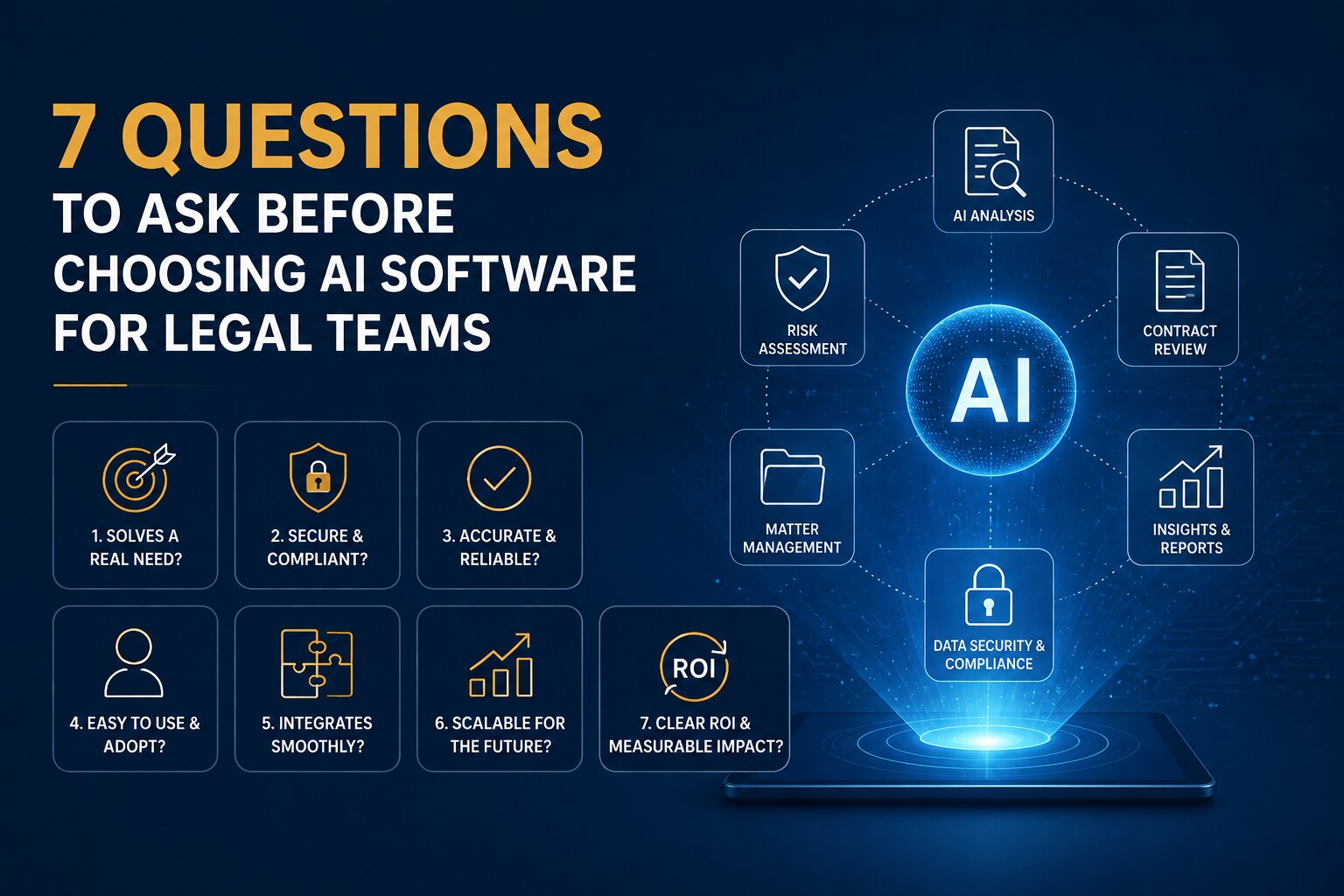
The right questions are simple:
- What problem are we trying to solve?
- Who needs to be involved?
- What information do they need?
- Where does the current process slow down?
- Where must human review remain essential?
These questions create a much stronger foundation for AI adoption.
Measure whether collaboration is actually improving
It is easy to measure how many tasks have been automated. But automation alone does not tell you whether the legal team is working better.
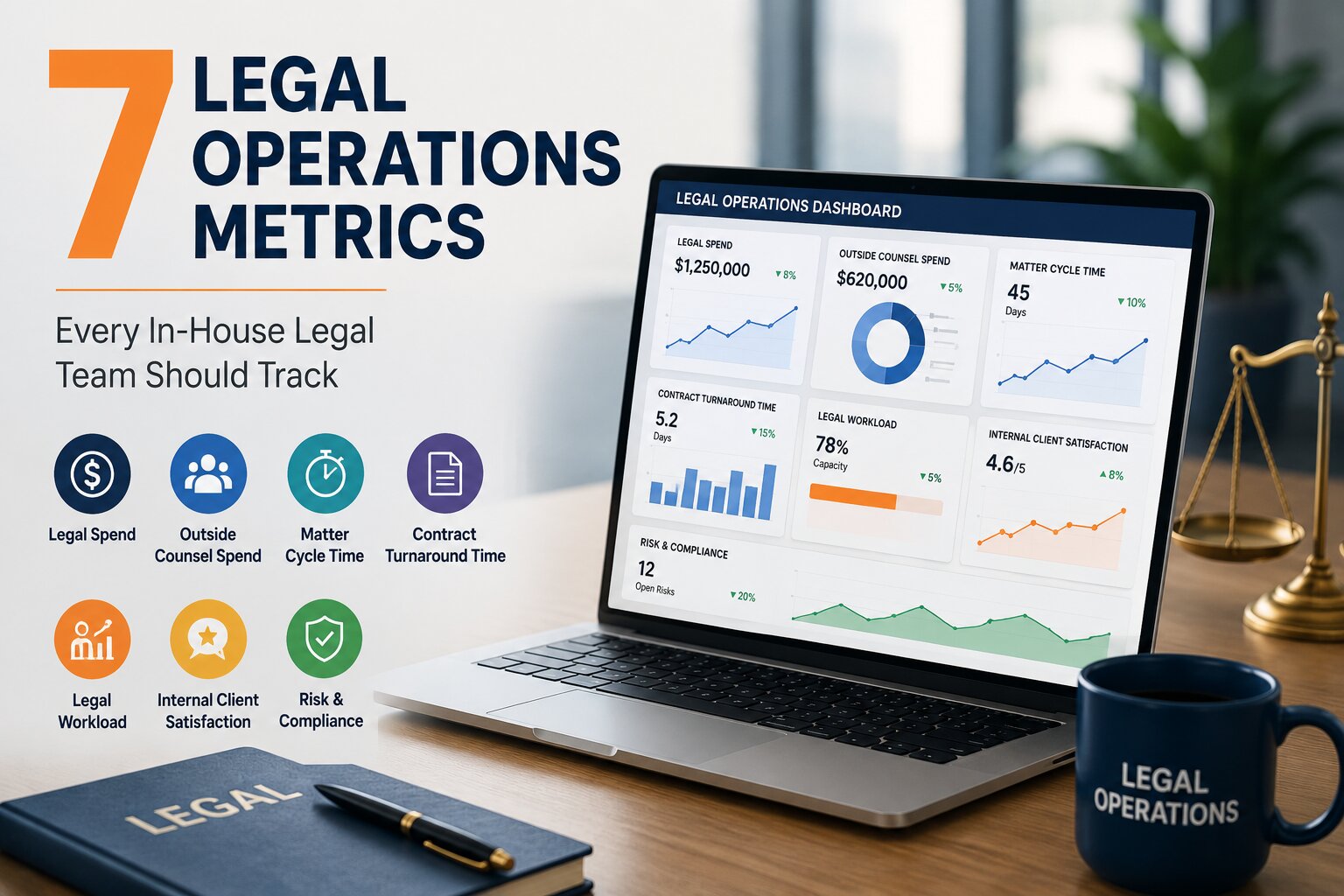
Legal operations leaders should also look at measures such as:
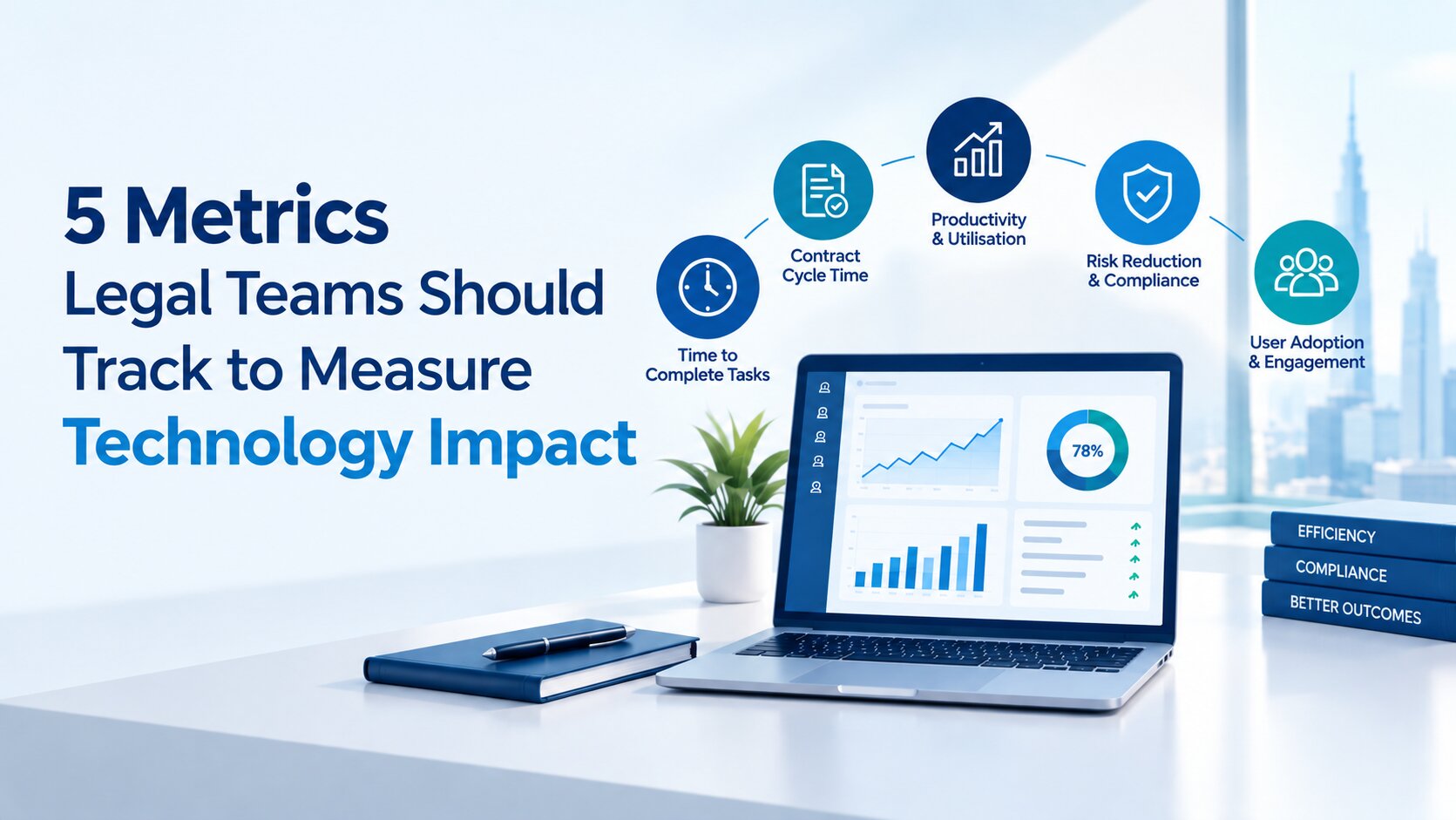
- Contract turnaround time
- Approval delays
- Number of manual follow-ups
- Time spent searching for information
- Response times between teams
- Repeated or duplicated work
- Stakeholder satisfaction
These measures show whether AI is actually making collaboration easier. The ultimate goal is not to automate the highest possible number of tasks. It is to create a legal operation where people can work together with less friction.
Frequently Asked Questions
Is AI-powered collaboration only useful for large legal teams?
No. Smaller legal teams can benefit as well. In fact, collaboration tools can be particularly useful for smaller teams because they often need to handle a broad range of work with limited resources. A well-designed AI workflow can reduce administrative effort and make information easier to manage. The key is to choose the right use cases rather than trying to implement AI everywhere.
Can AI-powered collaboration replace legal judgement?
AI should support legal judgement, not replace it. Legal decisions often involve context, professional responsibility, business priorities and risk. These areas require human judgement. AI can help professionals review information, identify patterns, summarise content and organise work. The final decision can remain with the appropriate legal or business professional.
How is AI-powered collaboration different from basic task automation?
Task automation focuses on completing a specific activity automatically, such as sending a reminder or assigning a task. AI-powered collaboration takes a broader view. It can connect information, people and workflows so that stakeholders have better context throughout a process.
For example, automation might remind someone that a contract needs approval. A more connected AI workflow could provide the approver with the relevant contract, key changes, previous comments and outstanding issues at the same time. That difference can have a major impact on how efficiently teams work together.
What types of legal workflows benefit most from AI-powered collaboration?
Workflows involving multiple people, repeated handoffs and large amounts of information are often strong candidates. These can include contract management, matter management, legal requests, compliance workflows, document review and cross-functional approvals. The best starting point is usually the process where teams already experience delays, repeated communication or difficulty finding information.
Build a More Connected Legal Operation
AI-powered collaboration is not about making legal teams less human. It is about removing some of the friction that prevents people from doing their best work. When information is easier to find, responsibilities are clearer and teams have better visibility into ongoing work, legal operations become easier to manage.
For legal operations leaders, the starting point does not need to be a complete technology overhaul. It can be as simple as identifying one frustrating workflow and asking how people, information and AI could work together more effectively. As legal departments continue to support increasingly complex businesses, the ability to collaborate quickly and intelligently will become just as important as the ability to automate individual tasks.
The future of legal operations is not simply about doing more with AI. It is about helping people work better together with AI.
Make Legal Collaboration Smarter with Beveron Technologies
Ready to move beyond disconnected legal workflows?
Beveron Technologies helps modern legal teams build more connected, AI-powered ways of working—bringing people, information and legal processes together in one streamlined environment.
Explore how AI-powered legal workflows can help your team reduce delays, improve collaboration and scale legal operations with greater confidence.
Get in touch with Beveron Technologies today to discover what smarter legal operations can look like for your organisation.
Best AI-powered collaboration for legal teams in the UAE
Best AI for legal operations in the UAE
Best AI collaboration tools for legal teams in the UAE
If you need a free demo of the best AI-powered collaboration for legal teams in the UAE, please fill out the form.