The Future of Legal Workflows: Why AI Will Replace 40% of Routine Tasks by 2030

The legal industry is standing at the edge of a digital revolution. For centuries, legal practice has been grounded in tradition, precedent, and manual labour — from drafting contracts by hand to manually reviewing thousands of documents for due diligence. But that paradigm is shifting fast. Artificial intelligence is no longer a futuristic concept in legal circles; it is an active, transformative force rewriting how law firms, corporate legal departments, and legal technology providers operate.
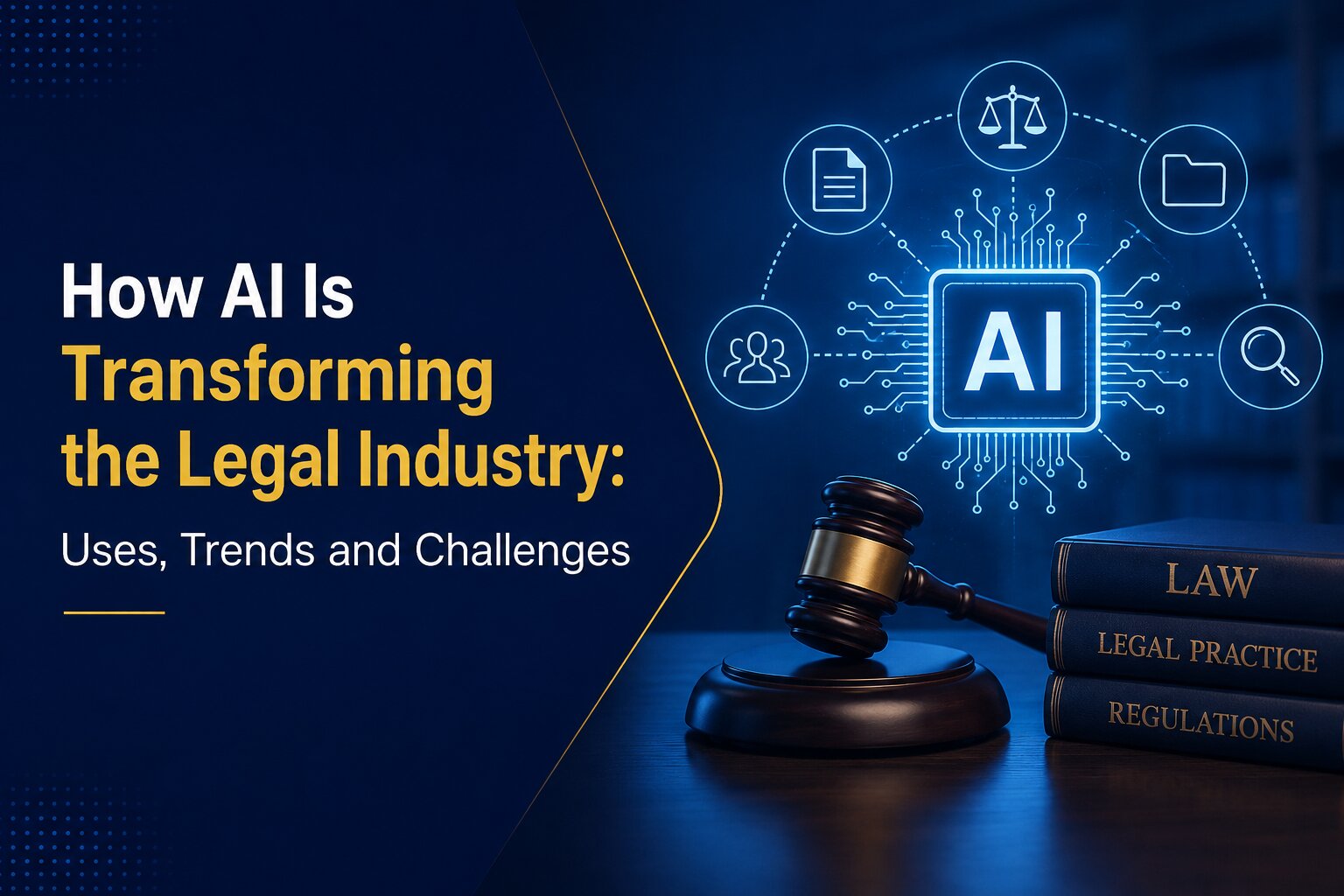
According to industry forecasts, AI is projected to automate up to 40% of routine legal tasks by 2030. For legal professionals and technology companies like Beveron Technologies, this is not a warning — it is an opportunity. Understanding which tasks are being automated, why the shift is accelerating, and how legal teams can adapt is critical to staying competitive in an AI-driven landscape.
The 40% Automation Estimate: What Does It Really Mean?
When researchers and analysts predict that AI will replace 40% of routine legal tasks, the keyword here is “routine.” Legal work broadly falls into two categories: high-cognition tasks that require human judgement, creativity, and ethical reasoning, and low-cognition, repetitive tasks that are rule-based and time-intensive.
AI excels in the latter. Tasks such as contract review, legal document summarisation, case law research, due diligence, invoice processing, and compliance monitoring are prime candidates for automation. These functions require precision and consistency — two areas where AI models powered by natural language processing (NLP) and machine learning significantly outperform the pace of human effort.
A McKinsey Global Institute report estimated that 22% of a lawyer’s job and 35% of a paralegal’s tasks could already be automated using current AI capabilities. As models become more sophisticated — particularly with advancements in generative AI and large language models (LLMs) — that percentage is expected to grow significantly by the end of the decade.
Key Legal Tasks AI Is Already Transforming
1. Contract Review and Analysis
AI-powered contract analysis tools can review hundreds of contracts in minutes, flagging non-standard clauses, identifying risks, and ensuring compliance with company policies. Platforms using NLP (natural language processing, meaning the ability of machines to understand and process human language) can extract key terms, obligations, and expiry dates automatically — tasks that traditionally took legal teams days or weeks.
Modern AI legal software can reduce review time by up to 80%, enabling legal professionals to focus on strategic advisory roles rather than administrative contract work.
2. Legal Research and Case Law Analysis
Legal research is notoriously time-consuming. Junior associates spend countless hours combing through case law, statutes, and legal journals to build arguments. AI tools like large language models can now perform comprehensive legal research in a fraction of the time, surfacing relevant precedents and synthesising case law insights with remarkable accuracy. This democratises legal research and levels the playing field for smaller firms and solo practitioners who cannot afford large research teams.
3. Due Diligence in Mergers and Acquisitions
M&A due diligence requires reviewing massive volumes of documents to assess risk, liabilities, and contractual obligations. AI can automate document classification, entity extraction, and anomaly detection across thousands of files simultaneously, reducing the due diligence timeline from weeks to days. This not only improves efficiency but also reduces the likelihood of human error in high-stakes transactions.
4. Compliance Monitoring and Regulatory Tracking
Keeping up with ever-changing regulations is a challenge for every organisation. AI systems can continuously monitor regulatory updates across multiple jurisdictions, automatically alert compliance teams, and even suggest necessary changes to internal policies. This proactive approach to compliance management reduces the risk of violations and costly penalties.
5. Document Drafting and Template Generation
Generative AI models can now produce legally sound first drafts of contracts, NDAs, employment agreements, and court submissions based on minimal input. While human review remains essential, the time spent drafting from scratch is rapidly becoming a thing of the past. AI drafting assistants accelerate turnaround times, improve consistency, and reduce the risk of omitting standard clauses.
Why the Pace of AI Adoption Is Accelerating
Several converging forces are driving AI adoption in the legal sector at unprecedented speed:
Client Demand for Cost Efficiency: Legal clients are increasingly resistant to paying premium hourly rates for low-value, repetitive work. Firms that leverage AI to reduce billable hours on routine tasks can offer more competitive pricing while maintaining or improving profit margins.
Talent Shortage and Burnout: The legal profession has long struggled with high burnout rates. Automating repetitive tasks reduces the administrative burden on legal professionals, improving job satisfaction and talent retention.
Data Availability and AI Maturity: The exponential growth of legal data — contracts, court decisions, regulatory filings — provides the training fuel for increasingly accurate AI models. As AI matures, its application to complex legal scenarios continues to expand.
Competitive Pressure from Legal Tech: LegalTech startups and established providers are launching AI-powered tools that give early adopters a significant competitive advantage, prompting widespread industry adoption.
Will AI Replace Lawyers? Setting the Record Straight
It is important to draw a clear distinction between replacing tasks and replacing professionals. AI will not replace lawyers — but lawyers who use AI will replace those who do not.
Legal judgement, client relationships, courtroom advocacy, and complex negotiations require deeply human skills—empathy, strategic thinking, ethical reasoning, and persuasion. Algorithms cannot replicate these. What AI does is eliminate the operational bottlenecks that prevent legal professionals from spending more time on these high-value activities.
The result is a leaner, faster, and more capable legal function — one where attorneys are empowered rather than displaced by intelligent technology.
How Beveron Technologies Is Shaping the Future of Legal AI
At Beveron Technologies, we build intelligent legal workflow solutions that empower law firms and corporate legal teams to embrace AI without disruption. Our platforms are designed with the legal professional at the center—intuitive, compliant, and deeply integrated with how legal work actually gets done.
Our AI-powered legal tools include:
- Smart Contract Lifecycle Management with automated clause detection and risk flagging
- AI-Driven Legal Research Assistants for faster, more accurate case law insights
- Automated Compliance Dashboards that track regulatory changes in real time
- Intelligent Document Review tools for due diligence and litigation support
- Predictive Analytics for case outcome modelling and litigation risk assessment
Legal teams can move from manual processes to a more structured and efficient way of working by adopting law firm automation software.
The Time to Act Is Now
Explore how Beveron Technologies’ AI-powered legal solutions can help your firm lead in a competitive, tech-driven era.
Best AI legal software in the UAE
Best law firm automation software in the UAE
Best legal workflow automation for corporate teams in the UAE
If you need a free demo of the best AI legal software in the UAE, please fill out the form below.