Procurement Contract Management Software in the UAE: How Businesses Can Simplify Contract Lifecycles
Procurement contracts often look straightforward on paper. A supplier sends an agreement, the procurement team reviews the commercial terms, legal checks the clauses, the right people approve it, and both parties sign.
In practice, it rarely happens that neatly. A single supplier contract may pass through procurement, legal, finance, business teams and senior management before it is finally approved. After signing, someone still needs to monitor renewal dates, payment terms, service obligations, notice periods and other commitments.
For UAE businesses managing several suppliers, business units or entities, keeping track of all this through spreadsheets, email threads and shared folders can become difficult very quickly. This is where procurement contract management software can make a practical difference. Instead of treating contracts as documents that simply need to be stored, it gives teams a structured way to manage them throughout their lifecycle.
This guide looks at the common contract-management problems UAE procurement teams face, how software can address them, and what businesses should consider before choosing a solution.
Where Procurement Contract Management Starts to Break Down
Contract problems rarely happen because a business does not have a contract. They happen because the contract is difficult to manage after it enters the organisation.
As contract volumes increase, several issues tend to appear.
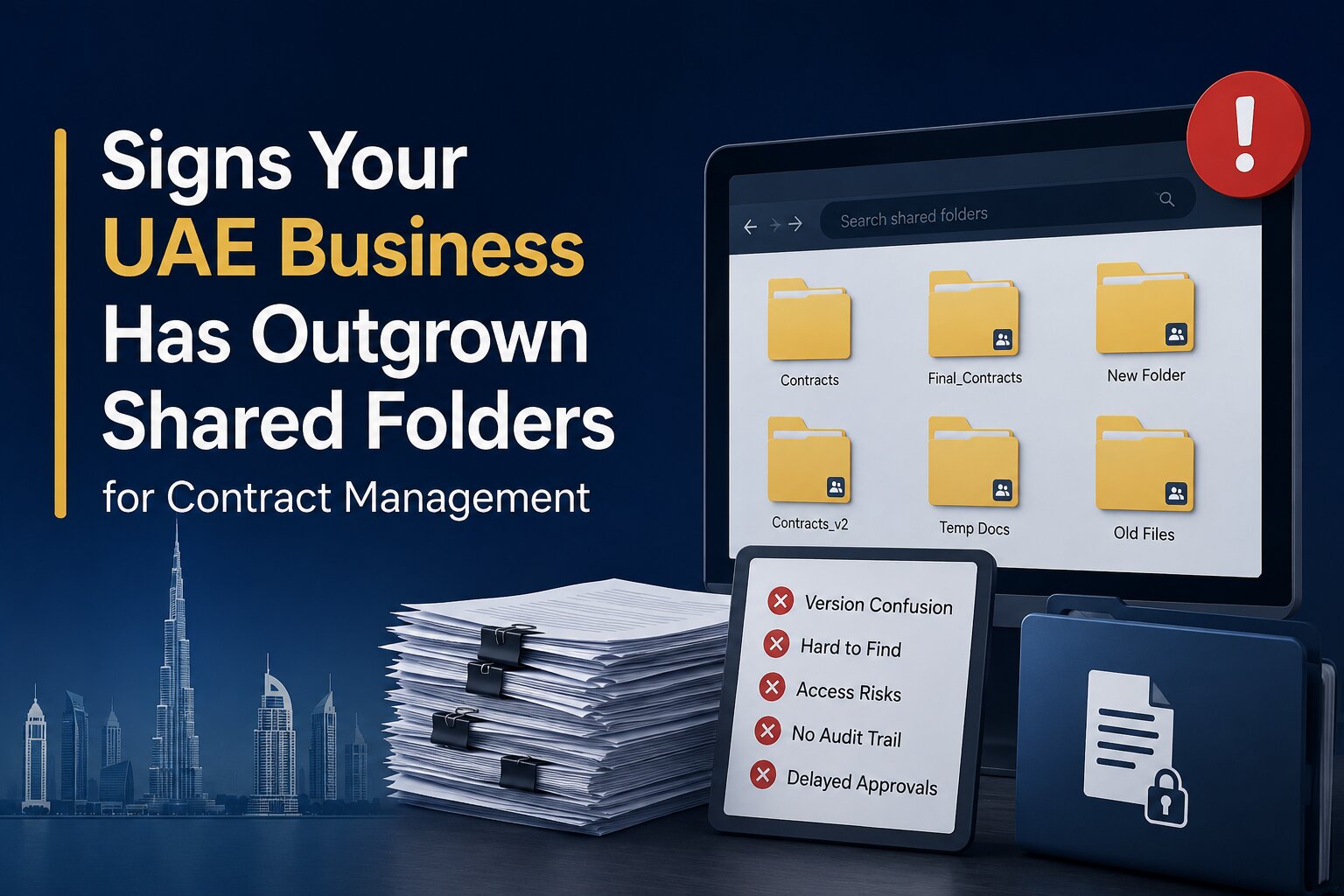
Contracts are scattered across emails and folders
A supplier agreement might be saved in procurement's shared drive while the latest version is sitting in a legal team's email. Another copy could be stored on an individual employee's computer. This creates a simple but important problem: which document is the current one?
Finding a signed contract should not require asking several people or searching through old email conversations. Yet this is still common in businesses that rely heavily on manual contract tracking. A central contract repository gives authorised users one place to find agreements, supporting documents and important contract information.
Contract approvals take longer than expected
Procurement contracts often require several approvals. A purchase agreement might need input from procurement, legal, finance and the relevant business owner. When these approvals are managed through email, it can be difficult to know where a contract is stuck. Someone may be waiting for a response without realising that the contract is holding up a supplier onboarding process.
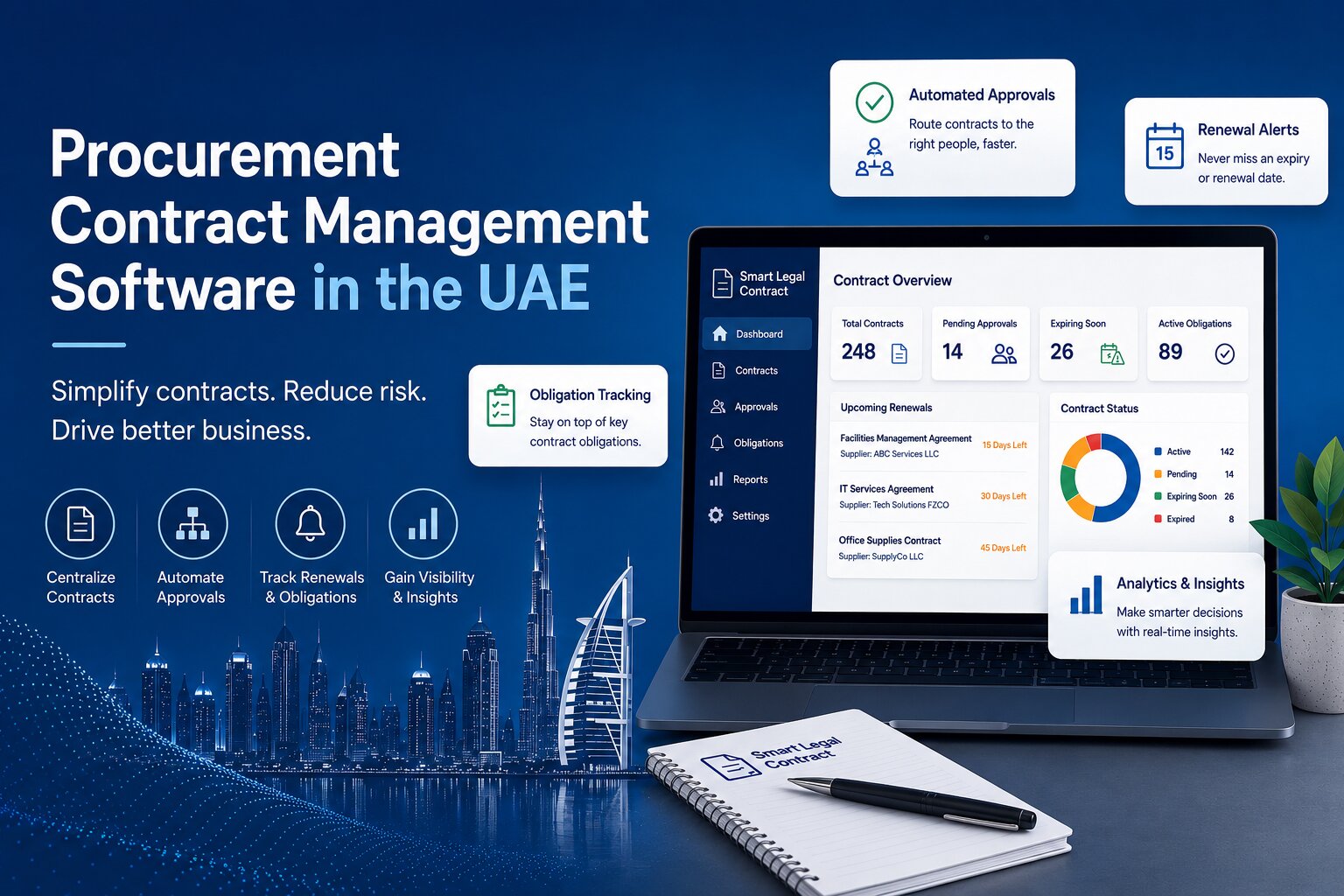
Automated workflows can make this process more predictable by routing contracts to the right people and showing what action is still pending.
Renewal dates are easy to miss
Contract expiry and renewal dates are among the most practical reasons businesses consider contract management software. A supplier agreement may automatically renew unless notice is given within a particular period. If that date is missed, the business may be locked into another term or lose an opportunity to renegotiate pricing and conditions.
Spreadsheets can track these dates, but only if they are kept accurate and checked regularly. With automated reminders, procurement teams can receive advance notifications about upcoming renewals and decide whether to renew, renegotiate or terminate an agreement.
Important obligations can get buried in the contract
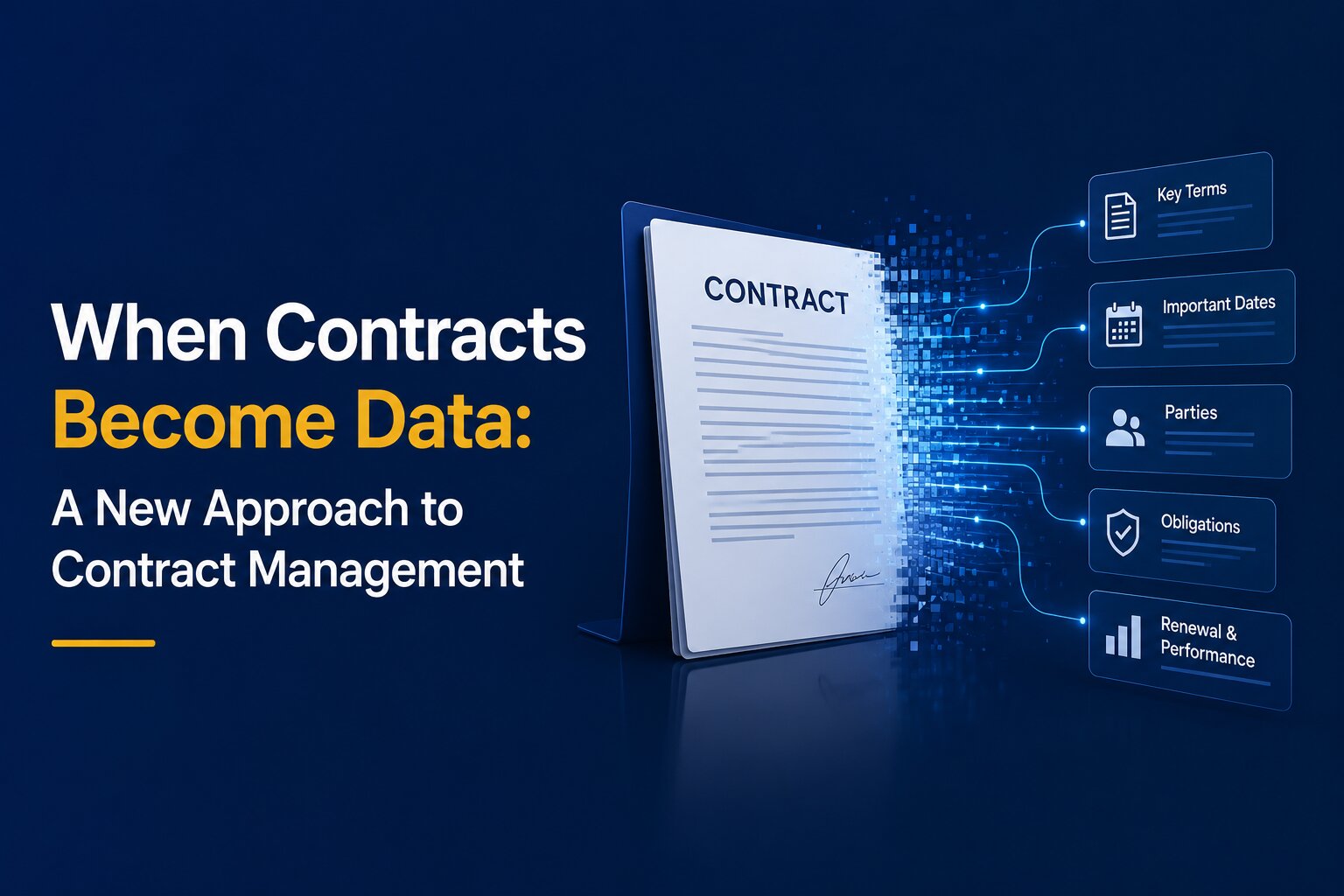
A contract can contain much more than a start date and an end date. It may include service-level requirements, payment conditions, reporting obligations, delivery commitments, insurance requirements, notice periods and other responsibilities. These details can easily be overlooked when teams treat contracts simply as documents to file away after signing.
A modern contract management system can help teams identify and monitor important obligations so that responsibilities do not disappear into long documents.
Bilingual and multi-entity operations add another layer
UAE businesses can have relatively complex organisational structures, with operations spanning mainland entities, free zones and different business units. Contracts may also involve Arabic and English documentation, depending on the parties, transaction and business requirements. That makes consistent document management and version control even more important.
The goal is not simply to store more documents. It is to make sure the right people can find the right contract and understand its status when they need it.
What Does Procurement Contract Management Software Actually Do?
At its simplest, procurement contract management software gives businesses a more organised way to manage contracts from creation and review through approval, signing, obligations and renewal. The exact features vary between platforms, but a useful system generally covers several core areas.
Contract management is also moving beyond simple workflow automation. As AI becomes more capable, businesses are exploring how intelligent systems can connect different stages of the contract lifecycle, from drafting and review to approval, execution and renewal. For a deeper look at this shift, see our guide on How Agentic AI Can Transform the Contract Lifecycle from Drafting to Execution.
Centralise procurement contracts
Instead of keeping supplier agreements across different folders and inboxes, businesses can maintain a central repository. Users can search for contracts, view their status and access relevant information based on their permissions.
This is particularly useful when someone needs to answer a question quickly:
- Which suppliers have active contracts?
- When does this agreement expire?
- Who owns the contract?
- What are the payment terms?
- Has the contract been approved?
- When can the agreement be renewed or terminated?
The less time employees spend looking for this information, the more time they can spend on actual procurement work.
Automate approval workflows
Not every contract needs to follow the same approval path. A low-value supplier agreement may need a relatively simple process, while a high-value or strategically important contract may require additional legal, financial or management approval. Workflow automation allows organisations to create rules around these processes. Instead of manually forwarding documents from one person to another, the system can route them to the appropriate stakeholders and provide visibility into the current stage.
That can reduce unnecessary follow-ups and make approval timelines easier to manage.
Track renewals and key obligations
A good contract management system should do more than tell you where a contract is stored. It should help teams stay ahead of important dates. Renewal reminders can give procurement teams enough time to review an agreement before it expires. Teams can also track other important milestones, such as notice periods or contractual obligations.
This is particularly valuable for supplier agreements where automatic renewal could affect future spending.
Improve contract risk and compliance visibility
Contracts can contain obligations and conditions that have operational or financial consequences. Software can help teams organise this information and make relevant requirements easier to monitor. For UAE businesses, this can support more consistent contract administration alongside the organisation's broader legal and compliance processes.
However, contract management software should not be viewed as a substitute for legal advice or as a guarantee of regulatory compliance. The platform helps teams organise, track and manage information; legal and compliance teams still need to interpret requirements and make appropriate decisions.
Connect contracts with other business systems
Procurement does not operate in isolation. Contract information may need to connect with ERP, finance, procurement or supplier-management systems. Integrations can reduce duplicate data entry and help teams connect commercial agreements with the wider processes they support. This becomes increasingly important as organisations grow and contract volumes increase.
Get better visibility through reporting
Contract data can also help procurement teams answer broader business questions.
For example:
- How much contract value is coming up for renewal?
- Which supplier agreements expire in the next six months?
- How long are contracts taking to reach approval?
- Which contracts are still awaiting action?
- Which suppliers have agreements approaching their renewal period?
Instead of relying on individual spreadsheets, teams can use dashboards and reports to get a clearer view of their contract portfolio.
How Beveron Smart Legal Contract Helps Manage Contracts More Efficiently
Once a business understands these requirements, the next question is how to bring them together in day-to-day operations. Beveron Smart Legal Contract is designed to help businesses manage contracts across their lifecycle, rather than treating contract management as simple document storage. For a procurement team, that can mean having a more structured environment for contract review, approvals, document management, key dates and ongoing contract tracking.
For example, instead of a procurement employee maintaining a separate spreadsheet of supplier renewal dates, relevant contract information can be managed within the contract management environment. Approval workflows can also provide greater visibility into where an agreement currently sits and which stakeholder needs to act next.
The value here is less about adding another software tool and more about reducing the number of disconnected steps involved in managing contracts.
For businesses evaluating solutions, this is an important distinction. The best platform is not necessarily the one with the longest feature list. It is the one that fits the organisation's actual workflow and makes everyday contract management easier.
Why Contract Management Matters for UAE Procurement Teams
The benefits of contract management software are not unique to the UAE. But certain characteristics of the local business environment can make structured contract management particularly useful.
Spend less time chasing contracts
Procurement teams already spend significant time coordinating suppliers and internal stakeholders. Searching for documents, checking approval status and sending reminders can consume time that could otherwise be spent on supplier negotiations and strategic sourcing.
Centralised information and automated workflows can reduce some of this administrative work.
Reduce the risk of missed renewals
A missed renewal is not always a major problem, but it can create unnecessary costs and complications. The business may miss an opportunity to renegotiate pricing, remain tied to an agreement longer than intended, or discover an expiry only when a supplier relationship is already affected.
Advance reminders give procurement teams more time to make a considered decision.
Speed up supplier contract approvals
Supplier onboarding can be delayed when contracts sit in someone's inbox waiting for review. A defined workflow makes responsibilities clearer and gives procurement teams better visibility into outstanding approvals.
This does not automatically make every approval faster. But it can make the process easier to track and reduce avoidable delays.
Improve visibility across entities
For businesses operating through multiple entities or business units, contract information can become fragmented. A centralised system can give authorised users a clearer view of contracts across the organisation while maintaining appropriate access controls.
This can be especially useful for procurement leaders who need to understand the broader supplier and contract portfolio rather than looking at one department at a time.
Manage bilingual documentation more consistently
Where businesses work with Arabic and English documentation, maintaining clear records and version control becomes important. A contract management platform can help teams organise documents and associated information more systematically.
The exact level of Arabic-language support varies between software providers, so this is something buyers should test rather than assume.
Make better procurement decisions
Contract data becomes more useful when it can be viewed as a portfolio rather than as individual documents. Procurement leaders can use information about contract values, renewal dates, suppliers and obligations to identify upcoming decisions and potential negotiation opportunities.
That moves contract management closer to strategic procurement rather than leaving it as an administrative task.
How to Choose Procurement Contract Management Software in the UAE
Choosing a platform should start with your actual problems rather than a long list of impressive features. Businesses comparing procurement contract management platforms may also want to look at the broader contract management landscape before making a decision. Our guide to Best Legal Contract Management Software for Businesses in the UAE covers the key capabilities businesses should consider when evaluating contract management solutions for the UAE market.
Before speaking to vendors, ask a few basic questions.
- Are contracts difficult to find?
- Are approvals regularly delayed?
- Are renewal dates being tracked manually?
- Do procurement and legal teams have different versions of the same contract?
- Can the business easily identify upcoming supplier commitments?
- Are important contractual obligations being monitored after signing?
Your answers will help determine which capabilities matter most.
Look for these essential features
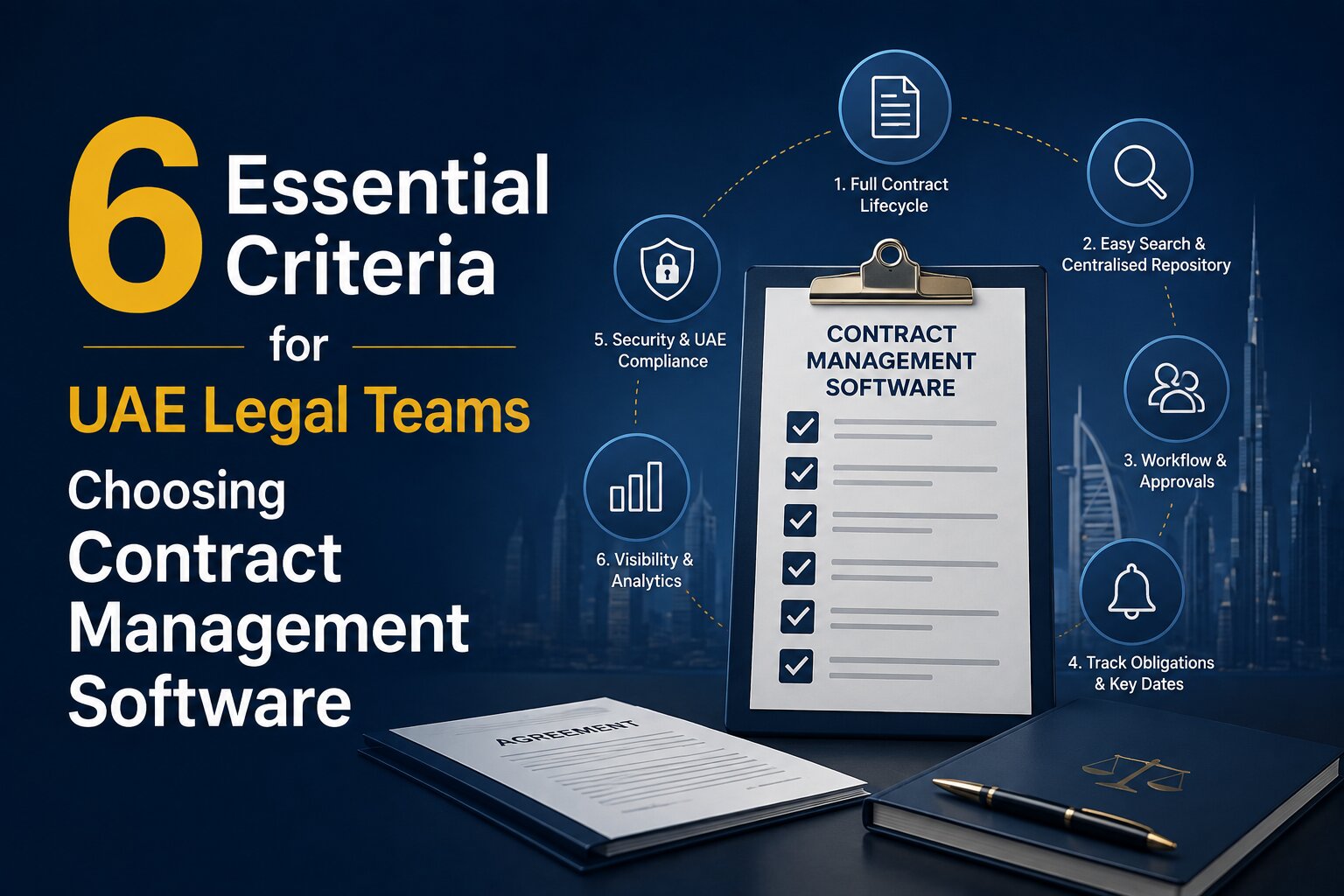
A procurement-focused contract management platform should ideally provide:
- Centralised contract repository for storing and organising agreements
- Automated approval workflows to route contracts to the appropriate stakeholders
- Renewal and expiry alerts to prevent important dates from being overlooked
- Obligation tracking for key responsibilities and milestones
- Search and version control to make documents easier to find and manage
- E-signature integration to support digital execution workflows
- Arabic and English support where relevant to your organisation
- Reporting and analytics for contract and procurement visibility
- ERP and procurement integrations where required
- Role-based access controls to limit access appropriately
- Audit trails to provide visibility into important actions
- Scalability so the system can support future growth
Not every organisation will need every feature on day one. The important thing is to identify which capabilities solve your most pressing problems.
Questions to Ask Software Vendors
A product demonstration can look impressive. The more useful test is whether the software works for your specific environment.
Ask vendors questions such as:
Where is our contract data hosted?
Understand the hosting model, security controls and data-handling arrangements. If your organisation has specific internal requirements around data location or hosting, make sure the vendor can address them clearly.
Does the platform support Arabic and English documentation?
Do not assume that because a system is available in the UAE, its document and workflow capabilities will automatically meet your bilingual requirements.
Can it support multiple business entities?
If your organisation operates through multiple entities or business units, ask how permissions, repositories, workflows and reporting work across them.
Can it integrate with our existing systems?
Find out whether the platform can connect with the ERP, procurement or other systems your teams already use.
How customisable are the workflows?
Your approval process may not match another company's. Check whether workflows can be adapted to different contract types, departments or approval thresholds.
How does the platform manage access and audit trails?
Contracts can contain commercially sensitive information. Ask how users are authorised and how important actions are recorded.
How is implementation handled?
A good platform can still fail if implementation is poorly planned. Ask about data migration, configuration, training and post-implementation support.
How is pricing calculated?
Pricing may depend on users, modules, contracts, storage or other factors. Ask for a clear explanation of the pricing model and what is included.
Cloud or On-Premise: Which Approach Is Right for Your Business?
There is no universal answer to the cloud-versus-on-premise question.
Cloud-based contract management
Cloud platforms can offer faster deployment, easier maintenance and straightforward access for distributed teams. The provider generally manages the underlying infrastructure and software updates, which can reduce the internal IT burden. However, businesses should still carefully assess the provider's security practices, hosting arrangements, access controls and data-handling policies.
On-premise contract management
An on-premise deployment gives an organisation greater control over its own hosting environment. This can be relevant for businesses with specific infrastructure, security or internal governance requirements.
For legal and procurement teams handling commercially sensitive contracts, keeping AI processing and sensitive information within a controlled environment may also be an important consideration. Beveron's secure on-premise AI for legal teams approach supports on-premise and private-cloud deployment, with AI processing designed to remain within the client's environment, alongside zero-retention and no-public-model-training measures.
The trade-off is that the organisation generally takes on more responsibility for infrastructure, maintenance and updates. Beveron's service page also makes this responsibility clear: the company provides the software implementation and AI integration layer, while management of the client's on-premise infrastructure remains with the client or its designated IT team.
Look beyond the deployment label
For UAE businesses, the important question is not simply whether a product is cloud or on-premise.
Look at the full picture:
- Where is data hosted?
- How is data protected?
- Who can access it?
- How are permissions managed?
- What audit capabilities are available?
- What are the vendor's backup and recovery practices?
- Does the deployment model fit your organisation's internal requirements?
Your legal, IT, security and compliance teams should be involved in this assessment where appropriate.
Moving from Spreadsheets to Contract Management Software
Switching from spreadsheets does not need to happen all at once. In fact, trying to migrate every contract and redesign every process simultaneously can make implementation unnecessarily difficult.
A phased approach is often more practical.
Step 1: Identify your existing contracts
Start by understanding what you already have.
Collect contracts from shared drives, email accounts and spreadsheets. Identify duplicates, expired agreements and missing information.
Then categorise contracts by supplier, type, business entity, value or status.
Step 2: Map the current workflow
Look at how a contract actually moves through the business.
- Who creates it?
- Who reviews it?
- Who approves it?
- Who signs it?
- Who monitors it after signing?
This exercise often reveals bottlenecks that were not obvious before.
Step 3: Assign ownership and reminders
Every important contract should have someone responsible for monitoring it.
Set up appropriate reminders for renewals, notice periods and other key events.
This removes the assumption that someone will remember to check a spreadsheet at the right time.
Step 4: Connect relevant systems
Where practical, connect the contract platform with procurement, ERP and other systems.
The objective is to reduce duplicate work and keep important information connected.
Step 5: Help people adopt the new process
Technology alone will not fix a contract management problem.
People need to understand why the new process exists and how it makes their work easier.
Start with common workflows, provide practical training and make the system part of the normal procurement process.
How to Measure Whether the Investment Is Working
The success of contract management software should not be measured simply by how many documents have been uploaded. Look at whether the process itself has improved.
The success of contract management software should not be measured simply by how many documents have been uploaded. Look at whether the process itself has improved. This is especially important when evaluating a platform across the wider contract lifecycle, from creation and review to approval, renewal and compliance. For a broader overview of the capabilities businesses should consider, see our guide to Legal Contract Management Software: A Complete Guide for Modern Legal Teams in 2026.
Useful measures can include:
- Contract approval turnaround time
- Number of missed or late renewals
- Time spent searching for contracts
- Supplier onboarding time
- Percentage of contracts with assigned owners
- Percentage of contracts managed through defined workflows
- Number of manual follow-ups required
- Contract-related savings or avoided costs
- Adoption across procurement, legal and finance teams
For example, if a procurement team previously spent hours every month checking spreadsheets for upcoming renewals, a reduction in that manual effort is a meaningful operational improvement. Similarly, if legal and procurement can see the same contract status without repeatedly emailing each other, that is a practical improvement even if it does not immediately appear as a financial saving.
Final Thoughts: Make Procurement Contracts Easier to Manage
Procurement contracts are not just documents that need to be signed and filed. They contain commercial commitments, supplier obligations, renewal conditions and information that can affect the business long after the signature is complete.
As UAE businesses grow, managing these agreements through spreadsheets, email and disconnected folders becomes increasingly difficult.
Procurement contract management software provides a more structured approach. It can bring contracts into one place, automate approval workflows, provide reminders for important dates, improve visibility into obligations and give procurement teams a clearer picture of their contract portfolio.
But choosing the right platform requires more than comparing feature lists.
Businesses should look at their existing processes, the complexity of their supplier relationships, their organisational structure, integration requirements, security expectations and future needs.
Beveron Smart Legal Contract can be considered as part of that evaluation, particularly for organisations looking to bring contract review, approvals, document management and lifecycle tracking into a more connected workflow.
The goal is ultimately simple: make contracts easier to manage, easier to understand and harder to overlook.
If your procurement team is still relying heavily on spreadsheets and email to manage contracts, it may be time to explore what a more structured contract lifecycle could look like.
Ready to Simplify Your Contract Lifecycle?
Managing procurement contracts through spreadsheets and email can make approvals, renewals and obligations harder to track. Beveron Smart Legal Contract helps businesses bring contract review, approvals, document management and lifecycle tracking into one structured platform.
Explore Beveron Smart Legal Contract or request a demo to see how it can support your business.
Best procurement contract management software in the UAE
Best supplier contract management software in the UAE
Best vendor contract management software in the UAE
If you need a free demo of the best debt collection management software for finance teams in the UAE, please fill out the form below.