What Should UAE Businesses Consider Before Adopting Contract Management Software?

Contracts are part of almost every business relationship, from supplier agreements and employment contracts to customer agreements and partnerships. As a business grows, managing these documents becomes more demanding. Legal teams may need to coordinate reviews with different departments, track changes across multiple versions and ensure that important deadlines are not missed.
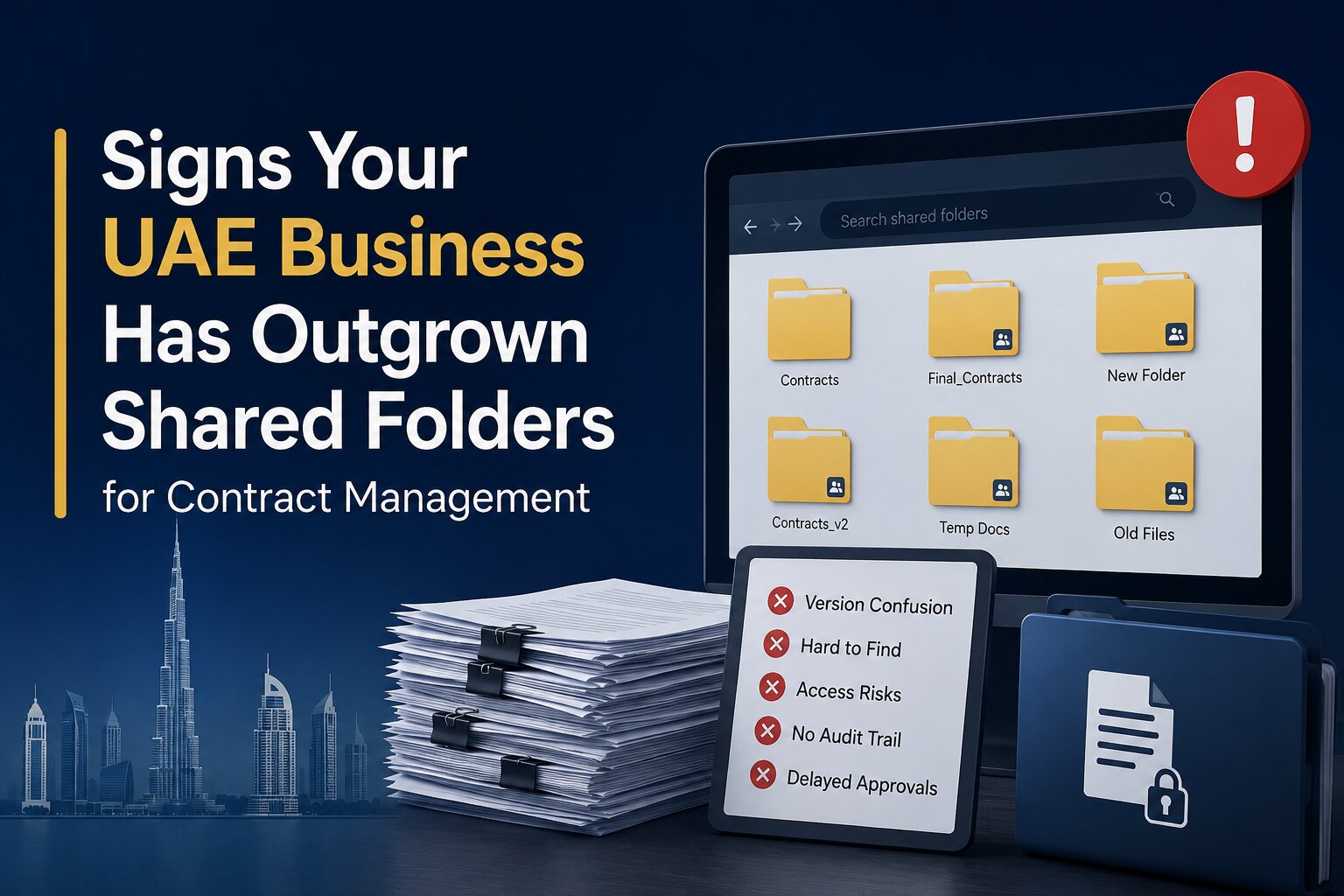
For many UAE businesses, these tasks still involve a combination of email, spreadsheets, shared folders and manual reminders. While this approach may work when contract volumes are low, it can become difficult to manage as more agreements move through the business.
Contract management software offers a way to organise these activities in a more structured process. However, choosing a solution requires more than comparing feature lists. Businesses need to consider their existing workflows, document security, local requirements, employee needs and long-term costs. Understanding these factors can help decision-makers choose software that solves real problems rather than adding another tool to their daily work.
1. Identify the Contract Management Problems Your Business Needs to Solve
Before exploring software options, businesses should look at how contracts are currently handled. Where do delays occur? How easily can employees find the latest approved version of an agreement? Who tracks renewal dates, and what happens when the person responsible is unavailable?
These questions help identify the problems that a new system should address. For example, a procurement team may struggle to track supplier agreements, while a legal department may spend considerable time reviewing changes and chasing approvals. Another business may have difficulty locating signed contracts or knowing which agreements are approaching expiry.
It is also worth speaking with the departments that work with contracts regularly. Legal, procurement, finance, sales and human resources may have different requirements. Understanding their needs before selecting software makes it easier to prioritise useful features and avoid paying for capabilities the business does not need.
2. Check Whether the Software Covers Your Contract Lifecycle
Contract management involves several stages, beginning with a request or draft and continuing through review, approval, signing, storage and renewal. When these activities happen across disconnected tools, information can become difficult to follow and responsibility for the next step may be unclear.
When evaluating software, check whether it supports the stages your business needs to manage. Can employees create contracts from approved templates? Can reviewers suggest changes and compare versions? Can the system route agreements to the appropriate people for approval and track whether signing has been completed?
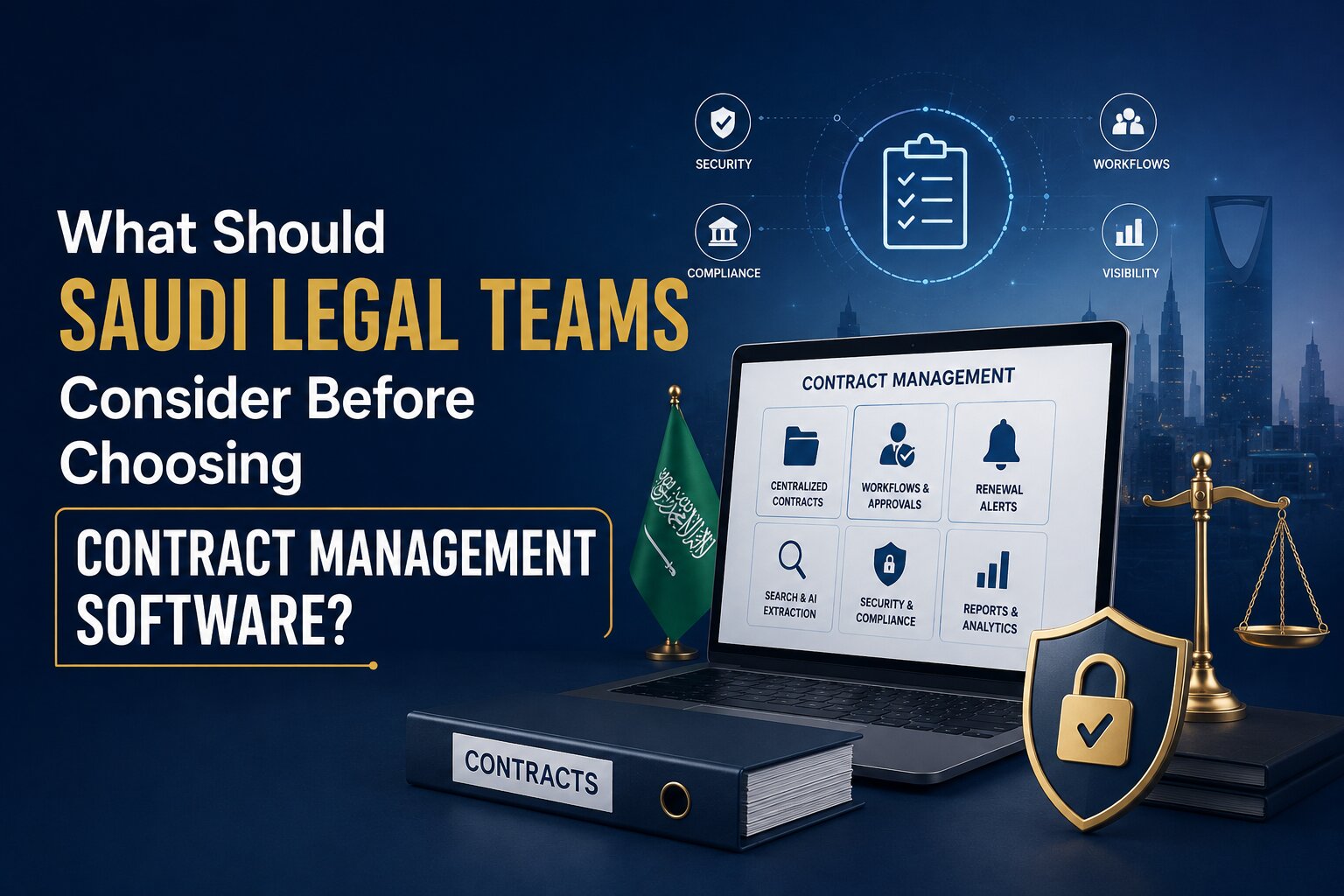
Beveron Technologies' Smart Legal Contract is designed to support contract management activities such as requests, templates, document collaboration, version tracking, approvals, e-signatures and centralised contract storage. Businesses considering the platform should assess these capabilities against their own processes and confirm that the available workflows meet their requirements.
The objective is not necessarily to move every activity into one system immediately. It is to make the contract process easier to follow, with clear responsibilities and fewer unnecessary handovers.
3. Evaluate Document Security and Access Controls
Business contracts often contain confidential information about pricing, suppliers, customers, employees and commercial arrangements. A contract management system must therefore do more than store documents in one place. It should help the business control who can access information and what they are permitted to do with it.
Ask providers how access permissions work.
Can access be limited according to an employee's role or department?
Can authorised users review documents without giving everyone permission to edit them? Is there a record of important actions, such as changes, approvals and document access, where supported?
Businesses should also understand how documents are protected, backed up and recovered if something goes wrong. Questions about encryption, security testing, incident handling and data deletion are equally important when assessing a provider. Do not assume that every contract management platform offers the same level of protection. Request clear answers about the specific security controls included in the proposed service, and involve your IT or information security team in the assessment where necessary.
4. Consider UAE Data Protection and Contract Requirements
For businesses operating in the UAE, data protection should be part of the software selection process from the beginning. Contracts may contain personal information belonging to customers, employees, suppliers or other individuals. How that information is collected, stored, accessed and shared can affect the organisation's legal responsibilities.
The UAE's Federal Decree-Law No. 45 of 2021 on the Protection of Personal Data establishes rules for handling personal data, including requirements relating to confidentiality, security and certain transfers of information across borders. However, businesses should first determine which rules apply to their particular operations. Organisations operating in the Dubai International Financial Centre (DIFC) or Abu Dhabi Global Market (ADGM), for example, are subject to separate data protection frameworks. Certain industries may also have additional requirements. Official UAE government information provides a useful starting point for understanding the relevant legislation.
When assessing contract management software, ask where documents and related information will be stored, who can access them, how the provider handles data and what happens when the service ends. Businesses should also review the provider's contractual commitments, including its responsibilities for protecting information and supporting applicable data protection obligations.
Software can help organisations manage information more consistently, but purchasing a platform does not automatically make a business compliant. Legal and compliance teams should assess the solution alongside the organisation's policies, contractual obligations and applicable laws.
5. Check Support for Arabic and English Contracts
Many businesses in the UAE work with Arabic and English documents, particularly when dealing with local customers, government entities, regional suppliers and international partners. A contract management system should fit these working requirements rather than create additional steps for employees.
Before choosing a platform, check whether it can store and organise documents in both languages. Consider how easily employees can search for agreements, manage templates and identify relevant contract information. If contracts contain both Arabic and English text, test how the system handles those documents in practice.
It is also important to distinguish between supporting bilingual documents and automatically translating or interpreting them. These are different capabilities. If the business needs translation, clause extraction or automated document review, ask the provider to demonstrate the exact functionality available and clarify any limitations.
Beveron Smart Legal Contract supports Arabic-English contract workflows. For UAE businesses working across both languages, this may be a relevant consideration when comparing solutions. A practical demonstration using the organisation's own document types can help determine whether the platform meets its day-to-day needs.
6. Look for Clear Renewal Tracking and Contract Visibility
Signing a contract is not the end of the process. Many agreements include renewal dates, notice periods, payment milestones and other obligations that need attention throughout the contract term. If these details are tracked manually, responsibility can become unclear, particularly when several departments manage different agreements.
A central contract repository can make it easier for authorised employees to find agreements and review their current status. Renewal and expiry reminders can also help teams prepare for upcoming deadlines instead of discovering them at the last minute. When evaluating software, check whether reminders can be configured for different types of dates and whether the appropriate employees can receive them. Find out whether users can search for contract details and generate reports that help them understand which agreements need attention.
Beveron Smart Legal Contract includes centralised contract storage, searchable contract information and renewal and expiry alerts. Businesses should assess how these features work in practice, including whether they can be configured to reflect internal responsibilities and approval processes. The important question is whether the system will help employees act on contract information at the right time, rather than simply provide another place to store documents.
7. Assess Integration With Existing Business Tools
Contract management software should fit into the way a business already operates. If employees have to enter the same information repeatedly or move documents manually between several systems, some of the expected time savings may be lost. Consider which tools your teams use for document preparation, communication, customer records and internal approvals. Ask whether the proposed platform can connect with the systems that matter most to your business and what those connections would require.
It is also worth checking whether information can be transferred from existing spreadsheets, shared folders or older contract repositories. A business with years of signed agreements may need a clear plan for moving those documents without losing important information or creating duplicate records.
Not every organisation needs extensive integration from the outset. A smaller business may be able to begin with a straightforward contract workflow, while a larger organisation may need closer connections with its existing systems. The right choice depends on the business's current setup and plans for growth.
8. Understand the Cost and Effort of Implementation
The advertised price of contract management software is only one part of the investment. Businesses should also consider the time and resources needed to introduce the system, prepare existing documents, configure workflows and train employees.
For example, moving contracts from shared folders into a new repository may require staff to organise files, check document details and assign ownership. Approval workflows may also need to be reviewed to reflect how the organisation actually makes decisions. Ask providers for a clear breakdown of costs, including implementation, subscriptions, user access, support, integrations and any additional services. It is equally important to understand how pricing may change as the number of users or contracts increases.
To assess whether the investment makes sense, establish a few measurable goals before implementation. These could include reducing the time needed to locate an agreement, shortening approval delays or improving the percentage of renewals reviewed before their notice deadlines. Comparing these measures before and after implementation gives the business a more useful picture of the software's value than relying on general promises of greater efficiency.
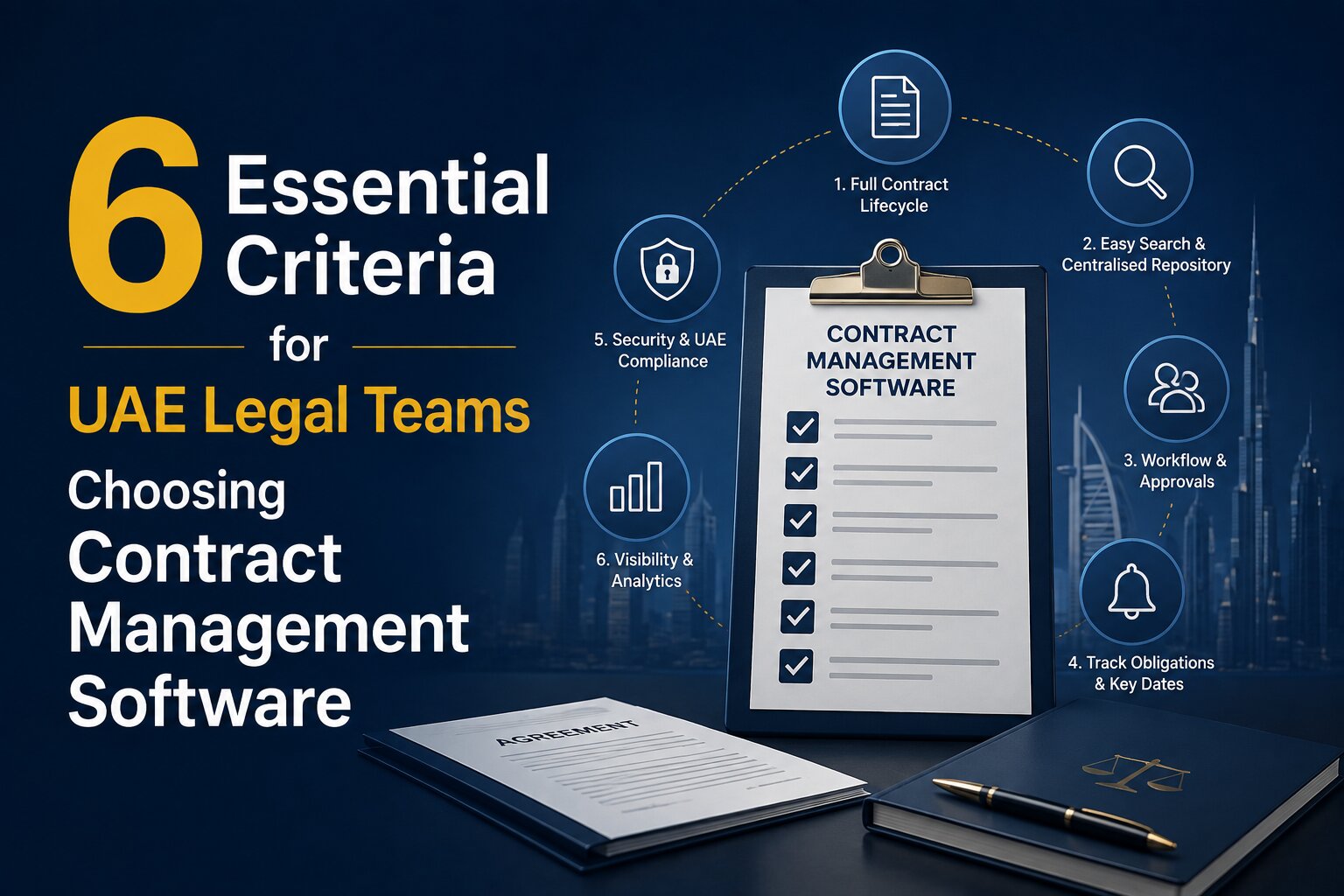
9. Questions to Ask Before Choosing Contract Management Software
Before making a final decision, businesses should ask providers questions that reflect their actual requirements. The answers should be specific enough to support a meaningful comparison.
- Contract workflows: Can the system support our contract types, review stages and approval responsibilities?
- Security: How are confidential documents protected, and can access be restricted according to roles?
- Data protection: Where is information stored, how is it handled, and what support does the provider offer for our applicable legal obligations?
- Language support: Can employees manage our Arabic and English documents effectively?
- Renewals: Can we configure reminders for renewal dates, notice periods and other important deadlines?
- Search and reporting: How easily can authorised employees locate contracts and review their status?
- Integration: Can the platform work with the tools we already use?
- Implementation: What support is available for transferring existing contracts, setting up workflows and training staff?
- Total cost: What will the system cost initially and over time?
- Practical testing: Can we test the platform using a representative contract and approval process before committing?
Whenever possible, request a demonstration based on a real business scenario. For instance, ask the provider to show how a supplier agreement moves from drafting through review, approval, signing and renewal tracking. This makes it easier to identify practical limitations that may not be obvious from a feature list.
10. Is Beveron Smart Legal Contract Suitable for Your Business?
Beveron Smart Legal Contract is worth evaluating if your organisation needs a more structured way to prepare, review, approve, sign and manage agreements. Its contract requests, templates, collaboration tools, version tracking, approval workflows, e-signatures, centralised repository and renewal alerts address several common challenges faced by corporate legal and business teams.
However, suitability depends on the organisation's specific requirements. A business managing a small number of straightforward agreements may need only a limited set of capabilities. An organisation handling large volumes of contracts across procurement, sales, legal and finance may place greater importance on workflow configuration, search, reporting and integration. The evaluation should also cover security, bilingual document handling, implementation support and the provider's contractual commitments regarding data. These areas deserve the same attention as the platform's day-to-day features.
Businesses considering Smart Legal Contract can explore Beveron's contract management solution and request a demonstration to understand how its capabilities could fit their existing processes. Preparing a short list of requirements and sample workflows beforehand will help make that discussion more useful.
Conclusion: Choose Software That Fits Your Contract Workflows
Choosing contract management software is a practical business decision, not simply a technology upgrade. The right solution should address the problems employees experience today, make contract information easier to access and help teams manage reviews, approvals and deadlines more consistently. For UAE businesses, the decision should also account for applicable data protection requirements, Arabic and English document needs, security controls, existing business tools and the total cost of implementation.
Start by reviewing your current contract process and identifying where delays, uncertainty or missed deadlines occur. Then compare available solutions against those needs, ask providers for clear answers and test the most important workflows before making a commitment. A well-chosen system should make contract management easier to follow and maintain as the business grows, while allowing employees to focus more of their time on the work that requires their attention.
Best contract management software for businesses in the UAE
Best corporate contract management software in the UAE
Best digital contract management in the UAE
If you need a free demo of the best contract management software for businesses in the UAE, please fill out the form.