Private AI for Law Firms: Why Client Data Needs a Secure AI Environment
Artificial intelligence is quickly becoming part of everyday legal work. Lawyers are using AI to summarise documents, review contracts, organise information, conduct research and handle other time-consuming tasks. But there is an important question that often gets overlooked: what happens to the client information being entered into these AI systems?
For a law firm, this is not a minor concern. A single prompt could contain a client's personal information, confidential contract terms, litigation strategy or privileged legal communication. Putting that information into an AI tool without understanding how it is stored, processed or protected can create risks that are difficult to see until something goes wrong.
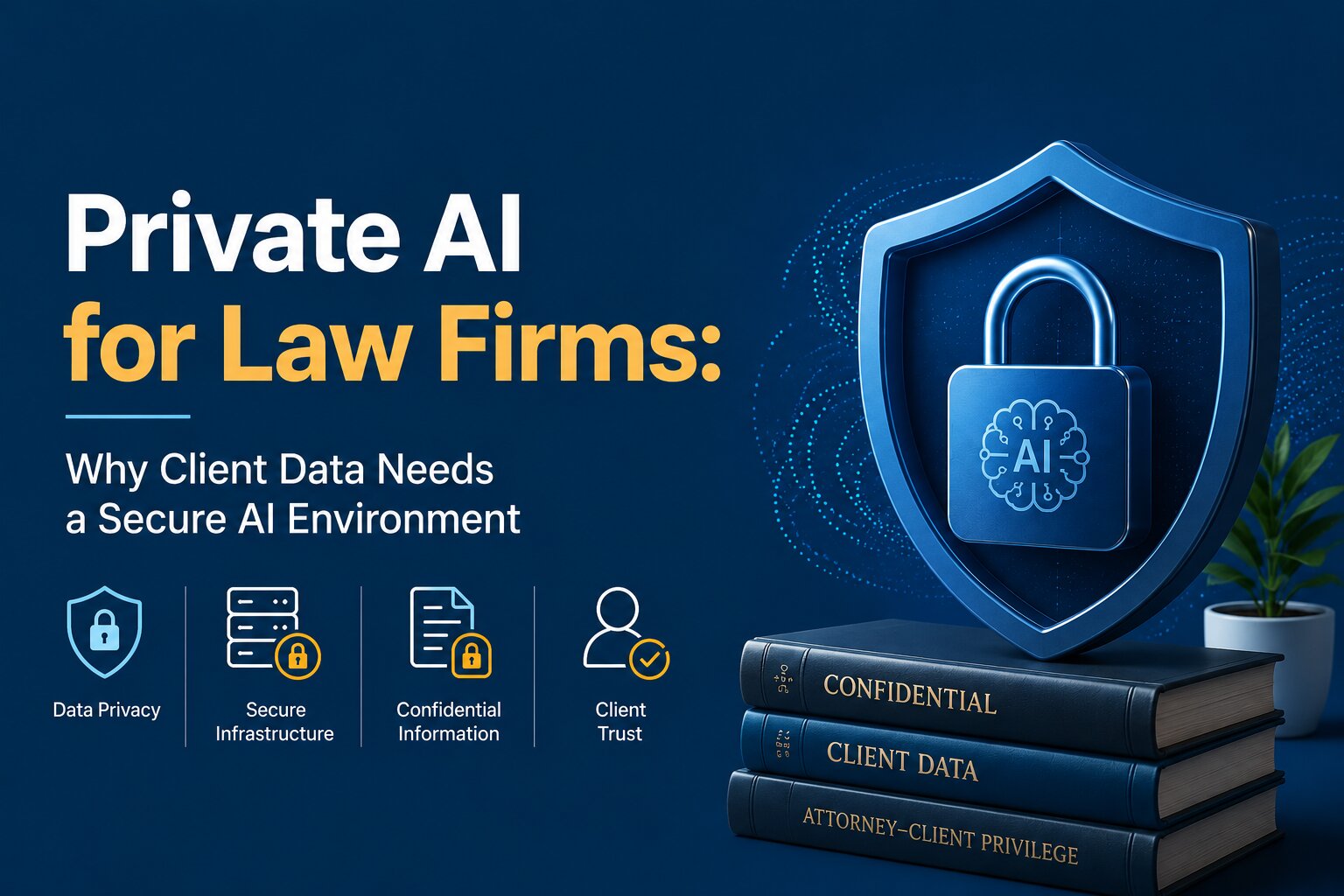
This is where private AI for law firms becomes important. Rather than treating AI simply as another productivity tool, private AI focuses on creating a more controlled environment for working with sensitive legal information.
The Rising Risk of Putting Client Information Into Public AI Tools
General-purpose AI tools can be useful for everyday tasks. However, convenience should not be confused with suitability for confidential legal work. For a closer look at the differences, see why legal teams should choose private AI over public AI.
What Happens to Information Entered Into General-Purpose AI Tools?
Different AI providers have different policies for handling user inputs. Depending on the service, account type and settings, information may be processed, stored or used in different ways. This is why lawyers should never assume that every AI tool treats information in the same manner.
For example, a lawyer might paste a lengthy contract into an AI chatbot and ask it to identify unusual clauses. Another lawyer might enter details about a dispute and ask AI to suggest possible arguments. While these actions may seem harmless, the information itself could be highly sensitive. Before using an AI service for legal work, firms need to understand its data-handling terms, retention practices, access controls and whether customer information can be used for model improvement or training.
Where Confidential and Privileged Information Can Be Exposed
Legal professionals regularly work with information that clients expect them to protect carefully. This can include:
- Client names and contact details
- Identification and financial information
- Contracts and commercial agreements
- Legal opinions and correspondence
- Litigation documents
- Case strategy
- Settlement discussions
- Confidential business information
- Information covered by professional confidentiality or privilege
The risk is not limited to a major security breach. Even an employee unintentionally sharing sensitive information with an unsuitable AI service can create a data governance problem for the firm.
Common Examples of Client Data Being Entered Into AI
Consider a lawyer who wants to save time reviewing a 60-page agreement. They upload the document to an AI tool and ask for a summary. Or perhaps a lawyer is preparing for a dispute and enters the facts of the case into an AI assistant to help organise the issues. Another employee may copy a client's email into an AI tool and ask it to draft a response.
Each activity has a legitimate business purpose. The problem is that the firm may not know enough about the environment receiving that information. The issue, therefore, is not that AI is inherently unsafe. It is whether the right AI environment is being used for the sensitivity of the information involved.
Why Law Firms Have More at Stake When AI Handles Sensitive Information
Every organisation needs to think about data security. Law firms, however, operate in an environment where confidentiality is central to the client relationship.
Confidentiality and Legal Privilege Change the Risk
Clients share sensitive information with lawyers because they expect it to be handled appropriately. Legal teams may have access to information that could cause serious commercial, financial or reputational harm if disclosed. This makes AI adoption different from simply introducing a new office productivity application.
A firm needs to consider not only whether an AI tool produces a good answer, but also whether using that tool is consistent with its professional obligations, client commitments, internal policies and applicable data protection requirements.
Cross-Border Data Makes the Picture More Complicated
The challenge can become more complex for firms operating across the UAE, GCC and other jurisdictions. Client information may pass through several systems before a lawyer sees the final result. An AI application might involve cloud infrastructure, external service providers or integrations with other platforms.
That makes questions such as where data is stored, where it is processed, who can access it and which third parties are involved particularly important. For firms handling matters across different countries, data protection requirements may also differ depending on the nature of the information and where it is being handled.
A Data Leak Can Affect More Than Security
The consequences of poor data handling can extend well beyond the technical issue itself.
A law firm could face:
- Loss of client confidence
- Damage to its reputation
- Regulatory concerns
- Contractual consequences
- Disruption to legal matters
- Financial losses
- Difficult conversations with clients
For a profession built heavily on trust, reputational damage can be particularly difficult to recover from.
So, What Does “Private AI” Actually Mean?
The term private AI can sound technical, but the basic idea is fairly simple. It means creating an AI environment where an organisation has greater control over its information, who can access it and how it is handled.
Your Firm's Data Should Not Become Someone Else's AI Training Material
One of the first questions a law firm should ask an AI provider is straightforward:
“Will our data be used to train or improve your AI models?”
The answer should be clear and supported by the provider's terms and contractual commitments. A firm should understand exactly how prompts, uploaded files, conversations and other information are treated. It should not rely solely on a general statement that a platform is “secure”.
Keeping Each Firm's and Client's Information Separate
Privacy also means keeping information properly separated. Imagine a firm has hundreds of active matters. Lawyers working on one client should not automatically have access to documents belonging to another client.
A secure legal AI environment should therefore support appropriate separation between firms, users, matters and documents. Access should be based on what a person actually needs to perform their role.
Where Can Private AI Be Deployed?
Private AI can be implemented in different ways, depending on a firm's requirements. Some organisations may use a private cloud environment. Others may prefer a hybrid approach that combines controlled infrastructure with selected cloud services. Firms with particularly strict infrastructure requirements may consider on-premise deployment.
No single deployment model fits every law firm. The important point is understanding where the AI operates and how much control the firm has over its environment.
Protecting Data While It Moves and While It Is Stored
Encryption is another basic part of protecting sensitive information.
In simple terms, encryption makes information difficult for unauthorised people to read. Firms should consider protection both when information is being transmitted between systems and when it is stored. This should form part of a wider security approach rather than being treated as a standalone solution.
What Should a Secure AI Environment for Lawyers Include?
A private AI solution should do more than place an AI model behind a login screen. Legal teams need controls that reflect how law firms actually work.
Matter-Level and Document-Level Access Controls
A lawyer may be working on several matters at the same time, each containing different levels of sensitivity. Access controls should therefore be detailed enough to restrict information according to roles, teams, matters or individual documents where appropriate.
This is particularly important for larger firms where hundreds of employees may work across different client accounts.
Clear Rules for Data Retention and Deletion
Law firms should know what happens to information after an AI interaction ends. How long are prompts retained? What happens to uploaded documents? Can conversations be deleted? Does the provider retain copies elsewhere?
These questions matter because data that no longer needs to be available should not necessarily remain accessible indefinitely. A firm's own retention requirements should also be considered when evaluating an AI provider.
Secure Integrations Without Creating New Weak Points
Connecting AI with document management, case management or other legal systems can make AI considerably more useful. But every connection introduces another point that needs to be secured.
For example, an AI system connected to a firm's document repository should have appropriate permissions rather than automatically receiving access to everything stored there. Convenience should never mean giving an AI system broader access than it actually needs.
Audit Trails, Vendor Transparency and Compliance Evidence
Trust should be supported by evidence. A law firm should be able to understand who accessed sensitive information, what actions were performed and what controls are in place. When evaluating a provider, firms should also ask for relevant security and compliance documentation and review the provider's contractual commitments around data handling.
If a vendor cannot clearly explain how client information is processed, retained and protected, that should be treated as an important warning sign.
How Law Firms Can Start Using AI Without Losing Control of Client Data
The good news is that firms do not need to abandon AI to protect confidential information. A more sensible approach is to introduce it deliberately.
First, Find Out Where Client Data Is Already Touching AI
Start with an internal review.
Look at the AI tools employees are currently using for:
- Legal research
- Document summarisation
- Contract review
- Drafting
- Meeting transcription
- Data analysis
- Internal knowledge management
The objective is simple: understand where client information is already entering AI systems. Many firms may discover that AI is already being used informally by employees before an official AI policy has been introduced.
Create an AI Usage Policy Before AI Becomes the Wild West
An internal AI policy gives employees clear boundaries. It can explain which tools are approved, what information can be entered into AI, what information must not be shared, who can use particular systems and when human review is required.
This does not have to be a complicated document. Clear rules are often more useful than a long policy that employees never read.
Ask the Right Questions Before Choosing a Legal AI Provider
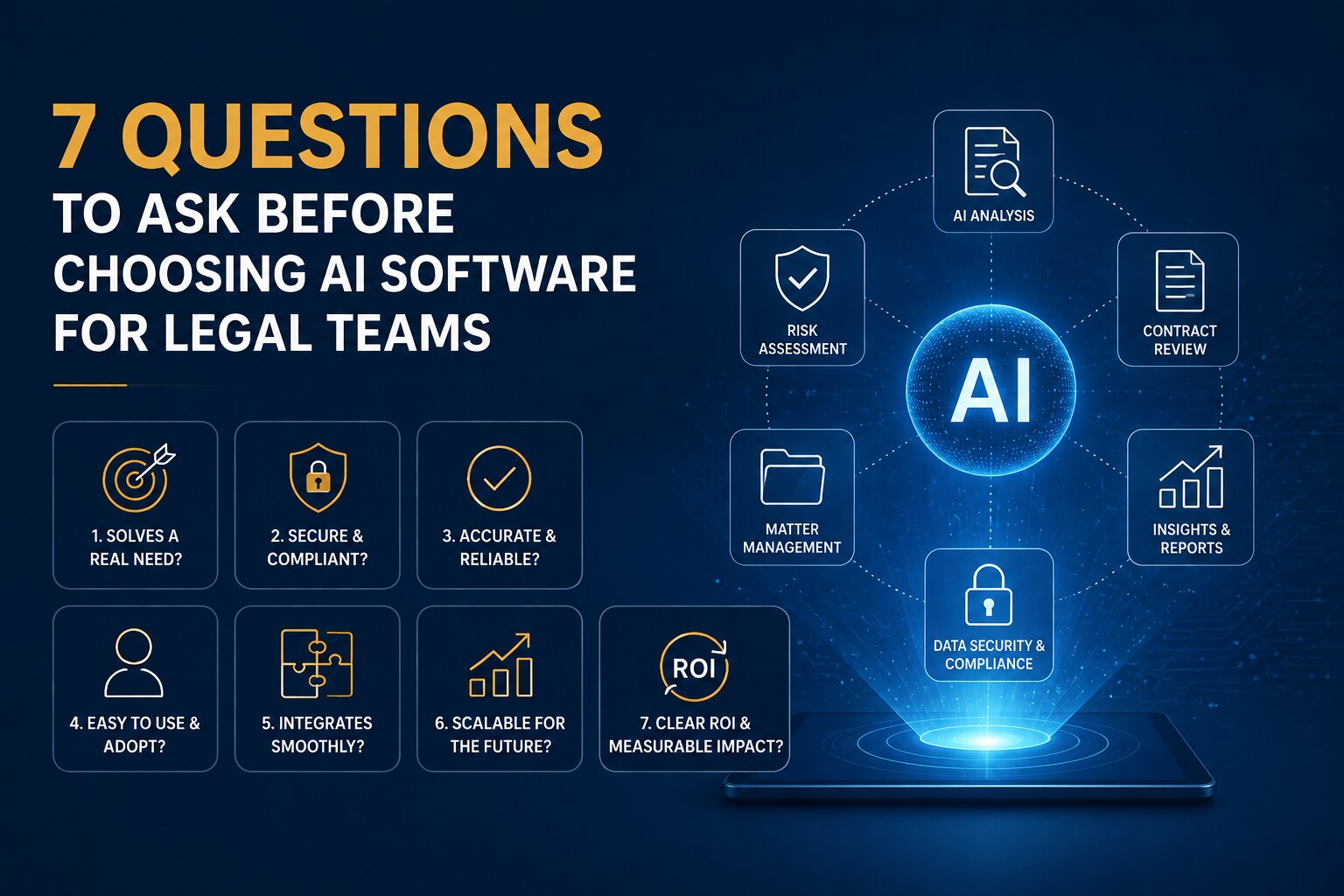
Before adopting an AI solution, legal teams should ask questions such as:
- Is our data used to train AI models?
- Where is our data stored and processed?
- Who can access it?
- How long is information retained?
- Can the firm delete its information?
- Is client data separated between customers?
- What encryption is used?
- Are user activities logged?
- What security and compliance documentation is available?
- How are integrations with other systems controlled?
These questions can help firms move beyond marketing claims and understand how an AI platform actually handles sensitive information.
How Beveron Approaches Private AI for Law Firms
As AI becomes more common in legal operations, law firms need technology that recognises the sensitivity of the information they handle. Beveron Technologies, a legal technology provider in the UAE, is developing private AI solutions for law firms with this need in mind.
The focus is on giving legal teams a more controlled environment for using AI alongside sensitive legal information, rather than treating AI as a standalone chatbot. This approach fits into the wider shift towards secure digital legal operations, where confidentiality, controlled access and responsible data handling are considered from the beginning.
For UAE law firms exploring AI for legal research, document work and everyday operations, private AI can offer a more considered path towards adoption. Beveron's wider legal technology ecosystem also reflects the growing need for technology that fits the practical requirements of modern legal teams while keeping security and control central to the conversation.
Frequently Asked Questions
Is It Safe to Use Tools Like ChatGPT for Legal Work?
It depends on what information is being entered, which service and account configuration is being used, and how the provider handles that information. Law firms should avoid assuming that a general-purpose AI tool is automatically appropriate for confidential client information. Sensitive data should only be entered when the firm's policies and the provider's data-handling practices support that use.
What Is a Private AI Environment in Practical Terms?
A private AI environment is an AI setup that gives an organisation greater control over its data, access, storage and usage. For a law firm, this can mean keeping sensitive client and matter information within a controlled environment rather than treating a public AI service as a general destination for confidential information.
How Can a Law Firm Verify an AI Vendor's Data-Handling Practices?
Start by reviewing the vendor's data-use, retention and deletion policies. Ask where information is stored and processed, whether it is used for model training, who can access it and whether customer data is separated. Firms should also review security documentation, contractual terms, audit capabilities and information about third-party service providers.
Conclusion: Make AI Adoption a Security Decision, Too
AI can give law firms a practical way to reduce repetitive work and help lawyers spend more time on higher-value tasks. But the benefits should not come at the expense of client confidentiality. The right starting point is not simply choosing the most powerful AI tool. It is understanding where sensitive information goes, who can access it and what happens to it after it is used.
For law firms, private AI provides a way to approach AI adoption with greater control. By reviewing existing AI usage, setting clear internal rules and carefully assessing providers, firms can make AI part of their operations without treating data security as an afterthought. Exploring a secure private AI environment for legal teams can also help firms understand how AI can be deployed with stronger control over sensitive legal information.
A useful next step is to assess your firm's current AI usage and identify where confidential client information may already be entering AI systems. A Private AI Readiness Checklist for Law Firms can help teams work through the key questions before expanding their use of AI.
Ready to adopt AI without compromising client confidentiality?
Explore Beveron’s secure private AI solution for legal teams.
Best private AI solutions for law firms in the UAE
Best secure AI for law firms in the UAE
Best legal AI solutions for lawyers in the UAE
If you need a free demo of the best debt collection management software for finance teams in the UAE, please fill out the form.