Five Decisions That Shape Whether Legal AI Becomes Useful or Just Another Tool
Legal teams no longer need to ask whether artificial intelligence has a place in legal work. AI can already support research, document review, drafting, summarisation and many other activities that take up a significant part of a lawyer's working day. The more difficult question is what happens after the technology becomes available.
A legal team can introduce an AI tool and still find that lawyers use it inconsistently, work remains spread across disconnected systems, sensitive information is difficult to manage, or every AI-generated output requires so much checking that the expected time savings disappear. Having access to AI does not necessarily mean that AI has become useful.
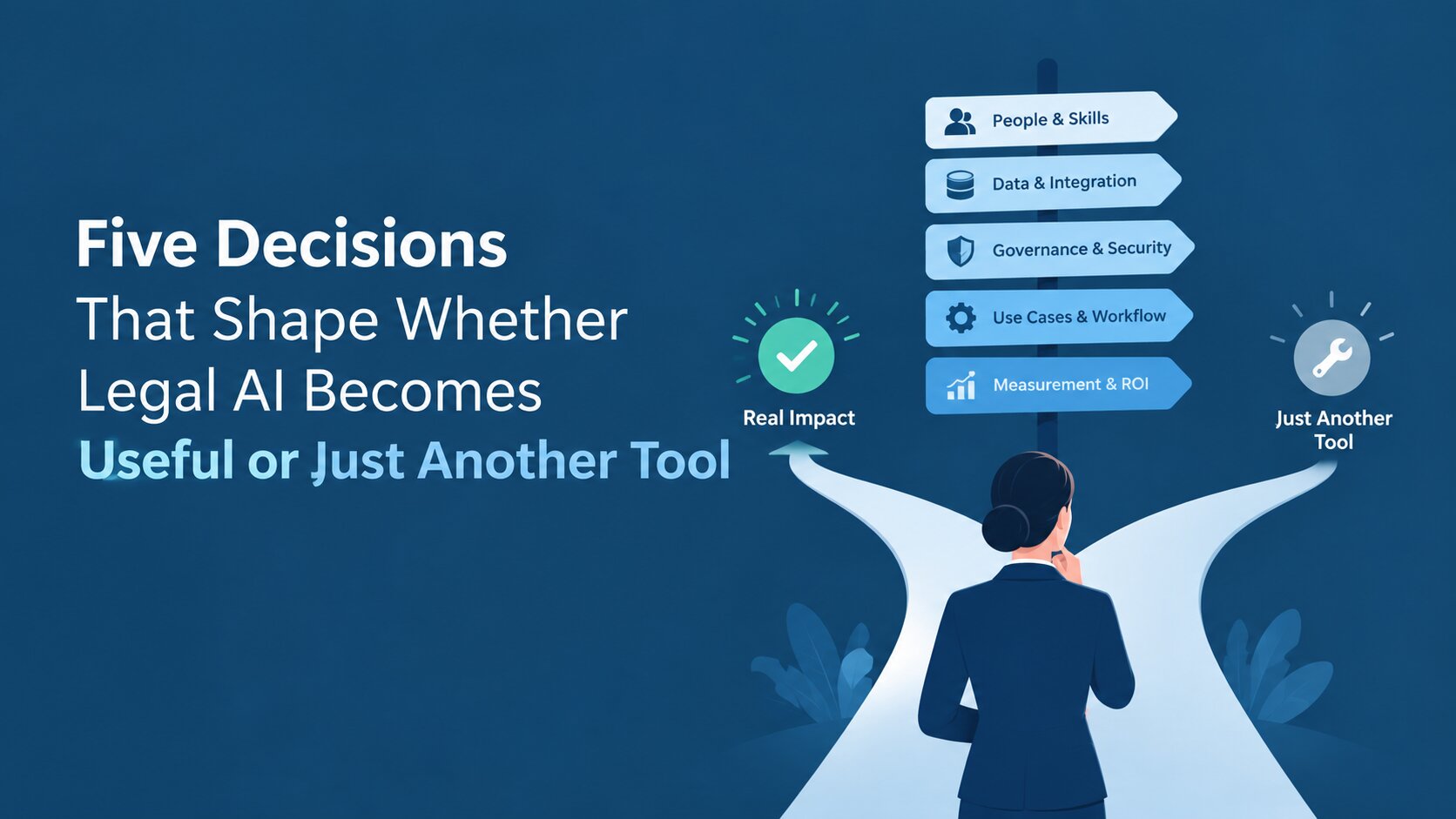
What makes the difference is how the technology is introduced into legal work. Where should it be used? What information should it be allowed to access? Where should human judgement remain essential? How should it fit into existing workflows? And how will the team know whether it is actually creating value?
These questions shape whether AI becomes part of everyday legal work or simply becomes another tool sitting alongside the systems lawyers already use.
The Hard Part Isn't Getting AI Into the Legal Team
AI adoption is often treated as a technology exercise. A legal team evaluates platforms, compares capabilities and chooses a solution. But selecting the technology is only one part of the process.
The more important work begins when the technology meets the way the legal team already operates. A research assistant may produce useful results, but that value changes if lawyers have to move information between several systems before they can use it. A document-review tool may identify relevant clauses quickly, but the benefit is smaller if the output has nowhere to go within the wider matter workflow.
This is why legal AI adoption should be considered an operating change as much as a technology change. The objective is not simply to give lawyers access to AI. It is to determine where AI can remove unnecessary effort, support better decisions and fit within the controls already required for legal work.
That starts with understanding where AI can make a meaningful contribution.
1. Start With the Work, Not the Technology
Not every legal task needs AI, and not every task benefits from the same level of automation. A useful starting point is to look at where legal professionals are spending time and identify work that is repetitive, information-heavy or structured enough for AI to provide meaningful assistance.
Consider a lawyer reviewing a large collection of documents before a matter progresses. Finding relevant information, summarising documents or extracting recurring terms can consume considerable time without necessarily requiring the lawyer to make the final legal judgement at every step. These are areas where AI can potentially reduce repetitive effort while leaving responsibility for interpretation and decision-making with the legal professional.
The same principle can apply to contract analysis, matter summaries, internal knowledge searches and other information-heavy activities. But the most technically impressive use case is not automatically the most valuable one. The better question is whether introducing AI improves a part of the legal workflow that genuinely needs improvement.
This distinction matters because organisations can easily end up using AI for tasks simply because the technology can perform them. That can create activity without creating meaningful value. A legal team may generate more summaries, drafts or analyses without actually reducing the time lawyers spend managing their work.
The strongest use cases are therefore likely to be those where AI addresses a clear source of friction in the way legal work is performed.
Once the right areas have been identified, attention turns to the information that sits behind them.
2. Give AI the Right Information—and the Right Boundaries
Legal work depends on information that is often confidential, commercially sensitive or subject to strict access controls. Matter files, contracts, client communications, internal advice and business information cannot simply be made available to every system because doing so makes an AI workflow easier.
At the same time, restricting access too heavily can make AI far less useful. A system that cannot reach the information required to understand a matter may produce limited or incomplete results. Legal teams therefore have to find a practical balance between usefulness and control. That balance becomes harder when legal information is fragmented across systems, inconsistent in structure or difficult to locate. The hidden data challenge behind AI adoption in legal departments is therefore an important part of understanding AI readiness.
The important question is not simply whether an AI system is secure. It is whether access to information reflects the way the organisation actually works. A lawyer working on one matter may need access to information that another employee should never see. A corporate legal team may need AI to work with internal contracts and policies while keeping unrelated business information outside the workflow.
This makes permissions part of AI design rather than an administrative detail added later.
The same thinking applies to how information is stored, processed and retained. Legal teams need to understand where sensitive information goes, who can access it, how it is protected and what happens to it after an AI task is completed.
For organisations handling highly sensitive legal work, these questions can influence whether AI is suitable for a particular workflow in the first place.
The goal is not to prevent AI from accessing useful information. It is to ensure that the information available to AI is appropriate for the work, the person and the purpose.
That brings the focus to another important boundary: what happens when AI produces an answer?
3. Keep Professional Judgement at the Right Point
One of the biggest differences between using AI for assistance and using it as part of a legal workflow is the question of responsibility. An AI system may be able to summarise a document, identify a clause, suggest language or organise information. But producing an output and taking responsibility for what happens next are two different things.
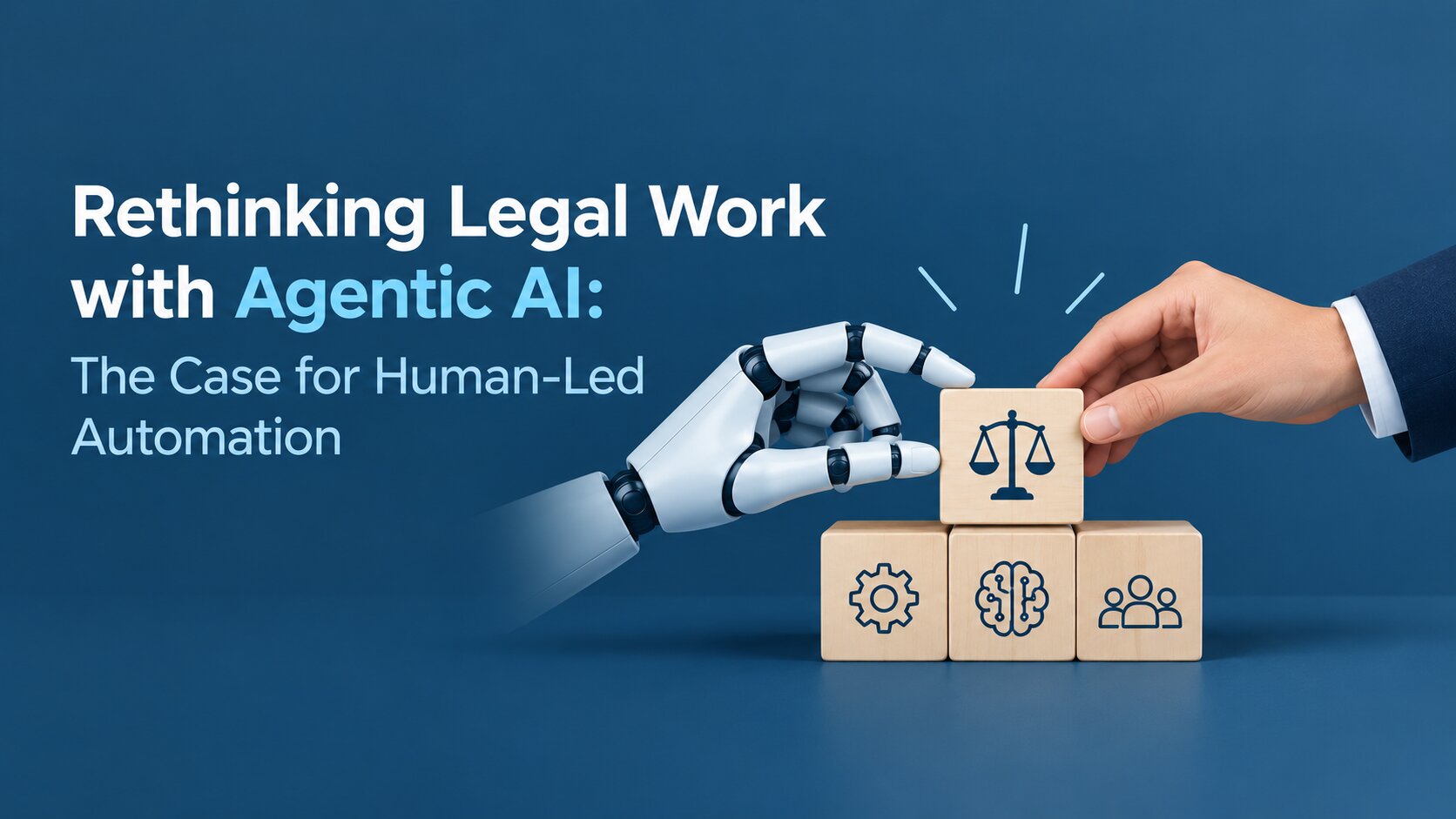
A lawyer may use AI to prepare a first draft, for example, but the decision to rely on that draft remains a professional judgement. An AI system may identify a potentially important contract provision, but someone still needs to determine whether that provision actually matters in the context of the agreement and the client's circumstances. This is why human oversight should not be treated as a final checkbox at the end of an AI process. It should be built into the workflow from the beginning.
This broader question of responsible use also connects with the ethical considerations of using AI in legal services, particularly around transparency, accountability, privacy and the role of human expertise.
Some activities may be appropriate for AI to handle with limited intervention. Others may require review before the work progresses, particularly when the output could affect a client, a legal position, a contractual obligation or a significant business decision. The level of human involvement should therefore reflect the consequences of the action. A research summary and a client communication may both involve AI, but they do not carry the same level of responsibility. This also changes how legal teams should think about AI performance. A system should not be judged only by how quickly it produces an answer. The quality of the workflow also depends on whether lawyers can understand, review and appropriately act on that output.
AI can support legal judgement. It should not quietly replace the point at which that judgement is required. But even with appropriate review in place, another problem can remain: the AI workflow may sit outside the way legal work is actually managed.
4. Make AI Part of the Workflow, Not Another Destination
An AI tool can produce an impressive result and still create additional work around it. Imagine a lawyer asking an AI system to review a contract and identify important clauses. The system completes the task in minutes. But what happens next? Where is the result stored? Does it become part of the relevant matter record? Who needs to review it? Can another lawyer find it later? Does the finding trigger another task or follow-up?
If the lawyer has to copy information from the AI system into a matter-management platform, email it to colleagues and separately update a spreadsheet, the original efficiency gain may be reduced by everything that happens afterwards. This is why AI should be evaluated as part of a workflow rather than as an isolated capability.
Legal work rarely consists of one action. A matter may involve documents, deadlines, communications, hearings, approvals, external counsel and reporting. A contract may move from drafting to review, approval, signature, storage and ongoing monitoring. A compliance issue may require information gathering, review, action and reporting.
AI becomes more valuable when it fits into these processes rather than creating another destination that lawyers have to manage. The important question is therefore not simply whether AI can perform a particular task. It is whether it can perform that task in a way that makes the overall workflow better.
That distinction becomes increasingly important as legal teams move from experimenting with individual AI tools towards using AI across larger areas of their operations. And once AI becomes part of a workflow, the organisation needs a way to determine whether the change is actually producing the expected result.
5. Define What "Useful" Actually Means
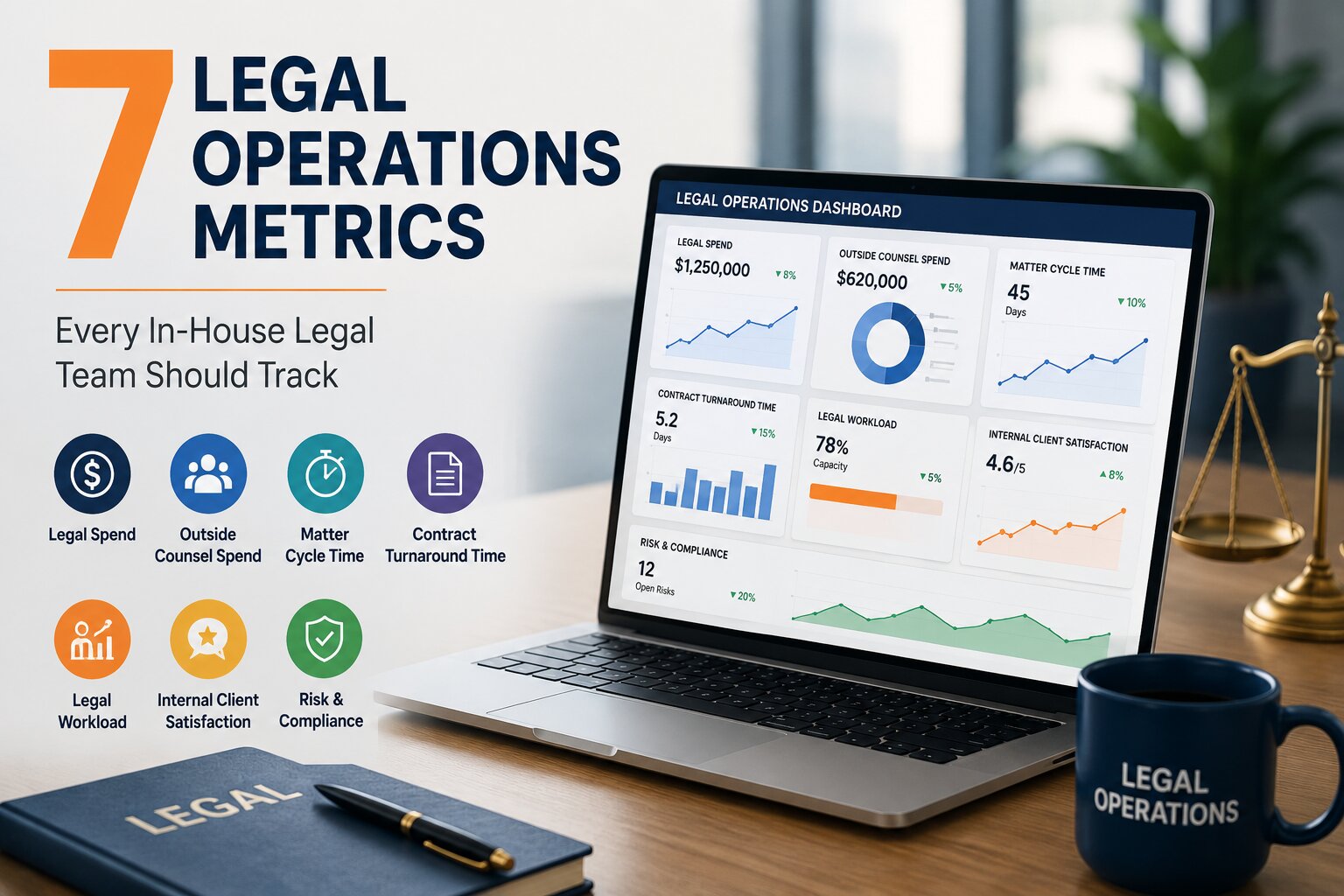
The word "efficiency" appears frequently in discussions about legal AI, but it can mean very different things. For one legal team, useful AI might mean reducing the time spent reviewing large document sets. For another, it could mean helping lawyers find matter information more quickly. A corporate legal department may value better visibility across contracts, litigation and compliance work, while a law firm may care more about reducing administrative work around matters and client communication.
Without defining the intended outcome, it becomes difficult to know whether an AI initiative is succeeding.
Expected improvements might include faster turnaround, less repetitive work, easier access to information, fewer manual handoffs, or more time for complex legal work. The measure will depend on the workflow and the organisation. What matters is connecting AI adoption to an actual change in legal work.
For a broader view of how AI automation is reshaping corporate legal functions, the strategic role of AI automation in corporate legal management provides further context.
This also helps prevent a common problem: measuring adoption rather than value.
The fact that lawyers are using an AI tool does not necessarily mean the organisation is benefiting from it. A high number of AI interactions can simply mean that people are experimenting with the technology. The more meaningful question is whether the work itself has improved. That is what turns AI adoption from a technology project into an operational improvement.
The Real Measure of Legal AI Adoption
These five areas are closely connected. A legal team needs to identify where AI can genuinely help, give it access to appropriate information, preserve human judgement where it matters, connect it to the wider workflow and establish a meaningful way to measure its contribution. None of this can be determined entirely by looking at an AI platform's feature list. It requires an understanding of how legal work is actually performed.
That is why two organisations can introduce similar AI technology and experience very different results. One may have clearly defined use cases, appropriate information boundaries, human review points and connected workflows. The other may simply give employees access to an AI tool and expect value to emerge from usage. The technology may be similar. The way it is incorporated into legal work is not.
A legal team does not become AI-enabled simply because its lawyers have access to an AI system. It becomes AI-enabled when AI is deliberately incorporated into the way legal work is performed, reviewed and managed.
Turning AI Into Practical Legal Workflows
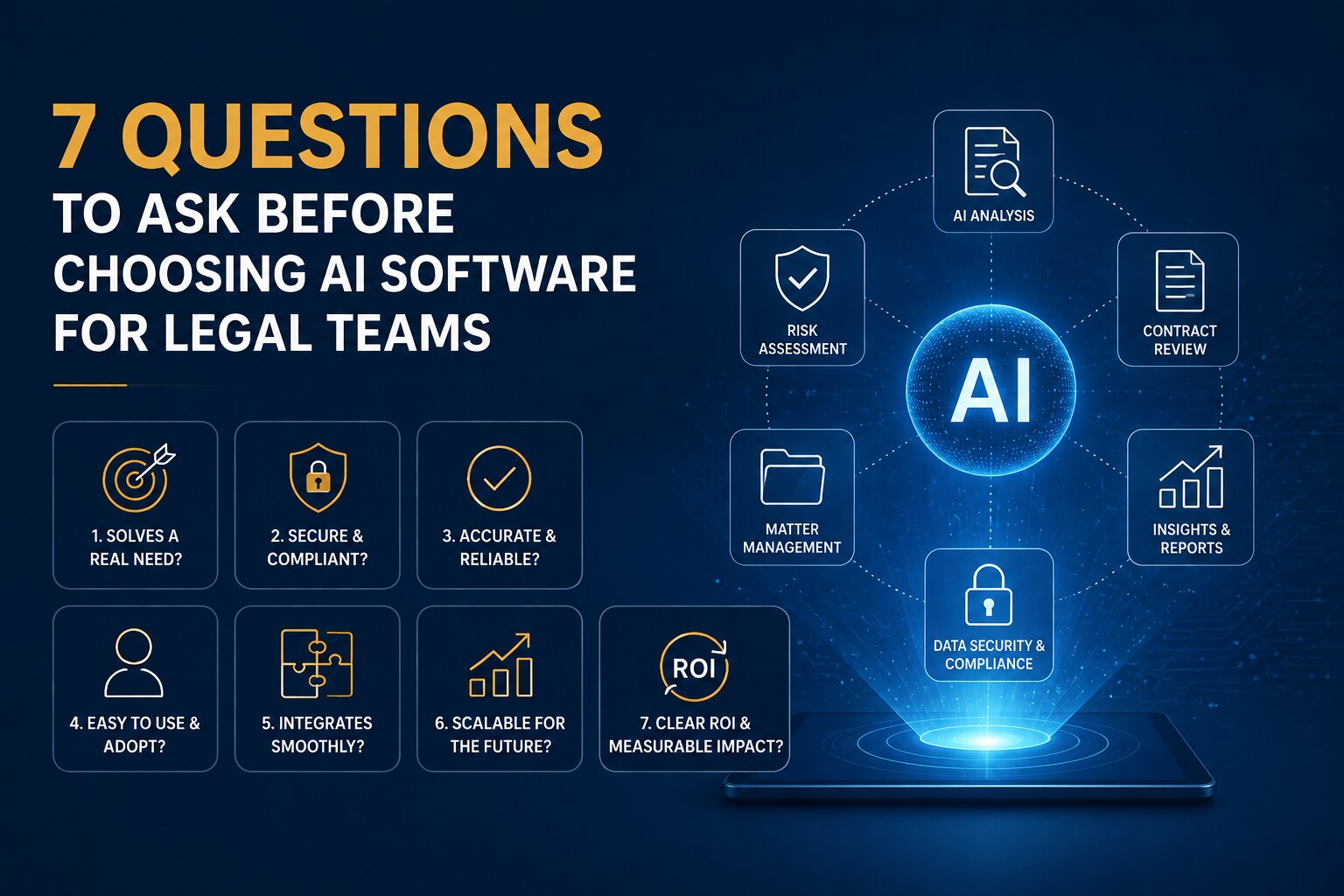
For legal teams, this changes how they should evaluate AI. Instead of asking only whether a platform has the latest AI capabilities, teams can look at how those capabilities fit into their existing legal operations and technology environment.
Can information remain within appropriate access boundaries?
Can AI support repetitive work without removing necessary human review?
Can its results become part of an organised matter or contract workflow?
Can legal leaders see whether the technology is actually improving the work?
These questions become increasingly important as legal departments and law firms move beyond isolated AI experiments.
Platforms such as Beveron's legal technology solutions can support this broader approach by bringing AI into structured legal workflows rather than treating it as a standalone capability. Depending on the use case, this can include managing matters, contracts, compliance activities and other legal processes within environments where information, tasks and oversight remain connected.
The value lies not simply in adding AI to a workflow but in creating an environment where AI can be used responsibly and where its contribution can be carried through to the rest of the legal process.
From AI Access to AI That Actually Works
The next stage of legal AI adoption is unlikely to be determined simply by who has access to the most capable technology. It will depend increasingly on how thoughtfully legal teams integrate AI into the work they already do. The technology itself is only one part of that equation. The surrounding workflow, information boundaries, review process and measures of success determine what happens after the tool is introduced.
When AI is connected to a genuine legal-work problem, given appropriate boundaries, supported by meaningful human judgement and integrated into the wider workflow, it has a clearer opportunity to become part of everyday legal work rather than another technology lawyers are expected to learn.
For legal teams evaluating their next step, the question may therefore be less about adopting more AI and more about finding where it can make legal work meaningfully better.
Ready to bring AI into a more connected legal workflow?
Explore Beveron’s legal technology solutions to see how AI, matter management, contracts, compliance and legal operations can work together in one structured environment.
Best legal AI adoption for law firms in the UAE
Best AI for legal teams in the UAE
Best AI workflow for legal teams in the UAE
If you need a free demo of the best legal AI adoption for law firms in the UAE, please fill out the form.