How Can Kenyan Law Firms Manage Cases, Documents and Client Communication in One Place?

For a law firm, a single matter can generate a surprising amount of information. Client instructions may sit in email, case documents in shared folders, hearing dates in a calendar, follow-ups in a spreadsheet and updates in a lawyer's notes. Each tool may work perfectly well on its own. The difficulty begins when someone needs to see the full picture.
A lawyer may remember that a document was received but not where it was saved. An important client instruction may be buried in an old email thread. A colleague taking over a matter may have to search through several systems before understanding what has already happened. The problem is not necessarily a lack of technology. It is that important information is often separated from the matter it belongs to.
This is where legal case management software can make a practical difference for Kenyan law firms. Instead of managing cases, documents and client communication as disconnected activities, firms can organise them around the matter itself. The real question is whether that approach can make everyday legal work easier to manage, easier to hand over and easier to act on.
Why Managing a Legal Matter Across Separate Systems Becomes Difficult
Most law firms already have ways of managing information. Email handles communication. Shared drives or cloud folders hold documents. Calendars track hearings and deadlines. Spreadsheets may be used for matter lists, follow-ups or reporting. The problem appears when these tools do not share the same context.
Imagine a lawyer preparing for an upcoming hearing. They may need to check the matter details, find the latest pleadings, review correspondence with the client, confirm previous actions and identify what needs to happen next. If that information is spread across several locations, time is spent finding and verifying information before the legal work itself can begin.
As the firm grows, this becomes harder to manage. More lawyers mean more matters, documents and communications. Information that was easy to remember in a small team becomes increasingly dependent on individual habits. This can also make handovers difficult. If one lawyer is the person who knows where the latest documents, instructions and updates are kept, another team member may struggle to take over the matter.
The role of case management software, therefore, is not necessarily to replace every tool a firm uses. It is to provide a structured record that improves matter tracking and case oversight.
What Should a Single Matter Record Actually Contain?
A useful matter management system for lawyers should give a lawyer enough information to understand the case without reconstructing its history from different sources. At a basic level, that includes the client, matter details, responsible lawyer and current status. But those details only become useful when they are considered alongside the activity surrounding the case. Documents, deadlines, hearings, correspondence, tasks and follow-ups all contribute to the matter's current position.
For example, when reviewing a litigation matter, a lawyer should be able to move from the case details to the relevant documents, upcoming hearings and outstanding actions without having to start a separate search each time.
This creates an important distinction between storing information and managing a matter.
A digital case file may tell a lawyer what exists. A structured matter record should also make it easier to understand what has happened and what requires attention. That is why firms should look beyond the number of features offered by legal case management software. What matters is whether those capabilities support the firm's actual way of working.
How Can Law Firms Keep Documents Connected to the Matter?
Documents are often where case information becomes particularly difficult to manage. A single matter may involve pleadings, agreements, evidence, correspondence, identification documents, court-related files and material received from clients. Over time, multiple versions can appear, and several people may need access to the same information.
When these files are kept separately, lawyers may have to rely on folder structures, file names or memory to locate the right document. That can become increasingly inefficient as the firm's document volume grows. A better approach is to make the matter the starting point. Rather than asking, “Which folder contains this document?”, the lawyer can begin with the case and access the documents associated with it.
Search and structured organisation become particularly important here. Lawyers should be able to retrieve relevant material quickly while retaining enough information to understand its relationship to the matter.
Access is equally important.
Kenyan law firms handle confidential client information, and the Law Society of Kenya's professional conduct guidance recognises an advocate's duty to safeguard client information and protect electronically stored data. That means document management should also account for who can access particular matter information and how sensitive records are handled.
How Should Client Communication Fit Into Case Management?
Client communication creates another common source of fragmentation. A client may send an instruction by email, provide a document through another channel and then call the lawyer for an update. The lawyer may respond, request further information and need to follow up later. When these interactions remain tied to individual inboxes or personal notes, important parts of the matter's history can become difficult for others to access.
Keeping relevant communication associated with the matter gives the team a clearer record of what the client has said, provided or requested. This becomes particularly valuable during handovers. If a lawyer is unavailable, another member of the team can review the matter and understand the relevant client history before responding.
It also makes follow-up easier to manage. A client instruction should not end with an email sitting in an inbox. If it requires a document review, additional information or another response, that next action should be visible to the person responsible for it. The goal is not to eliminate email or force every conversation into one channel. It is to prevent important client information from becoming isolated from the legal work it relates to.
What Changes When the Matter Becomes the Centre of the Process?
The practical benefit of bringing these elements together is not simply that there are fewer places to look. That can also reduce the time lawyers spend searching for information, a concern closely connected to time management for lawyers. It is that the lawyer has a clearer view of the matter. Instead of moving between a case spreadsheet, document folder, email inbox and calendar, the lawyer can start with the matter and work outward to the information required. That can make a difference when a partner wants a quick update, when a lawyer takes over a colleague's workload or when an administrator needs to identify outstanding actions.
It also creates greater continuity. The progress of a matter becomes less dependent on an individual's memory or filing habits. For a growing law firm, that consistency can be more valuable than simply having another digital repository.
What Should Kenyan Law Firms Consider Before Choosing Case Management Software?
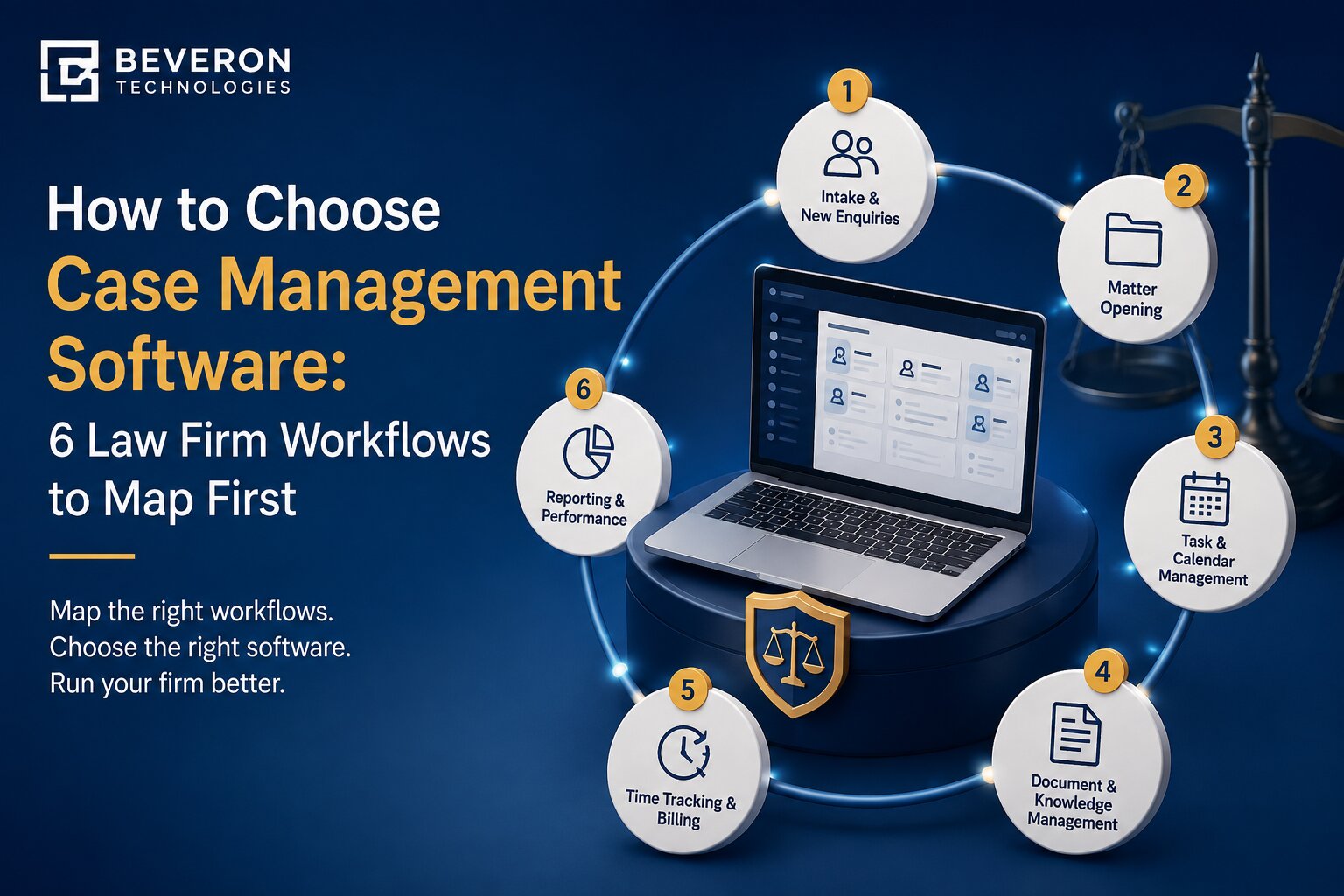
Choosing legal case management software should begin with the firm's actual processes rather than a long list of features. Start by mapping how a matter moves through the firm.
How does a new enquiry become a client? How are matters assigned?
Where are documents stored?
How are hearings and deadlines monitored? How are client updates handled?
How are follow-ups recorded? What information does management need for reporting?
These questions reveal where the current process works and where unnecessary manual effort or information gaps appear. The software can then be evaluated against those requirements.
A platform may have extensive functionality, but if lawyers have to create duplicate records or repeatedly transfer information between different areas, it can add administration rather than reduce it. Data protection and access controls also deserve careful attention. Kenya's Office of the Data Protection Commissioner oversees compliance with the Data Protection Act 2019 and regulates the processing of personal data.
For law firms, this makes questions about permissions, data handling and security part of the initial technology evaluation.
The firm should also consider future needs. A system that works for a small team should remain practical as the firm takes on more matters, hires additional lawyers or expands into new practice areas. Most importantly, lawyers need to be able to use the system without feeling that it creates another layer of administrative work.
Where Does Legal Case Management Software Fit?
This is where a platform such as Beveron's Smart Lawyer Office can become relevant. Smart Lawyer Office brings key law-firm activities into a structured environment, including matter management, documents, hearings, client interactions, follow-ups and related activities. For a Kenyan law firm, the value is not simply having another place to save information. It is having a consistent way to manage the information and actions surrounding each matter.
This can reduce reliance on scattered spreadsheets, folders and individual records while giving lawyers and managers a clearer view of ongoing work. The right case management system should adapt to the firm's legal processes rather than requiring lawyers to create an entirely new way of working around the software. For firms looking at the wider role of legal technology for law firms, this approach also shows how case management can fit into broader digital legal operations.
A Practical Test Before Choosing a System
Before evaluating platforms, ask four straightforward questions.
Can we find it?
Can lawyers locate the relevant matter, document or client information without searching through several systems?
Can we understand it?
Does the information retain enough context to show what has happened and where the matter stands?
Can we act on it?
Can important information lead naturally to the right task, follow-up, deadline or next step?
Can we protect it?
Does the system provide appropriate controls for confidential and personal information?
These questions provide a more useful starting point than simply comparing feature lists.
From Scattered Information to Better Matter Management
For Kenyan law firms, the challenge is not simply the volume of information they handle. It is the effort required to keep that information organised and accessible throughout the life of a matter. Cases, documents and client communication are closely connected in practice. When lawyers can manage those elements through a structured matter record, they spend less time searching for information and have a clearer understanding of what needs attention.
That is what legal case management software should ultimately deliver: not just digital storage, but a more reliable way to manage legal work.
If your Kenyan law firm is still managing matters across email, spreadsheets and disconnected document folders, explore Beveron Smart Lawyer Office to see how your team can bring matter management, documents, hearings and client communication into one structured environment.
Best case management system for law firms in Kenya
Best legal practice management software in Kenya
Best law firm case management software in Kenya
If you need a free demo of the best case management system for law firms in Kenya, please fill out the form.