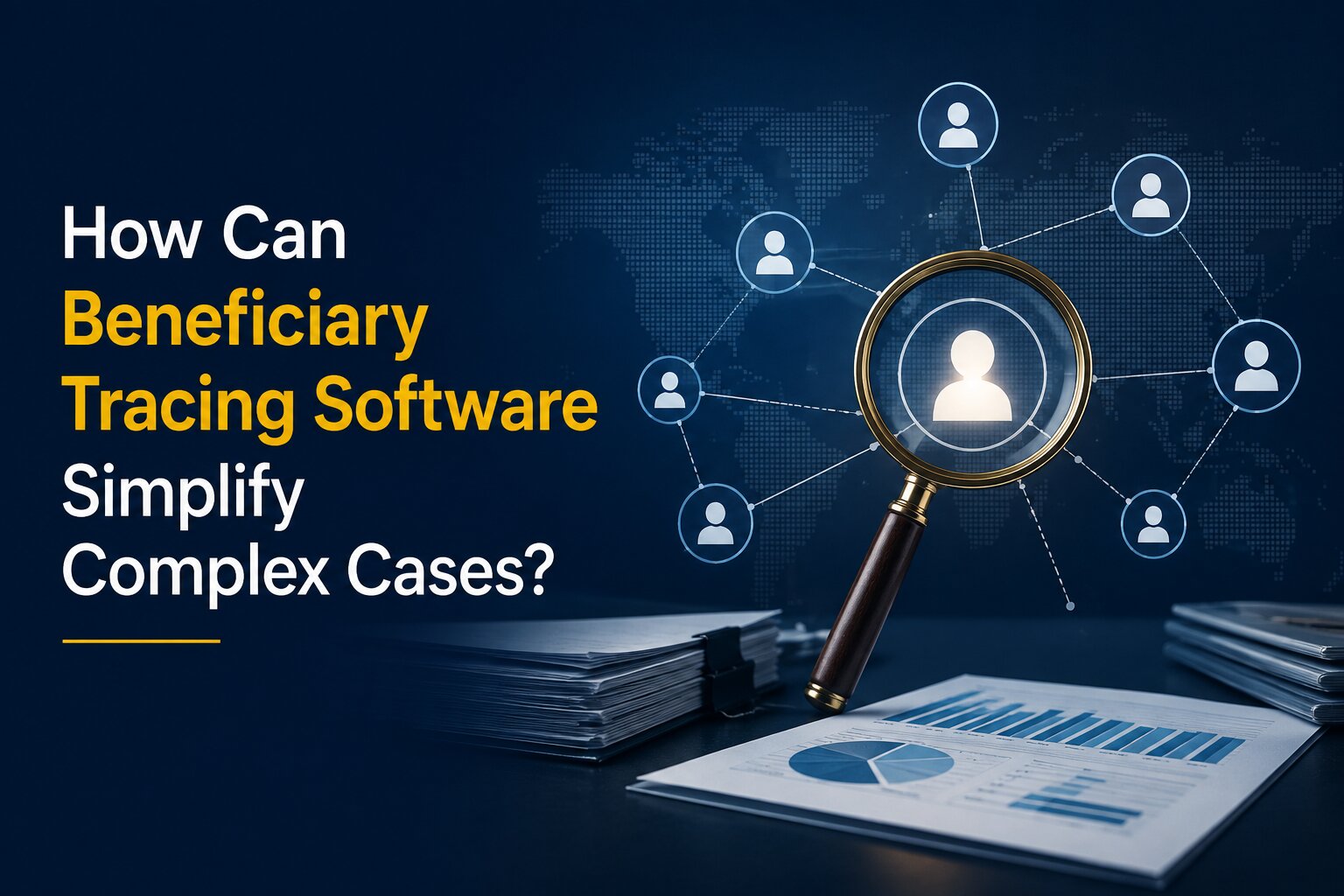
How Can Beneficiary Tracing Software Simplify Complex Cases?
Beneficiary tracing can look straightforward at first: find the right person, establish contact, verify their details, collect the required documents, and move the case towards resolution. In practice, however, each of these steps can involve several pieces of information, repeated follow-ups, and decisions that need to be recorded properly.
For banks, insurers, fund administrators, pension and provident funds, government programmes, and tracing agencies, the challenge becomes even greater when hundreds or thousands of cases are being handled at the same time.
A phone number may no longer be valid. An address may be outdated. A potential beneficiary may need to provide several documents before a claim can progress. Meanwhile, the team still needs to know what has already been checked, who contacted the beneficiary, what information was verified, and what needs to happen next.
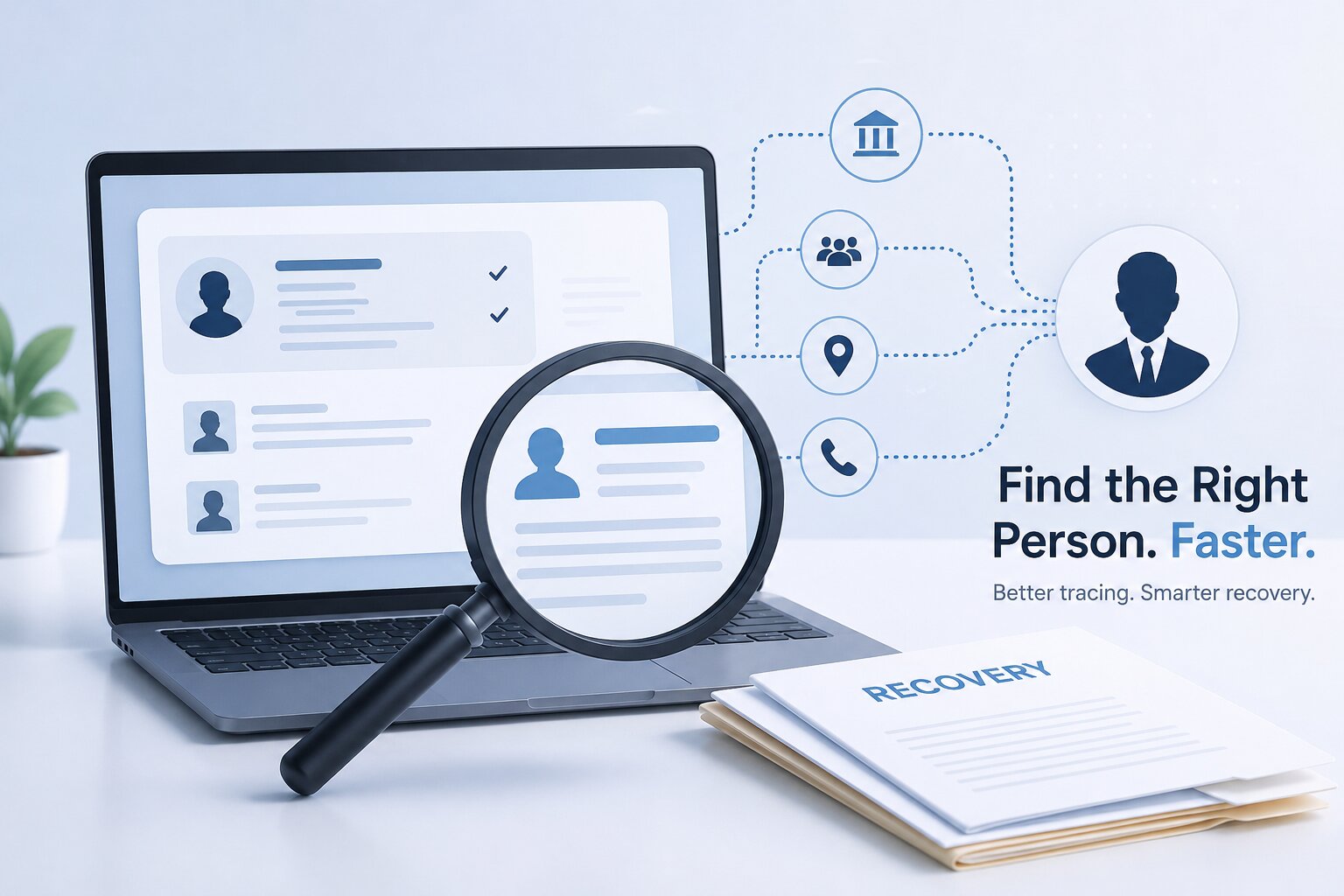
This is where beneficiary tracing software can provide more than a place to store contact details. A well-structured beneficiary tracing system can bring tracing, communication, verification, document collection, follow-ups, and resolution into one workflow.
What Makes Beneficiary Cases Difficult to Resolve?
The difficulty in beneficiary tracing is rarely just finding a name or contact number. A case often becomes complicated because information is incomplete, different records need to be considered, and several activities have to happen before the case can be closed.
Incomplete or outdated information
Beneficiary records may contain information that is several years old. A mobile number may have changed, an email address may no longer be active, or an address may not reflect where the person currently lives. Teams may then need to work with the information already available while looking for additional authorised sources that can help fill the gaps. This makes beneficiary identification an ongoing process rather than a single database search.
Information can become fragmented
A tracing case can involve personal details, identification information, contact attempts, related persons, documents, verification results, and previous correspondence. When these details are spread across spreadsheets, emails, shared folders, and separate systems, it can be difficult for an agent to see the full history of a case before deciding what to do next.
A centralised beneficiary record can help bring these details together. Beveron's platform, for example, provides a Beneficiary 360 profile covering identification, contact details, employment, related persons, trace cases, communication history, verification, documents, follow-ups, and resolution history.
Finding someone is not the same as resolving the case
This distinction is important. A tracing team may find a possible phone number or address, but that does not necessarily mean the case is ready for resolution. The person's identity may still need to be verified. Supporting documents may be required. The relationship between the person and the beneficiary record may need to be established.
In other words, a successful trace is only one stage of the process. A beneficiary tracing system should therefore support the journey beyond identification and help teams track what remains outstanding.
Follow-ups can become difficult to manage
Consider a case where a beneficiary has been contacted but has not yet submitted the required documents. Someone needs to remember when to follow up, what was requested, and whether the case has moved forward. When teams manage large volumes manually, these small activities can easily become difficult to track consistently.
Automated reminders, follow-up dates, escalations, and status tracking can help keep cases moving without relying entirely on individual memory. Beveron's workflow includes configurable reminders, escalations, SLA alerts, re-contact schedules, and supervisor notifications.
Where Can Beneficiary Tracing Software Reduce Manual Work?
The value of beneficiary tracing software becomes clearer when it is viewed through the actual case journey. Instead of treating tracing as a standalone search, organisations can manage it as a structured process: find, contact, verify, collect, resolve, and report.
Centralising beneficiary information
A beneficiary management system can give tracing teams one place to view the information associated with a case. This can include the original information held by the organisation, newly discovered contact details, communication history, verification results, documents, follow-ups, and resolution activity. The benefit is not simply having more information. It is having the information connected to the right case and available when the next action needs to be taken.
For example, if a tracing agent discovers a new mobile number, the system can retain the source, date discovered, verification status, previous attempts, and outcome rather than leaving the information as an isolated note. Beveron's Smart Contact Intelligence is designed around this type of contact history.
Supporting beneficiary identification
Beneficiary identification software can help teams organise information from the data they already hold and, where appropriate, authorised enrichment sources. This is particularly useful when several possible contact points exist and the team needs to understand which information has already been tested.
The objective should not be to assume that automation will always identify the correct person. Instead, technology can help organise the available evidence, highlight gaps, and give tracing teams a clearer basis for their next action.
Keeping every contact attempt visible
Repeatedly contacting the same invalid number or revisiting a source that has already produced no result wastes time and can create a poor experience for both teams and beneficiaries. A structured tracing system can record contact attempts and their outcomes against the beneficiary record.
For example, Beveron's platform classifies contact points and records information such as source, date discovered, verification status, attempts made, last contact, outcome, confidence level, and preferred method.
This means an agent can see more than just a list of phone numbers or email addresses. They can see what has already happened.
Managing documents as part of the case
Once contact has been established, the next challenge may be collecting and checking supporting documentation. Depending on the case, this could include identification documents, proof of address, bank confirmation, relationship documents, powers of attorney, affidavits, or other client-specific documents.
Managing these through separate email threads or folders can make it difficult to know whether a document has merely been requested, received, reviewed, or actually verified. A beneficiary tracing system can give each document a defined status and connect it directly to the relevant case. Beveron's workflow records documents through stages including requested, received, under review, and verified or rejected.
What Should a Beneficiary Tracing System Help Your Team Manage?
The right question when evaluating a beneficiary tracing system is not simply, “How many features does it have?”
A more useful question is:
Can it support the complete journey from the first tracing activity to a documented resolution?
Several capabilities are worth examining.
Case creation and tracking
Each beneficiary case should have a clear status, owner, history, and next action. This makes it easier for supervisors to understand which cases are active, delayed, awaiting information, or ready for review.
Contact and communication history
The system should retain relevant interactions so that agents do not have to reconstruct a case from separate records. Beveron's platform supports calls, SMS, email, and WhatsApp, with interactions written into the trace history.
Verification and document management
Identification, contact, employment, banking, and relationship information may all be relevant depending on the case. A system should allow the organisation to define what needs to be verified and record the status of each item.
Follow-ups and escalation
Cases should not depend on someone remembering to check a spreadsheet every few days. Automated reminders and escalation rules can help bring overdue or stalled cases back to the team's attention.
Reporting and operational visibility
Managers need to understand what is happening across the portfolio. Useful measures can include tracing status, successful and unsuccessful cases, contact attempts, verification status, document status, ageing, SLA performance, and resolution time.
Beveron's reporting capability includes these types of operational measures and allows results to be analysed by factors such as client, fund, assignment, batch, agent, status, period, and resolution outcome.
How Does Automation Fit Into Beneficiary Tracing?
Automation can be useful in beneficiary tracing, but it should support the process rather than remove appropriate human review. Some activities are well suited to automation. A system can create follow-up tasks, send reminders, escalate overdue cases, notify supervisors, and move cases between workflow stages based on defined rules.
For example, if a beneficiary does not respond, a follow-up can be scheduled. If documents are received, the case can move to the appropriate review stage. If a case remains unresolved after several attempts, it can be assigned a defined exception outcome rather than simply remaining open.
This creates a more consistent workflow while keeping people involved in decisions that require judgement.
Where AI can assist
AI can also be used to reduce the time teams spend reading and organising case information.
Beveron's platform uses AI assistance to summarise complex case histories, search portfolios using natural language, analyse data quality, generate management reports, and suggest the next appropriate action based on the existing tracing record. The product page states that AI operates on the organisation's own beneficiary records and that actions such as verification or resolution still require human approval.
That distinction matters. In sensitive beneficiary workflows, AI should help a professional understand and manage a case rather than quietly make decisions on their behalf.
What Should UAE Organisations Consider?
For organisations operating in the UAE, beneficiary tracing may sit alongside specific requirements relating to dormant accounts and unclaimed funds. The Central Bank of the UAE's current C 9/2025 Dormant Accounts and Unclaimed Funds Regulation, issued on 31 December 2025, sets out a framework to help customers and legal heirs reclaim dormant funds and balances.
The regulation places importance on processes such as contacting dormant customers, maintaining records, and handling claims with relevant documentation. For example, a customer or legal heir making a claim must provide relevant documentation to establish identity, while financial institutions must maintain records of payments made against dormant accounts.
The regulation also requires financial institutions to attempt contact through written, electronic, or recorded verbal channels in relevant dormant-account situations and provides for a three-month response period before certain funds are transferred to a dormant accounts and unclaimed funds ledger.
These requirements make case visibility particularly important.
A team should be able to answer practical questions such as:
- When was the beneficiary or customer last contacted?
- Which communication channel was used?
- What information was provided?
- Has identity been verified?
- Which documents have been received?
- What is still outstanding?
- Who is responsible for the next action?
- What was the final outcome?
The broader data-handling environment also matters. Beneficiary records can contain identity, contact, employment, banking, and relationship information. Organisations should therefore consider applicable UAE data-protection requirements, internal access controls, retention policies, and audit requirements when selecting technology.
How Should You Evaluate Beneficiary Tracing Software?
Before choosing a beneficiary tracing solution, organisations should map their existing process from the initial record through to resolution. Then ask whether the software actually addresses the points where cases slow down or information becomes difficult to manage.
Can it handle the full case journey?
A useful system should go beyond contact discovery. Consider whether it can support tracing, communication, verification, document collection, quality checks, resolution, and reporting within the same workflow.
Can the team see what has already happened?
A case history should make previous contact attempts, verification activity, documents, follow-ups, and outcomes visible to authorised users.
Can automation reduce repetitive work?
Focus on practical automation such as reminders, re-contact schedules, escalations, SLA alerts, and document follow-ups, rather than only headline AI capabilities.
Can managers measure progress?
A system should provide enough operational visibility to understand where cases are moving, where they are ageing, and where teams may need additional attention.
Can it support governance requirements?
Because beneficiary tracing involves personal and potentially sensitive information, organisations should examine access controls, audit trails, data-change history, document controls, communication records, consent recording, data masking, and retention controls. Beveron's platform describes controls including role-based access, user permissions, data-access controls, audit trails, document-access controls, verification records, consent recording, data masking, and configurable data-retention controls.
These should still be assessed against an organisation's own policies and regulatory obligations rather than treated as a substitute for internal compliance review.
How Can Beneficiary Tracing and Resolution Software Support the Process?
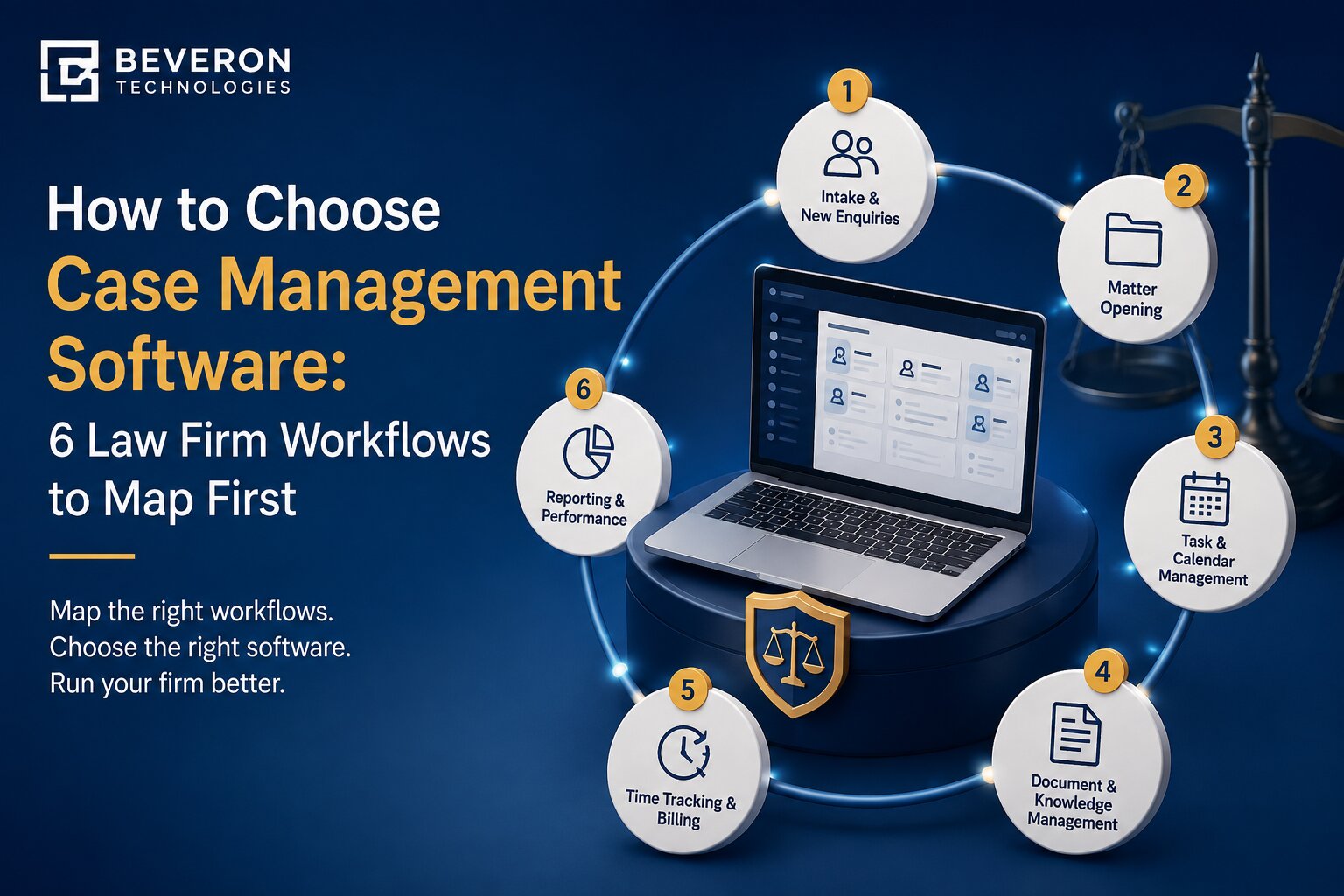
For organisations that need to manage beneficiary cases from initial tracing through to documented resolution, Beveron's Beneficiary Tracing and Resolution Software brings the workflow into one platform. The platform is designed around six core stages: finding the beneficiary, establishing contact, verifying information, collecting documents, resolving the case, and reporting on the outcome. It also supports bulk data import, beneficiary profiles, contact intelligence, workflow automation, case allocation, communication, verification, document management, traceability scoring, AI assistance, integrations, dashboards, and reporting.
This approach is particularly relevant when the organisation's challenge is not simply locating people but managing the many activities that happen after a potential beneficiary has been identified.
For example, a bank dealing with dormant-account cases may need to trace a customer or legal heir, establish contact, verify identity, collect supporting documentation, maintain a clear record of the activity, and monitor the case until it reaches an appropriate outcome.
The same principle can apply to insurers, fund administrators, pension and provident funds, government programmes, tracing agencies, and organisations managing unclaimed dividends or estate-related beneficiary cases. The important point is that software should fit the organisation's actual workflow. The objective is not to automate every decision. It is to give teams better visibility, reduce repetitive administrative work, keep case information together, and make the path from tracing to resolution easier to manage.
What Should Teams Do Next?
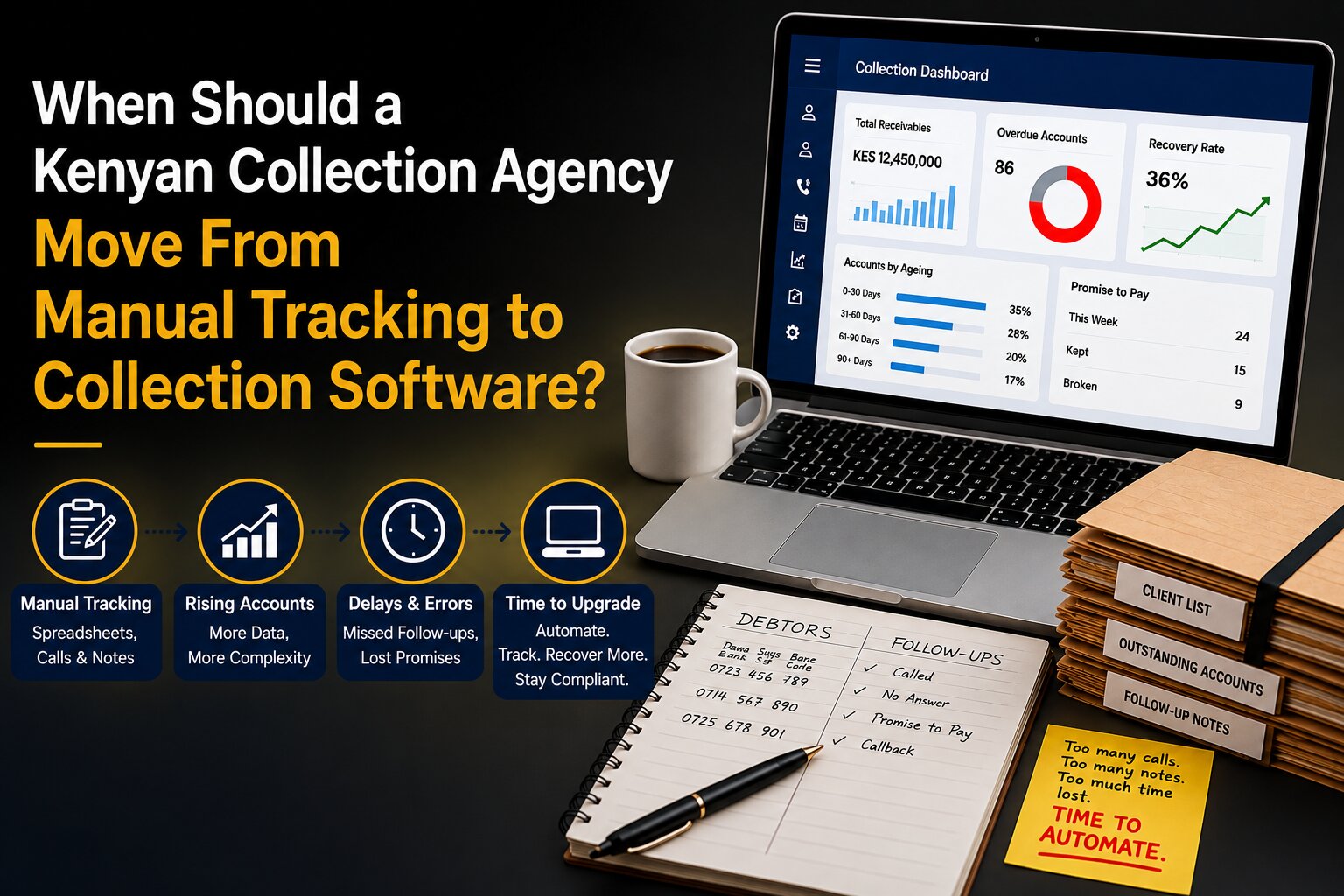
If beneficiary cases are currently managed through spreadsheets, email chains, separate document folders, or disconnected systems, the first step is to map the existing process. Look at where cases typically slow down.
Is it finding updated contact information?
Tracking previous attempts?
Waiting for documents?
Verifying identity?
Knowing who owns the next action?
Reporting on unresolved cases?
Those gaps provide a more useful basis for evaluating beneficiary tracing software than a long list of generic features. A suitable beneficiary tracing system should help the team see the whole case, understand what has already happened, identify what needs attention next, and maintain a clear record through to resolution.
For organisations looking to bring these activities into a structured workflow, Beveron Technologies offers a Beneficiary Tracing and Resolution Software designed to support the journey from locate to verify to resolve.
Ready to bring greater structure and visibility to beneficiary tracing?
Explore Beveron’s Beneficiary Tracing and Resolution Software or book a demo to see how it can support your team’s tracing, verification, follow-up, and resolution workflows.