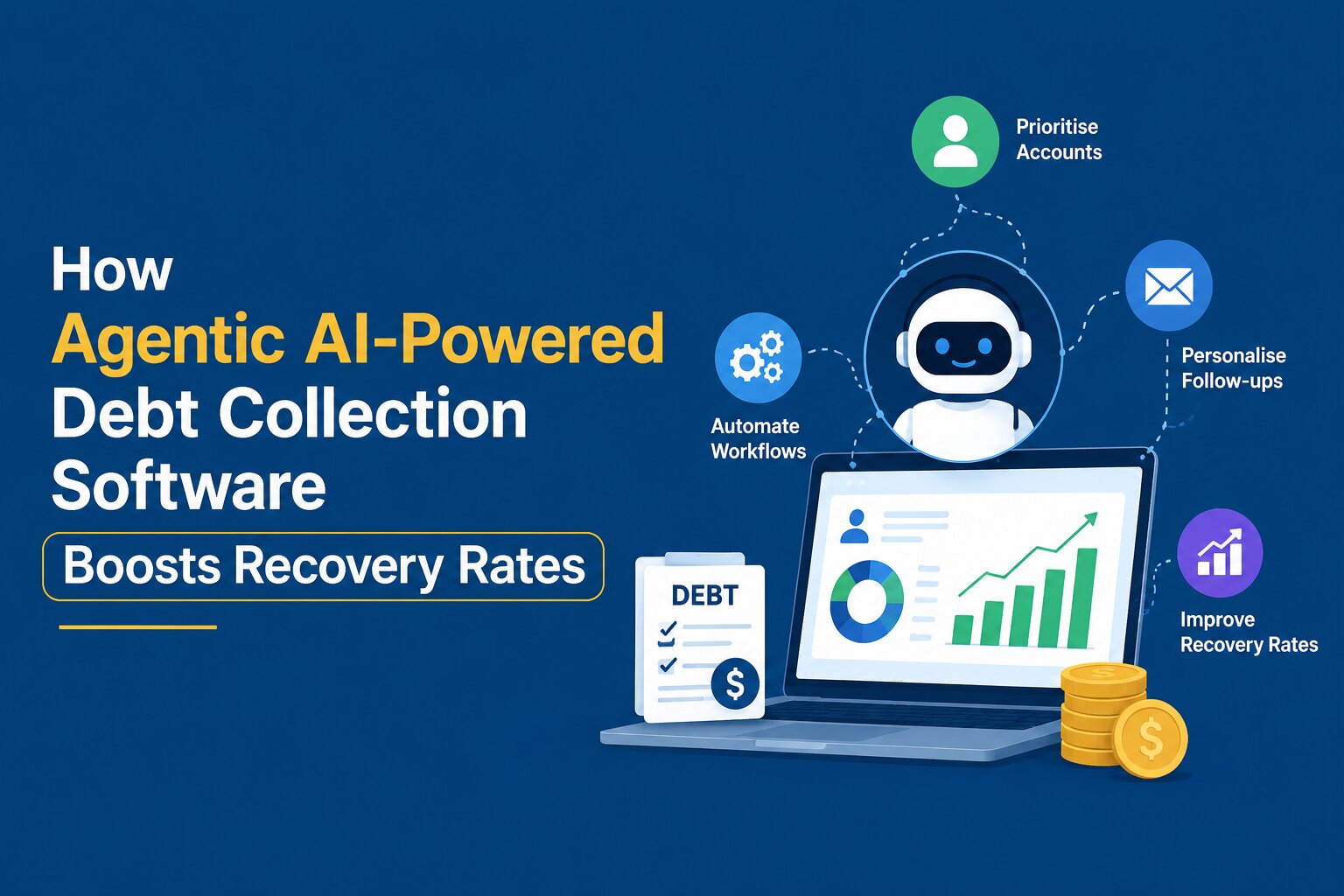
How Agentic AI-Powered Debt Collection Software Boosts Recovery Rates
Debt collection has always been about timing, communication, and knowing which accounts need attention first. But as collection teams manage larger account volumes, relying on spreadsheets, manual follow-ups, and fixed workflows can make the process harder to manage.
This is where Agentic AI-powered debt collection software is starting to change the way collection teams work.
Unlike traditional systems that mainly automate predefined tasks, Agentic AI can analyse information, determine the next suitable action within set rules, and help move a collection case forward. It can support account prioritisation, personalised communication, follow-ups, and other parts of the recovery process.
For collection agencies, banks, NBFCs, and corporate collection teams, the goal is not simply to automate more tasks. It is to make recovery operations more responsive, consistent, and efficient.
What Is Agentic AI-Powered Debt Collection Software?
Agentic AI-powered debt collection software combines debt collection management with AI systems that can handle tasks based on goals, data, and predefined rules. To understand the broader role of this technology in modern recovery operations, learn how Agentic AI is transforming debt collection.
To understand the difference, it helps to look at how collection technology has evolved. Traditional debt collection software is mainly designed to organise accounts, track payments, manage customer information, and support collection workflows.
AI debt collection software adds another layer. It can analyse account data, identify patterns, provide recommendations, and help teams decide which accounts may need attention.
Agentic AI in debt collection takes this further. Instead of simply presenting information to a collector, an AI agent can help determine what should happen next and initiate an appropriate action within the boundaries set by the organisation.
For example, if a debtor has agreed to make a payment, the system could schedule a follow-up based on the agreed date. If the debtor makes a partial payment, the account can be updated and the next step adjusted. If the situation requires negotiation or human judgement, the case can be routed to a collector.
The aim is not to remove people from the process. It is to reduce repetitive work and give collection professionals better support.
How Agentic AI Improves Debt Recovery Rates
Recovery rates depend on several factors, including how quickly teams respond, which accounts they prioritise, and how effectively they communicate with debtors. Agentic AI can support these areas in several practical ways.
Prioritising Accounts with Greater Recovery Potential
Collection teams cannot give the same level of attention to every account at the same time. When account volumes grow, deciding where to focus becomes increasingly important. Agentic AI can analyse information such as payment history, outstanding amounts, previous interactions, and account behaviour to help identify accounts that may need immediate attention.
Instead of relying only on basic categories such as account age or outstanding balance, teams can use more data-driven signals to prioritise their workload. This allows collectors to spend more time on accounts where their intervention is most valuable.
Automating Personalised Debtor Communication
Sending the same reminder to every debtor is rarely the most effective approach. AI-powered debt collection can help collection teams make communication more relevant by considering account information and previous interactions.
For example, a routine payment reminder may be suitable for one account, while another may require a different follow-up because the debtor has previously made partial payments or requested additional time. AI collection automation can help manage these different communication paths without requiring collectors to manually set up every individual follow-up.
Choosing the Right Time for Follow-Ups
A missed follow-up can mean a missed recovery opportunity. Collection teams often have to manage hundreds or thousands of accounts, making it difficult to remember every promised payment date and communication event. An intelligent system can track these events and help trigger the next appropriate action.
This could mean scheduling a reminder after a promise-to-pay date, sending a follow-up when a debtor has not responded, or escalating an account when a predefined condition is met. The result is a more consistent recovery process with fewer accounts falling through the cracks.
Responding to Changes in Debtor Behaviour
Debt collection is rarely a straight-line process. A debtor may promise payment, make a partial payment, stop responding, raise a dispute, or change their preferred communication channel. A rigid workflow may not respond well to all these situations. Agentic AI can help make the collection process more adaptive.
If a debtor responds positively, the system can continue with the appropriate follow-up. If circumstances change, it can support a different workflow or flag the account for human attention. This ability to respond to changing circumstances is one of the important differences between simple automation and more advanced AI-driven debt recovery.
This shift from fixed workflows to more adaptive decision-making is what sets Agentic AI apart from conventional collection technology. Learn more about how Agentic AI compares with traditional debt collection software and what this difference means for modern recovery teams.
7 Ways Agentic AI-Powered Debt Collection Software Boosts Recovery Rates
The value of Agentic AI becomes clearer when we look at the specific activities it can support.
1. Smarter Account Segmentation
Not every debtor should be approached in the same way. Agentic AI can help segment accounts according to factors such as payment behaviour, outstanding amounts, previous communication, and other available account information.
This helps collection teams create more targeted AI-driven collection strategies instead of applying one standard approach to every account.
2. Automated Collection Workflows
Collectors spend a significant amount of time on repetitive activities, including reminders, status updates, task creation, and follow-up scheduling. AI-powered recovery management can automate many of these routine steps.
The system can help keep accounts moving through the appropriate workflow while collectors focus on cases that require judgement, negotiation, or personal attention.
3. Better Recovery Insights
Large collections databases contain valuable information about payment behaviour and collection outcomes. AI can analyse this information to identify patterns that may not be obvious when teams rely only on manual reports.
These insights can help managers understand which approaches are working, which accounts need attention, and where collection processes could be improved.
4. More Personalised Collection Strategies
A successful collection strategy is not necessarily about contacting more people. It is about contacting the right people with the right approach. AI-driven collection strategies can use account-level information to support more relevant communication and follow-up.
Over time, this can help collection teams move away from generic campaigns and towards more targeted recovery activities.
5. Faster Follow-Up
Timing matters in debt recovery. Automated systems can respond to predefined events much faster than a manual process. When an account reaches a particular stage, the appropriate reminder, task, or escalation can be triggered without waiting for someone to notice it manually.
Faster action can help teams maintain momentum throughout the recovery process.
6. Reduced Collector Workload
Automation is particularly valuable when it removes repetitive administrative work. Instead of spending large parts of the day checking account lists, scheduling reminders, and updating routine statuses, collectors can focus on activities that benefit more from human involvement. These may include negotiations, disputes, complex cases, and high-value accounts.
This makes AI for debt collection agencies useful not only for recovery but also for improving how teams use their time.
7. Continuous Improvement
Collection strategies need to change as customer behaviour and business conditions change. Agentic AI can help teams use the results of previous actions to understand which approaches are producing better outcomes.
For example, managers may identify that one communication sequence generates more responses than another or that certain accounts need earlier human intervention. This creates an opportunity to continuously improve collection workflows rather than relying on a fixed process indefinitely.
Agentic AI vs Conventional AI Debt Collection Software
The terms 'AI' and 'Agentic AI' are sometimes used interchangeably, but there is an important distinction.
Conventional AI debt collection software may analyse data, identify patterns, provide recommendations, or automate individual tasks.
Agentic AI is designed to work towards a defined objective by assessing a situation, deciding what action should come next, and carrying out appropriate steps within the rules and permissions given to it.
Capability | Traditional Software | AI Debt Collection Software | Agentic AI |
|---|---|---|---|
Account management | Yes | Yes | Yes |
Workflow automation | Limited | Yes | Yes |
Data analysis | Limited | Yes | Yes |
Recommendations | Limited | Yes | Yes |
Adaptive actions | No | Limited | Yes |
Multi-step workflows | Limited | Limited | Yes |
Human escalation | Yes | Yes | Yes |
This does not mean every collection process should become fully autonomous. In many situations, the best approach is a combination of AI automation and human oversight.
How AI for Debt Collection Agencies Changes Daily Operations
The biggest change may not be a single AI feature. It is the way AI can change the daily workflow of a collection team.
From Manual Task Management to Intelligent Workflows
Instead of relying heavily on spreadsheets, reminders, and manually maintained task lists, collection teams can use automated workflows to manage routine activities. This helps reduce administrative effort and gives collectors a clearer view of their priorities.
From Generic Follow-Ups to AI-Driven Collection Strategies
Traditional campaigns often treat groups of debtors in the same way. AI can help teams consider account-level information and previous interactions when deciding what action may be appropriate. This supports more relevant communication without requiring every decision to be made manually.
From Reactive Collection to Proactive Recovery
Manual processes can make it difficult to spot accounts that require immediate attention. With better data analysis and automated alerts, teams can identify potential issues earlier and take action before accounts become more difficult to recover.
What to Look for in Intelligent Debt Collection Software
Choosing the right technology is just as important as understanding what Agentic AI can do. When evaluating intelligent debt collection software, collection agencies should look for capabilities that support both automation and human decision-making.
Beyond AI capabilities, agencies should also consider the core features that make debt collection software practical for everyday operations. These can include account management, automated follow-ups, payment tracking, reporting, communication tools, workflow management, and system integrations. Explore these essential debt collection software features to see what agencies should look for when evaluating a platform.
AI-Powered Account Prioritisation
The system should help teams understand which accounts deserve attention based on relevant data, rather than relying only on basic account categories.
AI Collection Automation
Look for the ability to automate routine activities such as:
- Payment reminders
- Follow-up scheduling
- Workflow triggers
- Task creation
- Escalations
Omnichannel Communication
A modern collection process may involve several communication channels, including email, SMS, voice, and other supported messaging options. Managing these interactions from a central system can give collectors a clearer view of the debtor journey.
Real-Time Dashboards and Analytics
Managers need to know what is happening across their collection operations.
Useful reporting can include:
- Recovery rates
- Payment trends
- Outstanding accounts
- Collector performance
- Response rates
- Campaign results
Human Oversight and Control
More automation does not mean less control. Good AI-powered collection software should allow organisations to define rules, review important actions, intervene when necessary, and maintain records of collection activity. This is particularly important for complex accounts and situations that require human judgement.
How to Implement Agentic AI in Debt Collection Operations
Introducing Agentic AI does not have to mean changing the entire collection operation overnight. For collection teams looking to modernise their recovery operations, it helps to take a broader view of how technology can support the entire debt collection process. Explore how Beveron helps debt collection teams streamline recovery operations with smarter technology and connected workflows.
Step 1: Identify Repetitive Tasks
Start by identifying the activities that consume the most collector time. These might include reminders, follow-up scheduling, account updates, or routine prioritisation. Before introducing Agentic AI, it is also useful to understand what modern AI-powered debt collection software can already automate and how it supports day-to-day recovery operations. This provides a practical foundation for deciding which processes are ready for more advanced AI capabilities.
Step 2: Organise Your Data
AI is only as useful as the information available to it. Bring relevant account, payment, and communication data together and make sure it is accurate and accessible.
Step 3: Define Goals and Rules
Decide what the AI should be allowed to do and where human approval is required. Clear boundaries are important, especially when dealing with customer communication and sensitive collection decisions.
Step 4: Start with High-Impact Workflows
Begin with practical use cases such as:
- Payment reminders
- Account prioritisation
- Promise-to-pay tracking
- Follow-up management
Once these workflows are working well, organisations can gradually expand their use of AI.
Step 5: Monitor and Improve
Track the results of each workflow. Look at recovery rates, response rates, payment conversion, collector productivity, and other relevant measures. Use these results to refine the process over time.
Beveron Smart Debt Collection: A Smarter Approach to Recovery Management
For collection agencies and other organisations managing large volumes of receivables, having the right system in place is essential. Beveron Smart Debt Collection brings collection activities into a centralised platform designed to help teams manage the recovery process more efficiently. It can support areas such as account and debtor management, payment tracking, follow-up management, collection workflows, communication, and recovery performance monitoring.
The value of a platform like this goes beyond simply storing collection information. By bringing important recovery activities and data together, teams can spend less time managing routine tasks and more time acting on the accounts that need their attention. For organisations exploring AI-powered recovery management, the combination of automated workflows, better visibility, data-driven insights, and appropriate human involvement can provide a more structured way to improve collection operations. The objective is straightforward: help collection teams work more efficiently while creating a more consistent path from outstanding debt to recovery.
Measuring the Impact of Agentic AI on Recovery Performance
Implementing AI is not enough. Collection teams need to measure whether it is actually improving results.
Important metrics can include:
- Recovery rate
- Collection rate
- Payment conversion rate
- Promise-to-pay fulfilment
- Contact rate
- Response rate
- Average recovery time
- Collector productivity
- Cost per recovery
Recovery rate is an important measure, but it should not be viewed in isolation. For example, a collection process may improve recovery while also reducing the amount of manual work required from collectors. That operational improvement is valuable too. Teams should therefore consider both financial outcomes and process efficiency when evaluating AI.
The Future of AI-Driven Debt Recovery
Debt collection technology is moving beyond simple task automation. The next stage is likely to involve more intelligent and adaptive workflows where AI can analyse account conditions, recommend or initiate appropriate actions, and adjust the next step based on what happens. This is where autonomous AI debt collection can become useful.
However, autonomy should not mean removing people from the process altogether.
AI can handle repetitive, data-heavy activities, while human collectors remain important for negotiations, disputes, complex cases, exceptions, and situations that require empathy or judgement.
The most effective approach is likely to be a partnership between AI and people, with each doing the work they are best suited for.
Conclusion: Is Agentic AI the Next Step for Debt Collection?
Recovery performance depends on more than simply contacting debtors more frequently. Collection teams need to know which accounts to prioritise, when to follow up, what approach to take, and when human intervention is necessary. Agentic AI-powered debt collection software can support these decisions by combining data analysis, automation, adaptive workflows, and human oversight.
It can help agencies:
- Prioritise accounts more effectively
- Personalise collection communication
- Automate repetitive workflows
- Reduce follow-up delays
- Improve collector productivity
- Identify useful recovery insights
- Build more responsive collection strategies
The technology is still evolving, but the direction is clear. Debt collection is moving from heavily manual processes towards smarter, more connected, and increasingly adaptive recovery operations.
For collection agencies and finance teams looking to modernise their processes, the next question is not simply whether they should automate. It is how intelligently they can automate while keeping people in control of important decisions.
Explore how Beveron Smart Debt Collection can help your team build a more efficient, data-driven recovery process.
Best agentic AI-powered debt collection software for banks in the UAE
Best AI-powered recovery management for financial teams in the UAE
Best AI collection automation for corporate teams in the UAE
If you need a free demo of the best agentic AI-powered debt collection software for banks in the UAE, please fill out the form below.