How Can Debt Collection Software Improve Recovery Rates for UAE Banks and Financial Institutions?

Recovering overdue payments is an important part of maintaining financial stability for banks and financial institutions. With large customer portfolios, multiple loan products and increasing collection workloads, managing overdue accounts requires consistent communication, accurate information and timely action. However, when collection activities depend heavily on manual follow-ups, spreadsheets and disconnected systems, it becomes difficult for teams to manage every account effectively. Delayed communication, missed payment commitments and limited visibility into account status can affect the overall recovery process.
For banks and financial institutions in the UAE, these challenges make it important to have a more organised approach to debt recovery. Debt collection software helps bring account information, customer communication, payment commitments and recovery activities together in one platform. It also helps collection teams automate routine tasks, prioritise overdue accounts and monitor recovery progress. By improving how collection activities are managed, financial institutions can make better use of their resources and work towards more consistent recovery outcomes.
Why Are Debt Recovery Rates a Challenge for UAE Banks and Financial Institutions?
Banks and financial institutions manage different types of outstanding payments, including personal loans, credit card dues, business financing and other credit facilities. Each account may have a different repayment history, outstanding balance and reason for delayed payment. As the number of overdue accounts increases, collection teams need to manage more follow-ups, review payment information and decide which accounts require immediate attention.
One of the main difficulties is maintaining consistency across the entire collection process. When account information is spread across multiple systems or handled through manual records, agents may not always have a complete picture of previous interactions or payment commitments. This can result in repeated communication, missed follow-ups and delays in taking appropriate action.
Growing Volumes of Overdue Accounts
Managing a large portfolio of overdue accounts requires more than simply contacting customers when payments are missed. Collection teams need to understand how long each account has remained overdue, how much is outstanding and whether the customer has made any previous repayment commitments. When this information is not organised properly, identifying accounts that require immediate attention becomes difficult.
For banks handling thousands of accounts across different financial products, manual tracking can increase the administrative workload. Collection agents may spend considerable time updating spreadsheets, checking account details and reviewing payment records instead of focusing on recovery activities. This makes it harder to maintain a consistent collection process as the portfolio grows.
Delayed Follow-Ups and Missed Payment Commitments
Timely communication plays an important role in debt recovery. When a customer misses a repayment, an early and appropriate follow-up can help the bank understand the reason for the delay and discuss possible repayment arrangements. However, when reminders depend entirely on manual scheduling, some accounts may not receive attention at the right time.
Payment commitments also need to be monitored carefully. For example, a customer may agree to pay an outstanding amount by a particular date but fail to do so. If the collection agent does not record that commitment or receive a reminder to follow up, the account may remain unresolved for longer. A structured collection process helps teams keep track of these commitments and take the next appropriate action.
Limited Visibility Across Collection Activities
Collection managers need a clear view of what is happening across their portfolios. They should be able to understand which accounts have been contacted, which customers have responded, what payments have been received and which cases require further action. When these details are maintained in separate systems, obtaining an accurate picture of collection performance can take time.
This lack of visibility can also make it difficult to identify gaps in agent activities or understand why certain accounts are not progressing. Without reliable and accessible information, managers may find it challenging to adjust their collection strategies.
Difficulty Prioritising High-Risk Accounts
Not every overdue account requires the same collection approach. Some customers may have missed a payment because of a temporary financial difficulty, while others may have remained overdue for several months despite repeated communication. Treating every account in the same way can lead to unnecessary effort and inefficient use of collection resources.
Banks need a practical way to organise accounts according to factors such as outstanding balances, payment history, days past due and previous collection activity. This helps agents focus their attention where it is needed while ensuring that other accounts continue to receive appropriate follow-ups.
How Can Debt Collection Software Improve Recovery Rates?
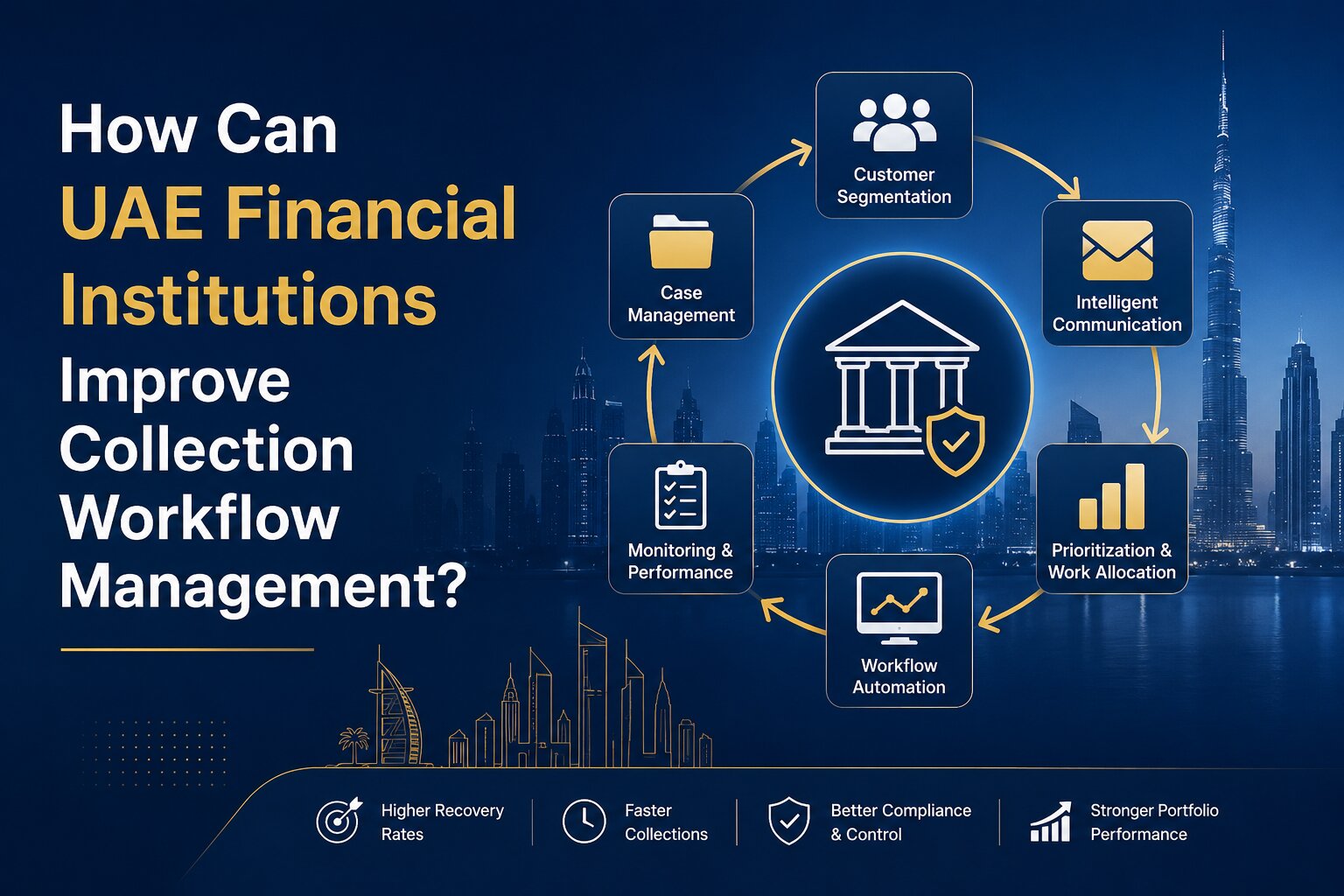
Debt collection software helps financial institutions manage recovery activities through a more structured and organised process. Instead of relying on separate tools for account information, reminders, payment tracking and reporting, teams can work from a central platform. This makes it easier to monitor overdue accounts, maintain communication records and understand the progress of individual recovery cases.
The main benefit is not simply automation. It is the ability to make collection activities more consistent, ensure that important information is available when needed and help teams decide what action to take next.
Automating Payment Reminders and Follow-Ups
Following up with customers at the right time is essential for managing overdue payments. However, manually contacting every customer can become difficult when collection teams handle large account portfolios. Automated debt collection software helps reduce this workload by scheduling reminders and follow-ups based on payment dates, account status and ageing cycles.
For example, when a loan instalment becomes overdue, the system can help initiate a scheduled reminder through supported communication channels such as SMS, email or WhatsApp. If the payment remains outstanding, additional follow-up activities can be scheduled according to the bank's collection policies.
This approach helps reduce the chances of missed reminders and allows collection agents to spend more time handling accounts that require personal attention. It also creates a more consistent communication process across the portfolio.
Prioritising Accounts Based on Payment Behaviour
Collection teams often need to decide which accounts should receive attention first. Reviewing every account individually can take considerable time, particularly when the bank manages a large number of overdue payments. Debt recovery software helps organise accounts using information such as outstanding balances, payment history, account ageing and previous collection activities.
This allows managers to identify accounts that may require closer attention and distribute work more effectively among collection agents. For instance, an account with a significant outstanding balance and repeated missed commitments may need a different follow-up approach from an account that has only recently become overdue.
Prioritisation does not mean ignoring lower-value or recently overdue accounts. Instead, it helps financial institutions allocate resources more carefully while maintaining appropriate follow-ups across different account categories.
Centralising Customer and Debtor Information
Having complete and accurate account information is important for making informed recovery decisions. When customer details, outstanding balances, previous communications and payment records are stored in different systems, agents may need to switch between multiple applications to understand an account.
Debt collection software provides a centralised view of debtor information and collection activities. Agents can review relevant account details, check previous interactions and understand the current recovery status without depending on disconnected records. This can improve coordination between team members, especially when accounts are transferred between agents or escalated to another department.
Centralised information also helps managers monitor collection activities more effectively and maintain a clearer record of how each account is being handled.
Tracking Payment Promises and Flexible Payment Plans
Not every customer who misses a payment is unwilling to repay. Some may be experiencing temporary financial difficulties and may need a revised repayment arrangement. For collection teams, recording these discussions and monitoring agreed payment dates is important. Debt collection software helps agents record promises to pay, update repayment information and track whether customers meet their commitments. It can also support flexible payment plans, allowing teams to maintain a clear record of agreed instalments and outstanding balances.
For example, if a customer agrees to repay an outstanding amount in smaller instalments, the collection team can record the arrangement and monitor each scheduled payment. If an instalment is missed, the account can be flagged for appropriate follow-up. This makes it easier to manage repayment arrangements without losing track of individual commitments.
Streamlining Collection Workflows and Escalations
A structured collection process helps ensure that overdue accounts receive attention at the appropriate stages. When agents depend on personal reminders or manual task lists, important activities may be delayed, particularly during busy periods or when accounts are reassigned.
Collection management software helps organise these activities through automated task assignments, follow-up schedules and escalation workflows. As an account progresses through different stages, the system can help teams identify the next required action and keep the relevant information accessible.
For example, an account that remains unpaid after several follow-ups may require additional review or escalation according to the institution's internal procedures. Having a documented workflow helps teams manage these transitions more consistently and reduces the administrative effort involved in tracking each case.
Monitoring Collection Performance Through Reports and Dashboards
Improving recovery performance requires financial institutions to understand what is working and where collection efforts need attention. Without reliable reporting, managers may find it difficult to assess recovery progress across different portfolios, branches or collection agents.
Debt collection software with business intelligence reporting provides a clearer view of account ageing, outstanding balances, recovered amounts and agent activities. Managers can use these reports to identify accounts that have remained overdue for extended periods, review collection performance and understand where follow-up strategies may need adjustment.
For instance, if a particular group of accounts consistently shows low recovery progress, managers can review the reasons, examine previous communication and consider whether a different collection approach is required. This makes reporting a useful part of ongoing collection improvement rather than simply a way to view past performance.
What Should UAE Banks Consider When Implementing Debt Collection Software?
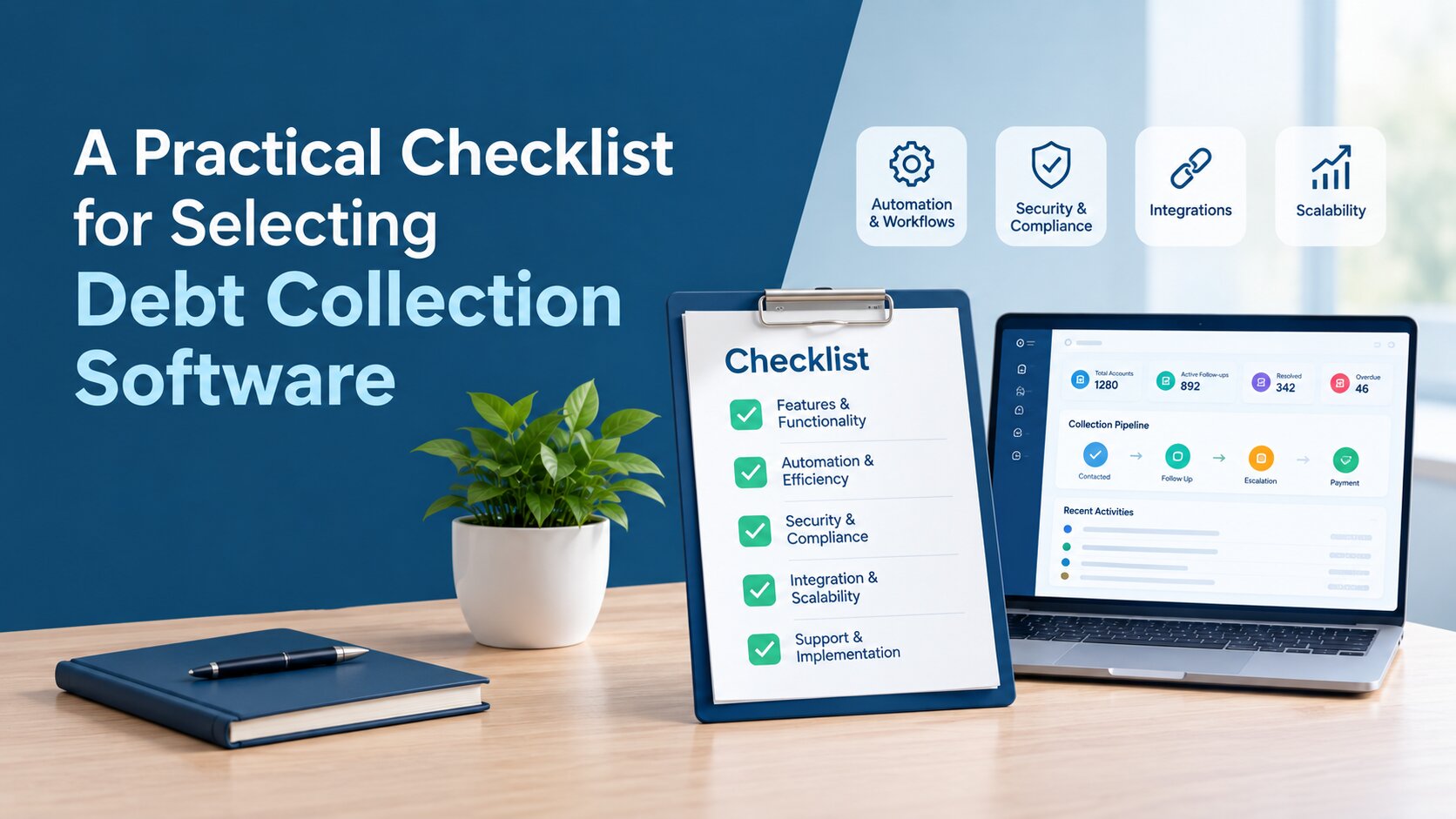
Choosing debt collection software involves more than reviewing the number of features available. Banks and financial institutions need a solution that fits their existing operations, supports their internal collection procedures and can handle the requirements of their customer portfolios. The right platform should also provide enough flexibility to accommodate changing business needs without making daily collection activities more complicated.
Integration with Existing Banking and Financial Systems
Banks already rely on different systems to manage customer information, loan accounts, payment transactions and financial records. Introducing a separate debt collection platform without considering these systems can create additional work for employees and lead to information being maintained in multiple places.
When evaluating debt collection software, financial institutions should consider whether it can connect with their existing CRM, ERP, accounting and payment systems. API-based integrations and data import options can help transfer relevant account information and reduce the need for repeated manual entry. A well-integrated system also helps collection teams work with more consistent information throughout the recovery process.
Data Security and UAE Regulatory Requirements
Financial institutions handle confidential customer and financial information, making data security an important consideration when selecting debt collection software. The platform should support appropriate access controls, secure data handling and reliable record management so that sensitive information is available only to authorised users.
Banks must also ensure that their collection procedures follow applicable Central Bank of the UAE requirements. The CBUAE Consumer Protection Standards address how financial institutions should communicate with customers in arrears, document collection discussions and handle repayment difficulties. They also require proportionate communication practices and the maintenance of relevant communication records. Software can support these processes through centralised records, activity tracking and reporting, but the institution remains responsible for ensuring that its policies and practices meet regulatory requirements.
Arabic and English Communication Support
The UAE has a diverse customer base, and financial institutions regularly communicate with customers who prefer different languages. Supporting both Arabic and English can help banks maintain clearer communication throughout the collection process.
When reviewing a debt collection platform, banks should consider whether it supports bilingual communication and allows teams to manage customer interactions through suitable channels. This can make it easier to maintain consistent communication while serving customers across different regions and language preferences.
Scalability for Growing Loan and Collection Portfolios
As financial institutions expand their lending operations, the number of accounts requiring collection management may also increase. A platform that works well for a smaller portfolio may become difficult to manage as account volumes, collection teams and reporting requirements grow.
Banks should therefore consider whether the software can support larger portfolios, additional users and changing workflows. Flexible deployment options can also be important, particularly for institutions with specific infrastructure and data management requirements. Choosing scalable debt recovery software helps financial institutions prepare for future operational needs without repeatedly changing their core collection platform.
How Does Smart Debt Collection by Beveron Support Banks and Financial Institutions?
Managing debt recovery across large account portfolios requires a combination of organised information, timely follow-ups and consistent monitoring. Beveron's Smart Debt Collection is an AI-enabled debt collection software solution designed for banks, lenders, collection agencies and corporate finance teams. It brings debtor information, collection activities, payment plans, communication records and recovery reporting together in one platform, helping financial teams manage their day-to-day collection operations more effectively.
The platform supports collection workflows from account import and follow-ups to payment tracking, settlements and recovery reporting. It is available in English and Arabic, with cloud and on-premise deployment options to support different operational requirements.
Centralised Debt and Account Management
Smart Debt Collection helps financial institutions maintain debtor information and collection cases within a centralised platform. Account information can be imported through API integrations or Excel files, making it easier to bring existing records into the system. Collection teams can access relevant account details, review recovery activities and monitor the status of individual cases. Having this information in one place reduces dependence on scattered spreadsheets and disconnected records. It also helps agents understand previous collection activities before contacting customers or taking further action.
Automated Collection and Communication Workflows
Managing reminders and follow-ups manually can take up a significant part of a collection agent's working day. Smart Debt Collection supports automated collection workflows that help teams manage reminders, follow-ups and escalations more consistently. The platform supports communication through SMS, email, WhatsApp and calls, allowing teams to manage customer interactions through different channels. Automated activities can help reduce repetitive administrative work and ensure that scheduled collection actions are easier to track.
Payment Plans and Recovery Tracking
Managing payment commitments is an important part of the recovery process. Smart Debt Collection supports flexible and customisable payment plans, helping collection teams record repayment arrangements and monitor outstanding amounts. The platform also supports payment system integration and recovery tracking, giving teams a clearer view of account progress. For cases that require further legal action, it includes court judgment tracking and litigation-related case management capabilities, helping financial teams maintain visibility beyond the initial collection stage.
Collection Reporting and Agent Performance Monitoring
Collection managers need reliable information to understand how their teams and portfolios are performing. Smart Debt Collection provides business intelligence reporting to help monitor recovery progress, account ageing and collection agent performance. These reports can help managers identify accounts requiring attention, review the effectiveness of collection activities and understand how different portfolios are progressing. With better visibility into collection operations, teams can make more informed decisions about resource allocation and follow-up priorities.
Integration and Flexible Deployment Options
Financial institutions may need their collection software to work alongside existing business applications. Smart Debt Collection supports integrations with enterprise systems, including CRM, ERP and accounting platforms, as well as payment systems and other workplace tools. API and Excel import options also help teams bring account information into the platform. The solution is available through cloud and on-premise deployment, giving organisations flexibility when considering their infrastructure requirements. Its bilingual English and Arabic interface also supports financial teams operating in the UAE and other markets.
How Can Banks Measure Improvements in Debt Recovery Performance?
Introducing debt collection software is only one part of improving recovery operations. Financial institutions also need to measure whether their collection processes are becoming more effective over time. Tracking the right performance indicators helps managers understand where recovery efforts are succeeding, where delays are occurring and which areas need further attention.
Debt Recovery Rate is one of the most important indicators. It measures the amount of debt recovered against the outstanding amount being assessed during a defined period. Monitoring this metric over time helps banks understand how effectively their collection activities are performing. It is important to use a consistent calculation method and account for the relevant portfolio and reporting period when comparing results.
Days Past Due (DPD) indicates how long a payment has remained overdue. Monitoring DPD helps collection teams understand the ageing of accounts and identify cases that may require additional attention. Reviewing accounts across different ageing categories can also help managers understand where collection delays are increasing.
Collection Efficiency helps financial institutions assess how effectively they collect amounts that are due within a particular period. It provides useful insight into the performance of collection activities and helps managers identify gaps between expected and actual collections.
Promise-to-Pay Fulfilment Rate measures how many customer payment commitments are fulfilled within the agreed period. This is useful for understanding whether repayment arrangements are translating into actual payments and whether additional follow-ups are needed.
Cost per Recovery helps banks understand the operational resources required to recover outstanding amounts. Reviewing this metric can highlight opportunities to reduce repetitive administrative work, improve task allocation and make better use of collection team resources.
Collection Agent Productivity provides insight into how effectively individual agents manage their assigned accounts. Managers can review completed follow-ups, accounts handled, payment commitments recorded and recovery outcomes to understand workload distribution and identify areas where additional support or training may be useful.
Together, these indicators provide a more complete picture of debt recovery performance. When supported by accurate reporting and centralised collection records, they help banks move beyond simply counting overdue accounts and focus on improving the overall recovery process.
Conclusion: Building a More Effective Debt Recovery Process for UAE Financial Institutions
Improving debt recovery rates requires more than increasing the number of customer follow-ups. Banks and financial institutions need a structured approach that helps them manage overdue accounts, maintain timely communication, monitor payment commitments and identify cases that require further attention. When these activities depend on disconnected systems and manual processes, maintaining consistency across large account portfolios becomes difficult.
Debt collection software provides a way to bring these activities together. Through automated reminders, account prioritisation, centralised debtor information, payment plan management and performance reporting, financial institutions can improve the way their collection teams handle recovery activities. It also gives managers better visibility into account progress and helps them make more informed operational decisions.
For UAE banks and financial institutions looking to improve their collection processes, Beveron's Smart Debt Collection offers a centralised platform with AI-enabled capabilities, automated workflows, bilingual communication support and flexible deployment options.
If your organisation is looking to bring more structure to its debt recovery operations, explore Beveron Smart Debt Collection and request a demo to see how the platform can support your collection team's requirements.
Best debt collection software for banks in the UAE
Best collection management software for financial institutions in the UAE
Best overdue account management in the UAE
If you need a free demo of the best debt collection software for banks in the UAE, please fill out the form