Agentic AI vs Traditional Debt Collection Software: What's the Difference?
Debt collection is changing rapidly. Across the GCC, businesses, banks, and finance teams are under increasing pressure to recover payments faster while maintaining strong customer relationships and complying with evolving regulations. At the same time, artificial intelligence (AI) has matured beyond simple automation, introducing a new way to manage collections.
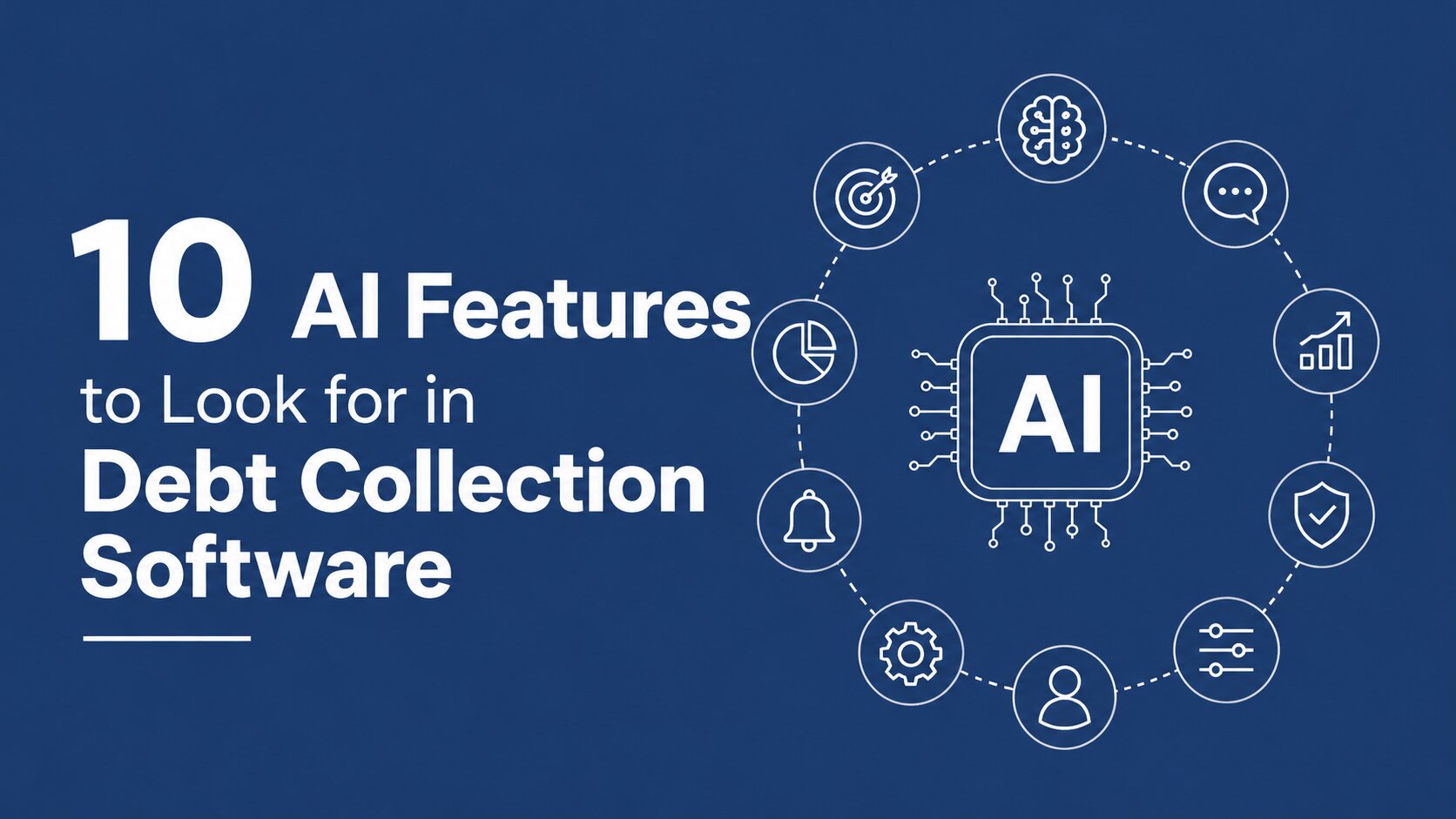
At the same time, artificial intelligence (AI) has matured beyond simple automation, introducing a new way to manage collections. As AI-powered debt collection continues to evolve, organisations are increasingly exploring how intelligent automation, predictive analytics, and data-driven decision-making can improve recovery outcomes. For a broader look at how AI is transforming modern debt recovery, read our guide on The Future of AI-Powered Debt Collection: Smarter, Faster Recovery.
Today, "debt collection software" no longer refers to a single type of solution. Some platforms still rely on predefined rules and workflows, while newer systems use agentic AI to analyse situations, make informed decisions, and continuously improve outcomes.
So, what is the real difference? More importantly, which approach is better suited for your organisation?
This guide explains how traditional debt collection software compares with agentic AI-powered debt collection, helping banks, financial institutions, accounts receivable teams, and finance departments understand which solution aligns best with their operational goals.
What Is Traditional Debt Collection Software?
Traditional debt collection software is designed to automate repetitive collection activities through predefined rules and structured workflows. Instead of manually sending payment reminders or tracking overdue accounts, organisations configure the software to perform these actions automatically.
Typical features include:
- Automated payment reminders through email or SMS
- Payment tracking and outstanding balance monitoring
- Dunning schedules based on overdue periods
- Basic reporting and collection dashboards
- Account assignment to collection officers
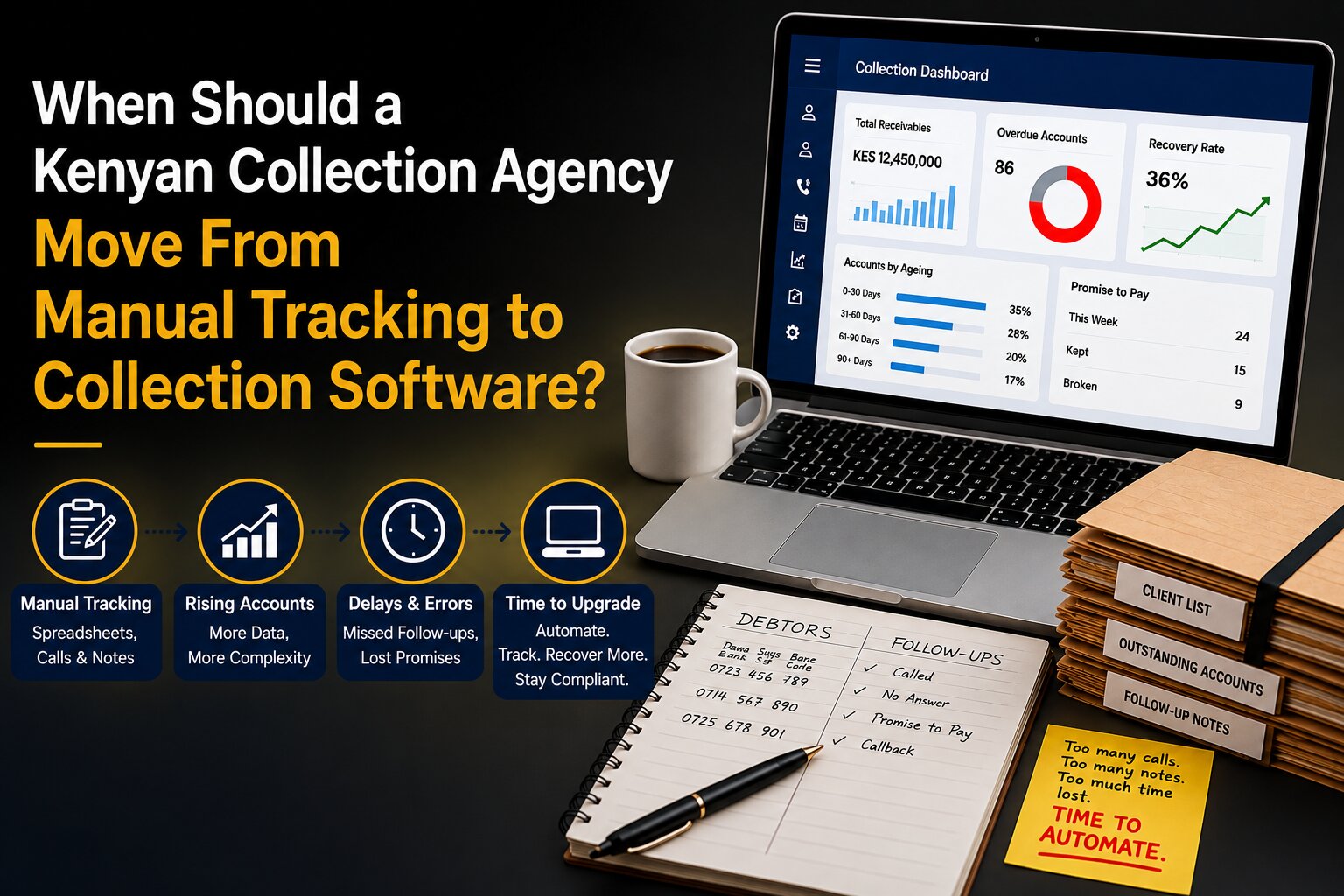
These systems have helped organisations reduce manual effort and improve consistency compared to spreadsheet-based processes. For many businesses, banks, and financial institutions, they remain an effective first step towards digital debt collection.
However, traditional platforms operate within fixed rules. If a debtor responds unexpectedly, disputes an invoice, requests a payment plan, or falls into an unusual risk category, human intervention is usually required. The software cannot evaluate the situation or decide the next best action independently.
As collection volumes increase, teams often spend significant time reviewing exceptions, prioritising accounts manually, and deciding how to communicate with different customers. While automation speeds up repetitive work, decision-making still depends heavily on experienced collection professionals.
What Is Agentic AI in Debt Collection?
Agentic AI represents the next stage of intelligent debt collection.
Rather than simply following predefined workflows, agentic AI systems can observe information, analyse context, make decisions within approved boundaries, and take appropriate actions. Instead of asking users to define every possible scenario, these systems continuously evaluate each collection case and determine the most effective next step.
In debt collection, this capability can transform how organisations manage overdue accounts.
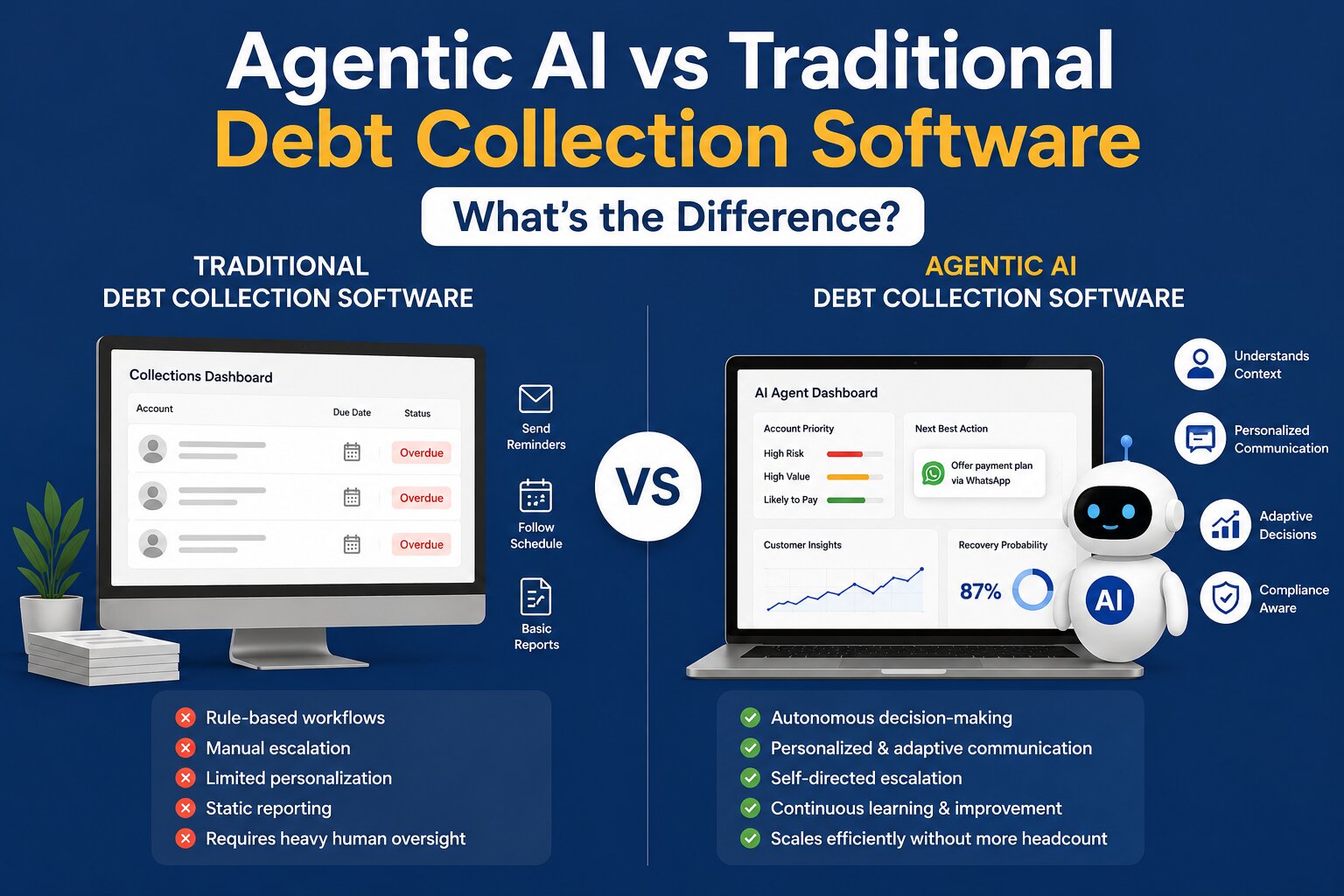
An agentic AI system can:
- Prioritise accounts based on payment risk, value, and recovery probability.
- Personalise communication using the most suitable language, channel, tone, and timing.
- Recommend or negotiate payment arrangements within predefined business rules.
- Learn from previous interactions to improve future collection strategies.
- Escalate only when human expertise is genuinely required.
The biggest distinction is simple. Traditional software executes rules.
Agentic AI makes informed decisions within controlled parameters.
Human oversight remains essential, especially for complex disputes, sensitive negotiations, or accounts requiring specialised intervention. However, instead of handling every routine follow-up manually, finance and collection teams can focus their expertise where it delivers the greatest value.
Agentic AI vs Traditional Debt Collection Software: Side-by-Side Comparison
| Capability | Traditional Debt Collection Software | Agentic AI Debt Collection |
|---|---|---|
| Decision-making | Executes predefined workflows | Analyses situations and recommends or takes the next best action |
| Personalisation | Uses standard templates for all customers | Adapts communication based on customer behaviour, language, history, and risk profile |
| Escalation Handling | Requires manual review and assignment | Automatically identifies complex cases and escalates when appropriate |
| Compliance Monitoring | Relies on predefined compliance rules | Continuously checks communication against configured regulatory and organisational policies |
| Scalability | Often requires additional staff as workloads increase | Handles larger account volumes without proportional increases in staffing |
| Learning & Improvement | Static workflows unless manually updated | Learns from collection outcomes to improve future recommendations |
The comparison highlights a fundamental shift in how debt collection technology supports banks, financial institutions, and finance teams.
Traditional software focuses on process automation. It ensures reminders are sent on time, tracks payments accurately, and maintains consistent workflows. This significantly reduces manual work but still depends on people to evaluate changing situations.
Agentic AI adds an intelligent decision layer. Instead of treating every debtor the same way, it assesses each account individually, identifies the most appropriate communication strategy, and adapts its recommendations based on previous results.
For organisations managing thousands of collection accounts across multiple business units, branches, portfolios, or jurisdictions, this difference can have a meaningful impact on productivity, recovery rates, and customer experience.
It also supports more informed decision-making by providing finance and collection teams with insights that go beyond static reports. Rather than simply showing overdue balances, agentic AI helps identify which accounts deserve immediate attention, which communication strategies are working, and where collection efforts can be improved over time.
Why This Matters for Banks and Financial Institutions in the GCC
Banks and financial institutions across the GCC face collection challenges that extend beyond unpaid invoices.
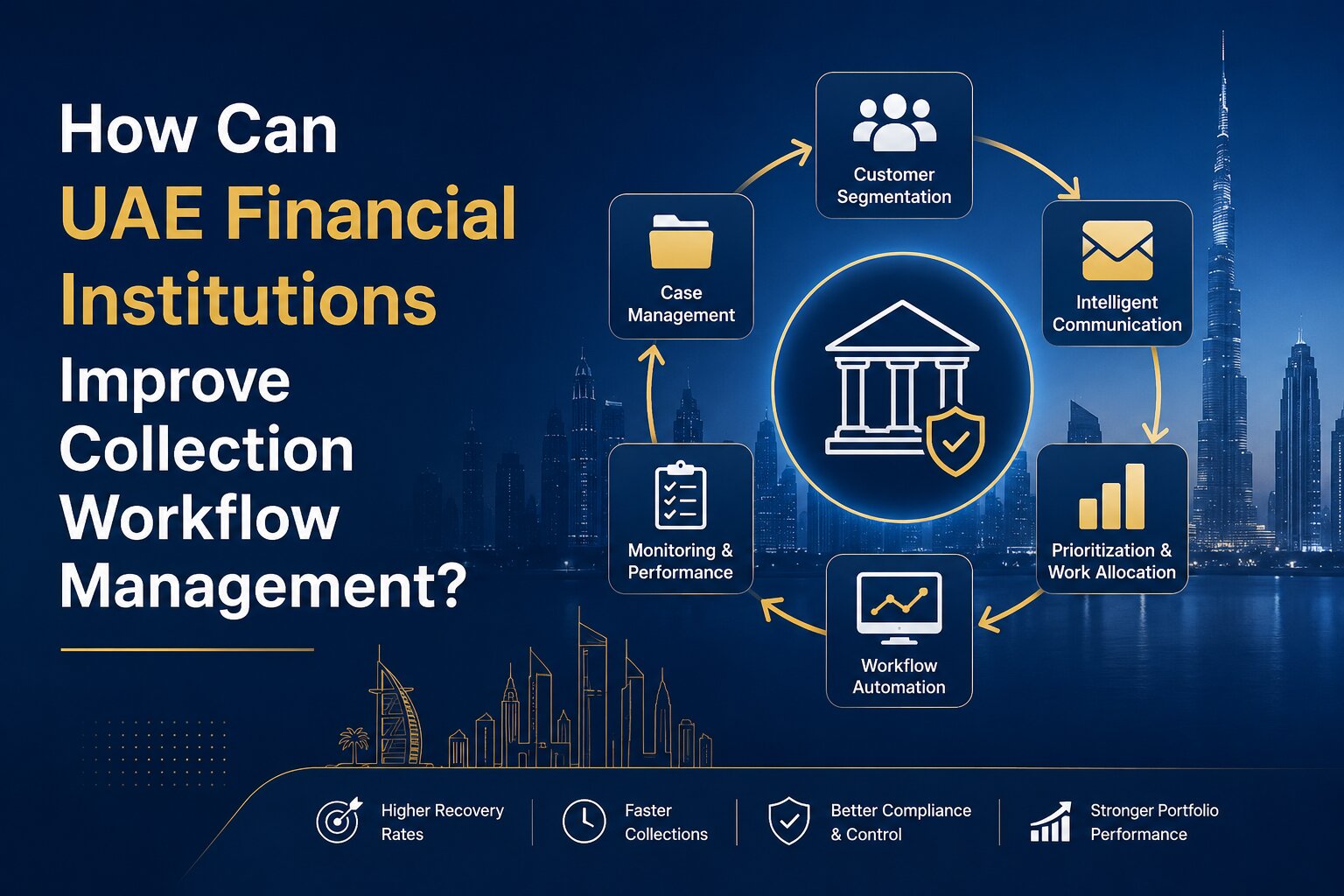
Many organisations operate across multiple jurisdictions, including the UAE, Saudi Arabia, Qatar, Bahrain, and Kuwait. Each market has its own regulatory frameworks, financial practices, and customer expectations. Managing collections while maintaining compliance requires both operational efficiency and strong oversight.
Consumer and commercial debt portfolios have also become more complex as financial institutions expand their lending and credit operations. Finance and collections departments are expected to recover payments efficiently without increasing administrative workloads or exposing the organisation to unnecessary compliance risks.
This is where agentic AI delivers strategic value.
For financial institutions considering AI adoption, technology is only one part of the equation. A clear implementation strategy is essential to ensure AI supports recovery goals, operational requirements, and compliance expectations. Our guide on AI Debt Collection Strategy: What Financial Institutions Should Do First explores the key steps financial institutions should consider when building an AI-powered debt collection strategy.
Instead of spending valuable time on repetitive follow-ups, manual account prioritisation, and routine communication, finance and collection professionals can focus on negotiations, dispute resolution, high-value accounts, customer retention, and recovery strategies.
Rather than replacing experienced collection professionals, agentic AI supports them by handling repetitive operational work while keeping teams informed and in control.
How Beveron's Smart Debt Collection Fits In
Beveron's Smart Debt Collection is designed to help organisations modernise their debt recovery processes with intelligent automation tailored to the needs of GCC businesses, banks, and financial institutions. Rather than functioning as a basic reminder system, the platform supports intelligent collection workflows that help finance and collection teams prioritise actions, improve visibility, and maintain consistent collection practices.
Some of its key capabilities include:
Intelligent Account Prioritisation
Instead of reviewing every overdue account manually, Smart Debt Collection helps identify high-value and high-risk accounts that require immediate attention. This enables teams to allocate resources more effectively and improve recovery outcomes.
Compliance-Conscious Communication
Collections often involve strict regulatory and organisational considerations. Smart Debt Collection supports structured communication processes that help organisations remain aligned with internal policies and regional compliance requirements while maintaining consistent customer engagement.
Integration Across Beveron's Technology Ecosystem
One of the platform's strongest advantages is its ability to support connected business workflows across collection and operational processes. Financial institutions and organisations can manage debt recovery alongside broader customer, account, and operational information within a connected environment, reducing duplicate work and improving collaboration.
Real-Time Analytics and Operational Visibility
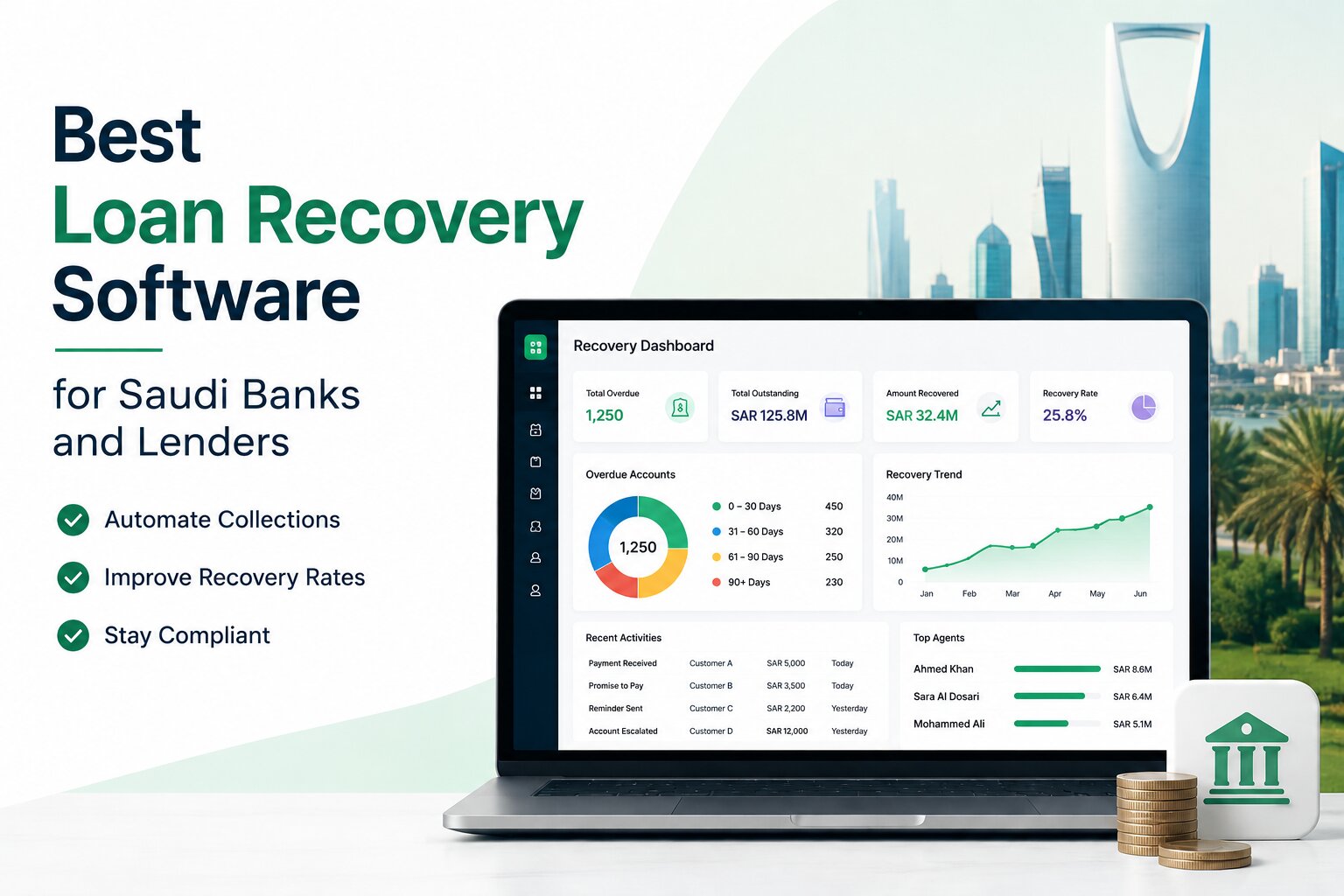
Collection managers and finance leaders gain access to dashboards that provide visibility into overdue accounts, collection performance, recovery trends, and team productivity. These insights support faster decision-making and continuous process improvement.
Instead of acting as a standalone automation tool, Smart Debt Collection is designed to support how banks, financial institutions, and corporate finance teams across the GCC manage collections in real-world environments. It combines intelligent workflows, operational visibility, and connected processes to help organisations recover payments more efficiently while maintaining control.
How to Choose the Right Debt Collection Solution
Selecting the right platform involves more than comparing feature lists. Finance leaders, collection managers, and institutional decision-makers should evaluate whether the software can support both today's requirements and future business growth.
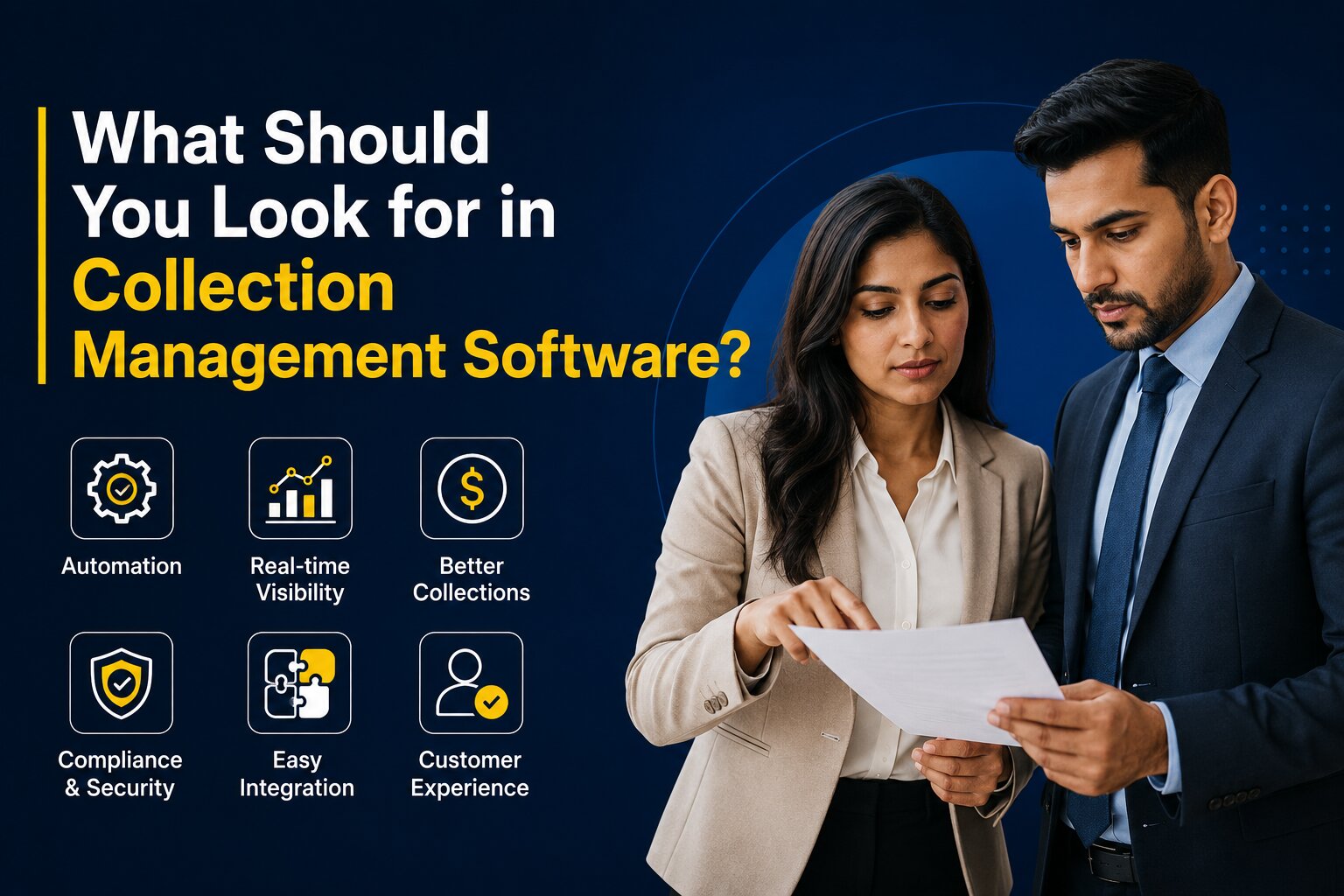
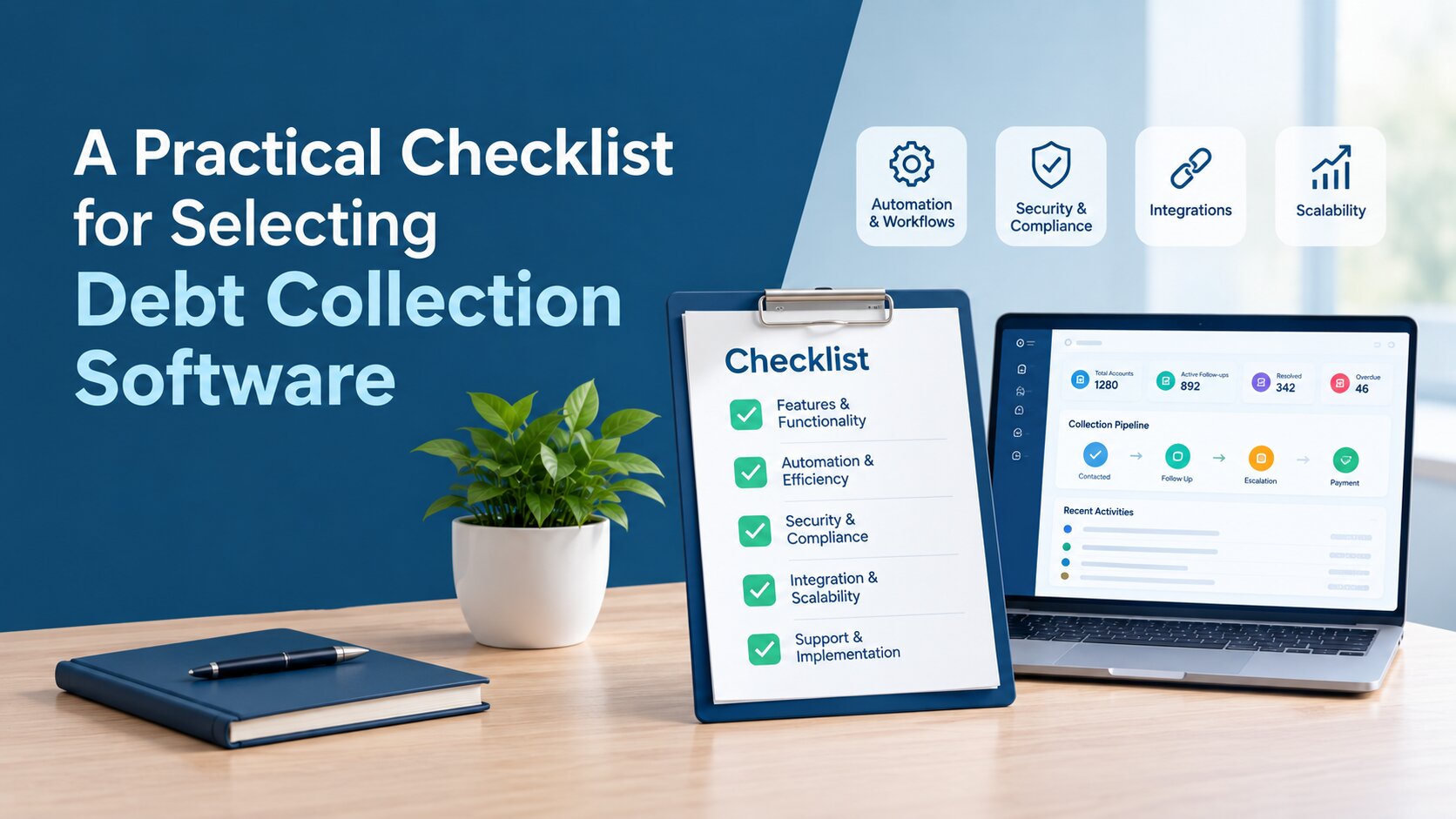
If you're evaluating AI-powered platforms specifically, our guide on How to Choose the Best AI-Based Debt Collection Software covers the key features and considerations to look for when selecting the right solution.
Before making a decision, consider these questions:
- Does the solution simply automate repetitive tasks, or can it intelligently recommend or make operational decisions?
- Can communication adapt to different jurisdictions, languages, and customer situations?
- Does it integrate smoothly with existing banking, ERP, CRM, accounting, or financial management systems?
- Does it provide clear reporting, audit trails, and compliance visibility?
- Can it scale as collection volumes increase without requiring significant additional staffing?
A platform that combines intelligent automation, operational transparency, and strong integration capabilities is more likely to deliver lasting value than one focused solely on workflow automation.
Conclusion
Traditional debt collection software has played an important role in improving operational efficiency, but the demands placed on modern banks, financial institutions, and finance teams continue to evolve.
Agentic AI represents the next step in that evolution. Rather than simply automating predefined tasks, it supports better decision-making, adapts to changing situations, and helps organisations manage collections more strategically.
For businesses and financial institutions across the GCC, this is not about replacing people with AI. It is about enabling finance and collection professionals to spend less time on repetitive administration and more time on complex, high-value work that requires human judgement and expertise.
Solutions like Beveron's Smart Debt Collection demonstrate how intelligent technology can support this transition while fitting naturally into existing financial and collection operations.
Frequently Asked Questions
Is agentic AI safe for compliance-sensitive debt collection?
Yes, when implemented with appropriate governance. Agentic AI operates within predefined business rules, approval processes, and compliance policies, allowing organisations to maintain oversight while benefiting from intelligent automation.
Does agentic AI replace debt collection professionals?
No. Agentic AI is designed to assist professionals by handling repetitive operational tasks and providing intelligent recommendations. Human expertise remains essential for negotiations, sensitive customer situations, and complex account resolution.
How is agentic AI different from chatbot automation?
Chatbots typically follow predefined conversation flows and respond to specific user inputs. Agentic AI goes further by analysing data, evaluating multiple factors, deciding on appropriate actions, and continuously improving based on previous outcomes.
Is Beveron's Smart Debt Collection suitable for organisations already using financial or collection management software?
Yes. Smart Debt Collection is designed to support connected collection and operational processes, helping banks, financial institutions, and finance teams connect debt recovery with broader account and business management workflows.
Transform Your Debt Collection Strategy
Looking to move beyond rule-based automation?
Discover how Beveron's Smart Debt Collection helps banks, financial institutions, and finance teams across the GCC prioritise accounts intelligently, streamline recovery workflows, maintain compliance, and gain real-time operational visibility—all within a connected debt collection technology ecosystem.
Best agentic AI debt collection software in the UAE
Best payment collection software for banks in the UAE
Best AI for debt recovery software for accounts receivable teams in the UAE
If you need a free demo of the best agentic AI debt collection software in the UAE, please fill out the form below.