10 Essential Features Every Debt Collection Agency Software Should Have

Debt collection has never been a simple process. Agencies often manage hundreds or even thousands of accounts, follow up with debtors across different channels, track payments, and keep clients informed about recovery progress—all at the same time.
When these tasks are handled through spreadsheets, emails, and disconnected systems, things can quickly become difficult to manage. A follow-up may be missed. A payment might not be recorded correctly. A collector may spend more time searching for account information than actually working on recovery.
This is where debt collection agency software can make a real difference.
The right software brings important information and everyday collection activities into one place. It can help agencies organise accounts, automate routine follow-ups, track payments, manage workflows, and understand how their teams are performing.
If you're considering moving away from spreadsheets and manual follow-ups, our guide to debt collection automation explains five practical steps for building a more streamlined collection process, from centralising debtor information to automating communication and tracking recovery performance.
But not every solution offers the same capabilities.
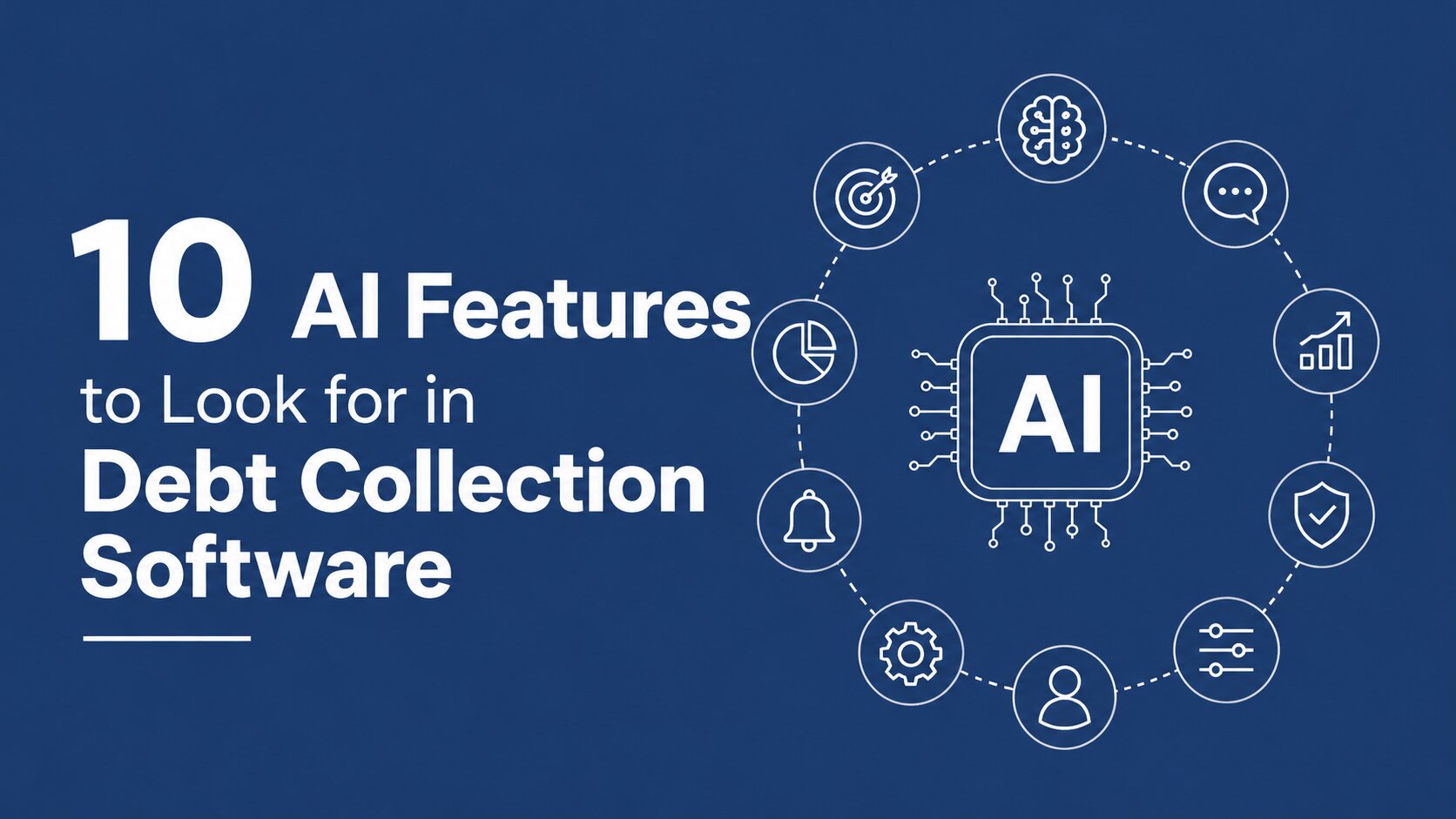
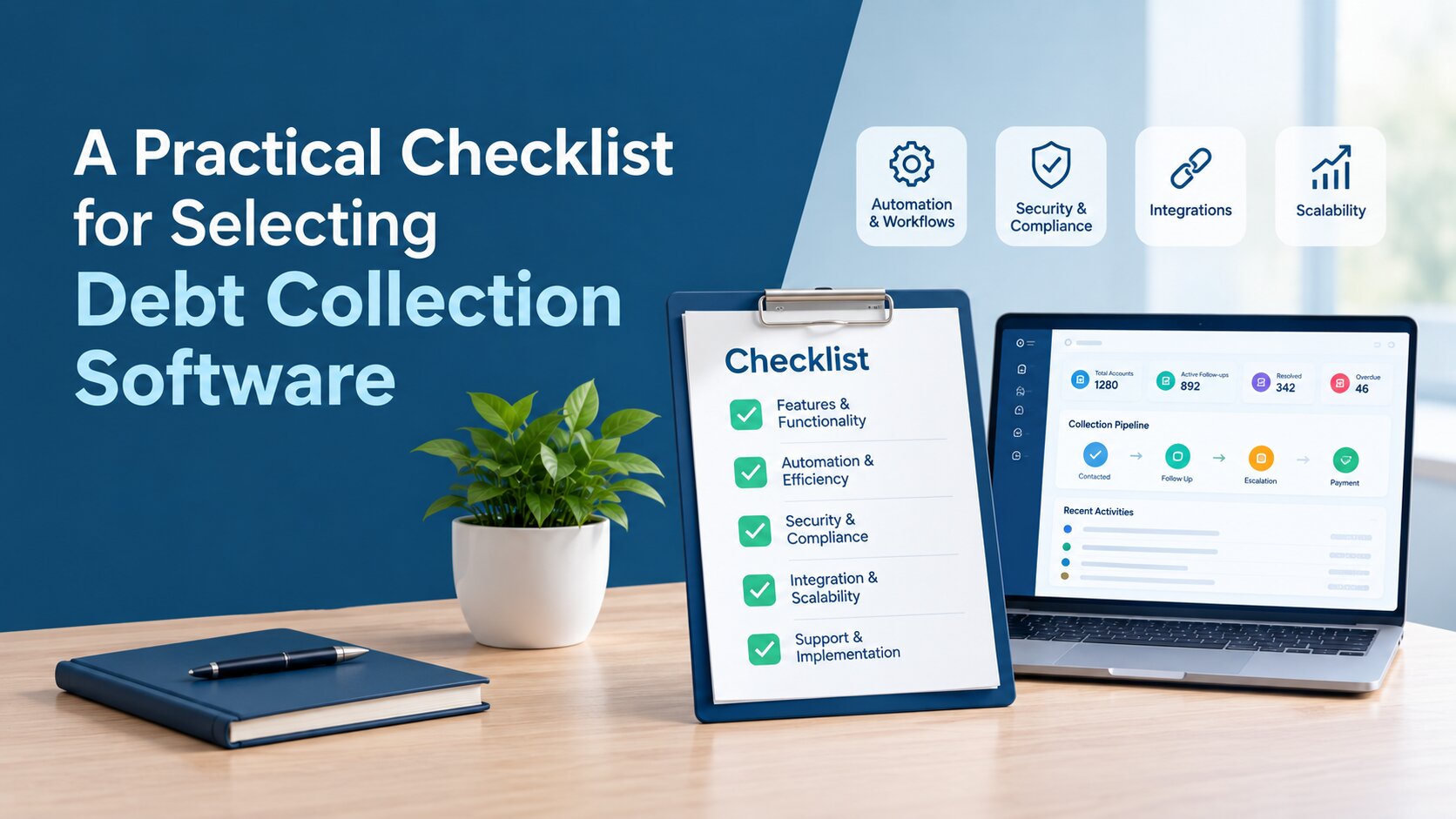
If you're comparing debt collection software, it's worth looking beyond the basic features and focusing on the tools that can genuinely improve your team's day-to-day work. Here are ten features that should be on your checklist.
Why Choosing the Right Debt Collection Software Matters
The effectiveness of a debt collection agency depends heavily on how well it manages its accounts and follows up with debtors.
As the number of accounts grows, relying on manual processes becomes increasingly difficult. Collectors need quick access to accurate information, managers need visibility into performance, and clients expect clear updates on recovery progress. Modern debt collection software can bring these activities together in one system. By reducing repetitive administrative work and keeping account information organised, it allows collection teams to spend more time on the accounts that need their attention.
The right platform can also give managers a clearer view of what's happening across the business. Instead of waiting for manually prepared reports, they can monitor recovery activity, payment trends, and team performance more easily. With that in mind, let's look at the features that matter most.
1. Centralised Account Management
A collection team should not have to search through multiple spreadsheets, emails, or folders just to understand the status of an account. One of the most important features of debt collection agency software is a centralised account management system. It gives collectors a single place to find the information they need about each debtor or account.
Depending on the software, this may include:
- Debtor contact details
- Outstanding balances
- Payment history
- Previous communications
- Assigned collectors
- Account status
- Supporting documents
- Notes and follow-up activities
Having this information in one place makes it easier for collectors to understand an account before taking action. It also reduces the risk of important information being overlooked. Centralised account management becomes particularly valuable when several team members are working on accounts for the same client. Everyone can work from the same set of information instead of maintaining separate records.
2. Automated Follow-Ups and Reminders
Consistent follow-up is an important part of debt recovery. The problem is that manually tracking every reminder can take a significant amount of time.
It's easy for a collector to lose track of which account needs a call today, which debtor needs an email tomorrow, or which payment plan requires another reminder next week. Debt collection software with automated reminders and follow-ups can take much of this work off the team's hands. Depending on the platform and communication setup, agencies may be able to schedule messages through channels such as email, SMS, or WhatsApp. Follow-ups can be triggered based on payment dates, account status, or specific stages in the collection process.
This doesn't mean every interaction has to be automated. Instead, automation can handle routine communication while collectors focus their time on accounts that require judgement, negotiation, or a more personal approach.
3. Smart Task and Case Assignment
As a collection agency grows, manually assigning accounts can become a challenge. If cases aren't distributed carefully, some collectors may end up overloaded while others have more capacity. High-priority accounts may also take longer to reach the right person.
A good debt collection system should make it easier to assign cases and tasks based on factors such as:
- Collector workload
- Account priority
- Account value
- Collection stage
- Client requirements
- Predefined business rules
Smart assignment helps managers distribute work more evenly and ensures that important accounts don't get overlooked. It also gives teams a clearer understanding of who is responsible for each account, reducing confusion and improving accountability.
4. Payment Tracking and Reconciliation
Accurate payment tracking is essential for any debt collection agency. Collectors and managers need to know how much has been paid, what remains outstanding, and whether an agreed payment arrangement is being followed. Clients also need reliable information about the money recovered on their behalf.
Debt collection software should make it easy to record and monitor the following:
- Full payments
- Partial payments
- Instalments
- Payment plans
- Settlements
- Outstanding balances
- Payment history
A clear record of payments reduces the need for manual calculations and makes it easier to understand the current position of every account. It also helps agencies maintain accurate client reports and reduces the risk of errors caused by keeping payment information across multiple systems.
5. Real-Time Reporting and Dashboards
Data is only useful when teams can actually make sense of it. Without good reporting tools, managers may struggle to understand which accounts are progressing, which collectors are performing well, or where recovery efforts are slowing down. Real-time dashboards can provide a clearer picture of collection activity by bringing key information together in one view.
Depending on the platform, agencies may be able to monitor metrics such as:
- Recovery rates
- Outstanding balances
- Amounts collected
- Payment trends
- Ageing accounts
- Collector performance
- Account status
- Collection activity
This gives managers a more current view of the business and helps them spot issues earlier.
For example, if a particular group of accounts is showing slower recovery than expected, managers can investigate and take action rather than discovering the problem weeks later in a manually prepared report.
6. Multi-Channel Communication
Not every debtor responds to communication in the same way. Some may prefer email. Others may be more responsive to SMS, phone calls, or messaging platforms such as WhatsApp.
For this reason, multi-channel communication can be an important feature when choosing debt collection software. A platform that supports multiple communication channels can help agencies manage interactions more consistently. More importantly, it should keep a record of those communications alongside the relevant account. This means a collector can review previous interactions before making the next contact.
Instead of asking, "What happened the last time we spoke to this person?", the collector can quickly check the account history and continue the conversation with the right context. That small difference can make communication more organised and reduce unnecessary repetition.
7. Compliance and Audit Support
Debt collection involves sensitive financial and personal information, so agencies need to take data handling and regulatory obligations seriously. The specific requirements will vary depending on the country, industry, and type of debt being collected. However, software can help agencies maintain better records and support more consistent internal processes.
Useful compliance-related capabilities may include:
- Activity logs
- Communication histories
- User permissions
- Role-based access
- Audit trails
- Document records
- Account-level histories
These features create a clearer record of what happened and when. For agencies, this can make it easier to review account activity, investigate disputes, and demonstrate that internal procedures are being followed. Software doesn't replace the need for legal or regulatory compliance, but having reliable records and appropriate access controls can make compliance management more organised.
8. Customisable Collection Workflows
Every debt collection agency operates a little differently. An agency handling banking collections may have very different processes from one working with healthcare providers, utilities, or commercial businesses. Client requirements can also vary significantly. This is why customisable workflows are valuable.
Rather than forcing every account through the same process, agencies should be able to configure workflows around their own operations. This might include:
- Collection stages
- Reminder schedules
- Escalation rules
- Approval processes
- Task sequences
- Follow-up activities
- Client-specific requirements
For example, one client may require several automated reminders before an account is escalated, while another may have a completely different process. Flexible workflows allow agencies to adapt the software to their way of working instead of constantly changing their processes to fit the software.
9. Secure Cloud Access
Collection teams are increasingly distributed across offices, locations, and regions. Clients may also be based in different countries. Cloud-based debt collection software can give authorised users access to account information without tying the system to a single physical office or local server. This can make collaboration easier, particularly for teams working across multiple locations.
A reliable cloud platform should also include appropriate security measures, such as:
- Role-based access controls
- Data encryption
- User authentication
- Activity monitoring
- Regular backups
- Secure infrastructure
The exact security measures will depend on the provider, so agencies should review the vendor's security practices carefully before choosing a solution. When implemented properly, cloud access can provide both flexibility and business continuity while helping agencies manage sensitive information responsibly.
10. Integration with Other Business Systems
Debt collection software shouldn't have to operate as a completely separate system. Agencies often rely on other tools for accounting, CRM, ERP, banking, payments, and client management. If these systems don't communicate with each other, teams may end up entering the same information multiple times. Integrations can help reduce this problem.
Depending on the software, agencies may be able to connect their collection platform with:
- Accounting systems
- CRM software
- ERP platforms
- Payment gateways
- Banking systems
- Client databases
When systems share information effectively, teams spend less time copying data between platforms. It can also help reduce inconsistencies and give different departments a more reliable view of account information. For growing agencies, this becomes increasingly important as the number of accounts and clients increases.
How Beveron Smart Debt Collection Helps Agencies Work More Efficiently
Choosing the right features is important, but the real value comes from how well those features work together in everyday operations.
Beveron Smart Debt Collection is designed to help agencies manage key parts of the debt recovery process through a centralised platform. If you're looking for a more streamlined approach to managing collection operations, you can also explore how Beveron helps debt collection agencies and the ways technology can support more efficient recovery workflows.
The solution brings together capabilities such as debtor management, automated reminders, case assignment, payment tracking, document management, workflow management, role-based access, and reporting. With information organised in one system, collection teams can spend less time switching between disconnected tools and more time focusing on recovery activities.
The platform also provides cloud-based access for authorised users and supports integration with other business systems, helping agencies streamline their workflows as they grow. For agencies managing large volumes of accounts, having these capabilities in one place can make everyday collection operations easier to manage and give managers better visibility into overall performance.
How to Choose the Right Debt Collection Agency Software
The best software isn't necessarily the one with the longest feature list. What matters is whether the platform fits the way your agency actually works.
Before making a decision, consider questions such as:
- How many accounts does your agency currently manage?
- Will the software scale as your account volume grows?
- Which tasks take up the most time today?
- Does the platform support your preferred communication channels?
- Can workflows be customised for different clients?
- How does the software handle sensitive data?
- Can it integrate with your existing systems?
- What reporting does your management team need?
- Is the platform easy for collectors to use?
It's also worth thinking about how much automation and intelligence your agency will need in the future. While basic automation can handle repetitive tasks such as reminders and follow-ups, AI-powered systems are increasingly being used for account prioritisation, personalised communication, predictive insights, and other parts of the recovery process. Our guide to AI in debt collection explores some of the most important applications in more detail.
If your agency is planning to move away from legacy systems or spreadsheets, it's equally important to evaluate whether a cloud-based platform offers the flexibility and scalability you need. Read our guide on Choosing the Right Cloud-Based Debt Collection Software for Agencies in the UAE to learn what factors to consider before making your decision.
Final Thoughts
Choosing debt collection agency software is about more than replacing spreadsheets. The right platform can help agencies organise account information, automate repetitive tasks, improve communication, track payments, and understand performance more clearly. The ten features covered here provide a useful starting point when evaluating different solutions. However, your agency's specific requirements should ultimately guide the decision.
Think about where your current process slows down. Is it manual follow-ups? Payment tracking? Case assignment? Reporting? Communication? Once you identify those gaps, you can focus on software features that solve real problems rather than simply choosing a platform because it has a long list of capabilities. A well-chosen debt collection system should make your team's work easier today while giving your agency the flexibility to grow tomorrow.
Ready to Modernise Your Debt Collection Process?
If your team is still relying on disconnected tools and manual follow-ups, it may be time to explore a more streamlined approach. Beveron Smart Debt Collection brings key debt recovery activities together in one platform, helping agencies manage debtor accounts, automate communication, track payments, monitor performance, and organise collection workflows.
If you're looking to improve operational efficiency, give your collectors better visibility, or manage a growing volume of accounts more effectively, exploring the right debt collection software could be a worthwhile next step.
Book a personalised demo to see how Beveron Smart Debt Collection can support your agency's recovery operations.
Frequently Asked Questions
1. What is debt collection agency software?
Debt collection agency software is a digital platform designed to help agencies manage debtor accounts and organise their recovery activities. Depending on the solution, it may include features for account management, automated follow-ups, payment tracking, communication, reporting, workflow management, and client updates.
2. What features should I look for in debt collection software?
Key features to consider include centralised account management, automated reminders, case assignment, payment tracking, reporting dashboards, multi-channel communication, customisable workflows, secure cloud access, compliance and audit support, and integrations with other business systems.
3. How does debt collection software improve recovery operations?
Debt collection software can improve recovery operations by reducing manual work, keeping account information organised, automating routine follow-ups, and giving collectors and managers better visibility into account activity. This can help teams prioritise their work and respond to accounts more efficiently.
4. Is cloud-based debt collection software secure?
Cloud-based software can be secure when appropriate security controls support it. Agencies should look for features such as encryption, role-based access control, user authentication, activity logging, secure infrastructure, and regular backups. They should also review the provider's security and data protection practices before making a decision.
5. Is Beveron Smart Debt Collection suitable for growing debt collection agencies?
Beveron Smart Debt Collection is designed to support debt collection operations as they grow. Its features include debtor management, workflow automation, payment tracking, reporting, secure cloud access, and tools to help teams manage collection activities more efficiently.
Best debt collection management software for finance teams in the UAE
Best payment collection software for educational institutions in the UAE
Best cloud-based debt collection agency software in the UAE
If you need a free demo of the
Debt collection has never been a simple process. Agencies often manage hundreds or even thousands of accounts, follow up with debtors across different channels, track payments, and keep clients informed about recovery progress—all at the same time.
When these tasks are handled through spreadsheets, emails, and disconnected systems, things can quickly become difficult to manage. A follow-up may be missed. A payment might not be recorded correctly. A collector may spend more time searching for account information than actually working on recovery.
This is where debt collection agency software can make a real difference.
The right software brings important information and everyday collection activities into one place. It can help agencies organise accounts, automate routine follow-ups, track payments, manage workflows, and understand how their teams are performing.
If you're considering moving away from spreadsheets and manual follow-ups, our guide to debt collection automation explains five practical steps for building a more streamlined collection process, from centralising debtor information to automating communication and tracking recovery performance.
But not every solution offers the same capabilities.
If you're comparing debt collection software, it's worth looking beyond the basic features and focusing on the tools that can genuinely improve your team's day-to-day work. Here are ten features that should be on your checklist.
Why Choosing the Right Debt Collection Software Matters
The effectiveness of a debt collection agency depends heavily on how well it manages its accounts and follows up with debtors.
As the number of accounts grows, relying on manual processes becomes increasingly difficult. Collectors need quick access to accurate information, managers need visibility into performance, and clients expect clear updates on recovery progress. Modern debt collection software can bring these activities together in one system. By reducing repetitive administrative work and keeping account information organised, it allows collection teams to spend more time on the accounts that need their attention.
The right platform can also give managers a clearer view of what's happening across the business. Instead of waiting for manually prepared reports, they can monitor recovery activity, payment trends, and team performance more easily. With that in mind, let's look at the features that matter most.
1. Centralised Account Management
A collection team should not have to search through multiple spreadsheets, emails, or folders just to understand the status of an account. One of the most important features of debt collection agency software is a centralised account management system. It gives collectors a single place to find the information they need about each debtor or account.
Depending on the software, this may include:
- Debtor contact details
- Outstanding balances
- Payment history
- Previous communications
- Assigned collectors
- Account status
- Supporting documents
- Notes and follow-up activities
Having this information in one place makes it easier for collectors to understand an account before taking action. It also reduces the risk of important information being overlooked. Centralised account management becomes particularly valuable when several team members are working on accounts for the same client. Everyone can work from the same set of information instead of maintaining separate records.
2. Automated Follow-Ups and Reminders
Consistent follow-up is an important part of debt recovery. The problem is that manually tracking every reminder can take a significant amount of time.
It's easy for a collector to lose track of which account needs a call today, which debtor needs an email tomorrow, or which payment plan requires another reminder next week. Debt collection software with automated reminders and follow-ups can take much of this work off the team's hands. Depending on the platform and communication setup, agencies may be able to schedule messages through channels such as email, SMS, or WhatsApp. Follow-ups can be triggered based on payment dates, account status, or specific stages in the collection process.
This doesn't mean every interaction has to be automated. Instead, automation can handle routine communication while collectors focus their time on accounts that require judgement, negotiation, or a more personal approach.
3. Smart Task and Case Assignment
As a collection agency grows, manually assigning accounts can become a challenge. If cases aren't distributed carefully, some collectors may end up overloaded while others have more capacity. High-priority accounts may also take longer to reach the right person.
A good debt collection system should make it easier to assign cases and tasks based on factors such as:
- Collector workload
- Account priority
- Account value
- Collection stage
- Client requirements
- Predefined business rules
Smart assignment helps managers distribute work more evenly and ensures that important accounts don't get overlooked. It also gives teams a clearer understanding of who is responsible for each account, reducing confusion and improving accountability.
4. Payment Tracking and Reconciliation
Accurate payment tracking is essential for any debt collection agency. Collectors and managers need to know how much has been paid, what remains outstanding, and whether an agreed payment arrangement is being followed. Clients also need reliable information about the money recovered on their behalf.
Debt collection software should make it easy to record and monitor the following:
- Full payments
- Partial payments
- Instalments
- Payment plans
- Settlements
- Outstanding balances
- Payment history
A clear record of payments reduces the need for manual calculations and makes it easier to understand the current position of every account. It also helps agencies maintain accurate client reports and reduces the risk of errors caused by keeping payment information across multiple systems.
5. Real-Time Reporting and Dashboards
Data is only useful when teams can actually make sense of it. Without good reporting tools, managers may struggle to understand which accounts are progressing, which collectors are performing well, or where recovery efforts are slowing down. Real-time dashboards can provide a clearer picture of collection activity by bringing key information together in one view.
Depending on the platform, agencies may be able to monitor metrics such as:
- Recovery rates
- Outstanding balances
- Amounts collected
- Payment trends
- Ageing accounts
- Collector performance
- Account status
- Collection activity
This gives managers a more current view of the business and helps them spot issues earlier.
For example, if a particular group of accounts is showing slower recovery than expected, managers can investigate and take action rather than discovering the problem weeks later in a manually prepared report.
6. Multi-Channel Communication
Not every debtor responds to communication in the same way. Some may prefer email. Others may be more responsive to SMS, phone calls, or messaging platforms such as WhatsApp.
For this reason, multi-channel communication can be an important feature when choosing debt collection software. A platform that supports multiple communication channels can help agencies manage interactions more consistently. More importantly, it should keep a record of those communications alongside the relevant account. This means a collector can review previous interactions before making the next contact.
Instead of asking, "What happened the last time we spoke to this person?", the collector can quickly check the account history and continue the conversation with the right context. That small difference can make communication more organised and reduce unnecessary repetition.
7. Compliance and Audit Support
Debt collection involves sensitive financial and personal information, so agencies need to take data handling and regulatory obligations seriously. The specific requirements will vary depending on the country, industry, and type of debt being collected. However, software can help agencies maintain better records and support more consistent internal processes.
Useful compliance-related capabilities may include:
- Activity logs
- Communication histories
- User permissions
- Role-based access
- Audit trails
- Document records
- Account-level histories
These features create a clearer record of what happened and when. For agencies, this can make it easier to review account activity, investigate disputes, and demonstrate that internal procedures are being followed. Software doesn't replace the need for legal or regulatory compliance, but having reliable records and appropriate access controls can make compliance management more organised.
8. Customisable Collection Workflows
Every debt collection agency operates a little differently. An agency handling banking collections may have very different processes from one working with healthcare providers, utilities, or commercial businesses. Client requirements can also vary significantly. This is why customisable workflows are valuable.
Rather than forcing every account through the same process, agencies should be able to configure workflows around their own operations. This might include:
- Collection stages
- Reminder schedules
- Escalation rules
- Approval processes
- Task sequences
- Follow-up activities
- Client-specific requirements
For example, one client may require several automated reminders before an account is escalated, while another may have a completely different process. Flexible workflows allow agencies to adapt the software to their way of working instead of constantly changing their processes to fit the software.
9. Secure Cloud Access
Collection teams are increasingly distributed across offices, locations, and regions. Clients may also be based in different countries. Cloud-based debt collection software can give authorised users access to account information without tying the system to a single physical office or local server. This can make collaboration easier, particularly for teams working across multiple locations.
A reliable cloud platform should also include appropriate security measures, such as:
- Role-based access controls
- Data encryption
- User authentication
- Activity monitoring
- Regular backups
- Secure infrastructure
The exact security measures will depend on the provider, so agencies should review the vendor's security practices carefully before choosing a solution. When implemented properly, cloud access can provide both flexibility and business continuity while helping agencies manage sensitive information responsibly.
10. Integration with Other Business Systems
Debt collection software shouldn't have to operate as a completely separate system. Agencies often rely on other tools for accounting, CRM, ERP, banking, payments, and client management. If these systems don't communicate with each other, teams may end up entering the same information multiple times. Integrations can help reduce this problem.
Depending on the software, agencies may be able to connect their collection platform with:
- Accounting systems
- CRM software
- ERP platforms
- Payment gateways
- Banking systems
- Client databases
When systems share information effectively, teams spend less time copying data between platforms. It can also help reduce inconsistencies and give different departments a more reliable view of account information. For growing agencies, this becomes increasingly important as the number of accounts and clients increases.
How Beveron Smart Debt Collection Helps Agencies Work More Efficiently
Choosing the right features is important, but the real value comes from how well those features work together in everyday operations.
Beveron Smart Debt Collection is designed to help agencies manage key parts of the debt recovery process through a centralised platform. If you're looking for a more streamlined approach to managing collection operations, you can also explore how Beveron helps debt collection agencies and the ways technology can support more efficient recovery workflows.
The solution brings together capabilities such as debtor management, automated reminders, case assignment, payment tracking, document management, workflow management, role-based access, and reporting. With information organised in one system, collection teams can spend less time switching between disconnected tools and more time focusing on recovery activities.
The platform also provides cloud-based access for authorised users and supports integration with other business systems, helping agencies streamline their workflows as they grow. For agencies managing large volumes of accounts, having these capabilities in one place can make everyday collection operations easier to manage and give managers better visibility into overall performance.
How to Choose the Right Debt Collection Agency Software
The best software isn't necessarily the one with the longest feature list. What matters is whether the platform fits the way your agency actually works.
Before making a decision, consider questions such as:
- How many accounts does your agency currently manage?
- Will the software scale as your account volume grows?
- Which tasks take up the most time today?
- Does the platform support your preferred communication channels?
- Can workflows be customised for different clients?
- How does the software handle sensitive data?
- Can it integrate with your existing systems?
- What reporting does your management team need?
- Is the platform easy for collectors to use?
It's also worth thinking about how much automation and intelligence your agency will need in the future. While basic automation can handle repetitive tasks such as reminders and follow-ups, AI-powered systems are increasingly being used for account prioritisation, personalised communication, predictive insights, and other parts of the recovery process. Our guide to AI in debt collection explores some of the most important applications in more detail.
If your agency is planning to move away from legacy systems or spreadsheets, it's equally important to evaluate whether a cloud-based platform offers the flexibility and scalability you need. Read our guide on Choosing the Right Cloud-Based Debt Collection Software for Agencies in the UAE to learn what factors to consider before making your decision.
Final Thoughts
Choosing debt collection agency software is about more than replacing spreadsheets. The right platform can help agencies organise account information, automate repetitive tasks, improve communication, track payments, and understand performance more clearly. The ten features covered here provide a useful starting point when evaluating different solutions. However, your agency's specific requirements should ultimately guide the decision.
Think about where your current process slows down. Is it manual follow-ups? Payment tracking? Case assignment? Reporting? Communication? Once you identify those gaps, you can focus on software features that solve real problems rather than simply choosing a platform because it has a long list of capabilities. A well-chosen debt collection system should make your team's work easier today while giving your agency the flexibility to grow tomorrow.
Ready to Modernise Your Debt Collection Process?
If your team is still relying on disconnected tools and manual follow-ups, it may be time to explore a more streamlined approach. Beveron Smart Debt Collection brings key debt recovery activities together in one platform, helping agencies manage debtor accounts, automate communication, track payments, monitor performance, and organise collection workflows.
If you're looking to improve operational efficiency, give your collectors better visibility, or manage a growing volume of accounts more effectively, exploring the right debt collection software could be a worthwhile next step.
Book a personalised demo to see how Beveron Smart Debt Collection can support your agency's recovery operations.
Frequently Asked Questions
1. What is debt collection agency software?
Debt collection agency software is a digital platform designed to help agencies manage debtor accounts and organise their recovery activities. Depending on the solution, it may include features for account management, automated follow-ups, payment tracking, communication, reporting, workflow management, and client updates.
2. What features should I look for in debt collection software?
Key features to consider include centralised account management, automated reminders, case assignment, payment tracking, reporting dashboards, multi-channel communication, customisable workflows, secure cloud access, compliance and audit support, and integrations with other business systems.
3. How does debt collection software improve recovery operations?
Debt collection software can improve recovery operations by reducing manual work, keeping account information organised, automating routine follow-ups, and giving collectors and managers better visibility into account activity. This can help teams prioritise their work and respond to accounts more efficiently.
4. Is cloud-based debt collection software secure?
Cloud-based software can be secure when appropriate security controls support it. Agencies should look for features such as encryption, role-based access control, user authentication, activity logging, secure infrastructure, and regular backups. They should also review the provider's security and data protection practices before making a decision.
5. Is Beveron Smart Debt Collection suitable for growing debt collection agencies?
Beveron Smart Debt Collection is designed to support debt collection operations as they grow. Its features include debtor management, workflow automation, payment tracking, reporting, secure cloud access, and tools to help teams manage collection activities more efficiently.
Best debt collection management software for finance teams in the UAE
Best payment collection software for educational institutions in the UAE
Best cloud-based debt collection agency software in the UAE
If you need a free demo of the
Debt collection has never been a simple process. Agencies often manage hundreds or even thousands of accounts, follow up with debtors across different channels, track payments, and keep clients informed about recovery progress—all at the same time.
When these tasks are handled through spreadsheets, emails, and disconnected systems, things can quickly become difficult to manage. A follow-up may be missed. A payment might not be recorded correctly. A collector may spend more time searching for account information than actually working on recovery.
This is where debt collection agency software can make a real difference.
The right software brings important information and everyday collection activities into one place. It can help agencies organise accounts, automate routine follow-ups, track payments, manage workflows, and understand how their teams are performing.
If you're considering moving away from spreadsheets and manual follow-ups, our guide to debt collection automation explains five practical steps for building a more streamlined collection process, from centralising debtor information to automating communication and tracking recovery performance.
But not every solution offers the same capabilities.
If you're comparing debt collection software, it's worth looking beyond the basic features and focusing on the tools that can genuinely improve your team's day-to-day work. Here are ten features that should be on your checklist.
Why Choosing the Right Debt Collection Software Matters
The effectiveness of a debt collection agency depends heavily on how well it manages its accounts and follows up with debtors.
As the number of accounts grows, relying on manual processes becomes increasingly difficult. Collectors need quick access to accurate information, managers need visibility into performance, and clients expect clear updates on recovery progress. Modern debt collection software can bring these activities together in one system. By reducing repetitive administrative work and keeping account information organised, it allows collection teams to spend more time on the accounts that need their attention.
The right platform can also give managers a clearer view of what's happening across the business. Instead of waiting for manually prepared reports, they can monitor recovery activity, payment trends, and team performance more easily. With that in mind, let's look at the features that matter most.
1. Centralised Account Management
A collection team should not have to search through multiple spreadsheets, emails, or folders just to understand the status of an account. One of the most important features of debt collection agency software is a centralised account management system. It gives collectors a single place to find the information they need about each debtor or account.
Depending on the software, this may include:
- Debtor contact details
- Outstanding balances
- Payment history
- Previous communications
- Assigned collectors
- Account status
- Supporting documents
- Notes and follow-up activities
Having this information in one place makes it easier for collectors to understand an account before taking action. It also reduces the risk of important information being overlooked. Centralised account management becomes particularly valuable when several team members are working on accounts for the same client. Everyone can work from the same set of information instead of maintaining separate records.
2. Automated Follow-Ups and Reminders
Consistent follow-up is an important part of debt recovery. The problem is that manually tracking every reminder can take a significant amount of time.
It's easy for a collector to lose track of which account needs a call today, which debtor needs an email tomorrow, or which payment plan requires another reminder next week. Debt collection software with automated reminders and follow-ups can take much of this work off the team's hands. Depending on the platform and communication setup, agencies may be able to schedule messages through channels such as email, SMS, or WhatsApp. Follow-ups can be triggered based on payment dates, account status, or specific stages in the collection process.
This doesn't mean every interaction has to be automated. Instead, automation can handle routine communication while collectors focus their time on accounts that require judgement, negotiation, or a more personal approach.
3. Smart Task and Case Assignment
As a collection agency grows, manually assigning accounts can become a challenge. If cases aren't distributed carefully, some collectors may end up overloaded while others have more capacity. High-priority accounts may also take longer to reach the right person.
A good debt collection system should make it easier to assign cases and tasks based on factors such as:
- Collector workload
- Account priority
- Account value
- Collection stage
- Client requirements
- Predefined business rules
Smart assignment helps managers distribute work more evenly and ensures that important accounts don't get overlooked. It also gives teams a clearer understanding of who is responsible for each account, reducing confusion and improving accountability.
4. Payment Tracking and Reconciliation
Accurate payment tracking is essential for any debt collection agency. Collectors and managers need to know how much has been paid, what remains outstanding, and whether an agreed payment arrangement is being followed. Clients also need reliable information about the money recovered on their behalf.
Debt collection software should make it easy to record and monitor the following:
- Full payments
- Partial payments
- Instalments
- Payment plans
- Settlements
- Outstanding balances
- Payment history
A clear record of payments reduces the need for manual calculations and makes it easier to understand the current position of every account. It also helps agencies maintain accurate client reports and reduces the risk of errors caused by keeping payment information across multiple systems.
5. Real-Time Reporting and Dashboards
Data is only useful when teams can actually make sense of it. Without good reporting tools, managers may struggle to understand which accounts are progressing, which collectors are performing well, or where recovery efforts are slowing down. Real-time dashboards can provide a clearer picture of collection activity by bringing key information together in one view.
Depending on the platform, agencies may be able to monitor metrics such as:
- Recovery rates
- Outstanding balances
- Amounts collected
- Payment trends
- Ageing accounts
- Collector performance
- Account status
- Collection activity
This gives managers a more current view of the business and helps them spot issues earlier.
For example, if a particular group of accounts is showing slower recovery than expected, managers can investigate and take action rather than discovering the problem weeks later in a manually prepared report.
6. Multi-Channel Communication
Not every debtor responds to communication in the same way. Some may prefer email. Others may be more responsive to SMS, phone calls, or messaging platforms such as WhatsApp.
For this reason, multi-channel communication can be an important feature when choosing debt collection software. A platform that supports multiple communication channels can help agencies manage interactions more consistently. More importantly, it should keep a record of those communications alongside the relevant account. This means a collector can review previous interactions before making the next contact.
Instead of asking, "What happened the last time we spoke to this person?", the collector can quickly check the account history and continue the conversation with the right context. That small difference can make communication more organised and reduce unnecessary repetition.
7. Compliance and Audit Support
Debt collection involves sensitive financial and personal information, so agencies need to take data handling and regulatory obligations seriously. The specific requirements will vary depending on the country, industry, and type of debt being collected. However, software can help agencies maintain better records and support more consistent internal processes.
Useful compliance-related capabilities may include:
- Activity logs
- Communication histories
- User permissions
- Role-based access
- Audit trails
- Document records
- Account-level histories
These features create a clearer record of what happened and when. For agencies, this can make it easier to review account activity, investigate disputes, and demonstrate that internal procedures are being followed. Software doesn't replace the need for legal or regulatory compliance, but having reliable records and appropriate access controls can make compliance management more organised.
8. Customisable Collection Workflows
Every debt collection agency operates a little differently. An agency handling banking collections may have very different processes from one working with healthcare providers, utilities, or commercial businesses. Client requirements can also vary significantly. This is why customisable workflows are valuable.
Rather than forcing every account through the same process, agencies should be able to configure workflows around their own operations. This might include:
- Collection stages
- Reminder schedules
- Escalation rules
- Approval processes
- Task sequences
- Follow-up activities
- Client-specific requirements
For example, one client may require several automated reminders before an account is escalated, while another may have a completely different process. Flexible workflows allow agencies to adapt the software to their way of working instead of constantly changing their processes to fit the software.
9. Secure Cloud Access
Collection teams are increasingly distributed across offices, locations, and regions. Clients may also be based in different countries. Cloud-based debt collection software can give authorised users access to account information without tying the system to a single physical office or local server. This can make collaboration easier, particularly for teams working across multiple locations.
A reliable cloud platform should also include appropriate security measures, such as:
- Role-based access controls
- Data encryption
- User authentication
- Activity monitoring
- Regular backups
- Secure infrastructure
The exact security measures will depend on the provider, so agencies should review the vendor's security practices carefully before choosing a solution. When implemented properly, cloud access can provide both flexibility and business continuity while helping agencies manage sensitive information responsibly.
10. Integration with Other Business Systems
Debt collection software shouldn't have to operate as a completely separate system. Agencies often rely on other tools for accounting, CRM, ERP, banking, payments, and client management. If these systems don't communicate with each other, teams may end up entering the same information multiple times. Integrations can help reduce this problem.
Depending on the software, agencies may be able to connect their collection platform with:
- Accounting systems
- CRM software
- ERP platforms
- Payment gateways
- Banking systems
- Client databases
When systems share information effectively, teams spend less time copying data between platforms. It can also help reduce inconsistencies and give different departments a more reliable view of account information. For growing agencies, this becomes increasingly important as the number of accounts and clients increases.
How Beveron Smart Debt Collection Helps Agencies Work More Efficiently
Choosing the right features is important, but the real value comes from how well those features work together in everyday operations.
Beveron Smart Debt Collection is designed to help agencies manage key parts of the debt recovery process through a centralised platform. If you're looking for a more streamlined approach to managing collection operations, you can also explore how Beveron helps debt collection agencies and the ways technology can support more efficient recovery workflows.
The solution brings together capabilities such as debtor management, automated reminders, case assignment, payment tracking, document management, workflow management, role-based access, and reporting. With information organised in one system, collection teams can spend less time switching between disconnected tools and more time focusing on recovery activities.
The platform also provides cloud-based access for authorised users and supports integration with other business systems, helping agencies streamline their workflows as they grow. For agencies managing large volumes of accounts, having these capabilities in one place can make everyday collection operations easier to manage and give managers better visibility into overall performance.
How to Choose the Right Debt Collection Agency Software
The best software isn't necessarily the one with the longest feature list. What matters is whether the platform fits the way your agency actually works.
Before making a decision, consider questions such as:
- How many accounts does your agency currently manage?
- Will the software scale as your account volume grows?
- Which tasks take up the most time today?
- Does the platform support your preferred communication channels?
- Can workflows be customised for different clients?
- How does the software handle sensitive data?
- Can it integrate with your existing systems?
- What reporting does your management team need?
- Is the platform easy for collectors to use?
It's also worth thinking about how much automation and intelligence your agency will need in the future. While basic automation can handle repetitive tasks such as reminders and follow-ups, AI-powered systems are increasingly being used for account prioritisation, personalised communication, predictive insights, and other parts of the recovery process. Our guide to AI in debt collection explores some of the most important applications in more detail.
If your agency is planning to move away from legacy systems or spreadsheets, it's equally important to evaluate whether a cloud-based platform offers the flexibility and scalability you need. Read our guide on Choosing the Right Cloud-Based Debt Collection Software for Agencies in the UAE to learn what factors to consider before making your decision.
Final Thoughts
Choosing debt collection agency software is about more than replacing spreadsheets. The right platform can help agencies organise account information, automate repetitive tasks, improve communication, track payments, and understand performance more clearly. The ten features covered here provide a useful starting point when evaluating different solutions. However, your agency's specific requirements should ultimately guide the decision.
Think about where your current process slows down. Is it manual follow-ups? Payment tracking? Case assignment? Reporting? Communication? Once you identify those gaps, you can focus on software features that solve real problems rather than simply choosing a platform because it has a long list of capabilities. A well-chosen debt collection system should make your team's work easier today while giving your agency the flexibility to grow tomorrow.
Ready to Modernise Your Debt Collection Process?
If your team is still relying on disconnected tools and manual follow-ups, it may be time to explore a more streamlined approach. Beveron Smart Debt Collection brings key debt recovery activities together in one platform, helping agencies manage debtor accounts, automate communication, track payments, monitor performance, and organise collection workflows.
If you're looking to improve operational efficiency, give your collectors better visibility, or manage a growing volume of accounts more effectively, exploring the right debt collection software could be a worthwhile next step.
Book a personalised demo to see how Beveron Smart Debt Collection can support your agency's recovery operations.
Frequently Asked Questions
1. What is debt collection agency software?
Debt collection agency software is a digital platform designed to help agencies manage debtor accounts and organise their recovery activities. Depending on the solution, it may include features for account management, automated follow-ups, payment tracking, communication, reporting, workflow management, and client updates.
2. What features should I look for in debt collection software?
Key features to consider include centralised account management, automated reminders, case assignment, payment tracking, reporting dashboards, multi-channel communication, customisable workflows, secure cloud access, compliance and audit support, and integrations with other business systems.
3. How does debt collection software improve recovery operations?
Debt collection software can improve recovery operations by reducing manual work, keeping account information organised, automating routine follow-ups, and giving collectors and managers better visibility into account activity. This can help teams prioritise their work and respond to accounts more efficiently.
4. Is cloud-based debt collection software secure?
Cloud-based software can be secure when appropriate security controls support it. Agencies should look for features such as encryption, role-based access control, user authentication, activity logging, secure infrastructure, and regular backups. They should also review the provider's security and data protection practices before making a decision.
5. Is Beveron Smart Debt Collection suitable for growing debt collection agencies?
Beveron Smart Debt Collection is designed to support debt collection operations as they grow. Its features include debtor management, workflow automation, payment tracking, reporting, secure cloud access, and tools to help teams manage collection activities more efficiently.
Best debt collection management software for finance teams in the UAE
Best payment collection software for educational institutions in the UAE
Best cloud-based debt collection agency software in the UAE
If you need a free demo of the
Debt collection has never been a simple process. Agencies often manage hundreds or even thousands of accounts, follow up with debtors across different channels, track payments, and keep clients informed about recovery progress—all at the same time.
When these tasks are handled through spreadsheets, emails, and disconnected systems, things can quickly become difficult to manage. A follow-up may be missed. A payment might not be recorded correctly. A collector may spend more time searching for account information than actually working on recovery.
This is where debt collection agency software can make a real difference.
The right software brings important information and everyday collection activities into one place. It can help agencies organise accounts, automate routine follow-ups, track payments, manage workflows, and understand how their teams are performing.
If you're considering moving away from spreadsheets and manual follow-ups, our guide to debt collection automation explains five practical steps for building a more streamlined collection process, from centralising debtor information to automating communication and tracking recovery performance.
But not every solution offers the same capabilities.
If you're comparing debt collection software, it's worth looking beyond the basic features and focusing on the tools that can genuinely improve your team's day-to-day work. Here are ten features that should be on your checklist.
Why Choosing the Right Debt Collection Software Matters
The effectiveness of a debt collection agency depends heavily on how well it manages its accounts and follows up with debtors.
As the number of accounts grows, relying on manual processes becomes increasingly difficult. Collectors need quick access to accurate information, managers need visibility into performance, and clients expect clear updates on recovery progress. Modern debt collection software can bring these activities together in one system. By reducing repetitive administrative work and keeping account information organised, it allows collection teams to spend more time on the accounts that need their attention.
The right platform can also give managers a clearer view of what's happening across the business. Instead of waiting for manually prepared reports, they can monitor recovery activity, payment trends, and team performance more easily. With that in mind, let's look at the features that matter most.
1. Centralised Account Management
A collection team should not have to search through multiple spreadsheets, emails, or folders just to understand the status of an account. One of the most important features of debt collection agency software is a centralised account management system. It gives collectors a single place to find the information they need about each debtor or account.
Depending on the software, this may include:
- Debtor contact details
- Outstanding balances
- Payment history
- Previous communications
- Assigned collectors
- Account status
- Supporting documents
- Notes and follow-up activities
Having this information in one place makes it easier for collectors to understand an account before taking action. It also reduces the risk of important information being overlooked. Centralised account management becomes particularly valuable when several team members are working on accounts for the same client. Everyone can work from the same set of information instead of maintaining separate records.
2. Automated Follow-Ups and Reminders
Consistent follow-up is an important part of debt recovery. The problem is that manually tracking every reminder can take a significant amount of time.
It's easy for a collector to lose track of which account needs a call today, which debtor needs an email tomorrow, or which payment plan requires another reminder next week. Debt collection software with automated reminders and follow-ups can take much of this work off the team's hands. Depending on the platform and communication setup, agencies may be able to schedule messages through channels such as email, SMS, or WhatsApp. Follow-ups can be triggered based on payment dates, account status, or specific stages in the collection process.
This doesn't mean every interaction has to be automated. Instead, automation can handle routine communication while collectors focus their time on accounts that require judgement, negotiation, or a more personal approach.
3. Smart Task and Case Assignment
As a collection agency grows, manually assigning accounts can become a challenge. If cases aren't distributed carefully, some collectors may end up overloaded while others have more capacity. High-priority accounts may also take longer to reach the right person.
A good debt collection system should make it easier to assign cases and tasks based on factors such as:
- Collector workload
- Account priority
- Account value
- Collection stage
- Client requirements
- Predefined business rules
Smart assignment helps managers distribute work more evenly and ensures that important accounts don't get overlooked. It also gives teams a clearer understanding of who is responsible for each account, reducing confusion and improving accountability.
4. Payment Tracking and Reconciliation
Accurate payment tracking is essential for any debt collection agency. Collectors and managers need to know how much has been paid, what remains outstanding, and whether an agreed payment arrangement is being followed. Clients also need reliable information about the money recovered on their behalf.
Debt collection software should make it easy to record and monitor the following:
- Full payments
- Partial payments
- Instalments
- Payment plans
- Settlements
- Outstanding balances
- Payment history
A clear record of payments reduces the need for manual calculations and makes it easier to understand the current position of every account. It also helps agencies maintain accurate client reports and reduces the risk of errors caused by keeping payment information across multiple systems.
5. Real-Time Reporting and Dashboards
Data is only useful when teams can actually make sense of it. Without good reporting tools, managers may struggle to understand which accounts are progressing, which collectors are performing well, or where recovery efforts are slowing down. Real-time dashboards can provide a clearer picture of collection activity by bringing key information together in one view.
Depending on the platform, agencies may be able to monitor metrics such as:
- Recovery rates
- Outstanding balances
- Amounts collected
- Payment trends
- Ageing accounts
- Collector performance
- Account status
- Collection activity
This gives managers a more current view of the business and helps them spot issues earlier.
For example, if a particular group of accounts is showing slower recovery than expected, managers can investigate and take action rather than discovering the problem weeks later in a manually prepared report.
6. Multi-Channel Communication
Not every debtor responds to communication in the same way. Some may prefer email. Others may be more responsive to SMS, phone calls, or messaging platforms such as WhatsApp.
For this reason, multi-channel communication can be an important feature when choosing debt collection software. A platform that supports multiple communication channels can help agencies manage interactions more consistently. More importantly, it should keep a record of those communications alongside the relevant account. This means a collector can review previous interactions before making the next contact.
Instead of asking, "What happened the last time we spoke to this person?", the collector can quickly check the account history and continue the conversation with the right context. That small difference can make communication more organised and reduce unnecessary repetition.
7. Compliance and Audit Support
Debt collection involves sensitive financial and personal information, so agencies need to take data handling and regulatory obligations seriously. The specific requirements will vary depending on the country, industry, and type of debt being collected. However, software can help agencies maintain better records and support more consistent internal processes.
Useful compliance-related capabilities may include:
- Activity logs
- Communication histories
- User permissions
- Role-based access
- Audit trails
- Document records
- Account-level histories
These features create a clearer record of what happened and when. For agencies, this can make it easier to review account activity, investigate disputes, and demonstrate that internal procedures are being followed. Software doesn't replace the need for legal or regulatory compliance, but having reliable records and appropriate access controls can make compliance management more organised.
8. Customisable Collection Workflows
Every debt collection agency operates a little differently. An agency handling banking collections may have very different processes from one working with healthcare providers, utilities, or commercial businesses. Client requirements can also vary significantly. This is why customisable workflows are valuable.
Rather than forcing every account through the same process, agencies should be able to configure workflows around their own operations. This might include:
- Collection stages
- Reminder schedules
- Escalation rules
- Approval processes
- Task sequences
- Follow-up activities
- Client-specific requirements
For example, one client may require several automated reminders before an account is escalated, while another may have a completely different process. Flexible workflows allow agencies to adapt the software to their way of working instead of constantly changing their processes to fit the software.
9. Secure Cloud Access
Collection teams are increasingly distributed across offices, locations, and regions. Clients may also be based in different countries. Cloud-based debt collection software can give authorised users access to account information without tying the system to a single physical office or local server. This can make collaboration easier, particularly for teams working across multiple locations.
A reliable cloud platform should also include appropriate security measures, such as:
- Role-based access controls
- Data encryption
- User authentication
- Activity monitoring
- Regular backups
- Secure infrastructure
The exact security measures will depend on the provider, so agencies should review the vendor's security practices carefully before choosing a solution. When implemented properly, cloud access can provide both flexibility and business continuity while helping agencies manage sensitive information responsibly.
10. Integration with Other Business Systems
Debt collection software shouldn't have to operate as a completely separate system. Agencies often rely on other tools for accounting, CRM, ERP, banking, payments, and client management. If these systems don't communicate with each other, teams may end up entering the same information multiple times. Integrations can help reduce this problem.
Depending on the software, agencies may be able to connect their collection platform with:
- Accounting systems
- CRM software
- ERP platforms
- Payment gateways
- Banking systems
- Client databases
When systems share information effectively, teams spend less time copying data between platforms. It can also help reduce inconsistencies and give different departments a more reliable view of account information. For growing agencies, this becomes increasingly important as the number of accounts and clients increases.
How Beveron Smart Debt Collection Helps Agencies Work More Efficiently
Choosing the right features is important, but the real value comes from how well those features work together in everyday operations.
Beveron Smart Debt Collection is designed to help agencies manage key parts of the debt recovery process through a centralised platform. If you're looking for a more streamlined approach to managing collection operations, you can also explore how Beveron helps debt collection agencies and the ways technology can support more efficient recovery workflows.
The solution brings together capabilities such as debtor management, automated reminders, case assignment, payment tracking, document management, workflow management, role-based access, and reporting. With information organised in one system, collection teams can spend less time switching between disconnected tools and more time focusing on recovery activities.
The platform also provides cloud-based access for authorised users and supports integration with other business systems, helping agencies streamline their workflows as they grow. For agencies managing large volumes of accounts, having these capabilities in one place can make everyday collection operations easier to manage and give managers better visibility into overall performance.
How to Choose the Right Debt Collection Agency Software
The best software isn't necessarily the one with the longest feature list. What matters is whether the platform fits the way your agency actually works.
Before making a decision, consider questions such as:
- How many accounts does your agency currently manage?
- Will the software scale as your account volume grows?
- Which tasks take up the most time today?
- Does the platform support your preferred communication channels?
- Can workflows be customised for different clients?
- How does the software handle sensitive data?
- Can it integrate with your existing systems?
- What reporting does your management team need?
- Is the platform easy for collectors to use?
It's also worth thinking about how much automation and intelligence your agency will need in the future. While basic automation can handle repetitive tasks such as reminders and follow-ups, AI-powered systems are increasingly being used for account prioritisation, personalised communication, predictive insights, and other parts of the recovery process. Our guide to AI in debt collection explores some of the most important applications in more detail.
If your agency is planning to move away from legacy systems or spreadsheets, it's equally important to evaluate whether a cloud-based platform offers the flexibility and scalability you need. Read our guide on Choosing the Right Cloud-Based Debt Collection Software for Agencies in the UAE to learn what factors to consider before making your decision.
Final Thoughts
Choosing debt collection agency software is about more than replacing spreadsheets. The right platform can help agencies organise account information, automate repetitive tasks, improve communication, track payments, and understand performance more clearly. The ten features covered here provide a useful starting point when evaluating different solutions. However, your agency's specific requirements should ultimately guide the decision.
Think about where your current process slows down. Is it manual follow-ups? Payment tracking? Case assignment? Reporting? Communication? Once you identify those gaps, you can focus on software features that solve real problems rather than simply choosing a platform because it has a long list of capabilities. A well-chosen debt collection system should make your team's work easier today while giving your agency the flexibility to grow tomorrow.
Ready to Modernise Your Debt Collection Process?
If your team is still relying on disconnected tools and manual follow-ups, it may be time to explore a more streamlined approach. Beveron Smart Debt Collection brings key debt recovery activities together in one platform, helping agencies manage debtor accounts, automate communication, track payments, monitor performance, and organise collection workflows.
If you're looking to improve operational efficiency, give your collectors better visibility, or manage a growing volume of accounts more effectively, exploring the right debt collection software could be a worthwhile next step.
Book a personalised demo to see how Beveron Smart Debt Collection can support your agency's recovery operations.
Frequently Asked Questions
1. What is debt collection agency software?
Debt collection agency software is a digital platform designed to help agencies manage debtor accounts and organise their recovery activities. Depending on the solution, it may include features for account management, automated follow-ups, payment tracking, communication, reporting, workflow management, and client updates.
2. What features should I look for in debt collection software?
Key features to consider include centralised account management, automated reminders, case assignment, payment tracking, reporting dashboards, multi-channel communication, customisable workflows, secure cloud access, compliance and audit support, and integrations with other business systems.
3. How does debt collection software improve recovery operations?
Debt collection software can improve recovery operations by reducing manual work, keeping account information organised, automating routine follow-ups, and giving collectors and managers better visibility into account activity. This can help teams prioritise their work and respond to accounts more efficiently.
4. Is cloud-based debt collection software secure?
Cloud-based software can be secure when appropriate security controls support it. Agencies should look for features such as encryption, role-based access control, user authentication, activity logging, secure infrastructure, and regular backups. They should also review the provider's security and data protection practices before making a decision.
5. Is Beveron Smart Debt Collection suitable for growing debt collection agencies?
Beveron Smart Debt Collection is designed to support debt collection operations as they grow. Its features include debtor management, workflow automation, payment tracking, reporting, secure cloud access, and tools to help teams manage collection activities more efficiently.
Best debt collection management software for finance teams in the UAE
Best payment collection software for educational institutions in the UAE
Best cloud-based debt collection agency software in the UAE
If you need a free demo of the best
Debt collection has never been a simple process. Agencies often manage hundreds or even thousands of accounts, follow up with debtors across different channels, track payments, and keep clients informed about recovery progress—all at the same time.
When these tasks are handled through spreadsheets, emails, and disconnected systems, things can quickly become difficult to manage. A follow-up may be missed. A payment might not be recorded correctly. A collector may spend more time searching for account information than actually working on recovery.
This is where debt collection agency software can make a real difference.
The right software brings important information and everyday collection activities into one place. It can help agencies organise accounts, automate routine follow-ups, track payments, manage workflows, and understand how their teams are performing.
If you're considering moving away from spreadsheets and manual follow-ups, our guide to debt collection automation explains five practical steps for building a more streamlined collection process, from centralising debtor information to automating communication and tracking recovery performance.
But not every solution offers the same capabilities.
If you're comparing debt collection software, it's worth looking beyond the basic features and focusing on the tools that can genuinely improve your team's day-to-day work. Here are ten features that should be on your checklist.
Why Choosing the Right Debt Collection Software Matters
The effectiveness of a debt collection agency depends heavily on how well it manages its accounts and follows up with debtors.
As the number of accounts grows, relying on manual processes becomes increasingly difficult. Collectors need quick access to accurate information, managers need visibility into performance, and clients expect clear updates on recovery progress. Modern debt collection software can bring these activities together in one system. By reducing repetitive administrative work and keeping account information organised, it allows collection teams to spend more time on the accounts that need their attention.
The right platform can also give managers a clearer view of what's happening across the business. Instead of waiting for manually prepared reports, they can monitor recovery activity, payment trends, and team performance more easily. With that in mind, let's look at the features that matter most.
1. Centralised Account Management
A collection team should not have to search through multiple spreadsheets, emails, or folders just to understand the status of an account. One of the most important features of debt collection agency software is a centralised account management system. It gives collectors a single place to find the information they need about each debtor or account.
Depending on the software, this may include:
- Debtor contact details
- Outstanding balances
- Payment history
- Previous communications
- Assigned collectors
- Account status
- Supporting documents
- Notes and follow-up activities
Having this information in one place makes it easier for collectors to understand an account before taking action. It also reduces the risk of important information being overlooked. Centralised account management becomes particularly valuable when several team members are working on accounts for the same client. Everyone can work from the same set of information instead of maintaining separate records.
2. Automated Follow-Ups and Reminders
Consistent follow-up is an important part of debt recovery. The problem is that manually tracking every reminder can take a significant amount of time.
It's easy for a collector to lose track of which account needs a call today, which debtor needs an email tomorrow, or which payment plan requires another reminder next week. Debt collection software with automated reminders and follow-ups can take much of this work off the team's hands. Depending on the platform and communication setup, agencies may be able to schedule messages through channels such as email, SMS, or WhatsApp. Follow-ups can be triggered based on payment dates, account status, or specific stages in the collection process.
This doesn't mean every interaction has to be automated. Instead, automation can handle routine communication while collectors focus their time on accounts that require judgement, negotiation, or a more personal approach.
3. Smart Task and Case Assignment
As a collection agency grows, manually assigning accounts can become a challenge. If cases aren't distributed carefully, some collectors may end up overloaded while others have more capacity. High-priority accounts may also take longer to reach the right person.
A good debt collection system should make it easier to assign cases and tasks based on factors such as:
- Collector workload
- Account priority
- Account value
- Collection stage
- Client requirements
- Predefined business rules
Smart assignment helps managers distribute work more evenly and ensures that important accounts don't get overlooked. It also gives teams a clearer understanding of who is responsible for each account, reducing confusion and improving accountability.
4. Payment Tracking and Reconciliation
Accurate payment tracking is essential for any debt collection agency. Collectors and managers need to know how much has been paid, what remains outstanding, and whether an agreed payment arrangement is being followed. Clients also need reliable information about the money recovered on their behalf.
Debt collection software should make it easy to record and monitor the following:
- Full payments
- Partial payments
- Instalments
- Payment plans
- Settlements
- Outstanding balances
- Payment history
A clear record of payments reduces the need for manual calculations and makes it easier to understand the current position of every account. It also helps agencies maintain accurate client reports and reduces the risk of errors caused by keeping payment information across multiple systems.
5. Real-Time Reporting and Dashboards
Data is only useful when teams can actually make sense of it. Without good reporting tools, managers may struggle to understand which accounts are progressing, which collectors are performing well, or where recovery efforts are slowing down. Real-time dashboards can provide a clearer picture of collection activity by bringing key information together in one view.
Depending on the platform, agencies may be able to monitor metrics such as:
- Recovery rates
- Outstanding balances
- Amounts collected
- Payment trends
- Ageing accounts
- Collector performance
- Account status
- Collection activity
This gives managers a more current view of the business and helps them spot issues earlier.
For example, if a particular group of accounts is showing slower recovery than expected, managers can investigate and take action rather than discovering the problem weeks later in a manually prepared report.
6. Multi-Channel Communication
Not every debtor responds to communication in the same way. Some may prefer email. Others may be more responsive to SMS, phone calls, or messaging platforms such as WhatsApp.
For this reason, multi-channel communication can be an important feature when choosing debt collection software. A platform that supports multiple communication channels can help agencies manage interactions more consistently. More importantly, it should keep a record of those communications alongside the relevant account. This means a collector can review previous interactions before making the next contact.
Instead of asking, "What happened the last time we spoke to this person?", the collector can quickly check the account history and continue the conversation with the right context. That small difference can make communication more organised and reduce unnecessary repetition.
7. Compliance and Audit Support
Debt collection involves sensitive financial and personal information, so agencies need to take data handling and regulatory obligations seriously. The specific requirements will vary depending on the country, industry, and type of debt being collected. However, software can help agencies maintain better records and support more consistent internal processes.
Useful compliance-related capabilities may include:
- Activity logs
- Communication histories
- User permissions
- Role-based access
- Audit trails
- Document records
- Account-level histories
These features create a clearer record of what happened and when. For agencies, this can make it easier to review account activity, investigate disputes, and demonstrate that internal procedures are being followed. Software doesn't replace the need for legal or regulatory compliance, but having reliable records and appropriate access controls can make compliance management more organised.
8. Customisable Collection Workflows
Every debt collection agency operates a little differently. An agency handling banking collections may have very different processes from one working with healthcare providers, utilities, or commercial businesses. Client requirements can also vary significantly. This is why customisable workflows are valuable.
Rather than forcing every account through the same process, agencies should be able to configure workflows around their own operations. This might include:
- Collection stages
- Reminder schedules
- Escalation rules
- Approval processes
- Task sequences
- Follow-up activities
- Client-specific requirements
For example, one client may require several automated reminders before an account is escalated, while another may have a completely different process. Flexible workflows allow agencies to adapt the software to their way of working instead of constantly changing their processes to fit the software.
9. Secure Cloud Access
Collection teams are increasingly distributed across offices, locations, and regions. Clients may also be based in different countries. Cloud-based debt collection software can give authorised users access to account information without tying the system to a single physical office or local server. This can make collaboration easier, particularly for teams working across multiple locations.
A reliable cloud platform should also include appropriate security measures, such as:
- Role-based access controls
- Data encryption
- User authentication
- Activity monitoring
- Regular backups
- Secure infrastructure
The exact security measures will depend on the provider, so agencies should review the vendor's security practices carefully before choosing a solution. When implemented properly, cloud access can provide both flexibility and business continuity while helping agencies manage sensitive information responsibly.
10. Integration with Other Business Systems
Debt collection software shouldn't have to operate as a completely separate system. Agencies often rely on other tools for accounting, CRM, ERP, banking, payments, and client management. If these systems don't communicate with each other, teams may end up entering the same information multiple times. Integrations can help reduce this problem.
Depending on the software, agencies may be able to connect their collection platform with:
- Accounting systems
- CRM software
- ERP platforms
- Payment gateways
- Banking systems
- Client databases
When systems share information effectively, teams spend less time copying data between platforms. It can also help reduce inconsistencies and give different departments a more reliable view of account information. For growing agencies, this becomes increasingly important as the number of accounts and clients increases.
How Beveron Smart Debt Collection Helps Agencies Work More Efficiently
Choosing the right features is important, but the real value comes from how well those features work together in everyday operations.
Beveron Smart Debt Collection is designed to help agencies manage key parts of the debt recovery process through a centralised platform. If you're looking for a more streamlined approach to managing collection operations, you can also explore how Beveron helps debt collection agencies and the ways technology can support more efficient recovery workflows.
The solution brings together capabilities such as debtor management, automated reminders, case assignment, payment tracking, document management, workflow management, role-based access, and reporting. With information organised in one system, collection teams can spend less time switching between disconnected tools and more time focusing on recovery activities.
The platform also provides cloud-based access for authorised users and supports integration with other business systems, helping agencies streamline their workflows as they grow. For agencies managing large volumes of accounts, having these capabilities in one place can make everyday collection operations easier to manage and give managers better visibility into overall performance.
How to Choose the Right Debt Collection Agency Software
The best software isn't necessarily the one with the longest feature list. What matters is whether the platform fits the way your agency actually works.
Before making a decision, consider questions such as:
- How many accounts does your agency currently manage?
- Will the software scale as your account volume grows?
- Which tasks take up the most time today?
- Does the platform support your preferred communication channels?
- Can workflows be customised for different clients?
- How does the software handle sensitive data?
- Can it integrate with your existing systems?
- What reporting does your management team need?
- Is the platform easy for collectors to use?
It's also worth thinking about how much automation and intelligence your agency will need in the future. While basic automation can handle repetitive tasks such as reminders and follow-ups, AI-powered systems are increasingly being used for account prioritisation, personalised communication, predictive insights, and other parts of the recovery process. Our guide to AI in debt collection explores some of the most important applications in more detail.
If your agency is planning to move away from legacy systems or spreadsheets, it's equally important to evaluate whether a cloud-based platform offers the flexibility and scalability you need. Read our guide on Choosing the Right Cloud-Based Debt Collection Software for Agencies in the UAE to learn what factors to consider before making your decision.
Final Thoughts
Choosing debt collection agency software is about more than replacing spreadsheets. The right platform can help agencies organise account information, automate repetitive tasks, improve communication, track payments, and understand performance more clearly. The ten features covered here provide a useful starting point when evaluating different solutions. However, your agency's specific requirements should ultimately guide the decision.
Think about where your current process slows down. Is it manual follow-ups? Payment tracking? Case assignment? Reporting? Communication? Once you identify those gaps, you can focus on software features that solve real problems rather than simply choosing a platform because it has a long list of capabilities. A well-chosen debt collection system should make your team's work easier today while giving your agency the flexibility to grow tomorrow.
Ready to Modernise Your Debt Collection Process?
If your team is still relying on disconnected tools and manual follow-ups, it may be time to explore a more streamlined approach. Beveron Smart Debt Collection brings key debt recovery activities together in one platform, helping agencies manage debtor accounts, automate communication, track payments, monitor performance, and organise collection workflows.
If you're looking to improve operational efficiency, give your collectors better visibility, or manage a growing volume of accounts more effectively, exploring the right debt collection software could be a worthwhile next step.
Book a personalised demo to see how Beveron Smart Debt Collection can support your agency's recovery operations.
Frequently Asked Questions
1. What is debt collection agency software?
Debt collection agency software is a digital platform designed to help agencies manage debtor accounts and organise their recovery activities. Depending on the solution, it may include features for account management, automated follow-ups, payment tracking, communication, reporting, workflow management, and client updates.
2. What features should I look for in debt collection software?
Key features to consider include centralised account management, automated reminders, case assignment, payment tracking, reporting dashboards, multi-channel communication, customisable workflows, secure cloud access, compliance and audit support, and integrations with other business systems.
3. How does debt collection software improve recovery operations?
Debt collection software can improve recovery operations by reducing manual work, keeping account information organised, automating routine follow-ups, and giving collectors and managers better visibility into account activity. This can help teams prioritise their work and respond to accounts more efficiently.
4. Is cloud-based debt collection software secure?
Cloud-based software can be secure when appropriate security controls support it. Agencies should look for features such as encryption, role-based access control, user authentication, activity logging, secure infrastructure, and regular backups. They should also review the provider's security and data protection practices before making a decision.
5. Is Beveron Smart Debt Collection suitable for growing debt collection agencies?
Beveron Smart Debt Collection is designed to support debt collection operations as they grow. Its features include debtor management, workflow automation, payment tracking, reporting, secure cloud access, and tools to help teams manage collection activities more efficiently.
Best debt collection management software for finance teams in the UAE
Best payment collection software for educational institutions in the UAE
Best cloud-based debt collection agency software in the UAE
If you need a free demo of the
Debt collection has never been a simple process. Agencies often manage hundreds or even thousands of accounts, follow up with debtors across different channels, track payments, and keep clients informed about recovery progress—all at the same time.
When these tasks are handled through spreadsheets, emails, and disconnected systems, things can quickly become difficult to manage. A follow-up may be missed. A payment might not be recorded correctly. A collector may spend more time searching for account information than actually working on recovery.
This is where debt collection agency software can make a real difference.
The right software brings important information and everyday collection activities into one place. It can help agencies organise accounts, automate routine follow-ups, track payments, manage workflows, and understand how their teams are performing.
If you're considering moving away from spreadsheets and manual follow-ups, our guide to debt collection automation explains five practical steps for building a more streamlined collection process, from centralising debtor information to automating communication and tracking recovery performance.
But not every solution offers the same capabilities.
If you're comparing debt collection software, it's worth looking beyond the basic features and focusing on the tools that can genuinely improve your team's day-to-day work. Here are ten features that should be on your checklist.
Why Choosing the Right Debt Collection Software Matters
The effectiveness of a debt collection agency depends heavily on how well it manages its accounts and follows up with debtors.
As the number of accounts grows, relying on manual processes becomes increasingly difficult. Collectors need quick access to accurate information, managers need visibility into performance, and clients expect clear updates on recovery progress. Modern debt collection software can bring these activities together in one system. By reducing repetitive administrative work and keeping account information organised, it allows collection teams to spend more time on the accounts that need their attention.
The right platform can also give managers a clearer view of what's happening across the business. Instead of waiting for manually prepared reports, they can monitor recovery activity, payment trends, and team performance more easily. With that in mind, let's look at the features that matter most.
1. Centralised Account Management
A collection team should not have to search through multiple spreadsheets, emails, or folders just to understand the status of an account. One of the most important features of debt collection agency software is a centralised account management system. It gives collectors a single place to find the information they need about each debtor or account.
Depending on the software, this may include:
- Debtor contact details
- Outstanding balances
- Payment history
- Previous communications
- Assigned collectors
- Account status
- Supporting documents
- Notes and follow-up activities
Having this information in one place makes it easier for collectors to understand an account before taking action. It also reduces the risk of important information being overlooked. Centralised account management becomes particularly valuable when several team members are working on accounts for the same client. Everyone can work from the same set of information instead of maintaining separate records.
2. Automated Follow-Ups and Reminders
Consistent follow-up is an important part of debt recovery. The problem is that manually tracking every reminder can take a significant amount of time.
It's easy for a collector to lose track of which account needs a call today, which debtor needs an email tomorrow, or which payment plan requires another reminder next week. Debt collection software with automated reminders and follow-ups can take much of this work off the team's hands. Depending on the platform and communication setup, agencies may be able to schedule messages through channels such as email, SMS, or WhatsApp. Follow-ups can be triggered based on payment dates, account status, or specific stages in the collection process.
This doesn't mean every interaction has to be automated. Instead, automation can handle routine communication while collectors focus their time on accounts that require judgement, negotiation, or a more personal approach.
3. Smart Task and Case Assignment
As a collection agency grows, manually assigning accounts can become a challenge. If cases aren't distributed carefully, some collectors may end up overloaded while others have more capacity. High-priority accounts may also take longer to reach the right person.
A good debt collection system should make it easier to assign cases and tasks based on factors such as:
- Collector workload
- Account priority
- Account value
- Collection stage
- Client requirements
- Predefined business rules
Smart assignment helps managers distribute work more evenly and ensures that important accounts don't get overlooked. It also gives teams a clearer understanding of who is responsible for each account, reducing confusion and improving accountability.
4. Payment Tracking and Reconciliation
Accurate payment tracking is essential for any debt collection agency. Collectors and managers need to know how much has been paid, what remains outstanding, and whether an agreed payment arrangement is being followed. Clients also need reliable information about the money recovered on their behalf.
Debt collection software should make it easy to record and monitor the following:
- Full payments
- Partial payments
- Instalments
- Payment plans
- Settlements
- Outstanding balances
- Payment history
A clear record of payments reduces the need for manual calculations and makes it easier to understand the current position of every account. It also helps agencies maintain accurate client reports and reduces the risk of errors caused by keeping payment information across multiple systems.
5. Real-Time Reporting and Dashboards
Data is only useful when teams can actually make sense of it. Without good reporting tools, managers may struggle to understand which accounts are progressing, which collectors are performing well, or where recovery efforts are slowing down. Real-time dashboards can provide a clearer picture of collection activity by bringing key information together in one view.
Depending on the platform, agencies may be able to monitor metrics such as:
- Recovery rates
- Outstanding balances
- Amounts collected
- Payment trends
- Ageing accounts
- Collector performance
- Account status
- Collection activity
This gives managers a more current view of the business and helps them spot issues earlier.
For example, if a particular group of accounts is showing slower recovery than expected, managers can investigate and take action rather than discovering the problem weeks later in a manually prepared report.
6. Multi-Channel Communication
Not every debtor responds to communication in the same way. Some may prefer email. Others may be more responsive to SMS, phone calls, or messaging platforms such as WhatsApp.
For this reason, multi-channel communication can be an important feature when choosing debt collection software. A platform that supports multiple communication channels can help agencies manage interactions more consistently. More importantly, it should keep a record of those communications alongside the relevant account. This means a collector can review previous interactions before making the next contact.
Instead of asking, "What happened the last time we spoke to this person?", the collector can quickly check the account history and continue the conversation with the right context. That small difference can make communication more organised and reduce unnecessary repetition.
7. Compliance and Audit Support
Debt collection involves sensitive financial and personal information, so agencies need to take data handling and regulatory obligations seriously. The specific requirements will vary depending on the country, industry, and type of debt being collected. However, software can help agencies maintain better records and support more consistent internal processes.
Useful compliance-related capabilities may include:
- Activity logs
- Communication histories
- User permissions
- Role-based access
- Audit trails
- Document records
- Account-level histories
These features create a clearer record of what happened and when. For agencies, this can make it easier to review account activity, investigate disputes, and demonstrate that internal procedures are being followed. Software doesn't replace the need for legal or regulatory compliance, but having reliable records and appropriate access controls can make compliance management more organised.
8. Customisable Collection Workflows
Every debt collection agency operates a little differently. An agency handling banking collections may have very different processes from one working with healthcare providers, utilities, or commercial businesses. Client requirements can also vary significantly. This is why customisable workflows are valuable.
Rather than forcing every account through the same process, agencies should be able to configure workflows around their own operations. This might include:
- Collection stages
- Reminder schedules
- Escalation rules
- Approval processes
- Task sequences
- Follow-up activities
- Client-specific requirements
For example, one client may require several automated reminders before an account is escalated, while another may have a completely different process. Flexible workflows allow agencies to adapt the software to their way of working instead of constantly changing their processes to fit the software.
9. Secure Cloud Access
Collection teams are increasingly distributed across offices, locations, and regions. Clients may also be based in different countries. Cloud-based debt collection software can give authorised users access to account information without tying the system to a single physical office or local server. This can make collaboration easier, particularly for teams working across multiple locations.
A reliable cloud platform should also include appropriate security measures, such as:
- Role-based access controls
- Data encryption
- User authentication
- Activity monitoring
- Regular backups
- Secure infrastructure
The exact security measures will depend on the provider, so agencies should review the vendor's security practices carefully before choosing a solution. When implemented properly, cloud access can provide both flexibility and business continuity while helping agencies manage sensitive information responsibly.
10. Integration with Other Business Systems
Debt collection software shouldn't have to operate as a completely separate system. Agencies often rely on other tools for accounting, CRM, ERP, banking, payments, and client management. If these systems don't communicate with each other, teams may end up entering the same information multiple times. Integrations can help reduce this problem.
Depending on the software, agencies may be able to connect their collection platform with:
- Accounting systems
- CRM software
- ERP platforms
- Payment gateways
- Banking systems
- Client databases
When systems share information effectively, teams spend less time copying data between platforms. It can also help reduce inconsistencies and give different departments a more reliable view of account information. For growing agencies, this becomes increasingly important as the number of accounts and clients increases.
How Beveron Smart Debt Collection Helps Agencies Work More Efficiently
Choosing the right features is important, but the real value comes from how well those features work together in everyday operations.
Beveron Smart Debt Collection is designed to help agencies manage key parts of the debt recovery process through a centralised platform. If you're looking for a more streamlined approach to managing collection operations, you can also explore how Beveron helps debt collection agencies and the ways technology can support more efficient recovery workflows.
The solution brings together capabilities such as debtor management, automated reminders, case assignment, payment tracking, document management, workflow management, role-based access, and reporting. With information organised in one system, collection teams can spend less time switching between disconnected tools and more time focusing on recovery activities.
The platform also provides cloud-based access for authorised users and supports integration with other business systems, helping agencies streamline their workflows as they grow. For agencies managing large volumes of accounts, having these capabilities in one place can make everyday collection operations easier to manage and give managers better visibility into overall performance.
How to Choose the Right Debt Collection Agency Software
The best software isn't necessarily the one with the longest feature list. What matters is whether the platform fits the way your agency actually works.
Before making a decision, consider questions such as:
- How many accounts does your agency currently manage?
- Will the software scale as your account volume grows?
- Which tasks take up the most time today?
- Does the platform support your preferred communication channels?
- Can workflows be customised for different clients?
- How does the software handle sensitive data?
- Can it integrate with your existing systems?
- What reporting does your management team need?
- Is the platform easy for collectors to use?
It's also worth thinking about how much automation and intelligence your agency will need in the future. While basic automation can handle repetitive tasks such as reminders and follow-ups, AI-powered systems are increasingly being used for account prioritisation, personalised communication, predictive insights, and other parts of the recovery process. Our guide to AI in debt collection explores some of the most important applications in more detail.
If your agency is planning to move away from legacy systems or spreadsheets, it's equally important to evaluate whether a cloud-based platform offers the flexibility and scalability you need. Read our guide on Choosing the Right Cloud-Based Debt Collection Software for Agencies in the UAE to learn what factors to consider before making your decision.
Final Thoughts
Choosing debt collection agency software is about more than replacing spreadsheets. The right platform can help agencies organise account information, automate repetitive tasks, improve communication, track payments, and understand performance more clearly. The ten features covered here provide a useful starting point when evaluating different solutions. However, your agency's specific requirements should ultimately guide the decision.
Think about where your current process slows down. Is it manual follow-ups? Payment tracking? Case assignment? Reporting? Communication? Once you identify those gaps, you can focus on software features that solve real problems rather than simply choosing a platform because it has a long list of capabilities. A well-chosen debt collection system should make your team's work easier today while giving your agency the flexibility to grow tomorrow.
Ready to Modernise Your Debt Collection Process?
If your team is still relying on disconnected tools and manual follow-ups, it may be time to explore a more streamlined approach. Beveron Smart Debt Collection brings key debt recovery activities together in one platform, helping agencies manage debtor accounts, automate communication, track payments, monitor performance, and organise collection workflows.
If you're looking to improve operational efficiency, give your collectors better visibility, or manage a growing volume of accounts more effectively, exploring the right debt collection software could be a worthwhile next step.
Book a personalised demo to see how Beveron Smart Debt Collection can support your agency's recovery operations.
Frequently Asked Questions
1. What is debt collection agency software?
Debt collection agency software is a digital platform designed to help agencies manage debtor accounts and organise their recovery activities. Depending on the solution, it may include features for account management, automated follow-ups, payment tracking, communication, reporting, workflow management, and client updates.
2. What features should I look for in debt collection software?
Key features to consider include centralised account management, automated reminders, case assignment, payment tracking, reporting dashboards, multi-channel communication, customisable workflows, secure cloud access, compliance and audit support, and integrations with other business systems.
3. How does debt collection software improve recovery operations?
Debt collection software can improve recovery operations by reducing manual work, keeping account information organised, automating routine follow-ups, and giving collectors and managers better visibility into account activity. This can help teams prioritise their work and respond to accounts more efficiently.
4. Is cloud-based debt collection software secure?
Cloud-based software can be secure when appropriate security controls support it. Agencies should look for features such as encryption, role-based access control, user authentication, activity logging, secure infrastructure, and regular backups. They should also review the provider's security and data protection practices before making a decision.
5. Is Beveron Smart Debt Collection suitable for growing debt collection agencies?
Beveron Smart Debt Collection is designed to support debt collection operations as they grow. Its features include debtor management, workflow automation, payment tracking, reporting, secure cloud access, and tools to help teams manage collection activities more efficiently.
Best debt collection management software for finance teams in the UAE
Best payment collection software for educational institutions in the UAE
Best cloud-based debt collection agency software in the UAE
If you need a free demo of the
Debt collection has never been a simple process. Agencies often manage hundreds or even thousands of accounts, follow up with debtors across different channels, track payments, and keep clients informed about recovery progress—all at the same time.
When these tasks are handled through spreadsheets, emails, and disconnected systems, things can quickly become difficult to manage. A follow-up may be missed. A payment might not be recorded correctly. A collector may spend more time searching for account information than actually working on recovery.
This is where debt collection agency software can make a real difference.
The right software brings important information and everyday collection activities into one place. It can help agencies organise accounts, automate routine follow-ups, track payments, manage workflows, and understand how their teams are performing.
If you're considering moving away from spreadsheets and manual follow-ups, our guide to debt collection automation explains five practical steps for building a more streamlined collection process, from centralising debtor information to automating communication and tracking recovery performance.
But not every solution offers the same capabilities.
If you're comparing debt collection software, it's worth looking beyond the basic features and focusing on the tools that can genuinely improve your team's day-to-day work. Here are ten features that should be on your checklist.
Why Choosing the Right Debt Collection Software Matters
The effectiveness of a debt collection agency depends heavily on how well it manages its accounts and follows up with debtors.
As the number of accounts grows, relying on manual processes becomes increasingly difficult. Collectors need quick access to accurate information, managers need visibility into performance, and clients expect clear updates on recovery progress. Modern debt collection software can bring these activities together in one system. By reducing repetitive administrative work and keeping account information organised, it allows collection teams to spend more time on the accounts that need their attention.
The right platform can also give managers a clearer view of what's happening across the business. Instead of waiting for manually prepared reports, they can monitor recovery activity, payment trends, and team performance more easily. With that in mind, let's look at the features that matter most.
1. Centralised Account Management
A collection team should not have to search through multiple spreadsheets, emails, or folders just to understand the status of an account. One of the most important features of debt collection agency software is a centralised account management system. It gives collectors a single place to find the information they need about each debtor or account.
Depending on the software, this may include:
- Debtor contact details
- Outstanding balances
- Payment history
- Previous communications
- Assigned collectors
- Account status
- Supporting documents
- Notes and follow-up activities
Having this information in one place makes it easier for collectors to understand an account before taking action. It also reduces the risk of important information being overlooked. Centralised account management becomes particularly valuable when several team members are working on accounts for the same client. Everyone can work from the same set of information instead of maintaining separate records.
2. Automated Follow-Ups and Reminders
Consistent follow-up is an important part of debt recovery. The problem is that manually tracking every reminder can take a significant amount of time.
It's easy for a collector to lose track of which account needs a call today, which debtor needs an email tomorrow, or which payment plan requires another reminder next week. Debt collection software with automated reminders and follow-ups can take much of this work off the team's hands. Depending on the platform and communication setup, agencies may be able to schedule messages through channels such as email, SMS, or WhatsApp. Follow-ups can be triggered based on payment dates, account status, or specific stages in the collection process.
This doesn't mean every interaction has to be automated. Instead, automation can handle routine communication while collectors focus their time on accounts that require judgement, negotiation, or a more personal approach.
3. Smart Task and Case Assignment
As a collection agency grows, manually assigning accounts can become a challenge. If cases aren't distributed carefully, some collectors may end up overloaded while others have more capacity. High-priority accounts may also take longer to reach the right person.
A good debt collection system should make it easier to assign cases and tasks based on factors such as:
- Collector workload
- Account priority
- Account value
- Collection stage
- Client requirements
- Predefined business rules
Smart assignment helps managers distribute work more evenly and ensures that important accounts don't get overlooked. It also gives teams a clearer understanding of who is responsible for each account, reducing confusion and improving accountability.
4. Payment Tracking and Reconciliation
Accurate payment tracking is essential for any debt collection agency. Collectors and managers need to know how much has been paid, what remains outstanding, and whether an agreed payment arrangement is being followed. Clients also need reliable information about the money recovered on their behalf.
Debt collection software should make it easy to record and monitor the following:
- Full payments
- Partial payments
- Instalments
- Payment plans
- Settlements
- Outstanding balances
- Payment history
A clear record of payments reduces the need for manual calculations and makes it easier to understand the current position of every account. It also helps agencies maintain accurate client reports and reduces the risk of errors caused by keeping payment information across multiple systems.
5. Real-Time Reporting and Dashboards
Data is only useful when teams can actually make sense of it. Without good reporting tools, managers may struggle to understand which accounts are progressing, which collectors are performing well, or where recovery efforts are slowing down. Real-time dashboards can provide a clearer picture of collection activity by bringing key information together in one view.
Depending on the platform, agencies may be able to monitor metrics such as:
- Recovery rates
- Outstanding balances
- Amounts collected
- Payment trends
- Ageing accounts
- Collector performance
- Account status
- Collection activity
This gives managers a more current view of the business and helps them spot issues earlier.
For example, if a particular group of accounts is showing slower recovery than expected, managers can investigate and take action rather than discovering the problem weeks later in a manually prepared report.
6. Multi-Channel Communication
Not every debtor responds to communication in the same way. Some may prefer email. Others may be more responsive to SMS, phone calls, or messaging platforms such as WhatsApp.
For this reason, multi-channel communication can be an important feature when choosing debt collection software. A platform that supports multiple communication channels can help agencies manage interactions more consistently. More importantly, it should keep a record of those communications alongside the relevant account. This means a collector can review previous interactions before making the next contact.
Instead of asking, "What happened the last time we spoke to this person?", the collector can quickly check the account history and continue the conversation with the right context. That small difference can make communication more organised and reduce unnecessary repetition.
7. Compliance and Audit Support
Debt collection involves sensitive financial and personal information, so agencies need to take data handling and regulatory obligations seriously. The specific requirements will vary depending on the country, industry, and type of debt being collected. However, software can help agencies maintain better records and support more consistent internal processes.
Useful compliance-related capabilities may include:
- Activity logs
- Communication histories
- User permissions
- Role-based access
- Audit trails
- Document records
- Account-level histories
These features create a clearer record of what happened and when. For agencies, this can make it easier to review account activity, investigate disputes, and demonstrate that internal procedures are being followed. Software doesn't replace the need for legal or regulatory compliance, but having reliable records and appropriate access controls can make compliance management more organised.
8. Customisable Collection Workflows
Every debt collection agency operates a little differently. An agency handling banking collections may have very different processes from one working with healthcare providers, utilities, or commercial businesses. Client requirements can also vary significantly. This is why customisable workflows are valuable.
Rather than forcing every account through the same process, agencies should be able to configure workflows around their own operations. This might include:
- Collection stages
- Reminder schedules
- Escalation rules
- Approval processes
- Task sequences
- Follow-up activities
- Client-specific requirements
For example, one client may require several automated reminders before an account is escalated, while another may have a completely different process. Flexible workflows allow agencies to adapt the software to their way of working instead of constantly changing their processes to fit the software.
9. Secure Cloud Access
Collection teams are increasingly distributed across offices, locations, and regions. Clients may also be based in different countries. Cloud-based debt collection software can give authorised users access to account information without tying the system to a single physical office or local server. This can make collaboration easier, particularly for teams working across multiple locations.
A reliable cloud platform should also include appropriate security measures, such as:
- Role-based access controls
- Data encryption
- User authentication
- Activity monitoring
- Regular backups
- Secure infrastructure
The exact security measures will depend on the provider, so agencies should review the vendor's security practices carefully before choosing a solution. When implemented properly, cloud access can provide both flexibility and business continuity while helping agencies manage sensitive information responsibly.
10. Integration with Other Business Systems
Debt collection software shouldn't have to operate as a completely separate system. Agencies often rely on other tools for accounting, CRM, ERP, banking, payments, and client management. If these systems don't communicate with each other, teams may end up entering the same information multiple times. Integrations can help reduce this problem.
Depending on the software, agencies may be able to connect their collection platform with:
- Accounting systems
- CRM software
- ERP platforms
- Payment gateways
- Banking systems
- Client databases
When systems share information effectively, teams spend less time copying data between platforms. It can also help reduce inconsistencies and give different departments a more reliable view of account information. For growing agencies, this becomes increasingly important as the number of accounts and clients increases.
How Beveron Smart Debt Collection Helps Agencies Work More Efficiently
Choosing the right features is important, but the real value comes from how well those features work together in everyday operations.
Beveron Smart Debt Collection is designed to help agencies manage key parts of the debt recovery process through a centralised platform. If you're looking for a more streamlined approach to managing collection operations, you can also explore how Beveron helps debt collection agencies and the ways technology can support more efficient recovery workflows.
The solution brings together capabilities such as debtor management, automated reminders, case assignment, payment tracking, document management, workflow management, role-based access, and reporting. With information organised in one system, collection teams can spend less time switching between disconnected tools and more time focusing on recovery activities.
The platform also provides cloud-based access for authorised users and supports integration with other business systems, helping agencies streamline their workflows as they grow. For agencies managing large volumes of accounts, having these capabilities in one place can make everyday collection operations easier to manage and give managers better visibility into overall performance.
How to Choose the Right Debt Collection Agency Software
The best software isn't necessarily the one with the longest feature list. What matters is whether the platform fits the way your agency actually works.
Before making a decision, consider questions such as:
- How many accounts does your agency currently manage?
- Will the software scale as your account volume grows?
- Which tasks take up the most time today?
- Does the platform support your preferred communication channels?
- Can workflows be customised for different clients?
- How does the software handle sensitive data?
- Can it integrate with your existing systems?
- What reporting does your management team need?
- Is the platform easy for collectors to use?
It's also worth thinking about how much automation and intelligence your agency will need in the future. While basic automation can handle repetitive tasks such as reminders and follow-ups, AI-powered systems are increasingly being used for account prioritisation, personalised communication, predictive insights, and other parts of the recovery process. Our guide to AI in debt collection explores some of the most important applications in more detail.
If your agency is planning to move away from legacy systems or spreadsheets, it's equally important to evaluate whether a cloud-based platform offers the flexibility and scalability you need. Read our guide on Choosing the Right Cloud-Based Debt Collection Software for Agencies in the UAE to learn what factors to consider before making your decision.
Final Thoughts
Choosing debt collection agency software is about more than replacing spreadsheets. The right platform can help agencies organise account information, automate repetitive tasks, improve communication, track payments, and understand performance more clearly. The ten features covered here provide a useful starting point when evaluating different solutions. However, your agency's specific requirements should ultimately guide the decision.
Think about where your current process slows down. Is it manual follow-ups? Payment tracking? Case assignment? Reporting? Communication? Once you identify those gaps, you can focus on software features that solve real problems rather than simply choosing a platform because it has a long list of capabilities. A well-chosen debt collection system should make your team's work easier today while giving your agency the flexibility to grow tomorrow.
Ready to Modernise Your Debt Collection Process?
If your team is still relying on disconnected tools and manual follow-ups, it may be time to explore a more streamlined approach. Beveron Smart Debt Collection brings key debt recovery activities together in one platform, helping agencies manage debtor accounts, automate communication, track payments, monitor performance, and organise collection workflows.
If you're looking to improve operational efficiency, give your collectors better visibility, or manage a growing volume of accounts more effectively, exploring the right debt collection software could be a worthwhile next step.
Book a personalised demo to see how Beveron Smart Debt Collection can support your agency's recovery operations.
Frequently Asked Questions
1. What is debt collection agency software?
Debt collection agency software is a digital platform designed to help agencies manage debtor accounts and organise their recovery activities. Depending on the solution, it may include features for account management, automated follow-ups, payment tracking, communication, reporting, workflow management, and client updates.
2. What features should I look for in debt collection software?
Key features to consider include centralised account management, automated reminders, case assignment, payment tracking, reporting dashboards, multi-channel communication, customisable workflows, secure cloud access, compliance and audit support, and integrations with other business systems.
3. How does debt collection software improve recovery operations?
Debt collection software can improve recovery operations by reducing manual work, keeping account information organised, automating routine follow-ups, and giving collectors and managers better visibility into account activity. This can help teams prioritise their work and respond to accounts more efficiently.
4. Is cloud-based debt collection software secure?
Cloud-based software can be secure when appropriate security controls support it. Agencies should look for features such as encryption, role-based access control, user authentication, activity logging, secure infrastructure, and regular backups. They should also review the provider's security and data protection practices before making a decision.
5. Is Beveron Smart Debt Collection suitable for growing debt collection agencies?
Beveron Smart Debt Collection is designed to support debt collection operations as they grow. Its features include debtor management, workflow automation, payment tracking, reporting, secure cloud access, and tools to help teams manage collection activities more efficiently.
Best debt collection management software for finance teams in the UAE
Best payment collection software for educational institutions in the UAE
Best cloud-based debt collection agency software in the UAE
If you need a free demo of the
Debt collection has never been a simple process. Agencies often manage hundreds or even thousands of accounts, follow up with debtors across different channels, track payments, and keep clients informed about recovery progress—all at the same time.
When these tasks are handled through spreadsheets, emails, and disconnected systems, things can quickly become difficult to manage. A follow-up may be missed. A payment might not be recorded correctly. A collector may spend more time searching for account information than actually working on recovery.
This is where debt collection agency software can make a real difference.
The right software brings important information and everyday collection activities into one place. It can help agencies organise accounts, automate routine follow-ups, track payments, manage workflows, and understand how their teams are performing.
If you're considering moving away from spreadsheets and manual follow-ups, our guide to debt collection automation explains five practical steps for building a more streamlined collection process, from centralising debtor information to automating communication and tracking recovery performance.
But not every solution offers the same capabilities.
If you're comparing debt collection software, it's worth looking beyond the basic features and focusing on the tools that can genuinely improve your team's day-to-day work. Here are ten features that should be on your checklist.
Why Choosing the Right Debt Collection Software Matters
The effectiveness of a debt collection agency depends heavily on how well it manages its accounts and follows up with debtors.
As the number of accounts grows, relying on manual processes becomes increasingly difficult. Collectors need quick access to accurate information, managers need visibility into performance, and clients expect clear updates on recovery progress. Modern debt collection software can bring these activities together in one system. By reducing repetitive administrative work and keeping account information organised, it allows collection teams to spend more time on the accounts that need their attention.
The right platform can also give managers a clearer view of what's happening across the business. Instead of waiting for manually prepared reports, they can monitor recovery activity, payment trends, and team performance more easily. With that in mind, let's look at the features that matter most.
1. Centralised Account Management
A collection team should not have to search through multiple spreadsheets, emails, or folders just to understand the status of an account. One of the most important features of debt collection agency software is a centralised account management system. It gives collectors a single place to find the information they need about each debtor or account.
Depending on the software, this may include:
- Debtor contact details
- Outstanding balances
- Payment history
- Previous communications
- Assigned collectors
- Account status
- Supporting documents
- Notes and follow-up activities
Having this information in one place makes it easier for collectors to understand an account before taking action. It also reduces the risk of important information being overlooked. Centralised account management becomes particularly valuable when several team members are working on accounts for the same client. Everyone can work from the same set of information instead of maintaining separate records.
2. Automated Follow-Ups and Reminders
Consistent follow-up is an important part of debt recovery. The problem is that manually tracking every reminder can take a significant amount of time.
It's easy for a collector to lose track of which account needs a call today, which debtor needs an email tomorrow, or which payment plan requires another reminder next week. Debt collection software with automated reminders and follow-ups can take much of this work off the team's hands. Depending on the platform and communication setup, agencies may be able to schedule messages through channels such as email, SMS, or WhatsApp. Follow-ups can be triggered based on payment dates, account status, or specific stages in the collection process.
This doesn't mean every interaction has to be automated. Instead, automation can handle routine communication while collectors focus their time on accounts that require judgement, negotiation, or a more personal approach.
3. Smart Task and Case Assignment
As a collection agency grows, manually assigning accounts can become a challenge. If cases aren't distributed carefully, some collectors may end up overloaded while others have more capacity. High-priority accounts may also take longer to reach the right person.
A good debt collection system should make it easier to assign cases and tasks based on factors such as:
- Collector workload
- Account priority
- Account value
- Collection stage
- Client requirements
- Predefined business rules
Smart assignment helps managers distribute work more evenly and ensures that important accounts don't get overlooked. It also gives teams a clearer understanding of who is responsible for each account, reducing confusion and improving accountability.
4. Payment Tracking and Reconciliation
Accurate payment tracking is essential for any debt collection agency. Collectors and managers need to know how much has been paid, what remains outstanding, and whether an agreed payment arrangement is being followed. Clients also need reliable information about the money recovered on their behalf.
Debt collection software should make it easy to record and monitor the following:
- Full payments
- Partial payments
- Instalments
- Payment plans
- Settlements
- Outstanding balances
- Payment history
A clear record of payments reduces the need for manual calculations and makes it easier to understand the current position of every account. It also helps agencies maintain accurate client reports and reduces the risk of errors caused by keeping payment information across multiple systems.
5. Real-Time Reporting and Dashboards
Data is only useful when teams can actually make sense of it. Without good reporting tools, managers may struggle to understand which accounts are progressing, which collectors are performing well, or where recovery efforts are slowing down. Real-time dashboards can provide a clearer picture of collection activity by bringing key information together in one view.
Depending on the platform, agencies may be able to monitor metrics such as:
- Recovery rates
- Outstanding balances
- Amounts collected
- Payment trends
- Ageing accounts
- Collector performance
- Account status
- Collection activity
This gives managers a more current view of the business and helps them spot issues earlier.
For example, if a particular group of accounts is showing slower recovery than expected, managers can investigate and take action rather than discovering the problem weeks later in a manually prepared report.
6. Multi-Channel Communication
Not every debtor responds to communication in the same way. Some may prefer email. Others may be more responsive to SMS, phone calls, or messaging platforms such as WhatsApp.
For this reason, multi-channel communication can be an important feature when choosing debt collection software. A platform that supports multiple communication channels can help agencies manage interactions more consistently. More importantly, it should keep a record of those communications alongside the relevant account. This means a collector can review previous interactions before making the next contact.
Instead of asking, "What happened the last time we spoke to this person?", the collector can quickly check the account history and continue the conversation with the right context. That small difference can make communication more organised and reduce unnecessary repetition.
7. Compliance and Audit Support
Debt collection involves sensitive financial and personal information, so agencies need to take data handling and regulatory obligations seriously. The specific requirements will vary depending on the country, industry, and type of debt being collected. However, software can help agencies maintain better records and support more consistent internal processes.
Useful compliance-related capabilities may include:
- Activity logs
- Communication histories
- User permissions
- Role-based access
- Audit trails
- Document records
- Account-level histories
These features create a clearer record of what happened and when. For agencies, this can make it easier to review account activity, investigate disputes, and demonstrate that internal procedures are being followed. Software doesn't replace the need for legal or regulatory compliance, but having reliable records and appropriate access controls can make compliance management more organised.
8. Customisable Collection Workflows
Every debt collection agency operates a little differently. An agency handling banking collections may have very different processes from one working with healthcare providers, utilities, or commercial businesses. Client requirements can also vary significantly. This is why customisable workflows are valuable.
Rather than forcing every account through the same process, agencies should be able to configure workflows around their own operations. This might include:
- Collection stages
- Reminder schedules
- Escalation rules
- Approval processes
- Task sequences
- Follow-up activities
- Client-specific requirements
For example, one client may require several automated reminders before an account is escalated, while another may have a completely different process. Flexible workflows allow agencies to adapt the software to their way of working instead of constantly changing their processes to fit the software.
9. Secure Cloud Access
Collection teams are increasingly distributed across offices, locations, and regions. Clients may also be based in different countries. Cloud-based debt collection software can give authorised users access to account information without tying the system to a single physical office or local server. This can make collaboration easier, particularly for teams working across multiple locations.
A reliable cloud platform should also include appropriate security measures, such as:
- Role-based access controls
- Data encryption
- User authentication
- Activity monitoring
- Regular backups
- Secure infrastructure
The exact security measures will depend on the provider, so agencies should review the vendor's security practices carefully before choosing a solution. When implemented properly, cloud access can provide both flexibility and business continuity while helping agencies manage sensitive information responsibly.
10. Integration with Other Business Systems
Debt collection software shouldn't have to operate as a completely separate system. Agencies often rely on other tools for accounting, CRM, ERP, banking, payments, and client management. If these systems don't communicate with each other, teams may end up entering the same information multiple times. Integrations can help reduce this problem.
Depending on the software, agencies may be able to connect their collection platform with:
- Accounting systems
- CRM software
- ERP platforms
- Payment gateways
- Banking systems
- Client databases
When systems share information effectively, teams spend less time copying data between platforms. It can also help reduce inconsistencies and give different departments a more reliable view of account information. For growing agencies, this becomes increasingly important as the number of accounts and clients increases.
How Beveron Smart Debt Collection Helps Agencies Work More Efficiently
Choosing the right features is important, but the real value comes from how well those features work together in everyday operations.
Beveron Smart Debt Collection is designed to help agencies manage key parts of the debt recovery process through a centralised platform. If you're looking for a more streamlined approach to managing collection operations, you can also explore how Beveron helps debt collection agencies and the ways technology can support more efficient recovery workflows.
The solution brings together capabilities such as debtor management, automated reminders, case assignment, payment tracking, document management, workflow management, role-based access, and reporting. With information organised in one system, collection teams can spend less time switching between disconnected tools and more time focusing on recovery activities.
The platform also provides cloud-based access for authorised users and supports integration with other business systems, helping agencies streamline their workflows as they grow. For agencies managing large volumes of accounts, having these capabilities in one place can make everyday collection operations easier to manage and give managers better visibility into overall performance.
How to Choose the Right Debt Collection Agency Software
The best software isn't necessarily the one with the longest feature list. What matters is whether the platform fits the way your agency actually works.
Before making a decision, consider questions such as:
- How many accounts does your agency currently manage?
- Will the software scale as your account volume grows?
- Which tasks take up the most time today?
- Does the platform support your preferred communication channels?
- Can workflows be customised for different clients?
- How does the software handle sensitive data?
- Can it integrate with your existing systems?
- What reporting does your management team need?
- Is the platform easy for collectors to use?
It's also worth thinking about how much automation and intelligence your agency will need in the future. While basic automation can handle repetitive tasks such as reminders and follow-ups, AI-powered systems are increasingly being used for account prioritisation, personalised communication, predictive insights, and other parts of the recovery process. Our guide to AI in debt collection explores some of the most important applications in more detail.
If your agency is planning to move away from legacy systems or spreadsheets, it's equally important to evaluate whether a cloud-based platform offers the flexibility and scalability you need. Read our guide on Choosing the Right Cloud-Based Debt Collection Software for Agencies in the UAE to learn what factors to consider before making your decision.
Final Thoughts
Choosing debt collection agency software is about more than replacing spreadsheets. The right platform can help agencies organise account information, automate repetitive tasks, improve communication, track payments, and understand performance more clearly. The ten features covered here provide a useful starting point when evaluating different solutions. However, your agency's specific requirements should ultimately guide the decision.
Think about where your current process slows down. Is it manual follow-ups? Payment tracking? Case assignment? Reporting? Communication? Once you identify those gaps, you can focus on software features that solve real problems rather than simply choosing a platform because it has a long list of capabilities. A well-chosen debt collection system should make your team's work easier today while giving your agency the flexibility to grow tomorrow.
Ready to Modernise Your Debt Collection Process?
If your team is still relying on disconnected tools and manual follow-ups, it may be time to explore a more streamlined approach. Beveron Smart Debt Collection brings key debt recovery activities together in one platform, helping agencies manage debtor accounts, automate communication, track payments, monitor performance, and organise collection workflows.
If you're looking to improve operational efficiency, give your collectors better visibility, or manage a growing volume of accounts more effectively, exploring the right debt collection software could be a worthwhile next step.
Book a personalised demo to see how Beveron Smart Debt Collection can support your agency's recovery operations.
Frequently Asked Questions
1. What is debt collection agency software?
Debt collection agency software is a digital platform designed to help agencies manage debtor accounts and organise their recovery activities. Depending on the solution, it may include features for account management, automated follow-ups, payment tracking, communication, reporting, workflow management, and client updates.
2. What features should I look for in debt collection software?
Key features to consider include centralised account management, automated reminders, case assignment, payment tracking, reporting dashboards, multi-channel communication, customisable workflows, secure cloud access, compliance and audit support, and integrations with other business systems.
3. How does debt collection software improve recovery operations?
Debt collection software can improve recovery operations by reducing manual work, keeping account information organised, automating routine follow-ups, and giving collectors and managers better visibility into account activity. This can help teams prioritise their work and respond to accounts more efficiently.
4. Is cloud-based debt collection software secure?
Cloud-based software can be secure when appropriate security controls support it. Agencies should look for features such as encryption, role-based access control, user authentication, activity logging, secure infrastructure, and regular backups. They should also review the provider's security and data protection practices before making a decision.
5. Is Beveron Smart Debt Collection suitable for growing debt collection agencies?
Beveron Smart Debt Collection is designed to support debt collection operations as they grow. Its features include debtor management, workflow automation, payment tracking, reporting, secure cloud access, and tools to help teams manage collection activities more efficiently.
Best debt collection management software for finance teams in the UAE
Best payment collection software for educational institutions in the UAE
Best cloud-based debt collection agency software in the UAE
If you need a free demo of the best debt collection management software for finance teams in the UAE, please fill out the form below.