Cloud-Based Debt Collection Software in 2026 | Complete Guide for Modern Debt Recovery
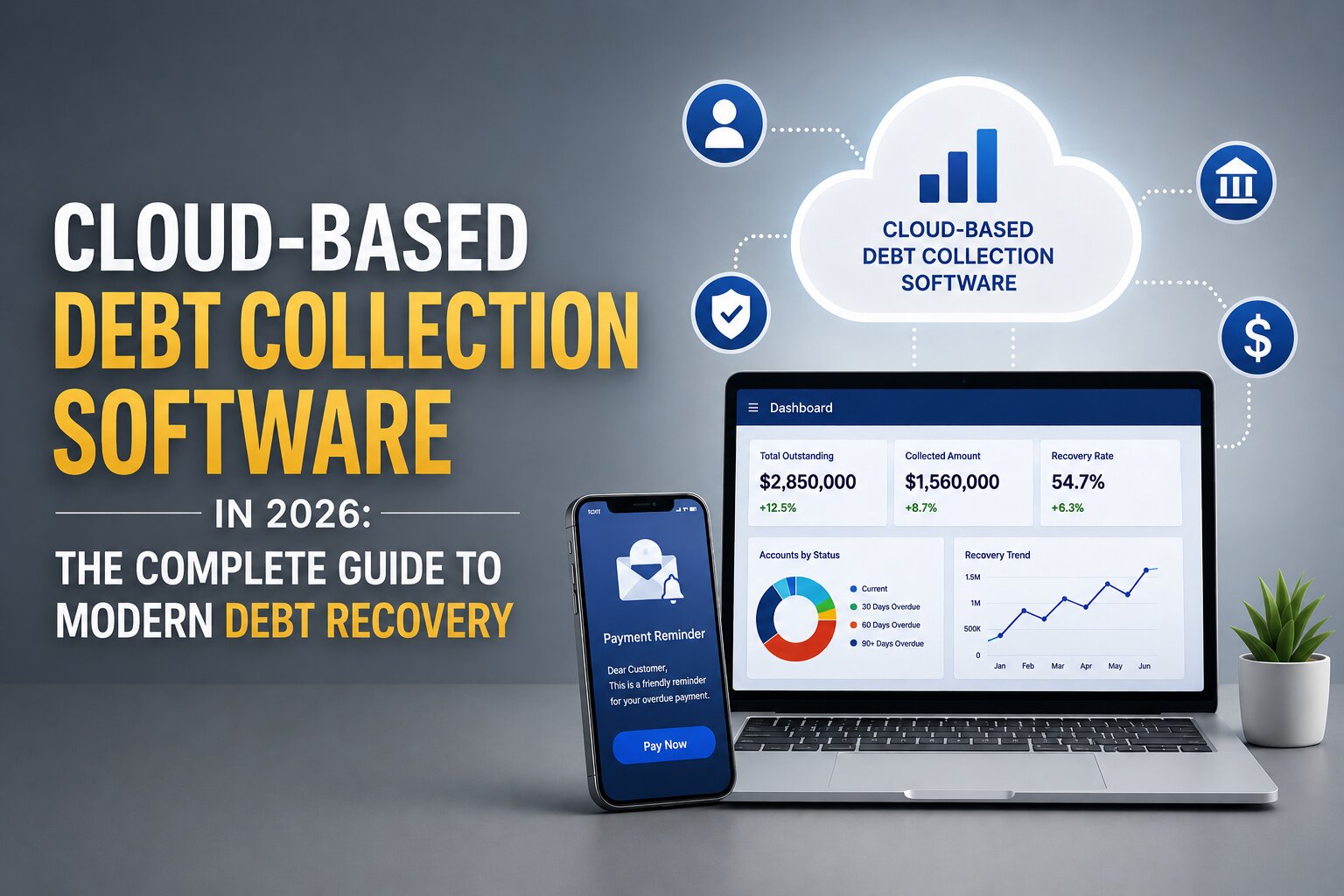
Cloud-Based Debt Collection Software in 2026: The Complete Guide to Modern Debt Recovery
Managing overdue payments has become increasingly complex. Organisations today are expected to recover outstanding balances quickly while maintaining regulatory compliance, protecting customer relationships, and operating with greater efficiency than ever before.
Traditional debt recovery methods, often reliant on spreadsheets, manual follow-ups, and disconnected systems, are no longer equipped to meet these demands. As customer expectations evolve and regulations become more stringent, businesses need smarter, more agile tools to manage collections effectively.
This is where cloud-based debt collection software is making a significant difference. By bringing together automation, intelligent workflows, real-time reporting, and secure cloud infrastructure, organisations can streamline their recovery operations while giving collectors the tools they need to work more productively.
Whether you're a bank managing thousands of delinquent accounts, a collection agency handling multiple client portfolios, or a healthcare provider following up on unpaid invoices, cloud technology offers the flexibility and scalability required for modern debt recovery.
In this guide, you'll learn:
- What cloud-based debt collection software is
- Why organisations are rapidly adopting cloud collections in 2026
- The advantages of cloud over traditional on-premise systems
- Essential features to look for in a modern debt recovery platform
- How solutions like Beveron Smart Debt Collection help organisations automate collections, improve compliance, and recover payments faster
By the end of this article, you'll have a clear understanding of how cloud technology is transforming debt recovery and what to consider when selecting the right solution for your organisation.
What Is Cloud-Based Debt Collection Software?
Cloud-based debt collection software is a Software-as-a-Service (SaaS) platform that helps organisations manage the complete debt recovery lifecycle through a secure online environment. Unlike traditional systems that require on-site servers and extensive IT maintenance, cloud solutions are hosted remotely and can be accessed securely from anywhere with an internet connection.
The software centralises collection activities into a single platform, allowing teams to manage accounts, assign cases, automate communications, track repayments, monitor collector performance, and generate detailed reports in real time.
Instead of spending valuable time on repetitive manual tasks, collection teams can focus on engaging with customers, resolving payment issues, and improving recovery outcomes.
How Does Cloud-Based Debt Collection Software Work?
A modern debt collection platform connects with existing business systems such as:
- Core banking platforms
- Loan management systems
- ERP solutions
- CRM software
- Billing platforms
- Payment gateways
- Accounting software
Once account information is synchronised, the platform can automatically do the following:
- Identify overdue accounts
- Prioritise cases based on configurable business rules
- Assign accounts to collectors
- Trigger automated reminders via email, SMS, WhatsApp, or voice calls
- Track customer interactions
- Record payment commitments
- Escalate unresolved accounts
- Generate compliance-ready audit trails
- Produce management dashboards and recovery reports
This level of automation significantly reduces administrative workload while improving collection efficiency across the organisation.
If you're new to collection automation, our guide Debt Collection Automation Basics: From Manual to AI-Powered in 5 Steps explains how organisations transition from spreadsheet-based recovery processes to intelligent, AI-driven debt collection. It provides a practical framework for understanding the technologies and workflows behind modern collection operations.
Cloud-Based vs On-Premise Debt Collection Software
Many organisations still rely on legacy collection systems installed on local servers. While these solutions have served businesses for years, they often struggle to keep pace with modern operational requirements.
Cloud-based platforms offer several advantages over traditional deployments.
Accessibility – Collectors can securely access cloud systems from the office, home, or while travelling, enabling hybrid and remote working models.
Lower Infrastructure Costs – There is no need to invest in expensive servers, hardware upgrades, or ongoing infrastructure maintenance.
Automatic Updates - Cloud providers continuously deliver new features, security improvements, and performance enhancements without disrupting daily operations.
Scalability – As collections grow, organisations can easily add users, expand storage, or introduce new workflows without replacing existing infrastructure.
Business Continuity – Cloud platforms include backup, disaster recovery, and high availability capabilities that minimise downtime and protect critical recovery data.
Core Capabilities of Modern Debt Collection Software
Today's leading debt collection software goes far beyond simply tracking overdue accounts. Enterprise platforms are designed to support the entire collections ecosystem.
Core capabilities typically include:
- Automated collection workflows
- Intelligent case allocation
- Multi-channel customer communications
- Payment promise tracking
- Settlement management
- Legal recovery workflows
- Compliance monitoring
- Collector productivity dashboards
- Performance analytics
- AI-driven account prioritisation
- Payment forecasting
- Document management
- Workflow automation
- Integration with enterprise applications
- Secure cloud hosting
These capabilities help organisations create more consistent, efficient, and customer-friendly recovery processes while reducing operational costs.
Why Businesses Are Moving to Cloud Collections in 2026
Digital transformation continues to reshape financial operations across industries, and debt recovery is no exception. Organisations are recognising that legacy collection systems often limit their ability to respond quickly to changing customer behaviours, regulatory requirements, and business growth.
Cloud-based debt collection software has emerged as the preferred choice because it combines flexibility, automation, and scalability in a way that traditional systems cannot.
Here are some of the key reasons why businesses are embracing cloud collections in 2026.
Greater Operational Flexibility
Modern collection teams are no longer confined to a single office location. Many organisations now operate hybrid or distributed workforces, making secure remote access an essential requirement.
Cloud-based platforms allow authorised users to access collection cases, update account information, communicate with customers, and monitor performance from virtually anywhere. This flexibility ensures uninterrupted operations while improving employee productivity.
Faster Implementation
Deploying traditional software often involves lengthy installation projects, server configuration, and complex infrastructure planning.
Cloud solutions significantly reduce deployment time, enabling organisations to begin using the platform much sooner. This allows businesses to modernise their recovery processes without lengthy implementation delays.
Reduced IT Costs
Maintaining on-premise infrastructure requires ongoing investment in servers, software upgrades, security patches, backups, and technical support.
With cloud-based debt collection software, these responsibilities are largely managed by the software provider. This reduces capital expenditure and allows IT teams to focus on strategic initiatives rather than system maintenance.
Improved Collector Productivity
Collectors spend a considerable amount of time on repetitive administrative work, including assigning accounts, scheduling reminders, updating spreadsheets, and generating reports.
Automation streamlines these routine tasks, allowing collectors to concentrate on higher-value activities such as negotiating payment plans and resolving customer issues.
As a result, organisations often experience:
- Higher collection rates
- Faster recovery cycles
- Better workload distribution
- Increased collector efficiency
Enhanced Customer Experience
Successful debt recovery is no longer just about collecting payments—it is also about preserving customer relationships.
Cloud platforms enable organisations to engage customers through their preferred communication channels while delivering timely, personalised reminders and flexible payment options.
This creates a more professional and customer-centric collection experience that encourages faster payments without unnecessary friction.
Stronger Compliance and Data Security
Compliance remains one of the biggest challenges in debt recovery. Organisations must demonstrate that collection activities follow internal policies and external regulations while safeguarding sensitive financial information.
Cloud platforms help address these challenges through features such as:
- Role-based user permissions
- Complete audit trails
- Secure document management
- Data encryption
- Automated workflow controls
- Communication history tracking
- Regulatory reporting
These capabilities reduce compliance risks while improving governance across collection operations.
Continuous Innovation
Technology continues to evolve rapidly, particularly with the increasing adoption of artificial intelligence, predictive analytics, and intelligent automation.
Cloud platforms receive regular updates that introduce new capabilities without requiring organisations to undertake costly upgrade projects. This ensures businesses always have access to the latest innovations in debt recovery technology. To understand where the industry is heading, explore The Future of AI-Powered Debt Collection: Smarter, Faster Recovery, which looks at how AI, predictive analytics and intelligent automation will continue to transform recovery operations over the coming years.
Supporting Enterprise Growth
As organisations expand into new markets, acquire additional customers, or manage larger portfolios, their collection systems must scale accordingly.
Cloud-based debt collection software makes it easy to support increasing account volumes, onboard additional users, and introduce new collection strategies without major infrastructure changes.
This scalability ensures that businesses can continue growing while maintaining efficient and consistent recovery operations.
Key Features to Look for in Cloud-Based Debt Collection Software
Choosing the right cloud-based debt collection software goes beyond comparing feature lists. The best platforms combine automation, intelligence, security, and seamless integrations to help organisations recover payments more efficiently while maintaining compliance and delivering a positive customer experience.
Here are the key capabilities every modern debt recovery solution should offer.
Automated Collection Workflows
Manual collection processes can slow down recovery efforts and increase the risk of errors. A modern automated debt collection system should automate repetitive tasks across the entire collection lifecycle.
Look for capabilities such as:
- Automatic account allocation
- Rule-based workflows
- Escalation management
- Payment reminder scheduling
- Promise-to-pay tracking
- Automated follow-up actions
- Case prioritisation
Automation ensures that no account is overlooked and that collectors can focus on resolving complex cases rather than administrative work.
Omnichannel Customer Communication
Today's customers expect businesses to communicate through their preferred channels. Effective payment collection software should support multiple communication methods from a single platform.
These typically include:
- SMS
- Voice calls
- Mobile notifications
- Customer self-service portals
Maintaining a consistent communication history across all channels helps improve transparency while increasing customer engagement.
AI-Powered Account Prioritisation
Not all overdue accounts require the same recovery strategy.
Modern cloud platforms use artificial intelligence to analyse customer behaviour, payment history, outstanding balances, and risk profiles to identify which accounts should be prioritised.
This enables collectors to:
- Focus on high-value accounts
- Predict payment likelihood
- Allocate resources more effectively
- Improve overall recovery performance
AI-driven recommendations also help managers optimise collection strategies based on real-time insights.
Intelligent Payment Reminders
Sending reminders at the right time can significantly improve payment outcomes.
Instead of relying on fixed schedules, intelligent reminder systems can automatically:
- Trigger reminders before due dates
- Send follow-ups after missed payments
- Personalise communication templates
- Adjust reminder frequency based on customer behaviour
This proactive approach increases payment rates while reducing manual effort.
Collector Dashboards
A well-designed dashboard gives collectors instant visibility into their workload and priorities.
Useful dashboards typically display:
- Assigned accounts
- Overdue balances
- Daily collection targets
- Promise-to-pay commitments
- Follow-up activities
- Recovery progress
- Performance metrics
Having all critical information in one place helps collectors work more efficiently throughout the day.
CRM and Enterprise Integrations
A powerful debt collection CRM software solution should integrate seamlessly with existing enterprise systems.
Common integrations include:
- CRM platforms
- ERP systems
- Loan management software
- Core banking systems
- Billing applications
- Accounting software
- Payment gateways
- Customer service platforms
These integrations eliminate duplicate data entry, improve data accuracy, and create a unified view of each customer.
Legal Recovery Management
Not every account can be resolved through standard collection activities.
Enterprise platforms should support legal recovery by enabling organisations to:
- Escalate cases
- Track litigation stages
- Manage legal documentation
- Monitor external legal partners
- Record court outcomes
- Maintain complete case histories
This ensures a smooth transition from standard collections to legal recovery when required.
Compliance Management
Regulatory compliance is essential for every collection operation.
An effective collection debt management software solution should include:
- Complete audit trails
- User activity logs
- Communication tracking
- Document version control
- Consent management
- Configurable approval workflows
- Role-based permissions
These features help organisations demonstrate compliance while reducing operational risk.
Reporting and Analytics
Real-time reporting enables managers to make informed decisions based on current performance rather than historical data.
Comprehensive dashboards should provide insights into:
- Recovery rates
- Collector productivity
- Payment trends
- Delinquency ageing
- Campaign effectiveness
- Customer response rates
- Portfolio performance
Advanced analytics also help identify opportunities to optimise collection strategies over time.
Enterprise-Grade Security
Security should never be an afterthought when handling sensitive financial information.
Look for cloud platforms that provide:
- Data encryption
- Multi-factor authentication
- Secure cloud hosting
- Regular backups
- Disaster recovery
- Access controls
- Continuous monitoring
Strong security measures help protect customer data while supporting regulatory compliance.
Industries That Benefit Most from Cloud-Based Debt Collection Software
While debt recovery is often associated with banks and collection agencies, many industries rely on efficient collections to maintain healthy cash flow and reduce bad debt.
Cloud-based solutions provide the flexibility to adapt workflows to different industries, customer types, and regulatory requirements.
Banks and Financial Institutions
Banks manage large portfolios of loans, mortgages, credit cards, and overdraft accounts.
A modern bank debt collection management software solution helps financial institutions:
- Prioritise delinquent accounts
- Automate customer communications
- Manage repayment arrangements
- Monitor collector performance
- Improve regulatory compliance
- Reduce non-performing assets
Real-time visibility allows managers to make faster decisions while improving portfolio performance.
Non-Banking Financial Companies (NBFCs)
NBFCs often manage diverse lending products with varying repayment schedules.
Cloud-based platforms help streamline:
- Consumer loan collections
- Vehicle finance recovery
- Microfinance collections
- Business lending recovery
- Collection agency coordination
Automation enables NBFCs to scale operations without significantly increasing administrative costs.
Collection Agencies
Collection agencies handle multiple client portfolios, each with unique workflows and reporting requirements.
A dedicated collection agency management software platform enables agencies to:
- Manage multiple clients
- Allocate cases efficiently
- Track commissions
- Generate client reports
- Monitor collector productivity
- Maintain compliance
This improves operational efficiency while strengthening client relationships.
Healthcare Providers
Hospitals, clinics, and healthcare networks often manage complex billing and payment processes.
Cloud-based collection software helps healthcare organisations:
- Follow up on unpaid invoices
- Automate patient payment reminders
- Manage payment plans
- Improve revenue recovery
- Reduce administrative workload
A patient-friendly approach also helps preserve trust while improving financial performance.
Telecom Providers
Telecommunications companies process thousands of recurring customer payments every month.
Automated collections support:
- Bill reminder automation
- Delinquent account management
- Payment tracking
- Customer communication
- Recovery analytics
This enables telecom providers to reduce overdue balances while maintaining customer satisfaction.
Utility Companies
Electricity, water, gas, and energy providers benefit from automated recovery processes that improve payment consistency.
Cloud platforms help utilities:
- Manage high account volumes
- Schedule automated reminders
- Track outstanding balances
- Support payment arrangements
- Improve operational efficiency
Insurance Companies
Insurance providers can automate premium collections while managing overdue payments across different policy types. This reduces manual follow-up and improves cash flow throughout the policy lifecycle.
Enterprise Finance Teams
Large organisations frequently manage outstanding payments across suppliers, distributors, and commercial customers.
Modern commercial debt collection software supports:
- Business-to-business collections
- Credit management
- Customer payment tracking
- Collection analytics
- Portfolio reporting
This gives finance teams greater visibility into receivables while improving working capital.
Cloud-Based vs Traditional Debt Collection Software
Many organisations considering digital transformation ask whether it's worth replacing their existing systems. The following comparison highlights why cloud-based solutions have become the preferred choice for modern debt recovery.
Feature | Cloud-Based Debt Collection Software | Traditional On-Premise Software |
|---|---|---|
Deployment | Fast implementation | Lengthy installation process |
Accessibility | Secure access from anywhere | Usually limited to office locations |
Infrastructure | No local servers required | Requires dedicated hardware |
Scalability | Easily expands as business grows | Scaling often requires hardware upgrades |
Maintenance | Managed by the software provider | Managed internally by IT teams |
Software Updates | Automatic updates | Manual upgrades required |
Initial Investment | Lower upfront costs | Higher capital expenditure |
Security | Continuous security enhancements | Organisation responsible for updates |
Business Continuity | Built-in backup and disaster recovery | Requires separate disaster recovery planning |
AI and Automation | Regularly updated with new capabilities | Often limited by legacy architecture |
Compliance | Easier to maintain with automated controls | More manual oversight required |
Remote Working | Fully supported | Often restricted |
For organisations seeking long-term scalability, operational efficiency, and continuous innovation, cloud deployment offers clear advantages over traditional systems.
As digital transformation continues across industries, cloud-based debt collection software provides the flexibility needed to adapt to changing business requirements without the limitations of legacy infrastructure.
Benefits of Cloud-Based Debt Collection Software
For organisations managing large volumes of overdue accounts, improving collections is about more than recovering payments. It's about creating efficient processes, reducing operational costs, maintaining compliance, and delivering a better experience for customers.
Cloud-based debt collection software brings these goals together in a single platform, enabling businesses to modernise their recovery operations while remaining agile in a rapidly changing environment.
Faster Debt Recovery
One of the biggest advantages of automation is speed. Instead of waiting for manual follow-ups, the system automatically assigns accounts, schedules reminders, escalates overdue cases, and tracks customer responses in real time.
This reduces delays throughout the collection cycle, helping organisations recover payments sooner and improve overall cash flow. This reduces delays throughout the collection cycle, helping organisations recover payments sooner and improve overall cash flow. Organisations looking to quantify the business impact of automation can also explore how modern collection platforms improve recovery performance in our guide on Debt Automation ROI: Proven Data Showing 3x Faster Payments, which explains how automation helps organisations accelerate collections, reduce manual effort and improve operational efficiency.
Higher Collector Productivity
Collection teams often spend a significant portion of their day on administrative tasks such as updating records, assigning cases, generating reports, and sending reminders. Automation removes much of this repetitive work, allowing collectors to focus on activities that require human judgement, such as negotiating payment plans or resolving disputes.
With better visibility into their workloads and priorities, collectors can manage more accounts without compromising quality.
Improved Customer Experience
Effective debt recovery doesn't have to come at the expense of customer relationships. Cloud-based platforms make it easier to communicate with customers through their preferred channels, provide timely payment reminders, and offer flexible repayment options.
This creates a more professional and respectful collections process, encouraging positive engagement and increasing the likelihood of successful recovery.
Stronger Compliance and Governance
Regulatory requirements continue to evolve, particularly for organisations operating across multiple jurisdictions. A modern credit and collections software solution helps businesses remain compliant by maintaining complete audit trails, recording every customer interaction, controlling user access, and supporting consistent collection procedures.
These capabilities reduce compliance risks while giving managers greater confidence in their operations.
Better Visibility Through Real-Time Analytics
Access to accurate data is essential for making informed decisions.
Cloud-based platforms provide real-time dashboards that allow managers to monitor:
- Recovery performance
- Collector productivity
- Delinquency trends
- Promise-to-pay fulfilment
- Portfolio ageing
- Communication effectiveness
These insights help organisations identify bottlenecks, refine strategies, and continuously improve collection outcomes.
Lower Operational Costs
Maintaining on-premise infrastructure often involves significant hardware, maintenance, and support costs.
Because cloud platforms are managed by the software provider, organisations benefit from lower IT overheads while gaining access to regular updates, enhanced security, and new functionality without major capital investment.
Business Scalability
Whether managing thousands or millions of customer accounts, cloud-based debt collection software can grow alongside the organisation.
New users, workflows, and business units can be added without major infrastructure changes, making cloud solutions well suited to expanding enterprises and growing financial institutions.
How AI Is Transforming Cloud Debt Collection
Artificial intelligence is reshaping how organisations approach debt recovery. Rather than replacing collectors, AI helps them make faster, more informed decisions by analysing vast amounts of data and identifying patterns that would be difficult to detect manually.
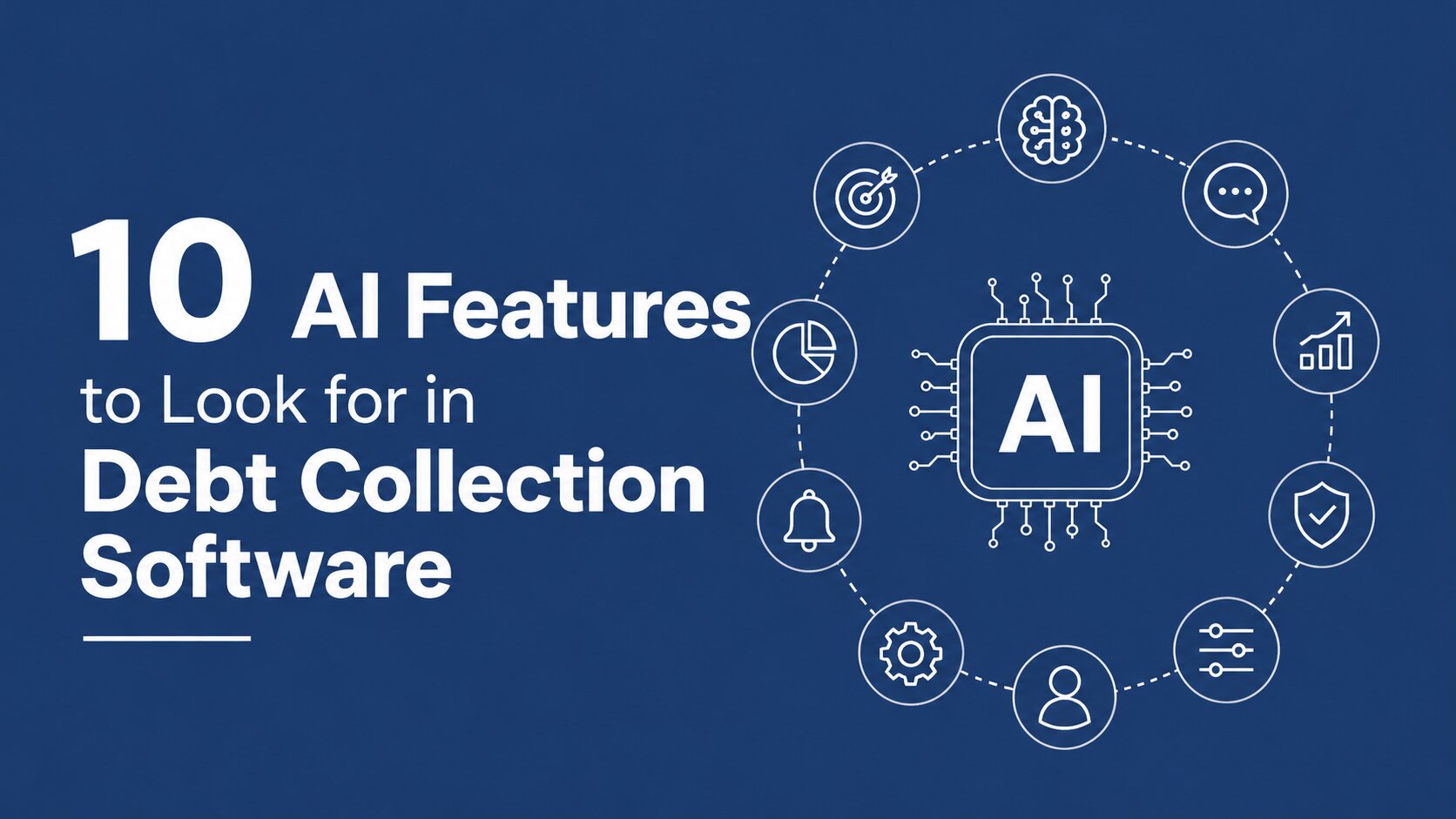
When integrated into a cloud-based debt collection platform, AI enables smarter, more proactive recovery strategies. When integrated into a cloud-based debt collection platform, AI enables smarter, more proactive recovery strategies. AI is rapidly becoming a core capability of modern debt collection platforms, helping organisations make smarter decisions throughout the recovery lifecycle. To explore this topic in greater depth, read our guide, AI in Debt Collection: 6 Powerful Applications Transforming Recovery in 2026, which explains how technologies such as predictive analytics, intelligent account prioritisation, automated customer communication and AI-powered decision-making are reshaping debt recovery across banks, financial institutions, healthcare providers, collection agencies and enterprises.
Predictive Account Prioritisation
AI can evaluate historical payment behaviour, outstanding balances, customer risk profiles, and previous interactions to identify which accounts are most likely to respond to collection efforts.
Collectors can then focus on high-priority cases instead of working through accounts in a fixed sequence.
Intelligent Risk Scoring
Machine learning models continuously analyse account data to assess the likelihood of repayment.
These risk scores help organisations determine:
- Which accounts require immediate attention
- Which customers may benefit from payment arrangements
- Which cases are likely to require legal escalation
This supports more effective resource allocation across the collections team.
Smarter Customer Engagement
AI also improves communication by recommending the most appropriate time, channel, and messaging for each customer. Rather than sending generic reminders, organisations can deliver more personalised communications that encourage engagement while maintaining a positive customer experience.
Performance Optimisation
Artificial intelligence can identify trends that may not be immediately visible through traditional reporting.
For example, AI can reveal:
- Which communication channels generate the highest response rates
- Which collection strategies deliver the best outcomes
- Which collector activities contribute most to successful recoveries
These insights enable continuous improvement across the entire recovery process. These insights enable continuous improvement across the entire recovery process. For a deeper look at how automation translates into measurable business outcomes, read Debt Collection Data Dive: How Automation Recovers 22% More in 90 Days, where we analyse how AI-powered collection strategies improve recovery performance while reducing manual effort.
Choosing the Right Cloud-Based Debt Collection Software
Not every solution offers the same level of functionality, scalability, or industry expertise. Selecting the right platform requires careful evaluation of both current requirements and future business goals.
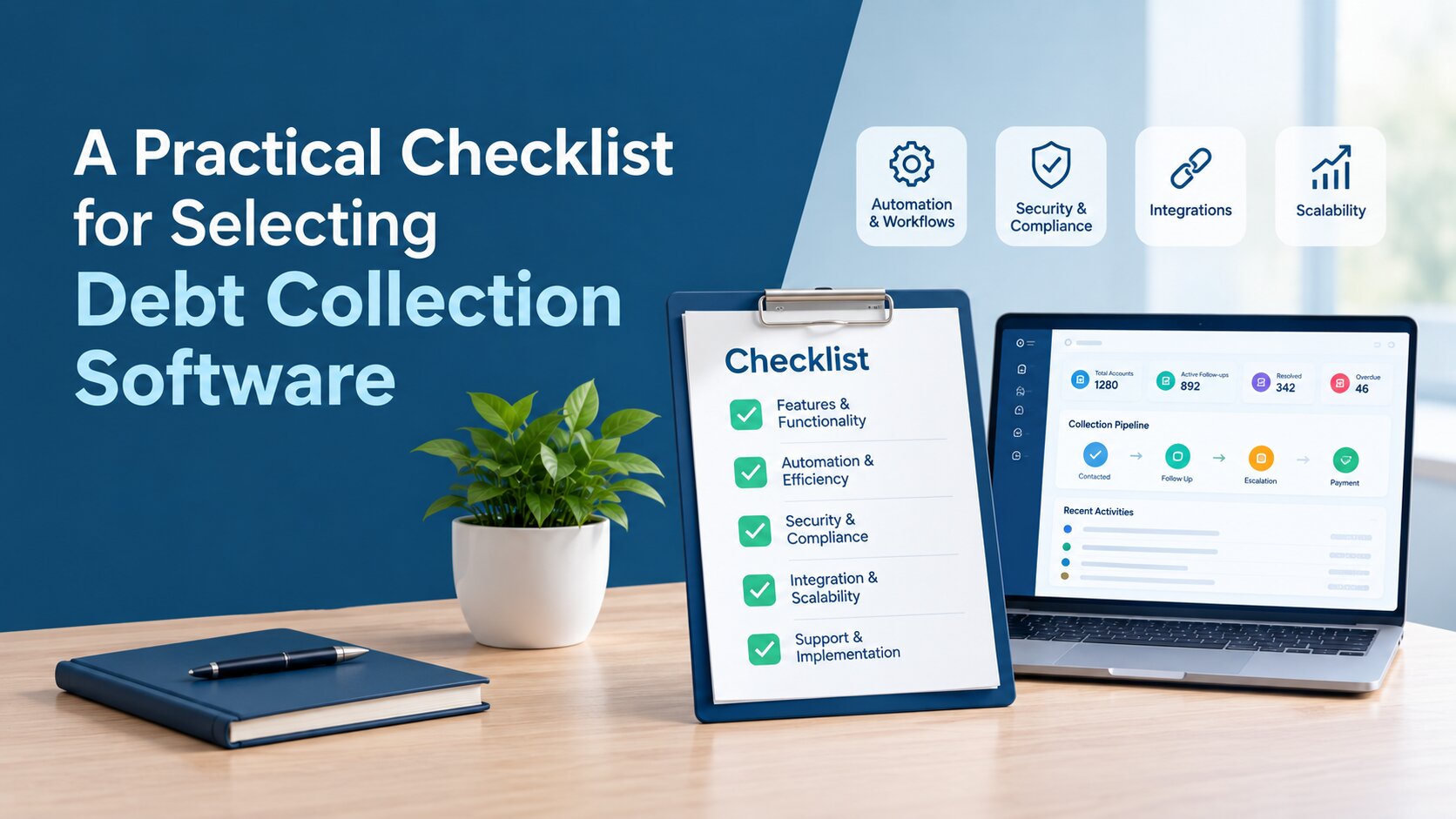
Choosing the right platform involves more than comparing feature lists. Organisations should assess AI capabilities, workflow automation, scalability, integration options, security, compliance and vendor expertise to ensure the solution supports both current operations and future growth. For a detailed buyer's guide, explore How to Choose the Best AI-Based Debt Collection Software, which outlines the key evaluation criteria for selecting an enterprise-ready AI-powered collections platform. When comparing vendors, consider the following questions.
Does the platform scale with business growth?
Choose a solution that can support increasing account volumes, additional users, and expanding operations without requiring significant infrastructure changes.
Does it integrate with existing systems?
Look for seamless integration with:
- Core banking systems
- CRM platforms
- ERP software
- Accounting applications
- Payment gateways
- Loan management systems
Integrated data reduces manual work and improves operational accuracy.
Does it automate the complete recovery lifecycle?
The platform should support everything from early-stage reminders to legal recovery, reporting, payment tracking, and workflow automation. For organisations evaluating AI-enabled capabilities, our article The AI Debt Revolution: How Startups Can Recover Unpaid Invoices Faster with AI highlights how intelligent automation can transform invoice recovery by reducing manual work, improving payment follow-ups and helping businesses scale collections more effectively.
Does it support regulatory compliance?
Ensure the solution includes:
- Audit trails
- Role-based permissions
- Secure document management
- Communication history
- Data protection controls
These capabilities help organisations manage compliance more effectively.
Does it provide actionable analytics?
Real-time dashboards and performance reporting enable managers to make informed decisions and optimise collection strategies based on measurable outcomes.
Does the vendor understand your industry?
Different industries have unique recovery processes. Choosing a provider with experience across banking, financial services, healthcare, telecommunications, utilities, and enterprise collections can simplify implementation and accelerate value.
Why Organisations Choose Beveron Smart Debt Collection
As organisations modernise their recovery operations, they need more than a basic debt collection application. They need an intelligent platform that supports automation, compliance, collaboration, and continuous improvement.
Beveron Smart Debt Collection has been designed to help organisations manage the entire debt recovery lifecycle from a single cloud-based platform.
Key capabilities include:
- End-to-end debt recovery workflow automation
- Configurable collection strategies
- Intelligent case allocation
- Multi-channel customer communication
- Real-time dashboards and analytics
- Comprehensive reporting
- Secure cloud deployment
- Enterprise-grade security
- Regulatory compliance support
- Integration with banking systems, ERP platforms, CRM solutions, and payment gateways
- Scalable architecture for growing organisations
Whether supporting banks, financial institutions, NBFCs, collection agencies, healthcare providers, telecom operators, utility companies, or enterprise finance teams, Smart Debt Collection helps improve recovery performance while reducing operational complexity.
By automating routine activities and providing real-time operational insights, organisations can recover payments more efficiently while maintaining consistent, compliant collection practices.
Conclusion
Debt recovery continues to evolve as organisations embrace digital transformation and customer expectations continue to change.
Manual processes and legacy systems are increasingly unable to deliver the speed, visibility, and flexibility required for modern collections. Cloud-based debt collection software addresses these challenges by combining automation, intelligent workflows, real-time analytics, and enterprise-grade security within a scalable SaaS platform.
Whether you're looking to improve collector productivity, reduce operational costs, strengthen compliance, or accelerate payment recovery, investing in the right technology can deliver measurable long-term benefits.
For organisations seeking a future-ready solution, Beveron Smart Debt Collection provides the tools needed to modernise collections, streamline recovery operations, and support sustainable business growth.
Ready to transform your debt recovery process?
Schedule a Beveron Smart Debt Collection Demo today and discover how Smart Debt Collection can help your organisation recover payments faster, improve operational efficiency, and deliver a better collections experience.
Frequently Asked Questions
What is cloud-based debt collection software?
Cloud-based debt collection software is a SaaS solution that enables organisations to manage debt recovery through a secure online platform. It automates workflows, tracks overdue accounts, manages customer communications, generates reports, and provides real-time visibility into collection performance.
How does cloud-based debt collection software work?
The software integrates with existing business systems to identify overdue accounts, automate reminders, assign cases, monitor repayments, and generate performance reports. This reduces manual effort while improving collection efficiency.
Is cloud-based debt collection software secure?
Yes. Enterprise platforms typically include encryption, secure cloud hosting, role-based access controls, audit trails, regular backups, and disaster recovery capabilities to protect sensitive financial information.
What industries use debt collection software?
Debt collection software is widely used by banks, financial institutions, NBFCs, collection agencies, healthcare providers, telecom companies, utility providers, insurance companies, educational institutions, and enterprises managing accounts receivable.
What is the difference between cloud-based and on-premise debt collection software?
Cloud-based software is hosted online and managed by the provider, offering greater scalability, lower infrastructure costs, automatic updates, and remote accessibility. On-premise software requires local servers, manual maintenance, and higher upfront investment.
Can cloud-based debt collection software integrate with CRM and ERP systems?
Yes. Modern platforms integrate with CRM solutions, ERP software, core banking systems, accounting applications, payment gateways, and loan management systems to create a unified collections environment.
Does cloud-based debt collection software support artificial intelligence?
Many modern solutions include AI capabilities such as predictive account prioritisation, risk scoring, intelligent communication recommendations, payment forecasting, and advanced analytics to improve recovery outcomes.
How can automated debt collection systems improve recovery rates?
Automation reduces delays by scheduling reminders, prioritising accounts, tracking payment commitments, and assigning cases automatically. This enables collectors to focus on high-value activities while improving operational efficiency.
What should businesses consider when choosing debt collection software?
Businesses should evaluate scalability, security, compliance, integrations, automation capabilities, analytics, vendor expertise, implementation support, and long-term flexibility before selecting a platform.
Why choose Beveron Smart Debt Collection?
Beveron Smart Debt Collection combines cloud technology, intelligent automation, enterprise integrations, compliance support, configurable workflows, and real-time analytics to help organisations modernise debt recovery, improve productivity, and achieve better collection outcomes.
Best cloud-based debt collection software in the UAE
Best debt recovery software for banks in the UAE
Best AI-powered debt collection software for healthcare in the UAE
If you need a free demo of the best legal practice management software in the UAE, please fill out the form below.