Best Litigation Workflow Strategies for Kenyan Law Firms

Litigation has always been one of the most demanding areas of legal practice. Managing court deadlines, client communications, legal documents, billing records, and case updates simultaneously requires careful coordination across the entire firm.
For many Kenyan law firms, litigation workflows are still heavily dependent on email threads, spreadsheets, paper files, and manual follow-ups. While these methods may work for a small number of matters, they often become difficult to manage as caseloads grow and client expectations increase.
Today, clients expect timely updates, faster responses, and greater transparency throughout the legal process. At the same time, law firms must maintain accuracy, compliance, and profitability while handling increasing workloads.
This is why many firms are reviewing their litigation processes and adopting legal case management software to improve efficiency, reduce administrative burdens, and create more structured workflows.
In this article, we explore the best litigation workflow strategies Kenyan law firms can implement to improve case management and strengthen operational performance.
Why Litigation Workflow Efficiency Matters More Than Ever
A litigation matter involves far more than courtroom appearances. Every case generates a continuous stream of documents, deadlines, communications, research materials, billing activities, and internal tasks.
When information is stored across multiple systems or managed manually, firms often encounter challenges such as:
- Missed deadlines and court dates
- Delayed client communication
- Difficulty locating documents
- Inconsistent matter management processes
- Administrative inefficiencies
- Revenue leakage from inaccurate time tracking
These challenges not only affect productivity but can also impact client satisfaction and overall firm performance.
An efficient litigation workflow ensures that every stage of a matter is tracked, monitored, and managed consistently from client intake through to case closure.
What Is a Litigation Workflow in a Modern Law Firm?
A litigation workflow refers to the structured process a law firm follows to manage a case throughout its lifecycle.
While workflows vary between firms and practice areas, most litigation matters typically involve:
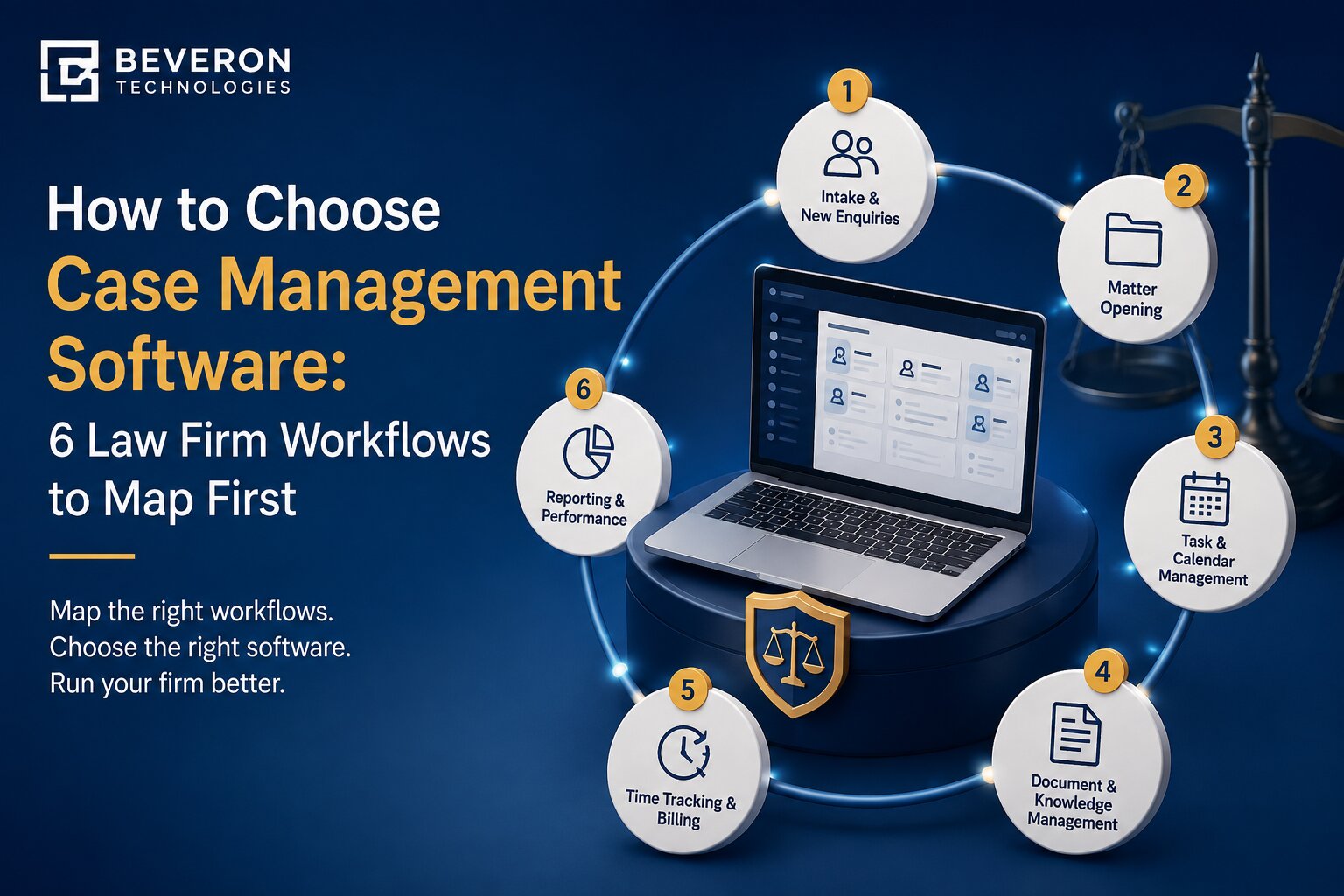
- Client intake and conflict checks
- Matter creation
- Document drafting and review
- Evidence collection
- Court filings
- Hearing preparation
- Client communications
- Time tracking and billing
- Matter closure and record retention
A well-designed workflow ensures that responsibilities are clearly assigned, deadlines are monitored, and information remains accessible to everyone involved in the matter.
Unfortunately, many firms still rely on fragmented systems that make it difficult to maintain visibility across all stages of a case.
Strategy #1: Centralise All Case Information in One System
One of the most effective ways to improve litigation workflows is to centralise all matter-related information within a single platform. Many firms store information across multiple locations, including email inboxes, shared folders, local drives, and paper files. As a result, lawyers often spend valuable time searching for documents, correspondence, or case updates.
Centralised case management allows firms to store:
- Client information
- Case documents
- Court filings
- Correspondence
- Notes and research
- Deadlines and tasks
within a single matter record.
This creates a complete view of each case and enables lawyers to access information quickly when preparing for hearings, responding to clients, or collaborating with colleagues. For firms handling multiple active litigation matters, centralisation significantly improves visibility and reduces administrative effort.
Strategy #2: Automate Critical Litigation Deadlines
Missed deadlines remain one of the biggest operational risks in litigation practice. Court appearances, filing deadlines, witness preparation schedules, and client reporting obligations all require careful monitoring. Manual diary systems and calendar reminders can be effective to a point, but they become increasingly difficult to manage as caseloads expand. Workflow automation helps firms reduce this risk by automatically generating reminders and notifications for important milestones.
Examples include:
- Court filing deadlines
- Hearing dates
- Evidence submission schedules
- Client follow-up tasks
- Internal review deadlines
Automated alerts provide an additional layer of protection against human error and help ensure that important dates do not go unnoticed. For busy litigation teams, automated deadline management can significantly improve reliability and reduce administrative pressure.
Strategy #3: Standardise Litigation Processes Across the Firm
Many law firms develop workflows organically over time. While experienced lawyers may have effective personal systems, inconsistent processes across teams often create inefficiencies. Standardised workflows provide a consistent framework for handling matters regardless of who is managing the case.
For example, firms can establish structured procedures for:
- New matter onboarding
- Court filing preparation
- Evidence management
- Hearing preparation
- Client reporting
- Matter closure
Standardisation helps reduce variability, improve quality control, and make it easier to train new team members. It also ensures that important steps are not overlooked during busy periods. As firms grow, repeatable workflows become increasingly important for maintaining operational consistency and service quality.
Strategy #4: Improve Document Management and Collaboration
Litigation is heavily document-driven. A single matter may involve pleadings, affidavits, contracts, witness statements, correspondence, evidence bundles, research materials, and court orders. Without an organised document management process, locating the correct version of a document can quickly become challenging.
Modern legal case management systems help firms organise documents by matter, making it easier to retrieve information when needed.
Effective document management also supports:
- Version control
- Secure access permissions
- Faster document retrieval
- Improved collaboration
- Reduced duplication
Consider a litigation team preparing for an upcoming hearing. Rather than searching through multiple email chains and folders, team members can access the latest pleadings and supporting documents from a single workspace.
This not only saves time but also reduces the risk of working with outdated information.
Strategy #5: Use Real-Time Case Tracking and Reporting
Successful litigation management requires visibility. Firm leaders need to understand the status of active matters, monitor workloads, and identify potential bottlenecks before they affect performance.
Real-time case tracking provides a clearer picture of:
- Matter progress
- Outstanding tasks
- Upcoming deadlines
- Team workloads
- Resource allocation
Reporting tools can also help firms analyse operational performance and make more informed decisions. For example, firms may identify recurring delays in document review processes or discover opportunities to improve task allocation across litigation teams. As legal technology continues to evolve, data-driven management is becoming increasingly important for firms seeking greater efficiency and profitability.
Strategy #6: Streamline Time Tracking and Legal Billing
Many litigation firms lose revenue simply because billable activities are not recorded accurately. Lawyers often become focused on client work and forget to capture time spent on calls, document reviews, legal research, or court preparation. Over time, these small omissions can significantly impact revenue. Integrated time tracking solutions help firms capture billable work more accurately and simplify the billing process.
Benefits include:
- Improved time recording
- Faster invoice generation
- Better financial visibility
- Reduced billing disputes
- Increased revenue recovery
When billing is closely integrated with case management processes, firms can reduce administrative effort while improving overall profitability.
Strategy #7: Strengthen Client Communication and Transparency
Client expectations have changed considerably over the past decade. Today's clients expect regular updates, clear communication, and greater visibility into the progress of their matters.
Unfortunately, communication often becomes inconsistent when lawyers rely solely on manual updates. Structured workflows supported by legal technology help ensure that clients remain informed throughout the litigation process.
This may include:
- Matter status updates
- Automated notifications
- Scheduled reporting
- Secure document sharing
Proactive communication improves client confidence and helps strengthen long-term relationships. In many cases, client satisfaction is influenced as much by communication quality as it is by legal outcomes.
How Legal Case Management Software Supports Modern Litigation Workflows
Technology alone cannot solve every operational challenge. However, the right legal case management software can provide the structure needed to support efficient litigation workflows.
When evaluating solutions, Kenyan law firms should look for features such as:
- Matter management
- Workflow automation
- Document management
- Deadline tracking
- Time recording
- Billing and invoicing
- Reporting and analytics
- Client communication tools
The goal is not simply to digitise existing processes but to create a more organised, scalable, and efficient way of managing litigation matters. Cloud-based platforms have become particularly attractive because they provide flexibility, accessibility, and easier collaboration across teams.
Supporting Litigation Efficiency with Smart Lawyer Office
As law firms continue their digital transformation journey, many are looking for solutions that combine matter management, workflow automation, document management, billing, and client communication within a single platform.
Smart Lawyer Office is designed to help firms create more structured legal workflows while reducing administrative burdens associated with managing litigation matters. By centralising information, automating routine processes, and improving visibility across active cases, firms can focus more time on delivering legal services and less time on administrative tasks.
The real value of legal technology lies not in replacing lawyers but in helping legal professionals work more efficiently and make better use of their time.
Future Litigation Workflow Trends Kenyan Law Firms Should Watch
The legal technology landscape continues to evolve rapidly.
Several emerging trends are expected to shape litigation management in the coming years.
AI-Assisted Legal Operations
Artificial intelligence is increasingly being used to support legal research, document analysis, workflow automation, and administrative processes. While AI is unlikely to replace legal judgement, it can help reduce repetitive work and improve efficiency.
Cloud-First Legal Practice Management
Cloud adoption continues to grow across professional services industries. Law firms are increasingly recognising the benefits of secure remote access, simplified collaboration, and reduced infrastructure requirements.
Data-Driven Law Firm Management
More firms are using analytics and reporting tools to measure operational performance, track productivity, and improve decision-making. This shift toward data-driven management is helping firms identify inefficiencies and optimise resource allocation.
Conclusion
Efficient litigation management requires more than legal expertise. It depends on well-structured workflows that support consistency, visibility, and accountability across every stage of a matter.
For Kenyan law firms, improving litigation workflows can lead to significant benefits, including better productivity, stronger compliance, improved client service, and greater profitability.
By centralising information, automating deadlines, standardising processes, improving document management, and leveraging legal case management software, firms can create a more efficient and scalable litigation practice.
As the legal industry continues to embrace digital transformation, firms that invest in workflow optimisation today will be better positioned to meet client expectations and compete effectively in the years ahead.
If your firm is exploring ways to streamline litigation management, improve billing efficiency, and enhance client communication, now is an ideal time to evaluate how a modern solution such as Smart Lawyer Office can support your long-term growth and operational goals.
Best litigation management software for law firms in Kenya
Best legal practice management software in Kenya
Best legal case management software for litigation teams in Kenya
If you need a free demo of the best litigation workflow strategies for law firms in Kenya, please fill out the form below.