Agentic AI for Legal Teams: How to Identify the Right Processes Before Deploying AI Agents
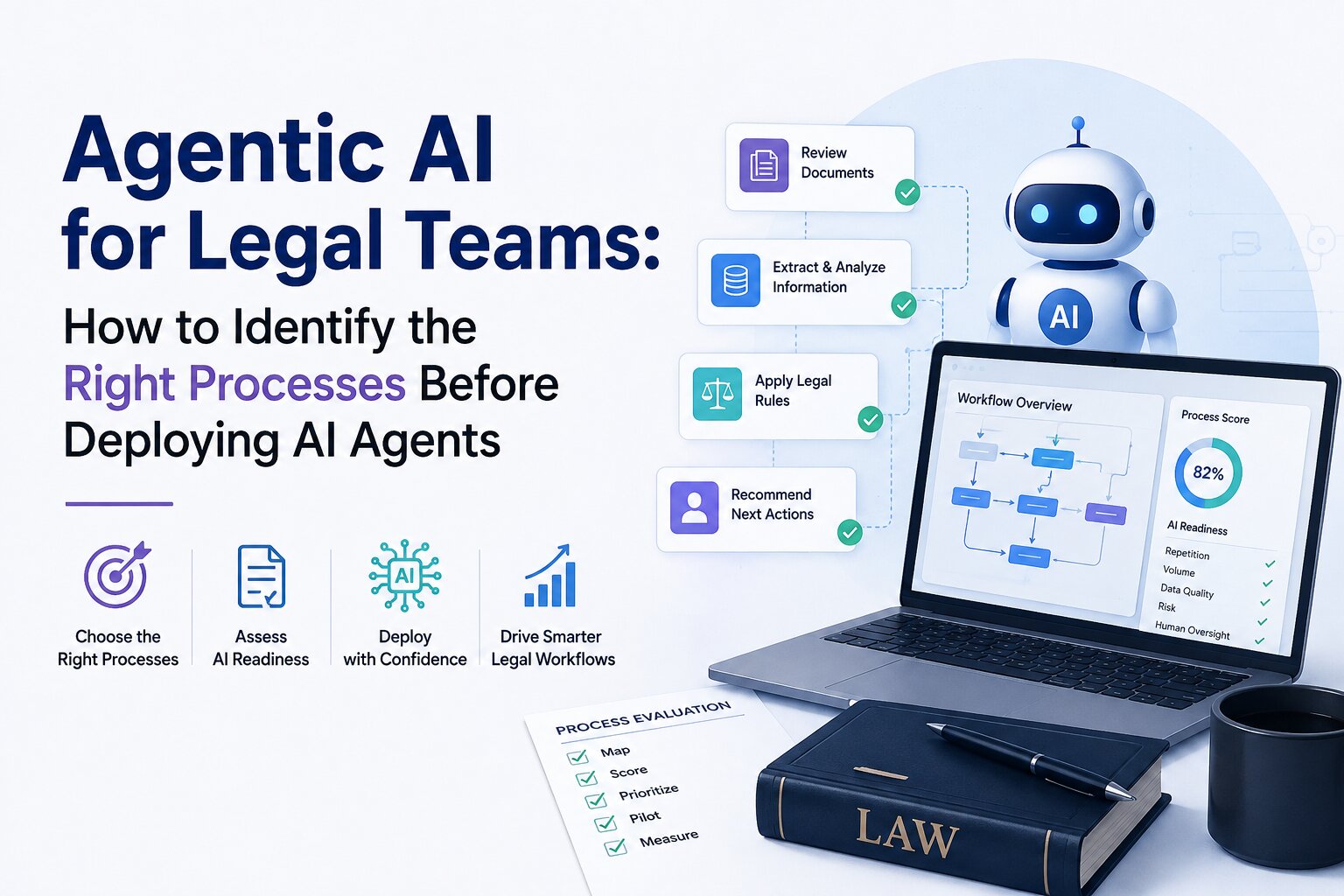
Legal teams are under constant pressure to do more with less. They manage contracts, respond to business requests, review documents, track deadlines, handle compliance work, and support disputes, often while working across disconnected systems. Agentic AI promises to change how much of this work gets done. Unlike basic automation, which follows a predefined set of rules, AI agents can work through multiple steps, use information from different sources, make decisions within defined boundaries, and take actions towards a goal.
But that does not mean every legal process should have an AI agent.
The real starting point is the process itself. Before investing in agentic AI for legal teams, organisations need to understand which workflows are suitable, which require human involvement, and which should remain human-led.
Agentic AI vs Traditional Legal Workflow Automation
Traditional automation is generally built around fixed instructions: when X happens, do Y. For example, a system may automatically send a reminder when a contract renewal date is approaching. Agentic AI can go further. An AI agent may identify upcoming renewals, review relevant contract information, check internal rules, prepare a summary, recommend the next action, and route the matter to the appropriate person. For a closer look at how this approach could affect routine legal work, explore how Agentic AI can transform day-to-day legal operations.
The difference is not simply that one is "smarter". It is about how the work is handled.
Traditional automation: follows predefined rules and steps.
Agentic AI: can interpret a goal, work through several steps, respond to changing information, and complete approved actions with a degree of independence.
That added flexibility also creates greater risk. This is why legal teams should not begin with the question, "Where can we use AI?" A better question is, "Which processes are structured enough, valuable enough, and controlled enough for an AI agent to handle?"
Why Legal Teams Should Choose the Process Before Choosing the AI
Choosing technology first can create an expensive problem: trying to force existing workflows into a tool simply because the tool is available. A process-first approach works differently. The legal team first identifies where time is being lost, where work is repetitive, and where decisions follow reasonably clear patterns. Only then does it assess whether agentic AI is appropriate.
This also makes it easier to define success. Instead of saying that an AI project should "improve efficiency", the team can target measurable outcomes such as reducing contract intake time by 30%, cutting manual follow-ups, or shortening the average matter turnaround time.
What Makes a Legal Process a Good Candidate for Agentic AI?
A legal workflow is more likely to be suitable when it meets several of these conditions:
- High repetition: The team performs the same type of task frequently.
- Clear decision points: There are defined rules or criteria for deciding what happens next.
- High volume: Even a small efficiency gain can create meaningful savings when the process handles hundreds or thousands of items.
- Reliable data: The agent has access to accurate contracts, matter records, policies, or other information it needs.
- Manageable risk: An incorrect action would not create unacceptable legal, financial, or regulatory consequences.
- Defined human oversight: A lawyer or authorised employee can review, approve, or intervene when necessary.
For example, checking whether contracts contain certain standard clauses may be a strong candidate for AI assistance. Having an AI agent independently decide a complex litigation strategy is not.
Which Legal Processes Are Not Suitable for Agentic AI?
Not every task benefits from greater autonomy. Processes that depend heavily on nuanced legal judgement, confidential context, incomplete information, or sensitive negotiations may require a human to remain firmly in control.
Examples include making final decisions on high-stakes disputes, providing advice where the facts are unclear, negotiating sensitive commercial terms without review, or making decisions that could significantly affect a person's legal rights.
The goal is not to remove lawyers from these workflows. AI may still help with research, document preparation or information gathering, but the final judgement should remain with an appropriate legal professional.
Examples of Legal Processes Suitable for AI Agents
It helps to divide potential use cases into three groups. Strong candidates include contract intake and routing, routine obligation tracking, document classification, matter status updates, deadline monitoring, standard information gathering, and first-level summaries. AI-assisted candidates include contract review, legal research, compliance checks, matter analysis, and preparing responses to common business requests. These processes can benefit from AI, but human review remains important. For a broader look at how these capabilities could shape the profession, explore how law firms can lead the future of legal practice in the Agentic AI era.
Human-led activities include complex legal strategy, sensitive negotiations, high-risk legal advice, and final decisions involving significant legal consequences. This classification prevents teams from treating every workflow as an automation opportunity.
How to Identify the Right Legal Processes for Agentic AI
A practical five-step framework can help legal teams move from broad interest to a realistic AI roadmap.
1. Map the process
Document the workflow from beginning to end.
Ask:
- What triggers the process?
- How many steps are involved?
- Who performs each step?
- Which systems contain the required information?
- Where do delays or handoffs occur?
- Where are decisions made?
- Where is human approval required?
A simple process map often reveals opportunities that are difficult to see from a high-level discussion.
2. Score each process
Use a simple 1–5 score for each factor:
Factor | Question |
Repetition | How frequently is the task performed? |
Volume | How many matters or documents are handled? |
Standardisation | How consistent is the workflow? |
Data quality | Is the required information reliable and accessible? |
Business value | How much time or cost could be saved? |
Risk | What happens if the AI makes a mistake? |
Human oversight | Can a person review important decisions? |
A process scoring highly on repetition, volume, standardisation, data quality, value and oversight, while scoring low on risk, is usually a stronger candidate.
For example, a team could assign each factor a score from 1 to 5 and calculate a total out of 35. Processes scoring 27–35 could be considered for an initial pilot, 19–26 for AI-assisted use, and below 19 for later review. These thresholds are not universal rules, but they create a consistent starting point for prioritisation.
3. Prioritise
Do not automate everything at once. Choose one or two processes where the potential value is clear and the risk is manageable. A smaller pilot makes it easier to identify problems, adjust approval rules, and build confidence before expanding.
4. Pilot
Start with a controlled workflow and clearly define what the AI agent can and cannot do. Set boundaries around data access, approvals, escalation and final decision-making. Keep a record of the agent's actions so the legal team can review what happened.
5. Measure
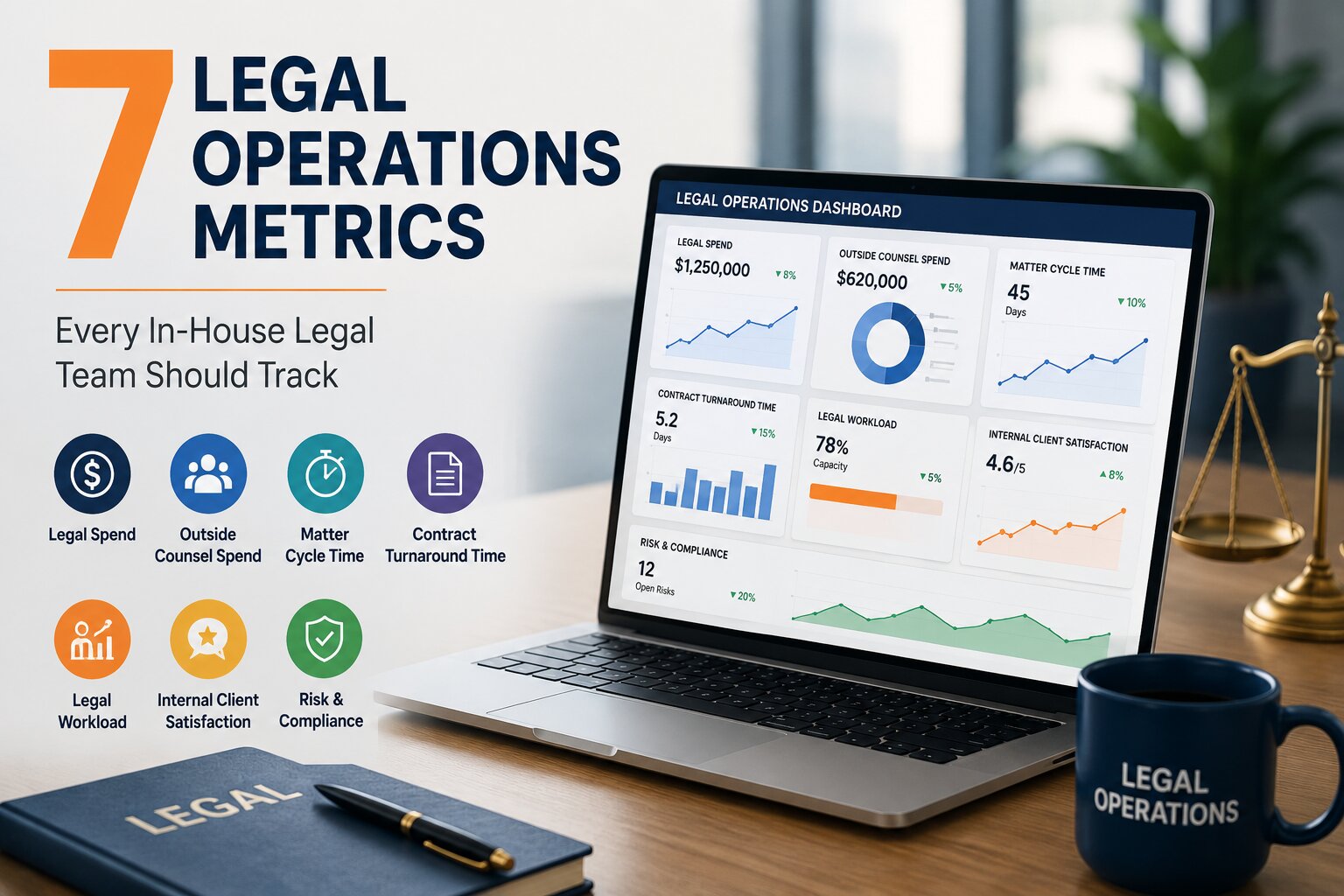
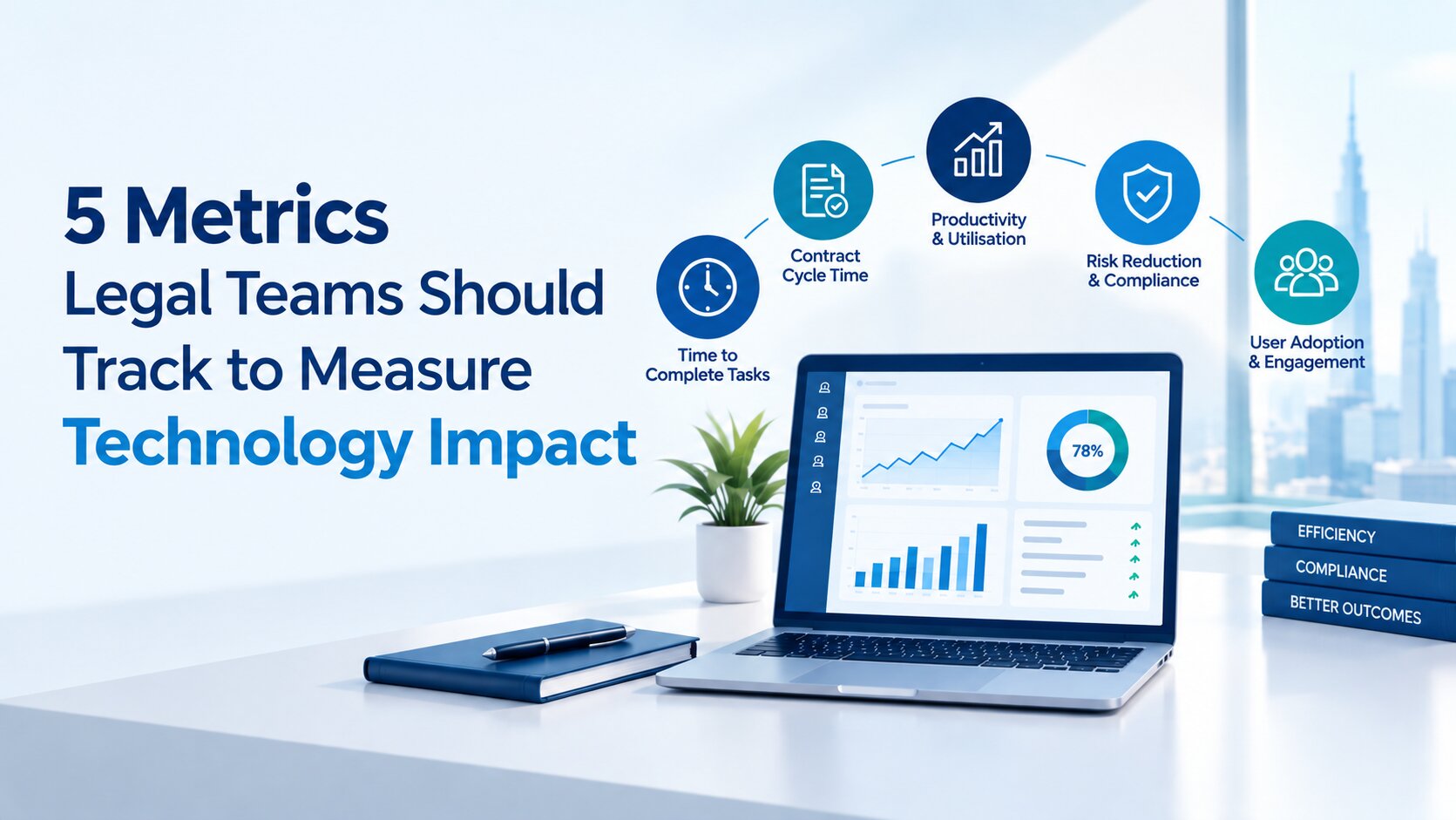
Compare performance before and after implementation. Legal teams should measure not only whether AI agents make a workflow faster, but also whether they maintain accuracy, quality and appropriate levels of human oversight. For a more detailed framework, read how to measure AI productivity in legal teams without sacrificing quality.
Useful measures include:
- Average processing time
- Number of manual steps
- Response or turnaround time
- Error or rework rate
- Number of matters handled per employee
- Percentage of tasks requiring human intervention
- Cost per completed workflow
If the numbers do not improve, the process may not be ready for agentic AI yet.
Common Mistakes When Deploying AI Agents in Legal Workflows
One common mistake is automating a poorly designed process. AI cannot fix unnecessary approvals, missing information, or unclear responsibilities. Another is giving an AI agent too much freedom too early. Legal workflows need clear boundaries, particularly where confidential information, regulatory requirements, or significant business decisions are involved. As legal teams introduce more advanced AI capabilities, responsible AI in LegalTech should remain a key consideration alongside productivity and automation goals.
Teams can also overlook data quality. If contract records are incomplete or matter information is scattered across systems, an agent may struggle to produce reliable results. Finally, success should not be measured by the number of AI agents deployed. The better question is whether the legal team is completing important work faster, more consistently, and with appropriate human control.
Agentic AI Readiness Checklist for Legal Teams
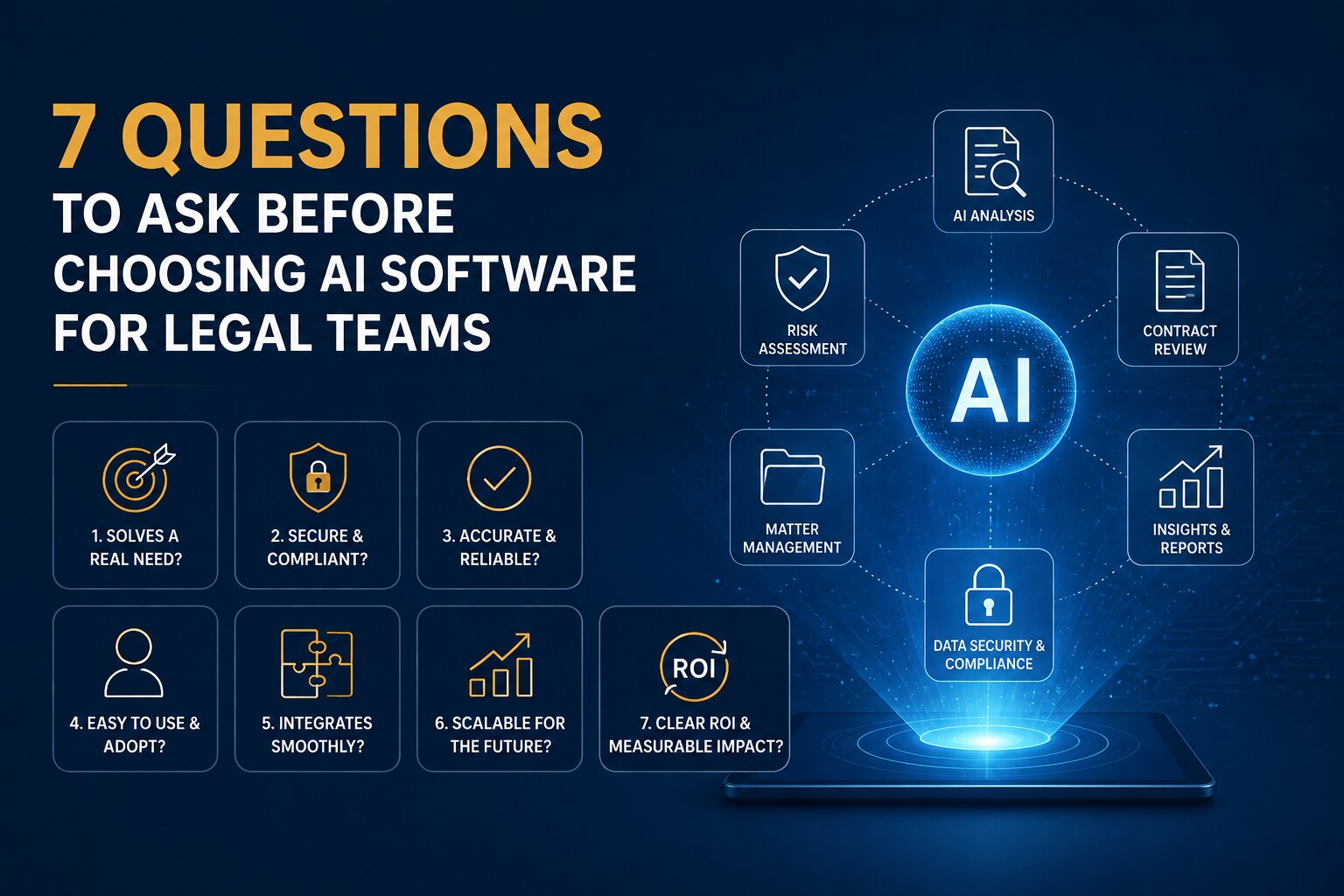
Before deploying an AI agent, ask:
- Is the process clearly documented?
- Is the task repetitive or high-volume?
- Are the decision points reasonably clear?
- Is the required data accurate and accessible?
- Can the process be measured?
- Are the risks understood?
- Is human review defined?
- Are escalation rules clear?
- Can the AI's actions be monitored?
- Is there a realistic pilot with a measurable outcome?
If several answers are "no", improving the workflow may need to come before deploying an AI agent.
How Beveron Helps Build the Foundation for Smarter Legal Workflows
Agentic AI works best when the underlying legal operations are organised. This is where legal technology can play an important role before, and alongside, AI adoption.
Beveron's legal technology solutions are designed around structured legal workflows, matter information, documents, tasks, contracts and related processes. Smart Legal Counsel can help in-house teams bring legal matters and workflows into a more organised environment, while Smart Lawyer Office supports law firm and legal office operations. Smart Legal Contract focuses on contract lifecycle management.
The value here is not simply adding another software product. A well-structured legal workflow lays the foundation for introducing more intelligent automation.
When matters, documents, responsibilities, deadlines, and approvals are easier to manage, legal teams are also better positioned to identify where AI agents could safely add value.
Start With the Process, Not the AI
Agentic AI has the potential to change how legal teams work, but successful adoption is unlikely to come from deploying AI everywhere at once. The better approach is to start with the work. Map the process. Score its suitability. Understand the risks. Choose a manageable pilot. Define human oversight. Then measure the outcome.
For legal teams, this process-first approach creates a more practical path to agentic AI. It helps organisations avoid automating the wrong work while focusing investment on workflows where AI can deliver measurable value.
Ready to assess your legal workflows for AI readiness?
Explore how Beveron can help your team build more structured, connected and AI-ready legal operations.
Best agentic AI for legal teams in the UAE
Best agentic AI legal workflows in the UAE
Best legal process automation in the UAE
If you need a free demo of the best agentic AI for legal teams in the UAE, please fill out the form below.