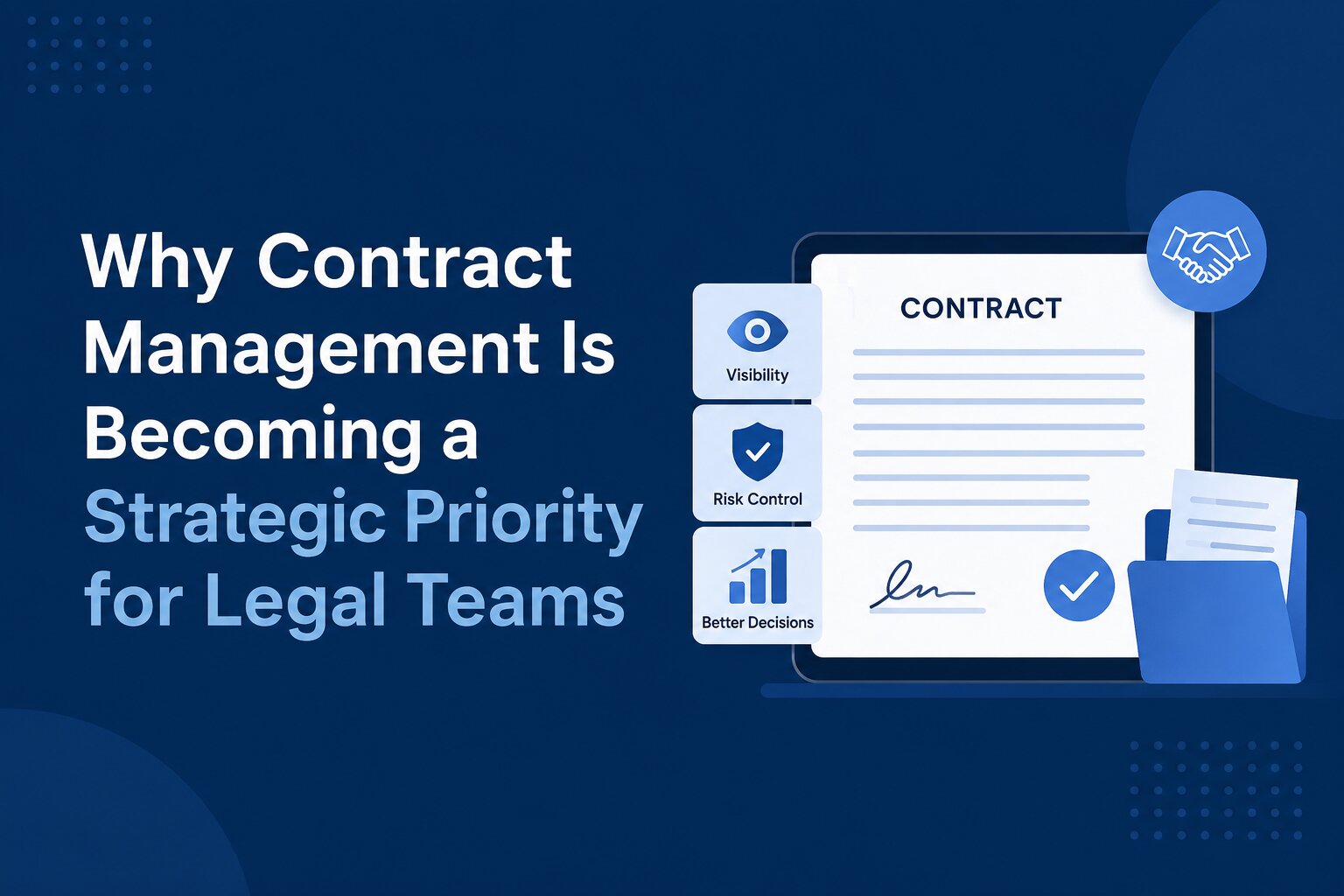
Why Contract Management Is Becoming a Strategic Priority for Legal Teams
For years, contract management was often treated as a necessary administrative responsibility. Contracts needed to be drafted, reviewed, approved, signed, stored, and eventually renewed. Legal teams handled the work, business teams submitted their requests, and the process continued in much the same way it always had.
But that view is changing.
Today, contracts sit at the centre of almost every important business relationship. They govern revenue, supplier commitments, partnerships, intellectual property, service obligations, pricing arrangements, and commercial risk. When contract processes are slow, fragmented, or difficult to track, the impact extends far beyond the legal department.
A delayed contract can slow down a deal. A missed obligation can create financial exposure. An unnoticed renewal date can lock a business into an unwanted commitment. This is why contract management is increasingly becoming a strategic priority for legal teams and business leaders alike. The question is no longer simply whether contracts are being managed. It is whether the organisation has enough visibility, control, and intelligence to manage them effectively at scale.
The Shift: From Back-Office Task to Boardroom Concern
Contract management did not suddenly become important. What changed is the environment around it. Businesses are managing more agreements than before. Commercial relationships are becoming more interconnected. Legal teams are expected to support faster decision-making while maintaining consistency and reducing risk.
At the same time, leadership teams increasingly expect legal departments to provide more than legal review. They want visibility into business commitments, contractual exposure, upcoming obligations, and potential bottlenecks.
What Changed: Contract Volume, Complexity, and Business Dependency
Contracts now touch nearly every major business function. Sales teams rely on contracts to close deals. Procurement teams depend on them to manage suppliers. Finance teams need accurate information about payment terms and financial commitments. Operations teams may be responsible for delivering contractual obligations.
As organisations grow, the number of contracts and stakeholders involved naturally increases. The challenge is that many contract processes have not evolved at the same pace. Information may still be spread across email inboxes, shared folders, spreadsheets, and individual desktops. Approval workflows can depend on manually following up with different stakeholders. Important dates may be tracked in calendars that only a few people can access.
This approach can work when contract volumes are low. It becomes increasingly difficult to manage as the organisation grows.
Why "Good Enough" Contract Handling No Longer Holds Up
For a long time, many organisations could tolerate fragmented contract processes because the consequences were not always immediately visible. A contract stored in the wrong folder might eventually be found. A delayed approval could be resolved through another email. A missed renewal date might be treated as an isolated mistake. But as contract portfolios become larger and more commercially important, these small inefficiencies start to accumulate.
Leadership teams are now asking more difficult questions.
- Which contracts are approaching renewal?
- What obligations are coming due?
- Where are contracts getting delayed?
- Which clauses create recurring negotiation issues?
- What financial commitments are hidden across hundreds or thousands of agreements?
- When legal teams cannot answer these questions quickly, the problem is no longer administrative.
It becomes a business visibility problem.
The Hidden Cost of Treating Contracts as Administrative Work
The biggest risks in contract management are not always dramatic legal disputes. Often, they come from everyday inefficiencies that gradually create financial, operational, and commercial consequences.
Missed Renewals and Auto-Renewal Traps
Renewal management is one of the clearest examples. Many contracts include notice periods, renewal deadlines, and automatic renewal clauses. Missing a single date can result in an agreement being renewed under terms the business no longer wants. Without a centralised system for tracking important milestones, legal teams may rely heavily on spreadsheets, individual calendars, or manual reminders. The risk increases when employees leave, responsibilities change, or contract volumes grow.
Strategic contract management means treating important dates as business-critical information rather than relying on someone remembering to check a spreadsheet.
Inconsistent Clause Language Creates Downstream Risk
When contracts are created manually from old templates or previous agreements, inconsistencies can easily develop. Different teams may use different versions of the same clause. Negotiated changes may not be captured for future reference. Employees may reuse outdated language because they do not know where the latest approved template is stored. Over time, this creates unnecessary variation across the contract portfolio.
Not every variation is a problem. Negotiation flexibility is important. The problem arises when legal teams cannot distinguish between intentional deviations and accidental inconsistencies. A strategic approach to contract management gives teams more control over standard language while still allowing the flexibility needed for commercial negotiations.
Slow Turnaround Times Can Bottleneck Business Activity
Legal teams are often under pressure to move faster. A sales team wants a contract approved before the end of the quarter. Procurement needs to finalise a supplier agreement. A partnership cannot move forward until negotiations are complete. When the contract process depends on long email chains, manual follow-ups, and unclear approval responsibilities, delays become almost inevitable.
The legal team may then be perceived as the bottleneck, even when the real problem is the process surrounding the work. Improving contract management is therefore not just about helping lawyers work faster. It is about removing unnecessary friction from business operations.
Lack of Visibility Into Obligations and Exposure
A signed contract should not disappear into a folder. Yet in many organisations, that is effectively what happens. The negotiation receives attention because it is active and urgent. Once the agreement is signed, visibility often declines. This creates a gap between what the organisation has agreed to and what decision-makers actually know about those commitments.
Leadership may struggle to get a clear view of contractual obligations, upcoming milestones, financial exposure, or recurring risk patterns. A well-managed contract repository can turn static agreements into accessible business information. That shift is one of the main reasons contract management is moving higher on the strategic agenda.
What's Driving the Strategic Reframe
The growing importance of contract management is closely connected to broader changes in how legal teams operate. Legal departments are being asked to become more efficient, more responsive, and more closely aligned with business goals. At the same time, expectations around visibility and accountability are increasing.
Legal Teams Are Expected to Do More Without More Headcount
Legal workloads continue to grow in many organisations, but expanding the legal team is not always an option. This creates a familiar challenge.
How can legal teams handle more contracts without simply adding more manual work? The answer increasingly involves improving processes and technology rather than relying entirely on additional resources. Automation can reduce repetitive administrative tasks. Standardised workflows can reduce unnecessary back-and-forth. Centralised systems can make information easier to find.
The goal is not to remove legal judgment from contract management. It is to reduce the amount of time lawyers spend searching for documents, chasing approvals, and handling repetitive process work.
Business Leaders Want Real-Time Visibility
Traditional reporting often tells leadership what has already happened. But contracts create ongoing commitments that can affect future decisions. Business leaders increasingly want faster access to information about contractual risks, obligations, renewal timelines, and negotiation activity. They do not always want to wait for a quarterly summary or manually request information from the legal team.
This is changing the expectations placed on contract data. Legal teams are being asked to provide information that supports proactive decision-making rather than simply responding to questions after an issue has already emerged.
Contracts Are Now a Cross-Functional Responsibility
Contracts may originate in one department, but they rarely belong to that department alone. Sales, procurement, finance, operations, and legal teams may all interact with the same agreement at different stages. This makes fragmented ownership particularly problematic.
If every department maintains its own records and processes, the organisation can quickly lose a consistent view of the contract lifecycle. Strategic contract management creates a more connected process. Different teams can participate in the workflow while legal maintains the necessary governance and oversight.
What "Strategic" Contract Management Actually Looks Like
Calling contract management strategic does not simply mean digitising documents. A shared drive full of PDF files may be more organised than filing cabinets, but it does not automatically create strategic value. The real shift happens when contracts become structured, accessible, and useful sources of business intelligence.
Centralised Visibility Across the Contract Lifecycle
Strategic contract management provides a clear view of contracts from creation through negotiation, approval, execution, renewal, and eventual expiry. As AI becomes more capable of supporting these stages, agentic AI can transform the contract lifecycle from drafting to execution by helping legal teams automate and coordinate more complex contract workflows.
Instead of searching across disconnected locations, authorised stakeholders can access relevant information from a central environment. This improves more than document storage. It creates continuity across the contract lifecycle. Teams can see where an agreement stands, who is responsible for the next step, and what actions may be required in the future.
Standardisation Without Losing Negotiation Flexibility
One concern around contract technology is that too much standardisation could make legal teams rigid. In reality, effective contract management should create consistency where consistency matters while preserving flexibility where negotiations require it. Approved templates and clause libraries can reduce unnecessary variation. Workflow rules can guide contracts through the right review and approval process.
At the same time, legal teams can retain control over exceptions and negotiated changes. The objective is not to make every contract identical. It is to make the process more controlled and predictable.
Data Legal Teams Can Actually Use
Perhaps the most significant difference between traditional and strategic contract management is the role of data. Contracts contain valuable information about the business. They reveal common negotiation issues, recurring obligations, commercial trends, approval delays, and areas of potential risk.
When this information remains trapped inside individual documents, legal teams cannot easily use it. Modern contract management technology can help transform contract information into searchable and structured data. This allows legal teams to identify patterns and provide more proactive guidance to the business. Instead of simply answering, "What does this contract say?", legal can increasingly help answer, "What are we seeing across our contracts, and what should we do about it?"
The Legal Team's New Mandate
The changing role of contract management reflects a broader shift in legal operations. Legal teams are moving beyond the traditional role of reviewing and approving documents. They are increasingly expected to enable the business to move faster while managing risk responsibly.
From Gatekeeper to Business Enabler
The idea of legal as a gatekeeper is becoming less useful in fast-moving organisations. Businesses do not simply need legal teams to say yes or no. They need legal teams to help them move forward with clarity and confidence. Efficient contract processes support this goal.
When routine work is standardised and administrative tasks are reduced, lawyers can spend more time on complex negotiations, strategic advice, and risk assessment.
This helps legal become a more active business partner. Technology alone does not create this transformation. But the right systems can give legal teams the infrastructure needed to support it.
Building the Internal Case for Contracts as a Strategic Asset
For many legal operations leaders, the challenge is not recognising the problem. It is helping the wider organisation understand why contract management deserves investment and attention. The strongest internal case usually focuses on business outcomes rather than technology features.
For example:
- Faster contract turnaround can support revenue and business growth.
- Better renewal visibility can reduce unnecessary commitments and missed opportunities.
- Standardised processes can improve consistency and reduce avoidable risk.
- Centralised contract information can improve decision-making across departments.
- Automation can help legal teams manage growing workloads without proportionally increasing administrative effort.
The conversation should not be about replacing an old spreadsheet with a new platform. It should be about creating a more efficient and intelligent way to manage one of the organisation's most important sources of commitments and risk.
How Beveron Smart Legal Contract Supports AI-Powered Strategic Contract Management
As contract volumes grow and agreements become more complex, legal teams need more than a digital repository for storing documents. They need an AI-powered contract management system that can help them manage the entire contract lifecycle, identify important information, reduce manual work, and support better business decisions. Beveron Smart Legal Contract is designed to provide this connected approach to modern contract management.
Beveron Smart Legal Contract uses AI-powered contract management to support key stages of the contract lifecycle, including contract creation, review, approval, execution, storage, obligation tracking, and renewal management. By bringing these activities into a centralised environment, legal teams can reduce their reliance on disconnected emails, spreadsheets, and manual follow-ups.
AI-Powered Contract Review and Management
AI can help legal teams work more efficiently by making contract information easier to identify and analyse. Instead of manually searching through lengthy agreements, teams can use AI-powered capabilities to surface relevant contract information, key clauses, obligations, dates, and potential areas that require attention.
This can help legal professionals spend less time on repetitive document-related tasks and more time on contract strategy, risk management, negotiation, and business support.
Centralised Contract Intelligence
Beveron Smart Legal Contract helps organisations bring contracts and related information into one structured environment. Centralised contract data makes it easier for legal teams to search agreements, monitor important milestones, track obligations, and maintain visibility across the contract portfolio.
With AI-powered contract intelligence, contracts can become more than static documents. They can serve as a source of useful business information that helps legal and business teams understand commitments, identify risks, and make informed decisions.
Smarter Contract Workflows
Contract management often involves multiple stakeholders, including legal teams, procurement, finance, sales, compliance, and business teams. Beveron Smart Legal Contract enables organisations to create structured workflows for contract creation, review, approval, and execution.
AI-powered workflows can help route contracts and tasks to the appropriate stakeholders, reduce unnecessary delays, and improve consistency across the contract lifecycle.
Better Contract Risk and Obligation Management
Missing a renewal date, contractual obligation, or important clause can create unnecessary financial and legal risk. A centralised AI-powered contract management environment can help teams maintain better visibility of critical dates, obligations, and contractual commitments.
This allows legal teams to take a more proactive approach to contract risk management, rather than reacting only when an issue occurs.
From Contract Management to Contract Intelligence
The strategic value of AI-powered contract management goes beyond automation. By making contract information easier to access, understand, and act upon, organisations can move from simply managing contracts to gaining intelligence from contracts.
For legal teams, this means stronger visibility into the contract portfolio, more consistent processes, faster access to information, and better support for business decisions.
As organisations manage increasing contract volumes and more complex commercial relationships, AI-powered contract management software such as Beveron Smart Legal Contract can provide the visibility, automation, and intelligence needed to manage contracts more strategically across their entire lifecycle.
Contract Management Is No Longer Just About Managing Documents
The strategic importance of contract management comes down to a simple reality. Contracts influence how businesses generate revenue, manage costs, build partnerships, and control risk. Treating them as routine administrative documents creates blind spots that become harder to manage as the organisation grows. Legal teams are now under pressure to work faster, provide better visibility, and support the business more proactively. That requires a different approach to contract management.
The future is not about making lawyers spend more time managing contracts. It is about giving legal teams the processes, technology, and information they need to manage contracts more intelligently. When that happens, contract management stops being a back-office responsibility and becomes what it should have been all along: a strategic capability that supports the wider business.
Frequently Asked Questions
Why is contract management getting more attention now than five years ago?
Several factors have increased its importance. Organisations are managing larger contract volumes, business relationships are becoming more complex, and legal teams are under pressure to work faster without proportionally increasing headcount. At the same time, leadership teams want better visibility into contractual obligations, risks, and business commitments.
Isn't contract management just a legal problem?
No. Contracts affect multiple departments, including sales, procurement, finance, operations, and leadership. Legal may oversee contractual risk and governance, but many teams rely on contracts to perform their day-to-day responsibilities. This makes contract management a cross-functional business concern.
What does "strategic" mean in the context of contract management?
Strategic contract management means looking beyond document storage and administrative tasks. It focuses on using contracts to improve visibility, manage risk, support faster decisions, identify business trends, and help legal teams provide more proactive advice to the organisation.
How can legal teams start improving contract management without a complete overhaul?
The first step is to understand where the biggest gaps exist. Legal teams can review how contracts are currently created, approved, stored, renewed, and tracked. Identifying recurring delays, visibility gaps, and manual tasks can help prioritise improvements before making larger process or technology changes.
Ready to Rethink How Your Organisation Manages Contracts?
For legal operations leaders, the starting point is not necessarily a complete transformation. It is understanding where the current contract process creates unnecessary friction, hidden risk, or limited visibility. A closer look at how contracts move through the organisation can reveal opportunities to improve efficiency, strengthen governance, and give legal teams more time to focus on strategic work.
As contract management continues to move from an administrative responsibility to a business priority, the organisations that build stronger processes today will be better prepared to manage growth, complexity, and risk tomorrow.
Best contract management for legal teams in the UAE
Best contract lifecycle management software in the UAE
Best contract management automation software in the UAE
If you need a free demo of the best contract management for legal teams in the UAE, please fill out the form.