Predictive Analytics in Litigation Strategy: How Data-Driven Law Firms Are Winning More Cases
Litigation has always involved a degree of uncertainty. Even the most experienced lawyers cannot predict every variable that may influence the outcome of a dispute. Traditionally, litigation strategy relied heavily on legal expertise, intuition, and past experience. While these remain essential, today’s most successful law firms are complementing professional judgement with data-driven insights.
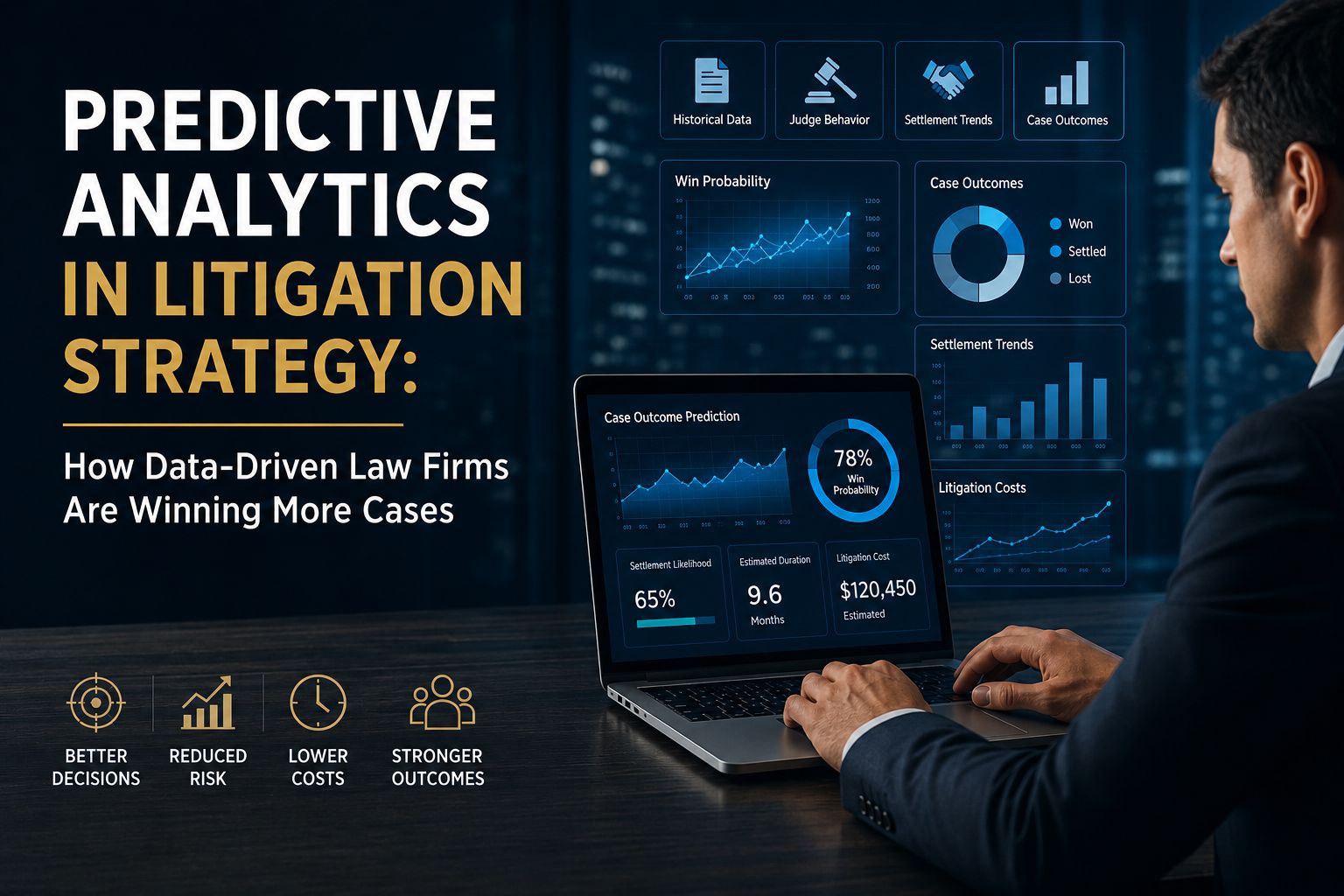
Predictive analytics is transforming the way legal teams assess risk, develop case strategies, and advise clients. By analysing historical case outcomes, judge behaviour, settlement trends, and litigation costs, law firms can make more informed decisions and improve their chances of success.
This article explores how predictive analytics is reshaping litigation strategy and why data-driven law firms are gaining a competitive advantage.
The Shift Toward Data-Driven Litigation
For decades, litigation decisions were based primarily on the experience of senior lawyers. They evaluated the facts, interpreted the law, and used their judgement to recommend whether to settle or proceed to trial.
However, legal disputes have become increasingly complex. Law firms now handle vast amounts of information, including pleadings, evidence, correspondence, deadlines, billing data, and historical case records.
Modern legal technology enables firms to analyse this data and uncover patterns that would be difficult to detect manually. Instead of relying solely on instinct, lawyers can use predictive analytics to support strategic decisions with objective evidence.
What Is Predictive Analytics in Litigation?
Predictive analytics refers to the use of historical data, statistical models, and artificial intelligence (AI) to forecast future outcomes.
In litigation, predictive analytics helps lawyers estimate:
- The probability of winning or losing a case
- The likelihood of settlement
- Expected litigation costs
- Estimated case duration
- Potential damages or recovery amounts
By combining legal knowledge with data analysis, law firms can make more accurate and strategic decisions throughout the litigation process.
Types of Data Used in Predictive Analytics
Predictive analytics tools draw insights from a wide range of structured and unstructured legal data.
Historical Case Outcomes
Past decisions in similar cases provide valuable information about likely outcomes and legal trends.
Judge Rulings and Court Behaviour
Data on how specific judges have ruled in comparable matters can help lawyers tailor their strategy.
Settlement Patterns
Analysing previous settlement amounts and timing can support negotiation decisions.
Opposing Counsel Strategies
Reviewing the tactics used by opposing firms can help anticipate their approach.
Litigation Timelines and Costs
Historical data helps estimate how long cases may take and the resources required.
Why Predictive Analytics Is Transforming Litigation Strategy
Better Outcome Forecasting
Law firms can estimate the probability of success before committing significant resources.
Stronger Legal Strategy
Data insights help lawyers identify arguments, precedents, and tactics that have worked in similar matters.
Risk and Cost Assessment
Predictive analytics helps quantify litigation risk and financial exposure.
Improved Client Advisory
Lawyers can provide clients with realistic, evidence-based recommendations.
Key Benefits for Data-Driven Law Firms
Faster Decision-Making
Lawyers can evaluate case options more quickly using data-backed insights.
Better Case Preparation
Teams can focus research and preparation on the factors most likely to influence the outcome.
Efficient Resource Allocation
Firms can assign lawyers, budget, and time more effectively.
Reduced Uncertainty
Predictive models provide greater clarity on likely outcomes.
Stronger Client Trust
Clients value recommendations supported by data as well as legal expertise.
Real-World Applications of Predictive Analytics
Case Strategy Planning
Law firms can analyse previous rulings to shape arguments and filings.
Settlement Decision Support
Data helps determine whether settling or proceeding to trial is the better option.
Judge Behaviour Analysis
Lawyers can assess a judge’s historical tendencies in similar cases.
Litigation Timeline Forecasting
Firms can estimate how long a matter may take and plan accordingly.
Technologies Powering Predictive Analytics in Law
Several technologies make predictive analytics possible.
Legal Analytics Platforms
These tools aggregate court data and historical decisions.
AI-Powered Legal Research Tools
AI can quickly identify relevant precedents and trends.
Case and Matter Management Systems
Centralised systems provide the structured data needed for meaningful analysis.
Data Aggregation Tools
These combine information from multiple sources to generate insights.
How Smart Lawyer Office Supports Data-Driven Litigation
Smart Lawyer Office helps law firms centralise litigation data in one secure platform. It enables legal teams to:
- Track case progress and milestones
- Monitor deadlines and court dates
- Analyse matter status and outcomes
- Generate reports on performance and workload
- Manage documents, billing, and communications
By organising legal information and making it easily accessible, Smart Lawyer Office gives law firms a stronger foundation for data-driven litigation strategy.
Challenges and Considerations
Data Quality
Predictive insights are only as reliable as the data used.
Privacy and Compliance
Law firms must protect confidential client information.
Avoiding Overreliance
Analytics should support, not replace, professional legal judgement.
Need for Legal Expertise
Experienced lawyers remain essential for interpreting and applying insights.
The Future of Predictive Litigation
Predictive analytics is becoming a core part of modern legal practice. As AI and legal analytics tools continue to evolve, more law firms will integrate data-driven insights into their everyday workflows.
Firms that adopt predictive analytics early will be better positioned to:
- Improve litigation outcomes
- Reduce costs
- Deliver stronger client service
- Gain a competitive advantage
Conclusion
Predictive analytics is changing the way law firms approach litigation. By analysing historical case data, court trends, and legal outcomes, firms can make smarter strategic decisions and advise clients with greater confidence.
Law firms that combine legal expertise with data-driven insights are better equipped to reduce uncertainty, manage risk, and improve success rates.
Smart Lawyer Office helps law firms centralise litigation data, monitor performance, and support more informed litigation strategies. As legal technology continues to advance, data-driven litigation will become the new standard for high-performing law firms.
Book a free demo to see how Smart Lawyer Office helps your law firm use data-driven insights to build stronger litigation strategies and win more cases.
Best litigation management software for law firms in the UAE
Best cloud-based legal practice management software in the UAE
Best legal technology for litigation strategy in the UAE
If you need a free demo of the best litigation management software for law firms in the UAE, please fill out the form below.