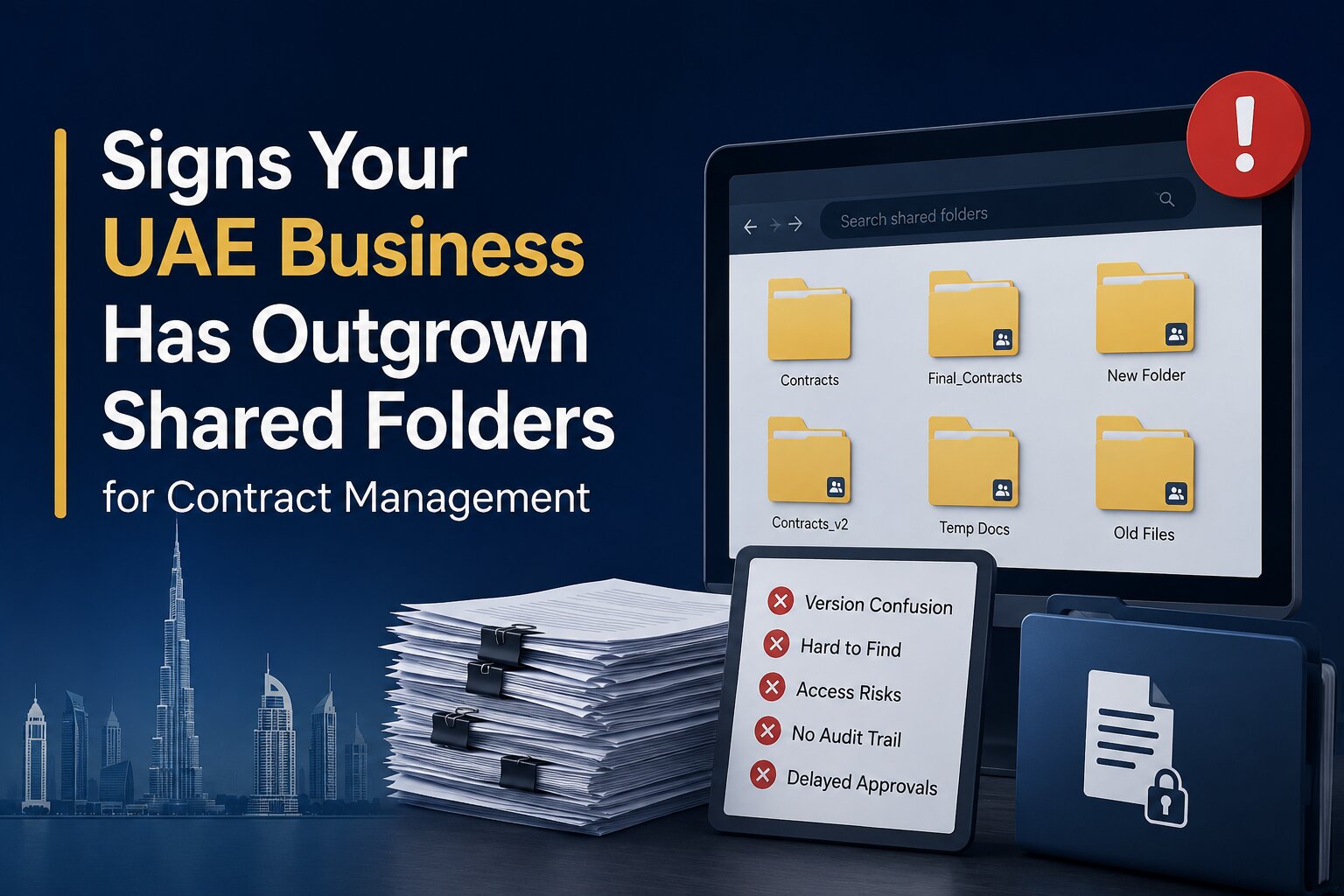
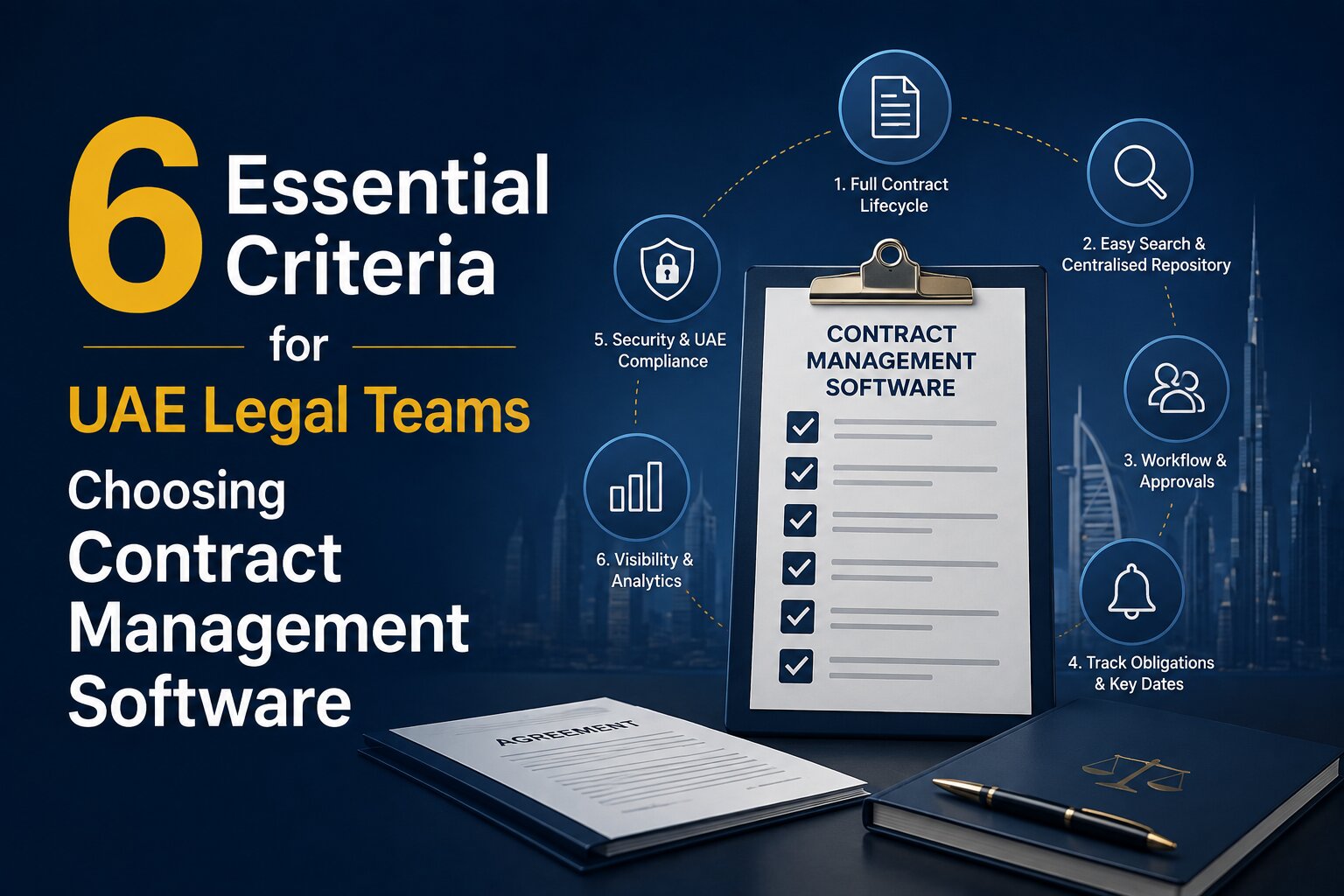
Legal Document Automation vs Manual Contract Drafting in the UAE: Which Is Better for Modern Businesses?
Introduction
Contracts are the foundation of every business relationship. Whether you're onboarding employees, signing vendor agreements, closing sales deals, or managing procurement, well-drafted legal documents help protect your business and reduce risk. In the UAE, where businesses operate in a fast-paced and highly regulated environment, accurate and consistent contract management is more important than ever.
Despite advances in legal technology, many organisations still rely on manual contract drafting using old templates, email exchanges, and multiple document versions. This traditional approach often leads to delays, inconsistent wording, version control issues, and costly drafting errors. As contract volumes increase, these challenges become even harder to manage.
This is where legal document automation is transforming legal operations. By combining intelligent templates, automated workflows, approval routing, secure e-signatures, and contract analytics, businesses can create contracts faster while maintaining compliance and consistency. This article compares legal document automation with manual contract drafting to help UAE businesses choose the approach that best supports long-term growth.
What Is Legal Document Automation?
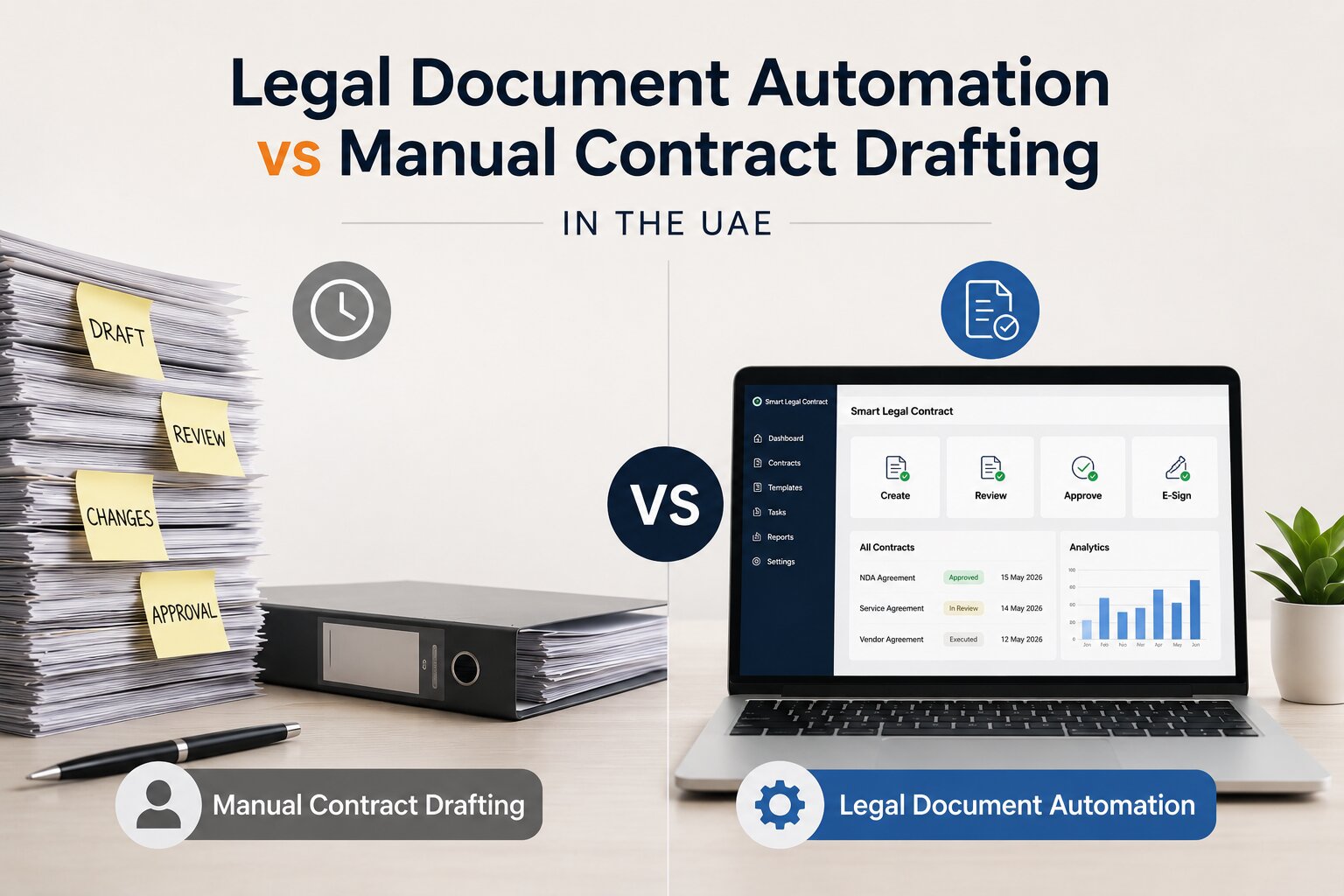
Legal document automation is the process of generating legal documents using pre-approved templates, automated fields, and structured workflows instead of drafting every contract from scratch.
Rather than copying an older agreement and manually editing it, users simply enter the required information, such as customer details, payment terms, contract duration, or project scope. The software automatically populates the document with approved clauses, company branding, and standard legal language.
Businesses commonly use legal document automation for:
- Employment contracts
- Vendor and supplier agreements
- Non-disclosure agreements (NDAs)
- Service agreements
- Purchase agreements
- Partnership contracts
- Customer contracts
- Lease agreements
As organisations continue to digitalise legal operations, document automation has become an essential part of modern contract management. It helps legal teams reduce repetitive work, improve consistency, minimise human error, and accelerate contract turnaround times. Businesses exploring how artificial intelligence is transforming contract creation can also learn more about AI in legal agreement drafting and storage, including how AI improves document accuracy, organisation, compliance, and legal workflows.
What Is Manual Contract Drafting?
Manual contract drafting is the traditional method of creating legal documents using applications like Microsoft Word, previous contract versions, and email-based collaboration.
A legal professional or business user typically copies an existing agreement, updates the relevant details, revises clauses, circulates the document for review, tracks feedback through multiple email threads, and manually manages approvals before obtaining signatures.
Although manual drafting remains useful for highly customised agreements, litigation matters, and complex negotiations, it becomes inefficient when organisations generate large numbers of routine contracts. As businesses grow, managing multiple document versions, approvals, and revisions manually can significantly increase legal workload and operational risk.
Legal Document Automation vs Manual Contract Drafting
Feature | Legal Document Automation | Manual Contract Drafting |
|---|---|---|
Document Creation | Automated templates | Draft from scratch |
Clause Library | Centralised approved clauses | Copy from previous contracts |
Review Process | Automated comparison | Manual review |
Approval Workflow | Automated routing | Email approvals |
Version Control | Automatic | Multiple file versions |
E-signatures | Built-in secure signing | Print, sign, scan or third-party tools |
Analytics | Real-time dashboards | Manual reporting |
Compliance | Standardised templates | Depends on manual checks |
Scalability | High | Limited |
Key Differences Between Legal Document Automation and Manual Contract Drafting
Faster Contract Creation
Creating contracts manually often means searching through folders for an old agreement, editing multiple sections, updating formatting, and checking whether the clauses are still current. Even routine contracts can consume valuable time.
Legal document automation eliminates much of this repetitive work through reusable templates and intelligent data fields. Users simply enter key information, and the system automatically generates a complete contract using approved legal language.
Modern contract automation platforms offer unlimited customisable templates that can be tailored to different business requirements. Legal teams can standardise frequently used agreements while enabling authorised users to generate contracts in minutes instead of hours. This approach not only saves time but also ensures every document follows approved organisational standards, improving consistency, reducing drafting errors, and supporting compliance across the organisation.
Better Accuracy and Consistency
Human error is one of the biggest risks associated with manual contract drafting. Incorrect party names, outdated clauses, missing provisions, formatting inconsistencies, or incorrect dates can all create unnecessary legal and commercial risks.
Legal document automation significantly improves accuracy by using centrally managed templates and approved clause libraries. Since every document is generated from the same controlled source, organisations maintain consistency across departments and business units.
This approach also makes it easier to update contracts whenever internal policies or regulatory requirements change, reducing the likelihood of outdated language appearing in future agreements.
Easier Review and Version Comparison
Contract negotiations often involve multiple revisions. With manual drafting, reviewers compare Word documents line by line, making it difficult to identify every modification accurately.
Modern legal document automation platforms simplify this process through automated redlining and document comparison. Changes between versions are highlighted instantly, allowing legal professionals to review edits more efficiently and focus on substantive legal issues rather than formatting differences.
Advanced contract automation solutions include automated comparison and redlining capabilities that enable legal teams to review revisions quickly, identify changes accurately, and shorten negotiation cycles while maintaining a complete version history.
Streamlined Approval Workflows
Manual approval processes frequently rely on long email chains, phone calls, and repeated follow-ups. Documents may sit in inboxes waiting for approval, creating unnecessary delays.
Legal document automation introduces structured approval workflows that automatically route contracts to the appropriate stakeholders based on predefined business rules.
With multi-level approval workflows, Beveron's Smart Legal Contract ensures contracts move seamlessly between legal, procurement, finance, compliance, and management teams. Each stage is recorded, providing greater accountability, transparency, and faster decision-making while reducing administrative effort.
Secure Digital Signing
Many organisations still print contracts, obtain handwritten signatures, scan documents, and email them back to all parties. This process is slow and increases the risk of misplaced documents.
Legal document automation integrates secure electronic signatures directly into the contract lifecycle. Once approvals are complete, authorised parties can review and sign contracts digitally from anywhere.
Beveron's Smart legal contract offers native secure e-signature integration, allowing businesses to complete agreements more quickly while maintaining document integrity and a secure audit trail. This is particularly valuable for organisations working with remote teams, international clients, and multiple business locations.
Better Visibility Through Analytics
Manual reporting often depends on spreadsheets that require regular updates and provide limited visibility into contract performance.
Legal document automation transforms contract data into actionable insights through real-time dashboards. Legal leaders can monitor contract status, approval timelines, pending renewals, bottlenecks, workload distribution, and key performance indicators from a single interface.
Many AI-powered contract management solutions offer business intelligence dashboards and KPI reporting, enabling legal departments to make informed decisions based on accurate, real-time data instead of manually compiled reports. For organisations evaluating the business value of modern contract technology, understanding the ROI of digital contract management can help demonstrate how automation reduces manual work, lowers operational risk, improves collaboration, and delivers long-term cost savings.
Greater Compliance and Scalability
As businesses expand, so does the volume of contracts they manage. Manual drafting becomes increasingly difficult to scale while maintaining compliance across different departments.
Legal document automation supports growth by ensuring every contract follows approved templates, clause libraries, and workflows. It also creates comprehensive audit trails, making regulatory reviews and internal audits much easier.
Whether an organisation manages hundreds or thousands of contracts annually, automation provides the consistency and control needed to support sustainable growth without significantly increasing legal workload.
Pros and Cons
Legal Document Automation
Pros
- Faster contract creation
- Improved drafting accuracy
- Standardised contract templates
- Better regulatory compliance
- Automated approval workflows
- Integrated secure e-signatures
- Real-time analytics and reporting
- Centralised contract repository
- Easier collaboration across departments
Cons
- Initial implementation requires planning
- Employees may need training during adoption
- Existing templates may require standardisation before migration
Manual Contract Drafting
Pros
- Familiar process for most legal professionals
- Suitable for highly customised or one-off agreements
- No software implementation required
Cons
- Time-consuming drafting process
- Higher risk of human error
- Difficult version control
- Slower review and approval cycles
- Limited reporting capabilities
- Hard to scale as contract volume grows
Which Option Is Better for Modern Businesses in the UAE?
The right approach depends largely on the number and complexity of contracts an organisation manages.
Small businesses handling only a few specialised agreements each year may still find manual drafting sufficient. However, as organisations expand, the limitations of manual processes become increasingly apparent. Mid-sized companies and large enterprises often manage contracts across legal, procurement, sales, finance, HR, and compliance teams. In these environments, manual drafting creates unnecessary delays, inconsistent documentation, and administrative overhead.
Legal document automation provides a more efficient and scalable solution by standardising templates, reducing drafting time, streamlining reviews, automating approvals, supporting secure digital signatures, and providing complete visibility into contract performance. Businesses looking to understand how automation improves every stage of the agreement process can also explore end-to-end contract lifecycle management, from contract creation and negotiation to execution, renewals, and compliance monitoring.
For UAE businesses seeking an end-to-end contract lifecycle management solution, Beveron's Smart Legal Contract offers a comprehensive platform designed to simplify every stage of the process. From automated document creation and clause management to contract comparison, multi-level approval workflows, secure e-signatures, centralised storage, business intelligence dashboards, and detailed reporting, the platform enables legal teams to work more efficiently while maintaining compliance and governance.
Beveron has established itself as a trusted legal technology provider by delivering solutions that address the practical challenges faced by corporate legal departments, government entities, financial institutions, and enterprises across the Middle East. Rather than focusing only on drafting, its Smart Legal Contract platform supports the complete contract lifecycle, helping organisations improve productivity, reduce operational risk, and maintain greater control over their legal processes.
Frequently Asked Questions
What is legal document automation?
Legal document automation is the process of generating legal documents using pre-approved templates, automated data fields, workflows, and clause libraries, reducing manual drafting effort and improving consistency.
Is legal document automation suitable for small businesses?
Yes. Small businesses can use legal document automation to create contracts faster, reduce drafting errors, and establish standardised documentation as they grow.
Can automation reduce legal drafting errors?
Yes. Since documents are generated from approved templates and clause libraries, automation helps minimise common manual errors such as incorrect dates, missing clauses, and inconsistent wording.
Does legal document automation support e-signatures?
Most modern legal document automation platforms, including Beveron's Smart Legal Contract, support secure electronic signatures, allowing contracts to be signed digitally without printing or scanning.
How does contract automation improve compliance?
Contract automation improves compliance by ensuring approved templates, standard clauses, structured approval workflows, version tracking, and audit trails are consistently applied across every contract.
Conclusion
Manual contract drafting continues to have value for highly specialised legal matters that require significant customisation. However, for organisations managing a growing volume of contracts, legal document automation delivers clear advantages in speed, consistency, compliance, visibility, and scalability.
By automating document creation, simplifying reviews, streamlining approvals, enabling secure digital signatures, and providing real-time reporting, businesses can improve both legal efficiency and operational performance. As more organisations embrace legal workflow automation to reduce manual processes and improve collaboration, they are creating more agile and efficient legal operations.
For organisations in the UAE looking to modernise contract management, Beveron's Smart Legal Contract offers a comprehensive platform that supports the entire contract lifecycle—from document creation and review to approvals, secure e-signatures, analytics, and reporting—helping legal teams work more efficiently, reduce risk, and maintain greater control over every agreement.
Discover how smarter contract management can transform your legal operations.
Book a personalised demo of Beveron Smart Legal Contract today.
Best legal document automation software for legal teams in the UAE
Best legal contract management for corporates in the UAE
Best contract drafting software for enterprises in the UAE
If you need a free demo of the best legal document automation software for legal teams in the UAE, please fill out the form below.