How UAE Law Firms Boost Productivity with Legal Practice Management Software

Introduction
The legal profession has always been demanding, but the expectations placed on law firms today are higher than ever. Clients want faster responses, greater transparency, and seamless communication throughout the lifecycle of a matter. At the same time, legal teams must manage increasing workloads, maintain strict compliance standards, and ensure that every deadline, document, and billable hour is accounted for.
For many UAE law firms, the challenge is not a lack of legal expertise. The real challenge lies in managing the growing volume of administrative work that surrounds legal services. A lawyer may spend hours searching for documents, tracking matter updates, following up on internal tasks, or preparing invoices before they even begin the substantive legal work clients are paying for.
These operational inefficiencies can quietly impact productivity, profitability, and client satisfaction.
As the UAE continues to accelerate its digital transformation agenda, law firms are increasingly turning to legal practice management software to streamline operations and create more efficient ways of working. Rather than relying on disconnected spreadsheets, email chains, and manual processes, firms are adopting technology that centralises information, automates routine tasks, and provides greater visibility across their legal operations.
This shift is not simply about adopting new software. It is about creating a more productive, scalable, and client-focused law firm.
In this article, we explore how UAE law firms are improving productivity with legal practice management software, the features driving these improvements, and what firms should consider when evaluating a solution.
Why Productivity Has Become a Priority for UAE Law Firms
Productivity is no longer viewed as an internal operational metric. For many law firms, it has become a competitive advantage.
Whether serving multinational corporations, government entities, or private clients, legal teams are under increasing pressure to deliver high-quality services efficiently. Firms that can manage matters faster, communicate more effectively, and reduce administrative overhead are often better positioned to strengthen client relationships and support sustainable growth.
Rising Client Expectations and Faster Service Delivery
Client expectations have evolved significantly over the past decade.
Today's clients expect the same level of responsiveness and transparency from their legal advisers that they receive from other professional service providers. They want timely updates, easy access to information, and confidence that their matters are progressing without unnecessary delays.
Consider a corporate client involved in a complex commercial dispute. They may need frequent status updates, access to supporting documents, and quick answers to urgent questions. If lawyers need to search through multiple systems before responding, communication slows down and client confidence can be affected.
In an increasingly competitive legal market, responsiveness is often just as important as expertise. Firms that can provide both are more likely to retain clients and secure new business opportunities.
Administrative Work Is Consuming Valuable Billable Hours
Ask any managing partner where valuable time disappears during a typical week, and the answer is rarely legal work itself.
Instead, time is often lost to administrative activities such as searching for documents, updating matter records, tracking deadlines, reviewing email threads, preparing invoices, and coordinating internal workflows. While each task may only take a few minutes, the cumulative impact can be substantial. A lawyer preparing for a client meeting might spend thirty minutes locating the latest contract version. A finance team member may need to manually reconcile billable hours before generating invoices. A paralegal may spend valuable time chasing updates across multiple departments.
These inefficiencies not only affect productivity but can also influence profitability. Every hour spent on avoidable administrative work is an hour that cannot be allocated to higher-value legal services.
The UAE's Ongoing Digital Transformation
The UAE has established itself as one of the region's leading advocates for digital innovation. Government initiatives promoting smart services, digital infrastructure, and technology adoption have encouraged organisations across industries to modernise their operations. The legal sector is no exception.
Law firms throughout Dubai, Abu Dhabi, and other emirates are increasingly exploring technology solutions that help them work more efficiently while maintaining high standards of service and compliance.
Recent industry studies continue to show growing investment in cloud-based platforms, workflow automation, and AI-powered business tools across professional services. For UAE law firms, digital transformation is becoming less about future planning and more about everyday operational necessity.
What Is Legal Practice Management Software?
At its core, legal practice management software is designed to help law firms run their operations more effectively.
Instead of storing information across spreadsheets, emails, paper files, and multiple standalone systems, firms can manage matters, documents, billing, tasks, and client communications from a centralised platform. Think of it as the operational backbone of a modern law firm.
Core Functions of Legal Practice Management Software
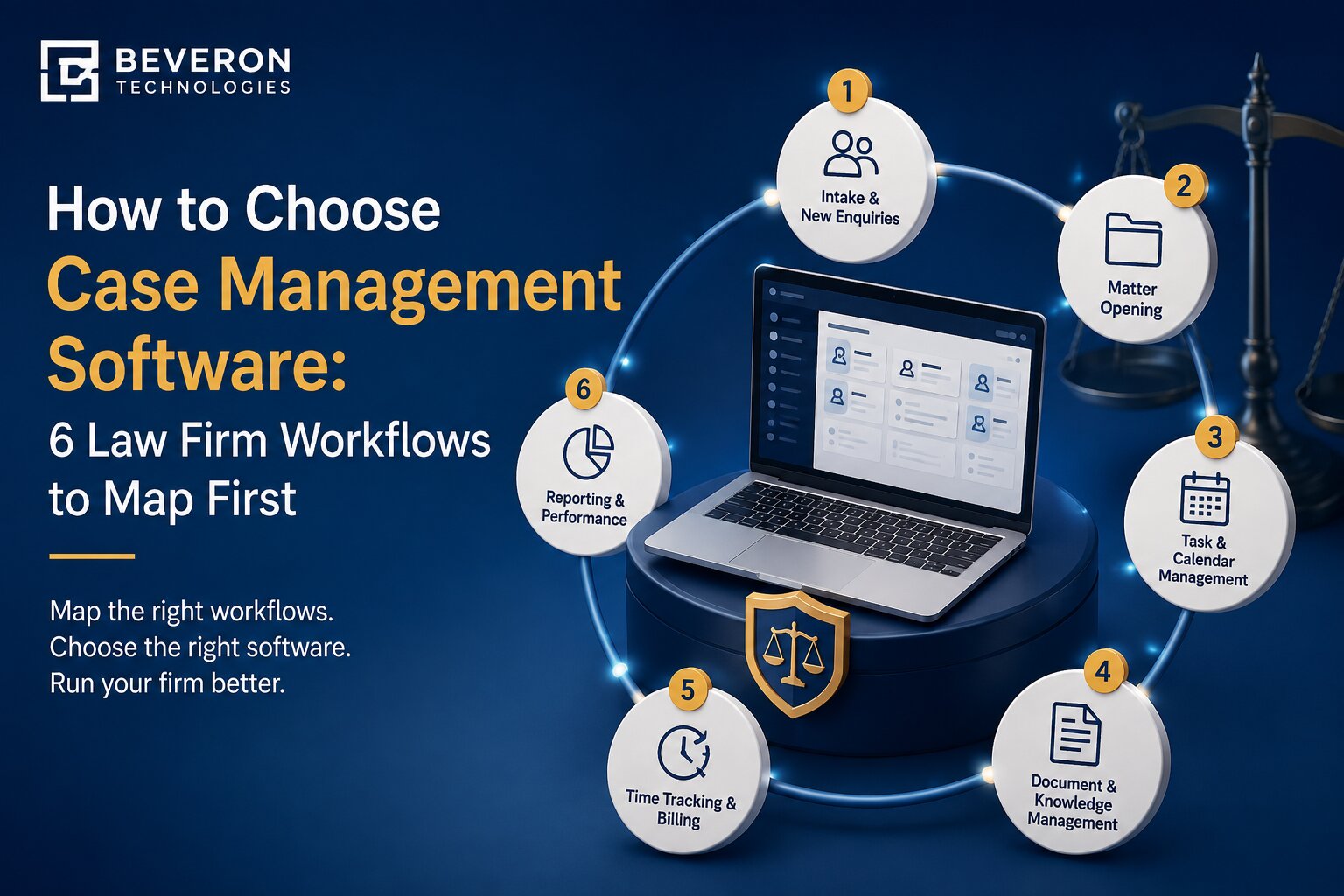
Most legal practice management platforms combine several critical functions into one environment, including:
- Matter and case management
- Document management
- Time tracking
- Billing and invoicing
- Task management
- Calendar and deadline tracking
- Client relationship management
- Reporting and analytics
When these functions work together, legal teams gain better visibility, stronger collaboration, and greater control over daily operations.
Key Ways Legal Practice Management Software Improves Productivity
Productivity improvements rarely come from one major change. More often, they result from eliminating dozens of small inefficiencies that occur throughout the working day.
Centralised Matter and Case Management
Legal matters generate a constant flow of information. Emails, contracts, pleadings, research notes, deadlines, and client communications all need to be tracked and organised.
Without a centralised system, information often becomes fragmented.
A litigation team handling multiple active matters across Dubai and Abu Dhabi may find itself switching between email inboxes, shared drives, and spreadsheets simply to obtain a complete picture of a case. Legal practice management software creates a single source of truth for every matter, helping lawyers access information quickly and make better-informed decisions. Many UAE law firms are now adopting advanced case management platforms to centralise documents, deadlines, communications, and legal workflows. Learn more in our comprehensive guide to The Complete Guide to Legal Case Management Software for Modern Law Firms in 2026
Faster Document Management and Retrieval
Every lawyer has experienced the frustration of knowing a document exists but being unable to locate it immediately. It may be the latest contract revision before a negotiation, an important piece of correspondence from several months ago, or evidence required before a hearing.
When documents are scattered across different locations, valuable time is lost before the actual legal work begins.
Modern document management tools allow firms to organise files by matter, maintain version control, and retrieve documents through powerful search functions. What once took hours can often be accomplished in seconds.
Automated Task and Deadline Tracking
In legal practice, deadlines matter. Missed court dates, filing deadlines, or client commitments can create significant operational and reputational risks.
Automation helps remove much of the manual effort involved in tracking responsibilities. Tasks can be assigned automatically, reminders can be generated in advance, and workflows can be monitored in real time. This creates greater accountability while reducing the likelihood of important obligations slipping through the cracks.
Streamlined Time Tracking and Billing
Revenue leakage is a challenge many firms do not fully recognise until they examine their billing processes closely. A lawyer may spend ten minutes reviewing a contract amendment or fifteen minutes responding to a client email but forget to record the time. These small omissions accumulate over weeks and months.
By automating time capture and billing workflows, firms can improve invoice accuracy, reduce administrative effort, and strengthen cash flow management.
Improved Internal Collaboration
Legal matters often involve multiple stakeholders. Partners, associates, paralegals, compliance professionals, and administrative staff all contribute to successful outcomes. When information is stored in different locations, collaboration becomes more difficult. Team members spend time requesting updates rather than progressing the work itself.
A shared platform improves visibility and ensures everyone is working from the same information.
Better Client Communication
Strong client relationships are built on trust, transparency, and responsiveness. When lawyers have immediate access to matter histories, communication records, and supporting documents, they can respond more confidently and efficiently.
Clients notice the difference when updates are timely and information is readily available.
The Role of Automation and AI in Modern Legal Operations
The conversation around legal technology increasingly includes automation and artificial intelligence, but their role is often misunderstood.
AI-Assisted Legal Workflows
AI is not replacing lawyers. Instead, it is helping legal professionals spend less time on repetitive administrative activities. Examples include intelligent document categorisation, enhanced search capabilities, knowledge management, and contract review assistance.
Used appropriately, AI helps firms access information faster and make better use of existing knowledge.
Automation Reduces Repetitive Administrative Tasks
Many operational activities follow predictable patterns. Matter creation, task assignments, reminder notifications, workflow approvals, and invoice generation can often be automated.
For legal teams, this means less time spent on administration and more time dedicated to client service and legal analysis.
Compliance and Data Security Considerations for UAE Law Firms
Productivity should never come at the expense of security.
Protecting Confidential Client Information
Law firms handle highly sensitive information that requires strong protection. Modern legal software platforms typically include access controls, encryption, audit logs, and user permissions that help safeguard confidential client data.
These controls are essential in an environment where information security remains a top priority.
Supporting Regulatory and Professional Compliance
As firms handle growing volumes of digital information, maintaining compliance becomes increasingly complex. Technology can help standardise processes, improve record keeping, and create greater accountability through detailed audit trails and reporting capabilities.
This supports both internal governance and professional obligations.
How Smart Lawyer Office Supports Productive Legal Operations
Consider a growing UAE law firm managing litigation matters, corporate advisory services, and compliance projects simultaneously.
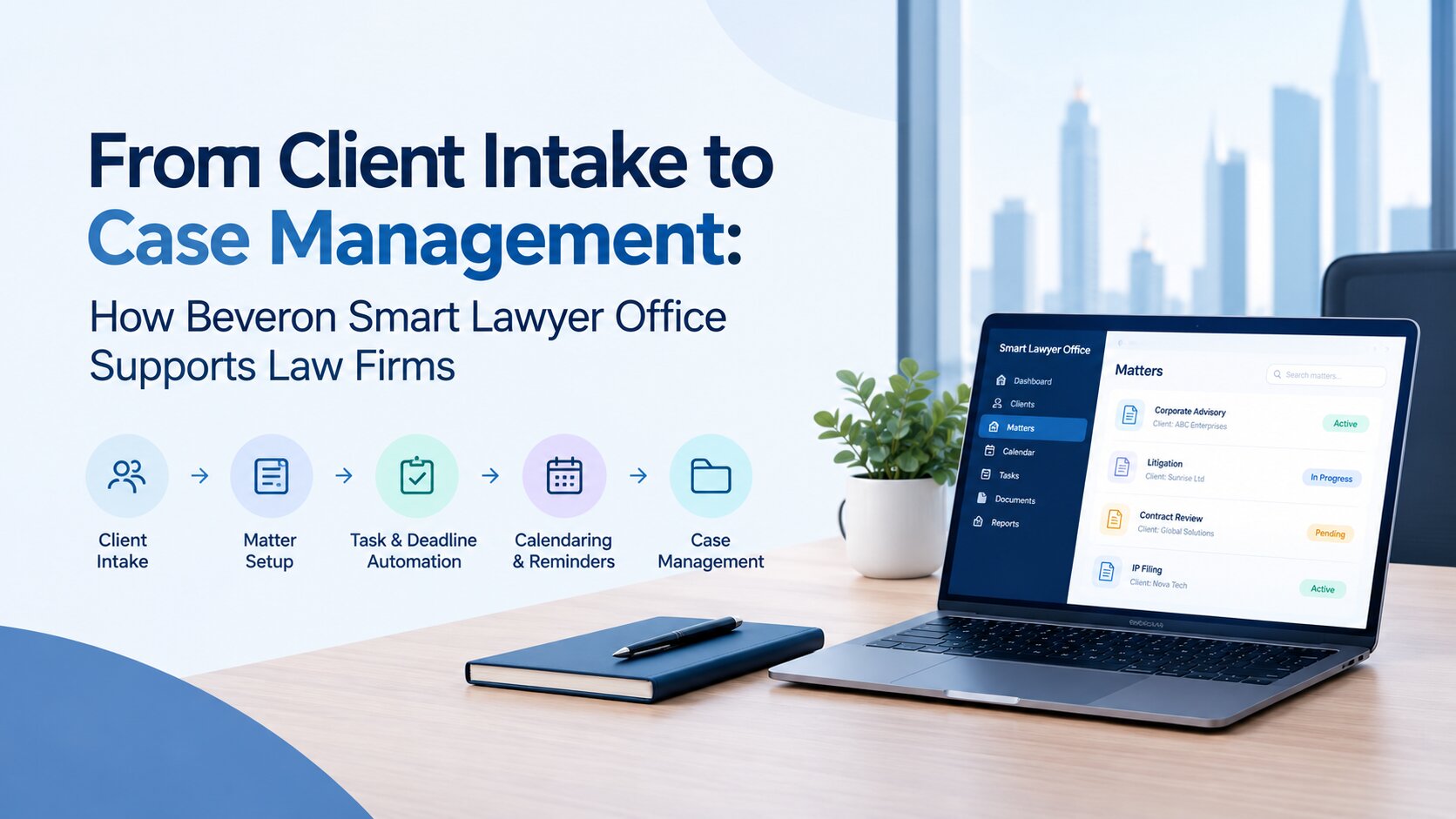
Lawyers need quick access to documents, partners require visibility into matter progress, and clients expect prompt communication. When information is spread across multiple systems, even routine tasks can become unnecessarily complicated. Solutions such as Smart Lawyer Office help address these challenges by bringing matter management, document organisation, workflow automation, billing, and collaboration into a single environment.
By reducing operational fragmentation, legal teams can focus more on legal work and less on administrative coordination.
The Future of Legal Practice Management in the UAE
The future of legal operations will be increasingly connected, data-driven, and automated.
Cloud-Based Legal Operations
Cloud technology gives firms greater flexibility, accessibility, and scalability while supporting modern ways of working.
Data-Driven Law Firm Management
Firms are increasingly using reporting and analytics to measure productivity, profitability, billing performance, and workflow efficiency.
Greater Integration Across Legal Workflows
The trend is moving towards unified legal ecosystems where matter management, billing, CRM, compliance, and document management work together seamlessly.
This reduces duplication, improves visibility, and creates a more efficient operational environment.
Conclusion
The most productive law firms are not necessarily those working longer hours. They are the firms that have created efficient systems for managing information, workflows, and client relationships. As legal operations become more complex and client expectations continue to rise, relying on manual processes can create unnecessary bottlenecks that limit growth.
Legal practice management software helps law firms streamline daily operations, improve collaboration, strengthen billing processes, and deliver a better client experience.
For UAE law firms looking to improve productivity while supporting long-term growth, investing in the right technology can be a significant step forward.
If your firm is exploring ways to centralise case management, automate routine workflows, and improve operational efficiency, Smart Lawyer Office offers an opportunity to see how modern legal technology can support those goals practically and sustainably.
Best legal practice management software in the UAE
Best legal case management software in the UAE
Best law firm management software in the UAE
If you need a free demo of the best legal practice management software in the UAE, please fill out the form below.