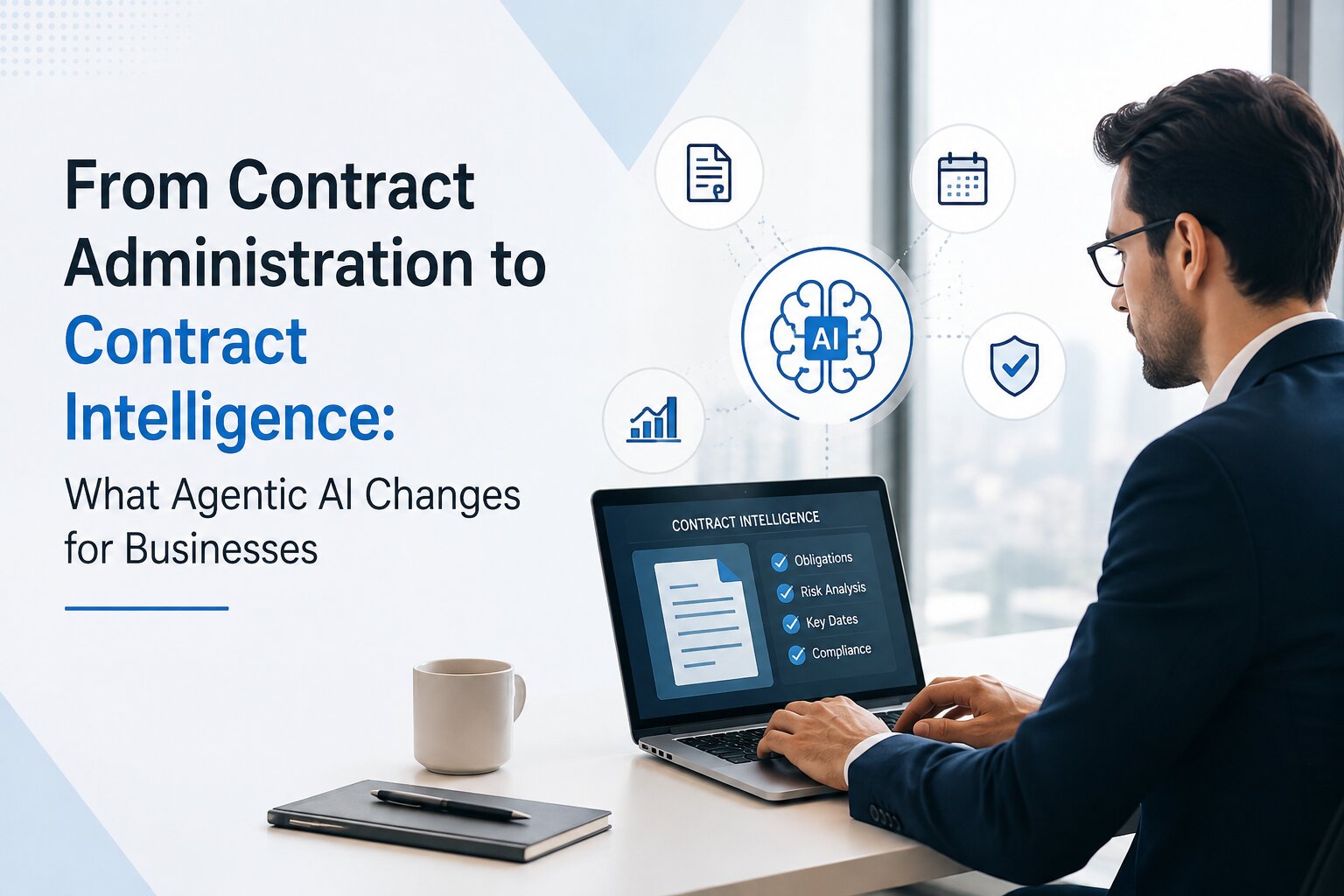
From Contract Administration to Contract Intelligence: What Agentic AI Changes for Businesses
For years, contract management has largely focused on keeping documents organised, tracking key dates, and ensuring agreements move from drafting to signing without unnecessary delays.
That model worked reasonably well when businesses had a manageable number of contracts. But as organisations grow, their contracts become more numerous, more complex and more closely tied to business operations. A single agreement can contain dozens of obligations, renewal conditions, pricing terms, compliance requirements and risks that need attention long after the document has been signed.
This is where contract intelligence is beginning to change the conversation.
Instead of treating contracts as documents to store and manage, businesses can treat them as sources of ongoing business insight. And with the emergence of Agentic AI, that shift can go a step further. AI systems are increasingly being designed not only to find and interpret information but also to help determine what should happen next and, within defined permissions, initiate actions.
The result is a move from simply administering contracts to actively understanding and working with them.
The Shift from Contract Administration to Contract Intelligence
Why contract administration is becoming less about manual processing
Contract administration covers many of the routine activities involved in managing agreements. Teams may need to locate documents, update records, monitor renewal dates, route contracts for approval, check obligations and communicate with different stakeholders.
The problem is that these tasks don't disappear when contract volumes increase.
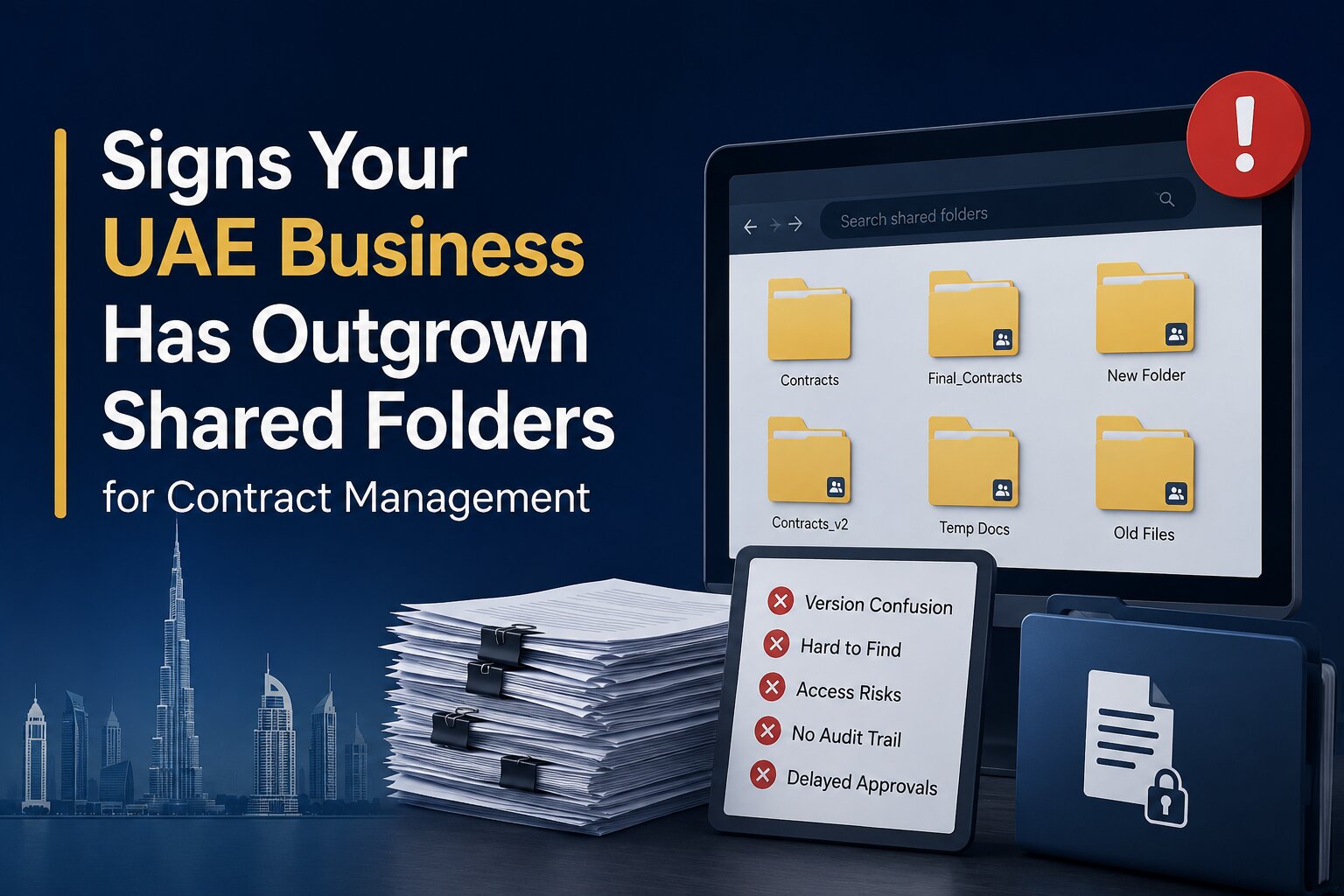
A legal team managing 50 contracts may be able to keep track of key information through spreadsheets, email reminders and shared folders. Try doing the same with hundreds or thousands of agreements spread across different departments, suppliers, customers and jurisdictions, and the limitations become obvious.
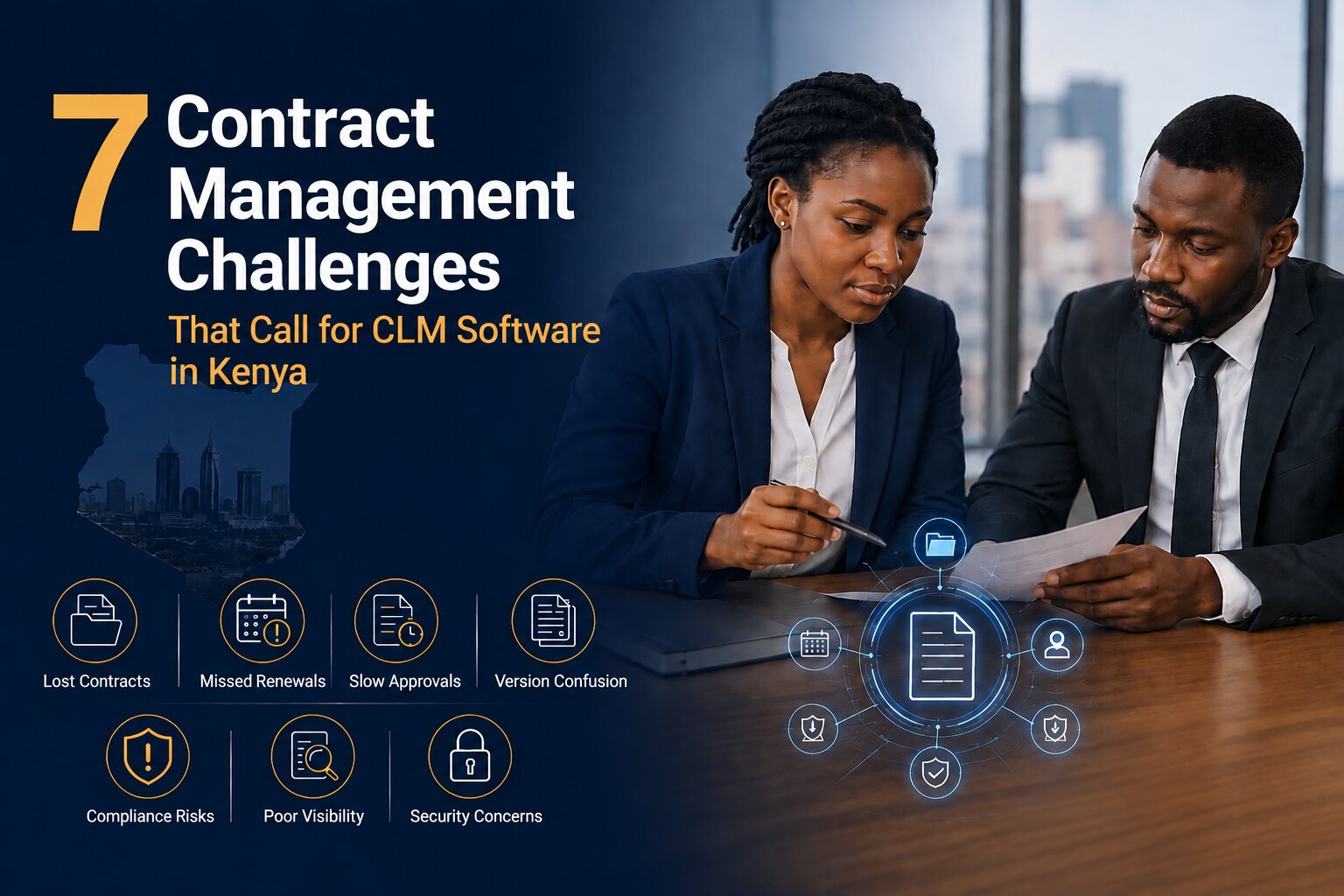
Information becomes harder to find. Important dates can be missed. Reviews take longer. And legal professionals can end up spending a significant amount of time looking for information that already exists somewhere inside the organisation.
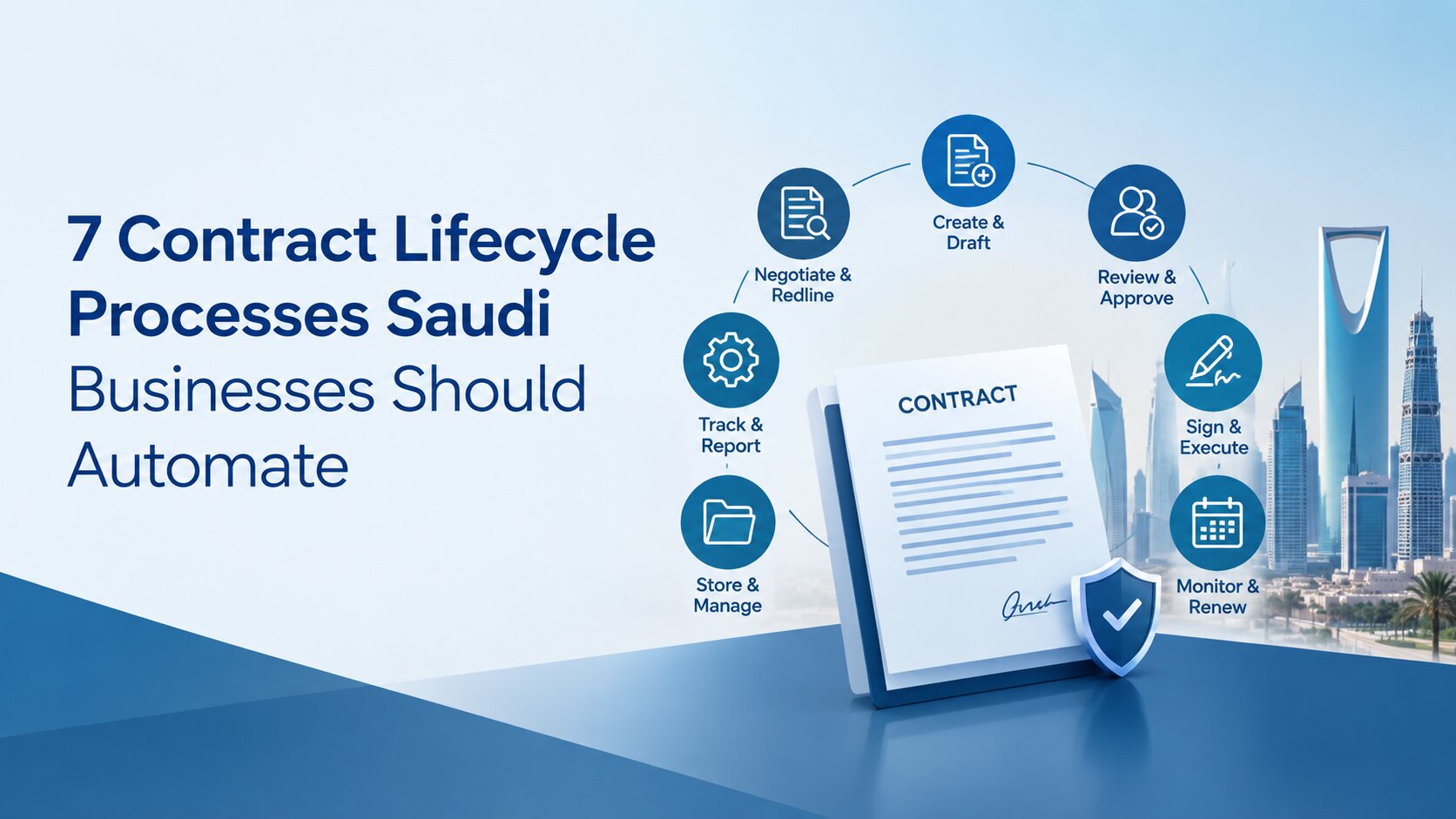
This is one reason modern contract lifecycle management is moving towards greater automation and intelligence. Digital contract management can help centralise information and automate parts of the workflow, reducing the reliance on manual processes.
But automation alone is not the end goal.
The bigger opportunity is to make the information inside those contracts useful.
What contract intelligence means in practice
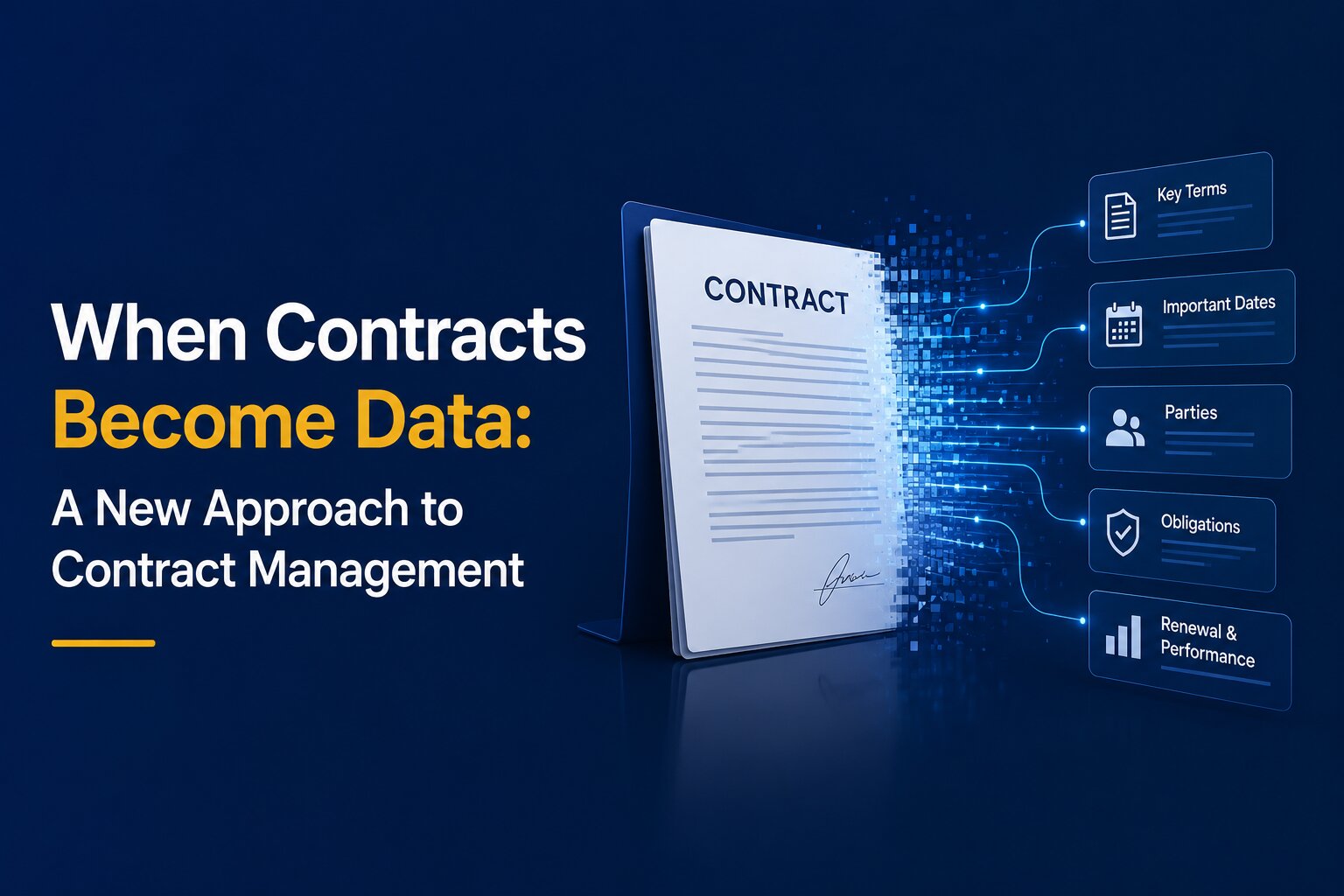
Contract intelligence goes beyond storing agreements in a searchable repository. It is about being able to understand what contracts contain and turn that information into something legal and business teams can use.
For example, instead of simply knowing that a supplier agreement expires in six months, an intelligent contract system could help identify:
- the renewal date
- the notice period
- the commercial terms
- the obligations assigned to each party
- relevant compliance requirements
- clauses that differ from the organisation's usual position
- contracts with similar risks or unusual terms
This changes the role of the contract repository. It becomes less like a digital filing cabinet and more like a source of business information.
Contract Management vs Contract Intelligence vs Agentic AI
These terms are often used together, but they describe different levels of capability.
Contract management software primarily helps organisations organise and manage contracts. It can support activities such as document storage, workflow management, approvals, renewals and reporting.
Contract intelligence goes further by helping teams understand the information contained within those contracts. It can identify clauses, obligations, risks, patterns and important relationships across documents.
Agentic AI takes the idea further still. An AI agent can be designed to work through a task, assess information, determine an appropriate next step and take action within the permissions and rules given to it.
That does not mean handing complete control of legal decisions to an AI system. In a well-designed workflow, the AI may review a contract, flag a potential issue, recommend an action and route the matter to the right person for approval.
The important shift is from “find this information” to “understand this situation and help me deal with it.”
Where Traditional Contract Administration Breaks Down
Manual review bottlenecks as contract volume grows
Contract review is rarely a one-click activity. Legal professionals need to understand the agreement, compare clauses, identify unusual terms, consider business context and determine whether anything requires further attention. When this happens repeatedly across a large contract portfolio, review becomes a bottleneck.
The challenge is not simply that humans are slow. Legal judgement is valuable precisely because contracts often contain context that cannot be reduced to a checklist. The problem is asking highly skilled professionals to spend too much of their time on repetitive information-gathering tasks.
AI can help with those tasks by quickly locating relevant clauses and information, allowing legal teams to focus their attention where human judgement matters most.
Fragmented visibility across the contract lifecycle
A contract rarely exists in isolation. Before signing, it may pass through procurement, sales, finance and legal. After signing, business teams may need to monitor delivery obligations, payments, service levels, compliance requirements and renewal conditions. When contract information is spread across email inboxes, shared folders, spreadsheets and different business systems, it becomes difficult to see the full picture.
A centralised contract lifecycle management approach can bring greater structure to this process, helping teams manage agreements from creation through execution, renewal or termination. Contract intelligence can then build on that foundation by making the information within those agreements easier to interpret.
Reactive risk management after contracts are signed
One of the biggest weaknesses of traditional contract administration is that risk management can become reactive. A deadline is noticed when it is approaching. A renewal is discovered when the notice period is almost over. An unfavourable clause becomes important only when a dispute or commercial problem arises.
By then, the organisation has fewer options. Contract intelligence changes the timing of risk management. Instead of waiting for someone to search for a problem, intelligent systems can help surface potentially important information earlier.
That creates an opportunity to act before a contractual issue becomes a business problem.
The difficulty of keeping track of obligations, deadlines and renewals
Contracts create responsibilities. Someone may need to deliver a report. A supplier may need to meet a service level. A customer may have a payment obligation. A legal team may need to provide notice before a renewal date.
These obligations can be easy to overlook when they are buried inside long agreements. Continuous monitoring can help bring those commitments into view and give teams a clearer picture of what needs attention and when.
What Agentic AI Changes About Contract Intelligence
From static repositories to proactive contract insight
A traditional contract repository waits for someone to search it. An intelligent system can help bring relevant information forward.
Imagine that several supplier contracts have renewal dates approaching within the next 90 days. Instead of a legal professional manually searching through contracts, the system could identify those agreements, summarise the relevant renewal terms and highlight which ones may need attention.
That is a meaningful change. The system is no longer simply holding information. It is helping the team make sense of it.
From administrative tracking to practical decision support
Contract intelligence becomes even more useful when it connects information to decisions. Suppose a business is preparing to renegotiate a group of supplier agreements. Looking at each contract separately may provide only part of the picture. A portfolio-level view could help the team compare pricing structures, notice periods, liability provisions, renewal terms or other recurring contractual patterns.
The AI does not make the negotiation decision for the business. Instead, it helps people reach that decision with better information. That distinction matters. The goal of Agentic AI in contract management should not be to remove professional judgement. It should be to make that judgement more informed and less burdened by repetitive work.
From isolated documents to connected contract intelligence
The real value of contract data often appears when individual agreements are viewed together. A company might discover that several contracts contain similar deviations from its preferred terms. It might identify suppliers with unusually short termination periods or notice requirements that could create operational problems. These patterns may be difficult to spot when contracts are reviewed one at a time.
Agentic AI and contract intelligence can help connect these pieces of information, giving legal and business teams a broader view of the contract portfolio.
From identifying issues to recommending or initiating next steps
This is where the concept of Agentic AI becomes particularly interesting. Traditional AI might identify a clause and explain what it says.
To see how Agentic AI can apply this approach across different stages of the contract lifecycle, from drafting and review through approval and execution, explore How Agentic AI Can Transform the Contract Lifecycle from Drafting to Execution.
An agentic system can potentially take the workflow further. For example, it could:
- identify a renewal approaching within a defined period
- review the relevant contract terms
- assess the agreement against predefined rules
- flag unusual or potentially risky conditions
- recommend the next step
- route the issue to the appropriate stakeholder
Whether the system is allowed to take an action automatically depends on how the organisation designs its permissions and controls. For high-impact legal decisions, human approval may still be essential.
The Capabilities Driving the Shift
Autonomous contract review and clause-level reasoning
Contract review often requires finding specific clauses and understanding how they relate to the rest of the agreement. AI can help identify relevant provisions, compare language and draw attention to terms that may need review. The important point is that the system should support legal professionals rather than encourage them to accept every AI-generated conclusion without checking it.
Continuous monitoring of obligations, deadlines and renewals
Contracts continue to matter after they are signed. A useful contract intelligence system should therefore help teams monitor what happens after execution. That can include renewal dates, notice periods, contractual obligations and other events that require follow-up. Automated alerts and notifications are already common examples of how contract technology can reduce the risk of missed deadlines. Agentic AI can potentially make this process more context-aware by helping determine which events are important and what should happen next.
Context-aware recommendations for legal and business teams
Not every contract requires the same response. A renewal involving a strategic supplier may deserve more attention than a low-value agreement. A clause that is unusual in one type of contract may be completely normal in another. This is why context matters.
The more useful contract intelligence becomes, the less it should behave like a simple keyword search and the more it should help teams understand information in relation to the situation they are dealing with.
Portfolio-level pattern detection and predictive insight
Reviewing one contract can answer a specific question. Reviewing an entire contract portfolio can reveal patterns. Businesses can use portfolio-level insights to understand where certain risks repeatedly appear, which agreements are approaching renewal, where contract terms vary significantly and where negotiation opportunities may exist. This can move contract management closer to strategic decision-making.
Automated actions within clearly defined rules and permissions
Autonomy needs boundaries. An organisation might allow an AI agent to create reminders or route a contract for review automatically, while requiring human approval before a contract is amended, approved or sent externally. That kind of graduated approach allows businesses to benefit from automation without treating every task as equally suitable for autonomous action.
NIST's AI Risk Management Framework similarly emphasises clearly defining human roles and responsibilities and documenting human oversight for AI systems.
What This Means for Legal and Business Teams
Moving legal teams from contract processing to strategic oversight
The promise of contract intelligence is not simply that legal teams can process more documents. It is that they can spend more time on work that actually requires their expertise. Instead of manually searching for every renewal date or comparing every clause line by line, lawyers can spend more time on negotiation strategy, risk assessment, stakeholder advice and complex contractual issues.
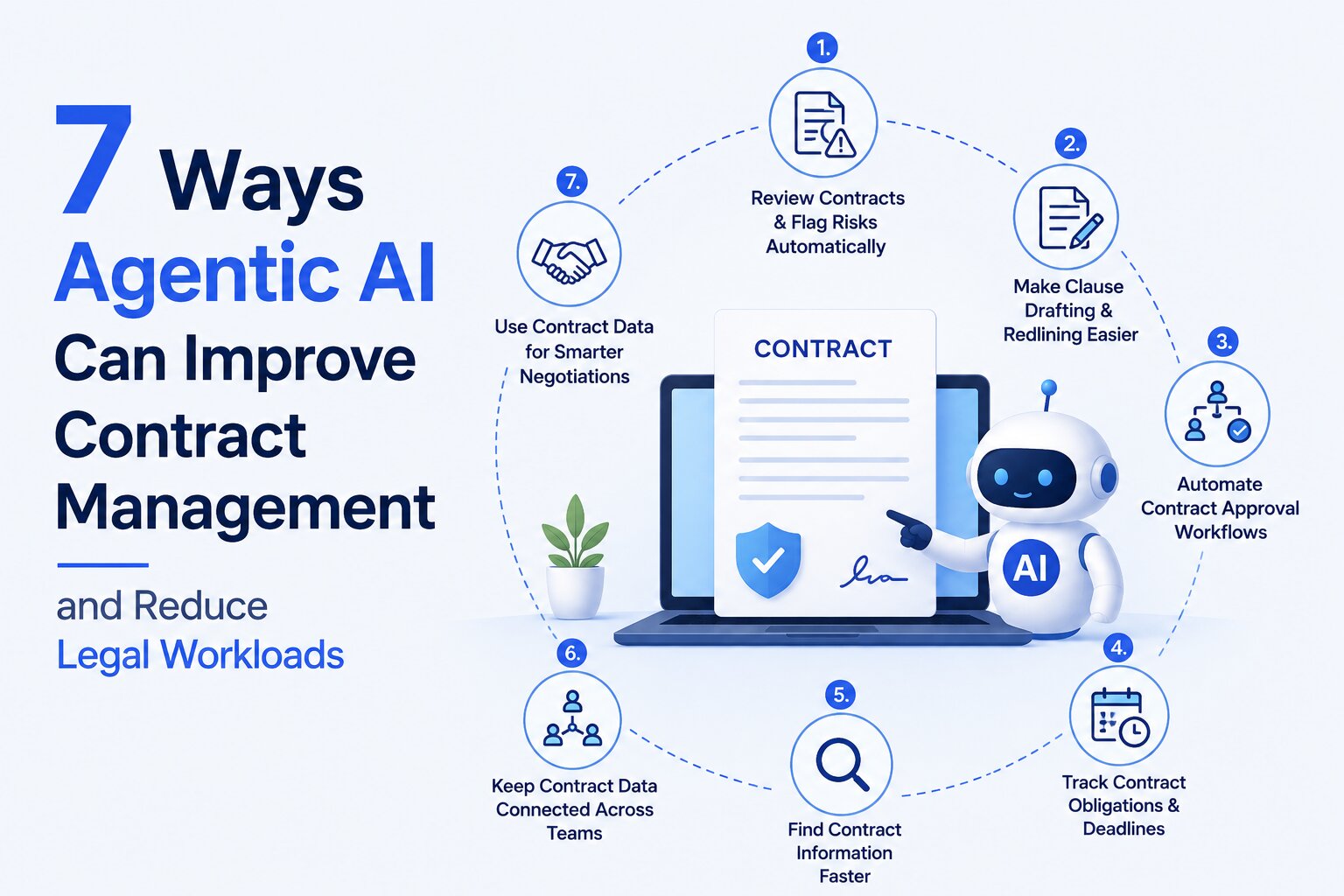
The practical benefits of this shift can be seen across everyday legal workflows, from reducing repetitive contract tasks to supporting review, approvals and ongoing contract management. Explore 7 Ways Agentic AI Can Improve Contract Management and Reduce Legal Workloads for examples of how Agentic AI can help legal teams work more efficiently.
That is a different role for the legal function.
It moves from being primarily a processing function towards becoming a more strategic partner to the business.
Getting earlier visibility into renewals, obligations and potential risks
Timing matters in contract management. Finding a risk six months before renewal gives a business far more room to respond than finding it six days before the deadline. The same principle applies to obligations and compliance requirements.
Earlier visibility gives teams time to investigate, discuss options and act.
Making better-informed negotiation and renewal decisions
Contract intelligence can also change how businesses approach negotiations. Instead of relying only on the contract currently being negotiated, teams can look across their wider portfolio. What terms have been accepted previously? Where are deviations common? Which suppliers have agreements approaching renewal? Are there recurring clauses that consistently create problems? These insights can provide useful context before negotiations begin.
Before those broader portfolio insights can be used effectively, teams also need a faster and more reliable way to review individual agreements. For a closer look at this process in the UAE, see AI Legal Contract Review in the UAE: How Businesses Can Review Contracts Faster and More Accurately
Building new workflows around people and AI working together
The future of contract management is unlikely to be simply “AI does everything”. A more realistic model is collaboration. AI handles information-heavy and repetitive tasks. People provide judgement, context and accountability. The exact balance will vary depending on the task, the risk involved and the organisation's policies.
Where Human Judgement Still Matters
Knowing which contracts and decisions need human attention
Not every contractual task carries the same level of risk. A system may be able to automatically identify an upcoming renewal. But deciding whether the organisation should accept a major change to liability terms is a very different matter. Businesses therefore need to decide where automation is appropriate and where human review is required.
Handling exceptions that require legal interpretation
Contracts can be messy. Language can be ambiguous. Commercial circumstances can change. A clause that appears unusual may make sense when viewed in the context of the wider agreement. These situations still require people who understand the legal and business context.
AI can help surface the issue. It should not automatically be treated as the final authority.
Setting clear approval thresholds and permissions
Before deploying Agentic AI, organisations should establish clear boundaries.
For example:
- What can the AI review automatically?
- What can it recommend?
- Which actions can it initiate?
- Which actions require approval?
- Who is responsible for reviewing high-risk outputs?
- How are AI-generated recommendations recorded?
These are governance questions, not just technology questions.
NIST's guidance stresses that organisations should define human roles and responsibilities around AI systems and establish appropriate oversight. Its AI Risk Management Framework is designed to help organisations manage AI risks while considering characteristics such as accountability, transparency, explainability and reliability.
Keeping people involved when decisions have significant consequences
For consequential legal or commercial decisions, human oversight remains important. This does not make AI less useful. In fact, a well-designed human-AI workflow can make the human role more valuable by giving legal professionals better information before they make a decision.
The objective is not to choose between people and AI. It is to decide where each is most effective.
Preparing for the Transition
Understanding whether your contract data is ready
AI cannot create useful contract intelligence from completely inaccessible or disorganised information. Before introducing advanced capabilities, organisations should understand where their contracts are stored, how consistently they are classified and whether important metadata is available. It is also worth identifying duplicate, outdated or incomplete records. Good contract intelligence starts with usable contract data.
Identifying which processes are ready for agentic automation
Not every workflow needs an AI agent. Start with tasks that are repetitive, rules-based and relatively easy to measure.
Examples could include:
- identifying upcoming renewals
- extracting key contract information
- monitoring defined obligations
- routing contracts for review
- flagging deviations from approved terms
- generating initial summaries for human review
Once these workflows are working reliably, organisations can consider more complex use cases.
Establishing clear rules, permissions and oversight
Agentic AI needs a clear operating environment. The organisation should define what the system is allowed to access, what actions it can perform and when human approval is required. This is particularly important because an AI system that can take action introduces different risks from one that only provides information.
NIST recommends defining and documenting processes for human oversight according to organisational policies and the intended use of the AI system.
Building trust in AI systems one workflow at a time
Trust is rarely built by switching everything on at once. A better approach is to start small. Choose a specific workflow. Establish clear expectations. Review the system's performance. Track where people accept or override its recommendations. Then expand gradually.
This also gives legal and business teams time to understand how the technology fits into their existing work. The goal is not simply to automate more tasks. It is to create a contract management process that people can trust.
How Beveron Smart Legal Contract Brings Contract Intelligence Into Practice
The move towards contract intelligence does not mean businesses have to abandon the contract management processes they already use. The more practical approach is to build intelligence into those processes gradually.
Beveron Smart Legal Contract is designed to help legal and business teams manage contracts across their lifecycle while making contractual information easier to find, analyse and act upon.
Its contract management capabilities include features such as advanced search, metadata filtering, AI-powered clause extraction, analytics and automated alerts for events such as renewals and expirations.
Moving beyond simply storing and tracking contracts
A contract platform should do more than provide a place to upload documents. The real value comes from making those documents easier to work with. When teams can quickly search for relevant clauses, identify important contractual information and organise agreements centrally, they have a stronger foundation for more intelligent contract operations.
Bringing greater visibility to contracts, obligations and key dates
Missed deadlines and overlooked obligations can create unnecessary pressure for legal and business teams. Smart Legal Contract can help organisations centralise contract information and use automated alerts and notifications to stay informed about important events.
That gives teams a clearer view of what needs attention without requiring them to manually check every agreement.
Supporting smarter contract review and risk identification
Contract intelligence becomes particularly useful when legal teams can quickly locate relevant provisions and identify information that may require closer review. AI-powered clause extraction and advanced search can help reduce the time spent locating information across large contract repositories.
The legal team can then focus its attention on interpreting that information and deciding what to do with it.
Helping teams manage the contract lifecycle more proactively
A contract does not stop being important after it is signed. Renewals, obligations, amendments and other events continue throughout its lifecycle.
By bringing contract information, workflows and alerts into a more connected environment, businesses can move away from purely reactive administration and towards more proactive contract management.
Keeping people at the centre of important contract decisions
Technology should make legal teams more capable, not make their judgement irrelevant. For complex or high-impact contractual decisions, people still need to assess context, business priorities and legal implications. That is why the most useful approach to contract intelligence is one where automation handles repetitive work while people remain responsible for decisions that require professional judgement.
A practical starting point for contract intelligence
For businesses dealing with growing contract volumes, the transition from contract administration to contract intelligence does not have to happen overnight. It can begin with better organisation, stronger visibility and targeted automation.
From there, organisations can explore more advanced AI capabilities as their data, processes and governance mature. The important question is no longer simply, “How can we store and manage our contracts better?”
It is becoming: “How can we make the information inside our contracts more useful to the business?”
That is the real promise of contract intelligence.
Frequently Asked Questions
1. What's the difference between contract management software and contract intelligence?
Contract management software helps organisations organise, store, track and manage agreements throughout their lifecycle. Contract intelligence goes further by helping teams understand the information inside those agreements, including clauses, obligations, risks and patterns across a contract portfolio.
2. How is Agentic AI different from traditional AI in contract management?
Traditional AI can help analyse, classify, extract or summarise contract information. Agentic AI is designed to work through tasks more independently. Depending on how it is configured, an AI agent may assess information, recommend a next step and initiate permitted actions rather than simply returning an answer.
3. Does Agentic AI replace legal review or support it?
It is better understood as a support tool, particularly for high-impact legal decisions. Agentic AI can help with repetitive review, information gathering, monitoring and workflow tasks, while legal professionals continue to provide judgement and oversight where the situation requires it.
4. What contract data is needed before intelligence capabilities become useful?
Organisations need accessible and reasonably well-organised contract data. Important information includes the contract documents themselves, metadata such as contract type and dates, and relevant information about parties, obligations and lifecycle stages. Cleaning up fragmented or duplicate contract records can be an important first step.
5. How can contract intelligence improve negotiation and renewal strategy?
Contract intelligence can help teams see patterns across their contract portfolio. For example, they may be able to identify recurring clauses, unusual terms, upcoming renewals or areas where agreements differ from preferred positions. This gives legal and business teams more information to consider before entering a negotiation.
6. How much autonomy should businesses give AI agents?
There is no single answer. The right level depends on the task, its potential impact and the organisation's risk tolerance. Lower-risk, repetitive tasks may be suitable for greater automation, while significant legal or commercial decisions may require human approval. Clear permissions, defined responsibilities and ongoing oversight are important when introducing autonomous AI workflows.
See What Contract Intelligence Could Look Like for Your Legal Operations
Contract management is moving beyond simply storing documents, tracking dates and completing administrative tasks. With the right combination of contract data, automation, AI and human judgement, businesses can build a more proactive approach to managing their agreements.
Explore how Beveron Smart Legal Contract can help your organisation gain greater visibility, insight and control across the contract lifecycle.
Best agentic AI contract management software in the UAE
Best AI contract management software in the UAE
Best contract lifecycle management software in the UAE
If you need a free demo of the best agentic AI contract management software in the UAE, please fill out the form.