Choosing the Right Legal Practice Management Software for a Kenyan Law Firm

Running a law firm involves much more than handling legal matters. Lawyers and support teams also need to manage client information, documents, deadlines, court dates, tasks, billing and day-to-day communication. As the number of matters grows, managing all of this through spreadsheets, email threads and physical files can become increasingly difficult.
This is why interest in legal practice management software in Kenya is growing. Legal technology can help firms organise information, improve visibility and reduce some of the administrative work that takes time away from legal practice. The Law Society of Kenya has also highlighted benefits such as better document management, task allocation, workflow coordination, productivity and support for remote working.
However, choosing software is not simply about finding a platform with the longest list of features. The right solution should fit the firm's actual workflows, team structure and growth plans.
What Is Legal Practice Management Software?
Legal practice management software is designed to help law firms manage their operational and legal work from a more centralised environment.
Depending on the platform, this can include:
- Case and matter management
- Client information management
- Legal document management
- Task and deadline tracking
- Court diary management
- Workflow automation
- Legal billing and invoicing
- Reporting and performance monitoring
- Internal collaboration
For a Kenyan firm, law practice management software for Kenyan law firms should ideally make everyday work easier rather than adding another complicated system for lawyers and staff to maintain.
The goal is simple: make it easier to know what needs to be done, who is responsible, what information is available and where each matter currently stands.
Why Kenyan Law Firms Need the Right Practice Management Software
A growing practice can quickly accumulate hundreds or thousands of documents, client records, tasks and matters. Without a structured system, important information can become scattered across different locations.
Reduce Administrative Work
Lawyers should not have to spend excessive amounts of time searching for documents, checking spreadsheets or asking colleagues for matter updates. A centralised platform can reduce repetitive administrative work by bringing information and workflows together.
This is where law firm automation software in Kenya can be particularly useful. Routine activities such as task assignments, reminders, follow-ups and status updates can be handled through structured workflows.
Improve Visibility Across Matters
A good system should make it easier to see:
- Which matters are active
- Who is handling each matter
- What tasks are outstanding
- Which deadlines are approaching
- What documents are associated with a matter
- Where work may be delayed
This visibility can help partners and legal teams make better operational decisions without relying on multiple spreadsheets or manual status checks.
Support Growth
Manual processes that work for a small practice may become difficult to manage as the firm grows. More clients mean more matters. More matters mean more documents, deadlines, tasks and billing activity. A scalable client and case management software solution can provide a more organised foundation as the firm expands.
Key Features to Look for in Legal Practice Management Software in Kenya
Not every law firm needs exactly the same features. However, several capabilities deserve close attention when evaluating the best law firm management software in Kenya.
Case and Matter Management
A good platform should give lawyers a central place to track case progress, documents, tasks and important deadlines. For a closer look at how this improves day-to-day legal operations, see our guide to the top benefits of case tracking software for law firms in Kenya.
Look for the ability to organise:
- Matter details
- Client information
- Assigned lawyers
- Case status
- Tasks
- Related documents
- Important dates
- Matter history
Effective case management software in Kenya should reduce the need to search across separate systems to understand what is happening with a case. For a broader look at how Kenyan law firms can organise matters, documents, tasks and deadlines in one system, see what every Kenyan law firm should know about matter management software.
Client and Case Management
Client information is at the centre of most legal practices. A useful system should allow firms to maintain organised client profiles and connect those profiles with relevant matters, documents and activities. This makes it easier for lawyers and authorised staff to find the information they need while working on a matter.
Legal Document Management
Documents are a major part of legal work. Pleadings, contracts, correspondence, evidence and other records need to be stored and retrieved efficiently.
Legal document management software can help firms move away from fragmented document storage by keeping relevant files connected to their matters.
When assessing a platform, consider:
- Searchability
- Document organisation
- Access permissions
- Version control
- Backup and recovery
- Links between documents and matters
Court Deadline and Task Management
Deadlines are another area where a structured system can make a practical difference. Court deadline and task management features can help teams monitor important dates, assign responsibilities and receive reminders before action is required.
The important point is not simply having a calendar. The system should make responsibility clear so that everyone knows what needs to happen and who is expected to handle it.
Legal Billing and Invoicing
Billing should also be considered when selecting software.
Depending on the firm's requirements, useful capabilities may include:
- Recording billable activities
- Creating invoices
- Tracking payments
- Monitoring outstanding amounts
- Connecting financial information with matters
- Generating reports
A platform that connects billing with case and matter information can reduce the need to maintain separate records.
Workflow Automation
The next step beyond storing information is improving how work moves through the firm. For example, a new client request might trigger a defined intake process. A new matter could generate standard tasks. An upcoming deadline could generate reminders for the responsible lawyer.
This is where law firm automation software Kenya becomes particularly relevant. Automation should remove unnecessary manual steps while keeping lawyers in control of important decisions.
How to Choose the Best Law Firm Management Software in Kenya
Start With Your Existing Workflow
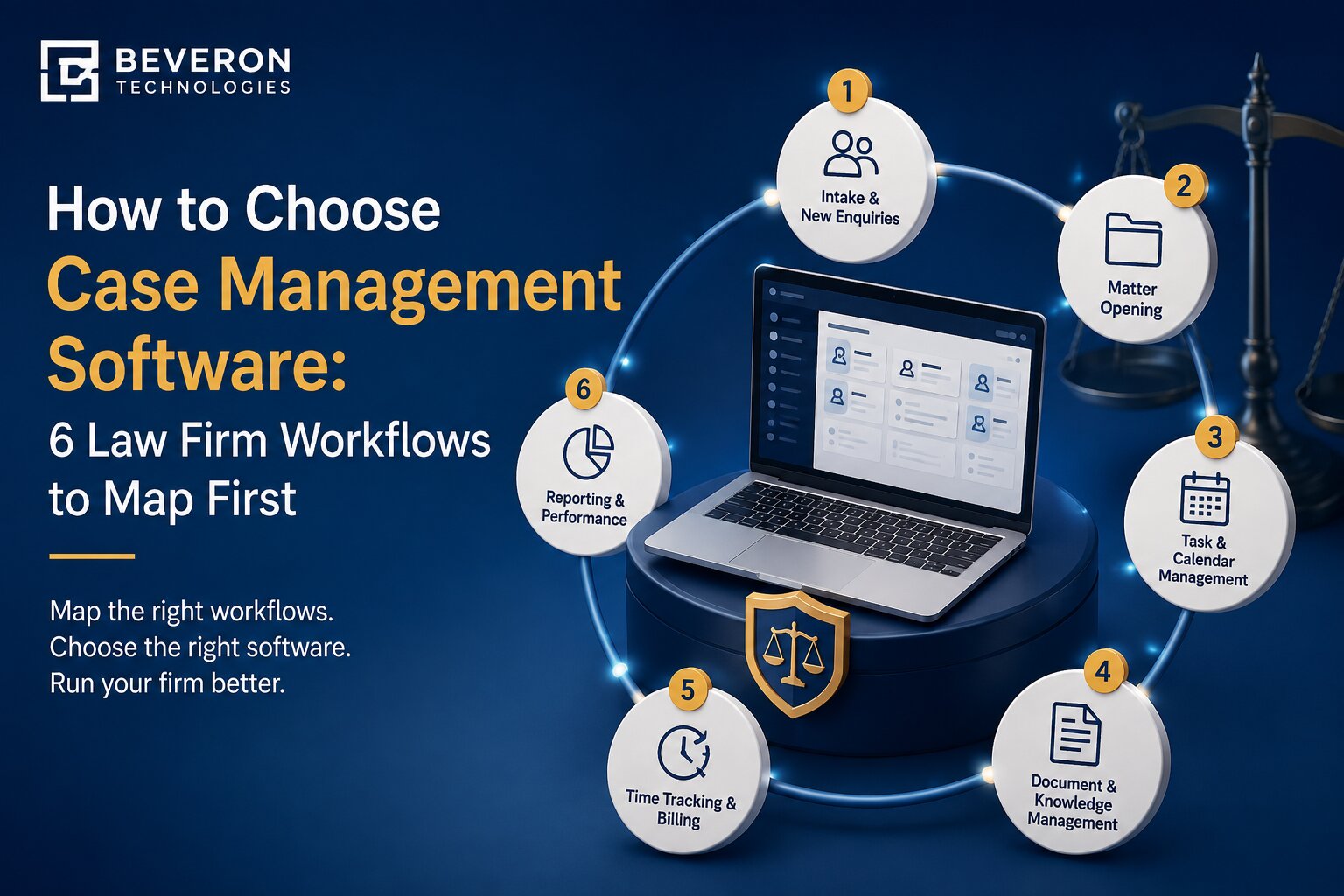
Before comparing vendors, understand how your firm currently works.
Ask:
- How are new clients recorded?
- How are matters opened?
- Where are documents stored?
- How are tasks assigned?
- How are court dates tracked?
- How are invoices created?
- Where do delays usually occur?
This exercise often reveals what the firm actually needs.
Prioritise the Features You Will Use
More features do not automatically mean better software.
A firm should prioritise capabilities based on its:
- Practice areas
- Number of lawyers
- Number of active matters
- Administrative workload
- Document volume
- Billing requirements
- Growth plans
A smaller practice may value simplicity and ease of use, while a larger firm may need stronger workflow, reporting and user-management capabilities.
Consider Cloud-Based Access
Cloud-based legal practice management software in Kenya can give authorised users access to information without depending on a single office computer or physical file. This can support collaboration between lawyers and staff working from different locations.
However, convenience should not come at the expense of security. Firms should ask potential providers about access controls, data protection, backups, authentication and how confidential information is handled.
Evaluate Ease of Use
A technically powerful system will not deliver much value if people do not use it.
During a demonstration, involve actual users and consider whether they can easily:
- Open a matter
- Find a client
- Upload a document
- Assign a task
- Check a deadline
- View matter progress
The best law firm software for advocates in Kenya should fit naturally into daily work.
Think About Scalability
The system should also work for the firm five years from now, not just today.
Ask whether it can accommodate:
- Additional users
- More matters
- Larger document volumes
- New workflows
- Expanded reporting needs
- Additional operational requirements
Common Mistakes Kenyan Law Firms Should Avoid
One mistake is choosing software based only on price. A cheaper system may become expensive if it requires extensive manual work or fails to meet important operational requirements. Another is selecting software without mapping existing processes. Technology cannot automatically fix unclear responsibilities or inefficient workflows. Firms should also avoid ignoring user adoption. Lawyers, paralegals and administrators should have an opportunity to evaluate the system because they understand the practical challenges of daily legal work.
Finally, avoid creating another disconnected system. If case information is in one platform, documents in another and billing in a spreadsheet, the firm may still face the same visibility problems after implementation.
Beveron Smart Lawyer Office for Kenyan Law Firms
For firms looking to modernise their operations, Beveron Smart Lawyer Office provides a structured environment for managing day-to-day law firm activities. The platform can help organise cases, matters, client information, documents, tasks and related workflows in one connected environment.
Centralised Case and Matter Management
Instead of relying on scattered records, firms can organise matter information in a more structured way. This can make it easier for authorised users to understand case status, responsibilities, tasks and related information.
Better Workflow Coordination
Law firm operations often involve several people completing different tasks. A structured workflow can help firms assign responsibilities, monitor progress and reduce the need for repeated manual follow-ups. This creates a stronger foundation for legal technology for law firms in Kenya, particularly for firms looking to gradually introduce greater automation.
Organised Documents and Information
Connecting documents and information with the relevant matter can also make everyday work easier. Lawyers spend less time looking for basic information and more time focusing on the legal work itself.
A Foundation for Digital Growth
The value of practice management technology is not limited to replacing paper files or spreadsheets. A structured digital environment can help firms establish better processes, improve visibility and prepare for further automation as their needs evolve.
Questions to Ask Before Choosing Law Firm Software
Before making a decision, Kenyan law firms should ask:
- Does the system fit our current workflows?
- Can it manage clients, cases and matters in one place?
- Does it provide effective legal document management?
- Can we track court deadlines and tasks?
- Does it support our billing and invoicing requirements?
- Is it easy for lawyers and staff to use?
- Can we control user access?
- Is it scalable?
- What implementation and training support is available?
- Can the provider demonstrate the system using realistic law firm workflows?
These questions can help firms compare solutions based on practical value rather than marketing claims.
Conclusion: Choose Software That Fits Your Law Firm
Choosing the right legal practice management software in Kenya is ultimately about finding technology that supports the way your firm actually works. The right platform should help organise cases and matters, centralise client and document information, improve deadline and task visibility, streamline billing and reduce unnecessary administrative work.
For Kenyan law firms, the best approach is to start with the firm's existing challenges, identify the workflows that need improvement and then evaluate technology against those requirements. A well-implemented system should not make legal work feel more complicated. It should make the business of running a law firm more organised, visible and manageable.
Looking for a more structured way to manage your firm's cases, matters, documents and workflows?
Explore the Beveron Smart Lawyer Office and discover how a connected legal practice management environment can support a more efficient and scalable law firm.
Request a demo today and see how Beveron can support your firm's digital transformation.
Best legal practice management software for legal teams in Kenya
Best law firm management software for lawyers in Kenya
Best case management software for law firms in Kenya
If you need a free demo of the best legal practice management software for legal teams in Kenya, please fill out the form below.