Agentic AI vs Traditional Legal Software: What's Changing for Legal Teams?
Legal teams have used software for years to organise matters, store documents, track deadlines, manage contracts and keep work moving. These systems have made legal work more structured, but they still depend heavily on people to decide what happens next.
That is where agentic AI is starting to change the conversation.
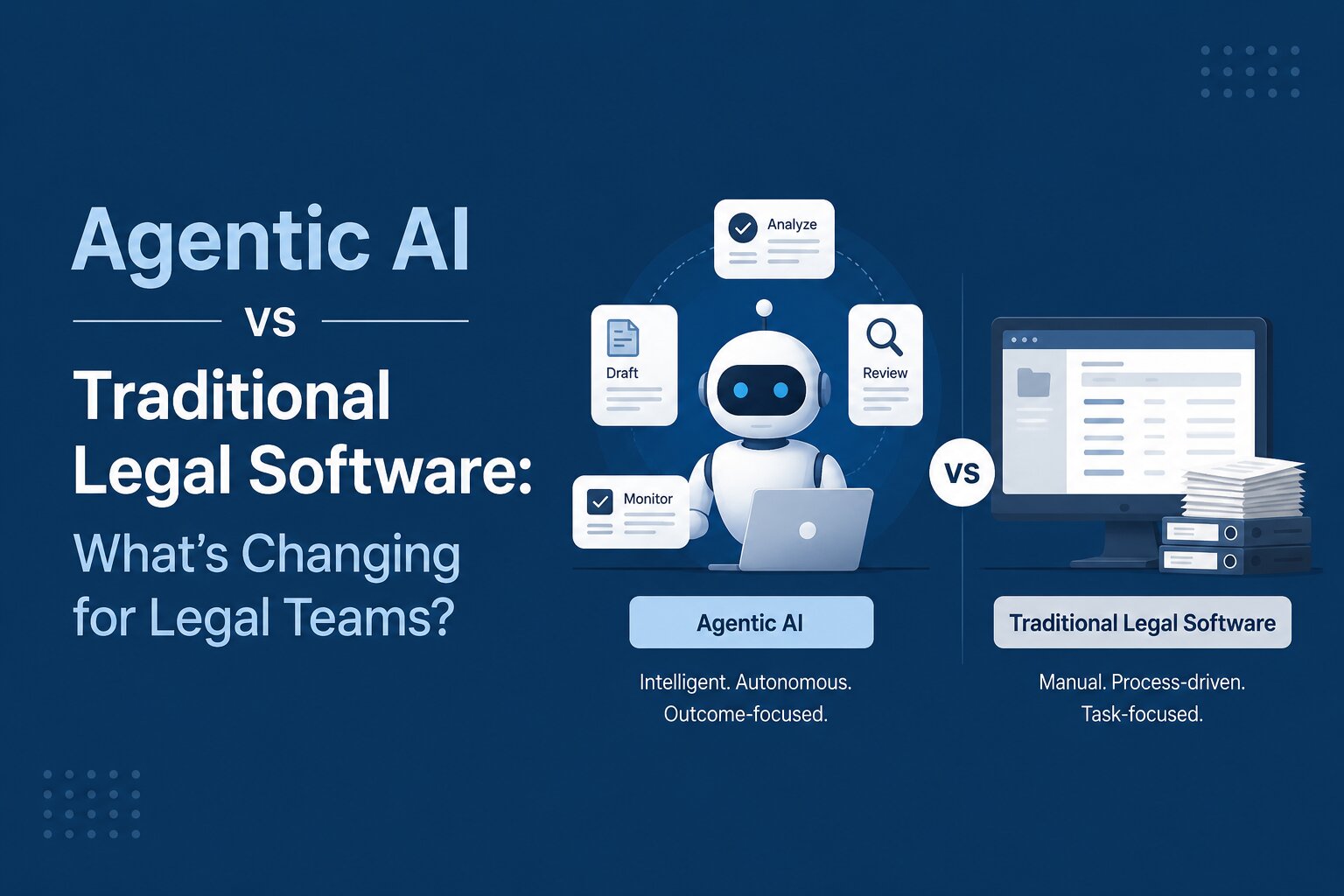
Unlike traditional software that mainly follows predefined rules, agentic AI can work through a series of tasks based on a goal, use information from the wider context and determine when human input is needed. It does not mean handing legal decisions over to a machine. Instead, it points towards a different way of working, where software can take on more of the routine steps while lawyers remain responsible for judgement and approval.
So, is agentic AI going to replace traditional legal software? Probably not. The more realistic future is a combination of both.
The Legal Software Legal Teams Have Always Known
Traditional legal software is built around structure. A legal team enters information, uploads documents, assigns tasks, sets deadlines and follows a defined workflow. The system then helps keep everything organised and accessible. This approach works particularly well for everyday legal administration. Teams can use legal software to manage matters, store case documents, monitor deadlines, create standard documents and maintain records in one place.
For example, a lawyer may create a new matter, assign it to a team member, attach the relevant documents and set a deadline. The software records these actions and makes the information available to authorised users.
The limitation becomes clearer when something unexpected happens. If a matter does not fit the predefined workflow, a person usually needs to step in. The software may show that a task is overdue, but someone still needs to decide what to do about it. A contract may contain an unusual clause, but the system may not know what that clause means for the business.
Traditional legal software is therefore not necessarily a problem. It provides the structure legal teams need. Its limitation is that much of the decision-making and follow-through still sits with people.
What Makes AI "Agentic" — Beyond Automation
It helps to separate three ideas: automation, AI assistance and agentic AI. Automation follows a set of instructions: if something happens, perform a particular action. AI-assisted software can help with a specific task, such as summarising a document or producing a first draft.
Agentic AI goes a step further. Given a goal, it can work through several connected steps, use available context and determine what should happen next within the limits set by the organisation.
Before deploying AI agents, however, legal teams need to identify which processes are actually suitable for this approach. A process-first assessment can help teams evaluate repetition, risk, data quality, decision points and the level of human oversight required. Learn Agentic AI for Legal Teams: How to Identify the Right Processes Before Deploying AI Agents
Imagine a new contract arrives for review. Instead of simply storing the document, an AI-powered workflow could identify the contract type, examine important provisions, compare them with the organisation's requirements, prepare a summary and route the matter to the appropriate person for review.
The important point is not that the AI makes the final legal decision. It is that the system can handle more of the work between the starting point and the point where human judgement is required.
What Agentic AI Looks Like in Everyday Legal Work
The idea becomes easier to understand when applied to everyday legal tasks.
In contract review, agentic AI could identify relevant clauses, flag potential concerns, and prepare a review summary before a lawyer makes the final assessment.
In legal research and drafting, it could help gather relevant information, organise findings and prepare an initial draft for a lawyer to check and refine.
For matter management, AI could help categorise incoming requests, identify required tasks, assign work and follow up on outstanding actions. For law firms looking at the broader impact of this technology, see The Agentic AI Era: How Law Firms Can Lead the Future of Legal Practice
In compliance, it could monitor defined requirements, identify missing actions and alert the appropriate person when attention is needed.
These examples do not mean AI should operate without controls. Legal work often involves confidential information, significant financial consequences and professional responsibilities. The value comes from reducing repetitive work while keeping appropriate human review in place.
Agentic AI vs Traditional Legal Software: A Head-to-Head Comparison
The difference becomes clearer when the two approaches are compared directly.
Area | Traditional Legal Software | Agentic AI |
|---|---|---|
Contract review | Stores documents and supports predefined workflows | Can analyse documents, identify issues and suggest next steps |
Research and drafting | Provides templates and document management | Can assist with research and prepare initial drafts |
Workflow | Follows defined processes | Can work through multiple connected steps |
Exceptions | Often requires manual handling | Can identify unusual situations and escalate them |
Growing workload | More work can mean more manual coordination | Can support higher volumes of repetitive tasks |
This does not mean agentic AI is automatically better at every legal task. Traditional systems remain valuable for structured records, permissions, document management and established processes. The difference is mainly about how much of the work the system can handle between human decisions.
What This Shift Actually Changes for Legal Teams
If agentic AI becomes part of everyday legal operations, the biggest change may not be the software itself. It may be how lawyers spend their time. Legal professionals can spend considerable time on administrative work: entering information, moving documents, checking statuses, following up with colleagues and preparing routine drafts.
When AI can handle more of these repetitive steps, lawyers can spend more time reviewing information, dealing with complex matters and making decisions that require professional judgement. This does not necessarily mean fewer people. In many teams, it may mean a different division of work.
This shift is also moving legal software from systems that simply respond to instructions towards tools that can help identify priorities, coordinate multiple steps and proactively surface work that needs attention. Learn How Agentic AI Is Making Legal Software More Intelligent and Proactive
Legal professionals will also need to become comfortable supervising AI-supported workflows. They will need to understand what the system can do, where it can make mistakes and when a task needs human review. In other words, the skill is not simply knowing how to use AI. It is knowing when to trust it, when to check it and when to stop it.
The Risks Legal Teams Cannot Ignore
The move towards agentic AI also creates important responsibilities.
Human oversight remains essential, particularly for high-risk legal decisions. AI-generated content should be reviewed before it becomes legal advice, a binding communication or another consequential action.
Accuracy is another concern. AI systems can produce incorrect information or misunderstand context. A confident-looking answer is not automatically a correct one.
Confidentiality and data protection also matter. Legal teams handle sensitive client, employee, commercial and litigation information. Any AI system used in legal work should have appropriate controls for access and data handling.
There is also the question of accountability. If an AI system recommends an action or completes part of a workflow, the organisation still needs to know who is responsible for the final decision. For these reasons, agentic AI should be designed to work within clear boundaries, with human approval where the risk demands it.
Is Traditional Software Becoming Obsolete — Or Just Incomplete?
Traditional legal software is unlikely to disappear simply because agentic AI is becoming more capable. Legal teams still need reliable systems for managing matters, documents, users, deadlines, contracts and records. These foundations are important even when AI is added.
The more likely direction is a hybrid approach. Traditional legal software provides the structure, while AI adds another layer of intelligence and assistance. A team may want to consider this shift when its lawyers are spending too much time on repetitive administration, when important follow-ups are handled manually, when information is spread across different systems or when growing matter volumes are becoming difficult to manage.
Before evaluating an agentic AI platform, legal teams should ask:
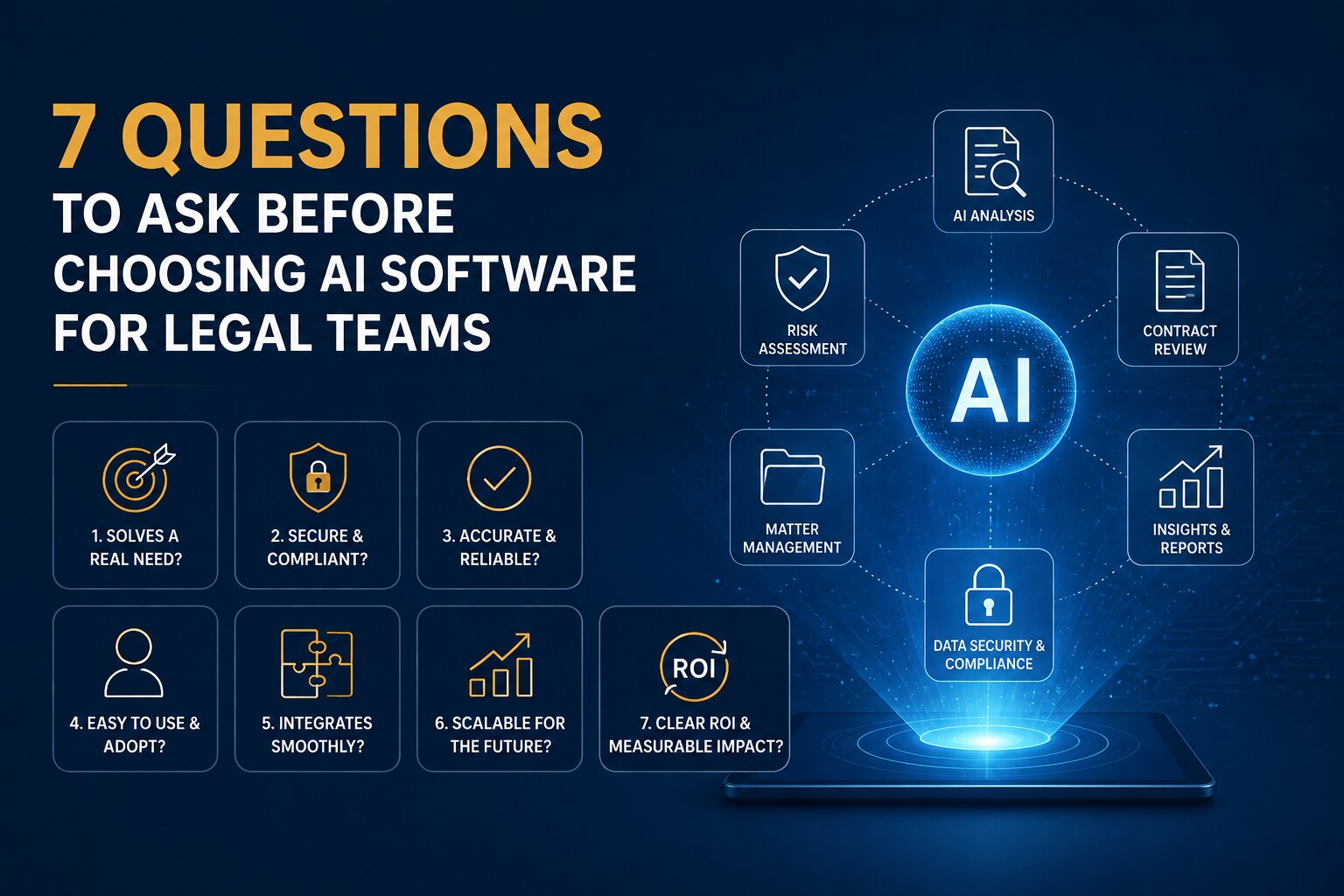
- What tasks are we trying to improve?
- Which decisions must always remain with a human?
- What information will the AI need access to?
- How will actions and approvals be tracked?
- What security and access controls are available?
- Can the technology fit into our existing legal processes?
How Beveron Technologies Is Bringing AI Into Legal Operations
Beveron Technologies approaches legal technology from different sides of the legal lifecycle, with solutions designed for specific types of legal work. Beveron Technologies offers Smart Lawyer Office, Smart Legal Counsel and Smart Legal Contract, giving law firms, corporate legal teams and businesses tools for managing their legal work in a more organised way.
Smart Lawyer Office for Law Firms
Smart Lawyer Office is designed for law firms that need to manage cases, matters, documents, tasks and day-to-day legal operations from a central system. It can help firms organise their work, track matters and deadlines, and give teams better visibility into ongoing cases. Adding intelligent capabilities to these structured workflows can reduce the amount of routine administration lawyers need to handle manually.
Smart Legal Counsel for In-House Legal Teams
Smart Legal Counsel is designed for corporate legal departments and in-house counsel. It helps teams manage legal matters, litigation, contracts, compliance, risks, tasks and collaboration with internal teams and external counsel. For busy in-house departments, having this information organised in one place can make it easier to understand what is happening across the legal function.
AI can then support repetitive activities while lawyers remain in control of important legal decisions.
Smart Legal Contract for Contract Management
Smart Legal Contract focuses on the contract lifecycle, helping businesses manage contracts from creation and review through approvals, obligations, renewals and other key stages. This is an area where AI can be particularly useful because contract work often involves repeated reviews, document comparisons, summaries and follow-ups. The goal is not to remove the lawyer from the process, but to reduce the manual effort around it.
Together, these solutions reflect an important direction in legal technology: AI does not have to replace the systems legal teams already depend on. It can make those systems more useful by helping people move work forward.
Frequently Asked Questions
Is agentic AI safe to use for legal work?
It can be used responsibly when appropriate security, access controls, human review and clear limits are in place. High-risk legal decisions should not be left to AI alone.
Does agentic AI replace traditional legal software?
Not necessarily. Traditional legal software provides important foundations for managing legal information and workflows. Agentic AI can work alongside these capabilities and handle more complex, multi-step tasks.
What's the difference between AI-assisted and agentic AI?
AI-assisted software generally helps with a particular task. Agentic AI is designed to work towards a broader goal by handling several connected steps and determining when to continue or request human input.
How much oversight does agentic AI require?
It depends on the task. Routine, low-risk activities may require less intervention, while legal advice, sensitive matters and decisions with significant consequences require stronger human oversight.
Explore the Next Generation of Legal Technology with Beveron
The future of legal technology is not about choosing between traditional software and AI. It is about bringing the strengths of both together. With Smart Lawyer Office, Smart Legal Counsel and Smart Legal Contract, Beveron Technologies helps law firms, in-house legal teams and businesses manage legal work with greater structure, visibility and intelligence.
The real question is no longer, “Can AI do this?” It is, “Which parts of our legal work can AI handle, and where should our people stay in control?”
Ready to Make Legal Work Smarter?
Move beyond repetitive tasks and disconnected workflows. Give your legal team technology that helps manage work, support better decisions, and keep human judgement at the centre.
Explore Beveron Technologies’ legal solutions and discover a smarter way to manage cases, legal matters and contracts.
See how Beveron can transform your legal operations.
Best agentic AI in legal technology in the UAE
Best agentic AI legal software in the UAE
Best AI in legal operations in the UAE
If you need a free demo of the best agentic AI in legal technology in the UAE, please fill out the form below.