When AI Gets Legal Advice Wrong: What Every Legal Team Needs to Know
Artificial intelligence is quickly becoming part of everyday legal work. From reviewing contracts and conducting legal research to managing compliance tasks and handling legal requests, AI-powered tools are helping legal teams work faster and manage growing workloads with fewer resources.
The efficiency gains are real. However, so are the risks.
The legal industry is moving quickly towards AI adoption. Law firms and legal departments are increasingly using AI to streamline research, contract review, document drafting, and operational workflows. As AI becomes more deeply embedded in legal processes, understanding its limitations becomes just as important as understanding its benefits. Our article, Why 80% of Law Firms Now Use AI and What the Other 20% Are Waiting For, explores the factors driving adoption and the growing role of AI in modern legal practice.
As organisations increase their reliance on AI-assisted legal decision-making, an important question emerges: what happens when AI gets it wrong?
For legal departments, the consequences can extend far beyond a simple error. Incorrect legal guidance can create compliance issues, expose organisations to financial risk, damage stakeholder trust, and create significant operational challenges. While AI can support legal professionals, it cannot replace legal judgement, accountability, or strategic thinking.
The organisations that gain the most value from AI will not necessarily be those that adopt it the fastest. They will be the ones who implement it responsibly, with the right governance, oversight, and operational controls in place.
Why AI Gets Legal Advice Wrong
Despite impressive advances in generative AI, it is important to understand a fundamental limitation: AI does not think like a lawyer.
AI Lacks Legal Context and Business Understanding
Legal professionals evaluate information within a broader context. They consider jurisdiction-specific requirements, regulatory obligations, business objectives, contractual relationships, and organisational risk tolerance before reaching conclusions.
AI systems operate differently.
Rather than applying legal reasoning, they generate responses based on patterns learned from vast amounts of data. As a result, they may produce answers that appear convincing but fail to account for the unique circumstances of a matter.
A contract clause that may be acceptable in one jurisdiction could create significant risks in another. Likewise, compliance requirements often depend on industry-specific regulations and organisational policies that AI may not fully understand.
Hallucinations Can Create Serious Problems
One of the most discussed challenges associated with generative AI is hallucination—the generation of information that sounds credible but is factually incorrect.
In legal environments, hallucinations can be particularly dangerous.
An AI tool may cite non-existent case law, misinterpret regulations, or provide inaccurate legal analysis. If these outputs are accepted without proper review, the consequences can quickly escalate from minor inaccuracies to significant legal exposure.
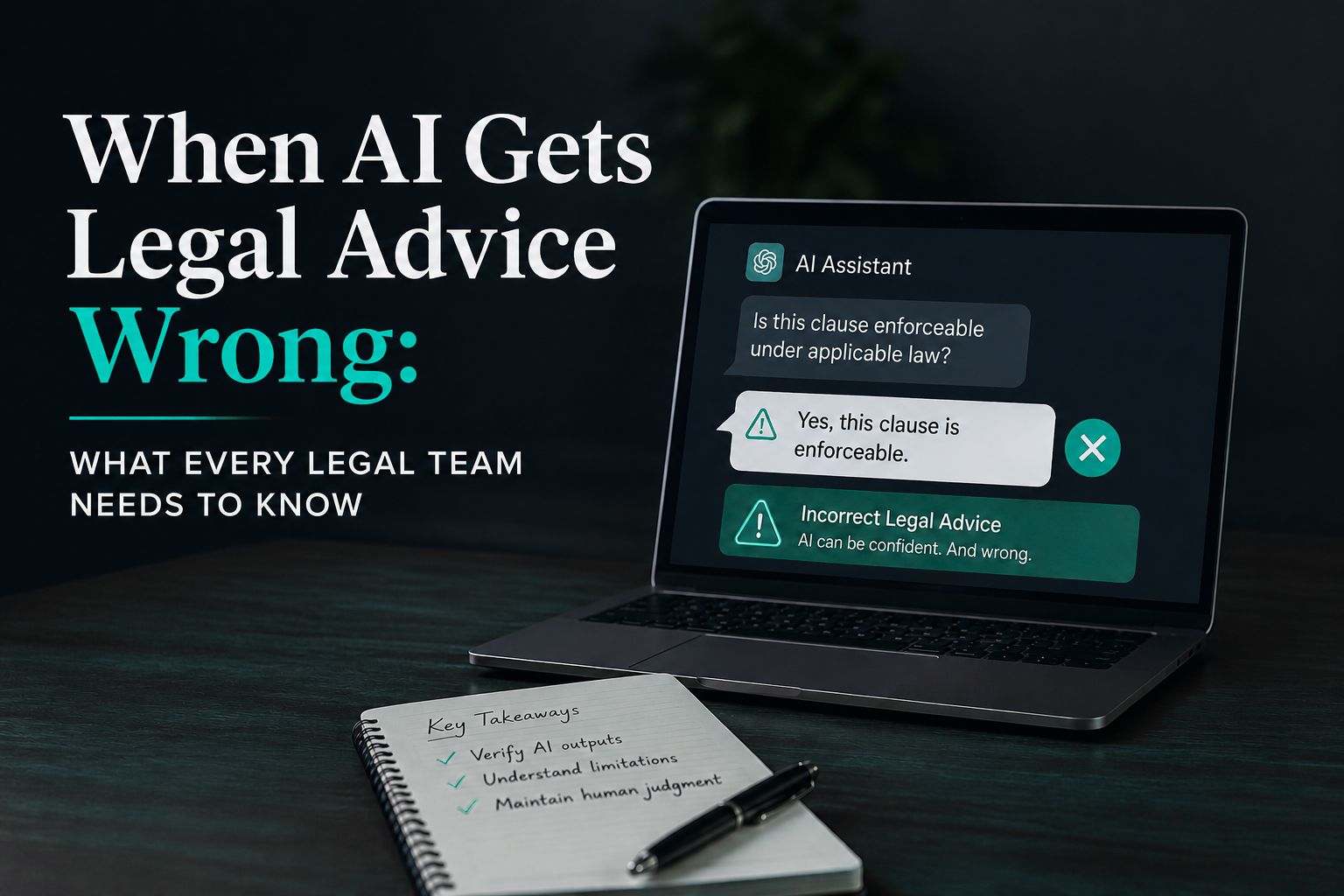
The issue is not that AI occasionally makes mistakes. Human professionals do as well. The difference is that AI often presents incorrect information with the same confidence as accurate information, making errors harder to identify without expert review.
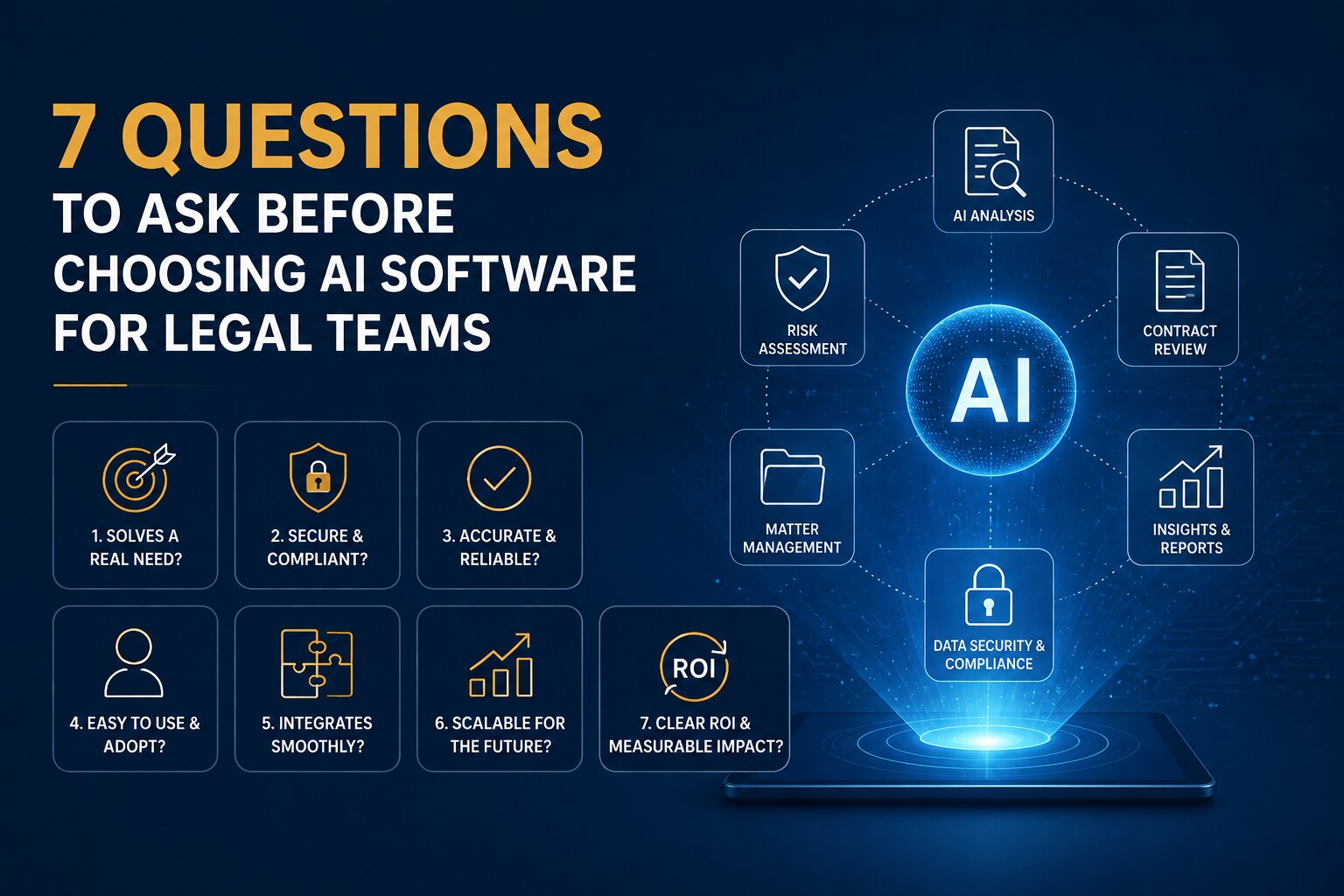
Hallucinations are only one part of the challenge. Legal teams must also consider issues such as algorithmic bias, confidentiality risks, privilege protection, and ethical accountability when deploying AI technologies. These concerns become increasingly important as AI tools are integrated into legal workflows and decision-making processes. For a deeper exploration of these risks, read our article on AI Hallucinations, Bias and Privilege: The Ethical Minefield of Legal Tech.
Legal Information Changes Constantly
Laws, regulations, and compliance requirements evolve continuously.
Even sophisticated AI models can struggle to keep pace with legislative updates, regulatory guidance, and emerging case law. Without access to current information and appropriate validation processes, legal teams risk relying on outdated recommendations.
For organisations operating across multiple jurisdictions, this challenge becomes even more complex.
The Real Risks for Legal Teams
When AI-generated advice is inaccurate, the impact extends beyond the legal department.
Compliance and Regulatory Exposure
Many organisations operate within highly regulated environments where even small compliance failures can result in substantial penalties.
If an AI-generated recommendation overlooks a regulatory requirement or misinterprets a compliance obligation, organisations may face audits, investigations, fines, or enforcement actions.
As regulators increasingly examine the use of AI within business operations, legal teams are also expected to demonstrate appropriate governance over how these technologies are used.
Contract and Commercial Risks
Contract management is one of the most common use cases for legal AI.
While AI can significantly accelerate contract review, it may overlook unusual clauses, fail to identify commercial risks, or misinterpret contractual obligations.
A missed indemnity clause, renewal provision, or regulatory requirement can create long-term financial and operational consequences that outweigh any short-term efficiency gains.
Reputational Damage
Legal departments are trusted advisors to the business.
When inaccurate legal guidance influences decision-making, confidence in both the legal function and the organisation can be affected. Senior leadership teams, business stakeholders, customers, and regulators expect legal advice to be accurate and defensible.
Trust is difficult to build and easy to lose.
Accountability Remains Human
Perhaps the most important point for legal leaders is this: responsibility cannot be delegated to AI. Regardless of which technology is used, legal professionals remain accountable for the advice provided, the decisions made, and the outcomes achieved. AI may support decision-making, but accountability remains firmly with the people overseeing the process.
Common Areas Where Legal AI Can Create Risk
Understanding where risks are most likely to occur can help legal departments implement stronger controls.
Contract Review and Redlining
AI can quickly analyse large volumes of contracts and identify standard clauses. However, complex negotiations often involve unique language, business-specific requirements, and nuanced commercial considerations.
Without careful review, important risks can be missed.
Legal Research
Research tools powered by AI can accelerate information gathering and improve productivity. However, they should never replace independent verification.
Legal professionals must validate authorities, confirm citations, and review primary sources before relying on any recommendation.
The challenge becomes even more significant for legal teams operating across multiple GCC jurisdictions, where regulations, legal frameworks, and court practices can vary considerably. While AI can help lawyers identify relevant information faster, accuracy still depends on proper validation and jurisdiction-specific expertise. Our article, AI in Legal Research: What Law Firms in the GCC Need to Know, explores how legal professionals can leverage AI research tools while avoiding common pitfalls and maintaining professional standards.
Compliance Assessments
Compliance requirements often vary by jurisdiction, industry, and organisational structure. AI-generated assessments may not fully account for these variables, creating blind spots that increase regulatory risk.
Legal Intake and Matter Management
Even operational workflows can be affected. If requests are incorrectly classified, routed to the wrong team, or prioritised inaccurately, legal departments may experience delays, inefficiencies, and increased risk exposure.
How Legal Teams Can Reduce AI-Related Risk
The goal should not be to avoid AI altogether. Instead, legal departments should focus on implementing safeguards that allow them to benefit from automation while maintaining appropriate oversight.
Establish Human-in-the-Loop Review
The most effective legal teams treat AI as an assistant rather than a decision-maker. AI can help identify issues, summarise information, draft content, and accelerate routine tasks. However, critical legal decisions should always be reviewed by qualified professionals.
A practical approach is to establish mandatory review checkpoints for high-risk activities such as contract approvals, compliance assessments, legal opinions, and regulatory submissions.
Actionable takeaway: Define which legal activities can be supported by AI and which require mandatory human review before any action is taken.
Create Clear AI Governance Policies
Many organisations have adopted AI tools faster than they have developed policies governing their use. This creates unnecessary risk.
Legal departments should establish clear guidelines covering approved use cases, data privacy requirements, validation procedures, escalation processes, and accountability standards.
Effective governance provides consistency while reducing the likelihood of inappropriate or uncontrolled AI usage across the organisation.
Actionable takeaway: Develop a formal AI governance framework before expanding AI usage across legal operations.
Standardise Legal Workflows
One of the biggest risks arises when employees use AI independently without established processes. Standardised workflows help ensure that legal requests, approvals, reviews, and compliance checks follow a consistent path regardless of who initiates them.
Structured processes reduce variability, improve visibility, and make it easier to identify potential issues before they become larger problems.
Actionable takeaway: Embed AI into approved legal workflows rather than allowing ad hoc usage across teams.
Monitor and Audit AI Outputs
AI performance should be measured continuously. Legal departments should regularly review output quality, track errors, assess compliance impacts, and identify opportunities for improvement. Ongoing monitoring not only reduces risk but also helps organisations understand where AI delivers value and where additional controls may be needed.
Actionable takeaway: Treat AI systems like any other business-critical process by implementing regular audits and performance reviews.
Why Workflow Automation Is Safer Than Uncontrolled AI Usage
Much of the discussion surrounding AI focuses on the technology itself. However, the real differentiator is often the process surrounding the technology.
AI performs best when it operates within structured, well-governed workflows.
AI Delivers Better Results Within Defined Processes
When legal requests enter through a standardised intake process, approvals follow predefined pathways, and matters are tracked through a centralised system, there are fewer opportunities for errors to go unnoticed. Rather than replacing legal oversight, AI becomes a tool that supports it.
For example, AI can assist with classifying requests, identifying relevant information, or generating draft responses, while legal professionals retain control over approvals and final decisions.
Visibility and Accountability Matter
One of the biggest operational risks facing legal departments is a lack of visibility. Requests arrive through emails, chat platforms, meetings, and informal conversations. Important matters can be delayed, duplicated, or overlooked entirely.
This challenge is one of the main reasons many general counsels are moving away from email-based legal request management. As legal demand increases, relying on inboxes makes it difficult to prioritise requests, track progress, and maintain accountability. A structured intake process creates a single source of truth for legal work and improves visibility across the department. For a deeper look at this shift, read our article on Why General Counsel Are Replacing Email-Based Request Management with AI-Powered Legal Intake Systems.
Structured legal operations provide transparency through audit trails, approval workflows, matter tracking, and reporting capabilities. This visibility becomes even more important when AI is involved because organisations must be able to demonstrate how decisions were made and who approved them.
Supporting Responsible AI Adoption with Beveron
Technology alone does not reduce risk. Well-designed processes do.
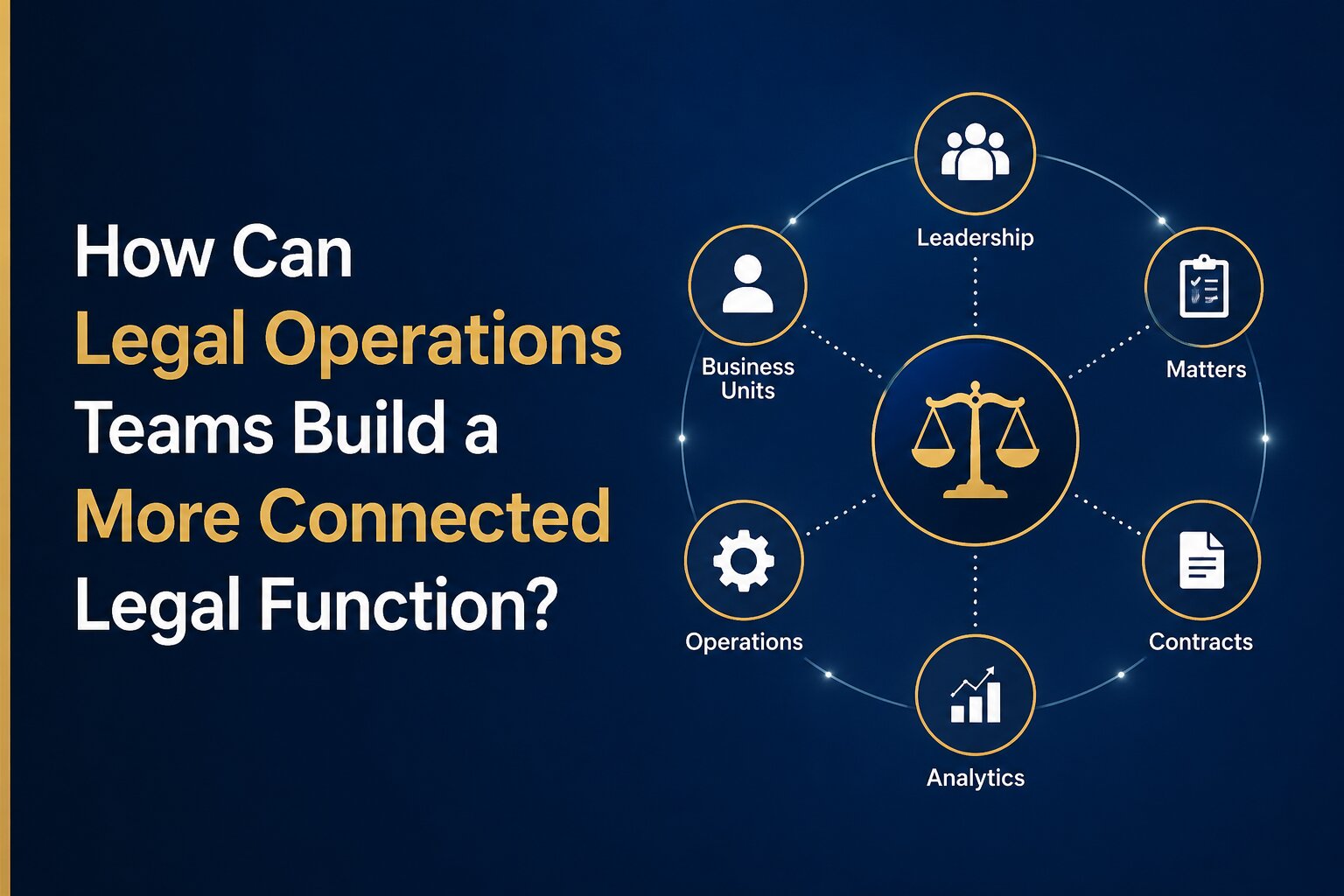
This is where legal operations platforms such as Beveron Technologies can play an important role. By centralising legal request management, automating workflows, tracking matters, and improving visibility across legal operations, organisations can create the governance framework necessary for responsible AI adoption. Rather than allowing AI to operate in isolation, legal teams can integrate automation into structured workflows that maintain accountability, oversight, and compliance.
The result is a more efficient legal function without sacrificing control.
Building a Responsible AI Strategy for the Future
AI adoption within legal departments is likely to accelerate over the coming years. The question is no longer whether legal teams will use AI but how they will use it responsibly.
Focus on Augmentation, Not Replacement
The most successful organisations view AI as a capability enhancer rather than a replacement for legal expertise. Technology can improve efficiency, reduce administrative burdens, and support faster decision-making. However, strategic judgement, ethical considerations, stakeholder management, and legal interpretation remain human responsibilities.
Legal professionals should focus on using AI to increase capacity, not eliminate oversight.
Invest in Governance Before Scaling
Many organisations focus on deployment before governance. A more sustainable approach is to establish policies, training programmes, risk assessments, and oversight mechanisms before expanding AI usage.
Building governance early creates a stronger foundation for long-term success.
Measure Outcomes Continuously
Responsible AI adoption requires ongoing evaluation.
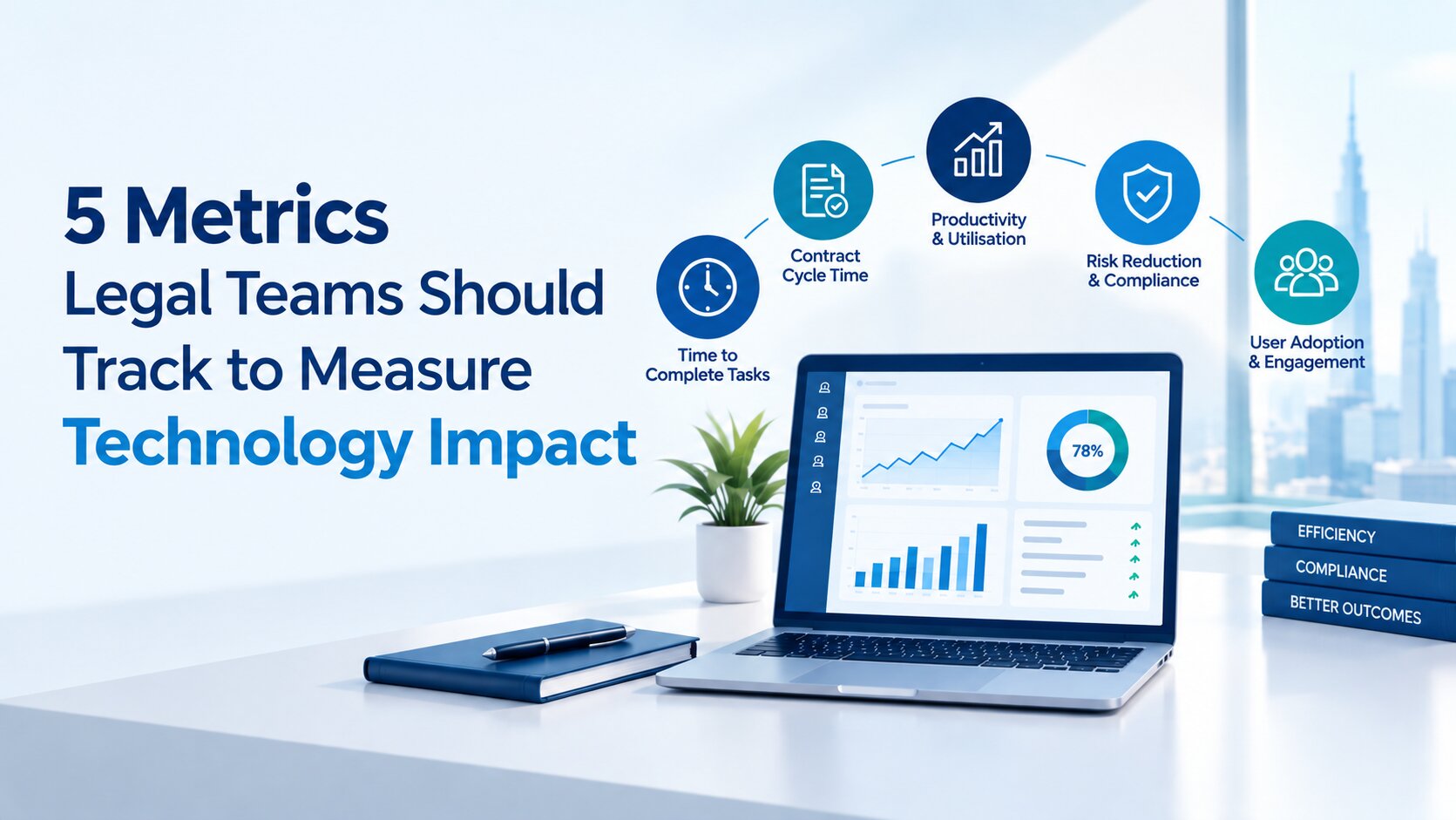
Legal departments should regularly assess the following:
- Accuracy of AI-generated outputs
- Compliance impacts
- Operational efficiency gains
- User adoption and satisfaction
- Risk reduction outcomes
Continuous improvement ensures that technology remains aligned with organisational objectives and regulatory expectations.
Conclusion
AI has the potential to transform legal operations by improving efficiency, accelerating workflows, and helping legal teams manage increasing demands. However, AI-generated outputs are not inherently reliable simply because they are produced quickly. When AI gets legal advice wrong, the consequences can include compliance failures, contractual disputes, reputational damage, and increased organisational risk.
The most effective legal departments recognise that successful AI adoption requires more than technology. It requires governance, oversight, accountability, and structured processes. As AI becomes more deeply embedded within legal workflows, organisations that balance innovation with control will be best positioned to reduce risk, strengthen compliance, and deliver greater strategic value to the business.
Ready to Adopt AI Responsibly?
AI should help legal teams make better decisions—not create new risks.
Discover how Beveron Technologies helps legal departments streamline legal operations, automate workflows, improve visibility, and maintain control over AI-assisted processes.
Book a demo today and see how smarter legal operations can support responsible AI adoption at scale.
Frequently Asked Questions
Can AI provide reliable legal advice?
AI can assist with legal research, drafting, contract analysis, and administrative tasks. However, all outputs should be reviewed by qualified legal professionals before they influence legal decisions or business actions.
What are the biggest risks of using AI in legal departments?
Common risks include inaccurate legal information, compliance failures, contract errors, regulatory exposure, data privacy concerns, and a lack of accountability when AI-generated outputs are not properly reviewed.
How can legal teams reduce the risk of AI-generated mistakes?
Legal departments can reduce risk by implementing human review processes, establishing AI governance policies, standardising workflows, auditing outputs regularly, and ensuring clear accountability for decision-making.
Should legal professionals trust AI-generated legal research?
AI can significantly speed up research processes, but legal professionals should independently verify case law, citations, statutes, and regulatory references before relying on the information.
What role does legal operations play in AI governance?
Legal operations teams help create the structure required for responsible AI adoption by implementing workflows, approval processes, reporting mechanisms, oversight controls, and performance monitoring frameworks.
Is workflow automation safer than relying solely on AI?
In many cases, yes. Workflow automation provides consistency, visibility, accountability, and auditability. When AI is integrated into structured workflows, organisations can benefit from automation while maintaining appropriate control and oversight.
Best legal operations AI in the UAE
Best compliance management software in the UAE
Best legal workflow management software in the UAE
If you need a free demo of the best legal operations AI in the UAE, please fill out the form below.