How AI-Powered Work Allocation Helps Legal Teams Improve Resource Planning
Legal departments are under increasing pressure to do more with less. As organisations face growing regulatory requirements, rising contract volumes, and increasing demands from internal stakeholders, legal teams must manage larger workloads without proportionally expanding headcount.
Yet many legal departments still rely on manual processes to assign work, track capacity, and allocate resources. Work is often distributed based on availability assumptions, individual preferences, or informal communication, creating inefficiencies that can affect productivity, employee well-being, and business outcomes.
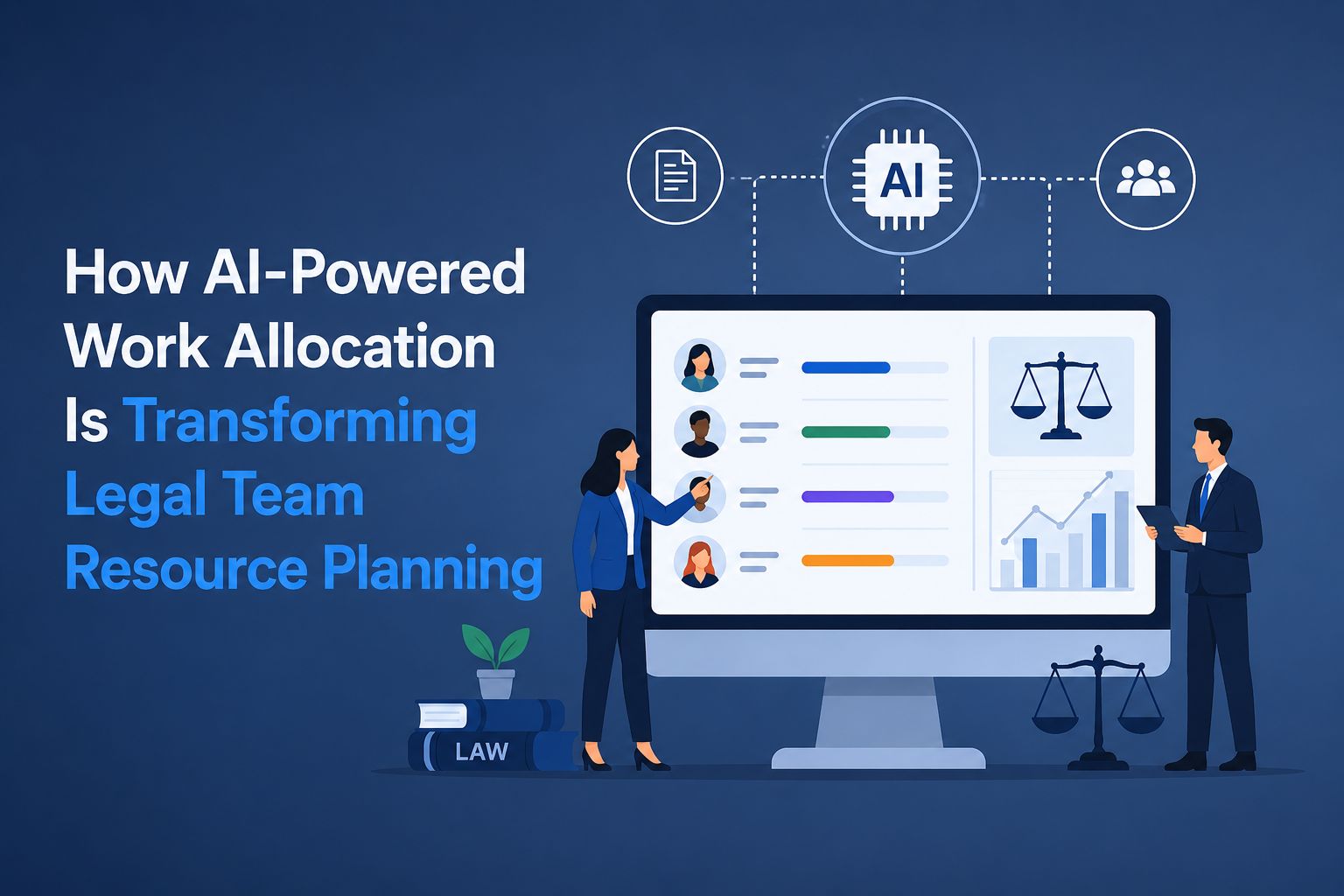
This is where AI-powered work allocation is changing the landscape. By using data-driven insights to match legal work with available resources, AI is helping legal teams improve workload distribution, optimise capacity, and make more strategic decisions about resource planning.
What Is AI-Powered Work Allocation?
AI-powered work allocation refers to the use of artificial intelligence to assign legal work based on factors such as workload, expertise, availability, priority, and historical performance data.
Rather than relying on manual decisions, AI analyses multiple variables simultaneously to recommend the most appropriate person or team for a particular task.
How AI Analyses Legal Workloads
Modern legal operations platforms can capture information from various sources, including:
- Matter management systems
- Contract repositories
- Legal service requests
- Compliance activities
- Internal business requests
AI uses this information to understand current workloads, identify capacity levels, and recommend optimal task assignments.
Manual vs AI-Driven Allocation
Traditional work allocation often depends on managers having visibility into team availability. However, as workloads become more complex, maintaining this visibility becomes increasingly difficult. AI-powered LegalTech is helping legal departments move beyond manual processes by combining automation, intelligent workflows, and data-driven insights. As explored in Why AI-Powered LegalTech is a Game-Changer for In-House Counsel, these technologies enable legal teams to work more strategically while improving efficiency and operational visibility across the department.
Actionable Takeaway
Assess how your team currently assigns legal work. If workload distribution relies heavily on spreadsheets, emails, or manual oversight, there may be significant opportunities for improvement.
Why Traditional Legal Resource Planning Falls Short
Many legal departments continue to face recurring challenges in resource planning despite investments in technology.
Uneven Workload Distribution
Some lawyers become overloaded while others have unused capacity. This imbalance can reduce efficiency and create unnecessary pressure on high-performing team members.
Limited Visibility Into Team Capacity
Without accurate workload data, legal leaders may struggle to understand:
- Who is available
- Which teams are overburdened
- Where bottlenecks are emerging
- How resources should be reallocated
These challenges often arise when legal work is managed across disconnected systems, emails, and spreadsheets. Modern legal software helps centralise matters, contracts, workflows, and reporting, providing legal leaders with the visibility needed to make informed resource allocation decisions. Organisations looking to modernise their legal operations can explore how technology is reshaping corporate legal functions in Transforming In-House Legal Departments with Legal Software Solutions.
Dependence on Manual Tracking
Spreadsheets and manual reporting methods can quickly become outdated, making it difficult to make timely decisions. Many legal departments still spend significant time on repetitive administrative activities that could be streamlined through automation. As discussed in Why Automation Is a Must for Modern In-House Legal Teams, reducing manual processes is often the first step towards improving efficiency, visibility, and resource utilisation across the legal function
Challenges in Forecasting Demand
Legal work often fluctuates due to business growth, regulatory changes, acquisitions, disputes, and new initiatives. Traditional planning methods rarely provide reliable forecasting capabilities.
Actionable Takeaway
Establish workload visibility as a priority. Resource planning becomes significantly more effective when decisions are based on measurable capacity data.
How AI-Powered Work Allocation Works
AI-powered allocation systems combine data collection, analysis, and automation to support better decision-making.
Capturing Workload and Matter Data
The process begins by gathering information about active matters, ongoing projects, incoming requests, and current assignments.
Analysing Availability and Expertise
AI evaluates factors such as:
- Current workload levels
- Practice area expertise
- Historical experience
- Availability
- Task complexity
Intelligent Task Assignment
Based on the analysis, the system recommends the most suitable individual or team for each assignment.
Real-Time Workload Balancing
As workloads change, AI continuously monitors capacity and can recommend adjustments to prevent bottlenecks or resource shortages.
Continuous Optimisation
Unlike static planning methods, AI systems improve over time by learning from patterns, outcomes, and resource utilisation trends.
Key Benefits of AI-Powered Work Allocation for Legal Teams
The adoption of AI-driven resource planning delivers benefits that extend beyond operational efficiency.
Improved Resource Utilisation
Legal leaders gain a clearer understanding of how resources are being used across the department, helping maximise productivity without increasing headcount.
Better Workload Balance
Balanced workloads contribute to stronger team performance and help reduce the risk of employee burnout.
Faster Matter Assignment
Work can be allocated more quickly, reducing delays and ensuring urgent matters receive appropriate attention.
Increased Legal Team Productivity
By reducing administrative effort and improving task distribution, legal professionals can spend more time on strategic legal work.
Enhanced Decision-Making
AI-generated insights provide legal leaders with objective information that supports more confident resource planning decisions.
Reduced Burnout Risk
Workload transparency helps identify pressure points before they become significant employee wellbeing concerns.
Actionable Takeaway
Measure both workload volume and workload distribution. Productivity improvements often come from better allocation rather than simply increasing capacity.
AI-Powered Work Allocation and Legal Capacity Planning
Capacity planning is one of the most valuable applications of AI within legal operations.
Understanding Current Capacity
AI provides a comprehensive view of available resources across teams, practice areas, and locations.
Forecasting Future Demand
Historical workload patterns can help predict future legal demand, allowing departments to prepare proactively.
Identifying Resource Gaps
AI can highlight areas where demand consistently exceeds available capacity.
This insight enables organisations to:
- Reassign resources
- Improve processes
- Hire strategically
- Consider external legal support where necessary
Supporting Strategic Hiring Decisions
Instead of relying on anecdotal evidence, legal leaders can use workload data to justify recruitment decisions and budget requests.
Real-World Use Cases in Corporate Legal Departments
AI-powered work allocation can support a wide range of legal functions.
Contract Management
Incoming contracts can be automatically assigned based on complexity, expertise, and current workload levels.
Compliance and Regulatory Work
Compliance tasks can be distributed across specialists while ensuring regulatory deadlines are met.
Litigation Management
Disputes and litigation matters can be allocated according to experience, jurisdiction, and resource availability.
Corporate Governance Activities
Board-related work, governance obligations, and corporate filings can be managed more efficiently through automated allocation.
Internal Legal Requests
Business stakeholders benefit from faster response times when legal service requests are routed intelligently.
Features to Look for in AI-Powered Legal Work Allocation Software
Not all solutions offer the same capabilities. Legal departments should evaluate technology based on operational requirements.
Automated Workload Tracking
Real-time visibility into workload levels is essential for effective planning.
Skills-Based Assignment
The ability to match work with expertise improves both efficiency and quality.
Capacity Dashboards
Visual dashboards help legal leaders identify trends and make informed decisions.
Predictive Analytics
Forecasting tools enable proactive resource planning rather than reactive management.
Performance Reporting
Comprehensive reporting provides insights into utilisation, productivity, and workload trends.
Integration Capabilities
Technology should integrate seamlessly with matter management, contract management, and legal operations platforms.
How Beveron Supports AI-Powered Legal Resource Planning
As legal departments seek greater visibility into workloads and team capacity, platforms such as Beveron Teechnologies are helping organisations modernise how legal work is managed and distributed.
Beveron's legal operations solutions give you a central place to manage matters, track workloads, monitor team performance, and improve resource allocation across legal departments. By bringing legal work, requests, and operational data into a single platform, legal leaders gain clearer visibility into capacity and workload trends.
This visibility supports more informed decisions about:
- Matter assignment and prioritisation
- Resource utilisation across teams
- Capacity planning and forecasting
- Workload balancing
- Performance reporting and operational efficiency
Rather than relying on disconnected spreadsheets and manual tracking processes, legal teams can use data-driven insights to make resource planning more strategic and scalable.
Actionable Takeaway
When evaluating legal operations software, look beyond basic matter management capabilities. Choose a platform that provides workload visibility, reporting, and resource planning insights that support long-term operational improvement.
Challenges and Considerations When Implementing AI Work Allocation
While the benefits are significant, successful implementation requires careful planning.
Data Quality Matters
AI recommendations are only as effective as the data available. Accurate workload tracking is essential.
Change Management Is Critical
Teams must understand how the technology supports decision-making rather than replacing professional judgement.
Transparency Builds Trust
Legal professionals are more likely to adopt AI solutions when allocation decisions can be clearly explained.
Privacy and Security Requirements
Legal departments must ensure any AI platform aligns with organisational security and confidentiality standards.
Actionable Takeaway
Focus on governance and user adoption alongside technology implementation to maximise long-term success.
The Future of AI in Legal Resource Planning
The next generation of legal operations technology will move beyond workload allocation towards comprehensive workforce planning.
Future capabilities are expected to include:
- Advanced workload forecasting
- Predictive staffing models
- Automated resource recommendations
- Cross-functional planning insights
- Real-time performance optimisation
As legal departments continue to embrace data-driven management, AI will become a central component of strategic resource planning.
Why Modern Legal Teams Are Investing in AI-Powered Work Allocation
Legal leaders increasingly recognise that resource planning is no longer simply an operational task. It is a strategic capability that directly impacts service delivery, risk management, employee engagement, and organisational performance.
AI-powered work allocation provides the visibility, intelligence, and scalability needed to manage growing legal demands effectively.
Departments that embrace these capabilities are better positioned to improve efficiency, optimise resources, and demonstrate measurable value to the wider business.
Conclusion
The growing complexity of legal work requires a more sophisticated approach to resource planning. Traditional allocation methods often lack the visibility and agility needed to support modern legal departments.
AI-powered work allocation helps legal teams distribute work more effectively, improve capacity planning, reduce administrative burdens, and make better-informed decisions. By transforming resource planning from a reactive process into a proactive strategy, legal departments can enhance both operational performance and business impact.
As legal operations continue to evolve, organisations that invest in intelligent workload management will be better equipped to support growth, manage risk, and deliver greater value across the enterprise.
Frequently Asked Questions
What is AI-powered work allocation in legal operations?
AI-powered work allocation uses artificial intelligence to assign legal tasks based on workload, expertise, availability, priority, and other operational factors to improve efficiency and resource utilisation.
How does AI improve legal team resource planning?
AI provides real-time visibility into workloads, identifies capacity constraints, forecasts future demand, and recommends optimal task assignments.
Can AI help reduce lawyer burnout?
Yes. By balancing workloads more effectively and identifying overloaded resources early, AI can help reduce excessive work pressure and improve employee wellbeing.
What types of legal work can be allocated using AI?
AI can support contract management, compliance activities, litigation matters, governance tasks, legal service requests, and many other legal workflows.
Is AI replacing legal professionals?
No. AI supports decision-making by providing data-driven recommendations. Legal professionals remain responsible for exercising judgement and managing legal outcomes.
What should organisations look for in AI-powered legal operations software?
Key capabilities include workload tracking, capacity management, skills-based assignment, predictive analytics, reporting, and integration with existing legal systems.
Improve Legal Resource Planning with Beveron
Effective legal resource planning requires more than visibility into current workloads. It requires the ability to understand team capacity, identify bottlenecks, and make proactive decisions that improve performance across the legal department.
Beveron's legal operations platform helps organisations centralise legal work, gain actionable workload insights, improve resource utilisation, and support smarter decision-making across legal teams. Whether your goal is to optimise matter management, improve workload distribution, or build a more data-driven legal operations function, Beveron provides the tools needed to support long-term efficiency and growth.
Explore how Beveron can help your legal department streamline operations, improve resource planning, and deliver greater business value.
Visit Beveron's official website to learn more.
Best AI-powered work allocation software in the UAE
Best legal workload management software in the UAE
Best legal operations software in the UAE
If you need a free demo of the best AI-powered work allocation in the UAE, please fill out the form below.