Choosing Beneficiary Tracing Software: What Should Teams Consider?
Finding and reconnecting with beneficiaries is not always straightforward. Organisations such as pension funds, insurance companies, banks, financial institutions and fund administrators often manage large volumes of beneficiary records, some of which may contain outdated contact details, incomplete personal information or missing documentation. Over time, people may change their residential addresses, phone numbers, email addresses or employment details without updating the organisation. In other situations, beneficiaries may be difficult to identify because of incomplete records, changes in family circumstances or a lack of communication over several years.
Managing these cases manually can create additional work for tracing teams. Employees may need to search through multiple databases, make repeated contact attempts, request supporting documents and update case information across different systems. When several people are involved in the same tracing process, keeping track of previous activities and outstanding tasks becomes even more challenging. This is where beneficiary tracing software can make a practical difference. It provides organisations with a centralised way to manage beneficiary information, coordinate tracing activities, monitor verification progress and move cases towards resolution.
However, choosing the right platform requires more than comparing feature lists. Organisations need to understand how the software fits their existing processes, what problems it can solve and whether it can support their operational requirements as they grow. So, what should teams consider before investing in beneficiary tracing software?
Why Is Choosing the Right Beneficiary Tracing Software Important?
Beneficiary tracing involves several connected activities, from identifying individuals and finding reliable contact information to confirming identities, collecting documents and completing outstanding cases. Each activity requires accurate information and proper coordination. When these tasks are handled through spreadsheets, email conversations and separate databases, important details can easily become scattered. A tracing agent might record a new phone number in one file while another employee continues using an outdated contact record. Similarly, a document received through email may not be updated in the main case record, leaving supervisors unaware of the latest progress.
These gaps can affect the overall tracing process. Teams may spend unnecessary time repeating work, following up on information that has already been received or trying to establish who is responsible for a particular case. Managers may also find it difficult to understand how many beneficiaries have been contacted, how many cases are awaiting verification and which cases require immediate attention.
The right beneficiary tracing software brings these activities together in one organised environment. It helps teams maintain consistent records, track communication history, assign responsibilities and monitor each case from its initial registration to its final outcome. More importantly, it gives managers a clearer picture of operational performance and helps them identify delays before they affect the wider process.
8 Essential Factors to Consider When Choosing Beneficiary Tracing Software
Not every beneficiary tracing platform offers the same capabilities. Some focus primarily on contact discovery, while others provide broader support for case management, verification, documentation and resolution. Before selecting a solution, organisations should assess the following eight areas.
1. End-to-End Beneficiary Tracing Capabilities
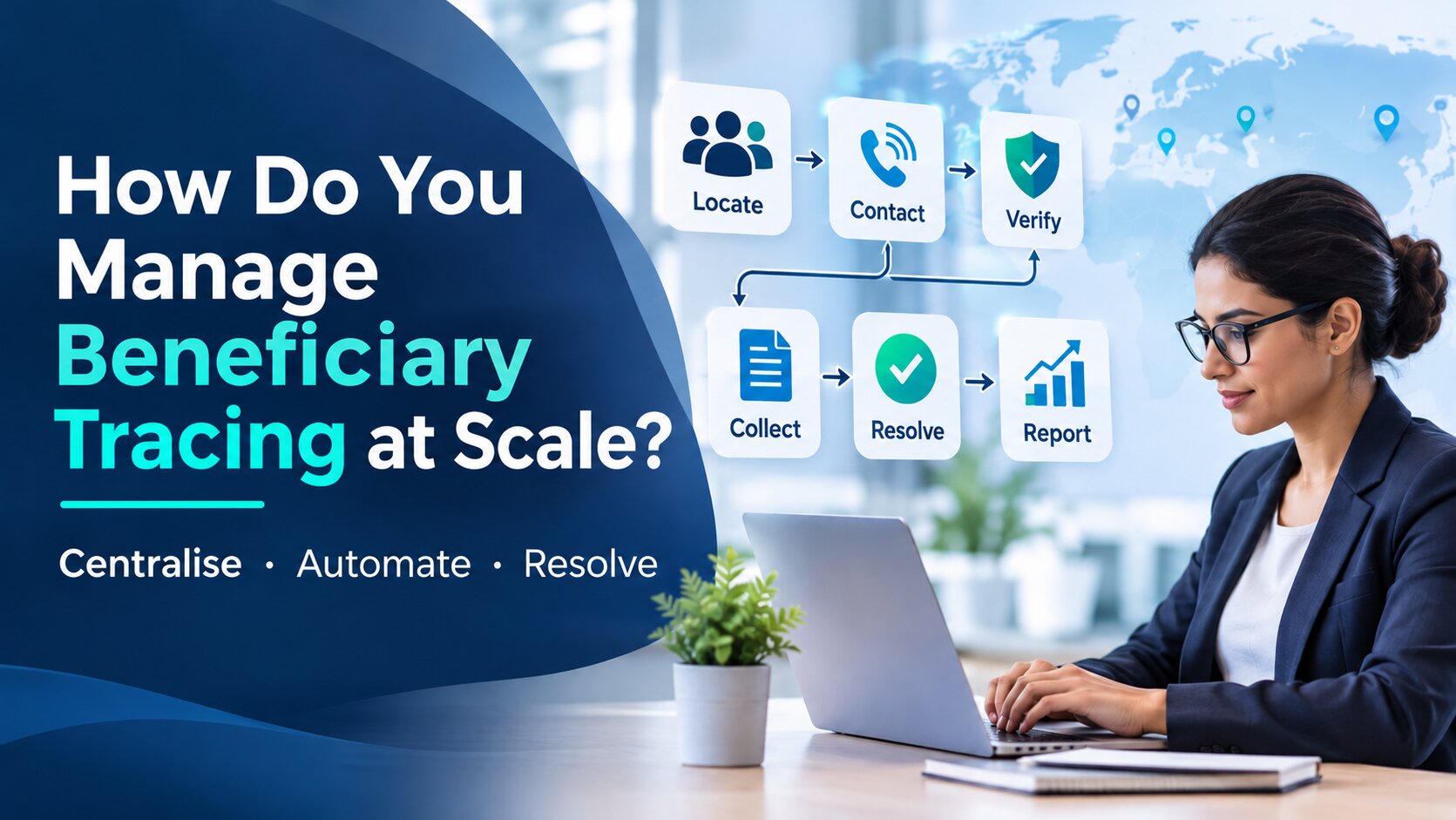
One of the first things to examine is whether the software supports the complete beneficiary tracing process rather than only one part of it. Finding a possible contact number or residential address is useful, but it does not necessarily mean that the beneficiary has been successfully traced. Teams still need to establish contact, confirm the individual's identity, collect relevant documents and complete the required procedures.
A suitable platform should allow organisations to manage these activities within a connected workflow. For example, a case might begin with importing an existing beneficiary record, followed by reviewing available information, identifying possible contact details, recording communication attempts, requesting supporting documents and completing verification. Each stage should be visible so that agents and supervisors can understand what has happened and what needs to happen next.
It is also important to check whether the software maintains a complete history of case activities. When a beneficiary responds after several unsuccessful contact attempts, the assigned employee should be able to review previous interactions without searching through separate files or asking colleagues for updates. This continuity makes case handling more organised and reduces the possibility of repeating completed activities.
2. Contact Discovery and Contact Management
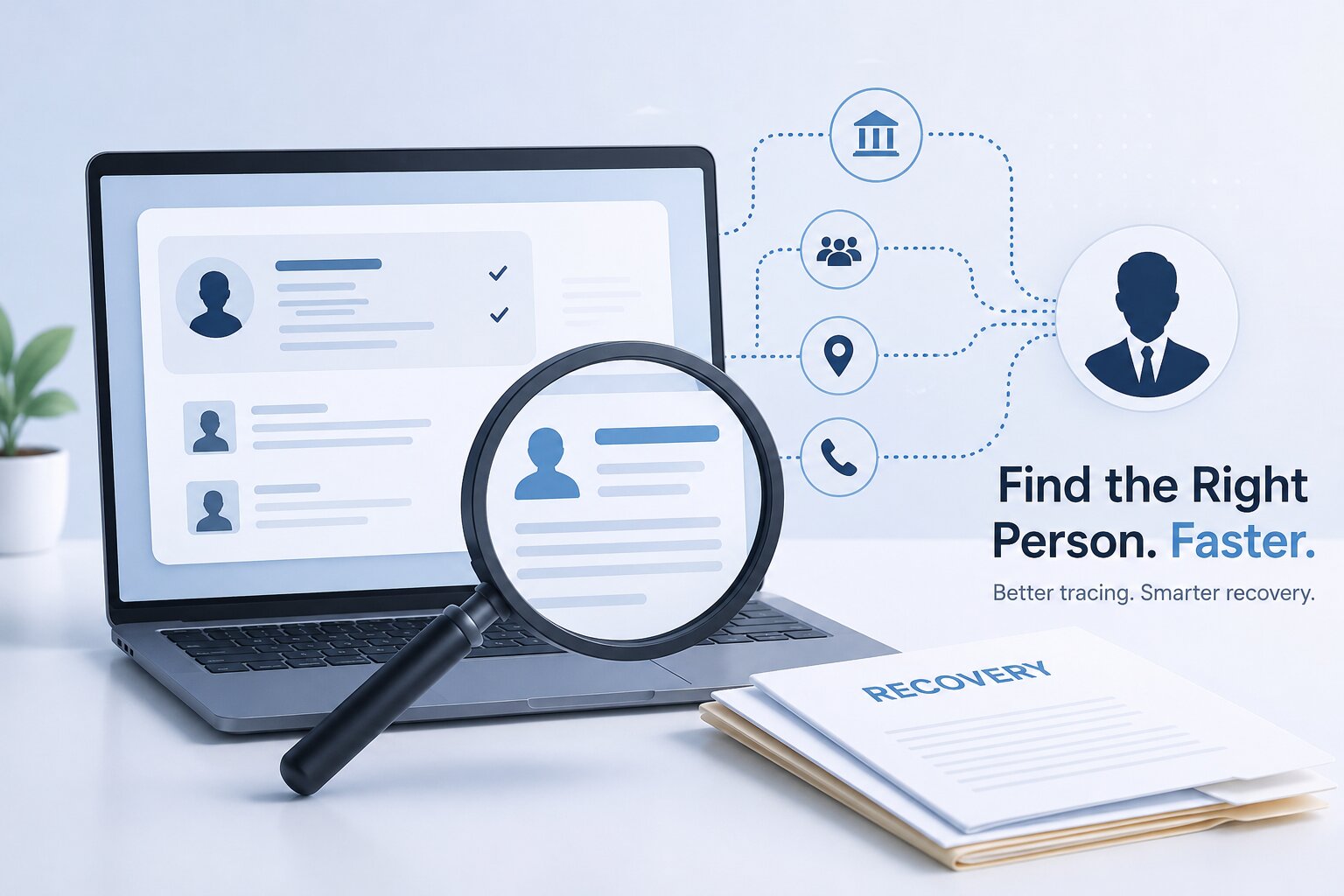
Accurate contact information is central to beneficiary tracing. However, organisations may hold several contact details for the same individual, particularly when records have been collected over many years. A beneficiary might have an old residential address, a discontinued mobile number, and an inactive email address. In some cases, the organisation may receive new contact information from external sources or through referrals.
The software should make it easy to record and manage multiple contact details against an individual beneficiary. It should also allow teams to distinguish between verified, unverified, outdated and invalid information. Without this distinction, agents may continue contacting the same incorrect number or assume that an old address is still reliable.
Another important consideration is communication history. Teams should be able to record when a call was made, whether an email was delivered, whether a message received a response and what happened during each interaction. This helps agents understand which contact methods have already been attempted and decide how to proceed. Organisations should also examine whether the platform supports the communication channels relevant to their operations, such as telephone, email and messaging services.
3. Identity Verification and Document Management
Locating a beneficiary does not automatically establish that the correct individual has been identified. Organisations often need supporting evidence before proceeding with a payment, claim, pension benefit or other outstanding entitlement. Depending on the organisation and the nature of the case, this may involve identity documents, proof of address, employment records, bank details or documents establishing a relationship with the original account holder.
Beneficiary tracing software should provide a structured way to request, receive, store and review these documents. Employees should be able to see which documents have been submitted, which are still outstanding and whether any information needs clarification. If a document is rejected or found to be incomplete, the reason should be recorded so that the next follow-up is clear.
Document management is particularly important when several employees participate in the verification process. A centralised record helps prevent duplicate requests and makes it easier for authorised team members to review the information already collected. Organisations should also check whether the software supports appropriate document access permissions, secure storage and an activity history showing who has accessed or updated relevant records.
4. Case Management and Workflow Automation
Beneficiary tracing teams may handle hundreds or thousands of cases simultaneously, with each case at a different stage. Some may require an initial contact attempt, while others may be waiting for identity documents, supervisor approval or additional information. Managing these activities manually can make it difficult to maintain consistent follow-ups.
A good beneficiary tracing system should provide structured case management with clear ownership, status updates and task tracking. Cases should be assignable to individual agents or teams, and employees should be able to identify their pending responsibilities without reviewing multiple spreadsheets. Supervisors should also have the ability to monitor case progress and intervene when a case remains inactive for too long.
Workflow automation can further reduce repetitive administrative work. For example, the system may generate reminders when a beneficiary has not responded within a defined period, notify an employee when documents are received or escalate an overdue case to a supervisor. These features help teams maintain regular follow-ups without depending entirely on manual reminders. However, organisations should ensure that workflows can be configured according to their actual procedures rather than forcing employees to follow a rigid process that does not suit their operations.
5. Case Prioritisation and Agent Allocation
Not all beneficiary tracing cases require the same level of attention. Some may contain several valid contact details and complete supporting information, while others may have missing records or a long history of unsuccessful communication attempts. Treating every case with the same priority can make it difficult for teams to allocate their time effectively.
Before selecting software, organisations should check whether it supports case categorisation and priority-based allocation. Managers may need to assign cases according to urgency, beneficiary category, case value, available information or internal service-level requirements. The ability to filter and organise cases using relevant criteria helps teams focus on the work that requires attention first.
Workload distribution is equally important. If a small number of agents receive most of the active cases while others have limited assignments, overall productivity can suffer. The platform should help supervisors understand individual workloads, review pending assignments and redistribute cases when necessary. Some platforms may also offer scoring or recommendation features that help identify cases with stronger tracing information. These tools can support decision-making, but teams should retain the ability to review the available evidence and make the final decisions themselves.
6. Reporting and Performance Tracking
A beneficiary tracing platform should not only help employees manage daily tasks; it should also provide management with a clear understanding of how the overall operation is performing. Without reliable reporting, organisations may struggle to identify why cases are taking longer than expected, which contact methods are producing responses or where additional resources are required.
Useful reporting capabilities include the number of active cases, completed cases, pending verifications, unsuccessful contact attempts and cases awaiting documents. Managers may also need to review average case turnaround times, contact success rates, resolution rates and agent productivity. These measures help organisations understand whether their tracing activities are progressing as expected and where improvements may be needed.
Dashboards can make this information easier to access by presenting important figures in one place. Instead of requesting separate updates from every employee, supervisors can review current workloads and outstanding activities through a central view. It is also worth checking whether the software allows reports to be filtered by date, team, agent, case category or status. Flexible reporting is particularly useful for organisations that need to prepare regular internal performance reviews or management reports.
7. Data Security, Access Control and Audit Trails
Beneficiary records may contain personal, financial and identity-related information. Protecting these details should therefore be a major consideration when evaluating any tracing platform. Organisations need to understand how information is stored, who can access it and what measures are available to prevent unauthorised changes or disclosure.
Role-based access control is an important capability to look for. It allows organisations to provide employees with access according to their responsibilities. For example, a tracing agent may need to view and update assigned cases, while a supervisor may require broader access to team performance and case allocation. Administrative users may need additional permissions for managing system settings and user accounts.
Audit trails are equally valuable because they provide a record of important activities performed within the platform. Organisations should be able to review relevant changes, including updates to beneficiary information, case status changes and document-related activities. This improves accountability and makes it easier to investigate discrepancies.
It is also important to examine the provider's approach to data protection, backup, hosting, encryption and compliance with applicable privacy requirements. The organisation should assess whether the software's security arrangements and deployment options meet its internal policies and the legal requirements of the countries in which it operates.
8. Integration, Scalability and Implementation
Beneficiary tracing software should work alongside an organisation's existing systems wherever possible. Banks, insurers, pension administrators and other institutions may already use customer databases, financial platforms, document management systems or internal reporting tools. If beneficiary information must be transferred manually between these systems, employees may continue facing the same administrative difficulties that the new platform is intended to address.
Check whether the software supports integration with relevant business applications through available APIs, data imports or other approved methods. The ability to import existing beneficiary records can also make implementation easier, particularly for organisations managing large volumes of historical information. Before proceeding, teams should understand how data will be transferred, checked and maintained to avoid creating duplicate or inconsistent records.
Scalability is another important consideration. A solution that works for a small tracing team should also be capable of supporting additional users, larger case volumes and changing operational requirements. Organisations should review licensing arrangements, customisation options, implementation timelines, user training and ongoing technical support. The total cost of ownership should include not only the initial software investment but also any recurring charges, integration work and maintenance requirements.
How Can Teams Evaluate Beneficiary Tracing Software Before Purchasing?
Once organisations have identified their essential requirements, the next step is to evaluate potential platforms using practical scenarios. A product demonstration can provide a better understanding of how the software works in everyday situations than a feature list alone. Instead of focusing only on the presentation, teams should ask the provider to demonstrate a complete tracing case, starting with the creation or import of a beneficiary record and continuing through contact management, document collection, verification and resolution.
It is useful to involve the people who will actually use the system. Tracing agents can assess how easily they can update records, record communication outcomes and manage their daily assignments. Supervisors can examine whether the dashboards provide enough information to monitor workloads, identify overdue cases and review performance. IT and compliance teams can evaluate integration requirements, access controls, security arrangements and data management procedures.
Organisations should also test how the software handles unsuccessful cases. For instance, what happens when a telephone number is invalid, a beneficiary does not respond or the submitted documents are incomplete? Can the system record the reason, schedule another follow-up and maintain the complete case history? These scenarios reveal whether the platform can support real operational challenges rather than only straightforward cases.
Before making a final decision, request clarity on implementation costs, licensing, customisation, training and support. Where possible, use a trial environment or a controlled pilot to understand how the platform performs with realistic data and workflows. A well-structured evaluation helps organisations select software based on operational suitability rather than presentation quality alone.
What Are the Common Mistakes to Avoid When Selecting Beneficiary Tracing Software?
One common mistake is choosing a platform that focuses only on finding contact details. Contact discovery is an important part of tracing, but successful resolution often requires additional activities such as identity verification, document collection, communication tracking and case closure. A solution that does not support these connected activities may leave employees dependent on other tools to complete their work.
Another mistake is overlooking workflow requirements. Organisations sometimes select software because it offers an extensive feature list without checking whether those features match their actual processes. A platform may include automated notifications, for example, but those notifications may not be flexible enough to reflect the organisation's follow-up schedules or approval procedures. Teams should therefore assess how easily workflows can be configured and whether the system can accommodate different case types.
Data security and reporting are also areas that should not be treated as secondary considerations. Beneficiary information requires careful handling, and organisations need appropriate access controls and activity records. Similarly, a system without useful reporting may help agents update cases but still leave managers without the information needed to measure progress. Finally, organisations should avoid selecting software based only on its initial price. Implementation, training, integration, ongoing support and future expansion can all influence the overall investment.
How Does Beneficiary Tracing Software Support Different Organisations?
The requirements of a beneficiary tracing operation can vary depending on the industry, the type of records involved and the purpose of the tracing activity. Pension funds, for example, may need to locate former members or beneficiaries associated with unclaimed pension entitlements. Their teams may need to review historical employment records, update contact information, confirm identities and collect the documents required to process outstanding benefits.
Insurance companies may use beneficiary tracing processes when policyholders or nominated beneficiaries cannot be reached. In these situations, the ability to manage multiple contact details, maintain communication histories and coordinate document verification can help claims teams handle outstanding cases more systematically. Banks and financial institutions may also need to identify and verify beneficiaries associated with dormant accounts, unclaimed balances or other financial records. For these organisations, accurate information and controlled access are particularly important.
Fund administrators and tracing agencies often manage cases on behalf of multiple clients or across different portfolios. They may require flexible case allocation, clear assignment ownership, performance reports and the ability to manage different tracing workflows. Government programmes and public institutions may also benefit from centralised beneficiary records, particularly when dealing with large populations and outstanding entitlements.
Although these organisations have different operational needs, they share a common requirement: reliable information and a structured process for moving cases towards resolution. The right software should support these requirements while allowing each organisation to configure its workflows according to its own procedures.
Why Consider Beveron's Beneficiary Tracing and Resolution Software?
For organisations looking to improve how they locate and reconnect with beneficiaries, Beveron's Beneficiary Tracing and Resolution Software offers a dedicated solution to support beneficiary identification, contact discovery and information verification. It helps organisations bring beneficiary information together and make tracing activities more organised, reducing the reliance on scattered records and manual searches.
The platform provides a centralised way to maintain beneficiary details, including personal information, phone numbers, email addresses and available contact information. This helps tracing teams access relevant details, review available information and identify potential ways to reach individuals. Keeping contact information organised also makes it easier to distinguish between available, outdated and verified details.
Another important capability is intelligent beneficiary prioritisation through Traceability Scores. This helps organisations assess available information and identify beneficiaries who may be easier to locate or require further tracing efforts. AI-assisted capabilities can also help review available information, highlight missing details and suggest possible next steps, while keeping human judgement involved in the process.
With reporting and performance insights, organisations can gain a better understanding of their beneficiary tracing activities. Teams can review tracing progress, monitor contact outcomes and assess the effectiveness of their efforts. These insights help organisations identify information gaps, understand tracing challenges and make more informed decisions about their approach.
Organisations exploring beneficiary tracing solutions can visit Beveron's Beneficiary Tracing and Resolution Software to learn more about its capabilities. Requesting a personalised demonstration is a practical way to understand how Beveron's Smart Tracing can support beneficiary identification, contact discovery and tracing operations.
Frequently Asked Questions
1. What is beneficiary tracing software?
Beneficiary tracing software is a digital platform that helps organisations locate, contact, verify and manage individuals who may be entitled to benefits, payments, claims or other outstanding financial entitlements. It centralises beneficiary records, contact information, communication history, supporting documents and case progress, allowing teams to manage tracing activities through a more structured process.
2. What features should beneficiary tracing software include?
Essential features include centralised beneficiary records, contact discovery and management, identity verification, document management, case tracking, workflow automation, case prioritisation, reporting and data security. Organisations should also consider integration capabilities, scalability and the flexibility to configure workflows according to their operational requirements.
3. How does beneficiary tracing software help improve case resolution?
The software helps improve case resolution by keeping beneficiary information and tracing activities organised in one place. Employees can review previous contact attempts, identify missing documents, manage pending tasks and track each case through its different stages. Automated reminders and case assignments also help reduce delays caused by missed follow-ups or unclear responsibilities.
4. Can beneficiary tracing software manage multiple contact details?
Yes. Suitable beneficiary tracing platforms allow teams to maintain multiple phone numbers, email addresses and physical addresses against individual beneficiary records. They can also help distinguish between verified, unverified, outdated and invalid details, making it easier for employees to identify which contact information should be used for further tracing activities.
5. How does automation support beneficiary tracing teams?
Automation can help manage repetitive activities such as follow-up reminders, task assignments, status notifications and overdue case escalations. It reduces the need for employees to track every activity manually and helps teams maintain consistent communication and case management procedures.
6. Is beneficiary tracing software suitable for pension funds and insurance companies?
Yes. Pension funds can use beneficiary tracing software to locate former members and beneficiaries associated with outstanding pension entitlements. Insurance companies can use it to manage tracing activities involving policyholders and nominated beneficiaries. The platform should be configurable to accommodate the organisation's verification requirements, documentation procedures and internal workflows.
7. How can organisations measure the performance of beneficiary tracing software?
Organisations can assess performance using measures such as contact success rates, completed tracing cases, beneficiary verification rates, case resolution rates, average turnaround times, overdue cases and agent productivity. Comparing these measures over time helps managers spot operational delays, evaluate team performance, and identify where process improvements are needed.
Best beneficiary tracing and resolution software
Best beneficiary tracing software for pension funds
Best beneficiary tracing software for insurance companies
If you need a free demo of the best beneficiary tracing and resolution software, please fill out the form