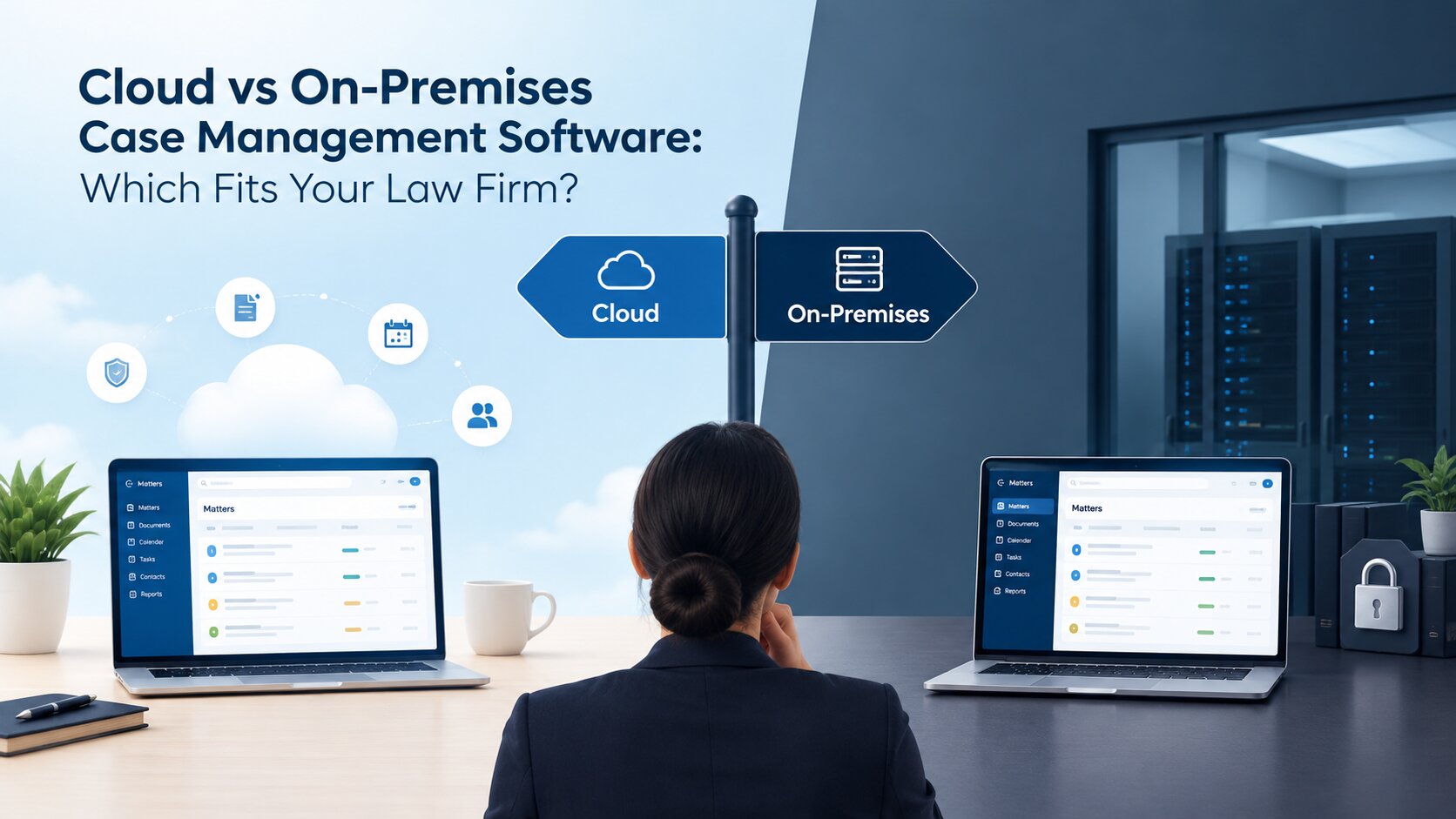
How to Choose the Right Legal Management System for Your Law Firm

Running a modern law firm is more complex than ever. Legal professionals are expected to manage multiple cases, track deadlines, organize vast amounts of documents, communicate with clients, and ensure compliance—all while delivering high-quality legal services. For many firms, relying on manual processes or disconnected tools creates serious challenges. Important deadlines may be missed, documents become difficult to track, communication gaps occur, and teams struggle to maintain visibility across cases. Over time, these inefficiencies can slow down productivity and affect client satisfaction.
This scenario is where a legal management system becomes essential. The right law firm software helps centralize operations, automate routine tasks, and give legal teams better control over their workflows.
However, with so many options available, choosing the right system can feel overwhelming. This guide will walk you through the key factors to consider when selecting the best legal management system for your law firm.
1. Understand Your Law Firm’s Needs
Before evaluating any legal tech solutions, it’s important to clearly identify the challenges your firm is currently facing. Every law firm operates differently. Some struggle with document organization, while others face issues with case tracking, billing, or internal communication. Understanding your specific pain points will help you choose a system that solves real problems rather than adding unnecessary complexity.
Ask yourself questions such as:
- Are we struggling to track multiple cases efficiently?
- Do we spend too much time managing legal documents?
- Are our billing and invoicing processes currently manual and taking up a lot of time
- Is client communication difficult to track?
- Do we lack visibility into case progress and team workloads?
By identifying these challenges, you can prioritize the features that matter most for your firm.
For example:
- Litigation-focused firms may prioritize case tracking and deadline management
- Corporate law firms may require document automation and contract management
- Growing firms may need workflow automation and collaboration tools
Having a clear understanding of your needs will make the decision process much easier.
2. Look for Essential Features
Once your requirements are clear, the next step is evaluating the core features of a legal management system. A good legal case management platform should simplify daily operations while improving productivity. Here are some essential features to look for:
Case Management
Case management is the foundation of any law firm software. It should allow you to:
- Track case details in one centralized system
- Monitor deadlines and important milestones
- Assign tasks to team members
- Maintain a clear overview of case progress
This helps lawyers and staff maintain organization and prevent any oversight.
Document Management and Automation
Law firms handle large volumes of documents every day. A strong document management system should allow you to:
- Store all legal documents in a centralized repository
- Quickly search and retrieve files
- Automate document creation using templates
- Maintain version control for documents
Document automation can significantly reduce time spent on repetitive drafting tasks.
Workflow Automation
Legal work often involves repetitive administrative processes. Workflow automation can streamline tasks such as:
- Case intake
- Task assignments
- Follow-ups and reminders
- Approval processes
Automation helps reduce manual effort and ensures processes run smoothly.
Reporting and Analytics
Data-driven insights are increasingly important for law firm management. Look for software that offers:
- Case performance reports
- Financial insights
- Workload tracking
- Productivity metrics
These insights help firm leaders make informed decisions.
Client Communication Tools
Client communication is critical in legal practice. The right system should make it easier to:
- Track client conversations
- Share updates and documents
- Maintain a history of interactions
This improves transparency and strengthens client relationships.
3. Check Ease of Use and User Experience
Even the most powerful software can fail if it is difficult to use. Lawyers and legal teams often work under tight schedules, so the system must be intuitive and easy to navigate. A complicated interface can slow down adoption and create frustration among team members.
When evaluating legal software, consider:
- Is the interface clean and easy to understand?
- Can new users learn the system quickly?
- Does it reduce complexity rather than add to it?
- Are common tasks easy to perform?
A user-friendly system ensures that your entire team can adopt the technology quickly and use it effectively.
4. Ensure Data Security and Compliance
Law firms manage highly sensitive information, including confidential client data, legal strategies, and financial records. This makes data security one of the most critical factors when choosing a legal management system.
Your legal software should provide:
- Secure data storage
- Role-based access control
- Data encryption
- Regular backups
- Compliance with relevant regulations
For firms operating in regions like the UAE, compliance with local data protection standards is particularly important. A secure platform helps protect client confidentiality while ensuring your firm meets regulatory requirements.
5. Evaluate Integration Capabilities
Most law firms already use multiple tools to manage different aspects of their work, such as:
- Email platforms
- Accounting software
- CRM systems
- Document storage solutions
A good legal management system should integrate smoothly with these existing tools. Integration helps create a connected workflow where information flows easily between systems. This eliminates duplicate data entry and reduces the risk of errors.
For example:
- Emails can be linked directly to cases
- Financial data can sync with accounting systems
- Client information can be shared across platforms
The result is a more efficient and streamlined legal workflow.
6. Consider Scalability
Your law firm may be small today, but it could grow significantly in the coming years. Choosing a scalable legal management system ensures that the software can support your firm's future growth without requiring a complete replacement.
A scalable system should allow you to:
- Add new users easily
- Manage increasing case volumes
- Expand features as your needs evolve
- Support multiple offices or teams
Investing in scalable legal software ensures long-term value and avoids unnecessary disruptions later.
7. Review Support and Training
Technology adoption is not just about software—it’s also about the support that comes with it. Even the best legal tech solutions require proper onboarding and training to ensure teams can use them effectively.
When evaluating vendors, look for:
- Comprehensive onboarding assistance
- Training sessions for staff
- Documentation and user guides
- Responsive customer support
- Regular product updates
Strong support ensures that your firm can quickly resolve issues and maximize the benefits of the system.
How Modern Legal Tech Providers Are Transforming Law Firms
Today, many legal technology providers are helping law firms transition from manual operations to smarter, technology-driven workflows. Companies like Beveron Technologies focus on developing modern legal management solutions designed specifically for legal professionals. These platforms aim to simplify complex processes by bringing case management, document handling, workflow automation, and reporting into a single system.
Instead of juggling multiple disconnected tools, law firms can manage their entire practice from one centralized platform. This improves visibility across cases, reduces administrative workload, and allows legal teams to focus more on delivering value to clients. By adopting modern legal tech solutions, firms can operate more efficiently, improve collaboration, and stay competitive in an increasingly digital legal landscape.
8. Compare Pricing and ROI
Cost is always an important consideration when choosing software, but it should not be the only factor. Instead of focusing solely on price, law firms should evaluate the return on investment (ROI) that the software can deliver.
A successful legal management system can help your firm:
- Save time on administrative tasks
- Reduce errors and missed deadlines
- Improve case tracking
- Increase team productivity
- Enhance client service
These improvements often translate into long-term financial benefits.
When comparing pricing options, consider:
- Subscription costs
- Implementation fees
- Training and support costs
- Potential productivity gains
In many cases, the right legal software pays for itself through improved efficiency and better operational control.
Conclusion:
Choosing the right legal management system is a critical decision for any modern law firm. The right technology can transform the way your firm operates—streamlining workflows, improving collaboration, and helping your team manage cases more efficiently. By carefully evaluating your firm’s needs, essential features, usability, security, integration capabilities, scalability, and vendor support, you can make a well-informed decision that supports long-term success.
As the legal industry continues to evolve, firms that adopt the right legal tech solutions will be better positioned to handle growing workloads, meet client expectations, and stay ahead of the competition.
Don’t let outdated systems slow you down—upgrade to a smarter legal management solution like Beveron and take control of your firm’s growth today.
Best legal management software for law firms
Best case management software for lawyers
Best legal practice management software
If you need free demo on thebest legal management software for law firms, please fill the form below.